Omelette ux fines herbes
breakfast/brunch, fall, french cuisine, summer, vegetarian

Using Up Herb Plants: Omelette aux Fines Herbes (with basic recipe)

Omelette ux fines herbes
High cuisine, not a simple attempt to use things up before going out of town for Thanksgiving

            Every fall, I bring my potted herb plants in from outside to enjoy using them for a bit longer. It works well enough for a while, but eventually they start to suffer from the limited sunshine. Since most of them are annuals, the time comes to use up what I can before starting again when summer returns. Everything except the rosemary is either done or fading. To use up as much as possible, I made a French classic, omelette aux fines herbes.

            Fines herbes is a mix of parsley, chives, tarragon, and chervil, common in French cuisine. The first three are widely available in the US, but chervil might require a specialty spice store or the internet. Supposedly it tastes like a milder parsley with a bit of a licorice undertone, but I couldn’t taste much difference. To compensate for all the herbs except parsley being dried, I also added some minced scallions to brighten things up.

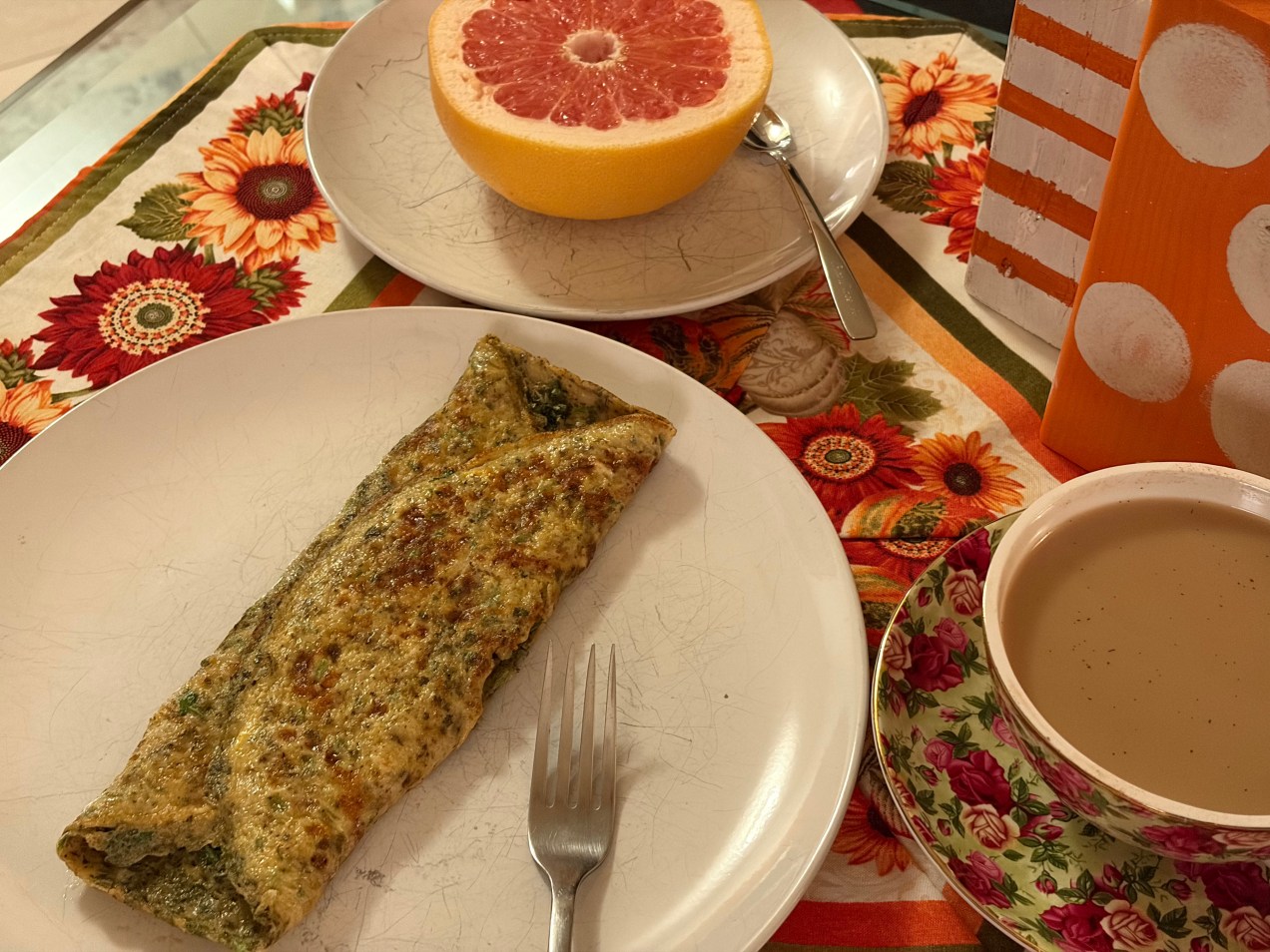
            For many French chefs, making a perfect omelet is one of the primary tests of skill. After following the basic directions on pages 107 – 108 of 1000 Foods to Eat Before You Die, mine turned out pretty well. The flavor is distinctly understated, but the freshness from the herbs was nice as fall turns to winter. The slight licorice flavor from either the tarragon or chervil is definitely there. Perhaps it just needs a little heat to release its flavor. Chefs disagree on how much browning, if any, is ideal. Personally, I like more browning, both for flavor and the fact that it helps the egg unstick itself from the pan.

Advertisements

            For each omelet, I used three eggs, beaten together with salt, pepper, and a tablespoon of milk. The herb mix contained three large parsley sprigs, minced, one minced scallion, and a teaspoon each dried chives, tarragon, and chervil. Half of the herb mixture gets added into the eggs before cooking. After melting about a tablespoon butter in a skillet over medium heat, the egg mixture is added to cook.

            To make sure that none of the eggs end up runny, I like to tilt the pan and lift up the edges of the cooked portion, letting the uncooked egg flow underneath. After this, sprinkle the remaining herb mixture over the surface. When the top is almost set, fold the right and left thirds of the omelet over onto the center. If this doesn’t work and you end up with a half-moon shaped omelet, don’t worry about it, it will still taste good. Let the omelet cook for another minute, covering the pan if desired to help it set, then slide it onto a plate.

            To make this simple mix of eggs and herbs sound extra fancy, serve with pommes de terre frits, compote de pomme, fruits frais, café au lait, or any combination thereof. In English, these are fried potatoes, applesauce, fresh fruit, and coffee with milk. To make anything sound fancy, say it in French, even if you have to use a translation app.

One-Time
Monthly
Yearly

Make a one-time donation

Make a monthly donation

Make a yearly donation

Choose an amount

$5.00
$15.00
$100.00
$5.00
$15.00
$100.00
$5.00
$15.00
$100.00

Or enter a custom amount

$

Your contribution is appreciated.

Your contribution is appreciated.

Your contribution is appreciated.

DonateDonate monthlyDonate yearly
Standard
food history, sauce, summer

Chimichurri: Argentine Steak Sauce

Steak with chimichurri is a delicious summer treat

            Across central Argentina, grasslands called the Pampas cover a vast area. Ever since Spaniards arrived in the 16th Century with cattle, beef has been a major industry. The region even had its own cowboys, called gauchos. Naturally, Argentine cuisine has developed a number of excellent beef recipes over the last five centuries, but the most famous is actually a sauce that goes with the meat. It doesn’t even have to be paired with beef, though it usually is.

            Chimichurri belongs to an ancient tradition of green sauces made of chopped or ground herbs moistened with vinegar and/or oil. They were eaten in Ancient Rome, across Medieval Europe, and modern variations include pesto, salsa verde, and the North African chermoula. Chimichurri is based on parsley, cilantro, and garlic, combined with other herbs and often peppers or tomatoes. In the Spanish/Mediterranean tradition, the liquids are olive oil and vinegar.

            When Spaniards first reached the Americas, they struggled to adjust to the available food options. In particular, they missed wheat bread and wine. To remedy their homesickness, the Spanish and Portuguese introduced a variety of plants and animals, with varied success. The Pampas were perfect for grazing cattle, sheep, and horses. Salted beef was an essential provision for the long voyages of discovery and trade. To produce it, an entire gaucho or cowboy culture evolved.

            Grapevines grew well in other parts of Argentina, a huge boon for Spaniards used to wine and vinegar. This made Argentina the natural birthplace for beef with chimichurri, which took a surprisingly long time to become popular in the US. As far as I can tell, it’s only become trendy in the last decade or so, and is still uncommon on restaurant menus. Admittedly, I don’t eat out much and definitely not at fashionable restaurants, so maybe I’m mistaken. But “fancy” South American steak sauce is easier to make at home than excellent hashbrowns, so I’ll stick to diners and making my own chimichurri at a fraction of the cost.

            Summer (or the hot days of early fall) is grilling and fresh herb season, making grilled steak with chimichurri a nice hot weather treat. In 1000 Foods to Eat Before You Die, Mimi Sheraton provides a recipe, which I adjusted to my taste. The essential ingredients for a bright, verdant flavor are cilantro, parsley, garlic, vinegar, and oil. Beyond that, some people include oregano, thyme, bay leaves, sweet and/or hot red pepper, or tomatoes. My recipe just uses oregano for depth and hot pepper flakes for a bit of kick. For the right texture the ingredients should be finely minced together. If using a food processor, watch carefully while pushing the pulse button. You want visible pieces of herbs, not a puree.

            Ingredients:

  • 1 bunch cilantro
  • 1 bunch Italian or flat-leaf parsley
  • Leaves from 2 sprigs oregano
  • ¼ yellow onion
  • 2 garlic cloves, peeled and crushed with the side of a knife
  • Pinch red pepper flakes
  • 2 tablespoons red wine vinegar
  • ½ cup (8 tablespoons) olive oil
  • Salt

            Directions:

  1. Coarsely chop the cilantro, parsley, oregano, onion, and garlic.
  2. Combine the herbs, onion, garlic, and red pepper flakes on the cutting board. Mince together.
  3. Place the herb mixture in a bowl, add the vinegar, olive oil, and a pinch of salt, and stir.
  4. Let the chimichurri rest at room temperature for at least an hour.
  5. Serve with beef, another protein, potatoes, or eggs. Bring any leftovers to room temperature before enjoying.

            Any leftovers are especially good with scrambled eggs. Chimichurri keeps well for several days. The herbs will eventually lose their color due to the acid in the vinegar, but this will not affect the taste. A similar meat, poultry, vegetable, or anything sauce is the North African chermoula, which I will be making soon. To get this and other recipes sent straight to your inbox, make sure to subscribe.

One-Time
Monthly
Yearly

Make a one-time donation

Make a monthly donation

Make a yearly donation

Choose an amount

$5.00
$15.00
$100.00
$5.00
$15.00
$100.00
$5.00
$15.00
$100.00

Or enter a custom amount

$

Your contribution is appreciated.

Your contribution is appreciated.

Your contribution is appreciated.

DonateDonate monthlyDonate yearly
Standard
Uncategorized

Fruhlingssuppe (German seven-herb soup)

Source: 1000 Foods (pgs. 289 – 290)

            In cold climates, the first spring vegetables and greens are particularly appreciated. Often, they appear around Easter as edible symbols of renewal. Seeing the landscape coming back to life after a long winter seems like the perfect celebration of the Resurrection. This does make the idea of celebrating Easter in the Southern Hemisphere, where it occurs during the fall, a little bit strange. My grandparents once told me that when they were in Australia one year for Easter, there were chrysanthemums on the altar at mass. While I understand why the seasons are reversed south of the Equator, thinking about a fall Easter with harvest decorations or a Christmas summer barbecue is still somewhat mind-bending.

            Anyway, back to green herbs. Traditionally, seven-herb soup was a German dish for Holy Week, right before Easter. Historically, fasting rules for Lent were a lot stricter than today. In early Christian communities, meat, fish, eggs, and dairy products were all forbidden. Fish was permitted from the Early Middle Ages onward. While this may seem surprising given the relative cost of fish today compared to most types of meat, it makes sense in the historical context. When fasting rules were first established in the later Roman Empire, most Christians lived around the Mediterranean, where grazing land was limited but fish was relatively abundant. As a result, fish was cheaper than meat.

            This changed once the people of northern Europe became Christian. Here there was plenty of land to pasture cattle and forests where pigs could forage. This made meat and dairy products more abundant and thus cheaper than they were further south. In many cases, meat was even cheaper than fish. Another issue was that north of the area where olive trees grew, people relied on lard, butter, and suet as their main cooking fats. This could be why, from the 15th Century onward, restrictions against dairy products (and eggs) during Lent and on Fridays began to be relaxed.

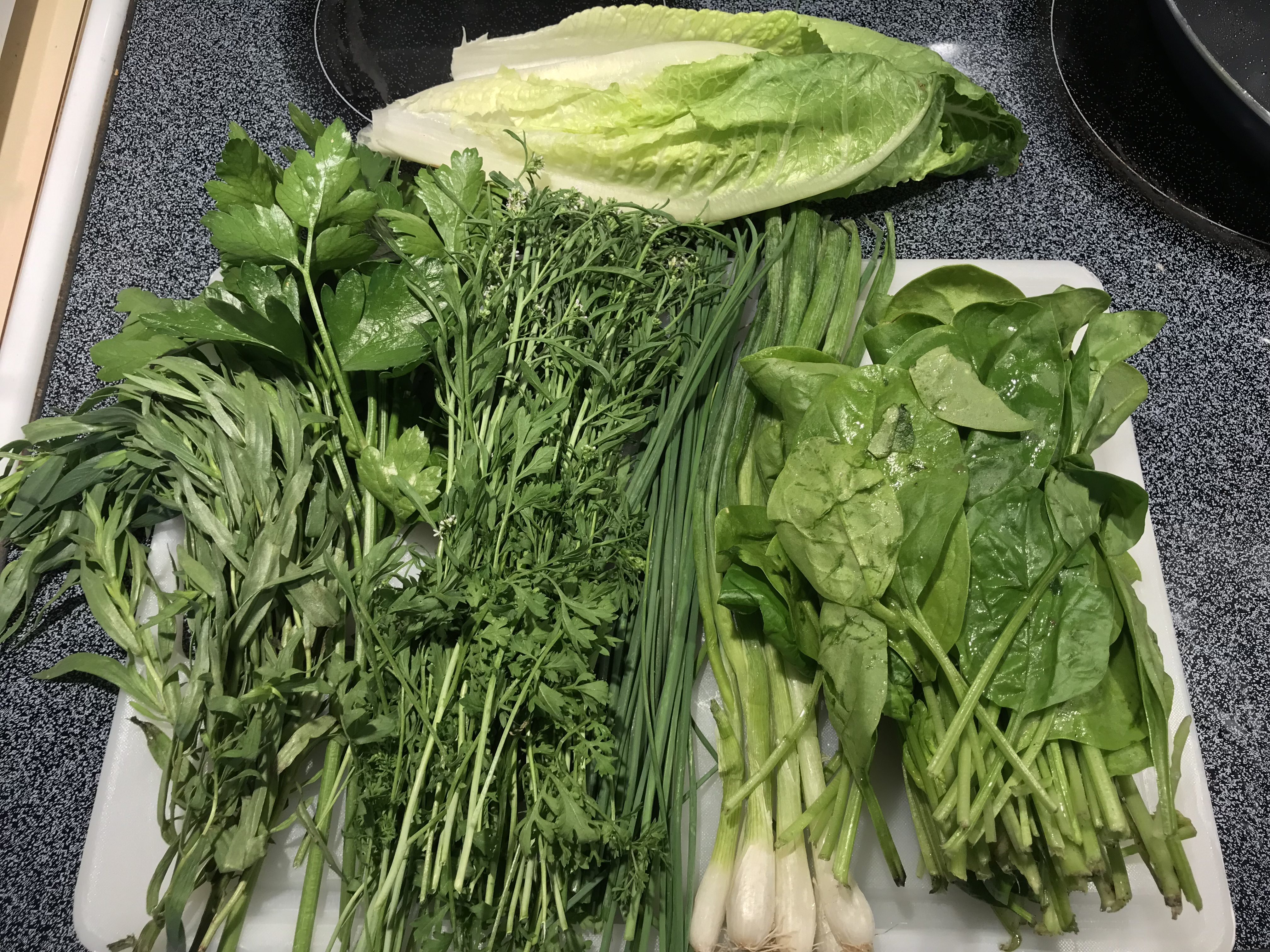
            The seven “herbs” I used were parsley, tarragon, watercress, chives, scallions, spinach, and lettuce. Cooked and pureed with vegetable broth and enriched with potato and cream, it was very fresh tasting. The only issue I had was that since I had never cooked with watercress before, I didn’t realize that the tougher stems needed to be removed, resulting in tough bits in the soup. Personally, I liked the extra texture they provided, but they weren’t supposed to be there.

            After Lent is over, an option is to use chicken or meat broth and add meatballs to the soup. Even though I made this in July, I stuck with the traditional Holy Week version to let the herbs shine. Served with some multigrain crackers, it was a light but complete meal, perfect to celebrate spring or summer.

Standard