Among the numerous varieties of risotto, there are a few classics, as detailed in 1000 Foods to Eat Before You Die on pages 233 – 234. Risotto bianco is the basic kind, made simply with rice, butter, a little onion or shallot, white wine, broth, parmesan cheese, and maybe some pancetta or bacon. Milanese is colored a bright golden yellow with saffron. Nero is colored black with squid ink. Piedmontese is enhanced with white truffles. Other varieties might include seafood, mushrooms, or vegetables.
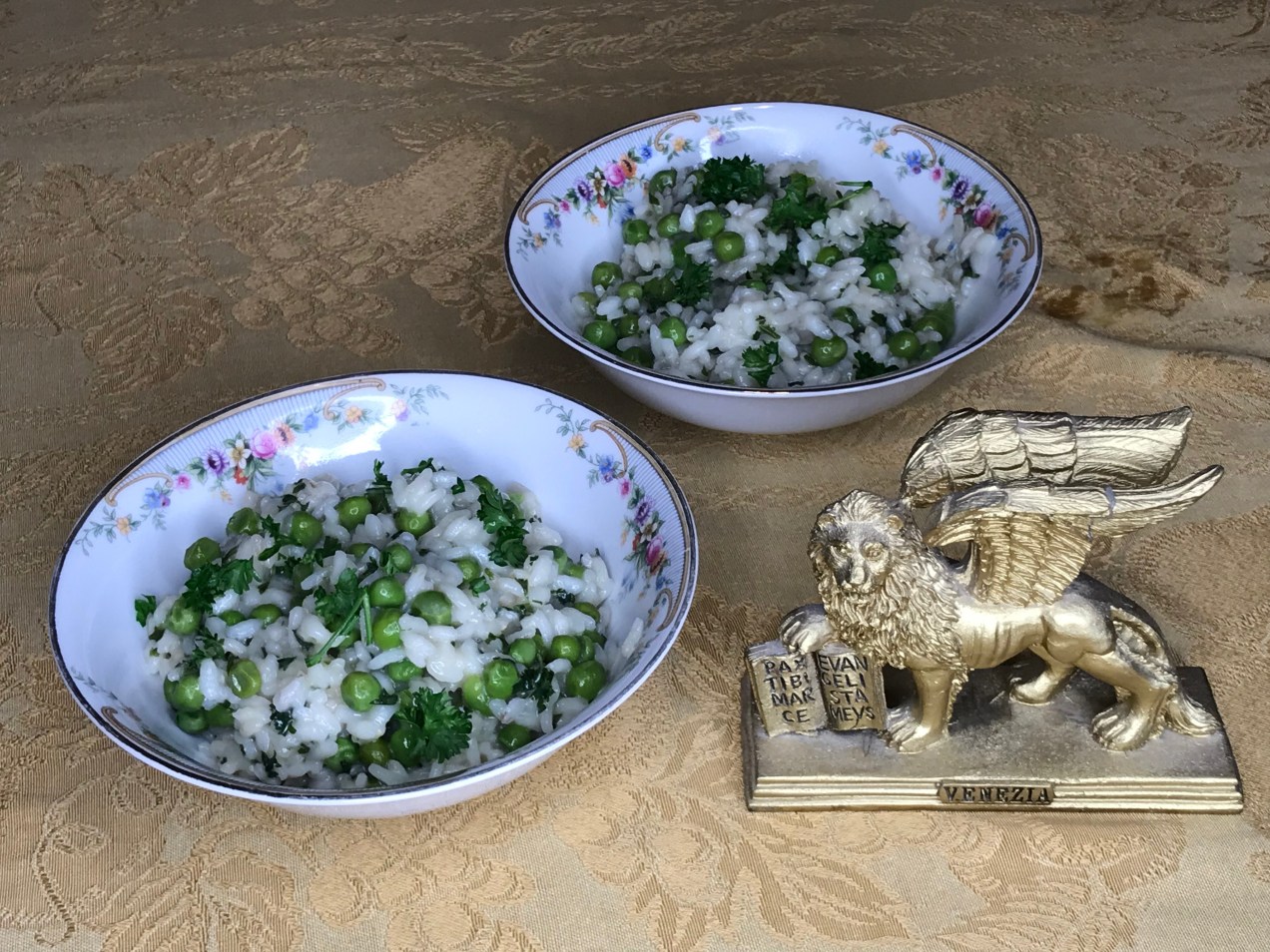
As you can probably guess, risotto verde is meant to be green. Frequently a spring specialty, it gets its color from parsley and either sweet green peas or asparagus. It’s very fresh-tasting and, when made with frozen peas, surprisingly quick and easy to prepare. To keep everything bright and fresh, I didn’t use any pancetta for my own recipe.
Technically, you’re not “supposed” to reheat risotto, because it thickens upon standing and can become “gluey.” I’ve never had this problem, or maybe the texture upon reheating just doesn’t bother me. Just add a few drops of water before putting it in the microwave. It will still be a great accompaniment to your chicken sandwich for lunch, and it’s way healthier than chips.
Ingredients:
4 tablespoons (or ¼ cup) butter, or 2 tablespoons each butter and olive oil
1 shallot or ¼ onion, minced
1 ½ cups arborio or other short-grain rice
4 tablespoons (or ¼ cup) dry white wine (something light like pinot grigio), or replace with extra broth
4 – 5 cups chicken or vegetable broth (broth made from poaching chicken works great here)
1 10-ounce bag frozen peas
Half bunch parsley, large stems removed, minced
1 cup grated parmesan cheese
Directions:
Combine the broth and peas in a medium saucepan and bring to a boil. Turn off heat, but leave on the stove.
Melt the butter in a large skillet over medium heat. When bubbling, add shallot or onion and sauté for about 2 minutes, until softened.
Add the rice and cook, stirring constantly, until coated and translucent, about 2 minutes.
Stir in the wine and cook, stirring constantly, until evaporated, another 2 or 3 minutes.
Add the broth and peas, a ladleful at a time, stirring constantly, waiting for each to absorb before adding the next. Stir in the parsley about halfway through, saving a little to sprinkle on top at serving time.
After adding 4 cups of broth, the risotto should be slightly liquid. If it seems too thick, add a little more broth.
Remove from the heat, stir in the parmesan, sprinkle with remaining parsley, and serve immediately.
For more recipes, history, and fun facts sent directly to your inbox, please like, subscribe, and/or share.
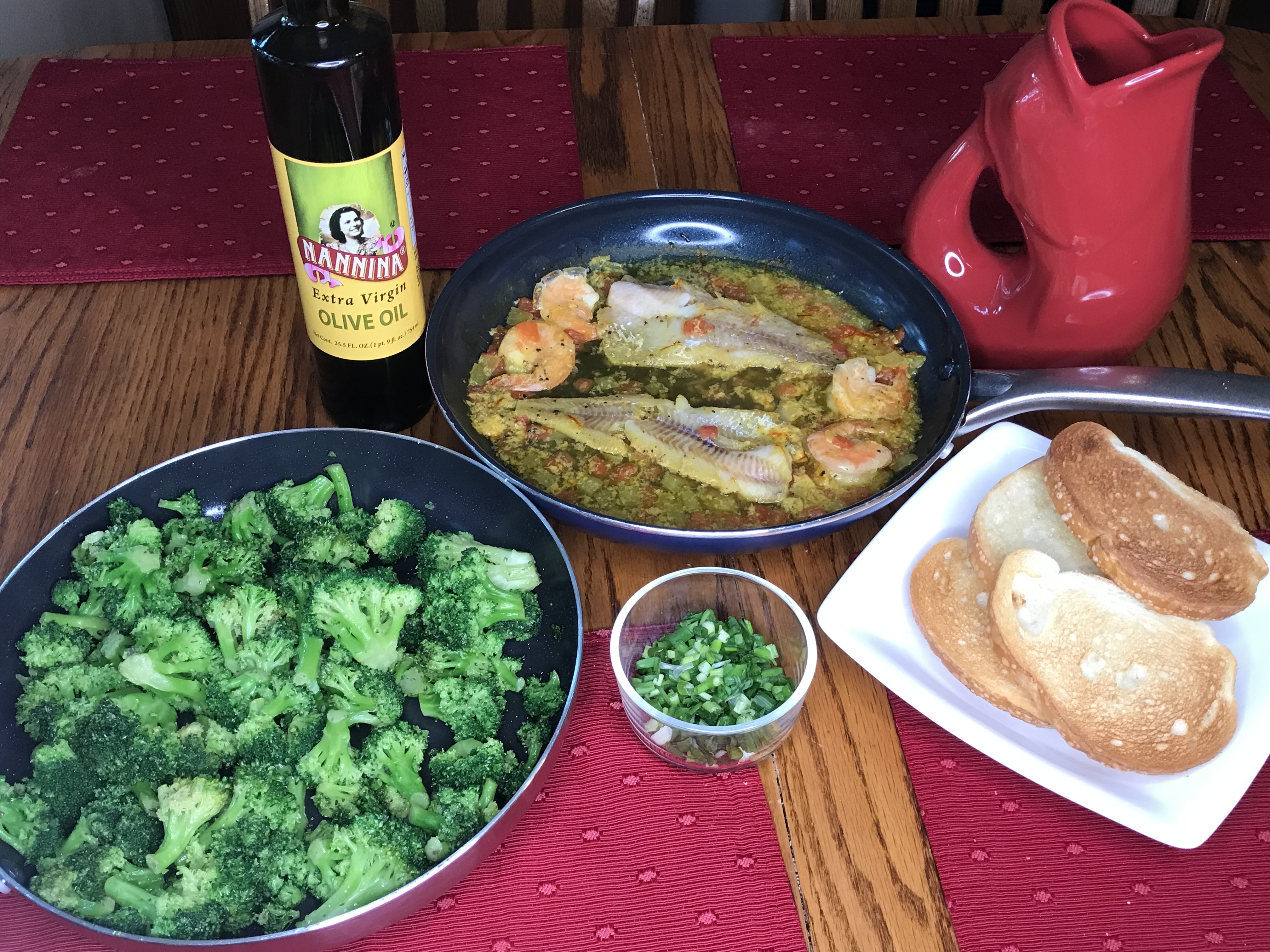
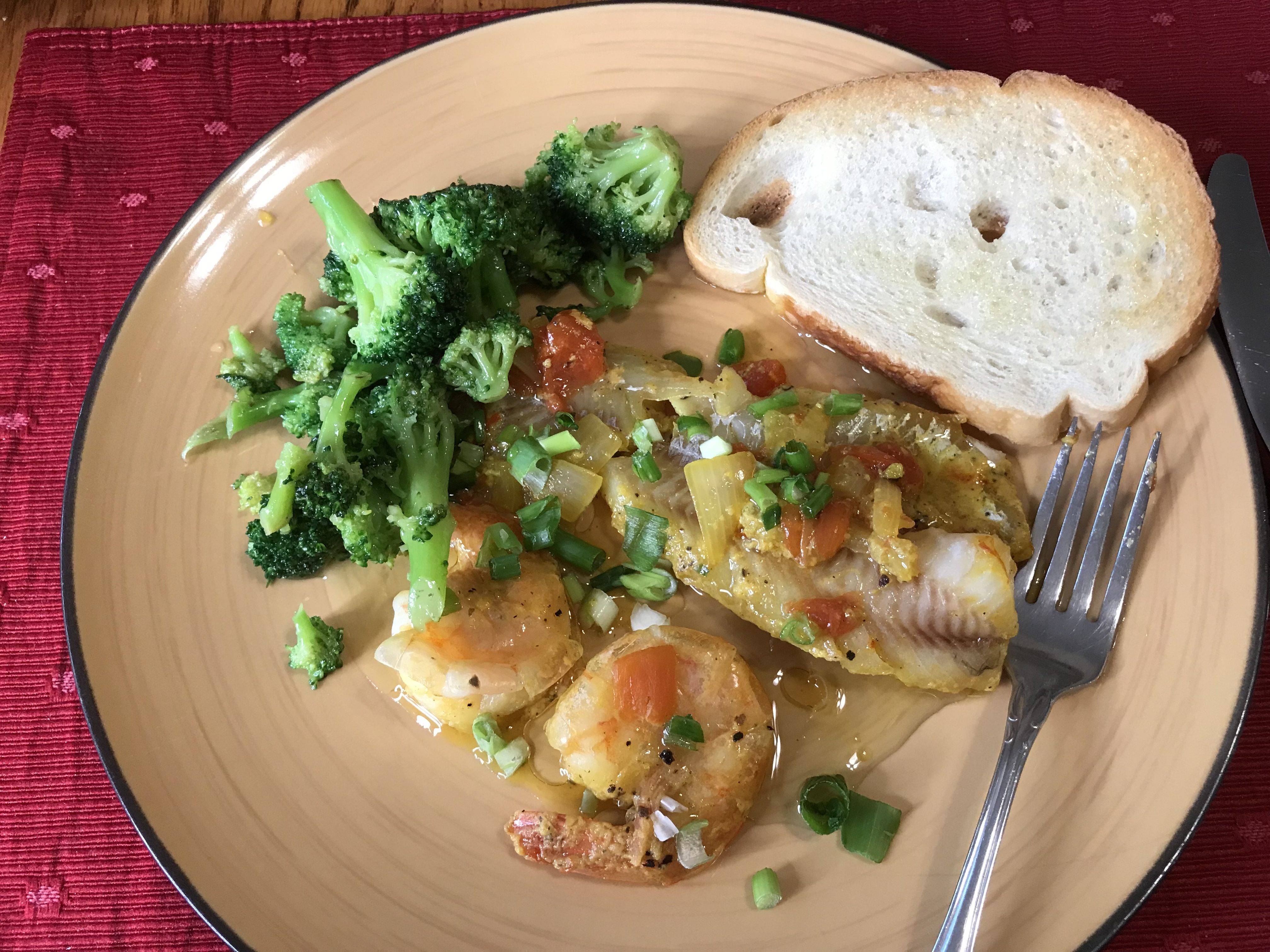
Menu: Poached “Sea Bass” with Wine and Saffron, Bruschetta, Broccoli Cooked in Garlic-Flavored Oil, Ricotta with Honey and Thyme
Recommended Wine: Orvieto (a dry or slightly sweet white)
In the 8th Century BC, rising population in their homeland led many Greeks to set out and establish colonies. They settled along the coasts of southern Italy, Sicily, Turkey, and the Black Sea, in some cases going as far as southern France, the Spanish coast, and north Africa. Over time, these colonies began setting up their own colonies. For some reason, the process slowed to a trickle by 500 BC. Had the Greeks run out of favorable locations? Did grain imports from Egypt and the Black Sea reduce population pressure in their city-states? Were local populations getting better at resisting the colonists? Or were the colonies, now grown into city-states in their own right, too busy fighting each other to keep expanding?
Whatever the reason, most colonization was finished when the Golden Age of Athens began in the 470s BC. There were a few exceptions. One of these was the city of Ancona, on Italy’s central Adriatic coast. It was founded by colonists from Syracuse in the 4th Century BC, several decades after the Syracusans crushed the Athenian invasion of Sicily. Ancona prospered but was never a great power, and was absorbed into the expanding Roman Republic in the 3rd Century BC.
Along Italy’s Adriatic (eastern) coast, various cities and regions feature seafood stews in their cuisine. Supposedly this is a remnant of Greek influence. Regardless, they are an interesting change of pace from grilled, fried, and baked fish, and cook much faster than meat or bean-based stews. It’s typical to serve these fish stews and chowders with bruschetta, to soak up the broth.
Since I couldn’t find sea bass, I used tilapia (I think). With the strong flavors of wine, tomatoes, garlic, and saffron, any affordable white fish would probably work. As promised in the introduction, this is one of the easiest main dishes in the book. Prep is just chopping a few vegetables, and cooking time is under 30 minutes. Personally, saffron is not my favorite flavoring, but the other ingredients balanced its somewhat medicinal flavor. Broccoli, lightly precooked and sauteed in garlic-infused oil, was a pleasant accompaniment, and the green was a pretty contrast with the red tomatoes and yellow saffron.
Dessert was rather interesting, fresh ricotta drizzled with honey and sprinkled with thyme. I have no problem with supermarket ricotta in lasagna, stuffed pasta, cheesecake, or cannoli filling, but don’t necessarily want to eat straight spoonfuls of it. Since fresh Italian-style ricotta was unavailable, I made my own. To serve, I had a trio of Italian honeys from World Market, chestnut, acacia, and millefiori (wildflower).
Notice the three different colors of honey
The acacia and millefiori honeys both paired well with the cheese (honestly, I couldn’t tell much difference). The chestnut took some getting used to. It’s dark in color, almost like maple syrup, and has a distinctly bitter edge. Like the saffron, it wasn’t my favorite, but overall, this was a tasty and balanced dinner.
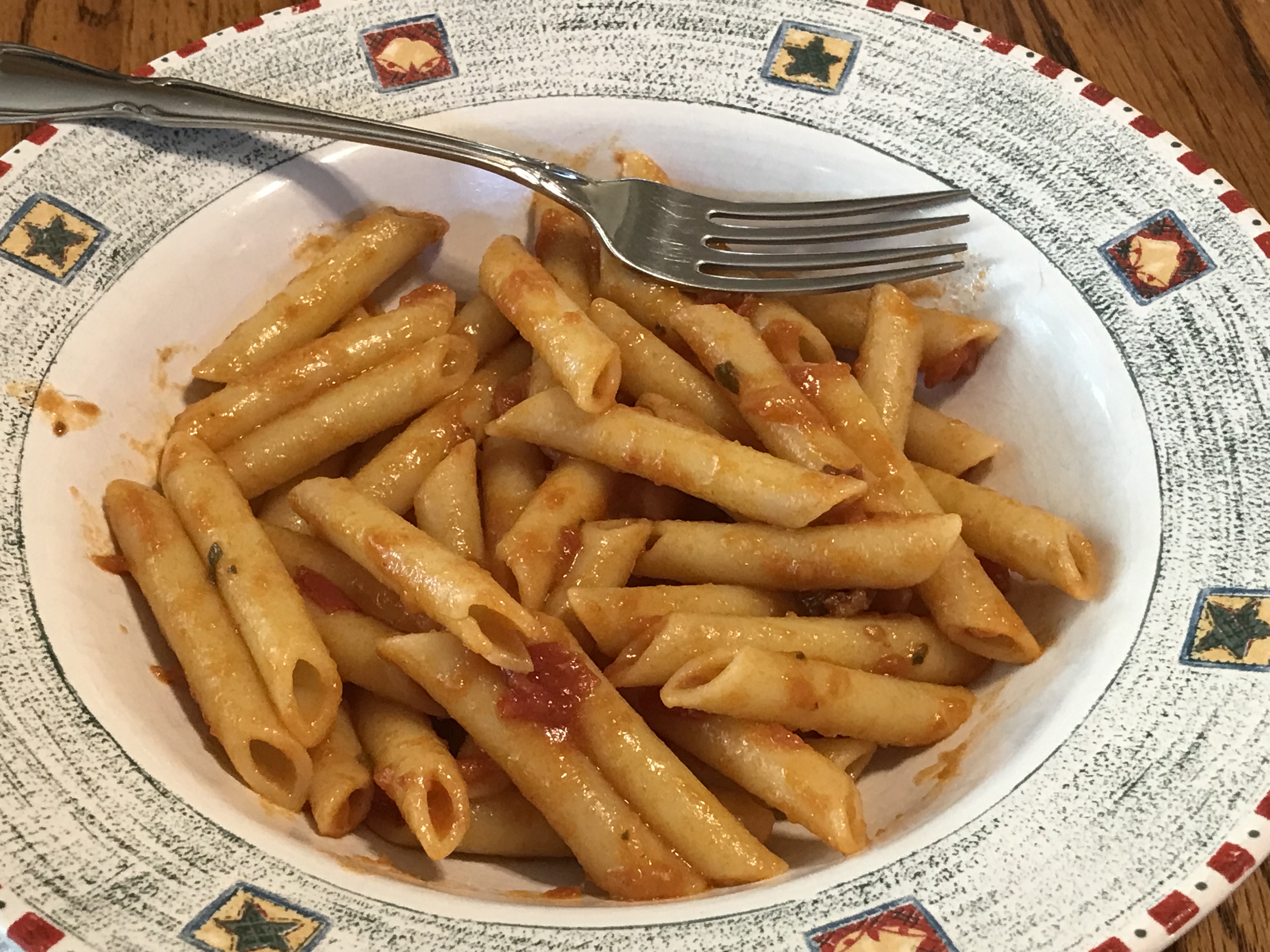
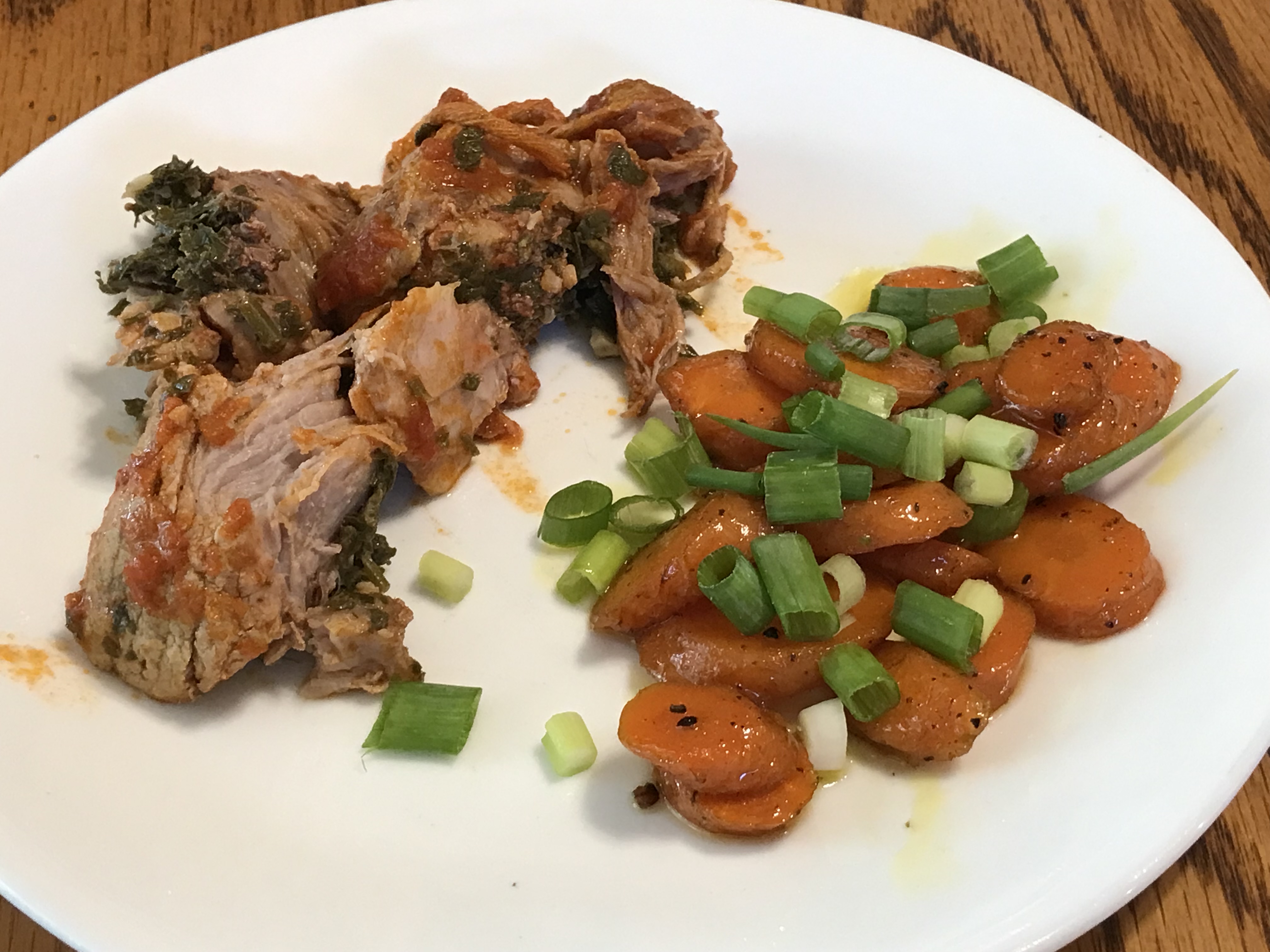
Menu: Penne with Pork Tomato Sauce, Sliced Pork, Carrots with Marsala, Romaine Watercress and Snow Peas with Lemon, Almond-Orange Meringue Cookies
Recommended Wine: Gragnano
Ragu, a rich sauce with tomatoes and meat, is popular all over Italy, but two main styles are most famous. The first, Bologna-style, is more of a meat sauce flavored with tomatoes and is popular across the North. The second, Neapolitan-style, is a tomato sauce flavored with meat, which is then served as a separate course. Variations of this second style are prevalent across the South, and here we have a basic version, flavored with pork shoulder. The difference in the two styles probably has to do with the fact that in the historically less affluent South, there was more incentive for diners to fill up on pasta before serving the meat.
This brings up an important point about typical Italian meal structure. The number of courses included depends on if it is an everyday or celebratory meal, but they usually follow a specific sequence: antipasti (appetizers), primi (pasta, risotto, polenta, or another starch or soup), secondi (meat or fish) with contorni (vegetable sides), salad, fruit and cheese (the most typical dessert), and dolci (sweets). If meat or fish is included (it may or may not be), it is always served after the starch. Here we have pasta with the tomato sauce as a first course, sliced pork for the second with carrots as a side, followed by salad, then cookies.
Humans and pigs have a fascinating history. First domesticated around 8000 BC, pigs quickly proved their value to early farming peoples. While they didn’t provide wool, surplus milk for human use, or pull plows, pigs mature quickly and breed much faster than sheep, goats, or cattle. This made them the most efficient source of meat, making up for their shortcomings in other regards. Plus, they could eat almost anything. Despite all this, pork taboos have been widespread across the Middle East for thousands of years.
At first glance, this is baffling. After all, this is where pigs were first domesticated. People in the earliest Mesopotamian civilizations ate pork without issue. Evidence suggests it was fed to workers building the pyramids. But over time, more and more taboos appeared, particularly after 1000 BC. There were some complete prohibitions like in the Hebrew Bible. In other cases, pork was seen as an inferior food for those who couldn’t afford meat otherwise, or an unclean food that was fine for the common people but unfit for priests and nobles. At the same time in Europe, where pigs had been introduced, and in China, where they were domesticated independently, no such problems arose and pork continued to be eaten widely.
There are a number of theories for this. One is that centuries of environmental damage in the Middle East reduced the area suitable for raising pigs. Another is that the introduction of chickens, which eat similar food, are small enough to eat at a single meal, and also produce eggs, made pigs unnecessary. Regardless, pigs remained essential in Europe, where they had plenty of woodland to forage in. Plus, in the cooler climate, preserving the meat as bacon, ham, or sausage was easier to do.
In cuisines where meat is limited, pork often acts as much as a flavoring as a source of protein. Cured pork products are frequently used for this, but here fresh pork shoulder or butt is used. After the meat is cooked, it is kept warm while the sauce is eaten with the pasta. If serving pasta first is to encourage people to fill up before having any meat, this dish did its job. The pork flavor was clearly present and provided an incredible richness to the sauce. Saving room for the other courses took substantial willpower. As expected, the sliced pork that followed was excellent; very tender and flavorful.
Carrots might seem surprising in an Italian menu, but they were eaten as far back as Ancient Rome, though they might not have been orange. New varieties were introduced from the east in the Middle Ages, though the story about the orange carrot being created by the Dutch to honor their ruling family in the 17th Century seems unlikely to be true. A drawing in a 6th Century manuscript clearly shows an orange carrot, though during the Renaissance white, yellow, red and purple carrots were also common. These other colors have recently regained popularity in a big way, even becoming trendy. Hopefully this particular trend sticks, as each of the varieties has a slightly different flavor, and they are just so pretty. But for this menu, we have regular orange carrots, cooked with a bit of sugar and marsala, and topped with minced scallions.
Every now and then, there is a dish that makes me think “Whoa, I made this?” This was one of those dishes. The marsala worked a lot better with carrots than with oranges, and the sugar produced a lightly browned glaze, and everything worked together for an incredible depth of flavor. A sprinkling of scallions on top added a nice contrast in taste and color. Though made with affordable ingredients, these would fit right in on a fancy restaurant menu. The advantage of making them at home is that you can have a normal portion size, leftovers, and avoid the restaurant markup in cost.
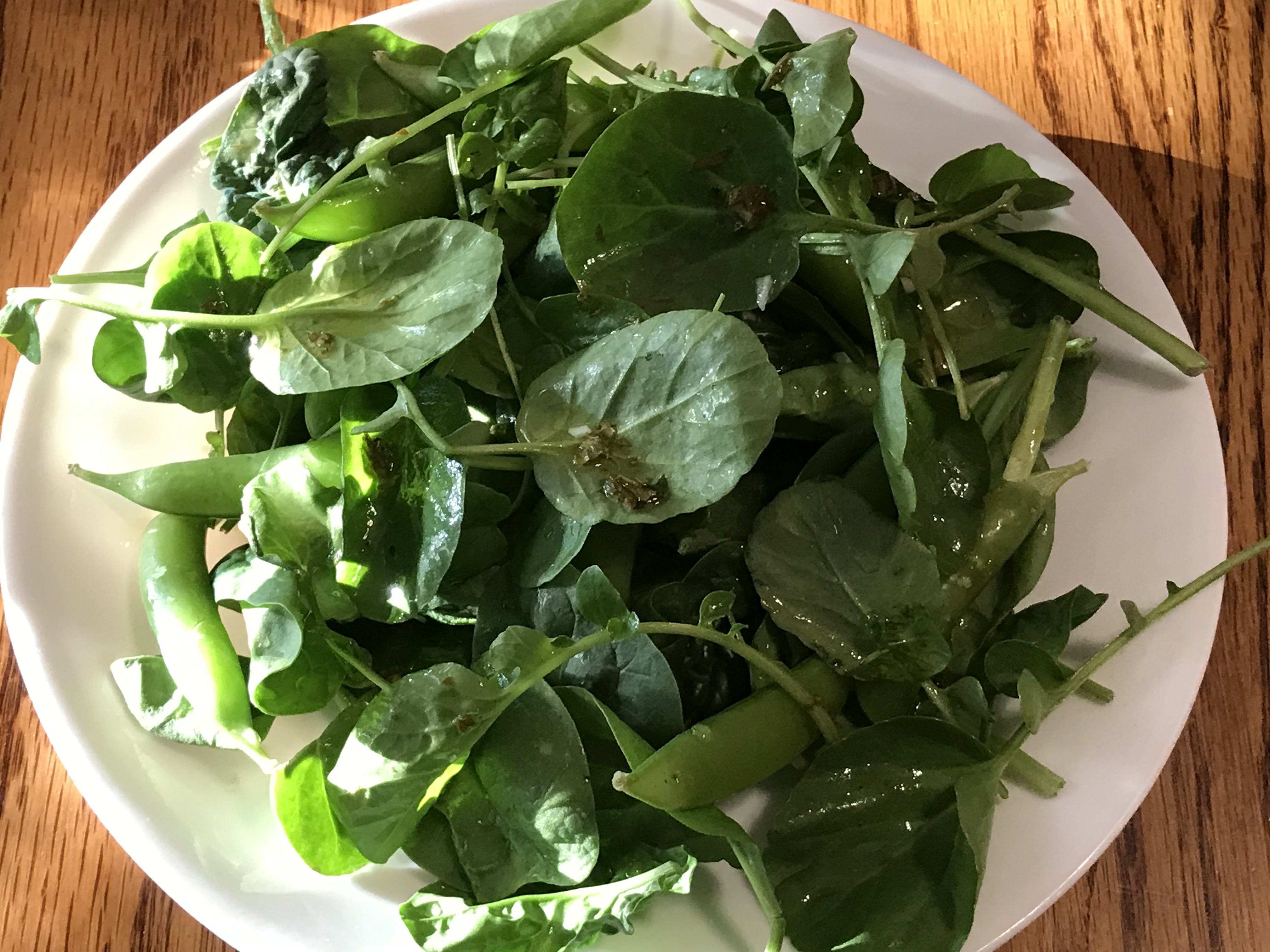
Watercress and snow peas provided interesting contrasts for the salad; peppery for the watercress, sweet and crunchy for the snow peas. The dressing was a bit too sour, but in small quantities worked fine.
The cookies were based on a meringue, which is a whipped mixture of sugar and egg whites. As pointed out in the book, these were sort of like the ricciarelli from Siena, with almonds and orange peel. They reminded me of macarons, with a crispy outside and chewy inside, though these were supposed to be crunchy. I suspect that humidity may have played a role in the texture not quite matching up, since meringue is known to be touchy on humid days. However they were supposed to turn out, they were delicious. Maybe I’ll tackle actual macarons at some point in the future.
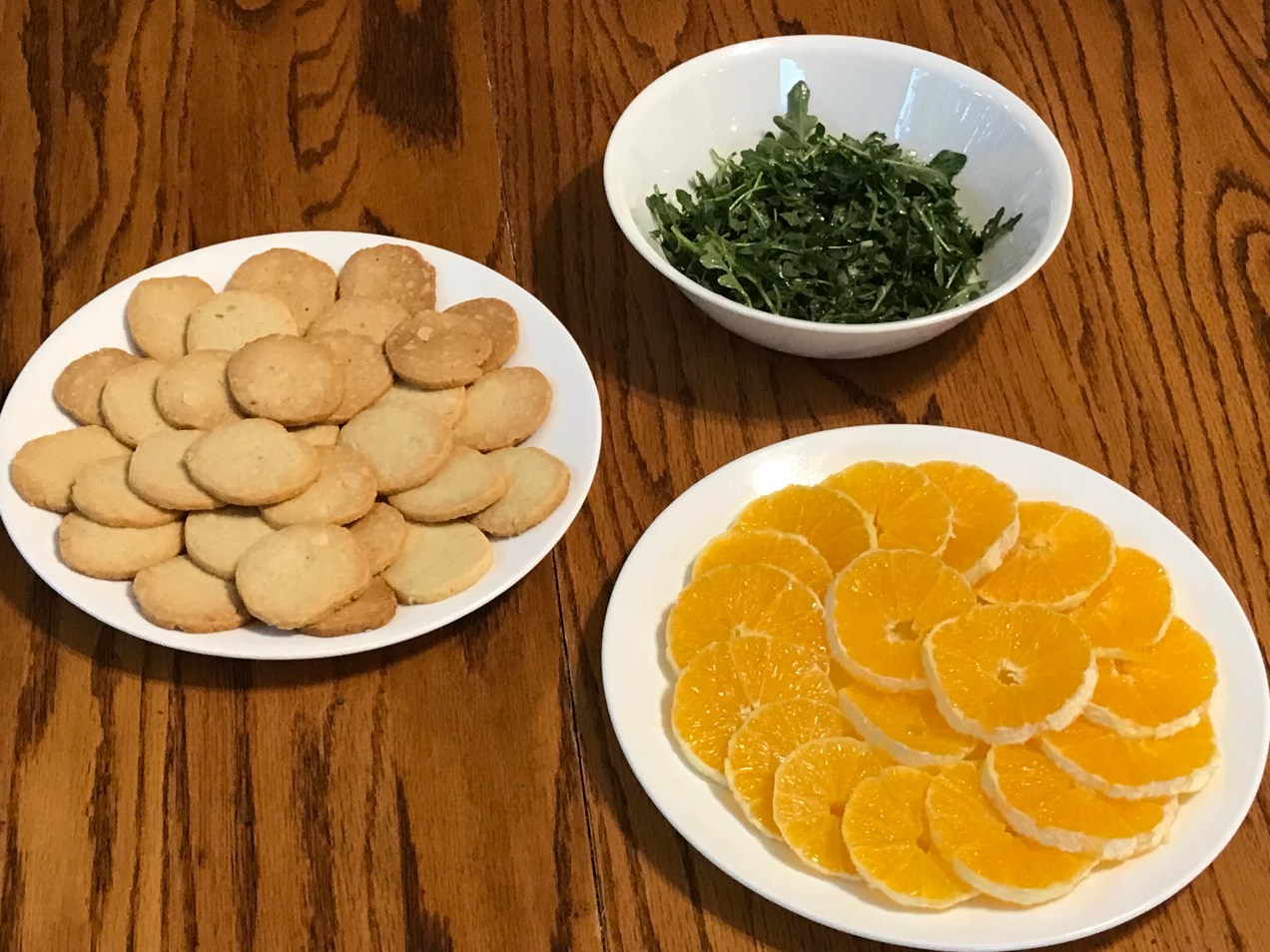
Menu: Spaghetti with Ginger and Garlic, Chicory Salad Mimosa, Sliced Oranges with Marsala, Enriched and Crisped Vanilla-Almond Cookies
Recommended Wine: Calabrian Red Ciro
South of Naples and Amalfi is Basilicata, one of Italy’s least known and least developed regions. Between the rugged terrain and often harsh taxation, life has historically been difficult here. The traditional diet includes pasta, vegetables, olive oil and fruit, all of which are featured here. In a nod to increasing prosperity in the area, this menu ends with buttery almond cookies.
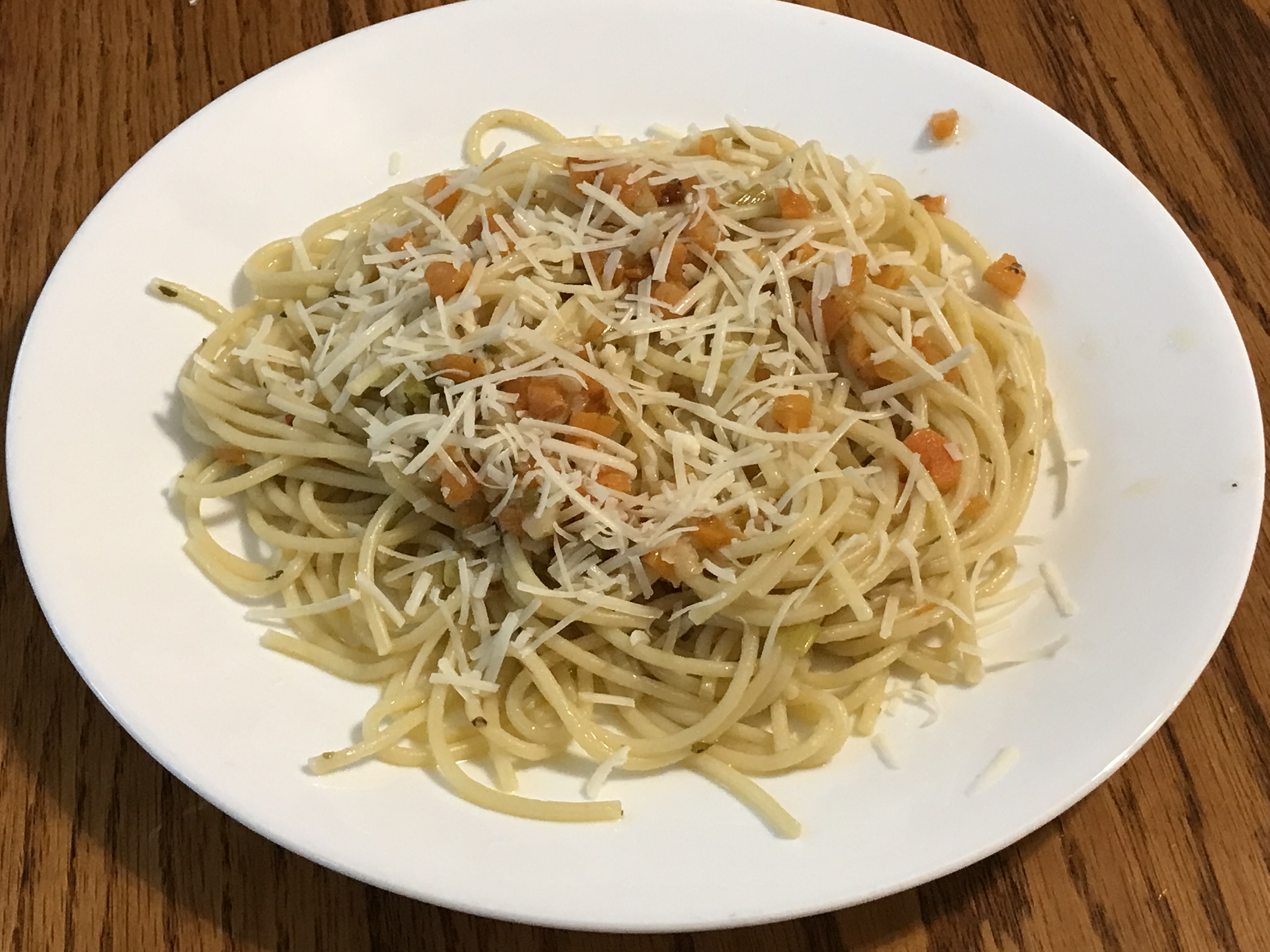
Adding ginger to a pasta dish sounds strange at first, but it does give it an interesting flavor. Ginger and garlic work together to flavor the pasta, enhanced by oregano and hot pepper flakes, sweetened with carrots and vermouth, and enriched with olive oil, butter, and Romano cheese. The flavor was good, but the amount of water called for in the sauce made it very thin, causing it to pool at the bottom on the serving platter instead of sticking to the pasta. It was also a bit sweet from the vermouth.
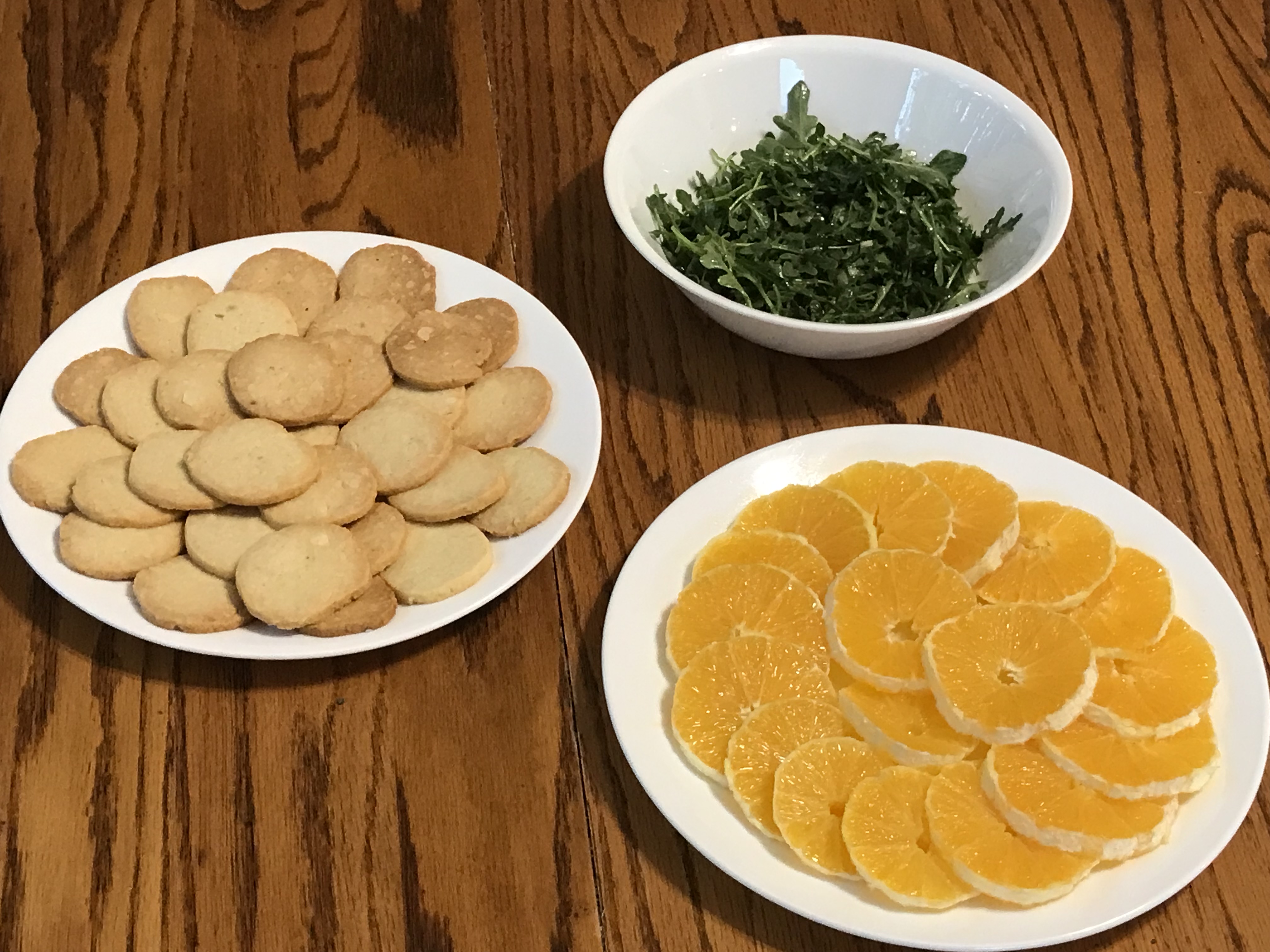
The reason the salad is called “mimosa” is because of chopped hard-boiled egg yolks sprinkled over it. I omitted this here because of my dislike for hard-cooked eggs, particularly the yolks. I also substituted arugula for the chicory because it is not quite as bitter. The lemon juice dressing was still pretty sour, but it was a decent salad.
Oranges grow all over southern Italy and are a popular dessert, especially in the winter. While they are often eaten plain, they can be embellished, as they are here with Marsala wine. Marsala is unique in that it is partially “cooked,” killing the yeast in the wine. As a result, it stays in good condition even after the bottle has been opened, at least for a while. This process also gives it a unique flavor. While I don’t drink much alcohol and am hardly a wine connoisseur, even I could pick out what seemed like briny and nutty flavors. Unfortunately, those flavors clashed with the oranges. A non-alcoholic experiment, with pineapple juice replacing the wine, was much better.
Dessert had a slight glitch in the preparation. A buttery dough was rolled into logs, chilled, sliced, and baked on buttered baking sheets. That was all fine, but one thing I didn’t realize was that if the cookies weren’t removed from the sheets almost immediately after coming out of the oven they would stick. The first sheet of cookies ended up as a bunch of broken pieces. They were still delicious, but not exactly photo-worthy. The cookies from the second sheet were able to be removed intact, but an experiment a few days later with leftover dough proved that parchment paper worked better.
Overall, this was a well-rounded menu, though I’m not sure if I’d make the pasta or salad again. The oranges and cookies, however, would be perfect for a Christmas spread. After the typically heavy main course and sides, the oranges would be a nice contrast; light and sweet with a bit of tartness. A little later, after everyone’s food has settled a bit, the cookies could be eaten with whatever other desserts are on offer.
In many cultures, toast is a common breakfast food. This probably originated with people wanting to revive and use up the previous day’s bread that was starting to get stale. It’s also quick and easy to make before the morning’s work, whether in a field or an office. Toasting causes the Maillard Reaction, which browns the bread and adds flavor. In Italy, small, thin slices are called crostini, while slightly thicker ones are called bruschetta.
Whatever you call it, toasted bread is a great vehicle for whatever toppings might be desired. One of the most popular toppings is a mixture of tomatoes, basil, and garlic. Southern French tapenade is made from olives. In Tuscany, one popular topping is made from chicken livers. Another is made from white beans, which Tuscans are famous for consuming in all sorts of ways. While the book was full of praise for the chicken liver version, I couldn’t bring myself to try it. Maybe I’ll manage it someday in the future, but with what they look like and knowing what the liver does, we’ll see.
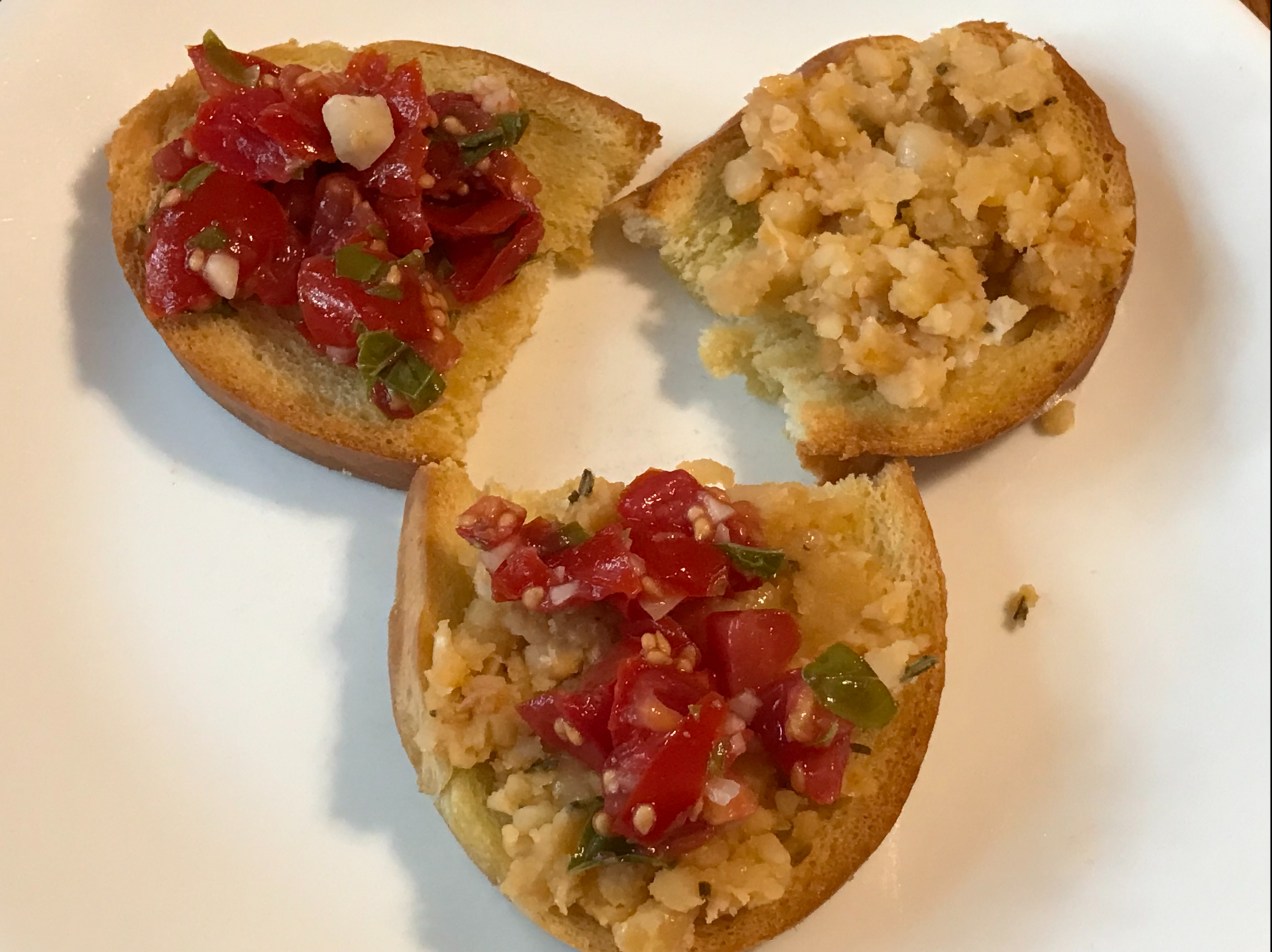
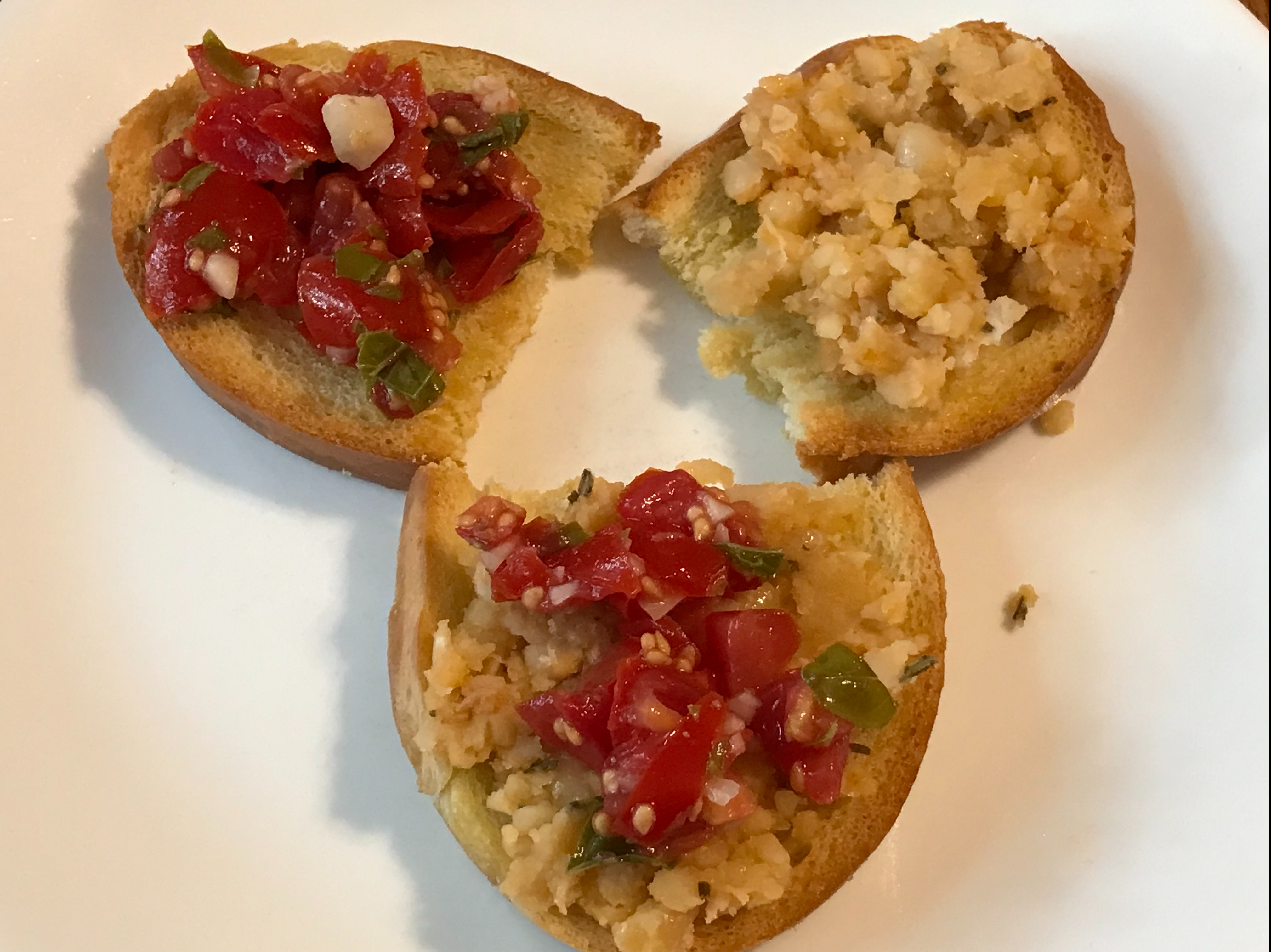
The white bean version was very tasty. Roughly mashing the beans with olive oil, garlic, lemon juice, herbs, and a bit of tomato and hot pepper produces a wonderful savory spread. The soft beans and crisp crostini contrast and complement each other. Despite my usual dislike of tomato-forward dishes, I even enjoyed the tomato-basil version. It was at once sweet and sour from the tomatoes, aromatic from the basil, and pungent from the garlic. I probably added a bit too much garlic, but it was still delicious. The best crostini, however, had some of both toppings. The richness of the beans with the intensity of the tomato mixture was just about the perfect combination. Just make sure to brush your teeth after.
Menu: Broccoli Baked with Prosciutto, Milan-Style “Veal” Shanks, Milan-Style Risotto, Baby Spinach Salad with Oil and Lemon Dressing, Fresh Orange Slices with Slivers of Orange Zest
Recommended Wine: Various reds from Lombardy
Milan is famous for many things. It is Italy’s business capital, a world-renowned fashion center, and home to more than 2000 years of history. In the 3rd and 2nd Centuries BC, Roman culture spread from there and other cities across the Po Valley. During the 4th and 5th Centuries AD, Western Roman Emperors often resided there instead of in Rome. Here they crossed paths with the Church Fathers, many of whom, including Saints Ambrose and Augustine, lived there for at least part of their careers. In the Middle Ages, Milan emerged as one of the main trading hubs of Northern Italy, even rivaling Venice and Genoa in the 14th and 15th Centuries. Other claims to fame include its silk industry, the world-famous La Scala Opera, and fabulous Gothic cathedral.
Then there’s the food. Historically (and currently), Milan had a lot of wealthy residents, and it is the cuisine of the privileged that is most well-known. Milanese-style veal cutlet resembles Austrian schnitzel. Panettone, loaded with butter and egg yolks, has become a Christmas treat all over the world. Gorgonzola and mascarpone are just two of the region’s notable cheeses. But perhaps most famous is the duo featured here: braised veal shank with golden risotto.
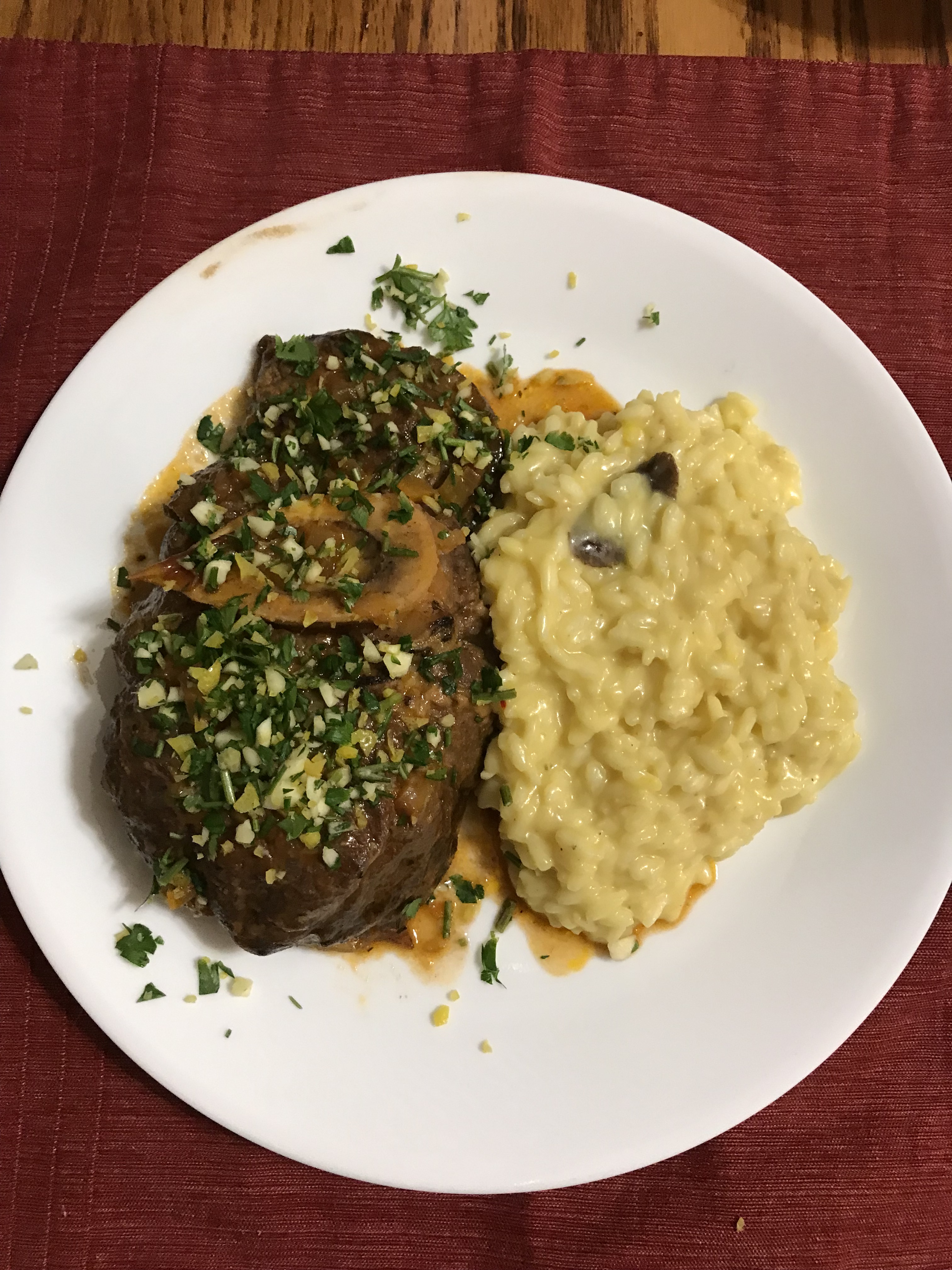
The name of the veal shank is osso buco, which roughly translates as “bone with the hole.” Inside the bone is the marrow. With its high fat content and soft texture when cooked, bone marrow was historically a delicacy and is still treasured in many parts of the world. For an authentic osso buco, it is essential, and often the dish is served with special narrow spoons for extracting it. (Text, pg. 100) A sprinkle of minced garlic, lemon peel, and parsley brightens an otherwise heavy entrée.
Risotto Milanese gets its golden color from saffron, a spice used for this purpose as much as for its flavor. From Ancient Greece and Rome all the way to India, saffron was used as a dye. Ancient peoples often associated it with the sun and sometimes considered it sacred. In the Middle Ages, it was used to make elaborately gilded meats and poultry and add color to pastries, jellies, and other dishes. An early form of risotto may have been colored with saffron at this time, but probably would have been simply cooked in broth or almond milk and possibly flavored with sugar and spices. The addition of butter was a later, Early Modern addition.
As discussed in previous posts, spinach and lemons were introduced to Europe during the Middle Ages. Both were adopted quickly, with spinach mostly replacing other greens (like sorrel) previously used in cooking. Lemons didn’t replace vinegar as a key sour ingredient, but their juice became a supplement while their aromatic peels were added to various dishes as an additional flavor. Around the same time, bitter and sour “Seville” oranges were introduced and were used in similar ways. Sweet oranges came later, in the 16th Century, brought by Portuguese sailors returning from East Asia. Unlike most other fruits, they ripen in the winter, making them a popular Christmas treat for those who could afford them.
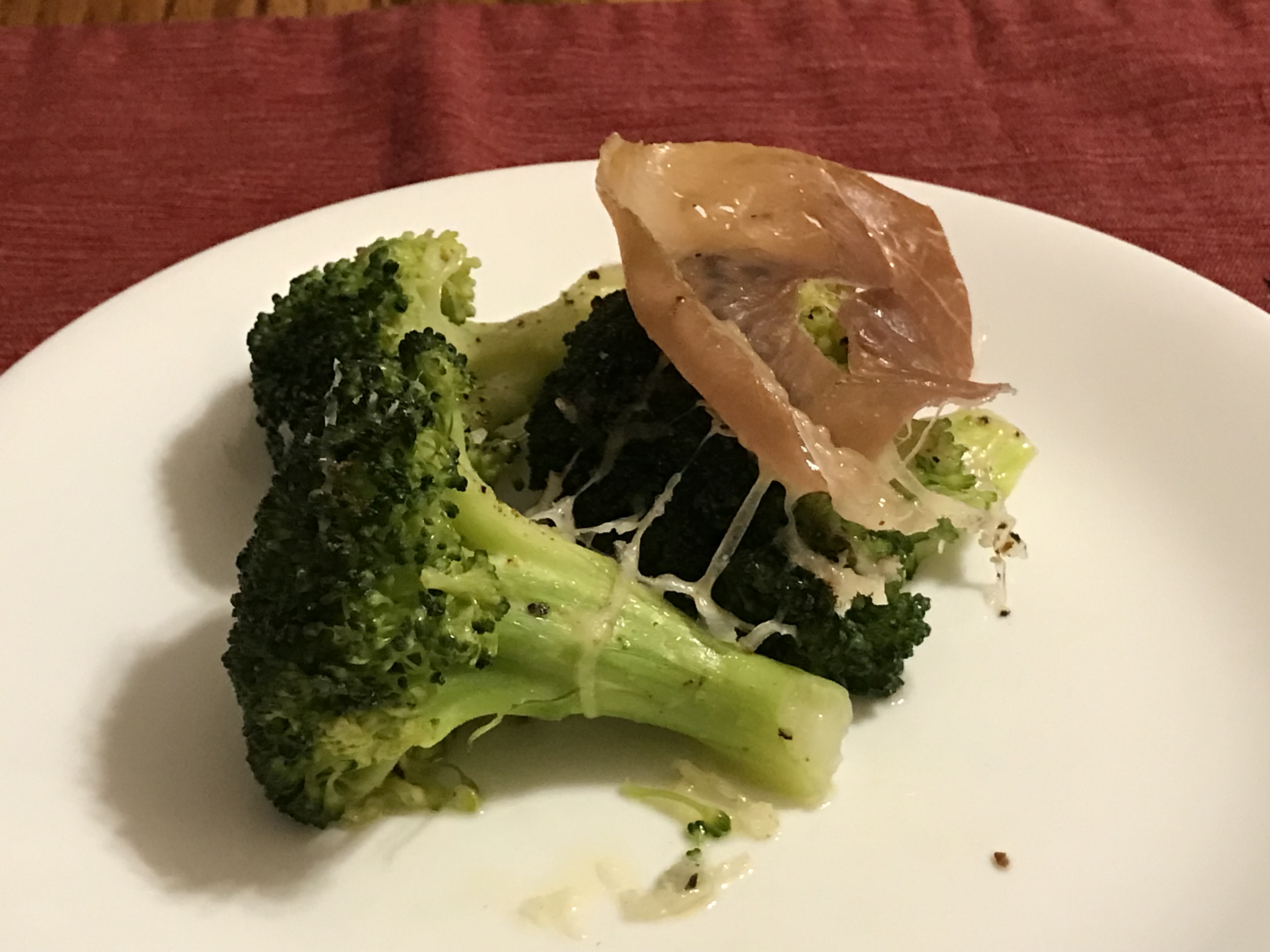
This was a fantastic dinner overall. The buttery, lemony broccoli with parmesan cheese was an interesting change of pace, though the prosciutto was probably not necessary. There was plenty of flavor without it. The osso buco was well-deserving of its status as a classic. I made it with beef shank instead of veal, but kept everything else the same. The beef became tender over the long cooking time, a mix of carrot, onion, and celery gave the sauce a great flavor, while the gremolata, a mix of parsley, garlic, and lemon peel, brightened everything. Even the bone marrow, which I was a little unsure about, tasted rich and buttery when spread on the meat.
Having a creamy risotto was a nice contrast to the highly-flavored meat and sauce, but I had two problems with the recipe. First, the saffron was not soaked in water or broth before being added. As a result, it didn’t finish releasing its color before the cooking was finished, so the risotto was fairly pale. As the dish sat on the table, orange spots appeared around the saffron threads. In addition, the medicinal flavor was pretty strong. Personally, I think a plain risotto would be a better complement, but it was still good. Any food that’s been around for hundreds of years tends to be.
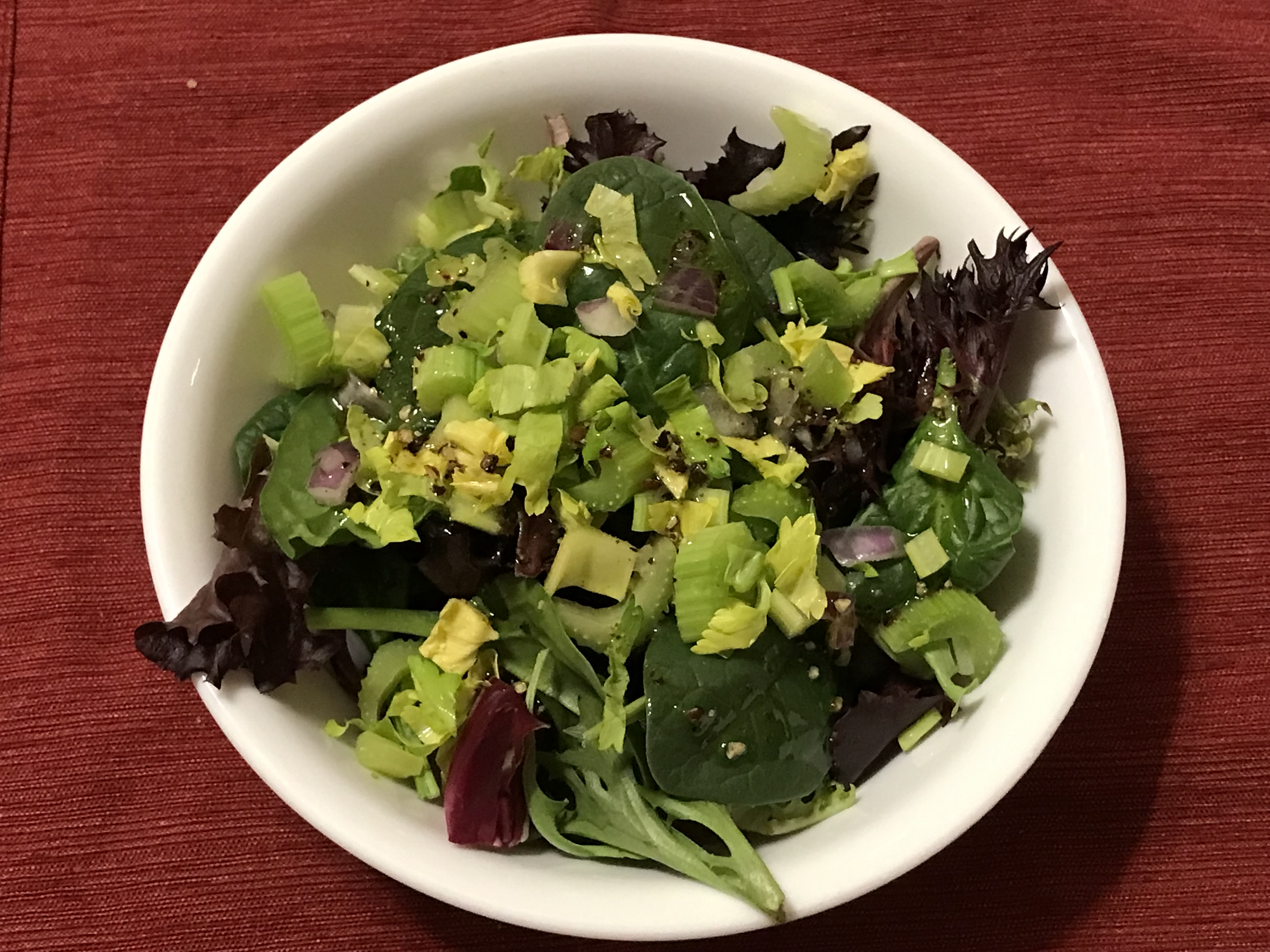
The salad was a nice palate cleanser, but the dressing seemed really sour. This has often been an issue with dressings that use lemon juice instead of vinegar. I’m not sure if Italian diners like sour flavors more or if the grocery near me has particularly acidic lemons. Either way, a tiny bit of sugar or honey would go a long way in balancing out the acidity without necessarily tasting sweet. If serving this again, not only would I add a bit of sugar or honey, but I would serve it after the broccoli. Even though all menus in the book that include salad place it after the main course, the bright, sour flavor makes more sense here. The salad can refresh the palate after the rich broccoli; the oranges serve the same purpose after the meat and rice.
After all the meat, butter, and cheese, the oranges make a perfect dessert. The light syrup and sprinkling of zest add another level of complexity but keep them light and refreshing. I had a slight issue when the melted sugar hardened as soon as I added the fresh juice, but with lots of stirring and a little reheating I was able to get everything combined. These extra touches enhanced the oranges, but for a simpler dinner, plain orange slices or clementines would be good too. With the heavier foods common in the winter months, oranges provide a great contrast, plus fiber and lots of vitamin c. What more can you ask for in a winter dessert?
Menu: Prosciutto-Wrapped Turkey Breast with Cheese, Marinated Tomatoes
Compared to most other forms of poultry, turkeys are a recent arrival in Europe. Native to North America, they were first brought back to Europe by Columbus at some point during the 1490s. Unlike tomatoes, potatoes, and chocolate, which took decades or even centuries to become widespread, the turkey caught on pretty much right away. Turkeys were being raised in Spain within 20 years and were popular in England by Shakespeare’s time.
The reason for this is probably due to Medieval and Renaissance dining customs. At the time, the “noblest” foods were the various types of fowl, and the variety consumed was astounding. Along with chickens, geese, and ducks, kings and nobles raised pigeons on their estates, hunted pheasants and quails, and even ate things like larks, cranes, and herons. For banquets, the centerpiece would be the biggest, showiest bird they could find, often a swan or peacock. While these displays were impressive, particularly when the roasted birds were sewn back into their feathers to arrive at the table looking alive, most sources suggest that neither of them tasted particularly good. When another impressively-sized bird that did taste good became available, it’s hardly surprising that it became popular immediately.
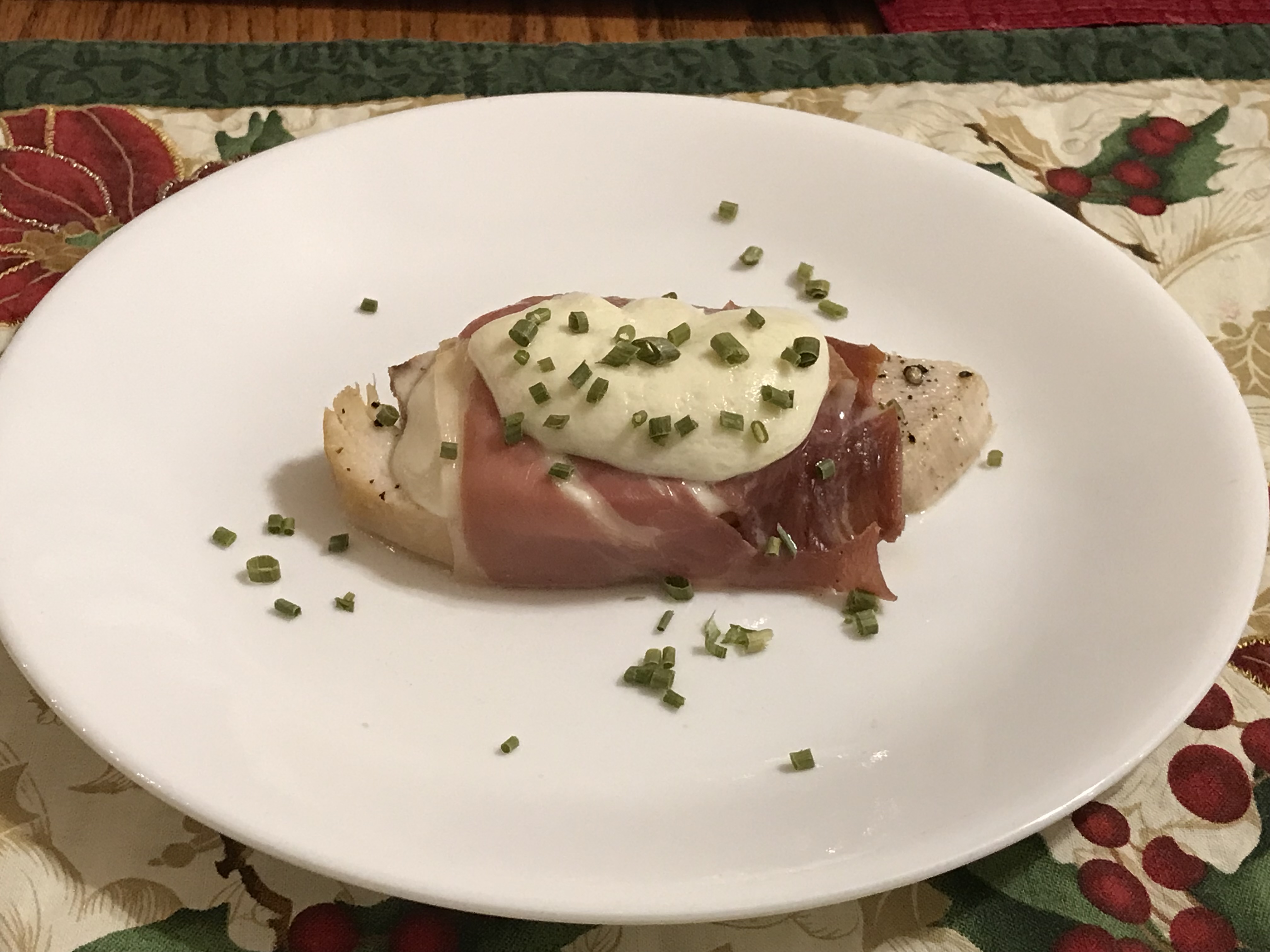
Contrary to what most people think of when they hear the phrase “Italian food,” roast turkey is actually a popular Christmas dish in many parts of the country. Here is a simpler preparation, where a slice of turkey breast is wrapped in prosciutto, topped with cheese, broiled, then topped with marinated tomatoes or beets. This is supposed to resemble a Cardinal’s hat, but admittedly, I’m having trouble seeing it. I’m not sure if this played a role, but I did make a minor adjustment. The recipe called for slices of raw turkey breast, but since I had leftover roast turkey, that was what I used. I was a little worried about it drying out, but the prosciutto and cheese kept that from happening. It was pretty good, but I’m not sure if I’d make this again, given all of the other dishes that can be made with leftover turkey.
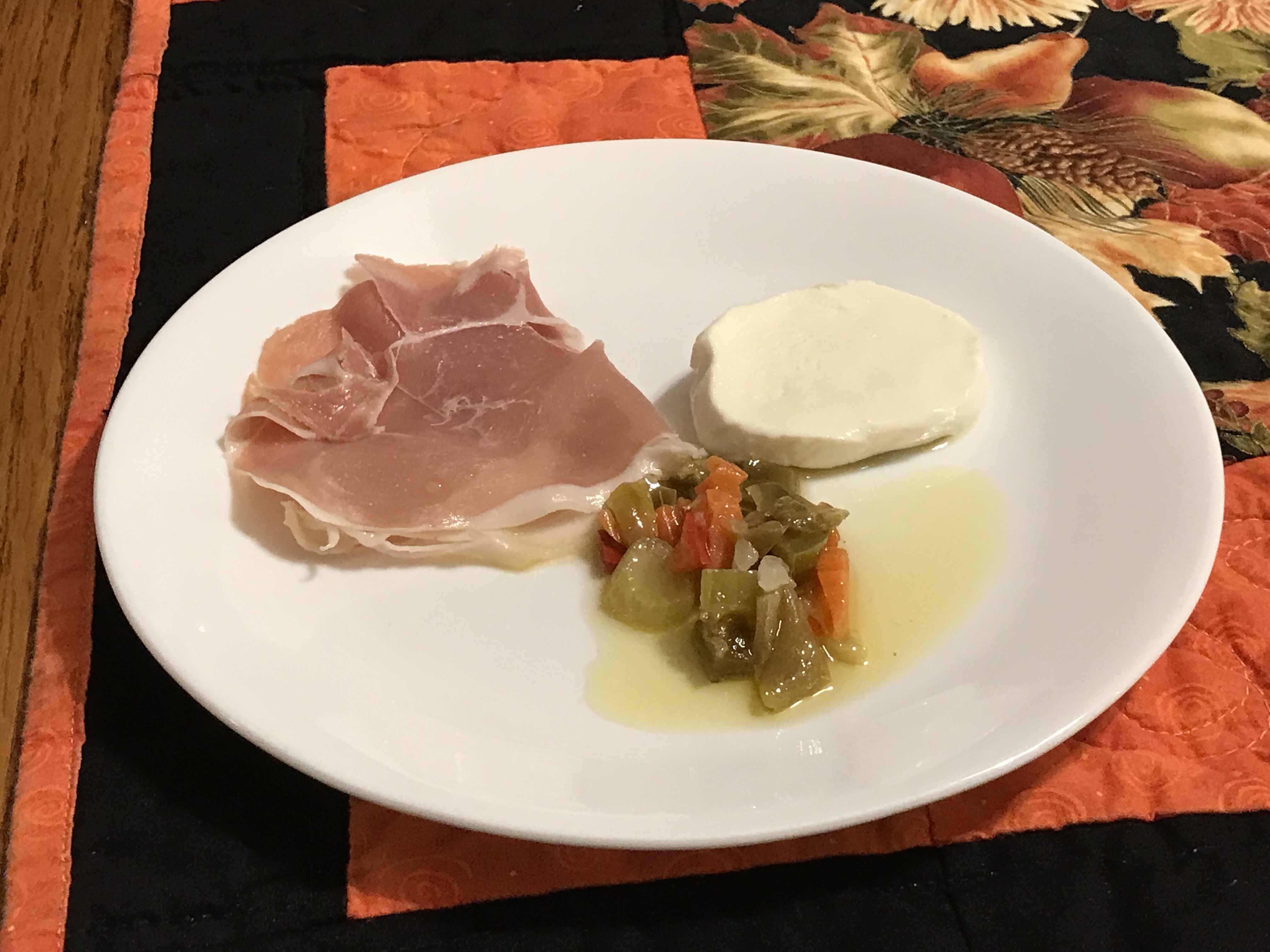
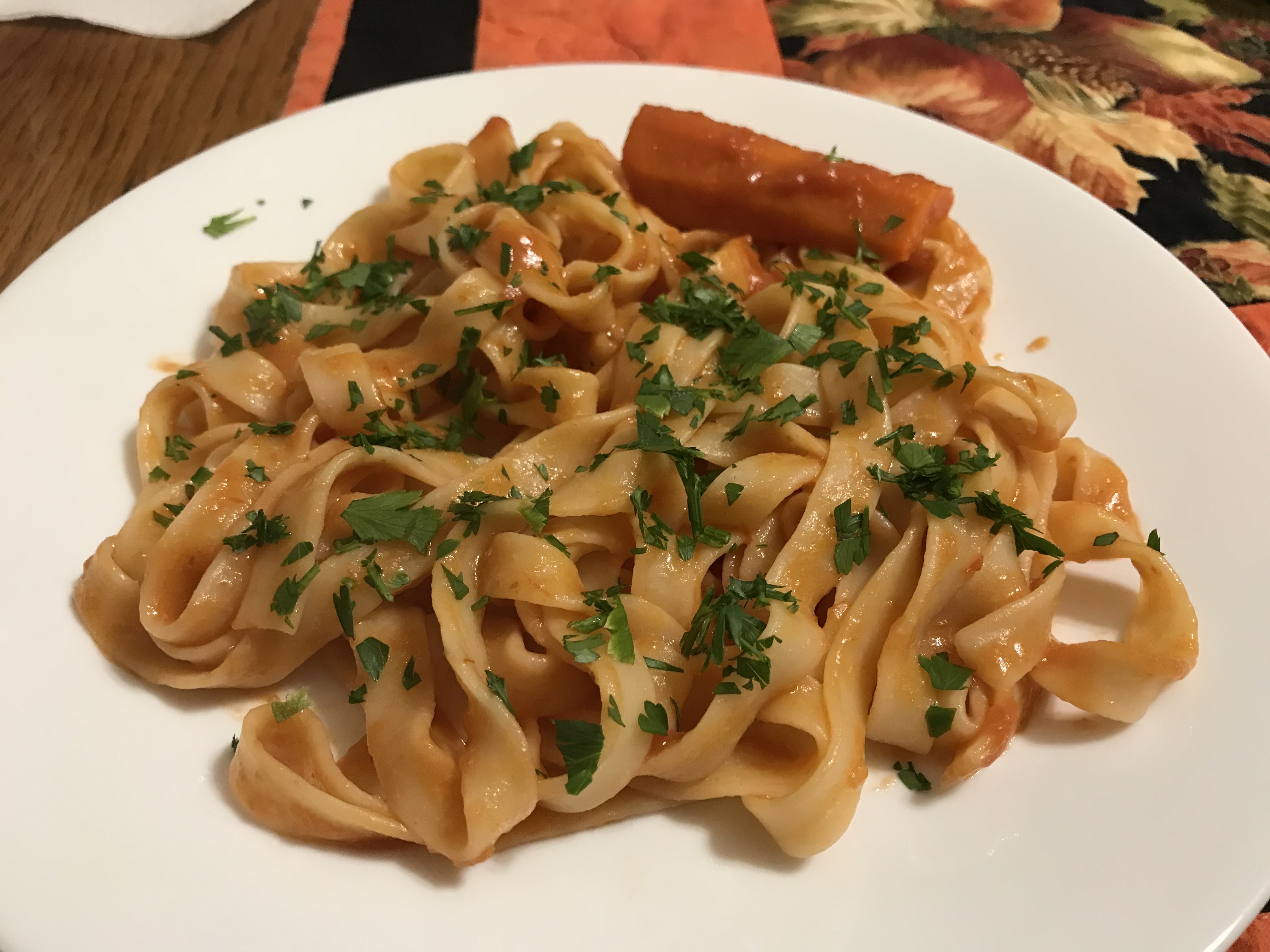
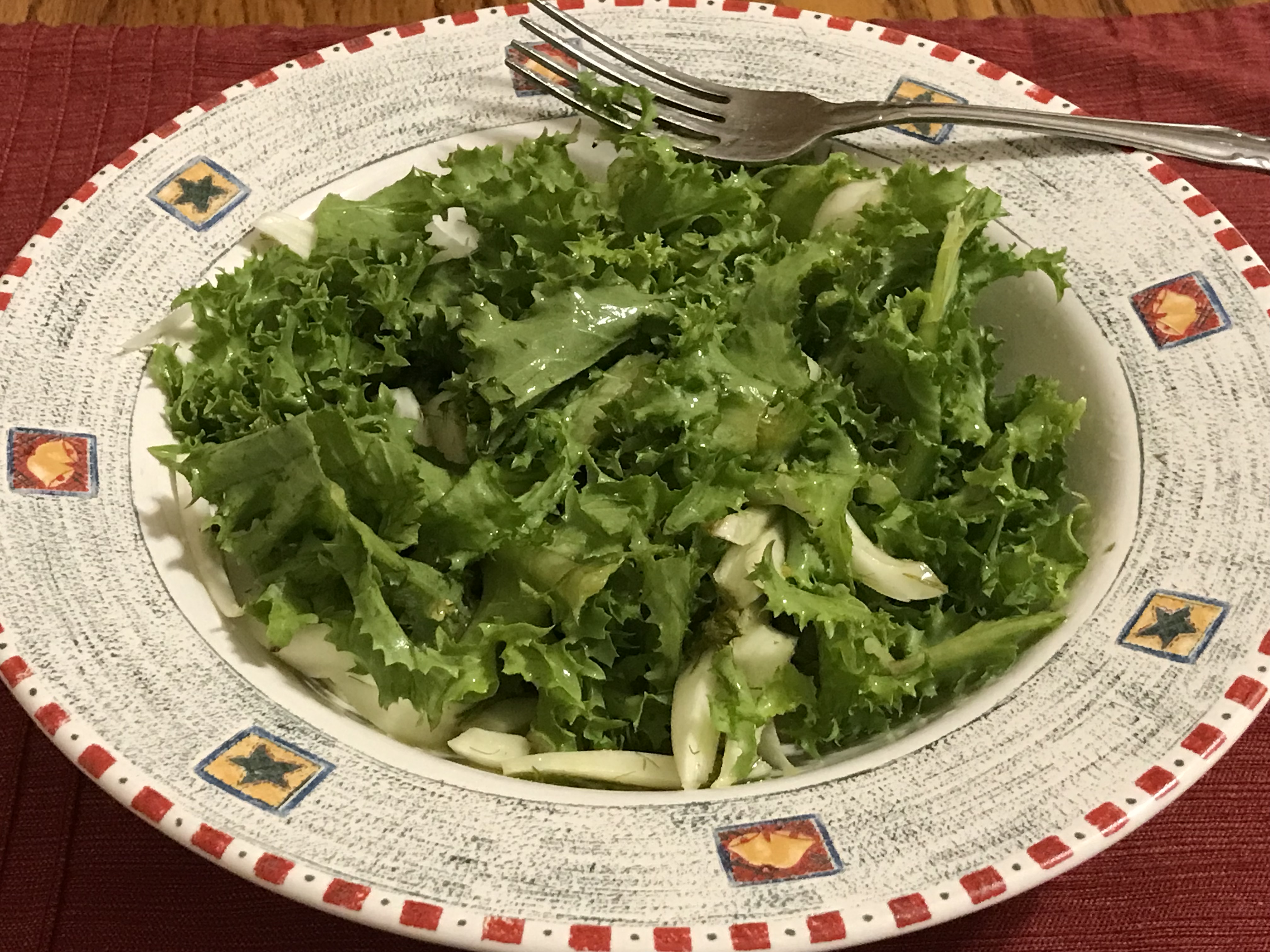
Menu: Cured Meats and Pickled Vegetables, Tagliatelle with Buttery Tomato Sauce, Salad with Herb Dressing, Pears Baked in “Wine” with Mascarpone
Recommended Wine: Sparkling Lambrusco or Lambrusca di Sobara
In Parma, as in the rest of Emilia-Romagna, fresh egg pasta is a specialty. As mentioned in a previous post, eggs used to be a bit of a luxury. While the common people couldn’t eat them in pasta on a daily basis, it was more affordable in historically richer Emilia-Romagna than in much of the South, where poverty and social inequality were more extreme. Thus, fresh pasta, made with eggs and often stuffed, is associated with Northern Italy, while dried, eggless pasta is more common in Southern Italy. This menu includes not only a fresh pasta, but other regional specialties like Parma ham, mortadella, a buttery sauce, orchard fruit, and cow’s milk cheese.
The first course is a selection of preserved items, an essential part of the diet in the days before refrigeration. Salting, drying, and pickling are all featured here. For thousands of years, people have salted and air-dried meats, especially pork, all over Italy. The variety of hams and sausages are endless, and in Emilia-Romagna, the most famous are prosciutto ham and mortadella, a lightly-spiced sausage often studded with pistachios. Vegetables are often preserved in vinegar, which tends to be plentiful in areas with a lot of wine production. Salt and vinegar both inhibit bacterial growth, while drying removes the water that bacteria need to survive.
I had some trouble finding mortadella. The closest thing I could find was ring bologna, which while based on the original and probably of very good quality was not quite the same. I ended up replacing the mortadella with mozzarella cheese, which was a nice contrast to the stronger-flavored prosciutto and pickled vegetables.
Normally, tomato-based sauces are bright and zesty while white sauces are rich, but this sauce bridged the gap in a remarkable way. Flavored with onion, carrot, and a lot of butter, it’s filling but not heavy and has a nice depth of flavor. With a sprinkling of parmesan cheese and parsley, this dish is simple and delicious, with an interesting history. Pasta has been eaten with butter and parmesan cheese since at least the Renaissance, but at that time adding sugar and spices was as common as adding herbs like parsley or basil. Heavy spices and sugar became less popular in the 16th and 17th Centuries, but tomato sauce did not become popular until the late 18th or early 19th Century. All of this means that until about 200 years ago, this seemingly classic dish would not have been found.
The salad was better than I expected. Even though I don’t usually like anything with a strong licorice flavor (like fennel), here it’s sweetness and aroma balanced the bitter chicory and sour dressing really well. In fact, given how bitter and sour the mix was, it probably could have used more fennel. Another option would be to add in another green with the chicory and dilute the lemon juice a bit.
Whether raw or cooked, pears have been a dessert favorite for over 2000 years. The Ancient Romans ate them plain or baked them in a sort of custard. Baking or stewing them in wine with spices has been common since the Middle Ages. Here, they are baked with white wine, sugar, cinnamon, and cloves, then served with a bit of mascarpone cheese. The recipe calls for white wine to keep the color from “competing with the mascarpone” (Text, pg. 165). That wasn’t an option here, since I wanted a non-alcoholic dish and red grape juice was easier to find. And personally, I think the red exterior and beige interior, with a little bit of white cheese in the center, is just so pretty. The pears tasted as good as they looked, though I must admit that I liked the dessert even better when replacing the mascarpone with a scoop of ice cream. Still, the fabled cuisine of Emilia-Romagna didn’t disappoint.
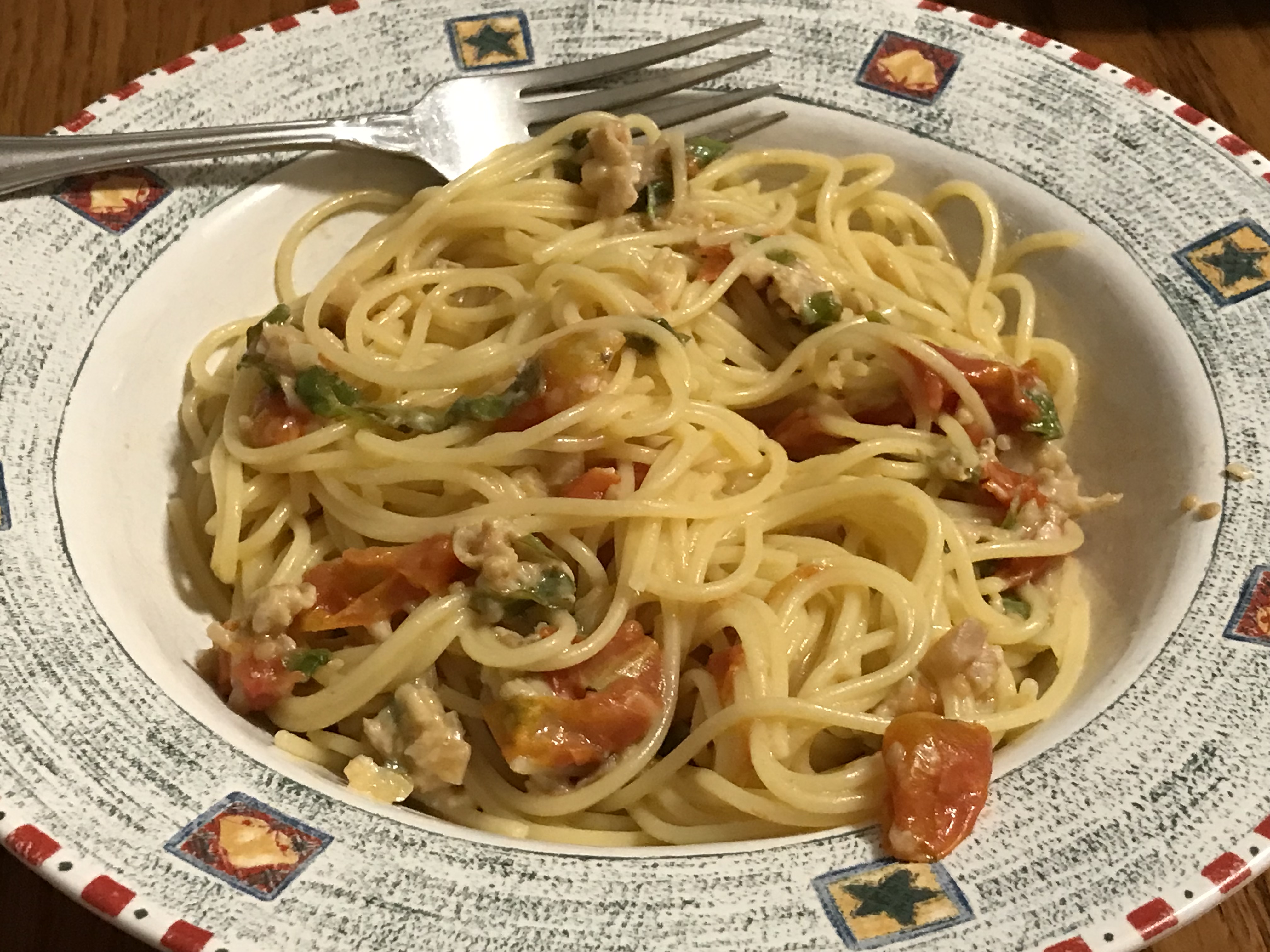
Menu: Thin Spaghetti with Tomato-Clam Sauce and Fresh Basil, Cornish Hens with Herbs and Pancetta, Marinated and Sauteed Radicchio, “Zabaglione” with Fresh Berries
Recommended Wine: San Leonardo (a Bordeaux-like red from Trentino)
Venetian cuisine is most famous for seafood and rice, but they are not its sole components. Pasta, though not as popular as rice and polenta, is common, served with all manner of fish and shellfish, or sometimes beans for a vegetarian dish. Meat and vegetable specialties include liver and onions, smothered cabbage, and radicchio. Combined with things like creamed, whipped salt cod and cuttlefish stew, these elements of Venetian cuisine are far from the tomato-heavy dishes popular further south.
Exactly why tomato sauces are so much more popular in the South than in the North when tomatoes can be grown throughout Italy is not entirely clear, but I have a theory. In another cookbook, I found a map showing where each starch (bread, rice, polenta, and fresh and dried pasta) is most common. Overlaid on the map were lines showing where sauces are mostly tomato-based, which bore a striking resemblance to a map of Spanish possessions in Italy in the 16th and 17th Centuries. In other words, Sicily, Sardinia, and the southern half of the mainland were under Spanish control during the two centuries of the Columbian Exchange. Since it was Spanish explorers who first brought these new foods to Europe, it would make sense that these foods would have arrived sooner and spread faster in regions they controlled. While this theory doesn’t explain everything (especially why corn caught on sooner and more thoroughly in the North, which was not under Spanish control), it could have been a contributing factor.
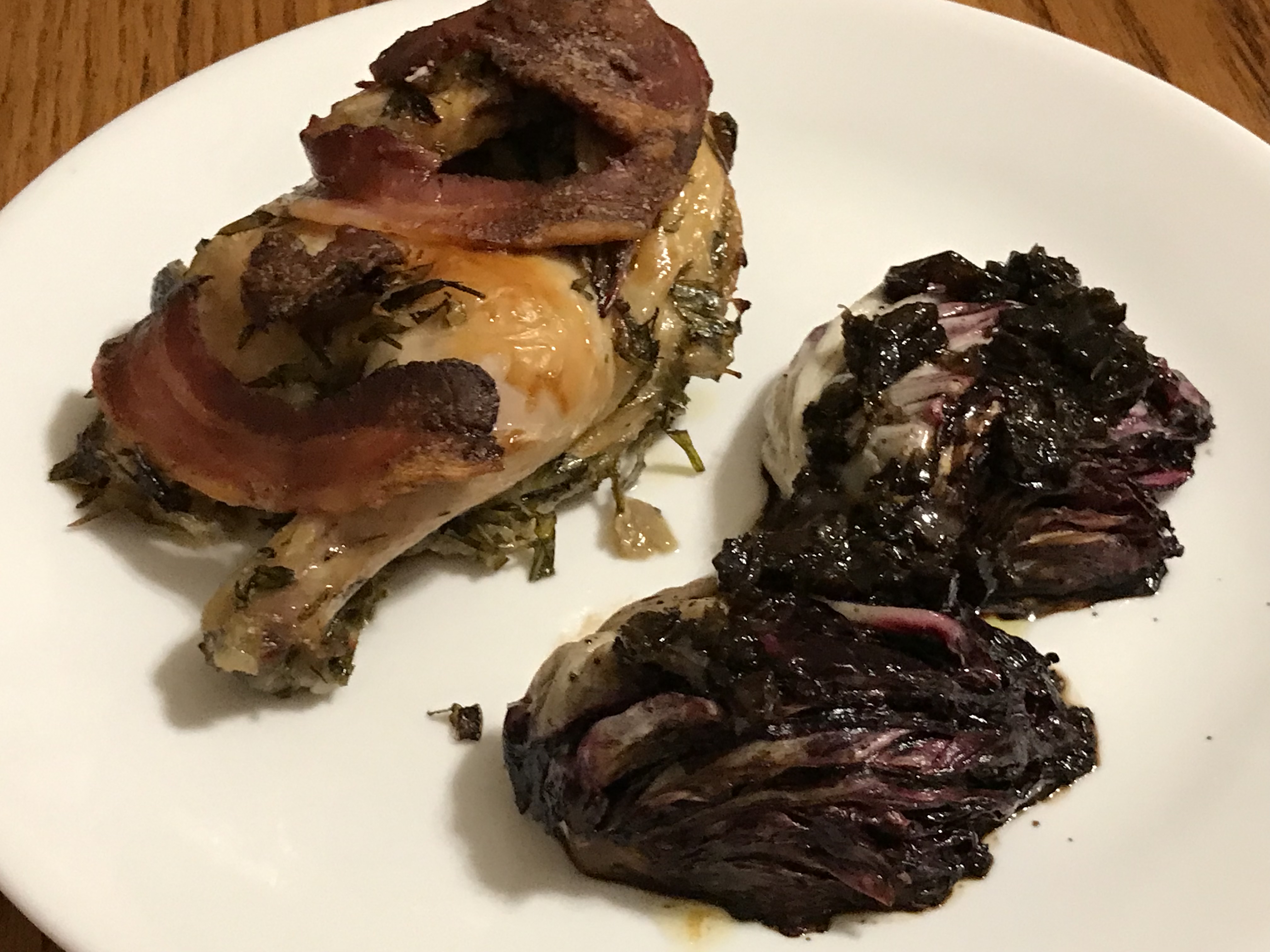
Regardless, tomato sauces are not unheard of in the North. This menu features an interesting one, made with cherry tomatoes and enriched with clams. Clam sauces are not usually my favorite, and after my experience with the deviled eggs I considered omitting them. Ultimately, I’m glad I didn’t. The tomato really cut the “fishiness,” while the clams and a sprinkle of parmesan cheese added substance. I was surprised by how much I enjoyed it. Similar success came with the Cornish hens (an option to use instead of quail), though I omitted the truffle oil. It’s pretty hard to go wrong with chicken, herbs, and bacon.
The radicchio was not as successful. Though it is one of the most popular vegetables in Venice and other parts of Northeast Italy, I found it way too bitter. The balsamic vinegar, shallots, and lemon zest in the sauce helped some, and a small bite of radicchio with each bite of chicken provided a nice contrast, but the bitter taste was still hard to get used to. It must be an acquired taste.
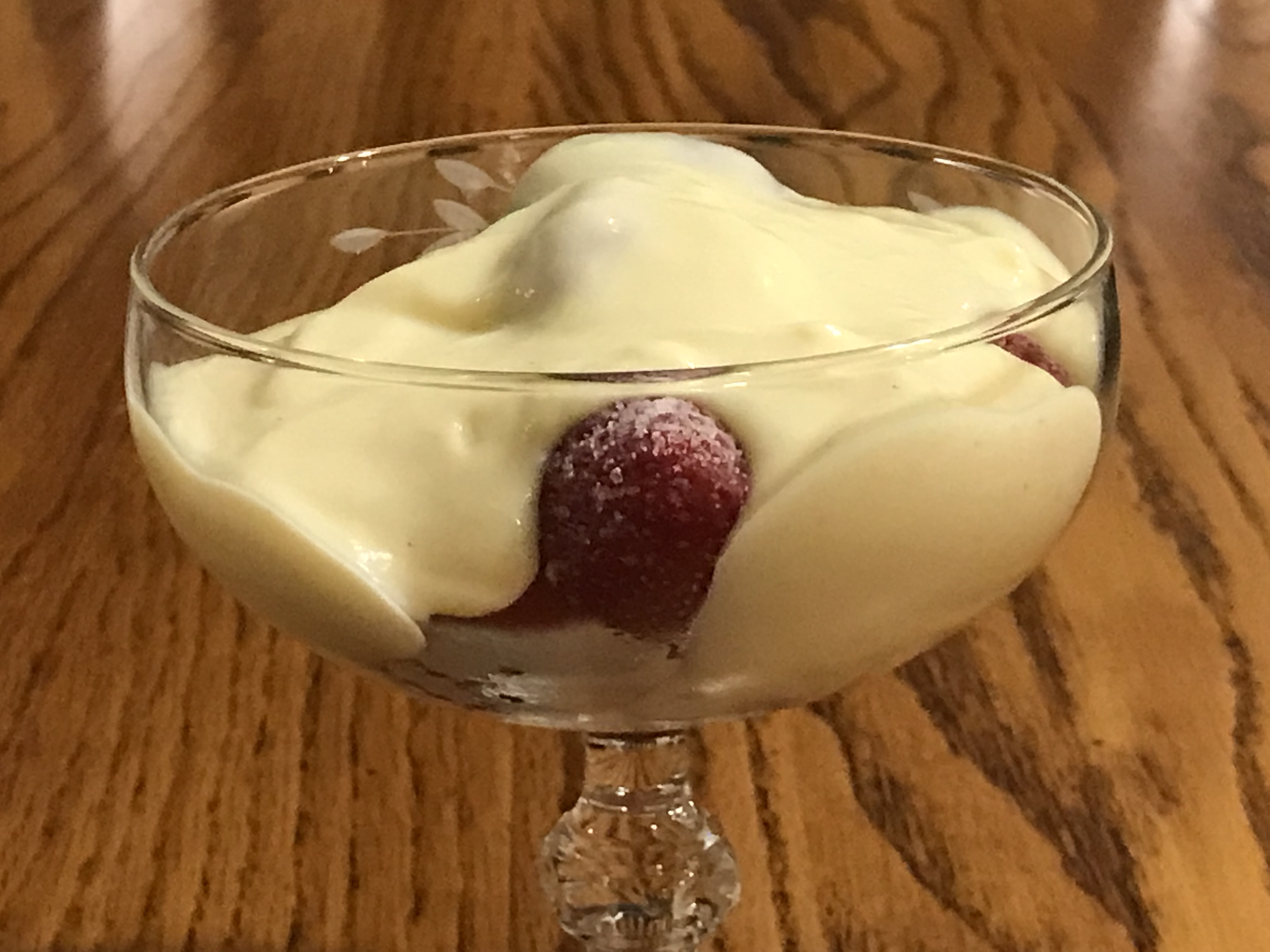
Dessert was slightly modified from the text. It still consisted of fresh berries with a custard sauce, just a different type of custard sauce. The recipe calls for zabaglione, which, as mentioned in previous posts, is a custard made with wine instead of milk. For some reason, the mix of egg yolks and wine thickens more as it’s heated than a milk-based custard does. This particular zabaglione recipe also includes grappa, a type of brandy made from grape seeds and skins, pressed to extract any remaining juice. It was invented in the region and is often used to preserve fresh berries. (Text, pg. 124) Thus, berries with a grappa-infused custard are a natural choice for dessert.
However, as also mentioned in previous posts, I don’t personally care for zabaglione. As replacing the wine with milk produces a very thin custard that doesn’t thicken adequately without curdling the eggs, a replacement was necessary. I chose homemade vanilla pudding as the closest alternative. While not quite the same, it’s a good match with the berries, and a fine ending to a Venetian-style dinner.
Region: Naples/Adriatic South (Along the Adriatic Coast)
Menu: Peppers with Almonds, Basilicata Style, Chicken with Spicy Herbed Tomatoes, Baked Caramelized Onions, Tangerine Sherbet with Lemon
Recommended Wine: Campanaro Fiano di Acellino (from near Naples) or Greco di Tufo Vignadangelo
The Adriatic Coast has a long history. The area was home to a number of Greek city-states in the first millennium BC, as was most of Southern Italy. During the 3rd Century BC, as the Romans moved into the area, the city-states brought in their ally Pyrrhus of Epirus. Despite a series of tactical victories, King Pyrrhus lost too many troops to sustain the war, thus giving rise to the term Pyrrhic victory. The region was subsequently part of the Roman Empire, then the Gothic Kingdom of Italy. In the 6th Century AD, it was the launching point of Byzantine Emperor Justinian’s attempt to retake the Western Empire. Though the Lombards took the region soon after, followed by the Franks under Charlemagne, Byzantine enclaves remained into the 11th Century, when the Normans captured the region.
On a side note, the rise and fall of the Normans is one of the more fascinating stories in Medieval history. After a spectacular rise in the 11th Century, they reached the peak of their power in the 12th. At one point, they controlled not only their native Normandy, but also England, much of Western France, Southern Italy, Sicily, and the Crusader States in the Holy Land. But in the 1180s, territories began slipping from their grasp. After the loss of the Kingdom of Jerusalem in 1187, the rest of the Crusader States followed by 1291, when their final stronghold of Acre was captured by the Mamluk forces, who were based in Egypt. The Anglo-Norman kings lost Normandy itself in 1204. Sicily was lost in 1282. In the late 14th Century, during the Hundred Years’ War between France and England, the Normans living in France began to see themselves as French, while the Anglo-Normans became truly English. By the end of the Middle Ages, the Normans were what they were a few hundred years before: a unique local culture, but restricted to Northwestern France and subject to the French king.
In the 15th Century, the forces of Aragon, who had conquered Sicily in the 13th Century, conquered the Kingdom of Naples, gaining control of the southern half of mainland Italy. Soon after, in 1480, the Ottoman Empire attempted to invade Italy through the region, occupying the city of Otranto. Though the arrival of reinforcements halted the invasion and the death of Sultan Mehmed II ended it for good, hundreds of the local population were martyred during the yearlong occupation. For most of the next 400 years, Spanish Habsburgs and then Bourbons controlled the area. Italy was finally unified in the 1860s.
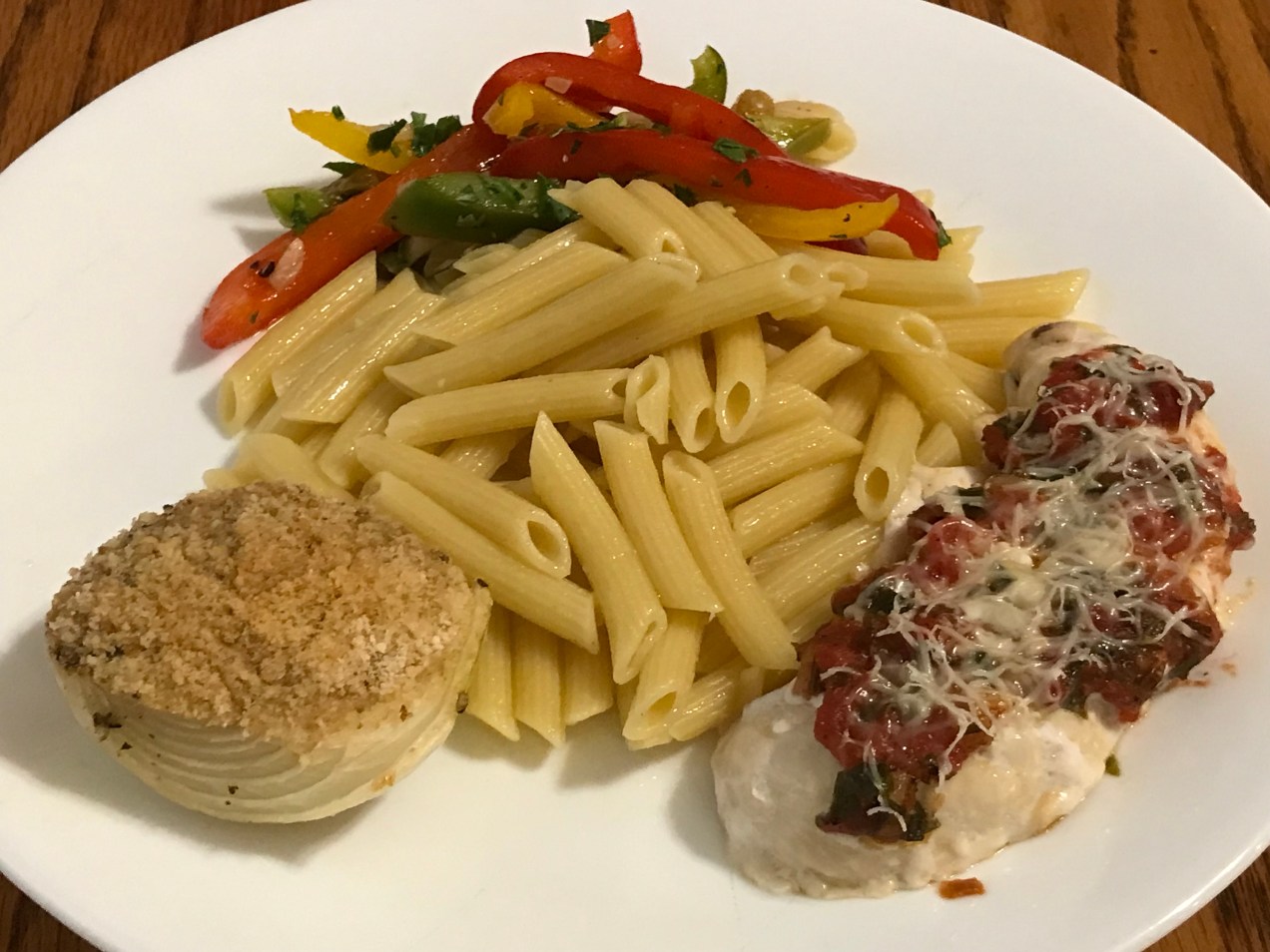
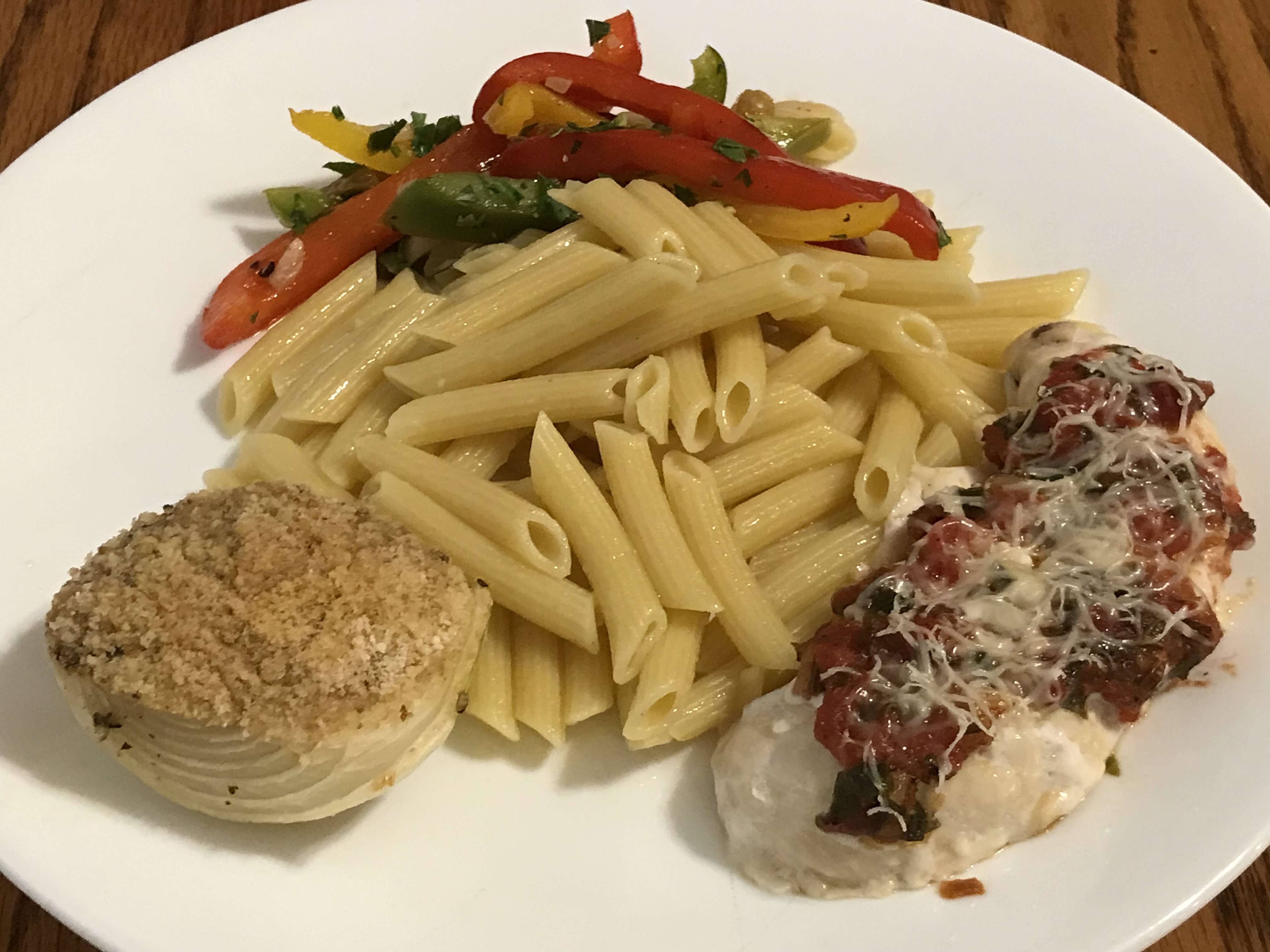
The cuisine here is much like in the rest of Southern Italy, with lots of olive oil, vegetables, citrus fruits, and some seafood. To be completely honest, this was not my favorite menu, although I would make the chicken again. The spicy tomato sauce added a nice flavor and kept the meat from drying out. As I have in the past, I replaced the pricey seafood (in this case lobster) with chicken. Pretty much any protein tastes good with tomato sauce and cheese, so there’s no reason to break the bank. As the menu seemed to lack a starch, I added some plain pasta to accompany the stronger-flavored dishes.
While typically associated with meat or seafood, sweet and sour sauces can and historically have been used on a wide range of foods, including vegetables. Personally, though, the sweet and sour peppers were not to my taste. There was nothing wrong with them, but I like peppers better in an omelet, stuffed, or in stuffed pepper soup. The onions were also a bit of a disappointment. It may have been due to the type of onions, but they never became melt-in-your-mouth soft in the oven like they were supposed to, even with some extra time. Despite this, the leftover peppers and onions made a pretty good omelet filling the next day.
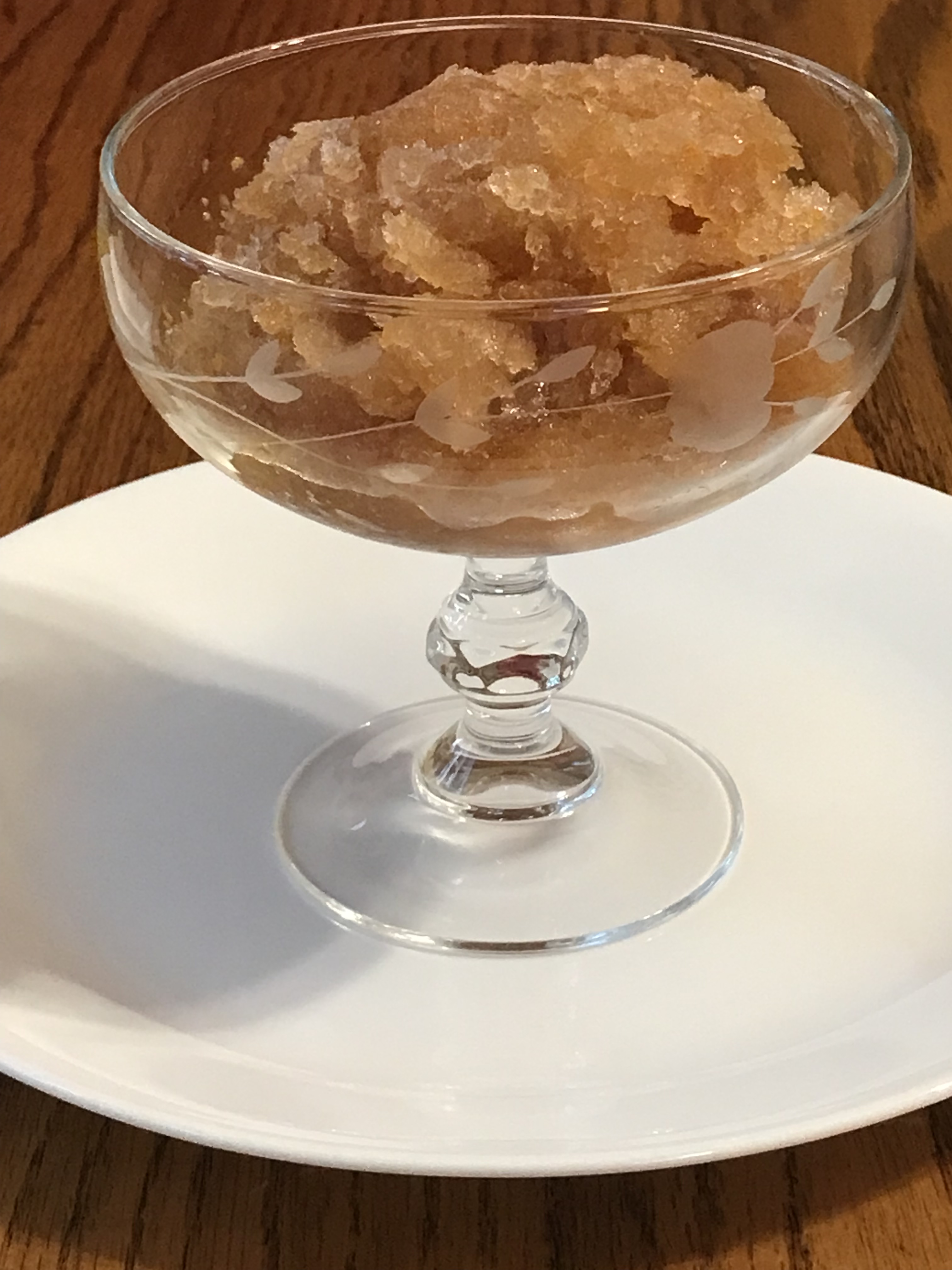
The sherbet/sorbet didn’t turn out quite like I would have hoped, though some modifications I made may be to blame. To make it non-alcoholic, I replaced the lemon liqueur with a lemon syrup and the wine with sparkling juice. I was concerned that removing the alcohol would make the mixture freeze too solid, but the extra sugar in the syrup was enough to avoid that problem, which is why it was included. If you’re curious, both alcohol and sugar lower the freezing point of water-based liquids. The final flavor was decent, but too sweet to eat on its own, almost like marmalade. When combined with lemon-flavored sparkling water, however, it became like a slush and was fairly enjoyable, though I’m not sure I’d go through the trouble of making it again.









 Feasting Through Time