
Menu: Roasted Beet Salad with Red Onions and Dried Fennel, Spaghetti with Lemon Sauce, Cantaloupe Melon Balls in Honeydew Puree, Bread
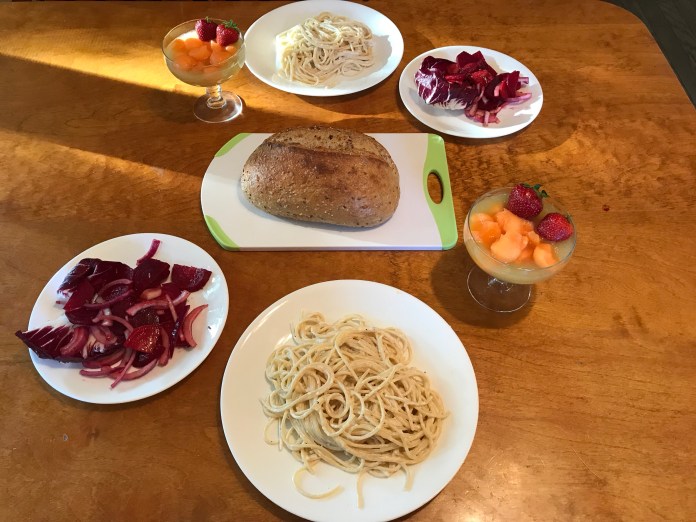 Still around Rome (maybe it’s just my imagination, but the menus and recipes seem, in many cases, to become more complicated as the book progresses), Mr. Famularo invites us to imagine lunch at a café after visiting a little-known gem in Grottaferrata, a town not far from Rome. There are numerous beautiful settings to imagine throughout the book, all wonderfully descriptive. Here, after being shown around a monastery museum by one of the monks, we can sit down to a lunch of a roasted beet salad, spaghetti with a lemon cream sauce, and a unique take on fruit salad for dessert.
To cook the beets, they are washed and scrubbed, rubbed with olive oil, sprinkled with salt, pepper and fennel seeds, and roasted in the oven in their own individual foil packets. I’ll admit, I cheated on this part a little bit by putting them all in one packet to save time and energy. After cooling enough to touch, they are peeled, sliced, and mixed with red onions, vinegar, oil and more fennel seeds. The salad is served on a few radicchio leaves. Except for this garnish, the beet salad can be prepared ahead of time. So can the fruit dessert, though again, assembly should be last minute. Cantaloupe melon balls, sprinkled with lemon juice and salt, are served in a honeydew puree and garnished with strawberries.
The spaghetti comes together fairly quickly. Essentially, garlic is sautéed in a bit of butter with grated lemon zest, then adding half and half as the pasta is cooking to al dente. Once the pasta is cooked, it is added to the pan with the sauce, followed by lemon juice. The acid slightly curdles the half and half, thickening the sauce without any flour, starch or eggs. Incidentally, that is also why it is uncommon to add both milk and lemon to tea, as the acid curdles the milk and essentially makes a hot sludge of homemade ricotta. Not what you want in tea, but the concept is used to great effect here.
This menu demonstrates two important features of many Italian regional cuisines: citrus fruits and the abundance of fruits and vegetables. Fitting into the ancient tradition of sweet and sour sauces (in Imperial times usually based on vinegar and honey), lemon and orange juice and the fruits’ aromatic peels were quickly adopted upon their introduction in the Medieval era, along with sugar. Though the taste for sweet and sour declined somewhat during the Early Modern era, particularly in the North, lemons and oranges remain ubiquitous throughout the peninsula.
The other notable feature is the attention given to produce. In the English-speaking world, vegetables in particular were historically an afterthought, often boiled and served with butter as a side dish or thrown into a soup or stew. In many parts of Italy, particularly the South, people have historically eaten less meat, providing extra incentive to make vegetables enjoyable. As far as I can tell, many Italians do enjoy them, judging by the number and diversity of recipes in Italian cookbooks. In addition, fruit and cheese are the most common everyday dessert, with many of the desserts we know (gelato, tiramisu, cannoli, etc.) eaten more commonly as afternoon snacks with coffee or on holidays. (Text, pg. 17)
The pasta was great, as I expected, as was the rest of the food. With both “salads,” I was admittedly skeptical but pleasantly surprised. I didn’t think I liked beets and maybe I still wouldn’t like the canned variety from the grocery store, but roasted with fennel seeds they are remarkable. If I make the salad again I would let the onions marinate in the vinegary dressing for a while before serving to reduce their potency, but I would just as soon just peel and slice the beets and roast them on their own with the mentioned seasonings in a foil packet. As a “sauce” for the cantaloupe and strawberries, the honeydew puree was good as well. I had a little trouble with the melon baller for the cantaloupe, but it did help provide a striking visual. I might skip the salt on the cantaloupe next time. If the cook wishes, a Frascati wine, classic and typical of the Rome/Lazio region, is recommended.
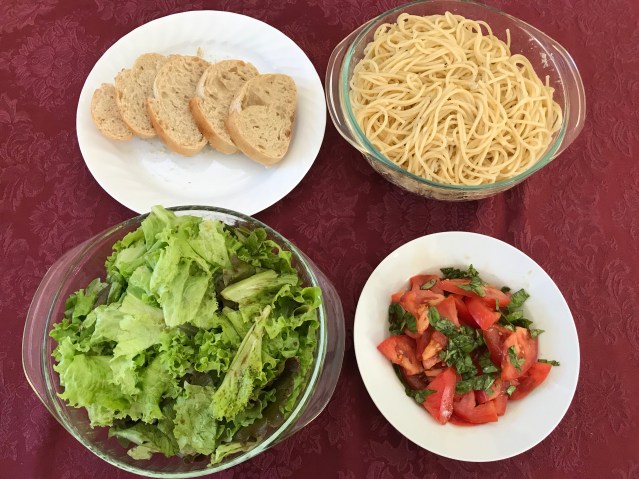 Overall, this was simple but really good. Ordinarily I’m not a big fan of Romano cheese (it has a bit of a funky taste to it), but grated and used in moderate amounts with pepper, it produced a pasta dish with a good flavor but not too strong. The one thing I would change is that I would not put salt in the salad, even though it was recommended. Though I only added it, along with the vinegar and oil, at the last minute, it quickly made the lettuce soggy and gave it a strange texture, though it was fine on the tomatoes. Maybe a different type of lettuce wouldn’t soften as fast, but personally I would skip it in the future since the salad had plenty of flavor without it. Still, the pasta was great and I would definitely make this menu again.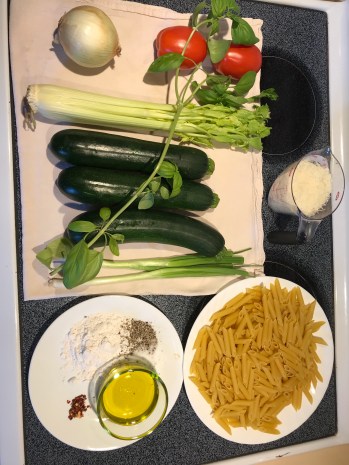


 Feasting Through Time