italian cuisine, recipes, sauce

Using Up the Basil: My Own Pesto Recipe

            As summer fades, so do basil plants. After bringing my plants inside, a fall batch of pesto is in order to use them up. There are a million and one different ways to make it. I like the classic. Adding a bit of parsley or arugula might add some extra flavor, but the basil should dominate, supported by garlic. With those two strong flavors plus parmesan cheese, there’s no point in using expensive pine nuts. Walnuts are a common substitution, giving the final sauce a similar taste and texture. And some recipes even add a little butter along with the olive oil.

            Note that while this recipe uses a food processor, connoisseurs prefer a mortar and pestle. If you have a big enough mortar and pestle and sufficient patience, by all means use it. Either way, smelling your fingers after handling the basil is optional, but highly encouraged. The aroma has a way of sticking, like that of lemon or orange peels.

            Ingredients:

  • 2 cups loosely packed fresh basil leaves
  • Several springs fresh parsley, if desired (seems to help reduce discoloration)
  • 3 cloves fresh garlic, peeled, crushed with the side of a knife, and coarsely chopped
  • ½ teaspoon salt
  • ½ cup walnuts and/or almonds
  • ½ cup parmesan and/or Romano cheese
  • ½ cup olive oil
  • Pasta and/or vegetables, for serving

            Directions:

  1. If desired, place the walnuts in a small skillet over medium heat and toast, watching carefully, until aromatic. This will only take a few minutes.
  2. Place the basil, optional parsley, and salt in the bowl of a food processor, and pulse several times to mince.
  3. Add the garlic, salt, and walnuts, and blend to form a paste. Add the cheese and blend again.
  4. With the motor running, slowly add the olive oil through the processor’s feed tube.
  5. To thicken, add more cheese, a spoonful at a time. To thin, slowly add warm water until desired consistency is reached.
  6. Taste for salt, adding more if necessary. Serve as soon as possible with hot pasta and/or vegetables.

            Pesto can be kept in the refrigerator for a few days, but the surface will darken and brown. This is just a chemical reaction between the basil and the oxygen in the air, and will not affect the flavor. The discoloration can be slowed by covering the surface with a thin layer of olive oil. If the color change bothers you, just scrape off the top layer before serving.

            To get upcoming fall recipes and posts sent directly to your inbox, be sure to subscribe. And if you liked this recipe (I hope you did), I would appreciate if you hit “like.”

One-Time
Monthly
Yearly

Make a one-time donation

Make a monthly donation

Make a yearly donation

Choose an amount

$5.00
$15.00
$100.00
$5.00
$15.00
$100.00
$5.00
$15.00
$100.00

Or enter a custom amount

$

Your contribution is appreciated.

Your contribution is appreciated.

Your contribution is appreciated.

DonateDonate monthlyDonate yearly
Standard
Uncategorized

Cook’s Tour of Italy Menu 22 (Pgs. 77 – 81): Dining at Sea Level in Portofino

Region: Liguria/Piedmont

Menu: Prosciutto with Roasted Peppers, Fresh Clams with Wine, Green Peas Grandmother Style, Lemony Apple Cake

Recommended Wine: Cinque Terre dry white

Roasted peppers also found in 1000 Foods

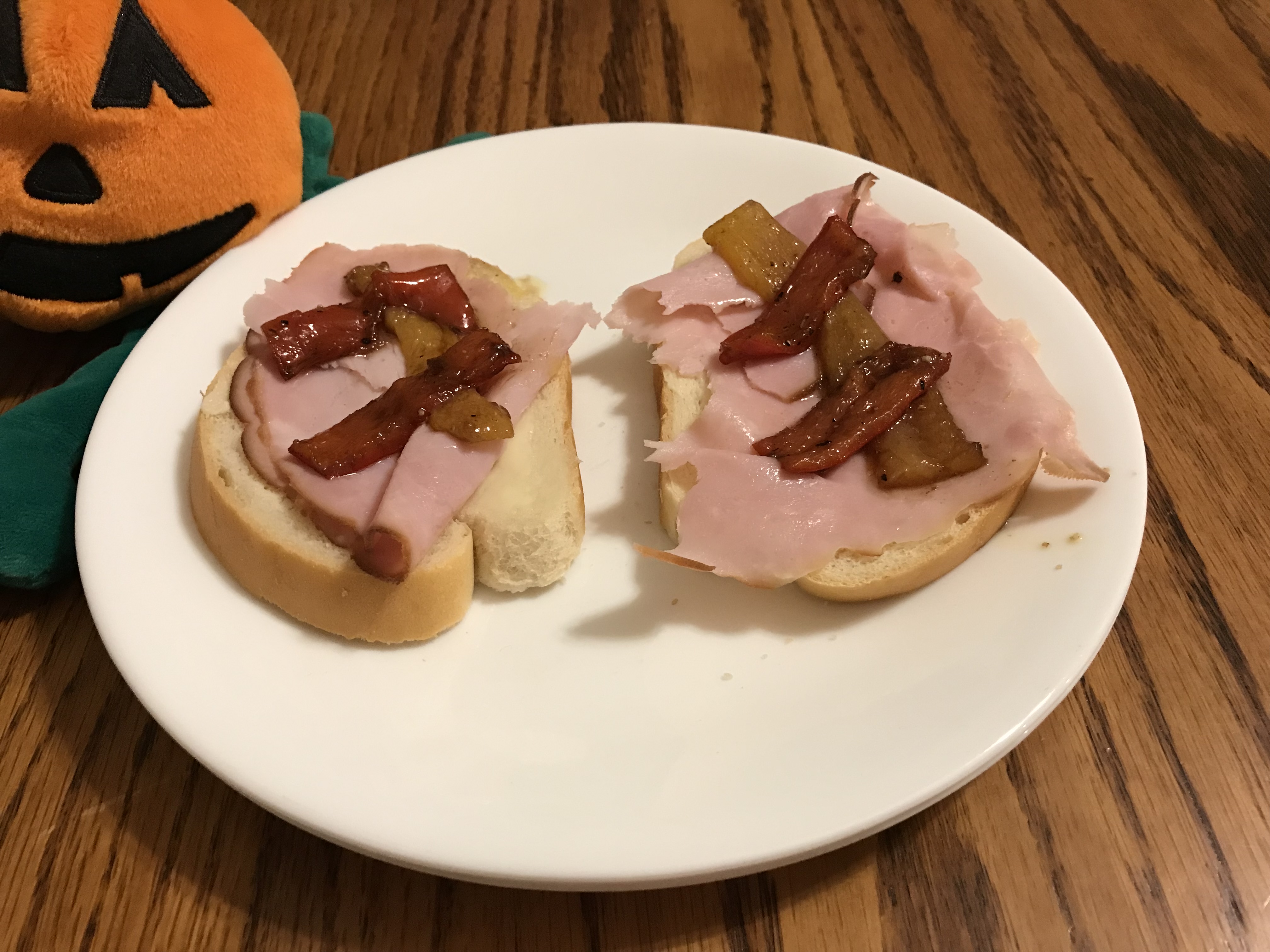
            Roasted peppers are a popular appetizer all over Italy. The red variety are especially pretty and tend to be the sweetest. A particularly attractive presentation involves a combination of red and yellow, sometimes with orange and/or green added to the mix. The peppers can be served plain, marinated, in salads, in sauces, or on canapes. Here they have a vinegar-based marinade and are served with on buttered white bread with ham. The recipe calls for prosciutto, but since it is kind of expensive and has a stringy texture, I used black forest deli ham instead. The combination worked very well. Side note: In Italy, pepperoni refers to peppers, not the spicy red salami disks found on pizzas.

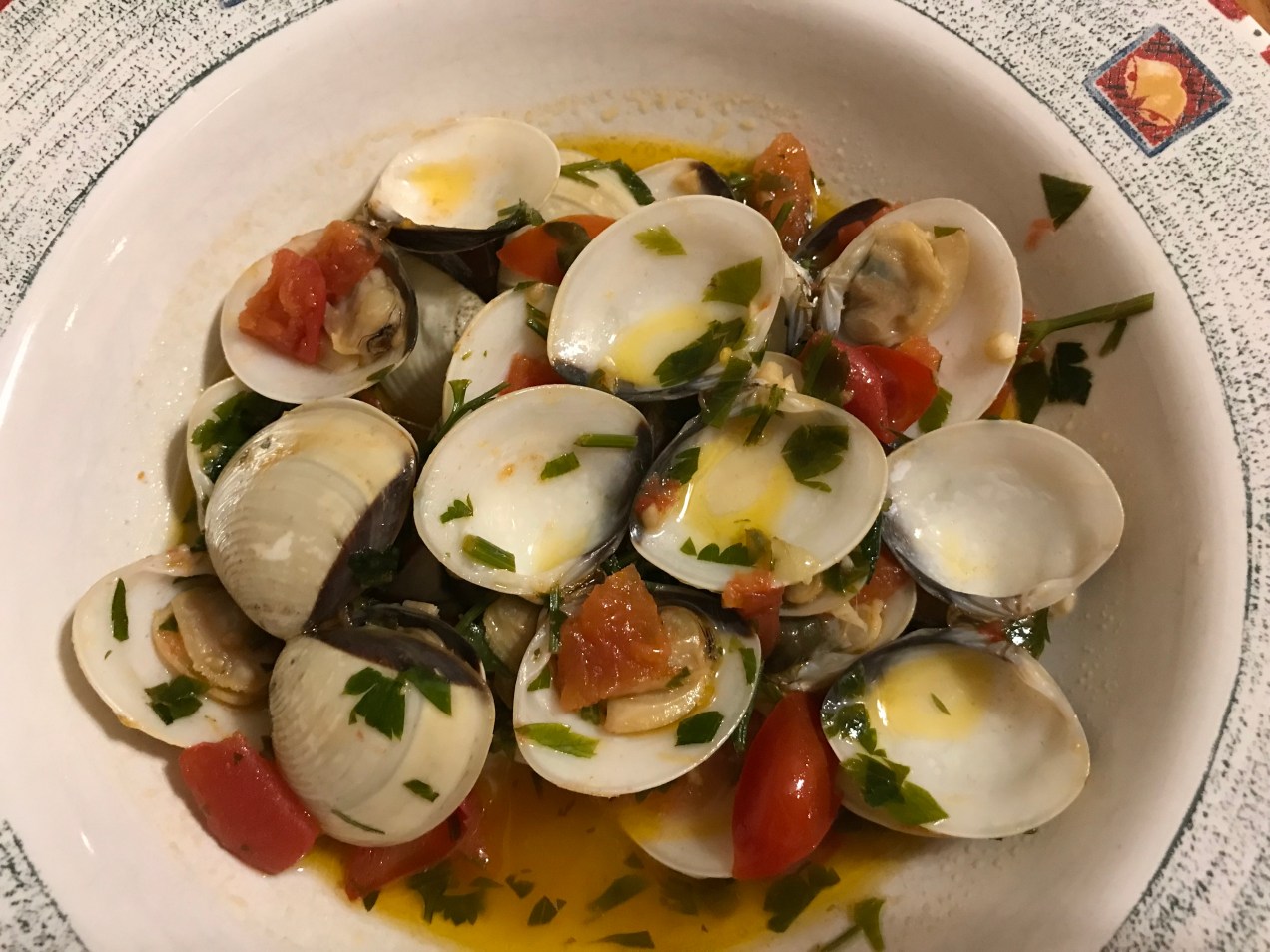
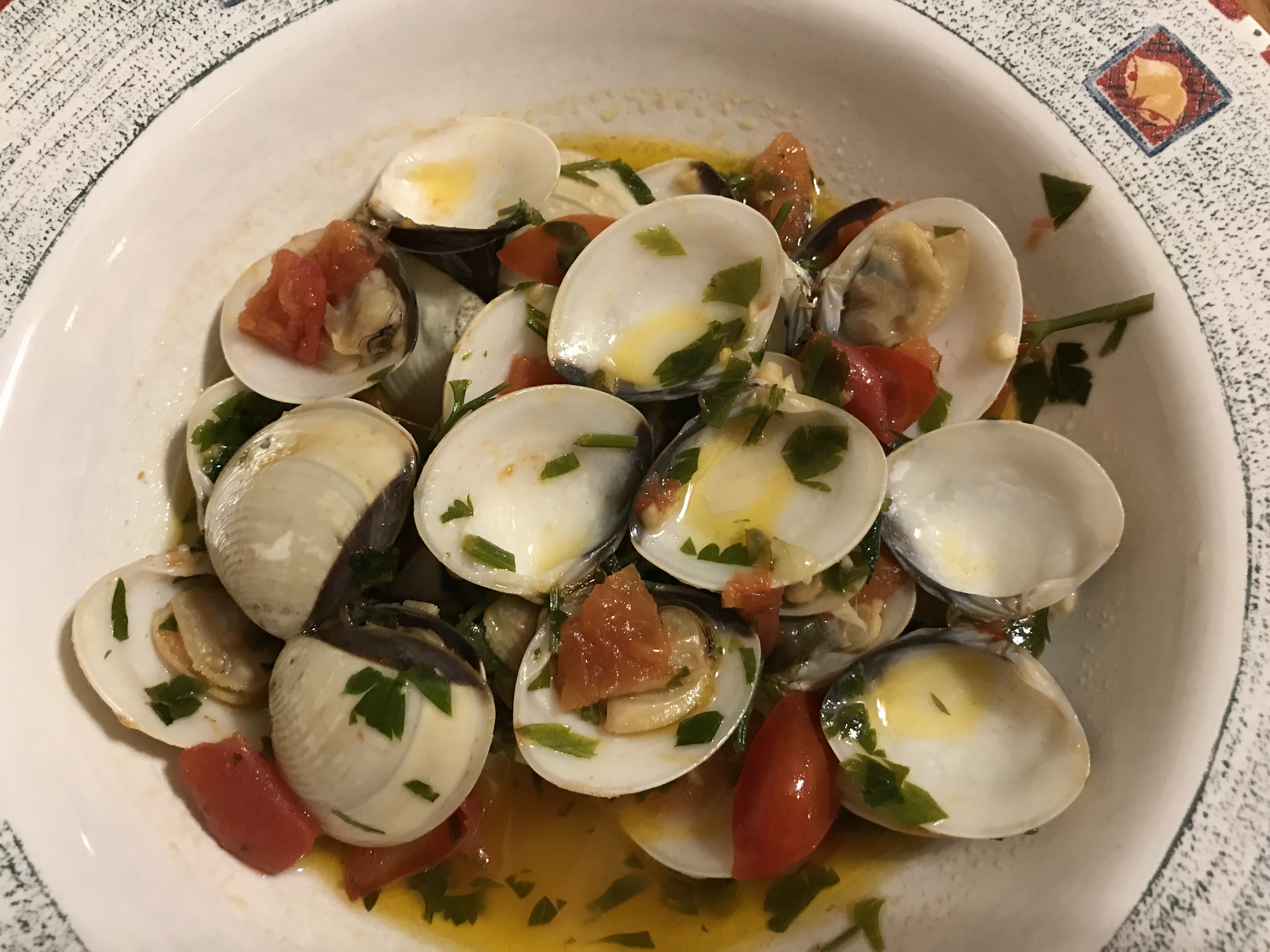
            I’m not usually a fan of clams, but after being pleasantly surprised by the tomato-clam sauce a while back, I had high hopes for this recipe. Frozen clams were steamed/braised in precooked wine (to burn off the alcohol), which seemed like it would counter the “fishy” flavor like tomatoes did. That didn’t work as well as hoped. They were edible, but I didn’t necessarily enjoy them.

            People have been eating starchy “field peas” for millennia, but sweet “garden peas” came much later. Most likely, they were developed by Dutch botanists in the early 17th Century. In France, the court of Louis XIV went crazy for them. Since the French court set fashions for the rest of Europe, sweet peas were soon found across the continent. Presumably the Italians, who had always appreciated vegetables more than most, adopted them quickly. One popular way of cooking them is in the Venetian risotto, risi e bisi.

            There are a number of “homestyle,” or “grandmother’s-style,” recipes for peas. In this case, a small amount of pancetta or bacon is used as a flavoring, and a bit of butter, flour, and chicken broth make a light sauce. Some fresh herbs brighten the dish. Everything is balanced; sweet, fat, and salt, but the flavors are mild and easy to enjoy. There’s nothing here that most picky eaters would have an issue with.

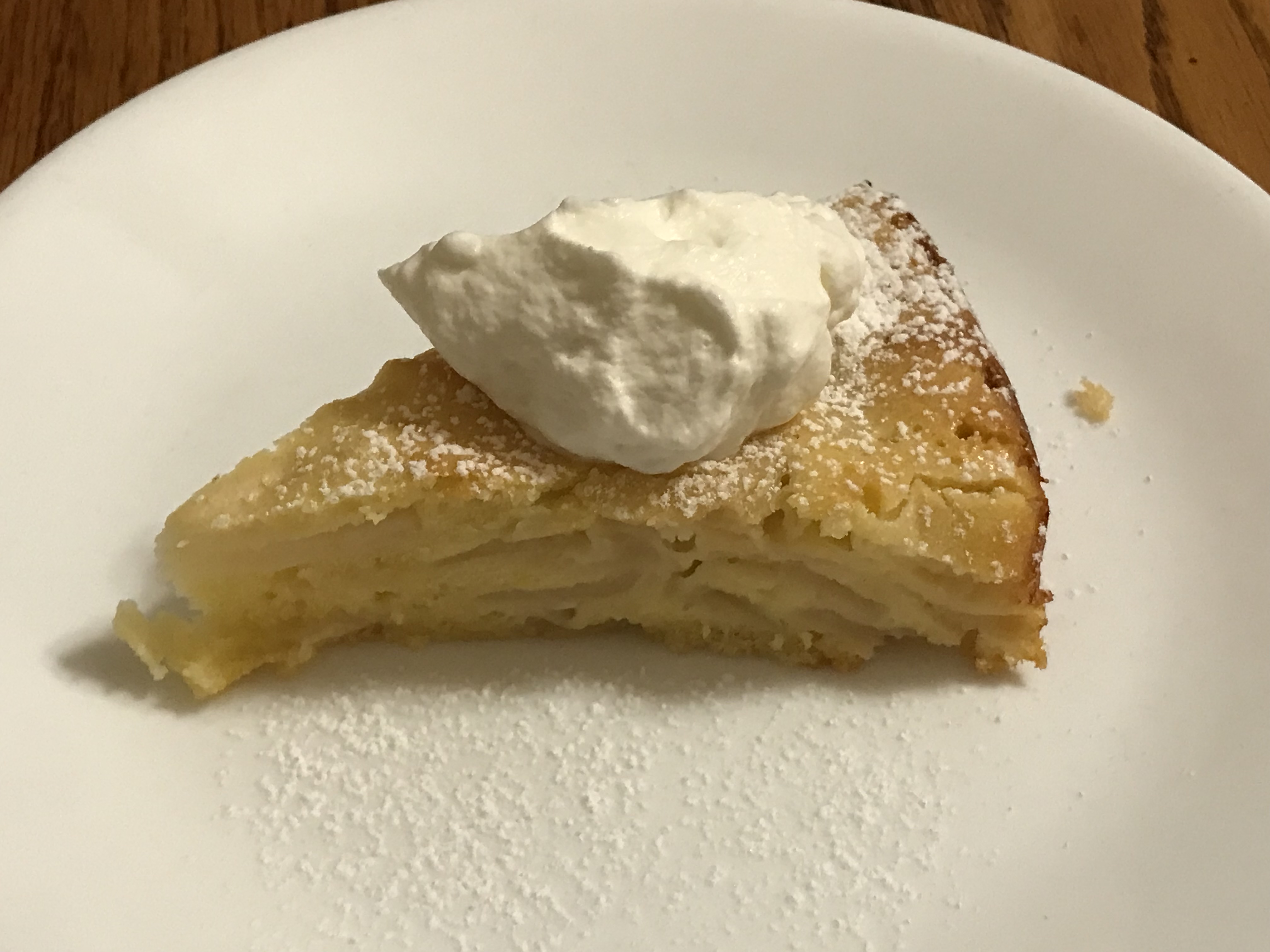
The cake tasted as good as it looks.

            The best dish in the menu was the apple cake. A sponge cake batter is flavored with lemon peel and extract, apple slices are folded in, and everything is baked in a springform pan. That was an unusual touch, but made unmolding easy. The lemon flavor was a nice complement to the apple, and adding a bit of lemon zest to some whipped cream made an excellent dessert even better. Minus the clams, everything was delicious.

If you’re enjoying my writing, please consider supporting my work with a small donation. I really appreciate any support.

One-Time
Monthly
Yearly

Make a one-time donation

Make a monthly donation

Make a yearly donation

Choose an amount

$5.00
$15.00
$100.00
$5.00
$15.00
$100.00
$5.00
$15.00
$100.00

Or enter a custom amount

$

Your contribution is appreciated.

Your contribution is appreciated.

Your contribution is appreciated.

DonateDonate monthlyDonate yearly
Standard
Uncategorized

Reflecting on the Growing Season: Basil, Pesto, San Marzano Tomatoes, and Seed Saving

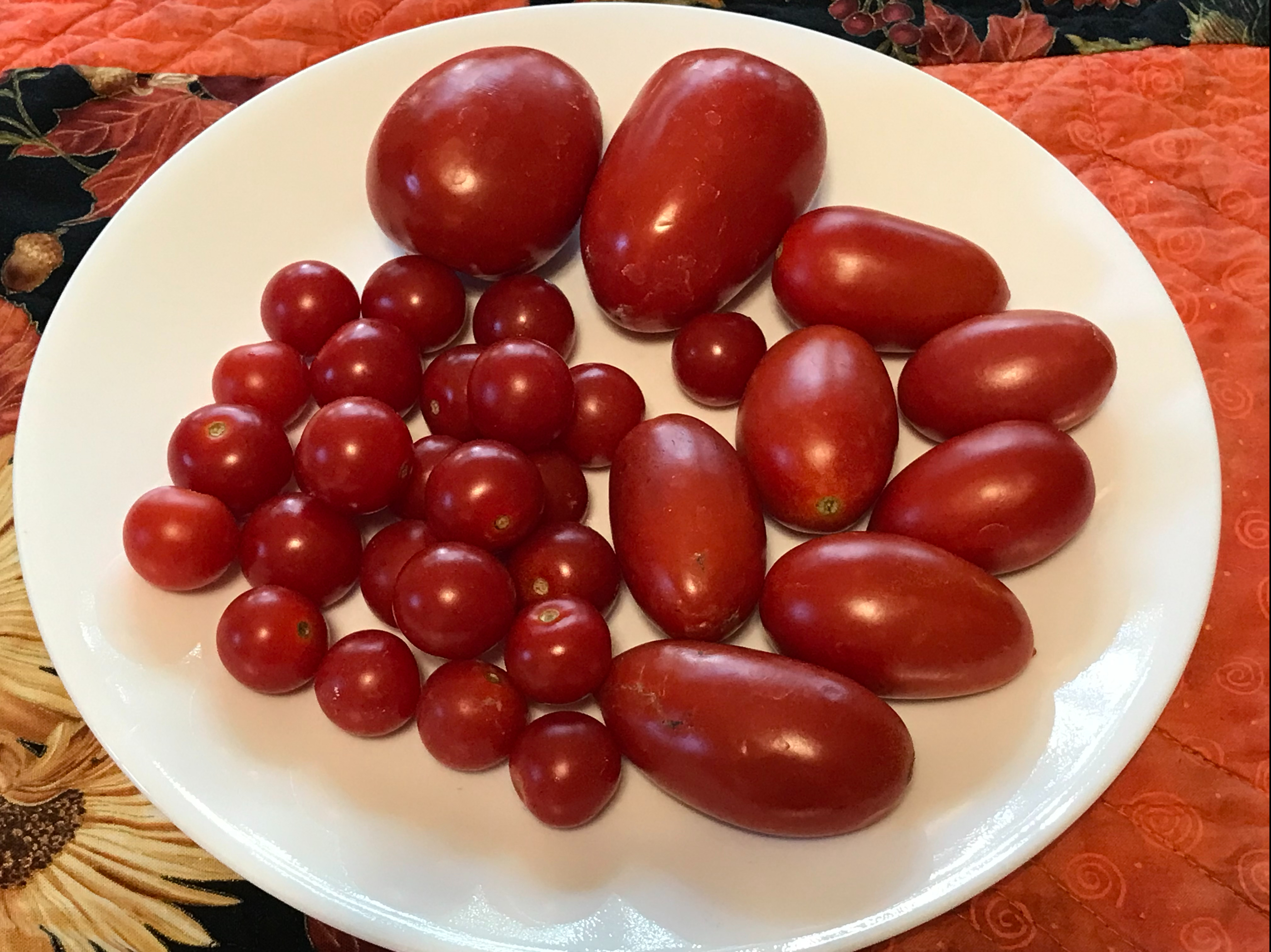
Clockwise from the top: Roma, San Marzano, and cherry tomatoes

1000 Foods (pgs. 220, 223 – 224, 235 – 236)

            This last summer, after removing part of the deck that was in disrepair, I had a small garden bed to use. For my birthday back in March one of my aunts gave me a gift card for a seed savers catalog, which had some particularly interesting selections, including two types of sunflowers, giant zinnias, arugula, and cress. After buying more herb plants than necessary and planting them in pots, I had a plan for the new garden bed. The larger type of sunflowers would go in the back row. Three tomato plants would get half of the middle row instead of their usual 5-gallon buckets. On the other side I had a bean plant given to me by a student after an experiment to determine where plants get their mass from as they grow. (Answer: it’s mostly the carbon and oxygen in the air.) I planted a few leftover seeds in the row to keep it company. In the corner was an unknown plant from a different student (turned out to be mustard greens). The front row was half arugula, almost half cress. Marigolds on the sides would hopefully keep rabbits away. It sounded tidy and organized.

            Plants don’t necessarily do tidy and organized. With plenty of space, the tomato plants spread out and covered much of the arugula. The bean plants, which I was not aware were pole beans (it didn’t say on the package) grew in every direction. By the time I got the stakes in it was too late to manage the chaos. They didn’t produce many beans and those few were tough, but the plants themselves may have had an additional benefit. The sunflowers on that side of the garden were taller than those on the side with the tomatoes. Since the change was gradual it may have had as much to do with drainage patterns, but the nitrogen-fixing bacteria that live on bean roots may well have enriched the soil and given them a boost. Finally, the marigolds ended up about two feet tall. Whether they or the fence was more effective at rabbit control is an open question.

            Along with Roma and cherry tomatoes, I planted a San Marzano plant. Technically, to be 100% authentic, the tomatoes would need to be grown in the rich volcanic soil near Naples, but this was a way to taste them fresh. The plants are scraggly-looking with long, thin, pointy fruits, but they are said to be one of the best tomatoes for canning. In fact, the use of tomatoes in Italian cuisine increased significantly once the canning industry developed. I couldn’t taste much difference in the three types of fresh tomatoes, but I’m not normally a fresh tomato fan. They seemed to work well in the various soups and salsas over the course of the season. It will be interesting to compare canned San Marzanos with other varieties at some point in the future.

            I probably could have managed with one basil plant instead of two. They were small when I got them, and so had me fooled. Each in their own pot, with lots of sunshine and daily watering, they thrived to the point of my not knowing what to do with all the basil. With a potent, distinctive aroma, basil is widespread around the world. In its homeland of South and Southeast Asia, it has religious as well as culinary significance. Pesto is perhaps basil’s most popular use in the West, but it can also be used in sauces, salads, and even lemonade and sorbet. It actually works as well with strawberries as it does with tomatoes.

            What’s interesting about pesto is that while pesto-type sauces have existed since Ancient Rome and basil was introduced to the Mediterranean in the Medieval era, the two were not combined until well into the Early Modern period. Perhaps the speed at which basil oxidizes once cut made people suspicious of it. (The darkening/browning is oxidation. The same process happens with guacamole.) Or maybe Medieval cooks were underwhelmed, since they didn’t like to serve raw ingredients and basil loses much of its flavor when cooked. Fortunately for us, the Italians eventually figured out the best way to use it, and many other cuisines followed.

            Like most popular foods, pesto has a number of variations. The classic form has basil, salt, garlic, olive oil, and pine nuts. Usually a hard cheese such as Parmesan or Romano is included, but not always. Some or all of the basil might be replaced with parsley or arugula, reducing the discoloration on the surface but changing the flavor. One modification that does not affect the flavor much is to substitute almonds or especially walnuts for the pine nuts. With all the garlic and basil, it’s hard to tell the difference, and walnuts are a lot more affordable. They thicken and enrich the mixture just as well. Some versions, like the one in the book, even replace part of the olive oil with butter. Garlic is a constant, as is salt. In addition to adding flavor, the salt is *supposed* to reduce discoloration, but that was not my experience. A reliable solution is to scrape off the discolored part. The pesto below will be as green and aromatic as ever.

            In the meantime, winter is here. For next year, I’ve embarked on some seed saving of my own, gathering hundreds of sunflower seeds, along with a few small bags of marigold and one of zinnia seeds. I’m not sure where the petunias that appeared in the garden bed with the small sunflowers and zinnias came from. Most likely, some petunia seeds got mixed in with the other seeds by mistake, or some seeds blew over from another plant. However it happened, they grew so well and lasted so long into the fall that I saved some of their seeds too. Planting slightly earlier and starting some of the sunflowers inside should ensure an even better display next summer. Just not a tidy one.

Standard
Uncategorized

Cook’s Tour of Italy Menu 20 (Pgs. 72 – 74): Lunch for 6 at Home, Genoa

Region: Liguria/Piedmont

Menu: Genovese Squid Salad with Vegetables, Focaccia with Sage, Chocolate Mocha Ricotta Cheesecake

Recommended Wine: Cinque Terre

            Squid might seem like a strange salad ingredient, but various seafood salads are common in Genoa and the rest of Liguria. With hilly terrain and mountains close to the sea limiting grazing land, seafood has long been a staple in the Ligurian diet. One of the most elaborate preparations is a Christmas Eve specialty called cappon magro, or “lean capon.” At one time, Christmas Eve was a “lean” or meatless day, as was the rest of Advent. To compensate for the lack of meat, cooks for wealthy clients created numerous elaborate seafood dishes. Some of these specialties included “ham” made of salmon, “bacon” made with different colors of fish layered together, “game birds” made of spiced pike, and custard made with fish and almond milk.

            Liturgical fasting has a fascinating history. As Christianity spread around the Mediterranean, meat was more of a luxury than fish, so replacing meat with fish made sense. This changed once Christianity reached Northern Europe, especially inland regions, and over the centuries those who could afford to do so increasingly followed the letter of the law, but not its spirit. By the Late Middle Ages, what could be considered “fish” was truly mind-boggling.

            Considering whales and dolphins as fish was probably an honest mistake, but I’m not sure how the confusion persisted. Surely whoever was responsible for preparing them noticed that they lacked gills and had lungs like a cow or pig, but maybe animals were classified by where they lived rather than how they breathed. Other “fish” included beavers and barnacle geese, which were believed to come from barnacles instead of eggs, though this was doubted by many people, including at least one Pope. If you’re wondering, barnacle geese do hatch from eggs, but since they nest in the Arctic no Europeans saw the evidence until the 16th Century. By the time that confusion was cleared up, Spanish settlers in South America had decided that the capybara counted as a fish because it spends a lot of time in the water. Apparently, the fact that they look more like giant guinea pigs than fish was irrelevant.

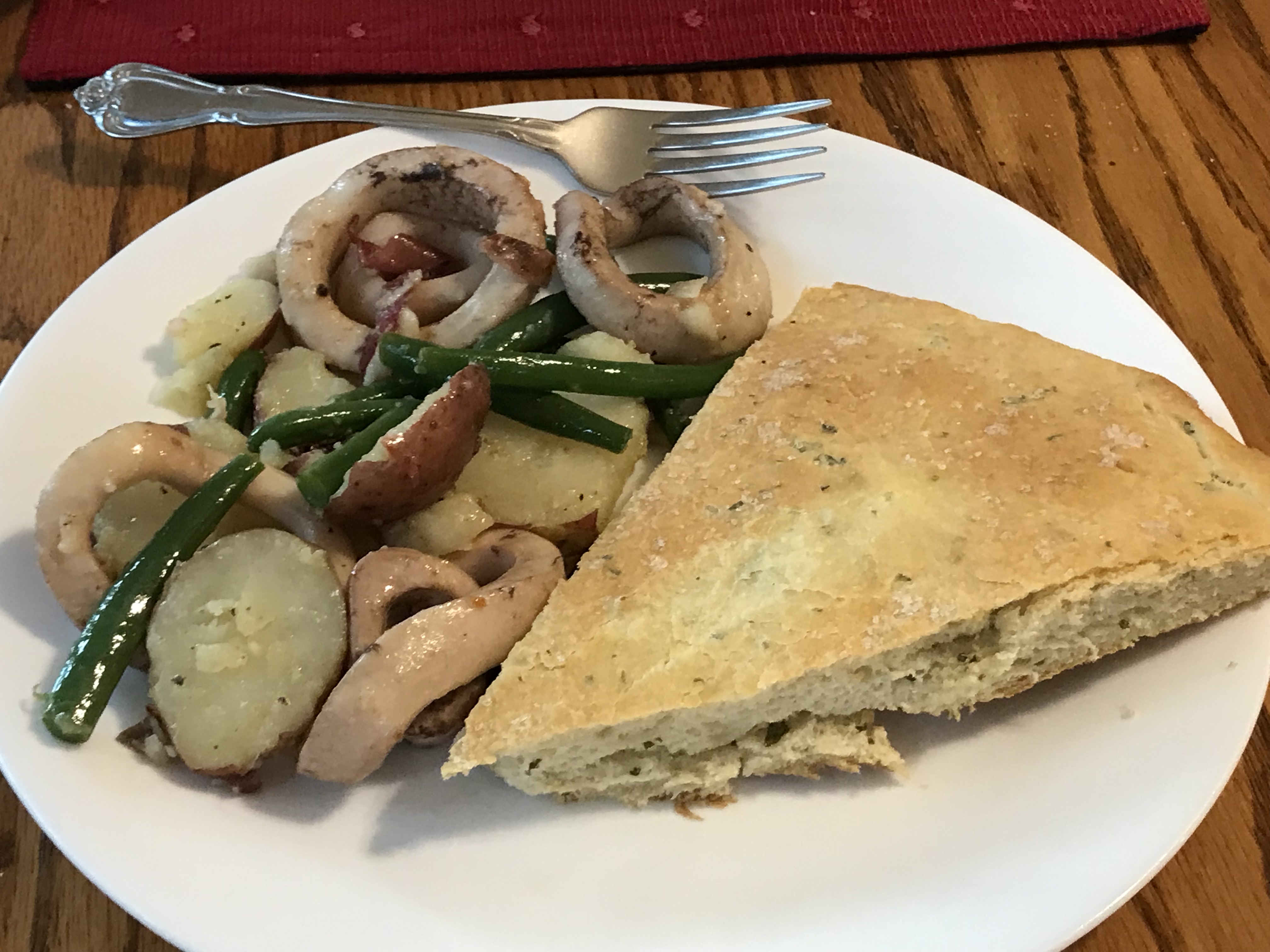
            There is no doubt, however, that squid counts as a fish. In this salad, it is baked, combined with potatoes, cooked vegetables, and a vinaigrette dressing, and served slightly warm. While the dish didn’t stand out like some that I’ve tried, it had a nice balance between protein, starch, and vegetable, none of the flavors overpowered the others, and the leftovers were almost as good cold the next day. And based on everything I’ve learned, the mix of seafood and fresh vegetables is very Ligurian.

            So is the focaccia, with lots of olive oil and herbs. Personally, I had some trouble with it. Despite following the recipe exactly, it wasn’t thick and spongy like what you find in the store and see on cooking shows. It was thinner and crispy, almost like a hand-tossed pizza crust. It still tasted great, but I couldn’t figure out what went wrong. Maybe the recipe is for a different variety of focaccia. With the number of bread varieties in Italy, that would not be surprising.

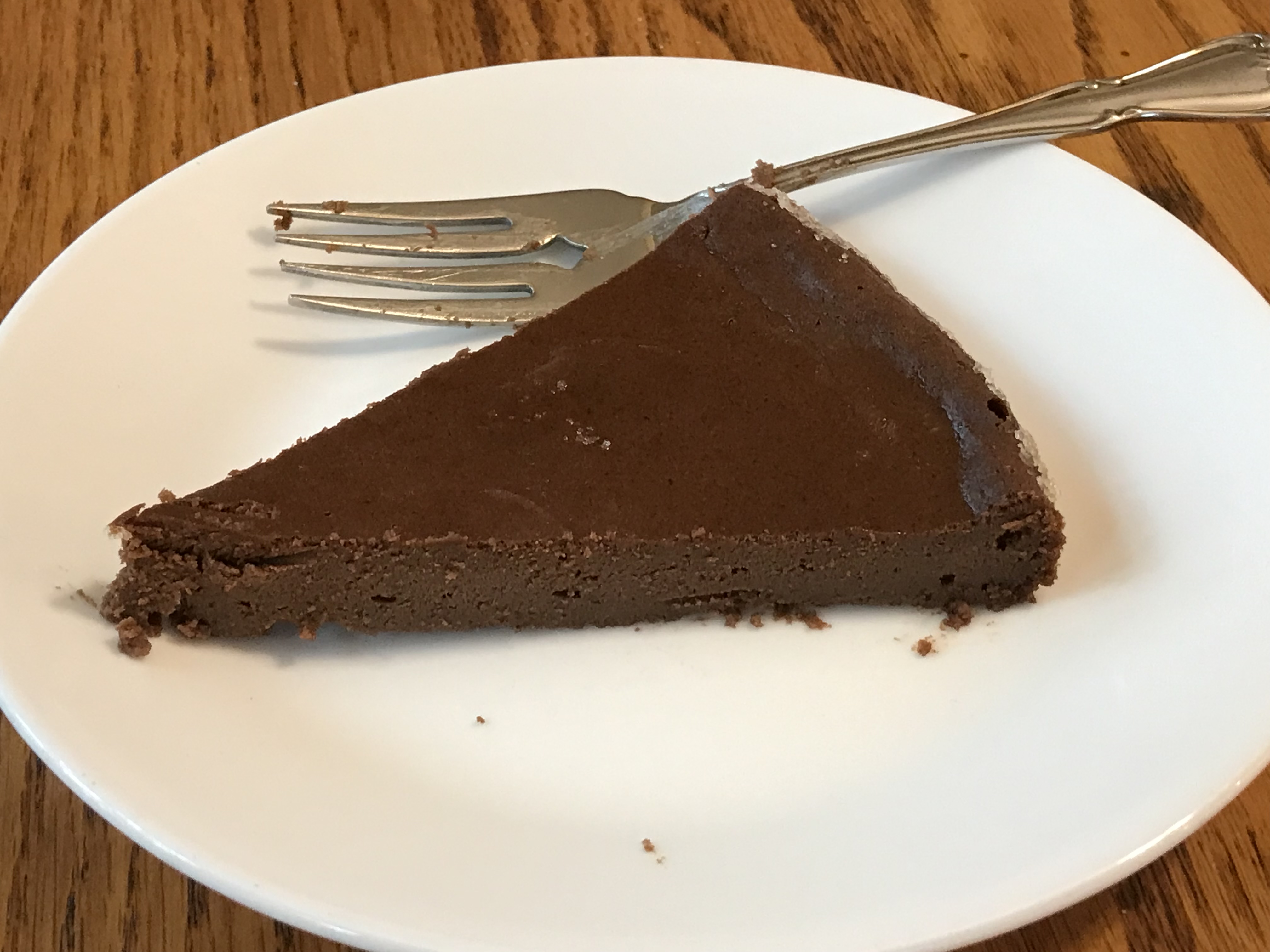
            I do know what went wrong with the cheesecake. The recipe called for a 6-inch springform pan, which I do not have. Rather than buy a new piece of equipment, I just used a regular springform pan, set the timer for less, and kept a close eye on the progress. It was good that I did, because even the shorter time was plenty. Many people would probably consider it overbaked, but it wasn’t burnt and I liked the firmer texture. The mocha flavor was excellent and it was a generally nice dessert.

Standard
Uncategorized

Cook’s Tour of Italy Menu 36 (Pg. 115): Genovese-Style Vegetable Soup

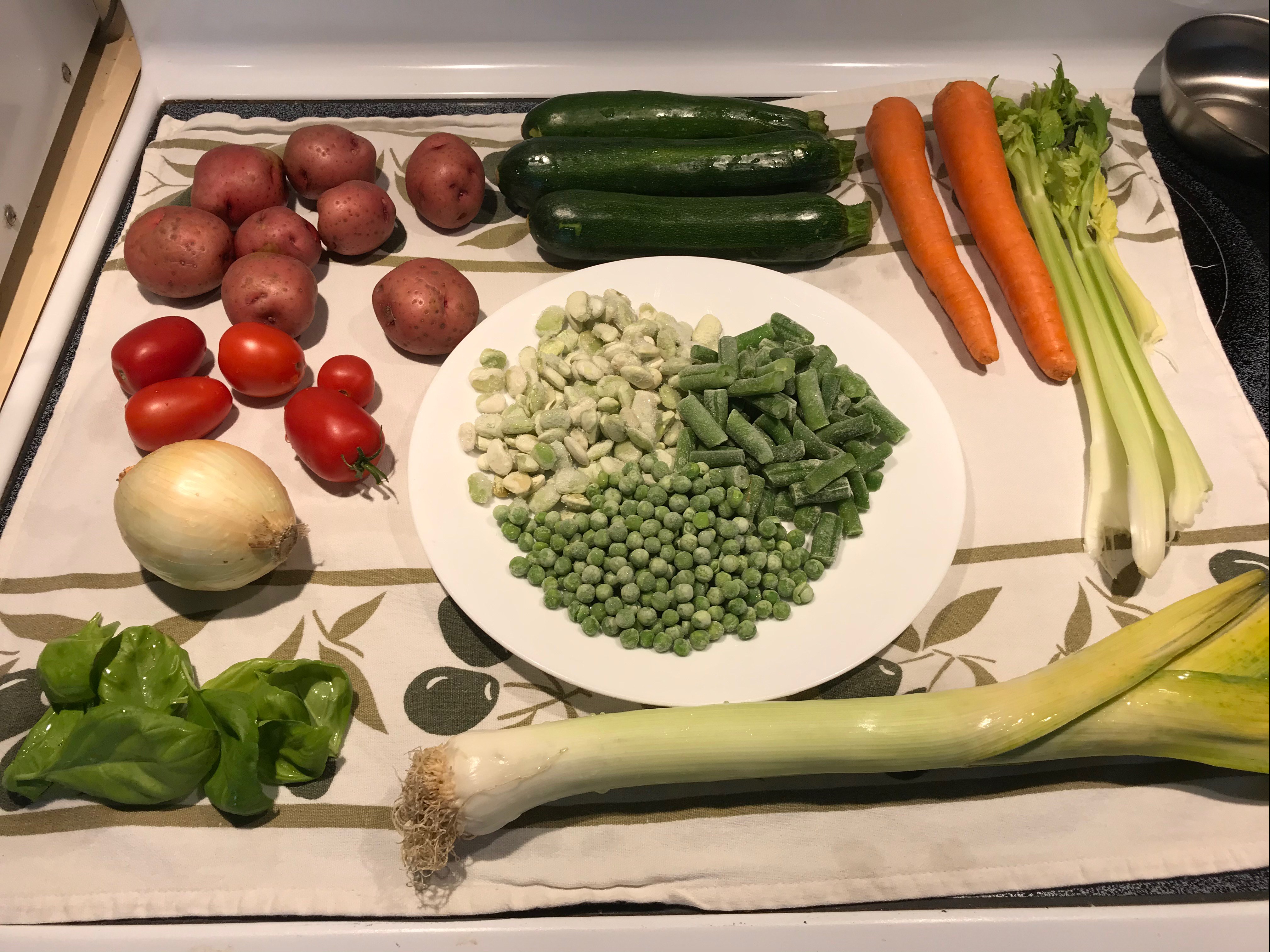
The raw ingredients

Menu: Genovese-Style Vegetable Soup, Bread

            Now its’s time to consider healthy food and fresh summer vegetables. This soup and those like it are frequently enjoyed by the residents of Lombardy while vacationing on the Ligurian Coast. Loaded with potatoes, beans, peas, zucchini, tomatoes, and several other vegetables, it contains no meat, meat broth, butter, or cheese. It’s just vegetables, water, salt, and olive oil, designed to be eaten with bread. These two foods, bread or some other starch and soup, are some of the most ancient and traditional dishes in numerous cultures across the globe. The reason for this is fairly simple. Since the rise of agriculture, most humans’ diet has been starch-based. Furthermore, cooking other foods in pottery or later metal vessels made sure all their calories and most of their nutrients went into the broth that would be consumed, rather than dripping into the embers and being wasted. Plus, soup can be made of pretty much anything available.

            In the case of Liguria, this has historically been lots of vegetables, herbs, and olive oil. The mild maritime climate allows vegetables to grow for a large part of the year and lets olive trees flourish north of where they ordinarily could (Liguria is north of Tuscany, their typical northern limit). Meanwhile the narrow coastal plain limits how much space can be dedicated to raising livestock. Hence, fish, vegetables, and olive oil have historically been more common than meat and butter and are still essential elements in the local cuisine. 

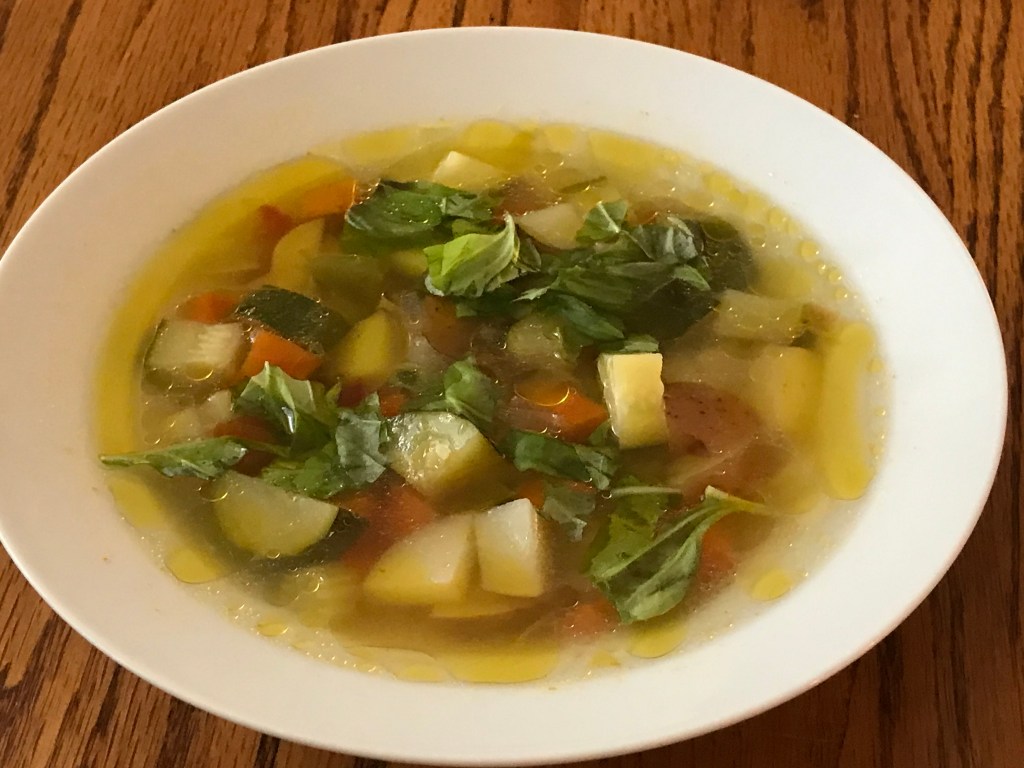
            The soup is really good, just make sure to add adequate salt. Since all the vegetables are fresh or, if necessary, frozen rather than canned and no broth is used, the only salt is whatever the cook adds. I thought I added plenty, but upon tasting the broth I thought it to be almost flavorless. Adding more salt changed my perspective entirely. It didn’t make the soup taste like salt, rather it brought out the vegetable flavors in the broth. While it is even better with a sprinkle of parmesan cheese and might benefit from a bit of vegetable soup base/bouillon, overall this recipe can be thought of as a tasty vegetarian minestrone.

Standard
Uncategorized

Cook’s Tour of Italy Menu 21 (Pgs. 75 – 77): Dinner in Portofino (on the Ligurian Coast)

Menu: Spaghetti with Basil Pesto, Ligurian Vegetable Salad, Ice Cream with “Sambuca” and Espresso

Recommended Wine: Fresh, delicate white like Vermentino, and/or spicy red

Northwest of Tuscany is the coastal region of Liguria. Situated on a narrow plain between mountains and the sea, the cities there have long turned to maritime enterprises. Foremost among them is Genoa, rival of Venice for centuries, from the High Middle Ages (and possibly even before) into the Early Modern Era. During a series of wars in the 13th and 14th Centuries the Genoese usually seemed to come out second-best but were always able to give the Venetians a run for their money. They wrestled over trading rights in Constantinople, Alexandria, the Levant, Cyprus, and the Black Sea. In the 14th Century, the Genoese even launched ships on the landlocked Caspian Sea and established trading colonies in Northern Europe as far east as Poland. During one battle in 1298, Genoa triumphed and captured several thousand Venetian prisoners, including Marco Polo. While imprisoned awaiting ransom, Polo began telling stories to entertain his fellow prisoners, including a chivalric romance author with whom he would later collaborate.

By the end of the 14th Century, defeats at sea and internal strife led to Genoa becoming a satellite of its neighbors, alternatively France and Milan, while the Venetian trading (and later territorial) empire approached its zenith. Despite this loss of independence, Genoa’s trade and shipping remained vibrant. Genoese navigators, including Christopher Columbus, were instrumental in many of the Spanish and Portuguese voyages of exploration. A revival in Genoese banking brought renewed prosperity in the 16th Century, and a Genoese contingent was part of the Holy League’s fleet at the Battle of Lepanto in 1571. While the Ottoman Empire quickly rebuilt its fleet, the morale boost the victory gave to the European powers was substantial. Even in the 16th Century, though, rivalry between the Genoese and Venetian contingents led to significant tension.

In addition to their historic rivalry, Venice and Genoa seem to have very different food traditions. From a historical and geographic perspective, this is surprising. Both cities were main points of import for “exotic” Asian goods like spices and sugar during the Middle Ages. Due to their coastal locations and maritime background, both regions’ cuisines feature a variety of seafood. But while Venetian cuisine featured and still features spices, sweet and sour sauces, seafood, rice, and polenta, Ligurian cuisine favors green herbs, vegetables, bread, particularly focaccia, pasta, olives and olive oil, and lower levels of seafood. The last part of this might be due to Venice’s location on a group of islands in a shallow, productive lagoon, while the seafloor near Genoa drops sharply, leading to lower levels of productivity. Why the Genoese tend to prefer herbs over spices is unclear, but as a result, the cities’ cuisines are distinct and unique.

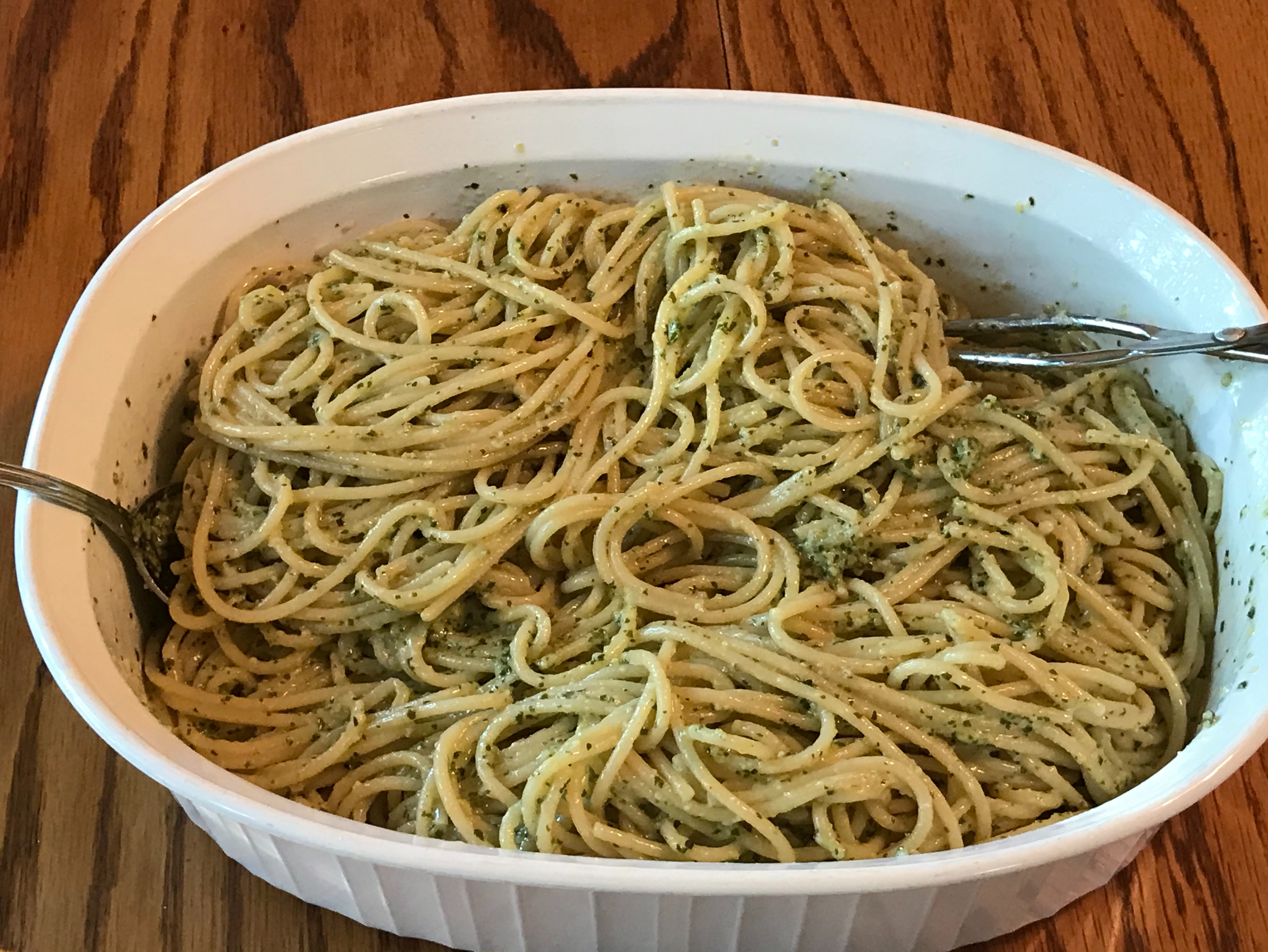
This menu demonstrates the some of the highlights of Ligurian cuisine: pesto, fresh vegetables, olives, seafood, and lots of olive oil. Unlike the Umbrian pesto in a previous post, this pesto has parmesan and pecorino Romano cheese along with the basil, garlic, pine nuts, and olive oil, making it slightly richer. It comes together quickly in a food processor. Once the spaghetti is cooked, it is added to the prepared pesto and served immediately. Unsurprisingly, it was excellent. Really, it’s hard to go wrong with pasta and pesto, especially when the basil comes from your own plants. The sauce left a fair amount of oil on the plates, but if some bread is added alongside it can be a nice dipping oil.

IMG_2726

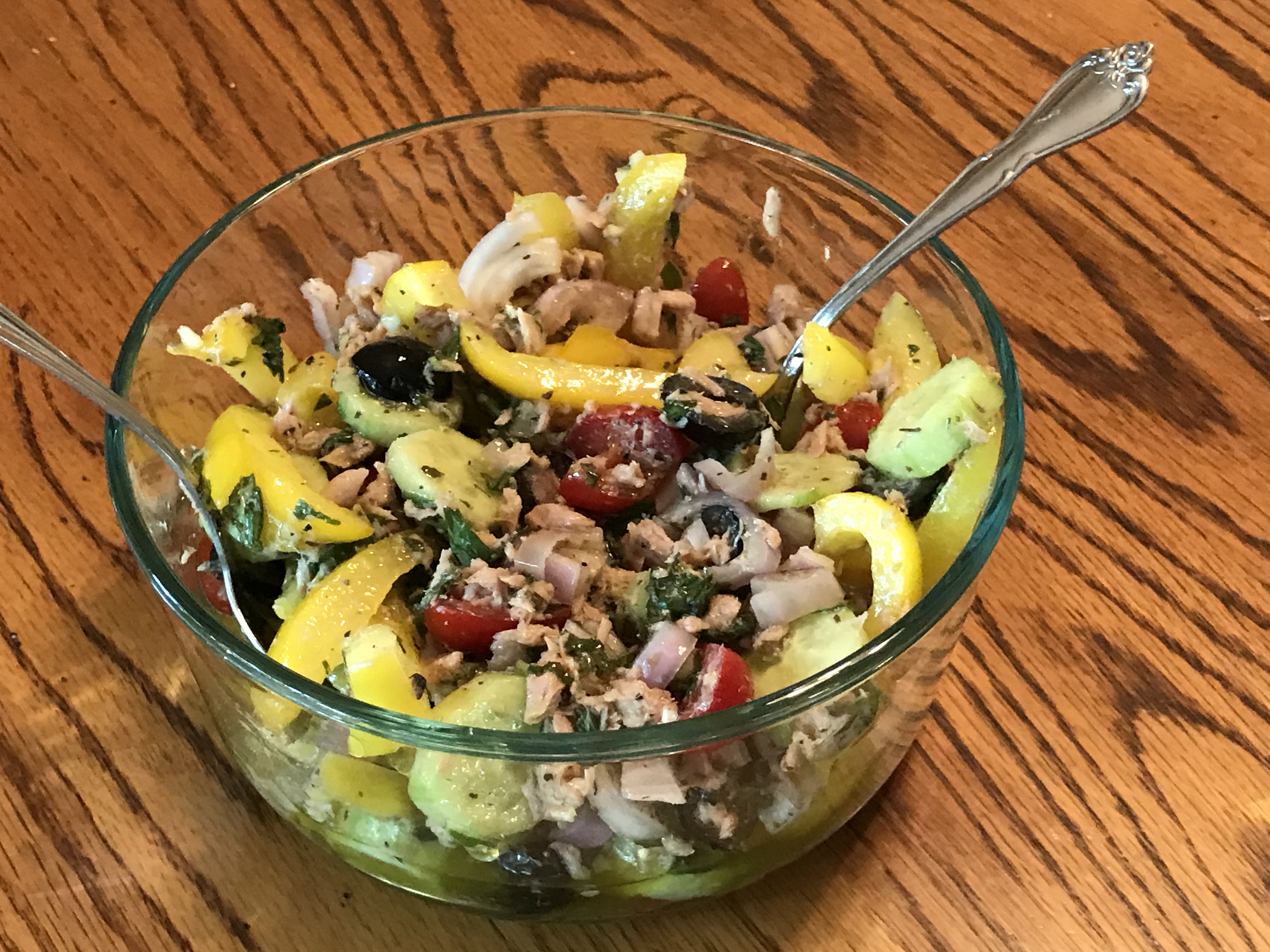
The salad was an interesting mix of cucumbers, peppers, olives, tomatoes, hard-boiled eggs (that I omitted), and tuna in olive oil. It is dressed with olive oil but no vinegar, flavored with basil and a bit of anchovy. It was good, but I liked most of the other salads better. I liked the dressing on the peppers and cucumbers, but since I’m not a big fan of olives or tomatoes on their own I found the rest of the salad was not really to my taste. Plus, a lot of oil in the pesto, followed by a lot of oil in the salad seemed a bit much, especially without an acidic contrast from vinegar or lemon juice. Still, a smaller amount of dressing on some peppers and cucumbers would be worth trying.

IMG_2727

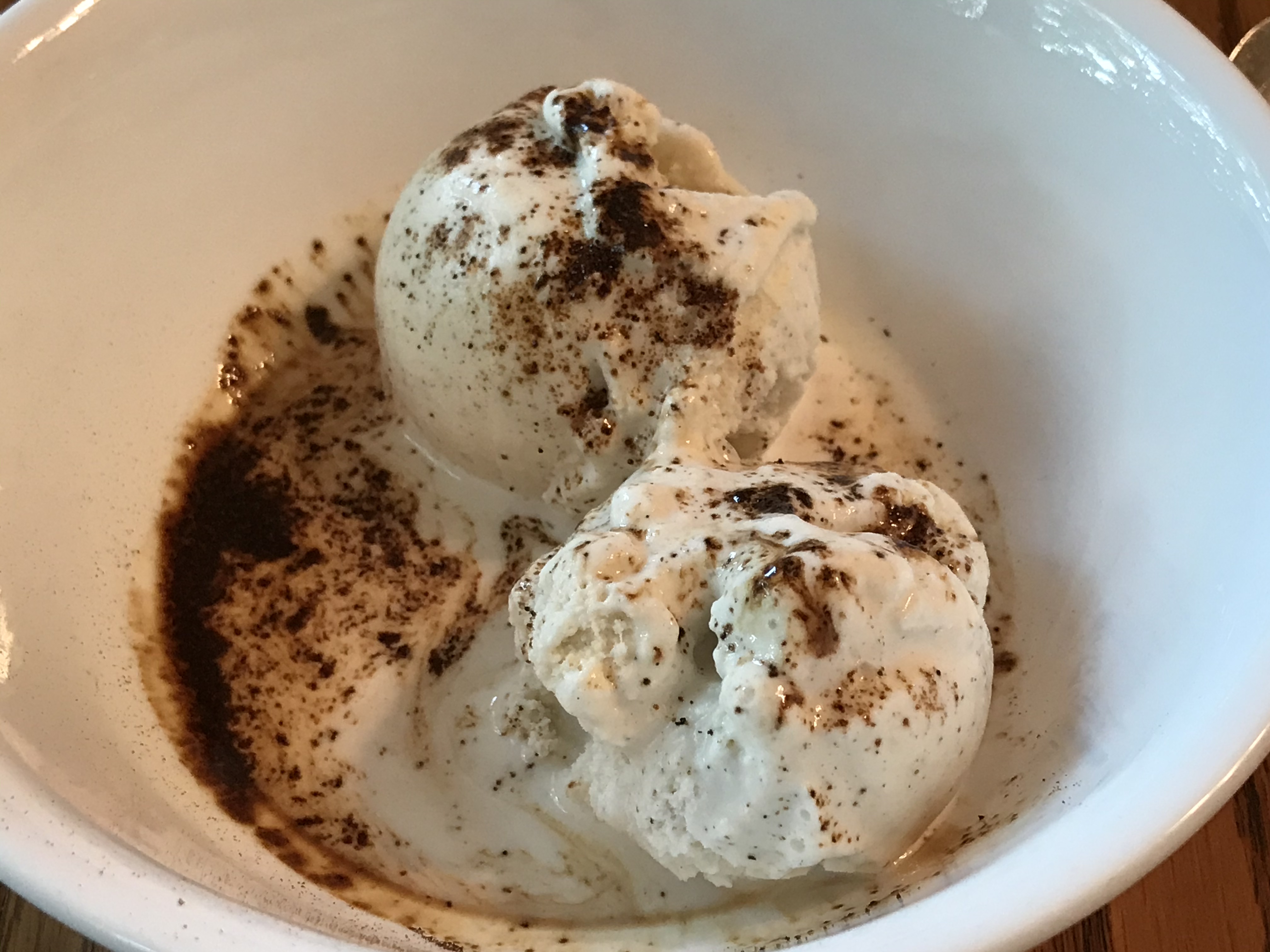
Dessert was an interesting surprise. The recipe calls for pouring sambuca over vanilla ice cream and sprinkling it with instant coffee granules. Since I didn’t want to buy an entire bottle of sambuca, especially when I didn’t think I cared for the anise flavor, I improvised by mixing a bit of anise extract into some half-and-half to pour over the ice cream. To my surprise, I really liked the flavor. The bit of anise blends with the coffee and vanilla to create an excellent palate cleanser. As discussed in the text, it is a super-simple but elegant dessert. Now that I have the anise extract, I would definitely make this again.

IMG_2728

Standard