

Region: Lombardy
Menu: Bergamo-Style Ravioli, Rabbit Roasted in Red Wine, Bergamo-Style Polenta, Cheese with Mixed Salad, Sambuca-Flavored Cocoa Roll (orange flavor instead)
Recommended Wine: Spumante
Bergamo is in the northern Italian province of Lombardy, north of Milan. As in the rest of northern Italy, there is a lot of fresh pasta and polenta, butter often replaces olive oil, and there are plentiful cow’s milk cheeses like fontina, gorgonzola, parmesan, and mascarpone. While generally overshadowed by its larger neighbor, Bergamo has its own specialties. One of these is a unique ravioli, filled with a mix of chicken, pork, salami, vegetables, and a little cheese. They are dressed in melted butter and sage, parmesan cheese, and toasted bread crumbs.
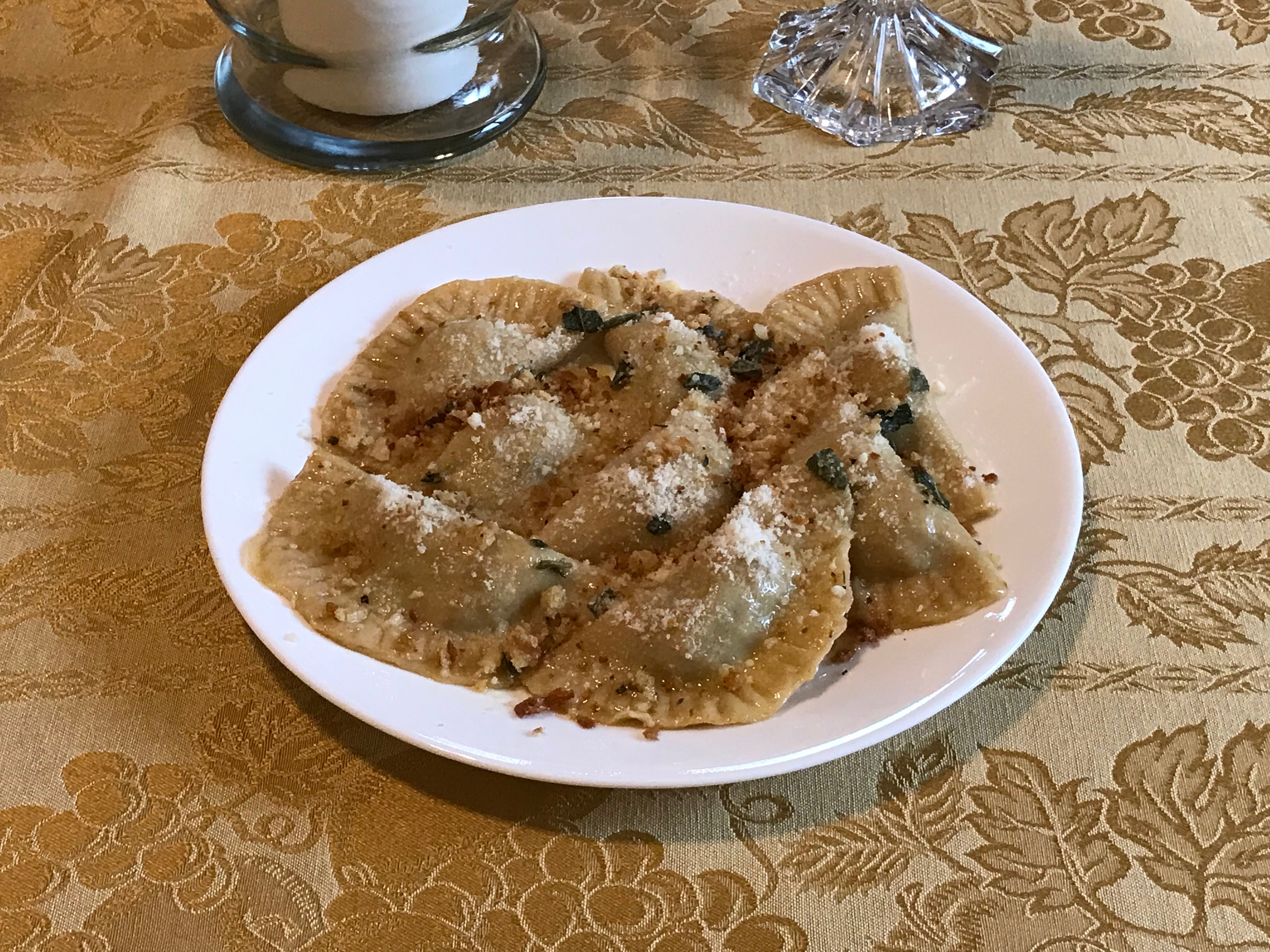
This was my first attempt at making my own pasta, and it went surprisingly well. Since I don’t have a pasta roller, I rolled little pieces of dough into circles with a rolling pin and folded them around the filling in a half-moon shape. It was a slow process, but making the ravioli bigger sped things along. The meat-and-vegetable filling was deliciously different from the usual cheese-heavy varieties, though there’s nothing wrong with those.
The only thing I would change is to cook the larger ravioli for an extra minute or two. Having thicker pasta kept the ravioli from bursting open, but not factoring it into the cooking time left it a little tough. It was still delicious, and the extras are in the freezer for whenever a quick homemade dinner is desired.
Another first for this menu was the rabbit. The idea was a little tough at first, until I reminded myself that this rabbit (which according to the package was a product of Spain) was bred and raised exclusively for food. It was never someone’s pet, or a former resident of the nearby farm/petting zoo. Besides, people have been eating rabbits for a lot longer than they’ve been keeping them as pets. They were a common protein into the 20th Century, and one 1930s menu even had rabbit pot pie as an economical alternative to chicken.

Rabbit does, in fact, taste sort of like dark meat chicken, but a little different and very lean. The fact that chicken is easier to farm on an industrial scale probably explains why rabbit isn’t as popular as it used to be. Or maybe it’s just that people didn’t grow up with the Easter Chicken. Or the fact that chickens won’t stand on their hind legs like a prairie dog when offered a banana chip.

Regardless, most rabbit recipes seem to involve slow-cooking it in liquid and/or adding some extra fat. In this case, the fat came from a bit of Italian sausage, and the liquid was red wine. It did taste very good, though in the future I would probably just use chicken thighs, which are cheaper and easier to find. At least for this recipe.
Upon reading the recipe, I was surprised at how quickly the polenta cooked. Once the salted water was boiling, the corn grits/polenta only had to cook for about five minutes. It required frequent but not constant stirring, and didn’t get lumpy, which is a common problem. Was the addition of a little buckwheat flour the key to a good consistency? Perhaps, and either way, the addition of butter, sage, and fontina cheese gave the final mix a pleasant rich but mild flavor that contrasted well with the stronger flavors in the rest of the meal.
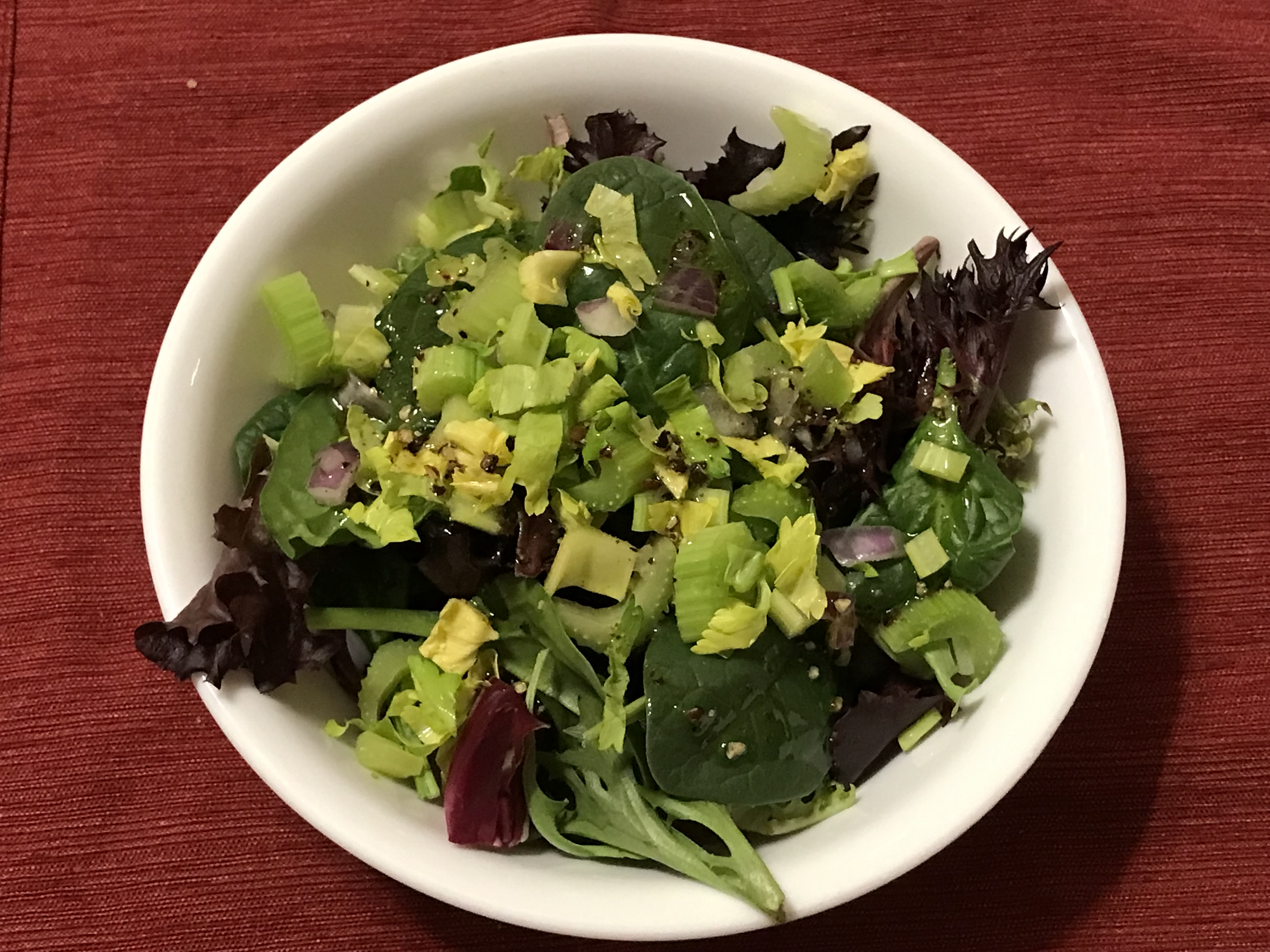
The salad was similar to many others in the book; a mix of greens dressed with a flavorful homemade dressing. The store didn’t have the endive called for in the recipe, so I just used the arugula and radicchio. Unlike other lemon juice and oil “vinaigrettes,” a little bit of orange zest and some minced shallots seemed to sweeten the mix, keeping it from becoming too sour and letting it balance the bitter radicchio. Don’t worry if the oil solidifies in the refrigerator. Fifteen to thirty minutes at room temperature will take care of that.
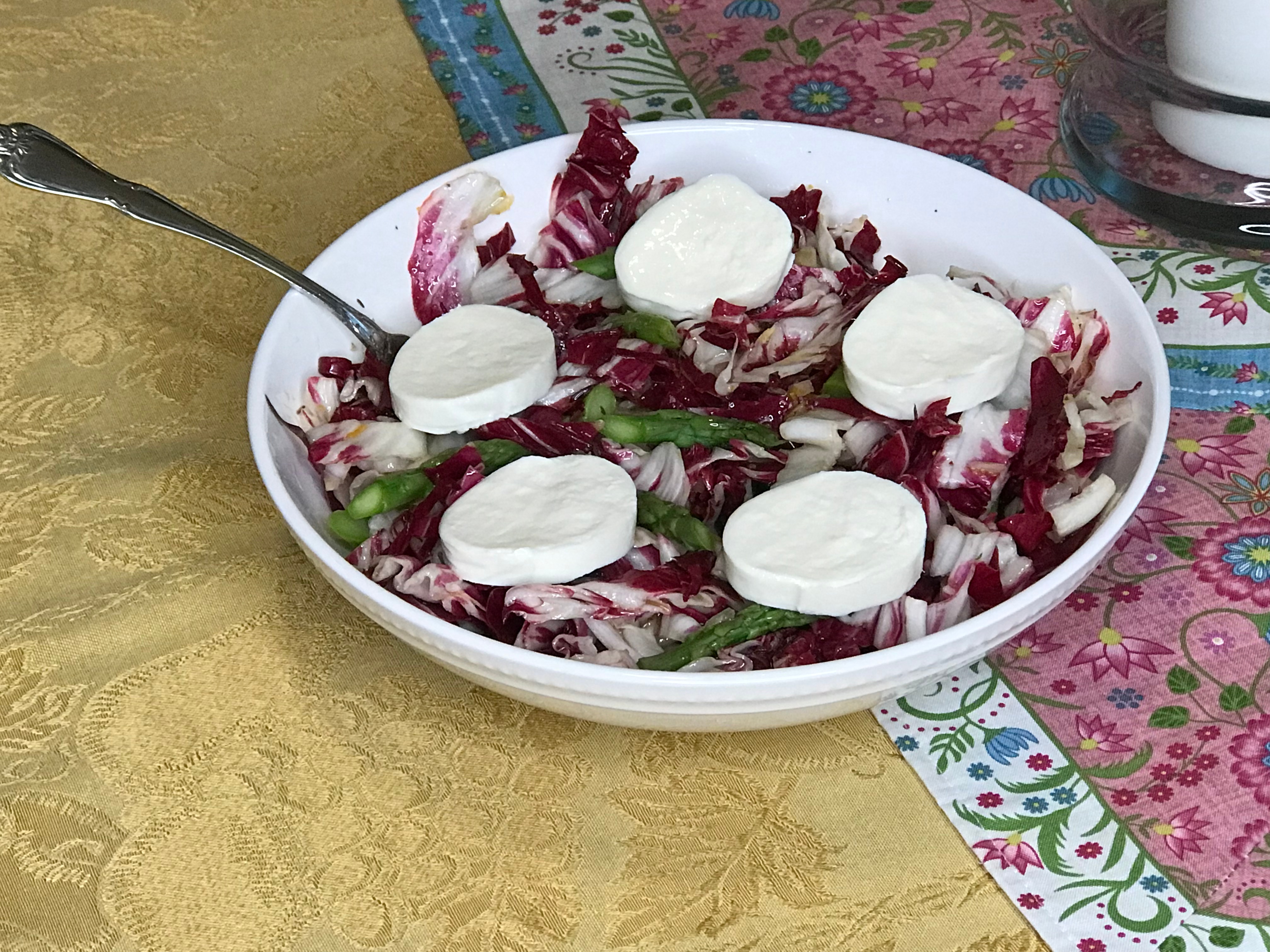
For the cheese, I used fresh mozzarella instead of taleggio because that’s what was available at the store. Even though it’s a southern Italian cheese not native to the Bergamo area, it went very well with the salad, especially when served on the dressed greens instead of next to them. The bitter arugula and radicchio, sour and slightly sweet dressing, and mild mozzarella all contrasted beautifully without clashing.
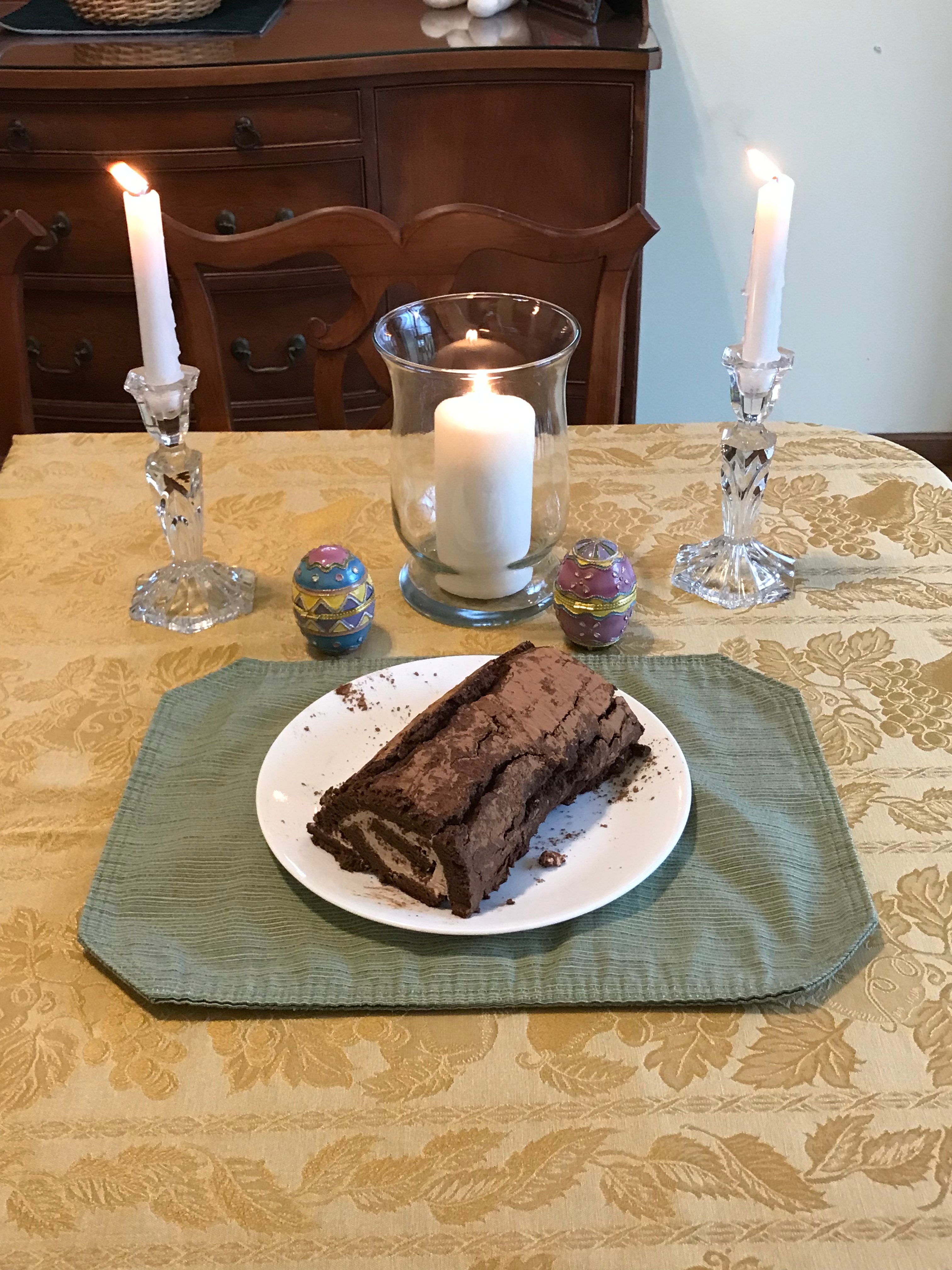
Dessert was one of the best things I’ve made in a while. The “cake” is a mix of egg yolks whipped with sugar, melted chocolate, a bit of flavoring, and separately whipped egg whites folded in at the end. The original recipe calls for three tablespoons of sambuca to be mixed in with the chocolate. Since I didn’t want to buy a whole bottle that I would be unlikely to drink or use in other recipes, I considered replacing it with a teaspoon of anise extract mixed into some cream, until I remembered that replacing wine with milk caused a previous attempt at zabaglione to fail. To keep the chemistry similar, I initially settled on a teaspoon of anise extract mixed into three tablespoons brandy.
Then I considered that anise (the flavor of black licorice) is not generally my favorite flavoring. Trying a bit over a scoop of ice cream with a sprinkle of coffee granules is one thing. It’s a single serving that takes two minutes to make. Even though that turned out well, I was hesitant to put anise flavoring into an entire cake that was a bit fiddly to make. Other extract options were vanilla, almond, and orange. Since I was already making an almond cheesecake for a different event, I settled on orange for something different. A teaspoon went into the “cake,” and half a teaspoon went into the whipped cream filling.

The cake was spectacular. The texture ended up somewhere between a brownie and a mousse, intensely chocolate lightened with a touch of orange. While the cake did crack slightly as I rolled it up, the inside still formed a recognizable spiral. Not pastry shop window perfect, and it wouldn’t pass muster on the Great British Baking Show, but still a pretty special occasion dessert. And of course, it’s the taste that counts. From time to time it’s well worth the effort.




 Feasting Through Time