
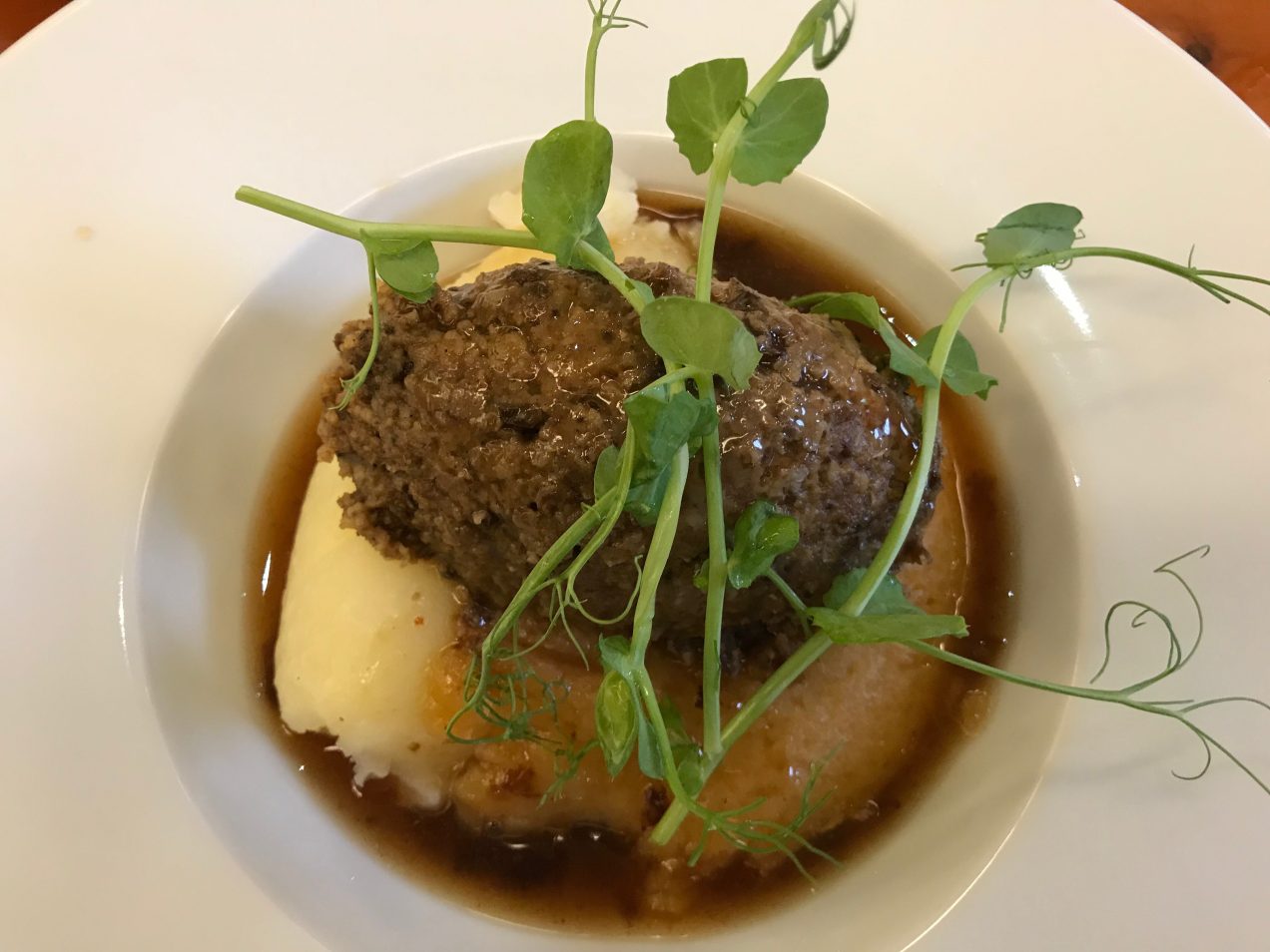
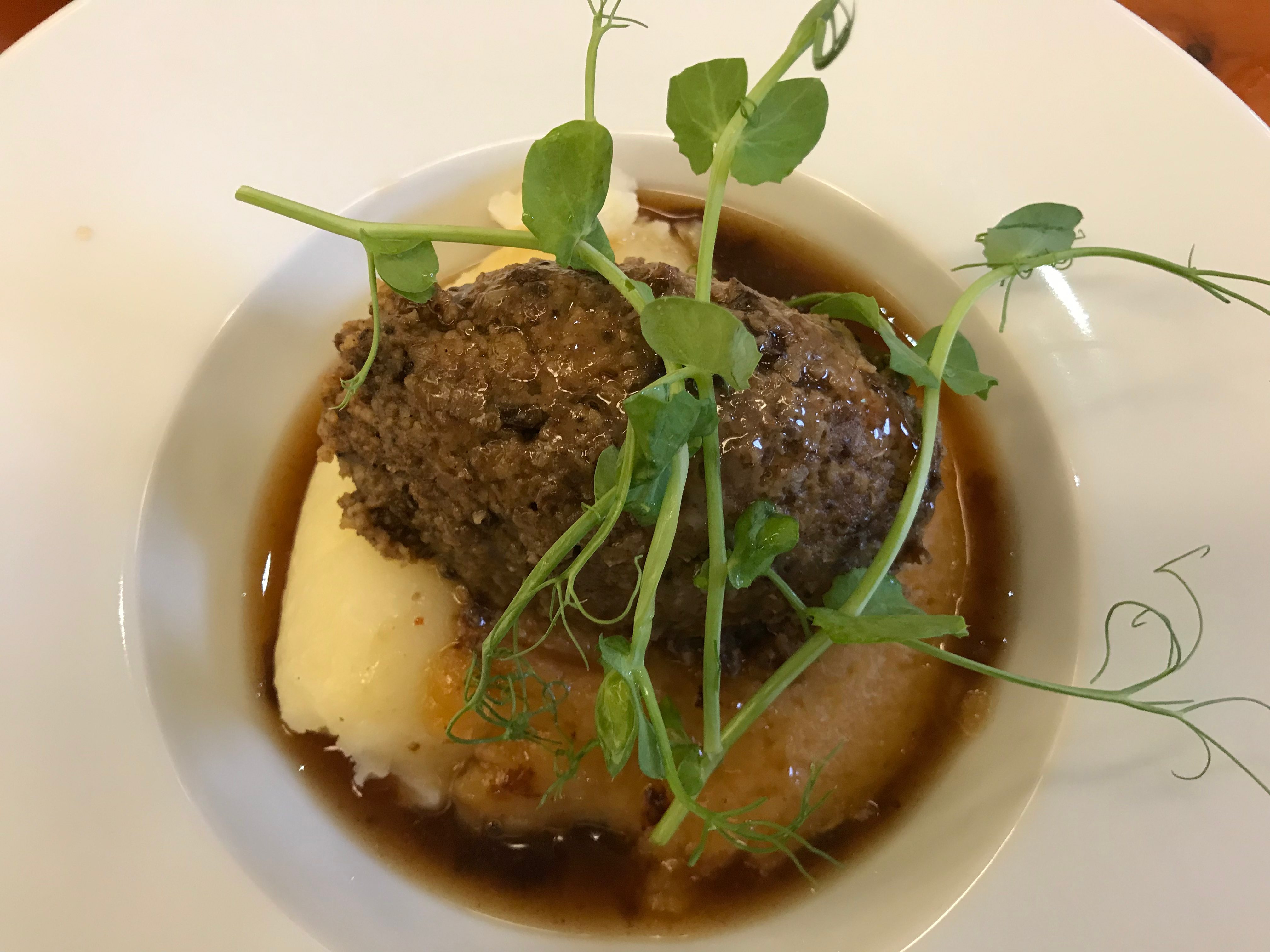
Of all the world’s foods, haggis has one of the worst reputations. In the modern age, minced sheep’s organs, fat, and oatmeal, cooked together in the stomach, are a hard sell. It’s a dish born out of harder times. Traditionally, Scottish farmers often found it more productive to raise cattle and sheep than to grow grain, and oats tolerate the cool, damp climate better than wheat. Almost from the arrival of agriculture, residents of Scotland had everything they needed to make haggis.
Today, it’s Scotland’s national dish. Traditionally, it’s heavily peppered and served with neeps and tatties. Neeps are mashed “turnips,” which are actually rutabagas. Tatties are potatoes. Aside from the potatoes, this would all be recognizable to ancient peoples.
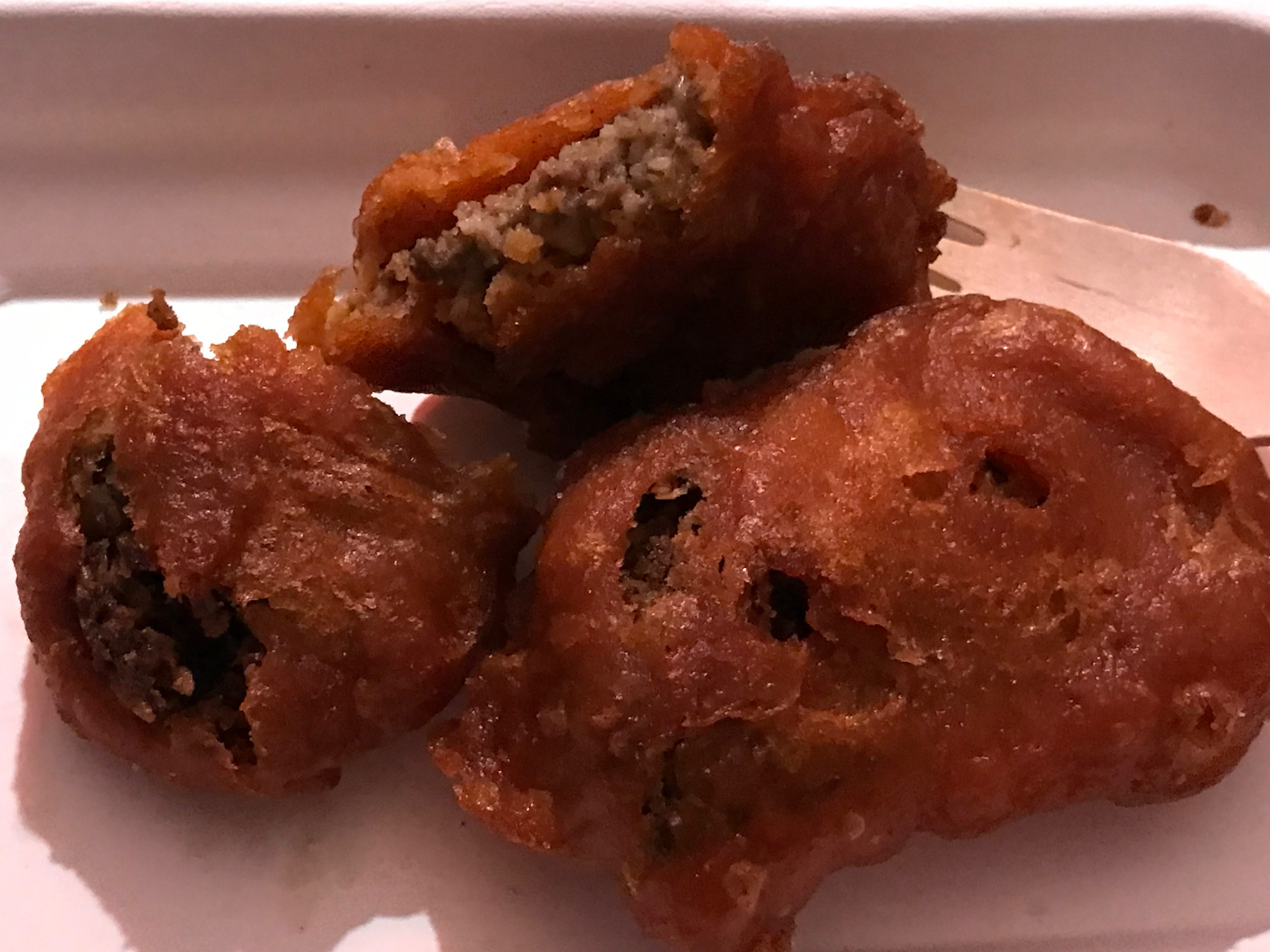
In Edinburgh, you can even get it battered, fried, and enhanced with Indian-style spices at fish and chips shops. One such shop was within easy walking distance from the hostel where our group was staying, so was the perfect stop for a quick lunch between morning and afternoon activities. In addition to fish and chips, which were delicious, they served chicken, vegetable, and haggis pakoras, which are a sort of Indian fritter. In this case, a traditional Scottish staple was cooked Indian-style, and served by Kurdish proprietors. Talk about international cuisine.
I was a little unsure about the haggis, but it was actually delicious. Since everything was ground up, it tasted like a peppery, crumbly sausage, enhanced by a spicy coating. There were no “weird” flavors at all.
That evening, we went to a restaurant and tried a more refined version, served with neeps, tatties, and gravy. It was sort of like sticky meatloaf, probably from the ground oats in the mix, and rather pleasant. Overall, I still preferred the pakoras, but both were good. The trick with “variety meats” must be to grind them up, add a lot of spices, and possibly fry them. Almost anything tastes good that way.
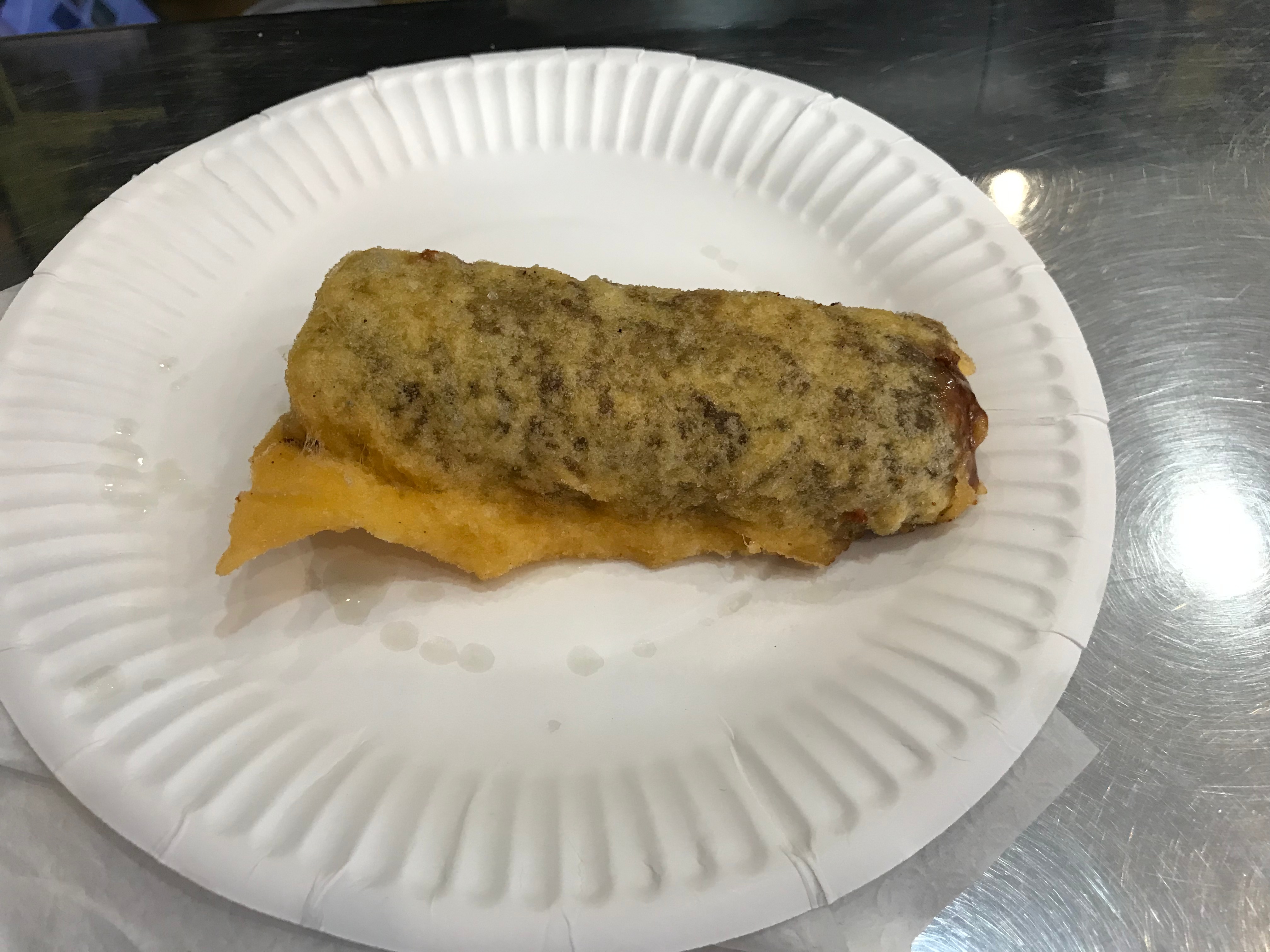
Apparently, Scottish cuisine has a reputation for deep-frying anything, including candy bars. Mars bars are sort of like American Milky Way bars, with a nougat and caramel center. When battered and fried, they become sticky, melty, and crispy, a delightful mix of textures. It’s clear why both haggis and deep-fried Mars bars are foods to eat at some point in your life. (For more information, reference 1,000 Foods to Eat Before You Die, by Mimi Sheraton, pages 38, 40 – 41.)
Make a one-time donation
Make a monthly donation
Make a yearly donation
Choose an amount
Or enter a custom amount
Your contribution is appreciated.
Your contribution is appreciated.
Your contribution is appreciated.
DonateDonate monthlyDonate yearly
 Feasting Through Time