food history, recipes, turkish cuisine

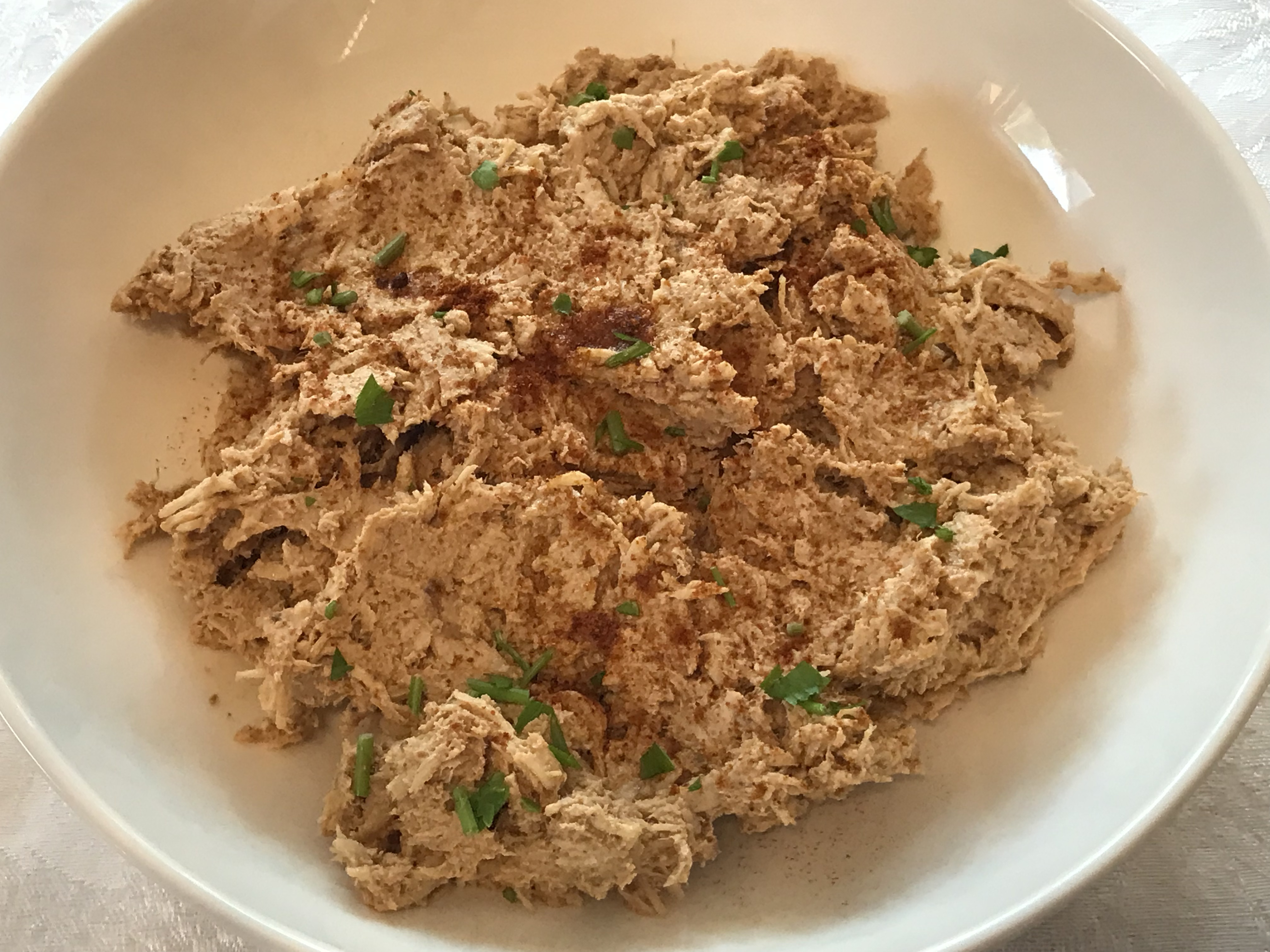
Even More Walnuts: Cerkez Tavugu (Turkish chicken with walnut sauce)

            This dish’s name, Cerkez tavugu, literally translates to “Circassian chicken.” Supposedly, the combination of shredded chicken in a creamy walnut sauce originated in Circassia, a region east of the Black Sea and just north of the Caucasus Mountains. Now part of Russia, Circassia was controlled by the Ottoman Empire for much of the Early Modern Era. During those centuries, the recipe was carried around the empire, hence the Turkish name and similarities to Greek skordalia and Balkan scordolea.

            The primary difference between the sauce for Circassian chicken and walnut scordolea is in the flavoring. Both use garlic, but the Turkish version replaces some of it with onion and seasons the dish with paprika. Traditionally, hot paprika is used, but I use sweet paprika and cayenne pepper to better control the heat. That ensures plenty of paprika flavor, with exactly as much bite as desired.

            Paprika, a blend of dried ground peppers, may have reached Turkey in two ways. From 1519 to 1556, Spain, much of the Low Countries, Naples, Sicily, part of Germany, Austria, Bohemia, and Hungary were all part of the empire of Charles V. Sweet and hot peppers might have been brought to Europe by the Spanish, who spread them across the Habsburg Empire. On their eastern frontier, Charles V, his brother Ferdinand I, and their descendants fought the Ottomans off and on for centuries. As the frontier shifted back and forth, peppers and paprika may have entered the Ottoman Empire via Hungary.

            Another possibility is that the Portuguese acquired peppers on their own voyages of exploration or from the Spanish. From there, peppers could be introduced across their vast trade network around the coasts of Africa, India, and into Indonesia and Malaysia. Unlike Europeans, who looked at hot peppers and mostly shrugged, Africans and Asians went crazy for them. Once chili peppers were introduced to Africa, they could have reached the Ottoman Empire through their holdings in Egypt and the North African coast.

            Regardless of how it got to Turkey, paprika and cayenne pepper make for an amazing sauce with an evolving flavor. When you first take a bite, it tastes slightly sweet. Then it’s sour and creamy, followed by a spicy finish.

            Ingredients:

  • 2 chicken breasts, ideally bone-in skin-on
  • A few pieces onion, carrot, and celery
  • 1 cup walnuts
  • 2 slices good-quality bakery white bread, crusts removed
  • ¼ cup milk
  • 1 garlic clove, peeled, crushed with the side of a knife, and coarsely chopped
  • ¼ cup chopped onion
  • Juice of ½ lemon
  • ¼ cup olive oil
  • 1 tbsp sweet paprika (make sure it’s fresh), plus extra to garnish
  • ½ to 1 tsp cayenne pepper
  • Chopped parsley, for garnish

            Directions:

  1. Slow cook the chicken with the onion, carrot, celery, a pinch of salt, and just enough water to cover. In a slow cooker, it typically takes about 4 hours on high or 6 on low.
  2. Remove the skin and bones from cooked chicken and shred the meat, either with two forks or clean hands. Cool completely.
  3. Place bread in a bowl, drizzle with milk, and let rest while you toast the walnuts.
  4. Heat the walnuts over medium heat in a skillet, shaking pan occasionally, until they smell toasty. Watch carefully, this only takes a few minutes.
  5. Place the toasted nuts into a food processor and pulse a few times. Add the bread and any extra milk, the garlic, onion, and a little salt. Process until smooth and blended.
  6. Add the lemon juice, paprika, and ½ teaspoon cayenne pepper and process again. Taste for salt and cayenne, adding more if desired. This usually has a kick but is not overly spicy.
  7. With the motor running, slowly add the oil through the processor’s feed tube.
  8. Slowly add ½ cup water, mixing until incorporated. The sauce should have a thick, creamy texture.
  9. Transfer the sauce to a bowl, add the shredded chicken, and toss to combine. Garnish with additional paprika and chopped parsley.

Soon it will be time for apple and pumpkin dishes! For free recipes and posts sent straight to your inbox, make sure to subscribe.

One-Time
Monthly
Yearly

Make a one-time donation

Make a monthly donation

Make a yearly donation

Choose an amount

$5.00
$15.00
$100.00
$5.00
$15.00
$100.00
$5.00
$15.00
$100.00

Or enter a custom amount

$

Your contribution is appreciated.

Your contribution is appreciated.

Your contribution is appreciated.

DonateDonate monthlyDonate yearly
Standard
french cuisine, recipes, vegetarian

French Meze/Tapa: Green Lentil Salad

            Lentils are an excellent source of plant-based protein and full of vitamins. Besides soup, some varieties make excellent salads. Green lentils are particularly good for this, since they hold their shape the best. Common brown lentils will also work. Yellow or red lentils fall apart when cooked, and are better in dal or as a thickener for curries.

            Green lentils are most associated with France, where a particularly fine variety grows in the volcanic soil of the south-central Auvergne region. In 1000 Foods to Eat Before You Die, Mimi Sheraton suggests trying the authentic lentilles de puy. These are dark green, speckled, and smaller than regular lentils. The genuine article is rather pricey, but I found French-style green lentils at Woodman’s and decided to give them a try.

            They were amazing. Somehow, the green lentils tasted vaguely like sausage, peppery with a suggestion of sage, even though none of those ingredients were present. Naturally, they would make an excellent vegetarian main course. Not only are they delicious, but I was able to make a few salads with multiple servings in each from one affordable bag.

            The bag had a recipe for French-style warm lentil salad, which I’m sure would be great during the winter with mashed potatoes and/or a pork chop. For summer meze, I created my own simple recipe, dressed with vinegar and oil and flavored with onions. It can be enjoyed warm, room temperature, or cold.

            If you can’t find green French-style lentils by the dried beans and peas, look in the health food section. Bob’s Red Mill is the most common brand, and is what I used. They also carry specialty grains like bulgur, buckwheat, rice flour, and so on.

            Ingredients:

  • 1 cup green lentils
  • 2 bay leaves
  • ¼ red onion, thinly sliced
  • ¼ cup olive oil
  • 2 tbsp red or white wine vinegar
  • Salt and pepper to taste

            Directions:

  1. Cook and drain the lentils according to package directions, adding a pinch of salt and the bay leaves to the water. Cool slightly.
  2. Toss the cooked lentils with the onion, oil, and vinegar. Taste for salt, and add pepper if desired.
  3. Let rest for at least an hour before serving for flavors to meld.

Next time, I’ll post another meze recipe, for chicken with walnut sauce.

Standard
Summer meze
food history, middle eastern cuisine, recipes, summer, Uncategorized, vegetarian

Assorted Meze: Perfect Appetizers/Sides for a Barbecue

This spread is way easier than it looks

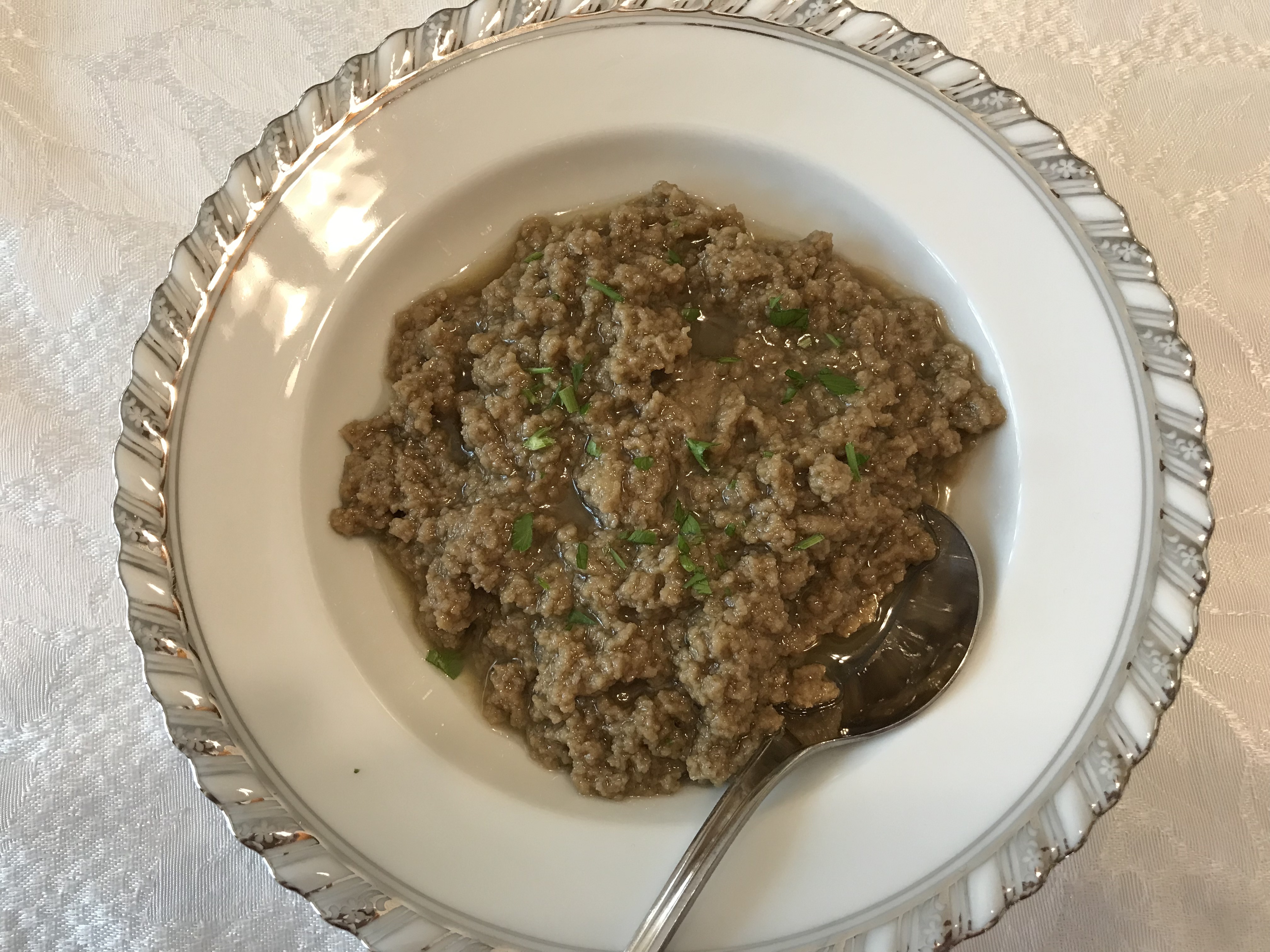
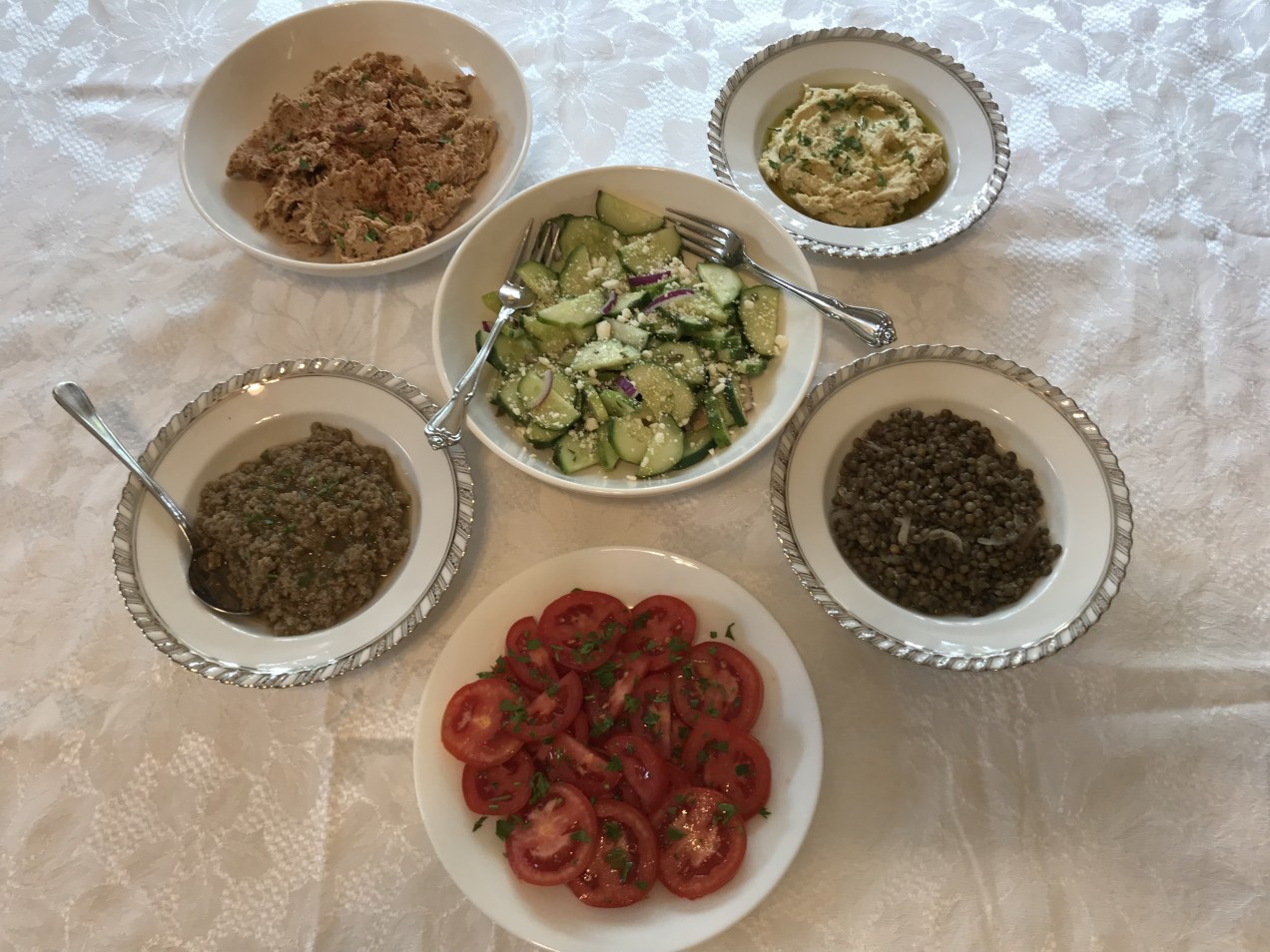
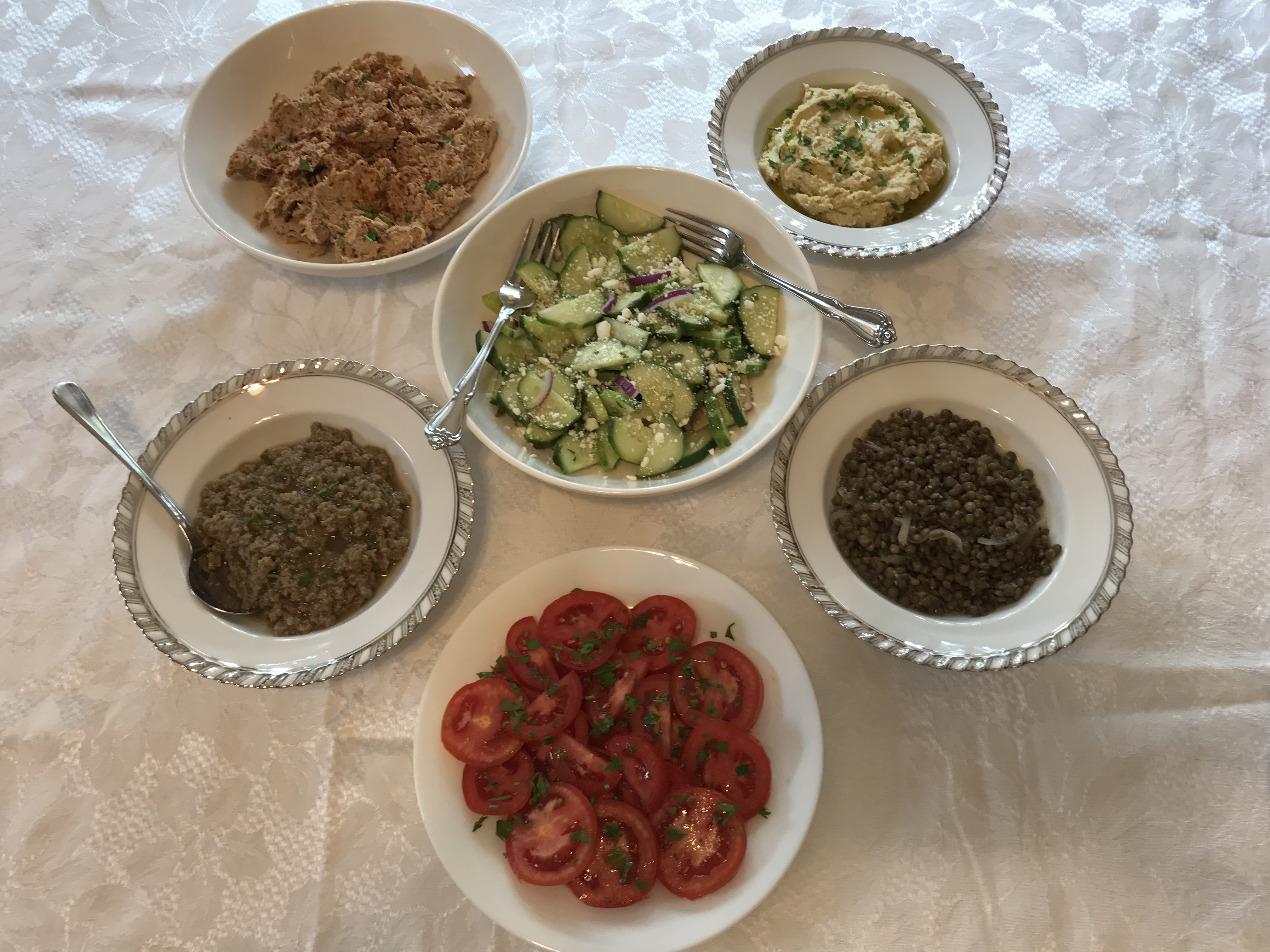
Menu: Hummus, Tahini Dip, Tomato Salad, Cucumber Salad, French-Style Lentil Salad, Turkish-Style Chicken with Walnut Sauce (last two recipes in subsequent posts)

            Just as Spain has tapas and Italy has antipasti, Greece and the Middle East have meze. Reading through Mimi Sheraton’s description of the different varieties in 1000 Foods to Eat Before You Die (on pages 498 – 500), it became abundantly clear they would be perfect for entertaining a crowd, particularly during the summer. Most of the common varieties are served cold or at room temperature, and so could be made ahead. Only a few need last minute cooking, and many require no cooking at all. For a barbecue, meze would be ideal to either nibble before the other food comes off the grill or to serve alongside the main dishes.

            Because meze are traditional over such a large area, with diverse landscapes, climates, and traditions, the variety is endless. Common options include olives, vegetable and legume salads, sausages, various dips like hummus or baba ghanoush, fish, stuffed grape leaves, fried items, tabbouleh, and phyllo pastry turnovers, alongside more local specialties. A large proportion of meze are flavored with lemon, garlic, olive oil, or fresh herbs.

            Meze usually serve as a leisurely meal on their own, so having a variety with some substantial dishes is important. So is plenty of pita bread. For a representative summer/early fall selection, I chose hummus (a classic and always a favorite), tahini dip (interesting on its own), tomato, cucumber, and lentil salads, and Cerkez tavugu (Turkish chicken with walnut sauce). As long as you have a food processor, this entire menu is easy to put together. It’s a good idea to make the hummus, tahini dip, lentil salad, and chicken dish a day ahead to allow time for flavors to meld.

To make hummus:

            Across the Middle East, hummus is frequently eaten as a main dish with pita bread. The idea makes perfect sense. Historically, people got much more protein from legumes like chickpeas than from meat. Comparatively speaking, the chickpeas and flavorings were relatively affordable staples. True connoisseurs say that the best hummus is made with a mortar and pestle, with dried chickpeas, but to save time, canned chickpeas and a food processor make a delicious, protein and vitamin-packed snack or meal.

            Ingredients:

  • 1 can chickpeas/garbanzo beans (about 15.5 ounces), drained
  • 4 cloves garlic (peeled, crushed with the side of a knife, and roughly chopped
  • ½ cup tahini (sesame seed paste)
  • Juice of ½ to 1 lemon
  • ¼ cup olive oil, plus more to drizzle if desired
  • Chopped parsley to garnish, if desired
  • Pita bread and/or vegetables, for serving

            Directions:

  1. Combine the chickpeas, garlic, tahini, and juice of ½ lemon in the bowl of a food processor with a pinch of salt. Process to make a thick, slightly gritty paste, scraping bowl as necessary.
  2. With the motor running, slowly add the olive oil through the feed tube. Once the oil is incorporated, taste for salt and lemon, adding more if necessary.
  3. Add water to thin hummus to the desired consistency. ¼ cup produces a thick paste, for a thinner paste, use ½ cup.
  4. Spoon hummus into a bowl. If desired, drizzle with olive oil and garnish with parsley, olives, roasted peppers, etc. (In the Middle East, pomegranate seeds are a popular garnish).
  5. Serve with pita bread and/or vegetables for dipping.

To make tahini dip:

            Tahini actually makes a fascinating, although distinctly bitter, dip on its own. Personally I prefer it sweetened for halva or used for hummus, but the bittersweet flavor is beloved across the Middle East. Here its flavor is further enhanced with garlic, salt, and lemon juice. All you have to do is crush 1 garlic clove with ¼ teaspoon salt in a mortar and pestle until it becomes a sticky paste. Stir the garlic paste into ½ cup of tahini, and mix in 2 teaspoons lemon juice and 2 tablespoons water. The paste will appear to “seize,” just keep stirring to smooth it out. Don’t add more water, which will make the oil separate out. Place in a bowl and serve with pita bread and/or vegetables (during the late summer and early fall, fresh carrots are particularly tasty).

To make tomato salad:

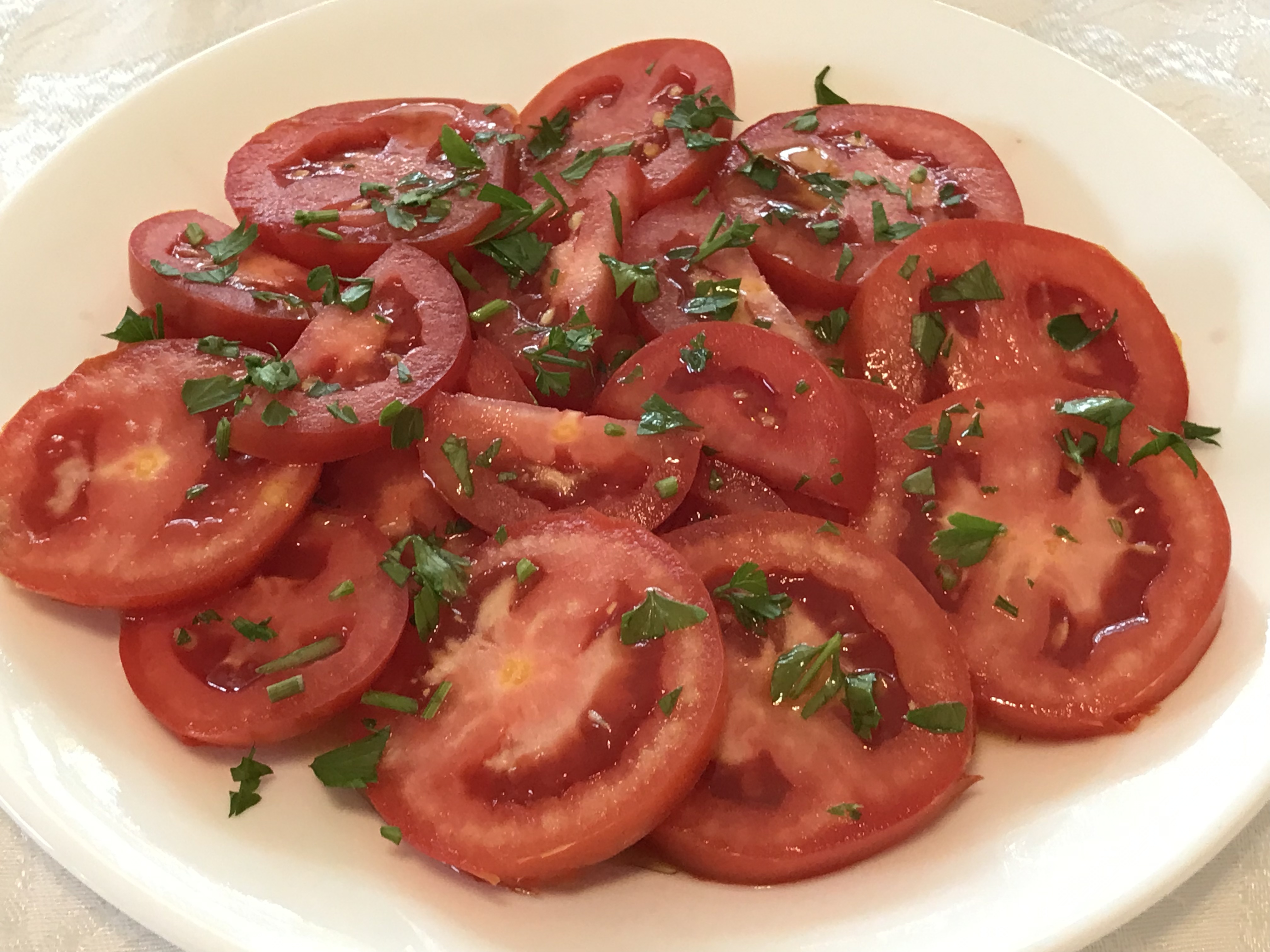
            First, make sure you have fresh seasonal tomatoes. If so, cut them into chunks or thin slices, place on a plate, drizzle with olive oil, salt and pepper to taste, and garnish with chopped parsley for a beautiful red and green effect. (If tomatoes aren’t in season, choose a different meze dish for the best flavor.)

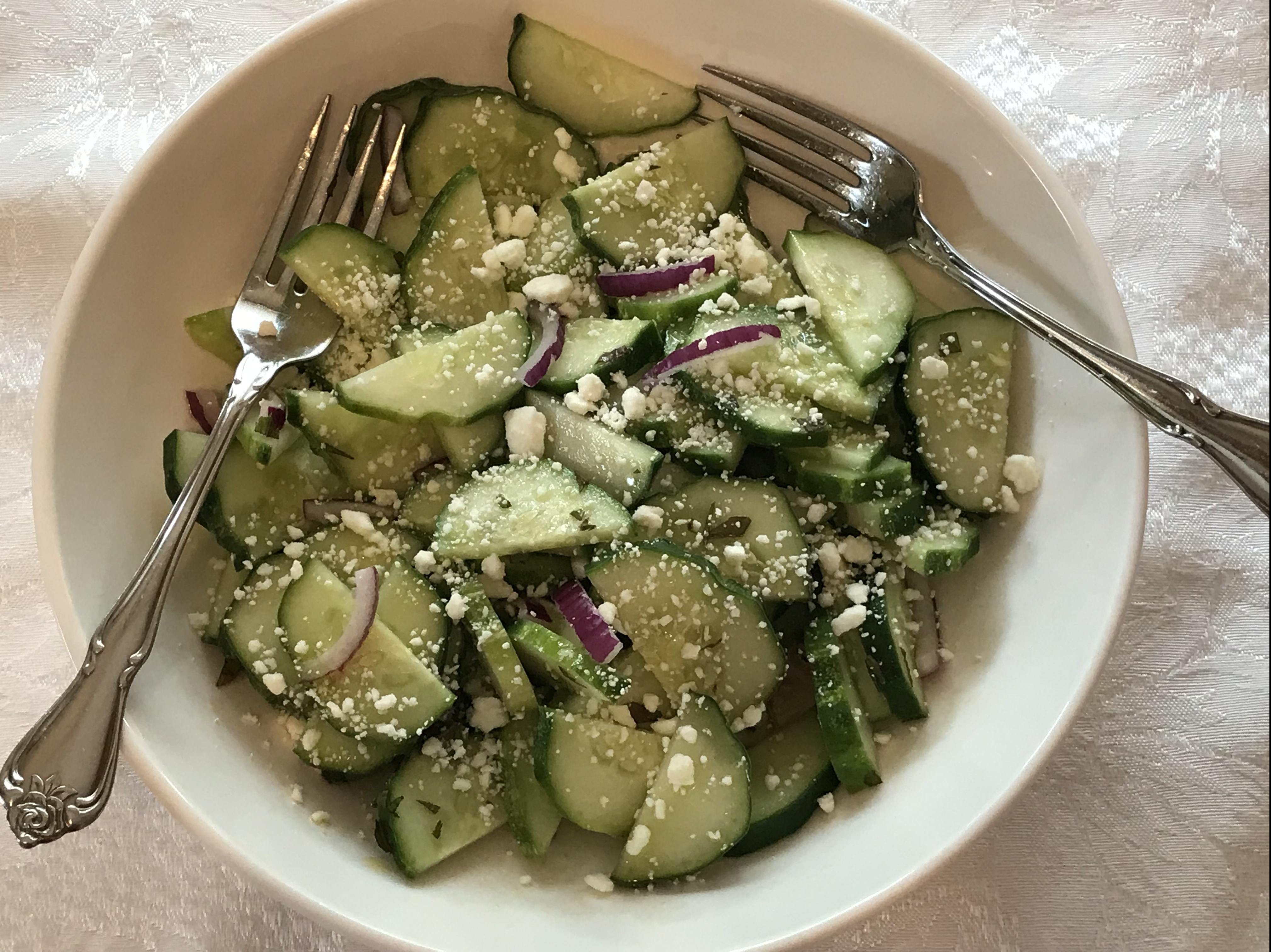
To make cucumber salad:

            Cucumbers, with their mild flavor and high water content, are quite refreshing, which reminds me of a story I heard recently. During the early centuries AD, Christian ascetics competed with each other, seeing who could eat the least food, go the longest without sleep, and so on. This was particularly common in the deserts of Egypt and Syria. In one instance, an ascetic tested his resolve by sitting in the hot sun with a cucumber and seeing how long he could go without eating it. He lasted for several days (presumably he had some water), at which point I shudder to think of the condition of the cucumber.

            For a better-tasting salad, use 2 large or 4 small cucumbers. Peel them if desired, and slice thinly. Toss with ¼ red onion, also thinly sliced, 2 tbsp olive oil, 1 tbsp red or white wine vinegar, and a few finely chopped mint leaves. If desired, add a few crumbles of feta cheese.

            Another common way to prepare cucumbers for meze is to combine with yogurt. Next time, I’ll have a recipe for green lentil salad, so be sure to subscribe.

One-Time
Monthly
Yearly

Make a one-time donation

Make a monthly donation

Make a yearly donation

Choose an amount

$5.00
$15.00
$100.00
$5.00
$15.00
$100.00
$5.00
$15.00
$100.00

Or enter a custom amount

$

Your contribution is appreciated.

Your contribution is appreciated.

Your contribution is appreciated.

DonateDonate monthlyDonate yearly
Standard