Add seasonal flowers for a lovely modern still life
Crazy as it sounds, ring bologna is actually a decent substitute for mortadella in a pinch. After all, mortadella originated in bologna. American “baloney” was an attempt to imitate it. The ring variety is better than the slices, and in either case, crisping it up in a pan gives the bologna a boost in flavor and texture. On this pizza, the oven takes care of that step for you.
If you make the dough the night before and leave it in the fridge, and if you still have garlic oil on hand (the recipe makes enough for several pizzas), this is the easiest pizza in the book. No vegetables need to be precooked; no herbs need to be minced. Just shred the fontina, rinse and chop up the canned artichokes, chop up the mortadella (or bologna) and you’re good to go.
Advertisements
The flavors and textures in this pizza are very well-balanced, between briny, slightly meaty artichokes, peppery bologna, creamy cheese, crispy crust, and garlic. On page 226, author Joe Famularo says the best way to get a good garlic flavor on a pizza without it scorching or being overwhelming is to use garlic-infused oil. And he’s absolutely right. The flavor is definitely there, but it doesn’t overpower the other flavors. Everything is in harmony.
A few months ago, I came across some ricotta salata while browsing at Woodman’s. Remembering that lack of it led me to improvise on sweet pepper pizza a few years ago, I decided to remake the recipe and give it a try. Plus, I had some unbleached flour and quick-rising yeast I wanted to use up before they went bad. At the time, I’d been trying to clear out the pantry, find a use for the ingredients pushed to the back, and therefore avoid food waste.
Recently I started watching Hoarders, which is enough to make anyone want to clean, even if they don’t have a problem. Many of the jam-packed kitchens came about because their owners liked to stock up when preferred items went on sale. There’s nothing wrong with that, as long as you don’t buy more than you can use before it goes bad. Having some extra cereal, pasta, crackers, and canned goods in the basement is handy. Just don’t overdo it.
Some items, like the cornmeal that I bought at the start of Covid, expired two or three years ago and weren’t salvageable. The yeast and unbleached flour were still good, but expiring soon, so it was as good a time as any to make pizza. I made the garlic oil that all the recipes use, stuck it in a jar in the fridge, and decided to start with a white pizza using the leftover provolone and some of the pecorino from the eggplant timbale (and leftover parmesan from some gnocchi, and some mozzarella already in the fridge).
Advertisements
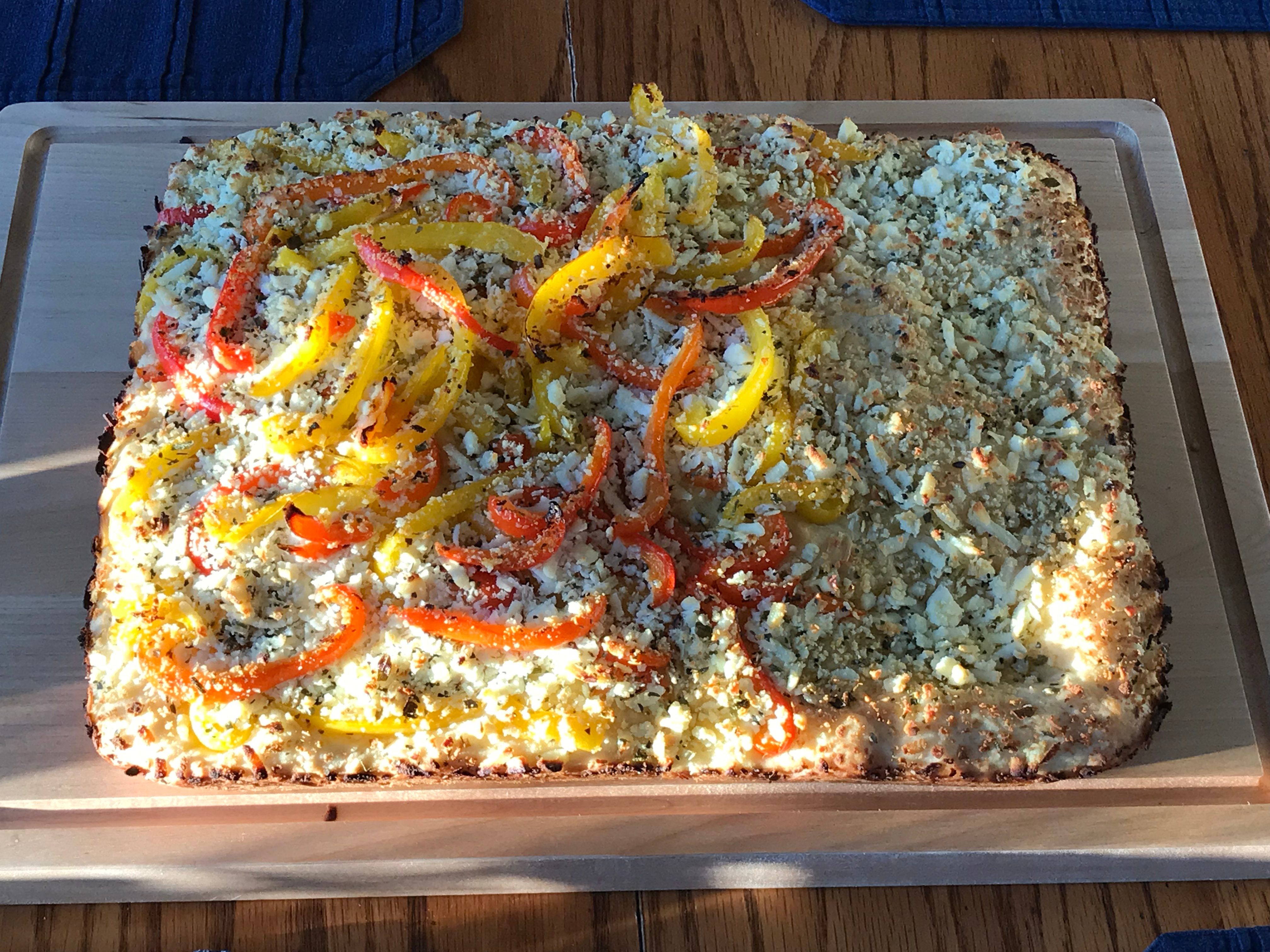
When I went to put the dough in the intended pan, a large round sheet pan with a short “lip,” it wasn’t there. Turns out, it had started flaking and reached the end of its natural life. Looking at my other options, I settled on a roasting pan with slightly higher sides. If I spread the dough all the way to the edge, the surface area would be similar, just in rectangular form. Nothing wrong with that.
This turned out to be the best culinary misadventure in a while. Because this dough recipe produces a thick crust, I had never spread it to the edge of the pan before, in case the garlic oil in the topping dripped off onto the bottom of the oven. Being able to do so made a huge difference. The crust rose evenly instead of bulging in the middle, and the edges got extra golden and crispy. Everything was delicious, but the edges were phenomenal. And the pizza fit perfectly on the new, giant wooden cutting board.
After this success, I decided to make any future pizzas in this pan. The sweet pepper and ricotta salata pizza was up next, for the simple reason that peppers were on sale at the store. This was good, but a little dry, even with the garlic oil. For pizza, meltier cheeses with a bit more fat seem to be the way to go.
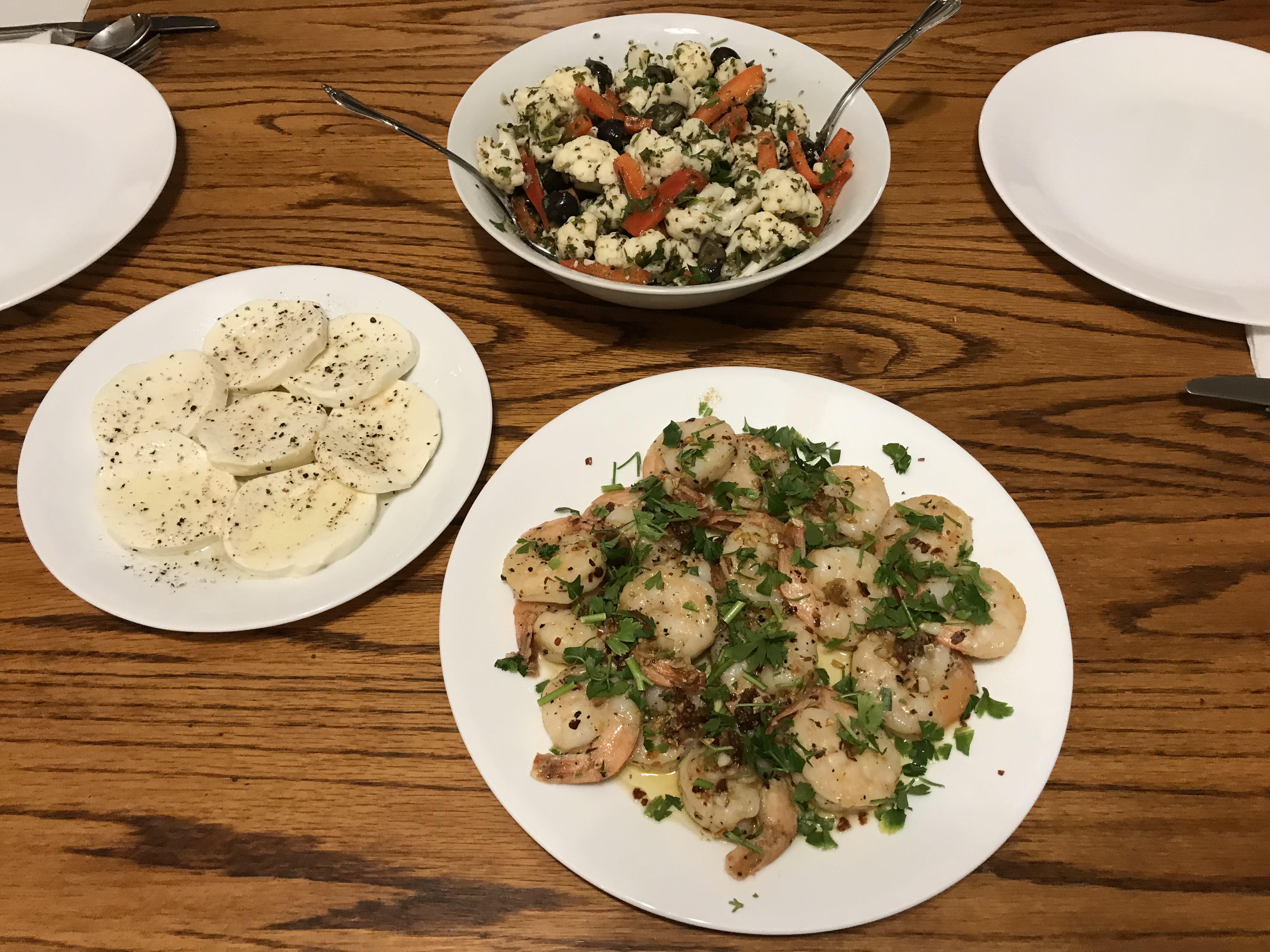
Menu: Seasoned Fresh Mozzarella, Peppery Shrimp 1-2-3, Neapolitan Cauliflower Salad, Spaghettini with Clams, Carrots, and Wine, Fish Filets Neapolitan Fishermen’s Style, Spinach with Oil and Lemon, Hearts of Escarole with Red Pepper Confetti, Panettone Bread Pudding
Recommended Wine: Capri or Sicilian dry white
Anywhere Christmas is celebrated, it is an occasion for feasting. Medieval Europeans loved a whole roasted boar with an apple in its mouth and hot spiced beer and wine. Gingerbread and other sweets were banquet treats in Elizabethan England, especially at Christmastime. Victorians liked roast beef, goose, or turkey, with plum pudding, mince pies, oranges, and nuts. In modern Australia, where Christmas is in the summer, holding a barbecue is popular. Exactly what people eat depends on personal preferences and cultural traditions, but the important thing is sharing it with loved ones.
In many places, including parts of Italy, the biggest feast is on Christmas Eve. This is interesting, because at one time, people fasted during Advent. There would be a simple meatless meal on Christmas Eve, people would go to midnight mass, then on Christmas Day enjoy eating lots of meat after a month of abstaining. Over time, the Christmas Eve meal became more elaborate. Eventually, in the area around Naples, it became the Feast of the Seven Fishes, supposedly for the seven sacraments. In some cases, it would even be twelve, for the twelve Apostles. To make things more complicated, the seven (or twelve) types of fish had to be in different dishes. A soup or salad with multiple varieties could only count as one dish.
To make everything easier to cook and eat, Mr. Famularo reduces the number of seafood dishes to three. This could be for the Trinity (text, pg. 198), but regardless, three “fishes,” plus all the other dishes in the menu, were a big enough challenge. The cauliflower salad could be made ahead of time, ingredients could be prepared, and the bread pudding assembled and left to soak up the custard, but a lot of last-minute prep was unavoidable. To make things easier, I split things up and made the fish filets and escarole salad on a second night.
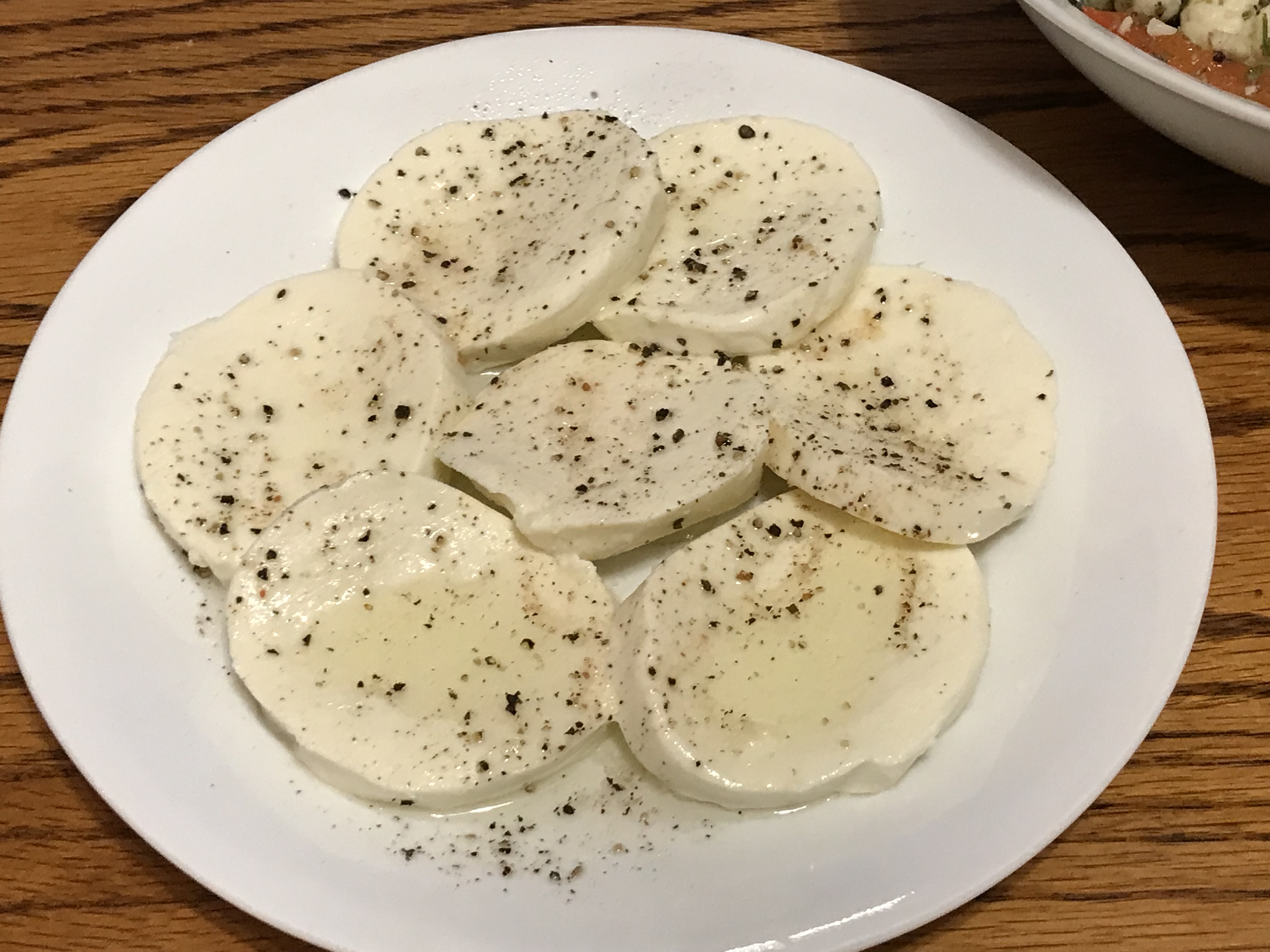
The first dish was composed of fresh mozzarella slices, sprinkled with olive oil and black pepper. Ideally, the cheese would be provolone burrinos, which have a piece of butter in the center. Since there is no Italian deli or food store near me that stocks them, I used the suggested alternative. The best fresh mozzarella in Italy is made from water buffalo milk (mozzarella di bufala), though cow’s milk varieties seem to have always been common. Some historians think the water buffalo was introduced to Italy by the Goths in the 5th and 6th Centuries AD. The technique of stretching the curds in hot water to produce mozzarella’s characteristic chewy texture appears to have been developed at some point after that. A few factories near me produce high quality fresh mozzarella, and you can even buy it ready-sliced in a log. The oil and pepper added some extra flavor, but even on its own, it was delicious.
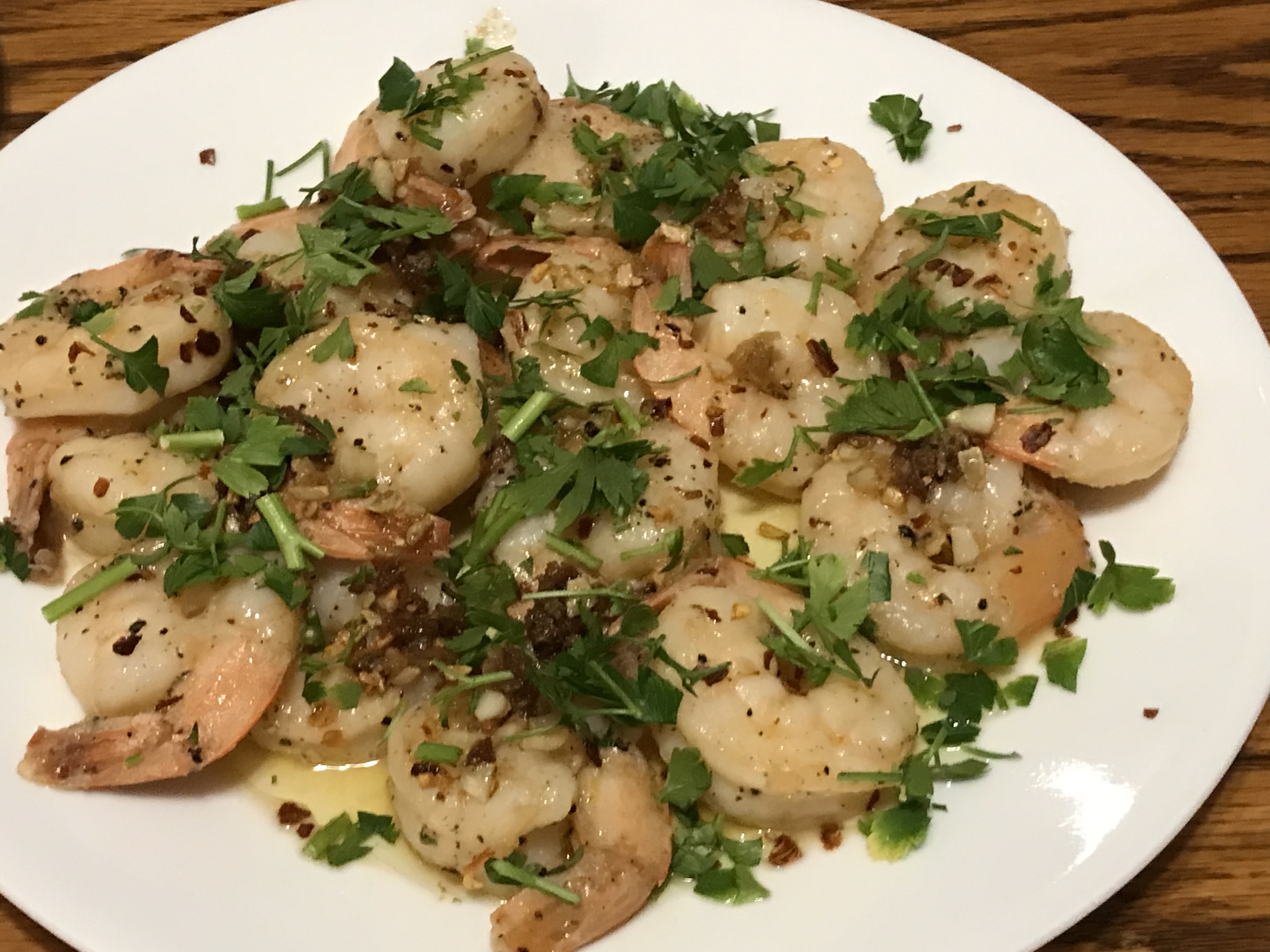
Success continued with the shrimp. What was unusual was that red pepper flakes were only sprinkled over it after it was sauteed. The oil was kept on the stove to briefly cook the garlic, just enough to add color before the garlic oil was sprinkled over the dish. It was interesting to add the seasonings after the shrimp was finished cooking, but it kept the pepper and garlic from scorching or darkening. A sprinkle of green parsley contrasted nicely with the red pepper.
The cauliflower salad was definitely different, but tasted great. Another great thing about it is that it can, and for the best flavor should, be made a day ahead. Cauliflower is firm enough not to get soggy when marinating and soaking up the flavor from the dressing. I wouldn’t have thought of cauliflower as a salad vegetable, but it worked beautifully.
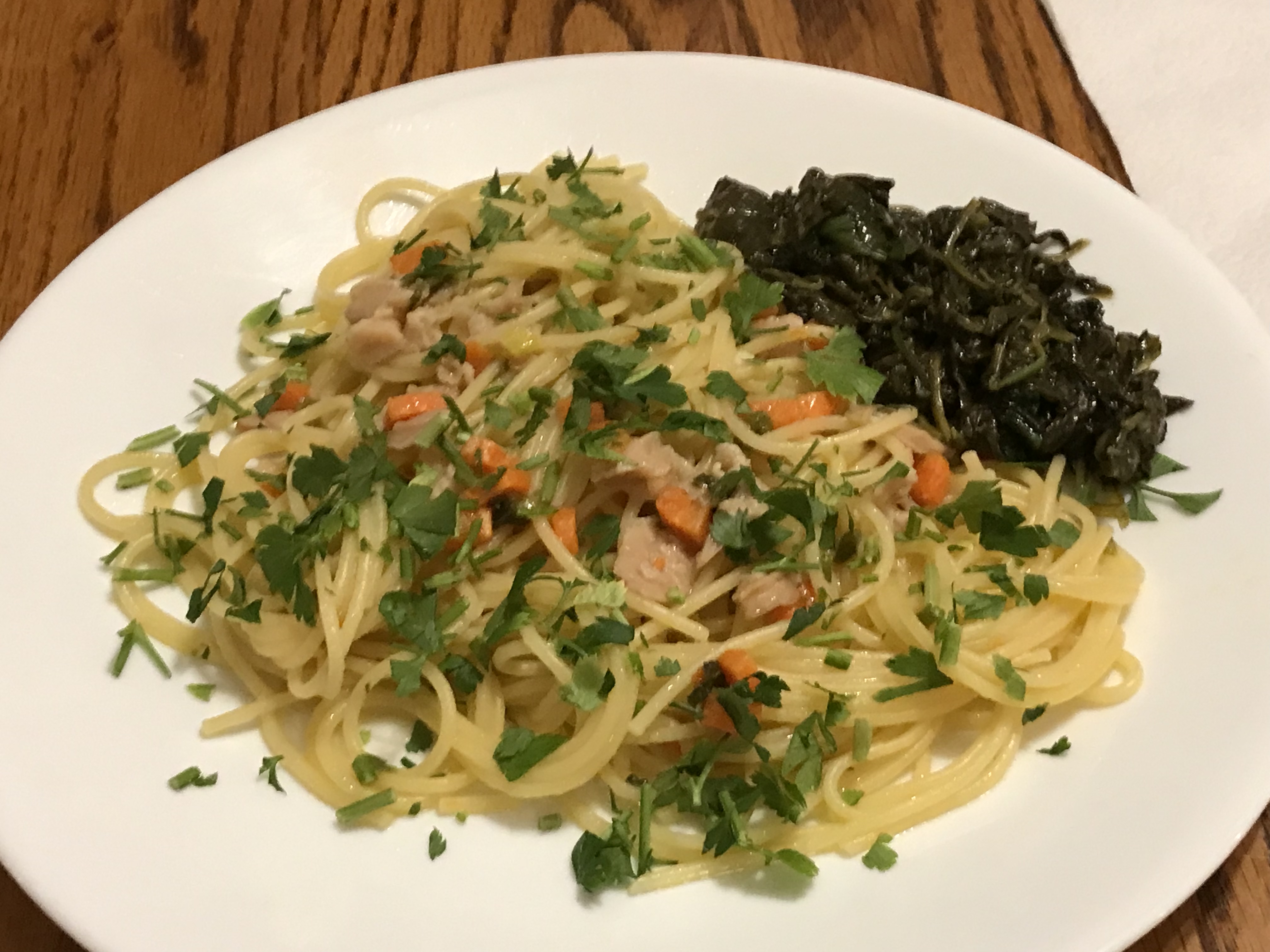
The second fish, the thin spaghetti with clams and carrots, was not such a success. While I hadn’t cared for the steamed clams in the Liguria/Portofino seaside menu, I had enjoyed chopped clams in a tomato-clam sauce in one of the Venetian menus, so I expected this would be similar. It wasn’t bad, but I still didn’t enjoy its strong fishy flavor. Tomato sauce had helped balance it, but there was no tomato in this recipe. Fortunately, Mr. Famularo does not follow a strict “no combining seafood and dairy” rule common in Italian cuisine, since some extra parmesan cheese made the pasta almost good. Good enough to eat the leftovers, in fact, but not good enough to make again.
The spinach was less edible. Part of the issue was that I was too cheap to buy fresh spinach in December and used frozen instead. That one was on me. But there was another issue. After cooking, the spinach got its addition of lemon juice. The problem is that the color and texture of some foods are affected by the pH of the dish, or how acidic it is. Bases are the opposite of acids. When green vegetables are cooked with a base, usually baking soda, their color stays especially green. Cooking them with an acid turns them an unappealing brown color, though their texture is unaffected. Lemon juice is highly acidic, and adding it after cooking didn’t help. The spinach immediately changed color, and using frozen instead of fresh did affect the texture, creating a gross-looking brown sludge. Maybe using fresh spinach is the key, since this is supposedly one of the favorite ways to cook spinach in Italy (text, pg. 202). The taste was ok, but the texture and appearance of this dish made it hard to eat.
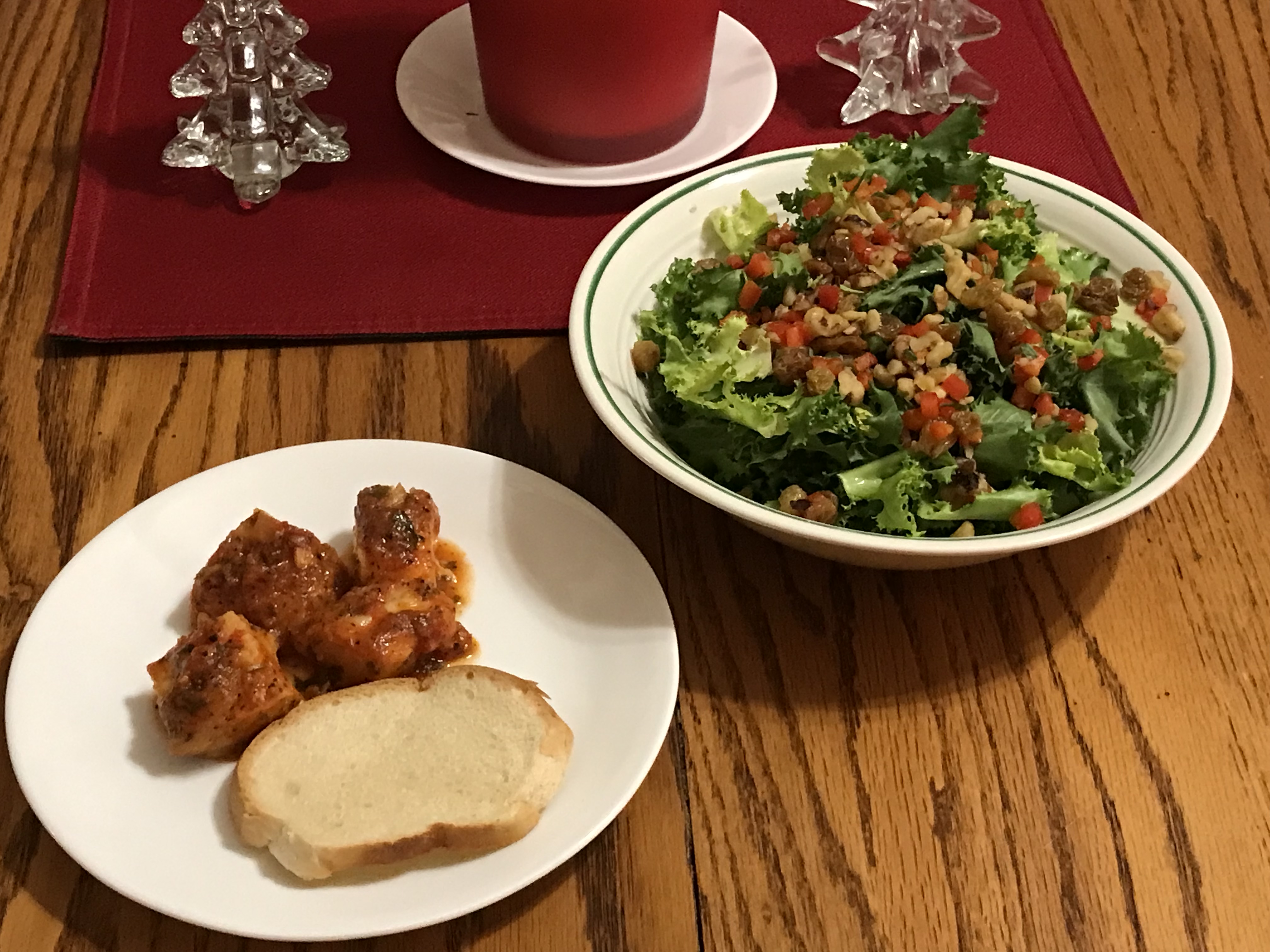
I had better luck with the fish filets and salad. Due to time constraints, those were made on a second night. The fish was eaten with a tomato-garlic-herb sauce. I wouldn’t have thought of using it with seafood, but the flavors worked together well. The escarole in the salad was a little bitter, but balanced with diced red pepper “confetti,” golden raisins, walnuts (replacement for pine nuts), and capers.
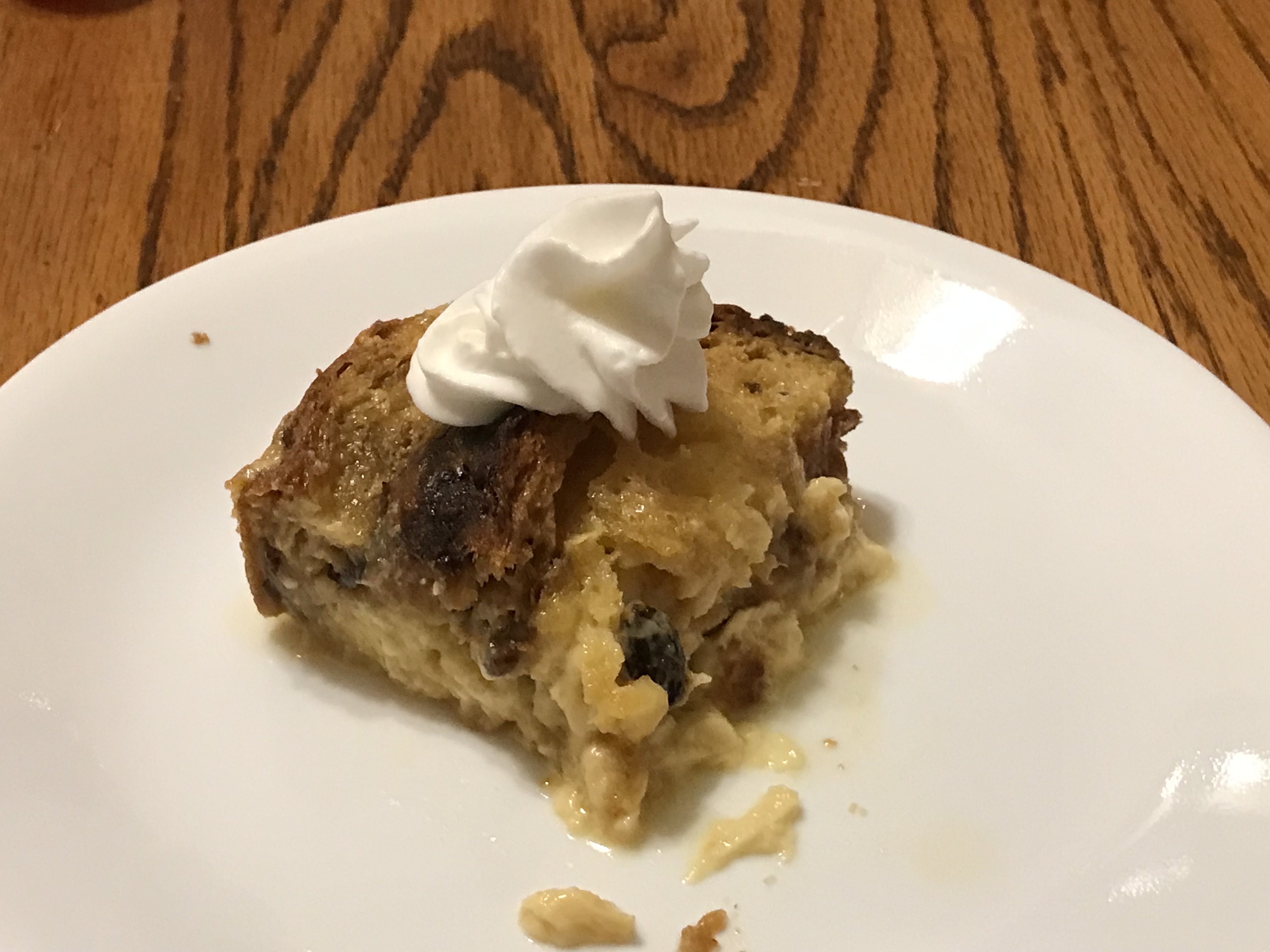
People have been making bread pudding for hundreds of years. Along with toasting, soaking stale bread with eggs is a great way to revive it. This particular variety, made with sweet, eggy panettone, soaked in a honey syrup and a creamy custard, was particularly rich. Panettone was originally from Milan, and is now a Christmas staple across Italy. Making a bread pudding was a unique way to include it in the menu. The cooking time was a lot longer than the recipe said, but dessert was worth the wait.
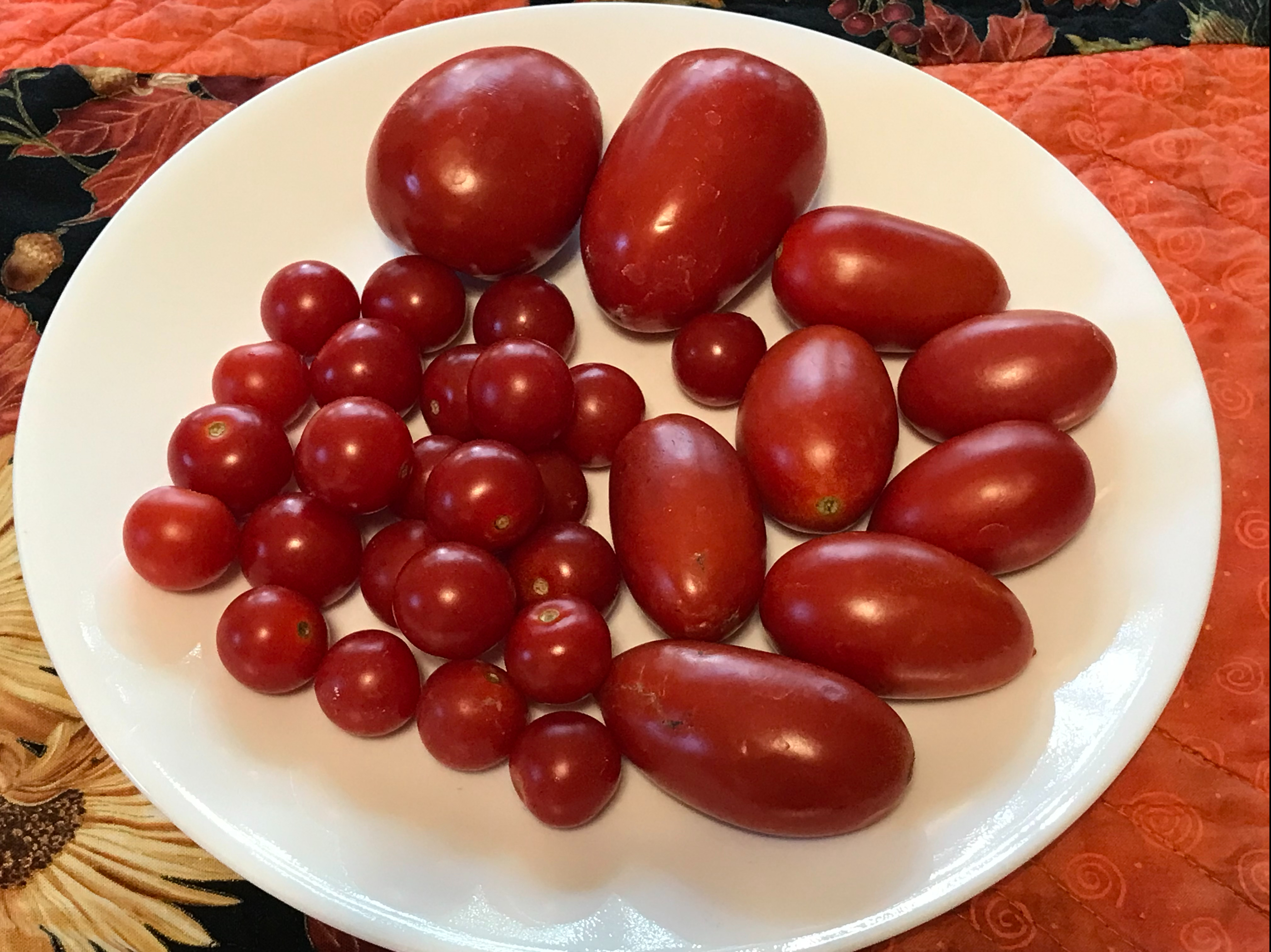
Clockwise from the top: Roma, San Marzano, and cherry tomatoes
1000 Foods (pgs. 220, 223 – 224, 235 – 236)
This last summer, after removing part of the deck that was in disrepair, I had a small garden bed to use. For my birthday back in March one of my aunts gave me a gift card for a seed savers catalog, which had some particularly interesting selections, including two types of sunflowers, giant zinnias, arugula, and cress. After buying more herb plants than necessary and planting them in pots, I had a plan for the new garden bed. The larger type of sunflowers would go in the back row. Three tomato plants would get half of the middle row instead of their usual 5-gallon buckets. On the other side I had a bean plant given to me by a student after an experiment to determine where plants get their mass from as they grow. (Answer: it’s mostly the carbon and oxygen in the air.) I planted a few leftover seeds in the row to keep it company. In the corner was an unknown plant from a different student (turned out to be mustard greens). The front row was half arugula, almost half cress. Marigolds on the sides would hopefully keep rabbits away. It sounded tidy and organized.
Plants don’t necessarily do tidy and organized. With plenty of space, the tomato plants spread out and covered much of the arugula. The bean plants, which I was not aware were pole beans (it didn’t say on the package) grew in every direction. By the time I got the stakes in it was too late to manage the chaos. They didn’t produce many beans and those few were tough, but the plants themselves may have had an additional benefit. The sunflowers on that side of the garden were taller than those on the side with the tomatoes. Since the change was gradual it may have had as much to do with drainage patterns, but the nitrogen-fixing bacteria that live on bean roots may well have enriched the soil and given them a boost. Finally, the marigolds ended up about two feet tall. Whether they or the fence was more effective at rabbit control is an open question.
Along with Roma and cherry tomatoes, I planted a San Marzano plant. Technically, to be 100% authentic, the tomatoes would need to be grown in the rich volcanic soil near Naples, but this was a way to taste them fresh. The plants are scraggly-looking with long, thin, pointy fruits, but they are said to be one of the best tomatoes for canning. In fact, the use of tomatoes in Italian cuisine increased significantly once the canning industry developed. I couldn’t taste much difference in the three types of fresh tomatoes, but I’m not normally a fresh tomato fan. They seemed to work well in the various soups and salsas over the course of the season. It will be interesting to compare canned San Marzanos with other varieties at some point in the future.
I probably could have managed with one basil plant instead of two. They were small when I got them, and so had me fooled. Each in their own pot, with lots of sunshine and daily watering, they thrived to the point of my not knowing what to do with all the basil. With a potent, distinctive aroma, basil is widespread around the world. In its homeland of South and Southeast Asia, it has religious as well as culinary significance. Pesto is perhaps basil’s most popular use in the West, but it can also be used in sauces, salads, and even lemonade and sorbet. It actually works as well with strawberries as it does with tomatoes.
What’s interesting about pesto is that while pesto-type sauces have existed since Ancient Rome and basil was introduced to the Mediterranean in the Medieval era, the two were not combined until well into the Early Modern period. Perhaps the speed at which basil oxidizes once cut made people suspicious of it. (The darkening/browning is oxidation. The same process happens with guacamole.) Or maybe Medieval cooks were underwhelmed, since they didn’t like to serve raw ingredients and basil loses much of its flavor when cooked. Fortunately for us, the Italians eventually figured out the best way to use it, and many other cuisines followed.
Like most popular foods, pesto has a number of variations. The classic form has basil, salt, garlic, olive oil, and pine nuts. Usually a hard cheese such as Parmesan or Romano is included, but not always. Some or all of the basil might be replaced with parsley or arugula, reducing the discoloration on the surface but changing the flavor. One modification that does not affect the flavor much is to substitute almonds or especially walnuts for the pine nuts. With all the garlic and basil, it’s hard to tell the difference, and walnuts are a lot more affordable. They thicken and enrich the mixture just as well. Some versions, like the one in the book, even replace part of the olive oil with butter. Garlic is a constant, as is salt. In addition to adding flavor, the salt is *supposed* to reduce discoloration, but that was not my experience. A reliable solution is to scrape off the discolored part. The pesto below will be as green and aromatic as ever.
In the meantime, winter is here. For next year, I’ve embarked on some seed saving of my own, gathering hundreds of sunflower seeds, along with a few small bags of marigold and one of zinnia seeds. I’m not sure where the petunias that appeared in the garden bed with the small sunflowers and zinnias came from. Most likely, some petunia seeds got mixed in with the other seeds by mistake, or some seeds blew over from another plant. However it happened, they grew so well and lasted so long into the fall that I saved some of their seeds too. Planting slightly earlier and starting some of the sunflowers inside should ensure an even better display next summer. Just not a tidy one.






 Feasting Through Time