Chocolate roll
food history, italian cuisine

Cook’s Tour of Italy Menu 32 (Pgs. 107 – 111): Menu for 4, Bergamo

Chocolate roll
Dessert, the star of the show

Region: Lombardy

Menu: Bergamo-Style Ravioli, Rabbit Roasted in Red Wine, Bergamo-Style Polenta, Cheese with Mixed Salad, Sambuca-Flavored Cocoa Roll (orange flavor instead)

Recommended Wine: Spumante

            Bergamo is in the northern Italian province of Lombardy, north of Milan. As in the rest of northern Italy, there is a lot of fresh pasta and polenta, butter often replaces olive oil, and there are plentiful cow’s milk cheeses like fontina, gorgonzola, parmesan, and mascarpone. While generally overshadowed by its larger neighbor, Bergamo has its own specialties. One of these is a unique ravioli, filled with a mix of chicken, pork, salami, vegetables, and a little cheese. They are dressed in melted butter and sage, parmesan cheese, and toasted bread crumbs.
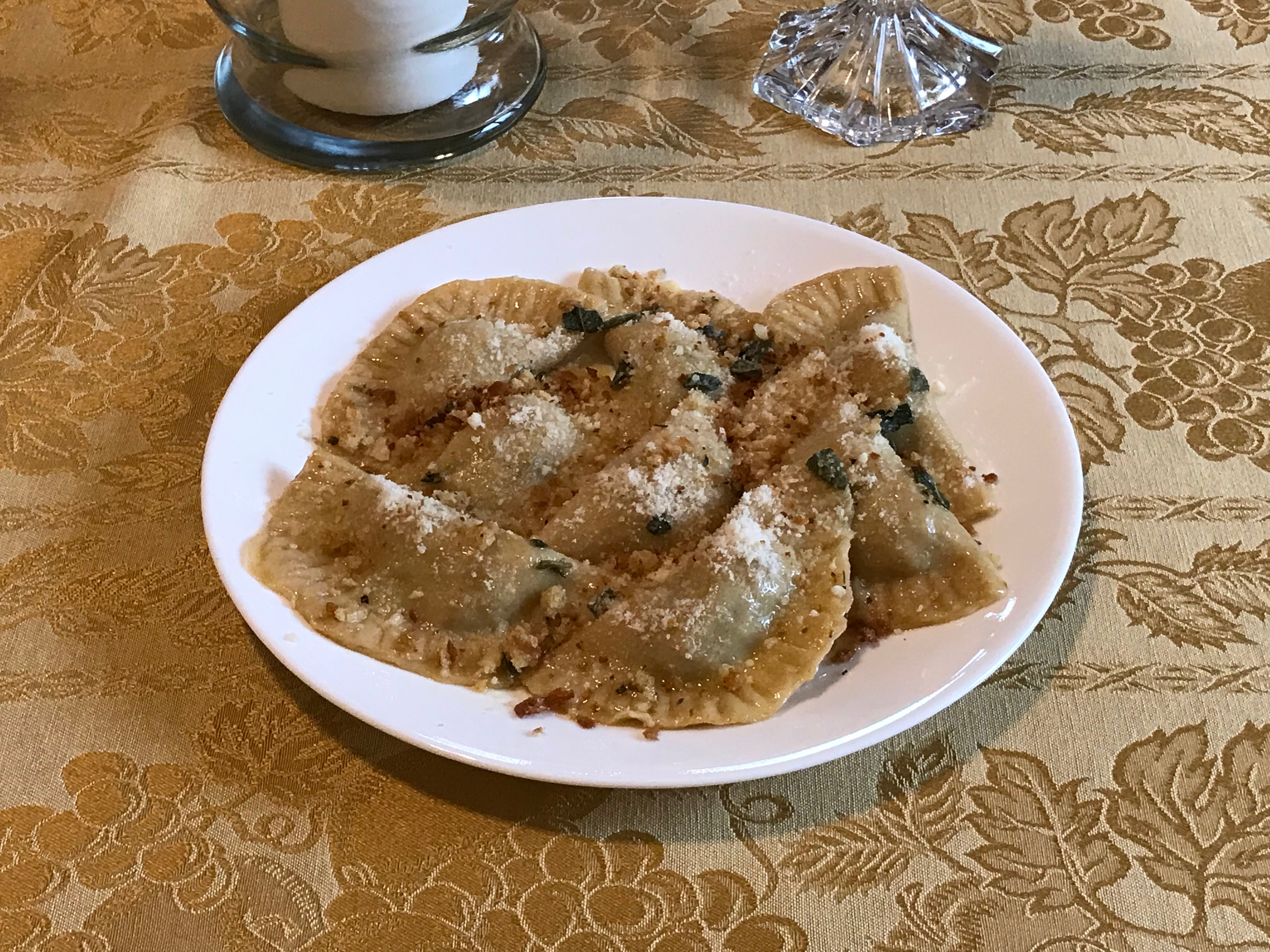
Bergamo ravioli

            This was my first attempt at making my own pasta, and it went surprisingly well. Since I don’t have a pasta roller, I rolled little pieces of dough into circles with a rolling pin and folded them around the filling in a half-moon shape. It was a slow process, but making the ravioli bigger sped things along. The meat-and-vegetable filling was deliciously different from the usual cheese-heavy varieties, though there’s nothing wrong with those.

            The only thing I would change is to cook the larger ravioli for an extra minute or two. Having thicker pasta kept the ravioli from bursting open, but not factoring it into the cooking time left it a little tough. It was still delicious, and the extras are in the freezer for whenever a quick homemade dinner is desired.

Advertisements

            Another first for this menu was the rabbit. The idea was a little tough at first, until I reminded myself that this rabbit (which according to the package was a product of Spain) was bred and raised exclusively for food. It was never someone’s pet, or a former resident of the nearby farm/petting zoo. Besides, people have been eating rabbits for a lot longer than they’ve been keeping them as pets. They were a common protein into the 20th Century, and one 1930s menu even had rabbit pot pie as an economical alternative to chicken.

Rabbit and polenta

            Rabbit does, in fact, taste sort of like dark meat chicken, but a little different and very lean. The fact that chicken is easier to farm on an industrial scale probably explains why rabbit isn’t as popular as it used to be. Or maybe it’s just that people didn’t grow up with the Easter Chicken. Or the fact that chickens won’t stand on their hind legs like a prairie dog when offered a banana chip.

Black rabbit
Not the second course…and I wasn’t rabbit sitting when I made this menu either.

            Regardless, most rabbit recipes seem to involve slow-cooking it in liquid and/or adding some extra fat. In this case, the fat came from a bit of Italian sausage, and the liquid was red wine. It did taste very good, though in the future I would probably just use chicken thighs, which are cheaper and easier to find. At least for this recipe.

            Upon reading the recipe, I was surprised at how quickly the polenta cooked. Once the salted water was boiling, the corn grits/polenta only had to cook for about five minutes. It required frequent but not constant stirring, and didn’t get lumpy, which is a common problem. Was the addition of a little buckwheat flour the key to a good consistency? Perhaps, and either way, the addition of butter, sage, and fontina cheese gave the final mix a pleasant rich but mild flavor that contrasted well with the stronger flavors in the rest of the meal.

            The salad was similar to many others in the book; a mix of greens dressed with a flavorful homemade dressing. The store didn’t have the endive called for in the recipe, so I just used the arugula and radicchio. Unlike other lemon juice and oil “vinaigrettes,” a little bit of orange zest and some minced shallots seemed to sweeten the mix, keeping it from becoming too sour and letting it balance the bitter radicchio. Don’t worry if the oil solidifies in the refrigerator. Fifteen to thirty minutes at room temperature will take care of that.
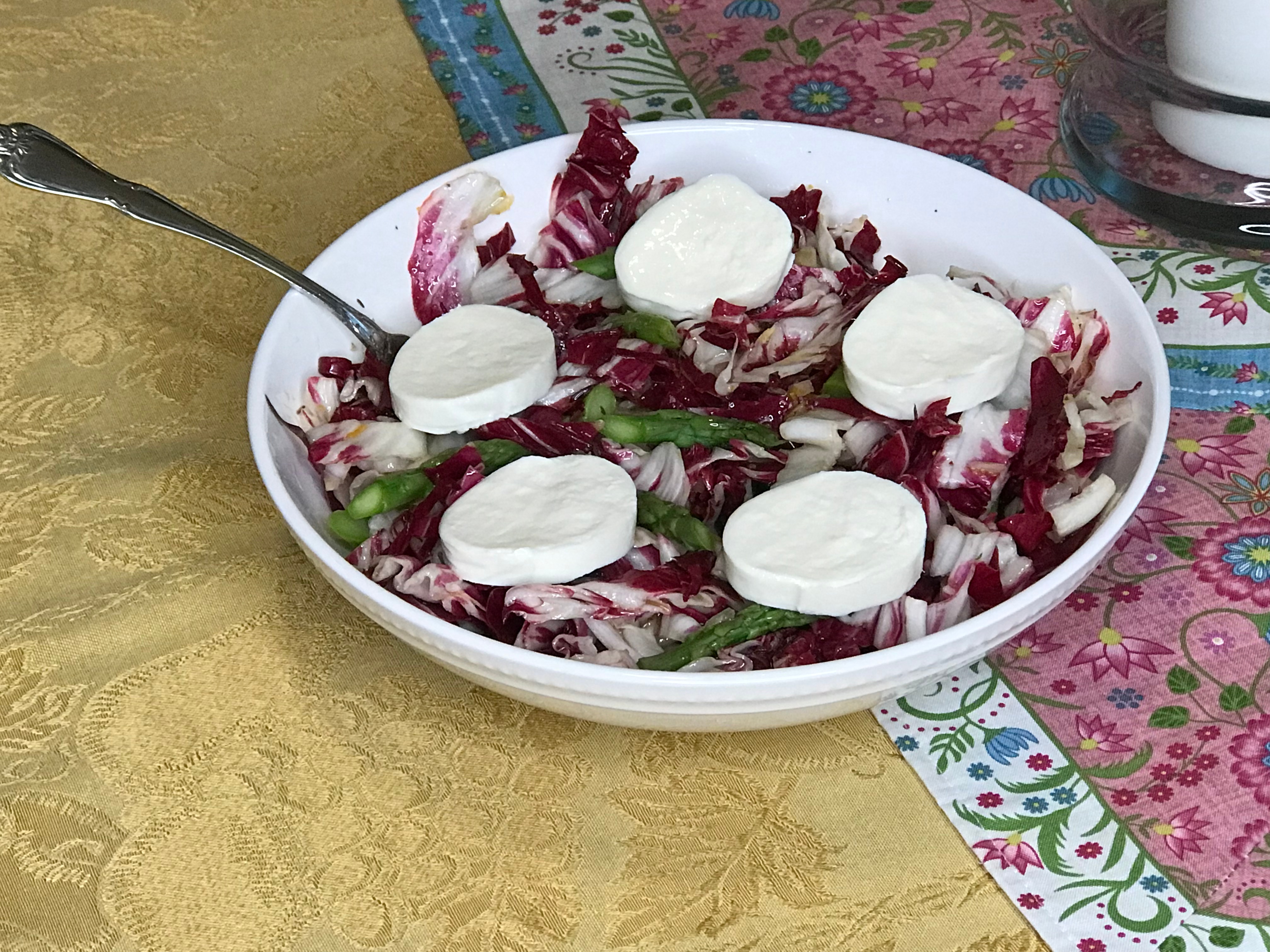
Mixed salad

            For the cheese, I used fresh mozzarella instead of taleggio because that’s what was available at the store. Even though it’s a southern Italian cheese not native to the Bergamo area, it went very well with the salad, especially when served on the dressed greens instead of next to them. The bitter arugula and radicchio, sour and slightly sweet dressing, and mild mozzarella all contrasted beautifully without clashing.

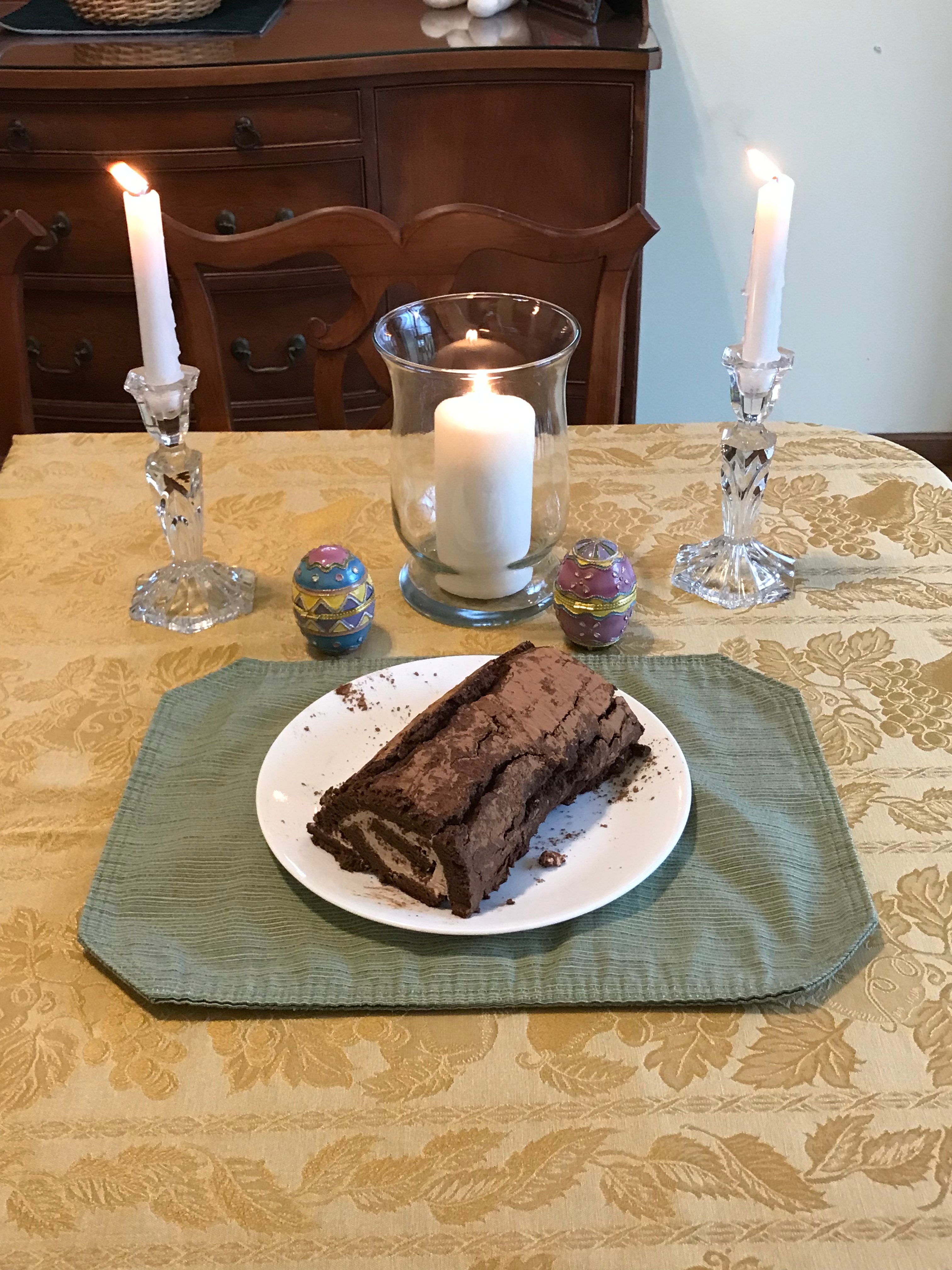
            Dessert was one of the best things I’ve made in a while. The “cake” is a mix of egg yolks whipped with sugar, melted chocolate, a bit of flavoring, and separately whipped egg whites folded in at the end. The original recipe calls for three tablespoons of sambuca to be mixed in with the chocolate. Since I didn’t want to buy a whole bottle that I would be unlikely to drink or use in other recipes, I considered replacing it with a teaspoon of anise extract mixed into some cream, until I remembered that replacing wine with milk caused a previous attempt at zabaglione to fail. To keep the chemistry similar, I initially settled on a teaspoon of anise extract mixed into three tablespoons brandy.

Advertisements

            Then I considered that anise (the flavor of black licorice) is not generally my favorite flavoring. Trying a bit over a scoop of ice cream with a sprinkle of coffee granules is one thing. It’s a single serving that takes two minutes to make. Even though that turned out well, I was hesitant to put anise flavoring into an entire cake that was a bit fiddly to make. Other extract options were vanilla, almond, and orange. Since I was already making an almond cheesecake for a different event, I settled on orange for something different. A teaspoon went into the “cake,” and half a teaspoon went into the whipped cream filling.

Chocolate roll

            The cake was spectacular. The texture ended up somewhere between a brownie and a mousse, intensely chocolate lightened with a touch of orange. While the cake did crack slightly as I rolled it up, the inside still formed a recognizable spiral. Not pastry shop window perfect, and it wouldn’t pass muster on the Great British Baking Show, but still a pretty special occasion dessert. And of course, it’s the taste that counts. From time to time it’s well worth the effort.
Standard
Risotto verde
food history, italian cuisine, recipes, rice, spring, vegetarian

Risotto Verde: The Taste of Spring

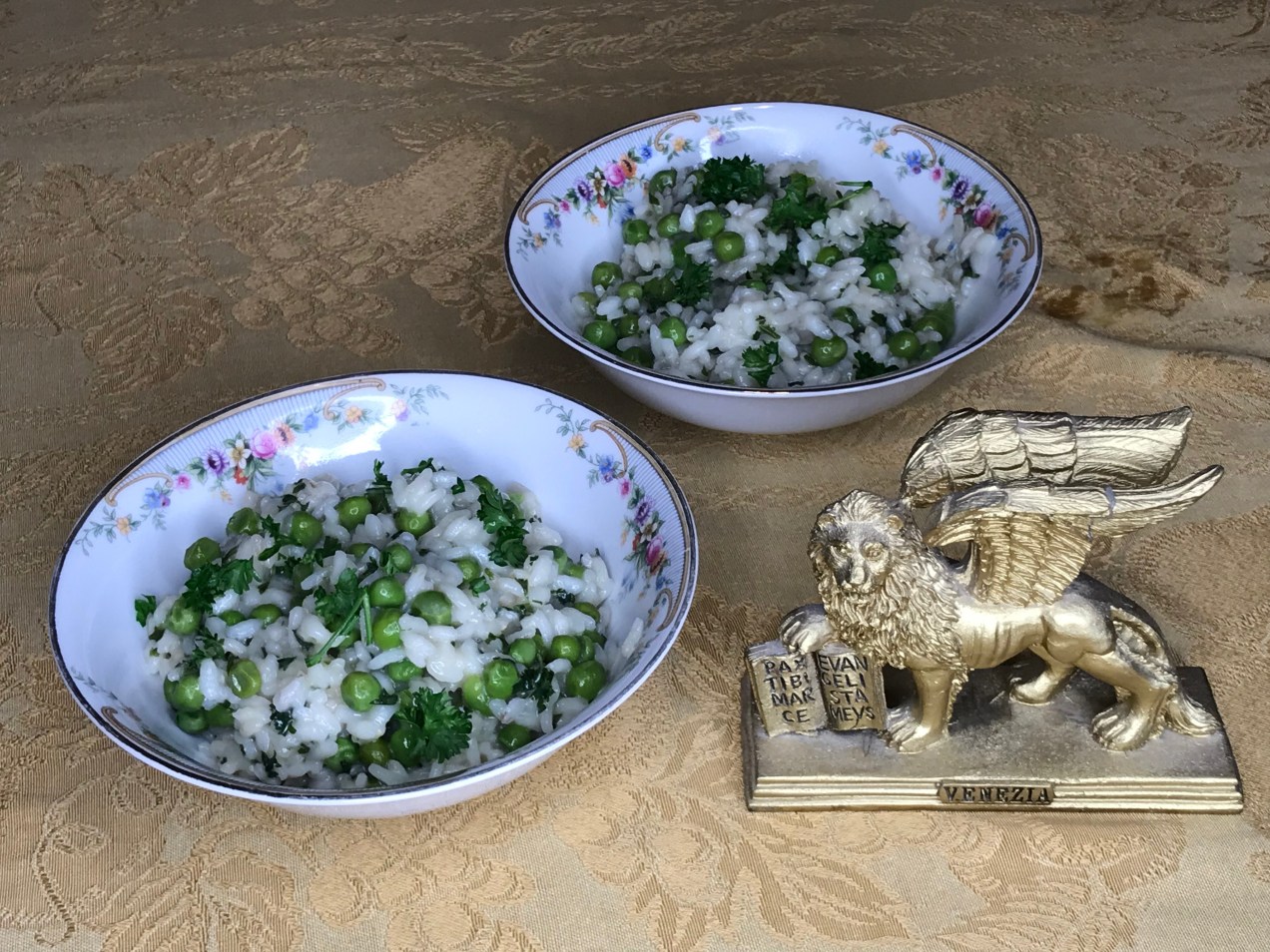
Risotto verde

            Among the numerous varieties of risotto, there are a few classics, as detailed in 1000 Foods to Eat Before You Die on pages 233 – 234. Risotto bianco is the basic kind, made simply with rice, butter, a little onion or shallot, white wine, broth, parmesan cheese, and maybe some pancetta or bacon. Milanese is colored a bright golden yellow with saffron. Nero is colored black with squid ink. Piedmontese is enhanced with white truffles. Other varieties might include seafood, mushrooms, or vegetables.

            As you can probably guess, risotto verde is meant to be green. Frequently a spring specialty, it gets its color from parsley and either sweet green peas or asparagus. It’s very fresh-tasting and, when made with frozen peas, surprisingly quick and easy to prepare. To keep everything bright and fresh, I didn’t use any pancetta for my own recipe.

            Technically, you’re not “supposed” to reheat risotto, because it thickens upon standing and can become “gluey.” I’ve never had this problem, or maybe the texture upon reheating just doesn’t bother me. Just add a few drops of water before putting it in the microwave. It will still be a great accompaniment to your chicken sandwich for lunch, and it’s way healthier than chips.

Ingredients:

  • 4 tablespoons (or ¼ cup) butter, or 2 tablespoons each butter and olive oil
  • 1 shallot or ¼ onion, minced
  • 1 ½ cups arborio or other short-grain rice
  • 4 tablespoons (or ¼ cup) dry white wine (something light like pinot grigio), or replace with extra broth
  • 4 – 5 cups chicken or vegetable broth (broth made from poaching chicken works great here)
  • 1 10-ounce bag frozen peas
  • Half bunch parsley, large stems removed, minced
  • 1 cup grated parmesan cheese

Directions:

  1. Combine the broth and peas in a medium saucepan and bring to a boil. Turn off heat, but leave on the stove.
  2. Melt the butter in a large skillet over medium heat. When bubbling, add shallot or onion and sauté for about 2 minutes, until softened.
  3. Add the rice and cook, stirring constantly, until coated and translucent, about 2 minutes.
  4. Stir in the wine and cook, stirring constantly, until evaporated, another 2 or 3 minutes.
  5. Add the broth and peas, a ladleful at a time, stirring constantly, waiting for each to absorb before adding the next. Stir in the parsley about halfway through, saving a little to sprinkle on top at serving time.
  6. After adding 4 cups of broth, the risotto should be slightly liquid. If it seems too thick, add a little more broth.
  7. Remove from the heat, stir in the parmesan, sprinkle with remaining parsley, and serve immediately.

For more recipes, history, and fun facts sent directly to your inbox, please like, subscribe, and/or share.

One-Time
Monthly
Yearly

Make a one-time donation

Make a monthly donation

Make a yearly donation

Choose an amount

$5.00
$15.00
$100.00
$5.00
$15.00
$100.00
$5.00
$15.00
$100.00

Or enter a custom amount

$

Your contribution is appreciated.

Your contribution is appreciated.

Your contribution is appreciated.

DonateDonate monthlyDonate yearly
Standard
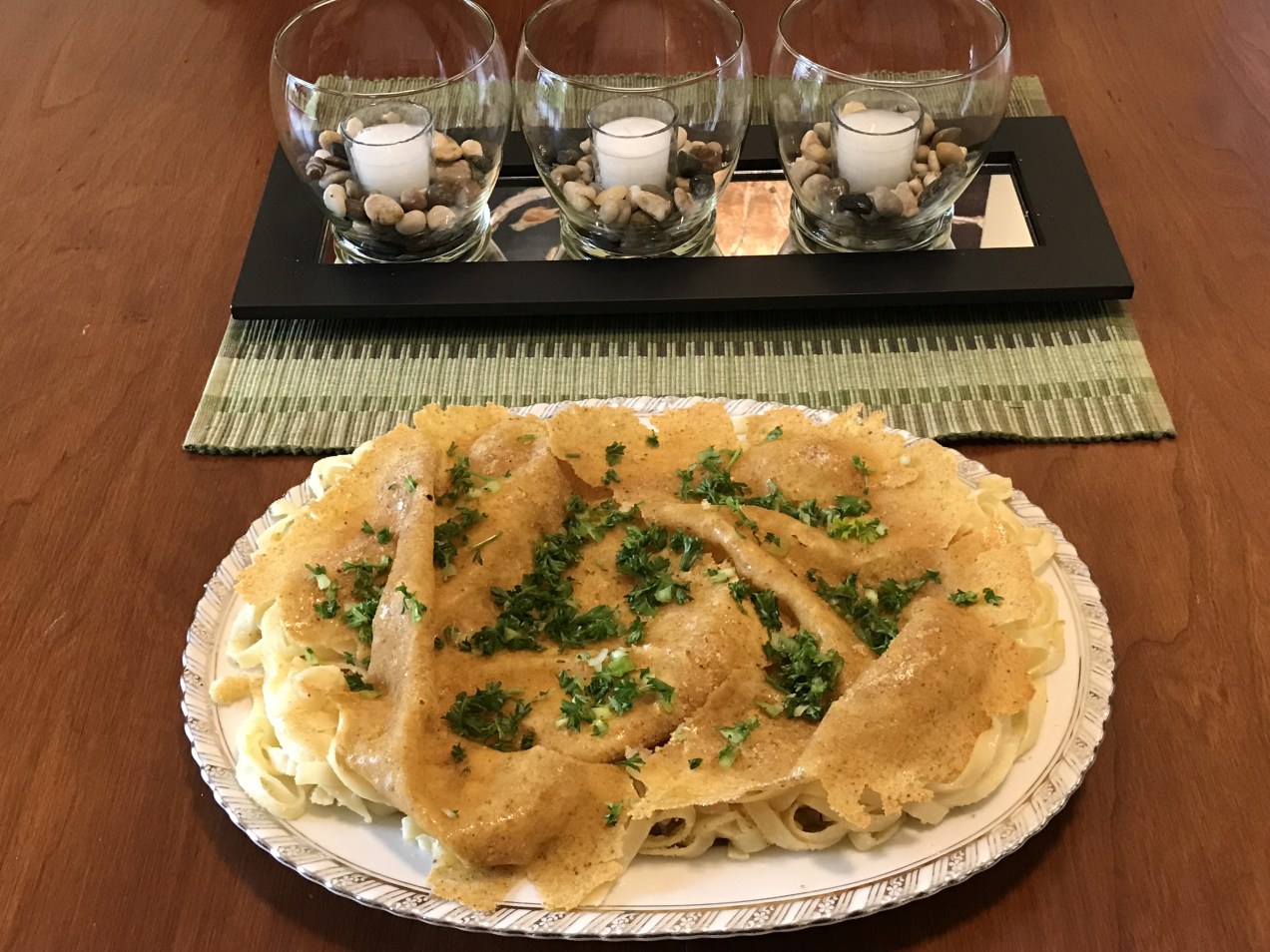
Tagliatelle baked with two cheeses
food history, italian cuisine, pasta

Cook’s Tour of Italy Menu 54 (Pgs. 170 – 171): Tagliatelle Baked with Two Cheeses

Two cheese baked tagliatelle

Region: Emilia-Romagna

            As mentioned before, Emilia-Romagna is known for its fresh pasta and dairy products. Fettuccine-like tagliatelle is frequently served with Bolognese ragu, which is never served with spaghetti. Wider pasta strands hold the sauce better. Tagliatelle can also be baked with cheese, as it is here. In this case, the two cheeses are Emilia-Romagna’s native parmesan, as well as fontina. More dairy is supplied by butter and cream.

            Parmesan and fontina are both cow’s milk cheeses, which predominate in northern Italy. Here, the cheese is front and center. The only contrast comes from breadcrumbs lining the baking dish and a mix of scallions and parsley minced together. Interestingly, instead of sprinkling the breadcrumbs over the top, the baking pan is buttered, coated in a layer of crumbs, then a layer of egg, then another layer of crumbs. After baking, the whole pan is inverted onto a serving platter.

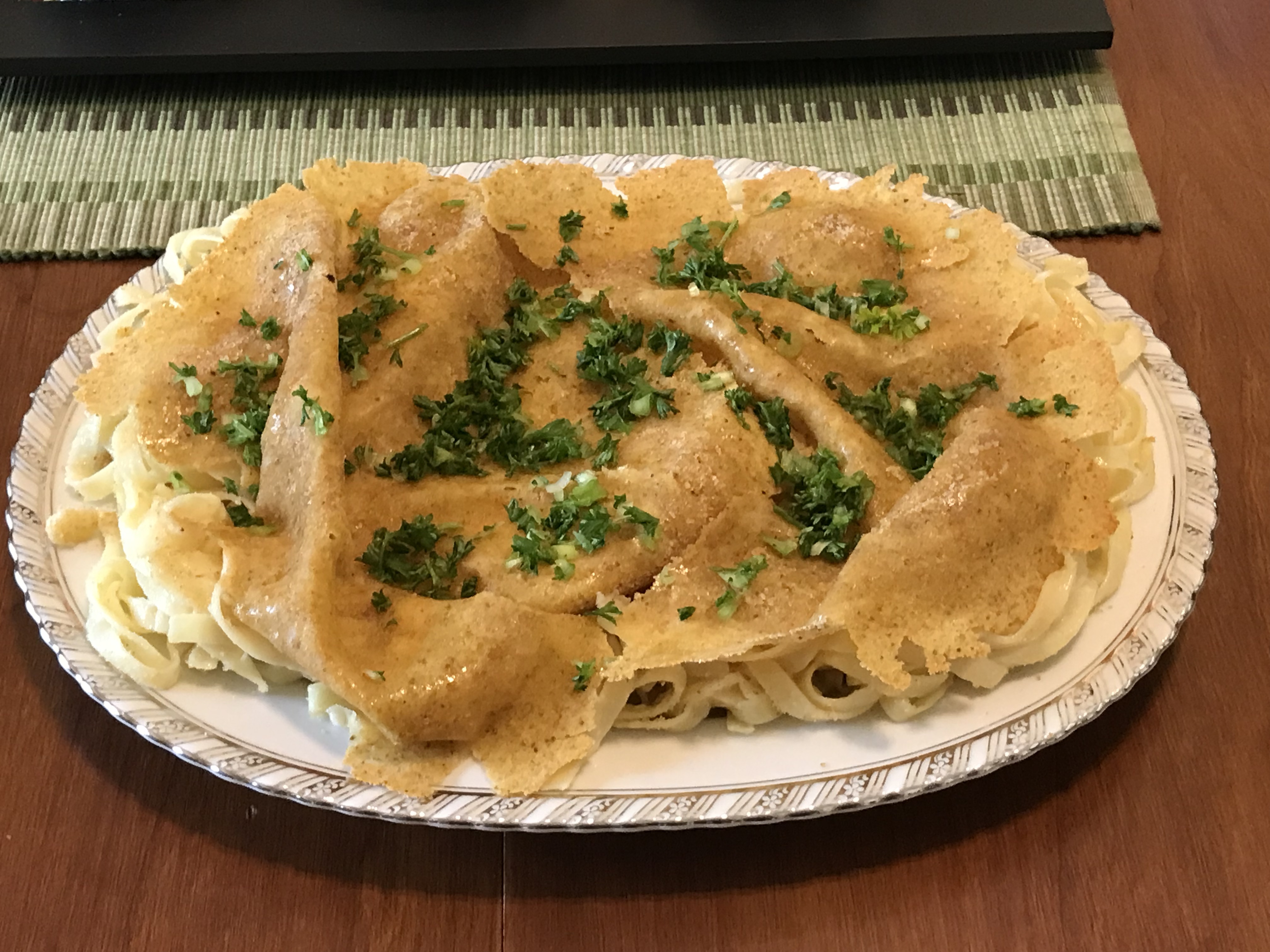
            I had an issue with the crumb layer sticking to the pan. It was easy to peel off, but the presentation wasn’t as pretty as it could be. And the texture wasn’t what I expected. It was more of an eggy film than the crisp crust I anticipated. Maybe it was supposed to be this way, maybe the extra egg I added because one didn’t fully coat the pan affected the texture. It was good, but in the future, I would just sprinkle the bread crumbs over the top. It’s easier and ensures that they stay crisp.

            This dish reminded me of alfredo pasta, but lighter and with a stronger flavor. The scallions and parsley added a pleasant fresh contrast, and a salad would balance things out nicely. So would a cooked vegetable like green beans, and/or a bowl of fruit for dessert.

Standard
beverages, food history, italian cuisine, recipes

Northwestern Italy’s Afternoon Pick-Me-Up: Bicerin

1000 Foods (pgs. 165 – 166) for information, recipe is my own creation

            Italians seem to love their coffee, but have some interesting opinions about what kind of coffee to drink when. Any coffee with milk, such as cappuccino, should only be drunk in the morning. Maybe that’s because many Italians don’t eat much breakfast and need the calories. Unless they’re drinking gallons of café lattes or adding sweeteners, they probably won’t be getting many, but maybe black coffee is too irritating on an empty stomach. It seems like adding milk to coffee in the afternoon, or after dinner, would cut the caffeine and allow for better sleep, but apparently that’s culinary heresy. But I don’t care for coffee unless it has a fair amount of milk and sugar, so what do I know?

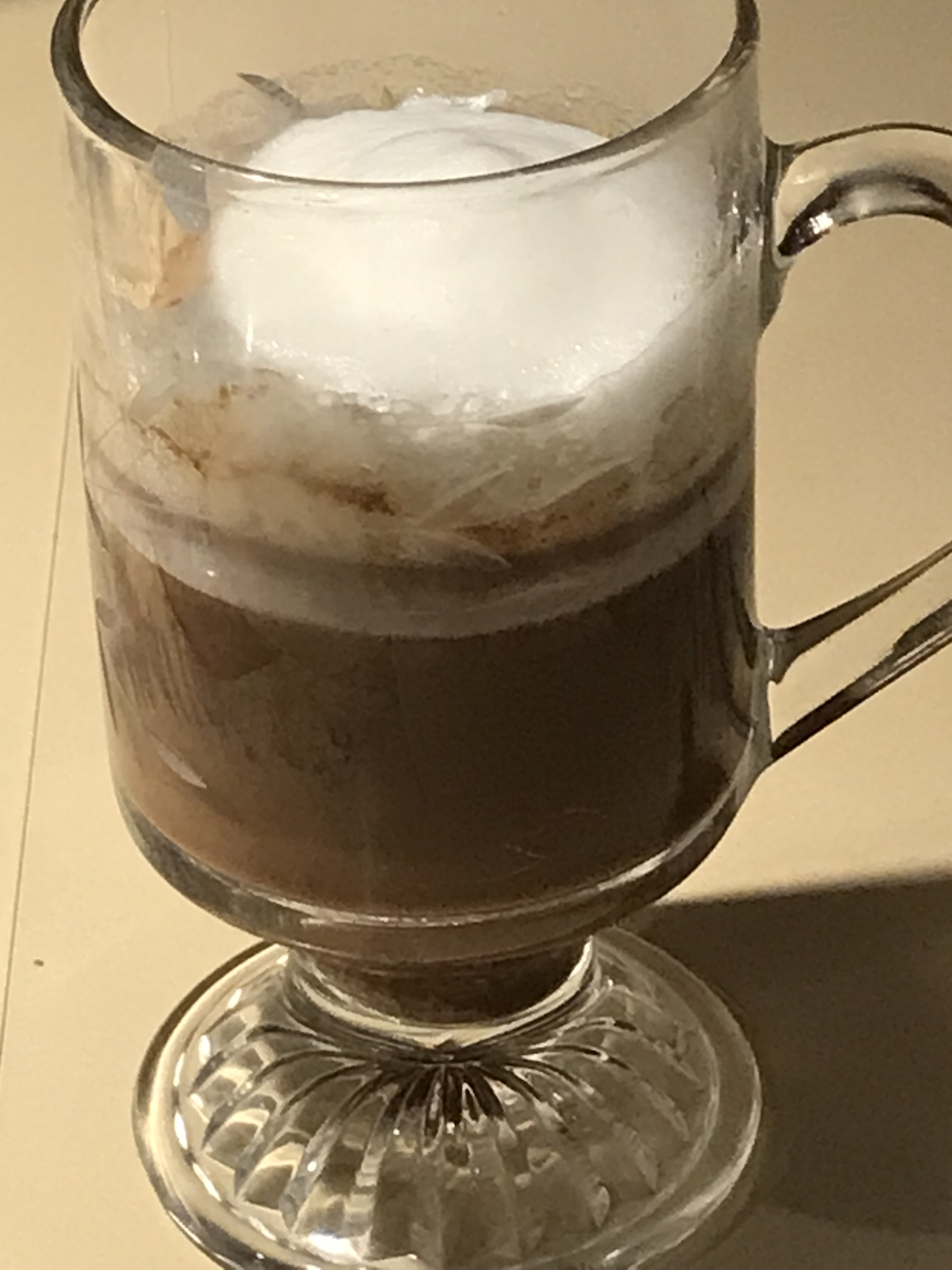
            One particularly delicious coffee drink is bicerin, essentially a fancy layered mocha native to Turin. A number of 19th Century authors loved it. To enjoy it at home, a heatproof glass is essential, as is “a steady hand,” in the words of Mimi Sheraton. The servings are small by American standards, but the drink is rich and meant to be savored. Espresso goes into the glass first, followed by thick hot chocolate. If this is done correctly and the chocolate is thick enough, it will sink to the bottom. Foamed milk goes on top, carefully, so it will stay separate, at least temporarily. Bicerin is not stirred. Rather, the layers mix as you drink it, and flavor gradually shifts from mostly coffee and milk to mostly chocolate.

            Charges of culinary heresy aside, bicerin is a great afternoon treat. Drinking it in the morning seems like a recipe for a sugar crash before lunch. Plus, it’s a bit fiddly to make, not ideal for someone who isn’t a morning person. For the right consistency, almost like a syrup, the hot chocolate should be made from scratch with chocolate pieces and milk. 2 ounces of bittersweet chocolate and 4 ounces (1/2 cup) of milk seems to be the right amount for two servings. Espresso needs to be made, and milk needs to be heated and foamed. For two servings, 6 ounces of espresso and 1 cup of a 50/50 mix of milk and half-and-half is about right. None of this is particularly difficult, but having all three elements hot and ready at the same time can be a logistical challenge to anyone still half-asleep.

            So in summary, you need: 2 ounces of bittersweet chocolate, 1 cup milk, 6 ounces espresso, and ½ cup half-and-half. Melt the chocolate in half of the milk, stirring frequently, until smooth. Remove from heat. Prepare the espresso however you choose. Combine the remaining milk with the half-and-half and heat, whisking almost constantly, until the mixture is foamy and steaming. The coffee goes in the glasses first, then the chocolate. Spoon the milk foam over the top, don’t stir, and serve. And enjoy by mid-afternoon at the latest. With three ounces espresso and an ounce of dark chocolate per serving, it will keep you up otherwise.

Standard
Uncategorized

Friuli’s Twist on Risotto: Orzotto

Friuli’s Twist on Risotto: Orzotto

1000 Foods (pgs. 211 – 212)

            Risotto comes in many varieties. I’ve already made four of them as part of menus in A Cook’s Tour of Italy, and there are several more in 1000 Foods to Eat Before You Die. This particular version comes from the Friuli region near Venice. Close to the borders with Austria and Slovenia, Friuli was even controlled by Austria for much of the 18th and 19th Centuries. During this time, and from large-scale trade before and after, a number of Germanic dishes worked their way into the cuisine of northeastern Italy. Sauerkraut is found across the region, and in Trentino-Alto-Adige, apple strudel is a local specialty. The transfer went in the other direction, too, with Italian influences reaching Vienna and beyond.

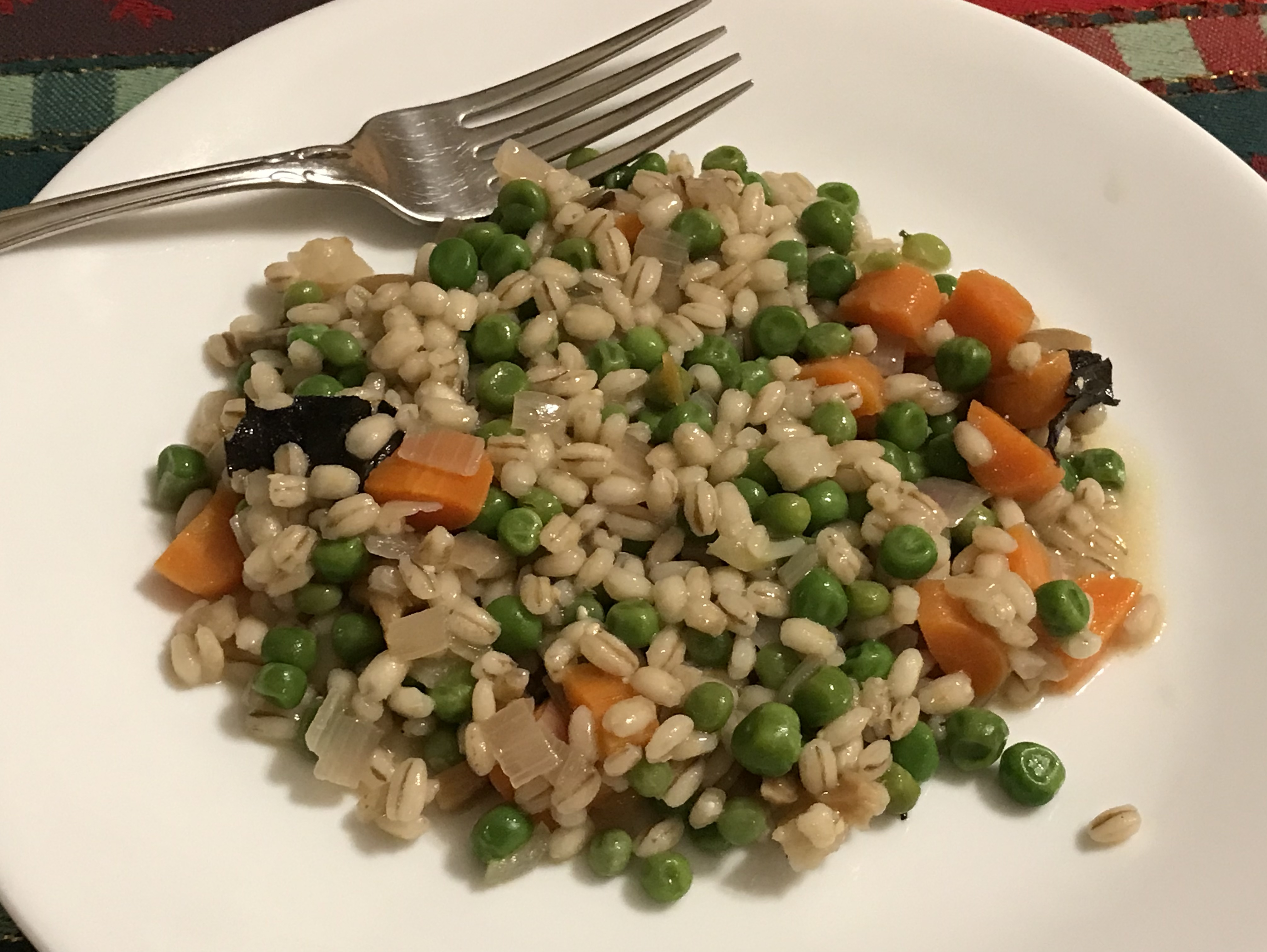
            Instead of using rice, a risotto-type dish is made in Friuli with barley, or orzo, hence the name. Exactly why barley replaces rice is unclear, but it seemed like an interesting variation. Since store-bought pancetta is somewhat pricey, I made my own with side pork and kosher salt, curing in the fridge for two days. Bacon is a decent substitute, but its smoked flavor is noticeably different. After sautéing the chopped pancetta with butter and shallots, the barley is added. Like with risotto rice, it soaks up the broth, which is added bit by bit. Constant stirring rubs starch off the barley grains and mixes it into the broth, creating a creamy texture. Vegetables can also be added. I used carrots, dried mushrooms, and frozen peas, all of which are consistently good over the winter. Other options might include asparagus in spring or zucchini in summer. A bit of local parmesan cheese, grated in at the last minute, finished everything perfectly.

Advertisements

            The barley gave the orzotto a fascinating texture and flavor. It was chewier than rice and had a bit more flavor, but wasn’t overpowering. All the flavors were in balance except for the salt, which was, as in the caldo Gallego, a bit strong. Interestingly enough, I made the two recipes on the same day, ready for the next week’s lunches and weeknight dinners. Unlike the soup, I do know where the extra salt in the orzotto came from – the homemade pancetta. Not realizing how much salt the pork strips had absorbed, I didn’t even think to wipe the extra off the outside. With low-sodium broth and no added salt, I thought the balance would be right. It was still very good, and I have everything to make another batch except shallots.

Standard
Uncategorized

Cook’s Tour of Italy Menu 40 (Pgs. 128 – 132): Bachelor Party with Romeo, Verona

Menu 40 (Pgs. 128 – 132): Bachelor Party with Romeo, Verona

Region: Veneto

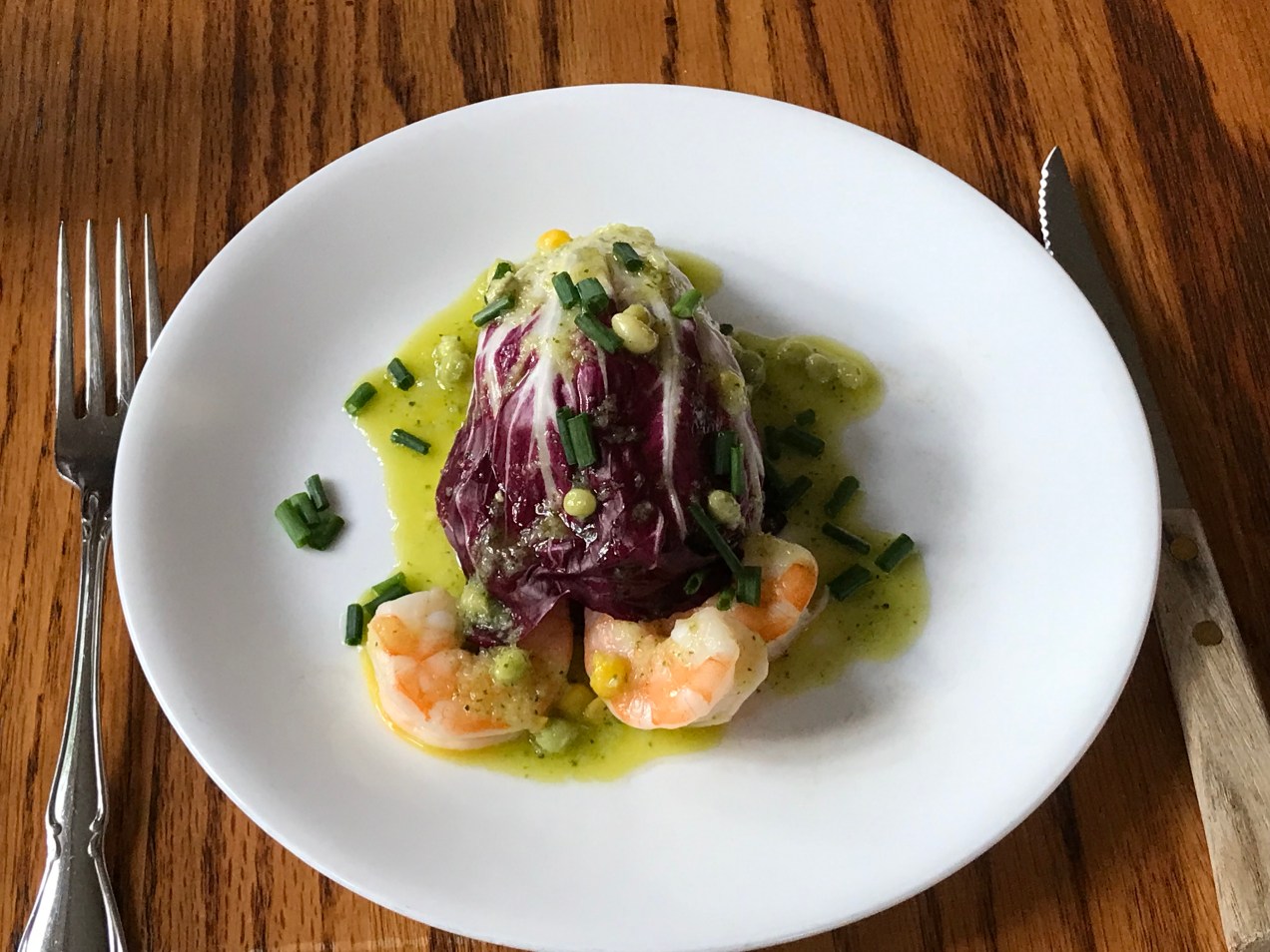
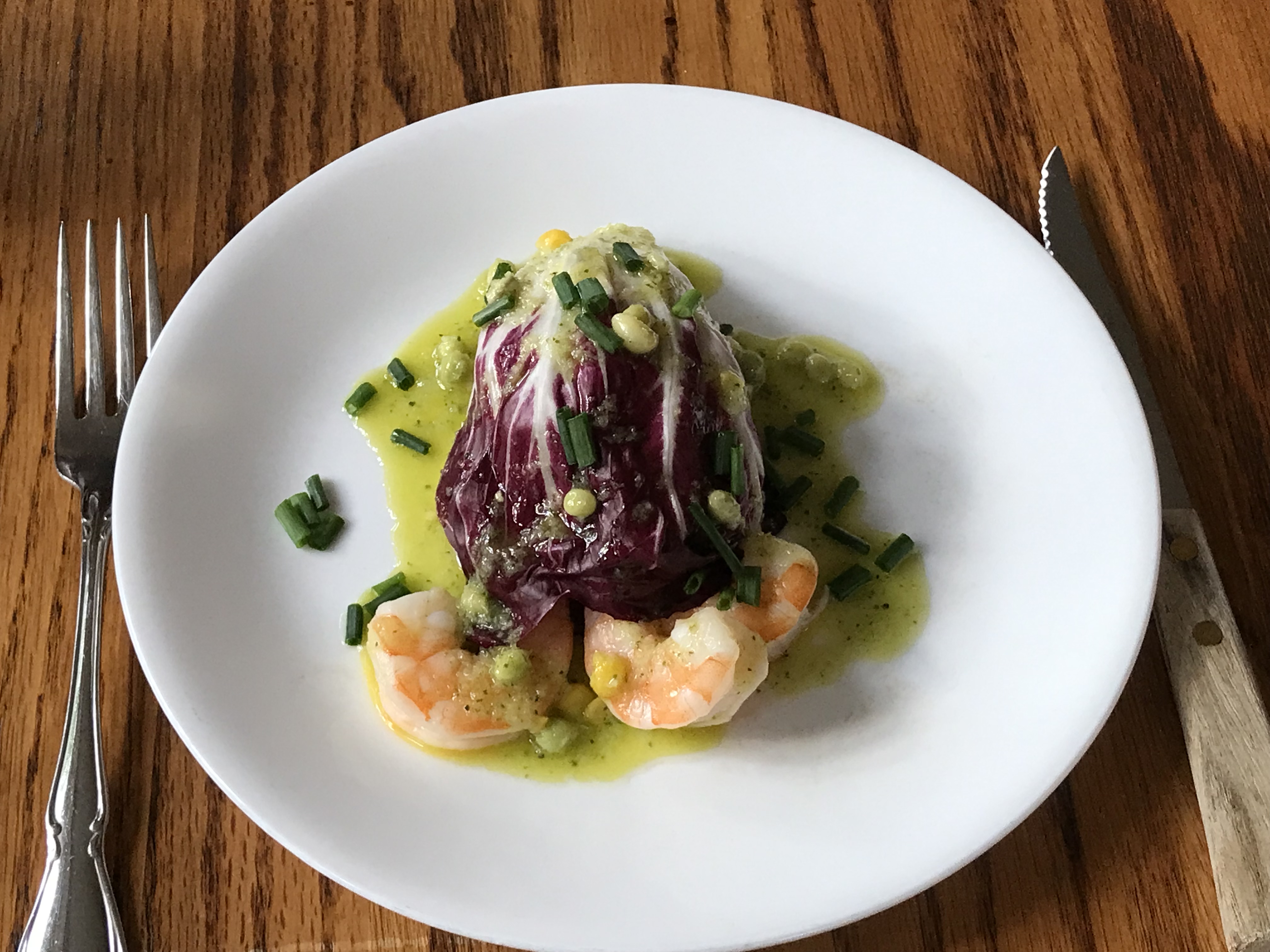
Menu: Shrimp and Radicchio with a Sweet and Sour Sauce, Fried “Soft-Shell Crabs,” Asparagus with Oil, Vinegar, and Fried Eggs on Radicchio, Sweet Semolina Cookies with Grana and Honey

Recommended Wine: Frontego (Soave, bright yellow with citrus aroma)

            If you’ve ever read Romeo and Juliet, you’ll know that the title characters’ secret wedding did not allow for a bachelor party, but here we can imagine one. Pizza, hot wings, and lots of beer seem more likely fare for such a party, but maybe Romeo preferred the specialties of the Veneto region. These include fish, shellfish, and cephalopods of all sorts, including soft-shell crabs and cuttlefish, a variety of sweet and sour sauces, and radicchio. While this menu does not match up to the story’s Medieval origins very well, it was tasty and interesting.

            Note that I did make a few substitutions for economy, convenience, and personal preference. The recipe called for using smoked salmon to form a “cornucopia” for the shrimp and vegetable pieces, but with all the other flavors in the mix it would be hard for the fish to shine. While the smoky flavor probably would have been a nice contrast with the sweet corn, peas, and sauce, the benefit didn’t justify the added cost. The contrast was provided by radicchio instead. Its bitter flavor worked well with the other ingredients, and it looked pretty on the plate. Even though I care more about how food tastes, having it look good is a nice bonus.

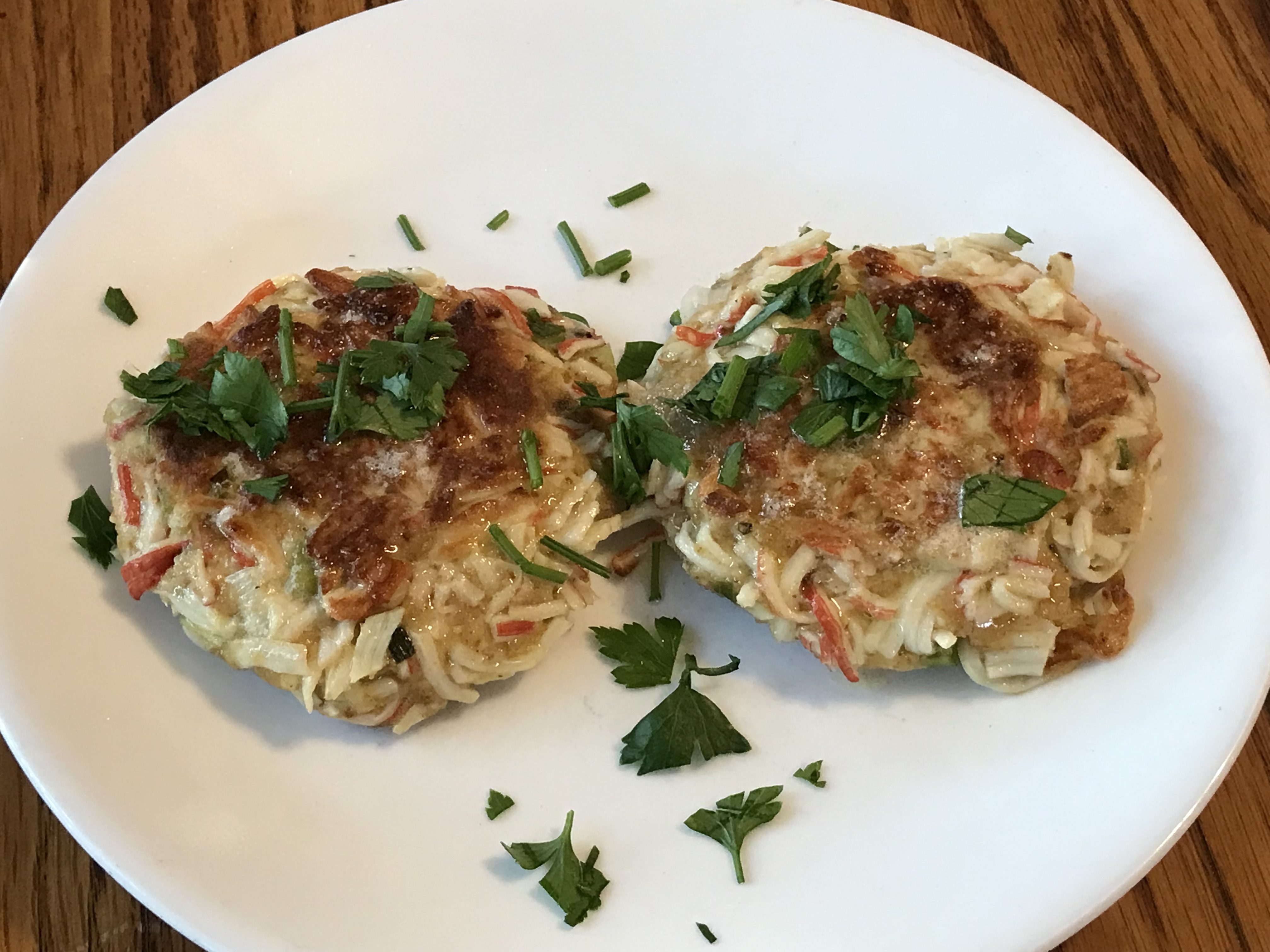
            Soft-shell crabs are hard to come by when you live several states away from the nearest ocean. The two options are 1) have them delivered (which is impractical unless buying a large quantity of items) or 2) drive three hours to one of the fish markets in Chicago (possibly at night to accommodate their early hours). As neither option was feasible, I decided to make crab cakes instead. Specifically, imitation crab cakes, because frozen crab was too expensive and I didn’t trust the canned variety. So I combined chopped imitation crab, bread crumbs, and eggs, shaped them into cakes about the width of a palm (roughly the size of actual soft-shell crabs), and made those the main course. They were delicious.

            The asparagus was closer to the recipe in the book. I cooked and marinated it as directed and plated it on radicchio. The difference was in the topping. The recipe calls for working chopped hard-boiled egg into the sauce. Since I don’t like hard-boiled eggs, I used another common method mentioned in the recipe: topping the asparagus with butter, fried eggs, and parmesan cheese. This all worked very well together and isn’t as weird for a bachelor party as it might seem.

            Asparagus has been viewed as an aphrodisiac since the days of Ancient Rome. After falling out of favor for several centuries, it became popular again in the Renaissance. There was even a way to tell if someone was eating it in secret: by the distinctive odor it left in their chamber pot. People have noticed for centuries that asparagus made their urine smell funny. Both Benjamin Franklin and Marcel Proust mention it at least once in their writings, and one 18th Century club insisted that gentlemen not urinate in the coat rack during asparagus season. Why that was too much to ask for during the rest of the year is unclear, but it was a different time.

            Moving on from aphrodisiacs and asparagus pee, we have dessert. These cookies are made crunchy and slightly gritty with semolina flour, flavored with rum and raisins, and served with parmesan-like grana cheese and honey. I’m not usually a raisin fan, but they were a good match with the light sweetness of the cookie and texture from the semolina. There is actually a Medieval connection here. At the end of a feast, it was common to serve wafers and cookie-like sweets, along with aged cheese, dried fruit, and spiced wine sweetened with honey. While the idea that this helped close the stomach and aid digestion was incorrect, the cookies, cheese, and honey worked surprisingly well together for a treat that stands the test of time.

Standard