american cuisine, food history, recipes

Divine Citrus Refreshment: Ambrosia

1000 Foods (pgs. 519 – 520)

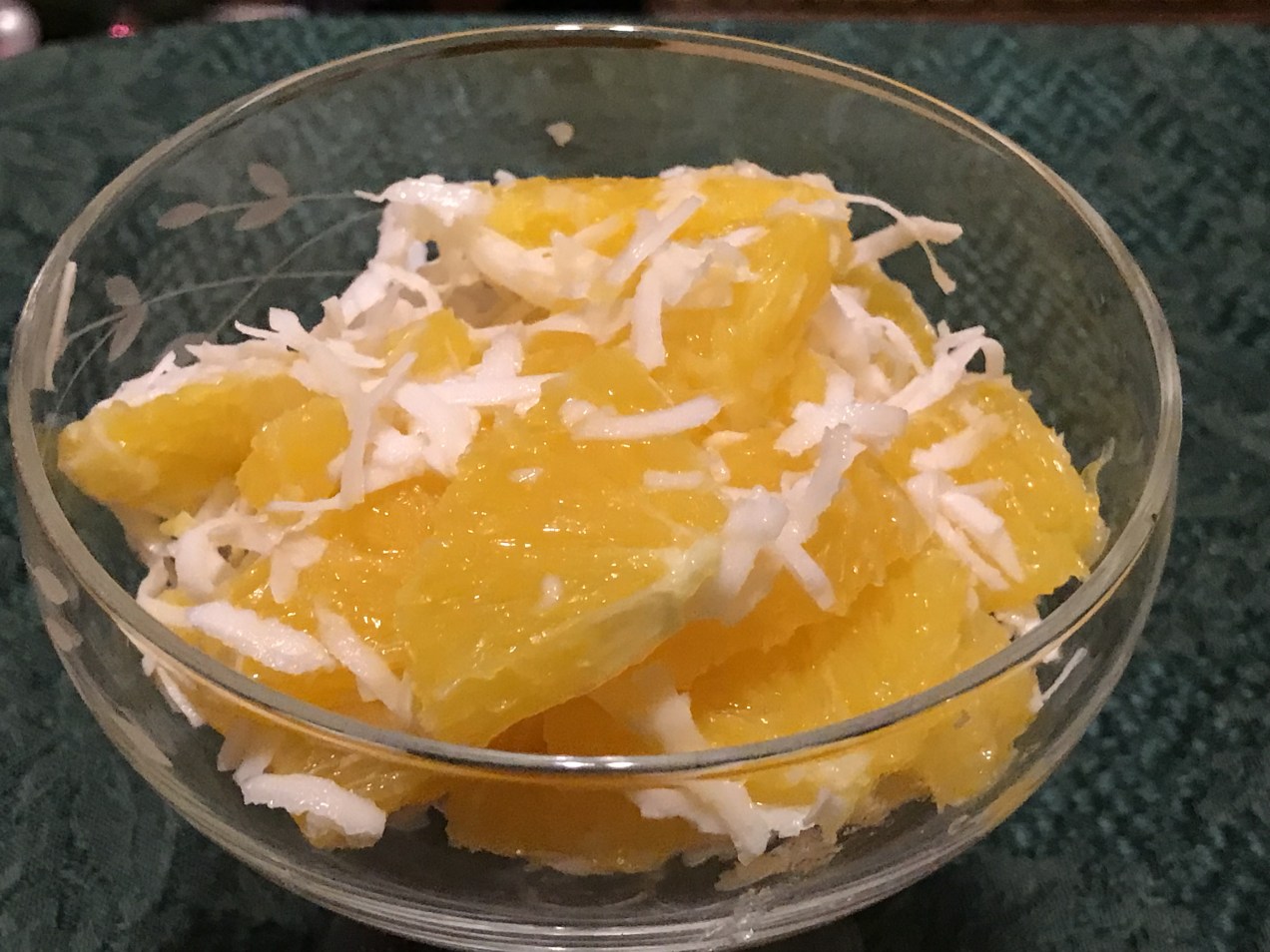
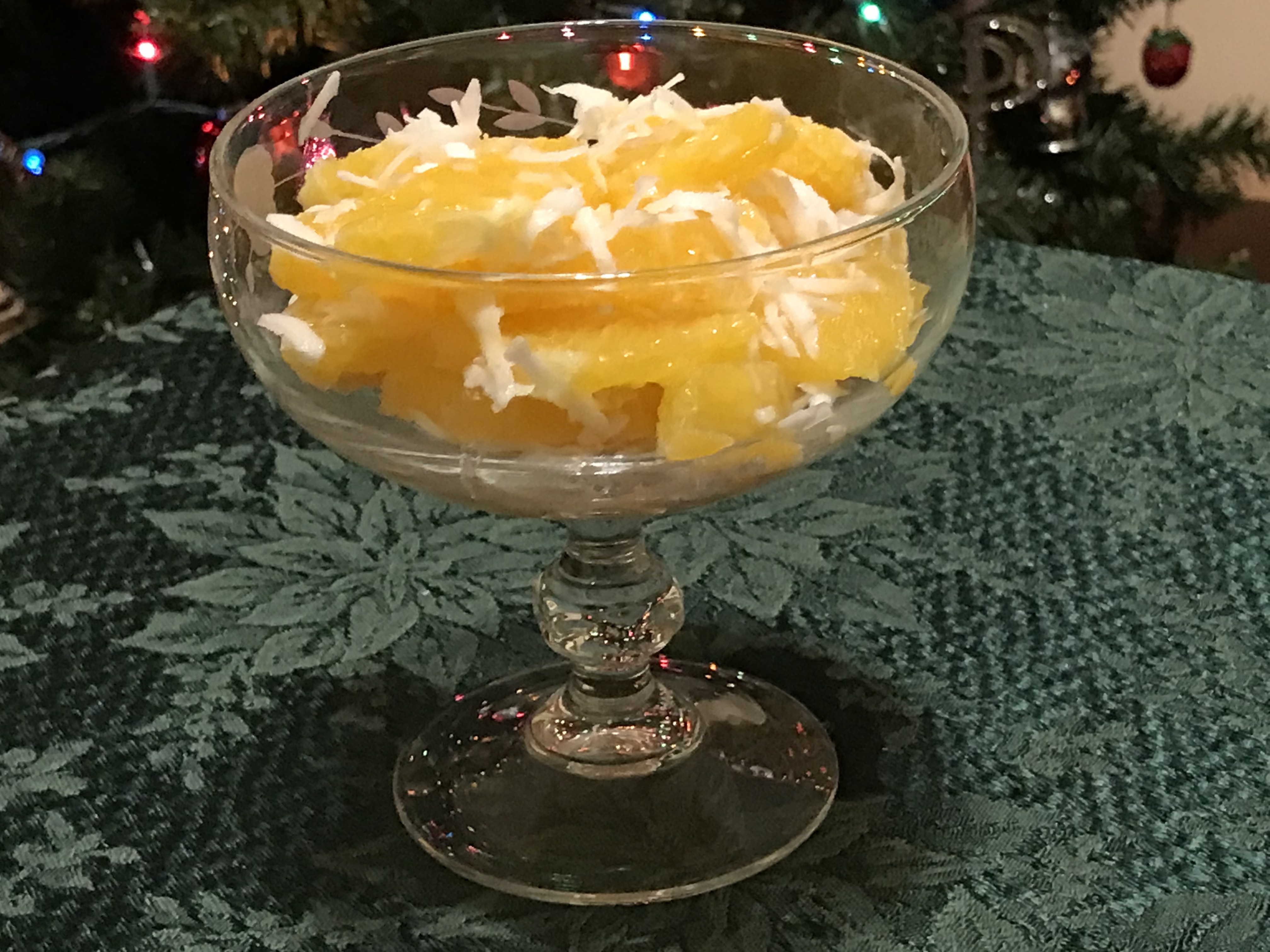
            According to Greek mythology, ambrosia was what the gods ate on Mt. Olympus. In the US, particularly the Southeast, it came to mean a mixture of oranges and grated coconut. It’s especially popular at Christmastime, peak season for oranges. In the past, difficulties with transportation made oranges and other citrus fruits relatively expensive in areas where they couldn’t be grown. As transportation improved in the late 19th Century and prices dropped, cooks in the US Southeast developed a layered dessert with sliced oranges and shredded coconut. A bit of powdered sugar helps the orange slices release some of their juices.
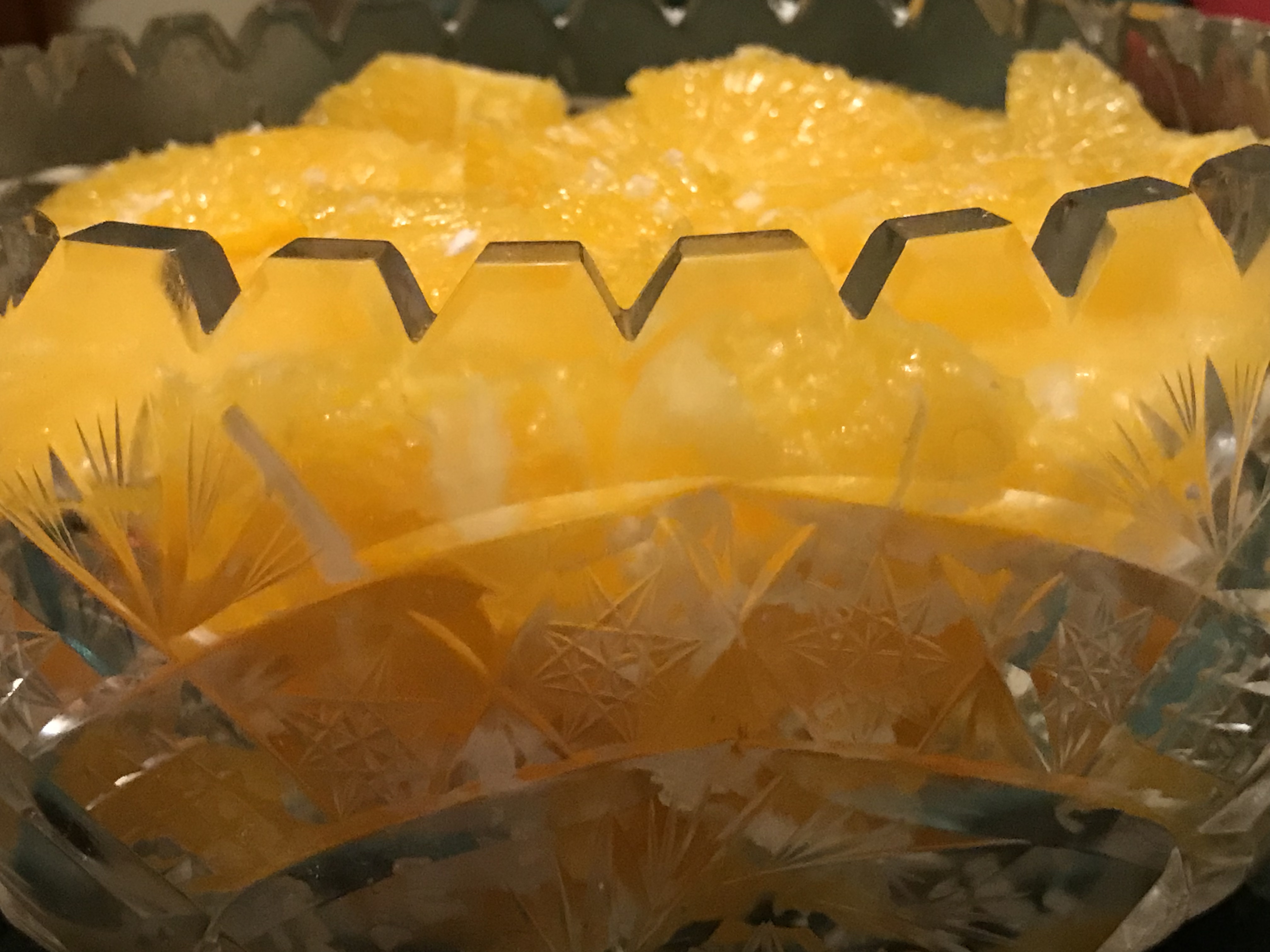
            Sometimes other fruits or a bit of liquor is added, but the oranges and coconut are always central. Presumably, this is the type of ambrosia featured in To Kill a Mockingbird, set in Alabama in the 1930s. Along with the ambrosia, Aunt Alexandra fixed three kinds of meat and two cakes. Presumably there was also bread, rolls, biscuits, or cornbread, and some sort of vegetables. In the 1950s, with the explosion in available convenience food, a mix of canned fruit, coconut, sometimes pecans and/or marshmallows, cool whip, and occasionally mayonnaise was developed. Without the mayonnaise, that actually sounds pretty good, but here we have the original, basic version.
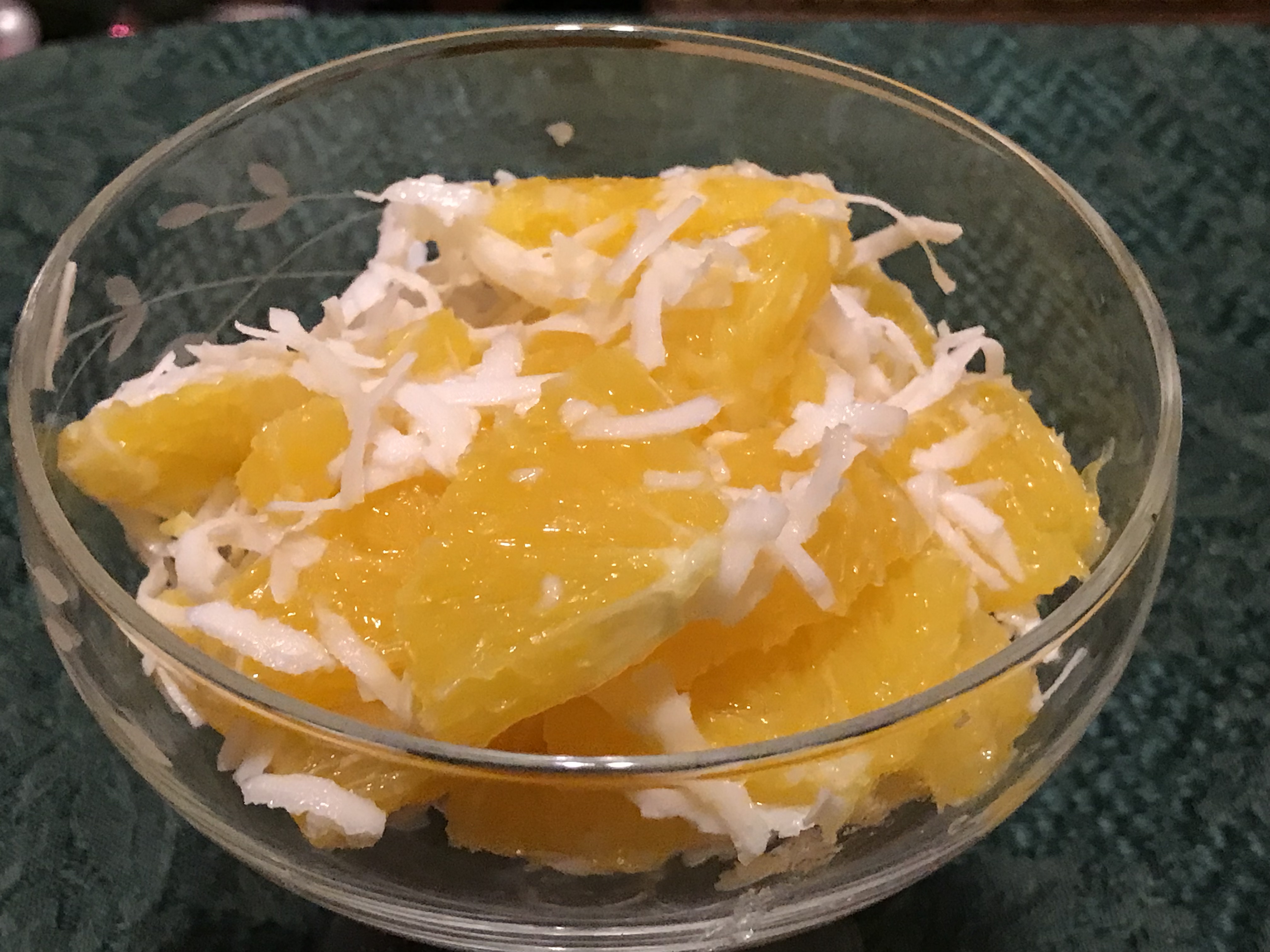
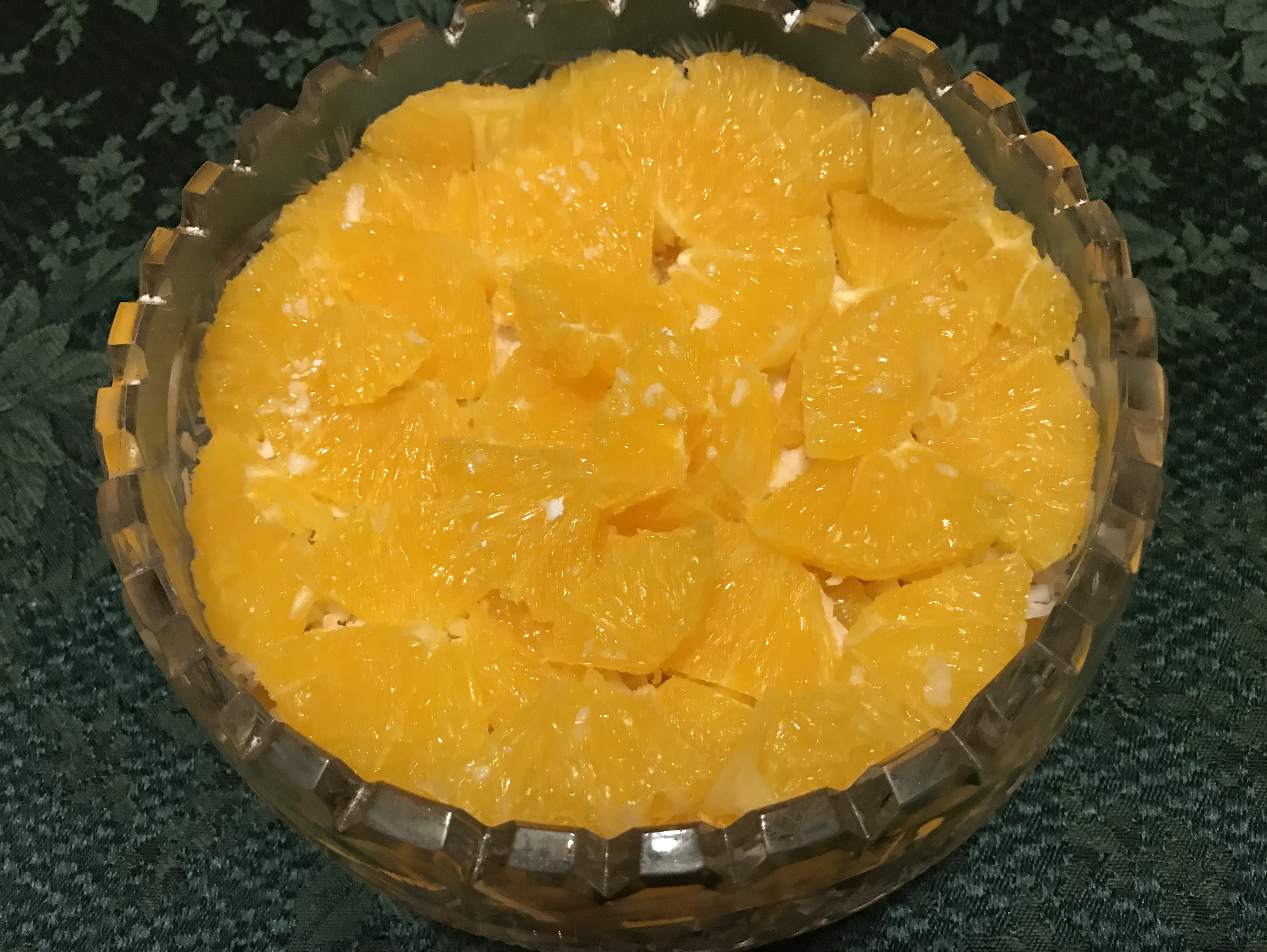
Doesn’t that look divine?

            It’s super simple to make. All you need are oranges, shredded coconut, and powdered sugar. I used five oranges and about a cup of coconut, soaked in hot water for about fifteen minutes to soften. The oranges are peeled, quartered, sliced, and layered in a glass serving dish. The slices are sprinkled with a bit of powdered sugar, then a layer of coconut, repeated until the oranges are used up. On the last layer of oranges is just the powdered sugar. The ambrosia is so pretty, and tastes just as good.
Standard
Uncategorized

Cook’s Tour of Italy Menu 76 (Pgs. 235 – 238): Lunch in Potenza

Region: South Mainland/Islands (Basilicata)

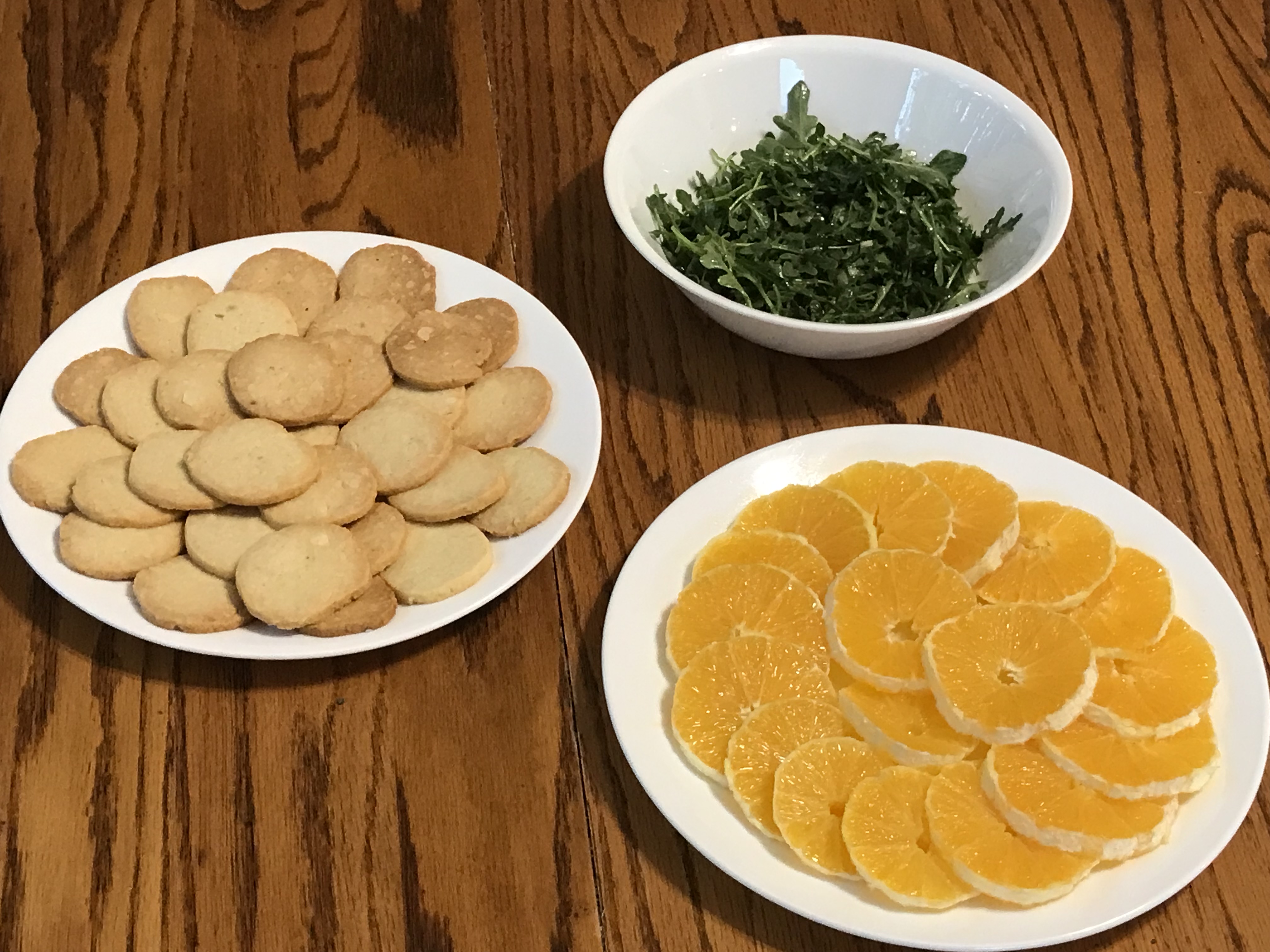
Menu: Spaghetti with Ginger and Garlic, Chicory Salad Mimosa, Sliced Oranges with Marsala, Enriched and Crisped Vanilla-Almond Cookies

Recommended Wine: Calabrian Red Ciro

            South of Naples and Amalfi is Basilicata, one of Italy’s least known and least developed regions. Between the rugged terrain and often harsh taxation, life has historically been difficult here. The traditional diet includes pasta, vegetables, olive oil and fruit, all of which are featured here. In a nod to increasing prosperity in the area, this menu ends with buttery almond cookies.

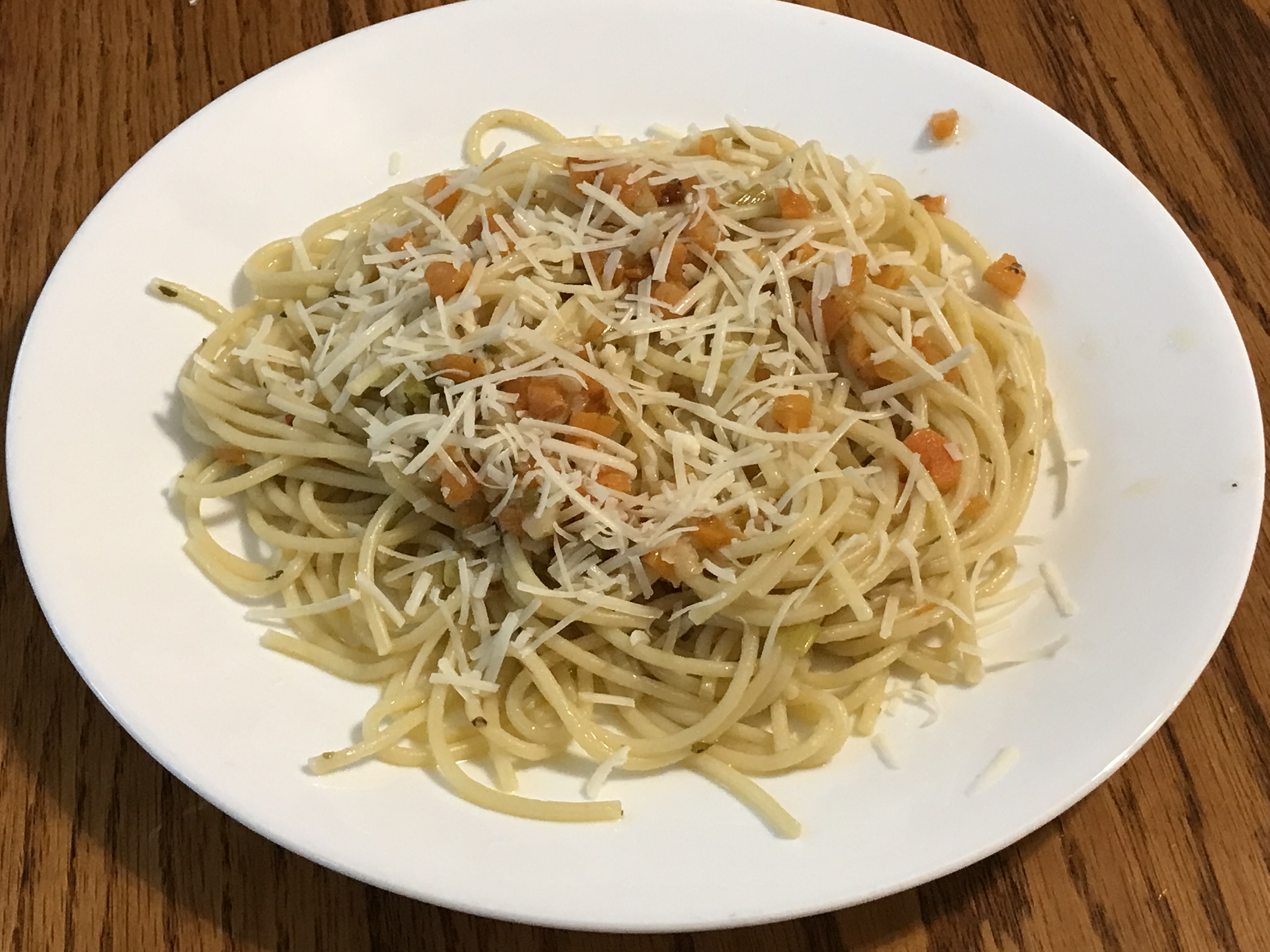
            Adding ginger to a pasta dish sounds strange at first, but it does give it an interesting flavor. Ginger and garlic work together to flavor the pasta, enhanced by oregano and hot pepper flakes, sweetened with carrots and vermouth, and enriched with olive oil, butter, and Romano cheese. The flavor was good, but the amount of water called for in the sauce made it very thin, causing it to pool at the bottom on the serving platter instead of sticking to the pasta. It was also a bit sweet from the vermouth.

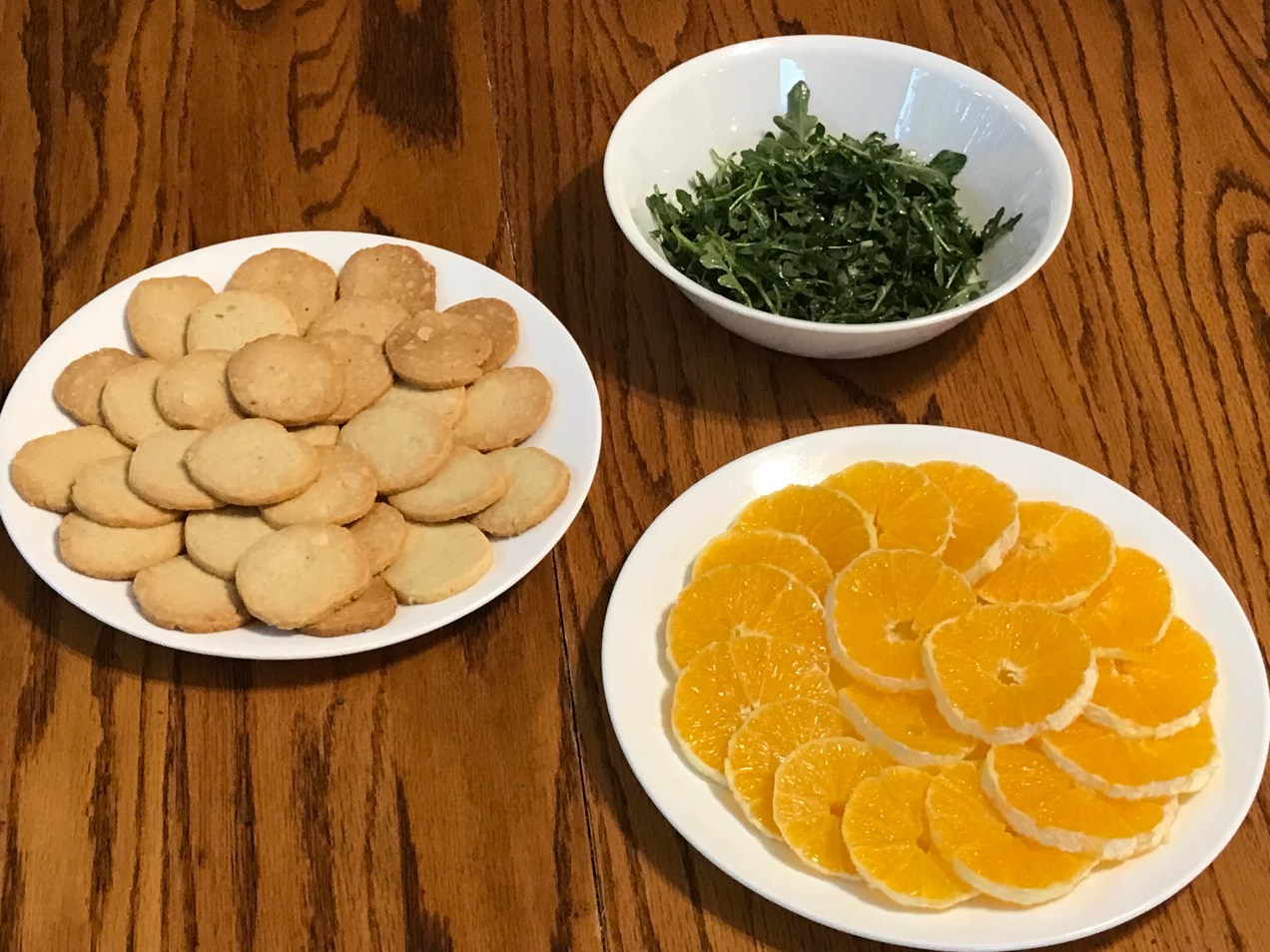
            The reason the salad is called “mimosa” is because of chopped hard-boiled egg yolks sprinkled over it. I omitted this here because of my dislike for hard-cooked eggs, particularly the yolks. I also substituted arugula for the chicory because it is not quite as bitter. The lemon juice dressing was still pretty sour, but it was a decent salad.

            Oranges grow all over southern Italy and are a popular dessert, especially in the winter. While they are often eaten plain, they can be embellished, as they are here with Marsala wine. Marsala is unique in that it is partially “cooked,” killing the yeast in the wine. As a result, it stays in good condition even after the bottle has been opened, at least for a while. This process also gives it a unique flavor. While I don’t drink much alcohol and am hardly a wine connoisseur, even I could pick out what seemed like briny and nutty flavors. Unfortunately, those flavors clashed with the oranges. A non-alcoholic experiment, with pineapple juice replacing the wine, was much better.

            Dessert had a slight glitch in the preparation. A buttery dough was rolled into logs, chilled, sliced, and baked on buttered baking sheets. That was all fine, but one thing I didn’t realize was that if the cookies weren’t removed from the sheets almost immediately after coming out of the oven they would stick. The first sheet of cookies ended up as a bunch of broken pieces. They were still delicious, but not exactly photo-worthy. The cookies from the second sheet were able to be removed intact, but an experiment a few days later with leftover dough proved that parchment paper worked better.

            Overall, this was a well-rounded menu, though I’m not sure if I’d make the pasta or salad again. The oranges and cookies, however, would be perfect for a Christmas spread. After the typically heavy main course and sides, the oranges would be a nice contrast; light and sweet with a bit of tartness. A little later, after everyone’s food has settled a bit, the cookies could be eaten with whatever other desserts are on offer.

Standard