
So-called “variety meats” are often disregarded today, but in the past, when animal protein was more expensive relative to income, they were widely consumed. Some parts, like tripe, were poverty food even then, while others, like sweetbreads, were considered delicacies. Yet others, like liver, seem to have been viewed in a similar way to tougher, more inexpensive cuts of meat: not fine banquet fare, but perfectly good for informal and everyday meals.
This appears to have been the case with oxtail. It turns up again and again in old recipes, almost always in soups and stews, which makes perfect sense. It contains a lot of collagen, so it is not very tender initially. As it cooks, the collagen breaks down, imparting an incredible body to the broth. Plus, soup and stew are excellent ways to stretch a small or modest amount of meat to feed more people. Oxtail was made for economical ingenuity.
Versions of oxtail stew are found across the globe, but the Roman variation features wine, tomatoes, and celery. If you don’t have or don’t want to use wine, a viable replacement is grape juice with a tablespoon of vinegar per cup. It’s still a little sweeter than it would be if dry wine were used, but I used this substitution and it worked well.
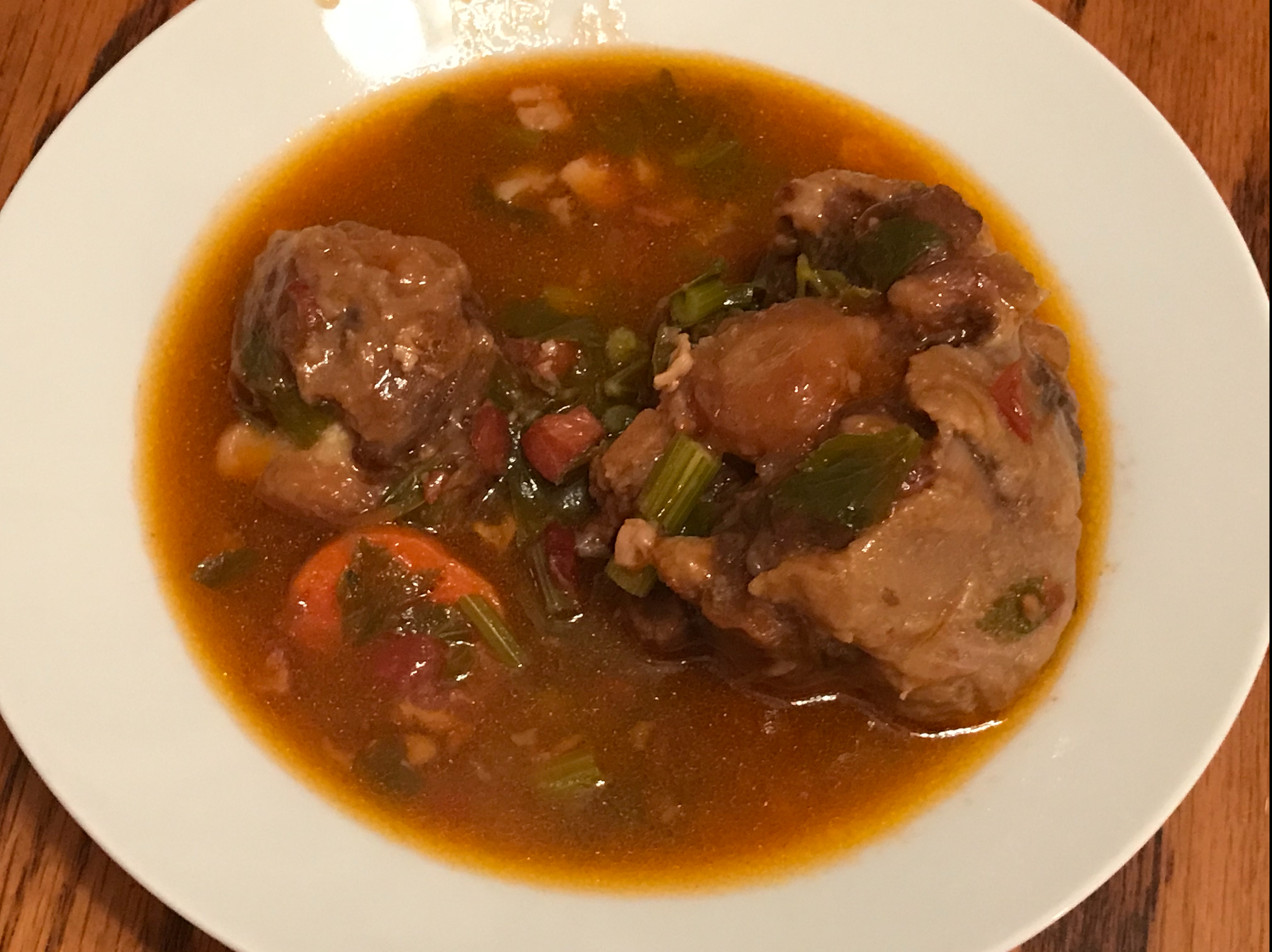
The dish started with the common flavor base of vegetables and pancetta/bacon. A bit of celery was added now, most was set aside to be separately cooked and added later. After browning, the oxtails are added to the pot, along with the tomatoes and wine. This all simmers for a few hours, with some of the broth being added periodically. Near the end of the cooking time, the rest of the celery is added. I’m not sure why the celery needs to be cooked separately rather than added directly to the pot, but I followed the recipe as closely as possible.
The taste and texture of this stew were both remarkable. The combination of broth, grape juice, tomatoes, and aromatics lent a pleasant, slightly sweet-tart flavor, while the collagen from the oxtail created a rich, almost sticky body. It was definitely messy to eat, though, since the meat stuck to the bones despite its tenderness and could not easily be removed with a fork and knife. Fingers and a lot of patience were required. That’s not to say I wouldn’t make it again. Add some bread and maybe a salad, and it’s clear why this dish remains so popular. Just make sure you have plenty of napkins.
 Feasting Through Time