
Region: Emilia-Romagna
Menu: Cured Meats and Pickled Vegetables, Tagliatelle with Buttery Tomato Sauce, Salad with Herb Dressing, Pears Baked in “Wine” with Mascarpone
Recommended Wine: Sparkling Lambrusco or Lambrusca di Sobara
In Parma, as in the rest of Emilia-Romagna, fresh egg pasta is a specialty. As mentioned in a previous post, eggs used to be a bit of a luxury. While the common people couldn’t eat them in pasta on a daily basis, it was more affordable in historically richer Emilia-Romagna than in much of the South, where poverty and social inequality were more extreme. Thus, fresh pasta, made with eggs and often stuffed, is associated with Northern Italy, while dried, eggless pasta is more common in Southern Italy. This menu includes not only a fresh pasta, but other regional specialties like Parma ham, mortadella, a buttery sauce, orchard fruit, and cow’s milk cheese.
The first course is a selection of preserved items, an essential part of the diet in the days before refrigeration. Salting, drying, and pickling are all featured here. For thousands of years, people have salted and air-dried meats, especially pork, all over Italy. The variety of hams and sausages are endless, and in Emilia-Romagna, the most famous are prosciutto ham and mortadella, a lightly-spiced sausage often studded with pistachios. Vegetables are often preserved in vinegar, which tends to be plentiful in areas with a lot of wine production. Salt and vinegar both inhibit bacterial growth, while drying removes the water that bacteria need to survive.
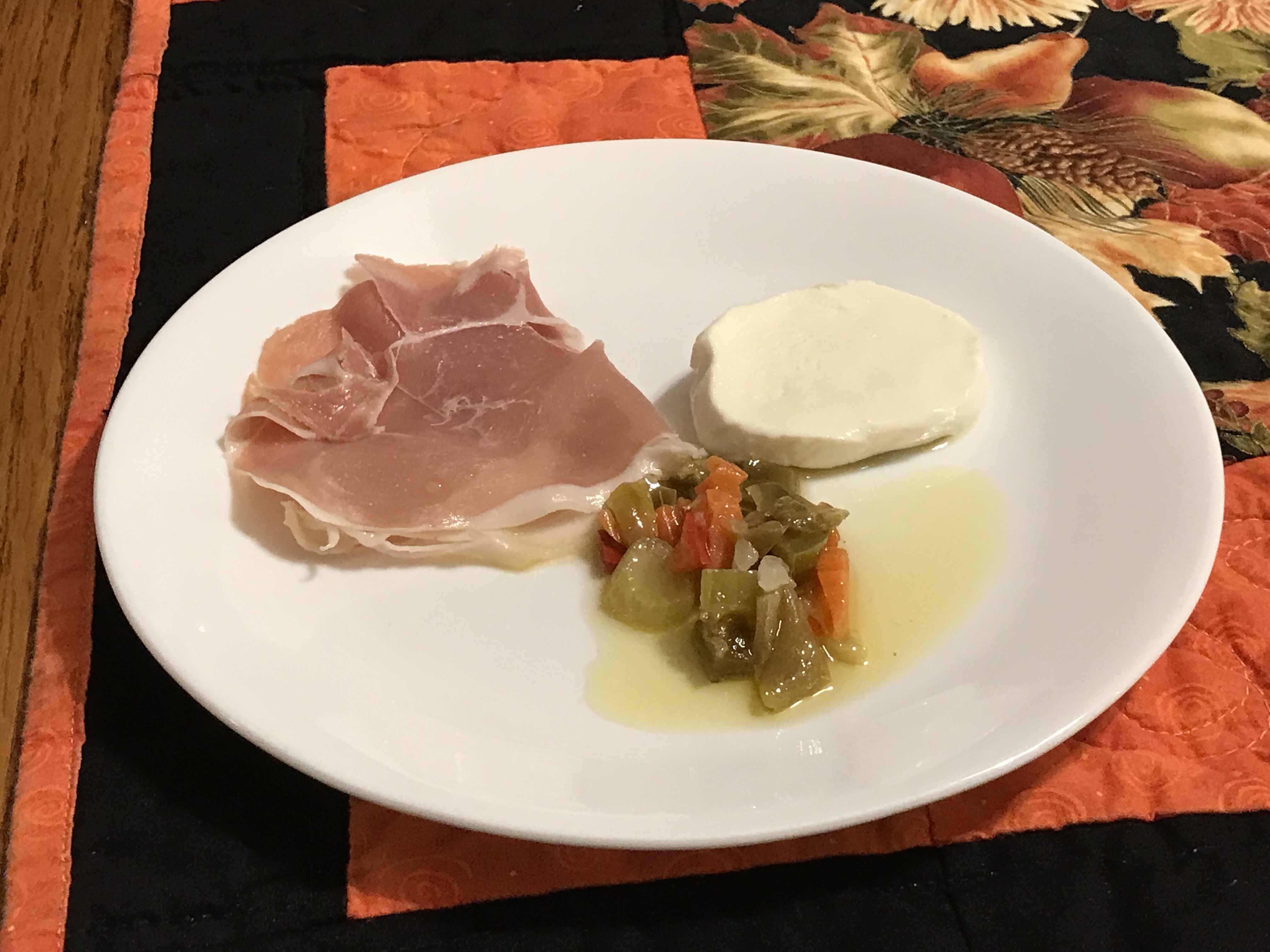
I had some trouble finding mortadella. The closest thing I could find was ring bologna, which while based on the original and probably of very good quality was not quite the same. I ended up replacing the mortadella with mozzarella cheese, which was a nice contrast to the stronger-flavored prosciutto and pickled vegetables.
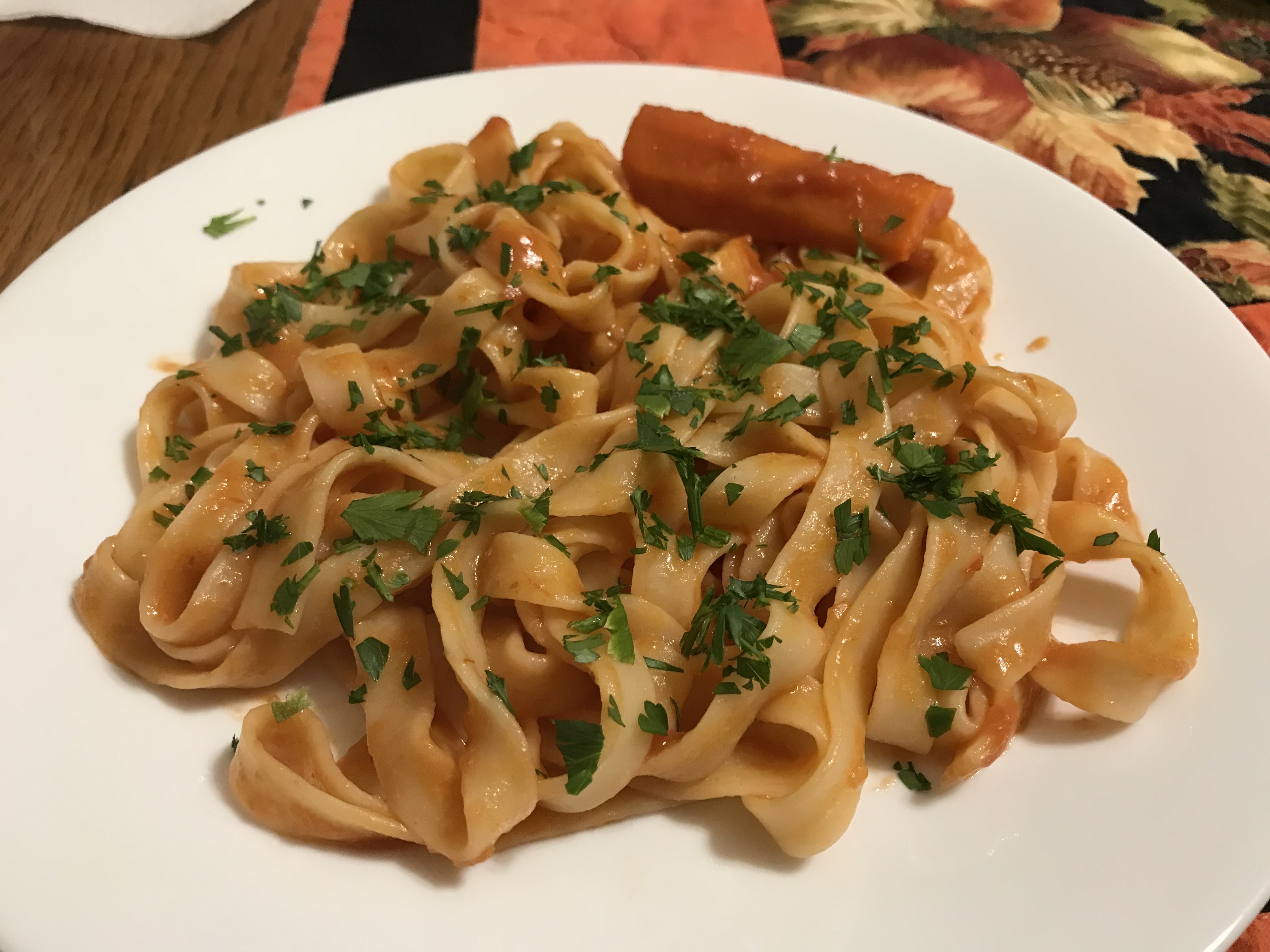
Normally, tomato-based sauces are bright and zesty while white sauces are rich, but this sauce bridged the gap in a remarkable way. Flavored with onion, carrot, and a lot of butter, it’s filling but not heavy and has a nice depth of flavor. With a sprinkling of parmesan cheese and parsley, this dish is simple and delicious, with an interesting history. Pasta has been eaten with butter and parmesan cheese since at least the Renaissance, but at that time adding sugar and spices was as common as adding herbs like parsley or basil. Heavy spices and sugar became less popular in the 16th and 17th Centuries, but tomato sauce did not become popular until the late 18th or early 19th Century. All of this means that until about 200 years ago, this seemingly classic dish would not have been found.
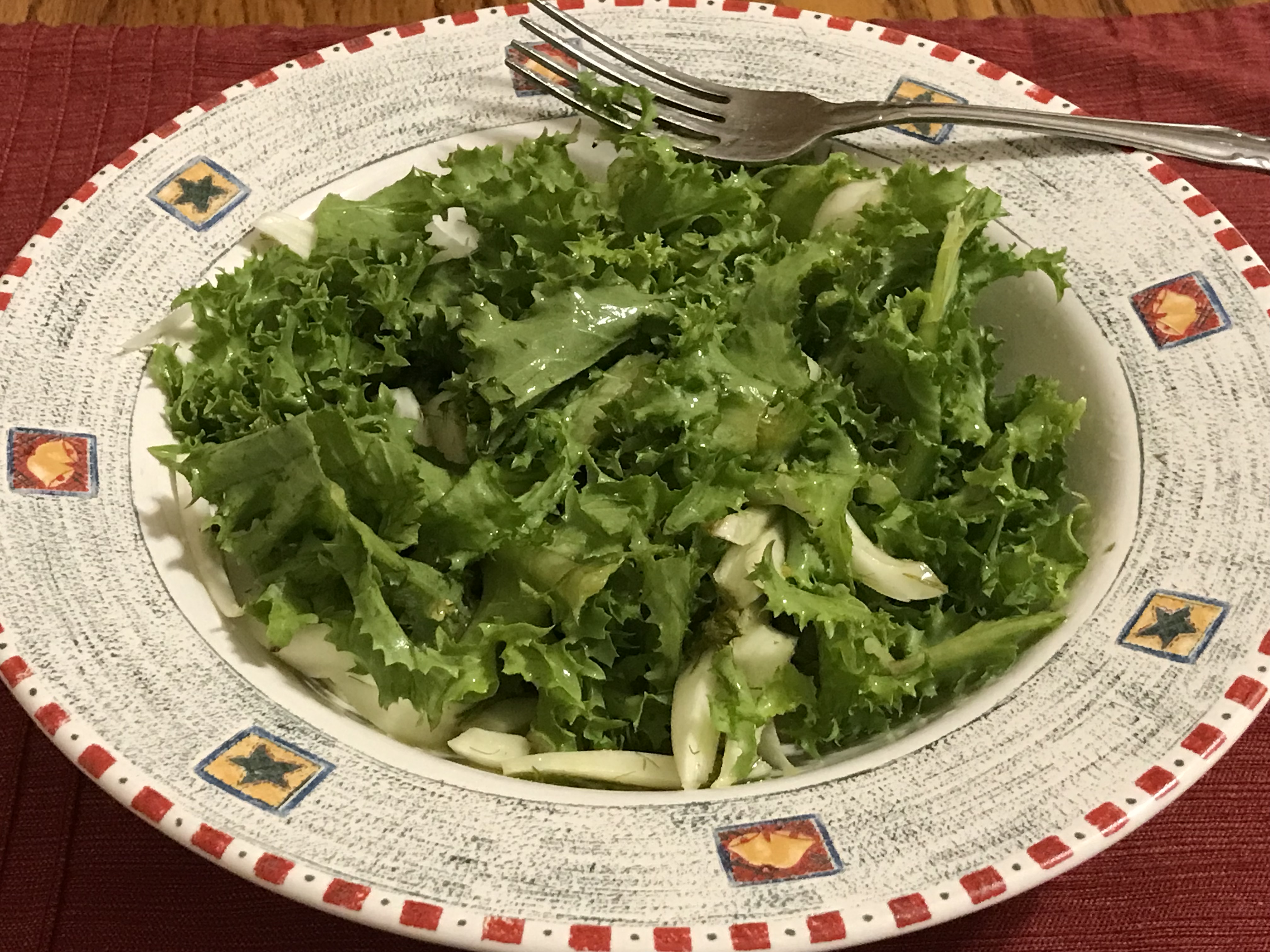
The salad was better than I expected. Even though I don’t usually like anything with a strong licorice flavor (like fennel), here it’s sweetness and aroma balanced the bitter chicory and sour dressing really well. In fact, given how bitter and sour the mix was, it probably could have used more fennel. Another option would be to add in another green with the chicory and dilute the lemon juice a bit.

Whether raw or cooked, pears have been a dessert favorite for over 2000 years. The Ancient Romans ate them plain or baked them in a sort of custard. Baking or stewing them in wine with spices has been common since the Middle Ages. Here, they are baked with white wine, sugar, cinnamon, and cloves, then served with a bit of mascarpone cheese. The recipe calls for white wine to keep the color from “competing with the mascarpone” (Text, pg. 165). That wasn’t an option here, since I wanted a non-alcoholic dish and red grape juice was easier to find. And personally, I think the red exterior and beige interior, with a little bit of white cheese in the center, is just so pretty. The pears tasted as good as they looked, though I must admit that I liked the dessert even better when replacing the mascarpone with a scoop of ice cream. Still, the fabled cuisine of Emilia-Romagna didn’t disappoint.
 Feasting Through Time