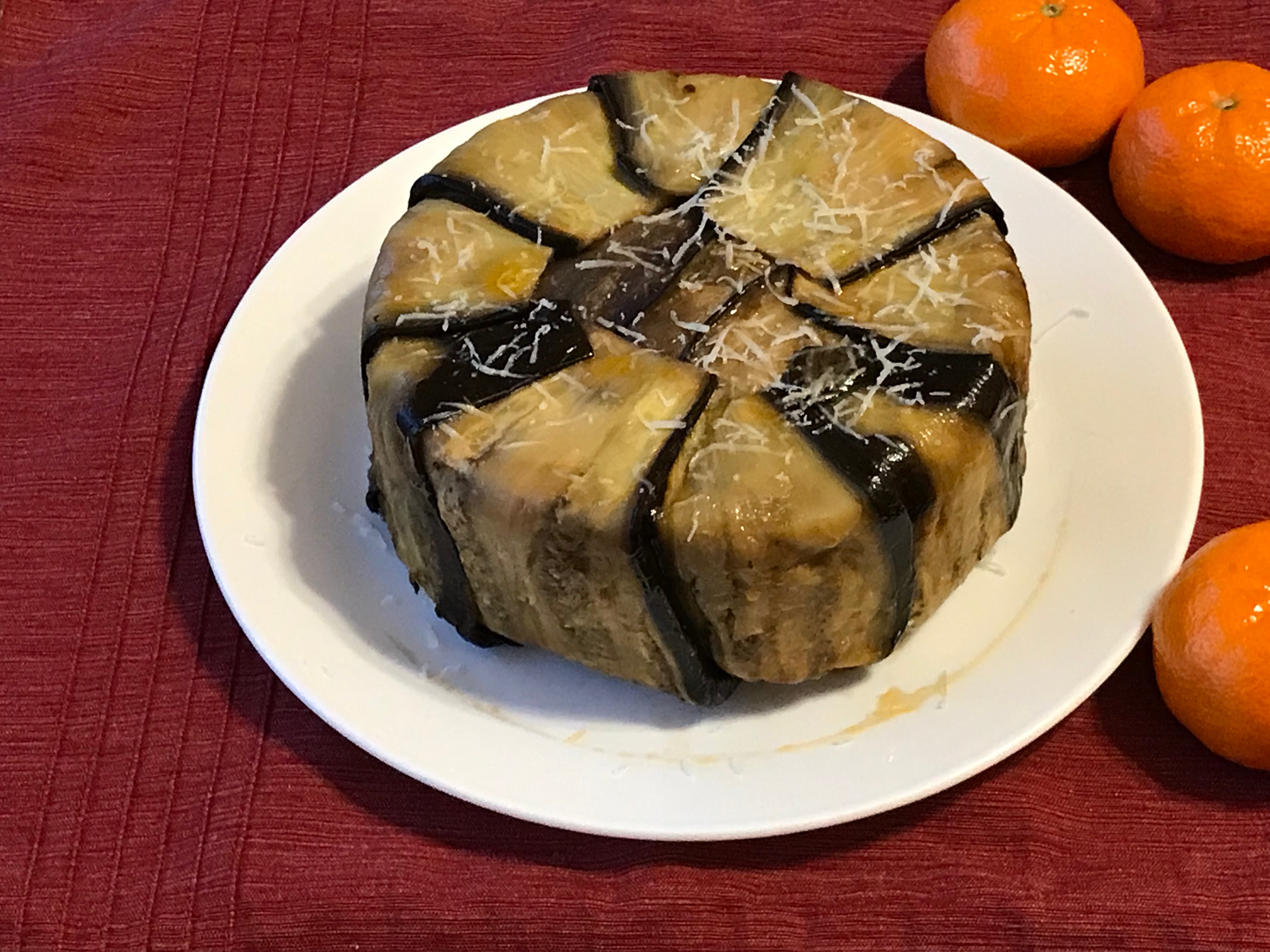
Eggplant Timbale
food history, italian cuisine, pasta, vegetarian

Cook’s Tour of Italy Menu 84 (Pgs. 264 – 265): Timbale of Eggplant and Pasta

Eggplant Timbale

Region: South Mainland/Islands (Sicily)

            As far as I can tell, the plain English definition of timbale is “food, encased in a different type of food, cooked in a mold, then turned out onto a platter to serve.” Timbales, or timballos in Italian, are popular in Sicily, probably originating in the kitchens of wealthy aristocrats. Elaborate versions might include a pastry crust, or rice molded precariously around a complex filling of meats, cheeses, vegetables, and eggs.

            The recipe here is much simpler, a mix of pasta, tomato sauce, cheese, and eggs, stuffed into an eggplant “shell.” There are two time-consuming steps, preparing the eggplant (slicing super thin, salting, and broiling) and making the homemade tomato sauce, but both can be done ahead of time. In fact, it isn’t a bad idea to make extra sauce, set aside what’s needed for the timbale, and have the rest with meatballs (and the gnocchi you made to clear the semolina flour out of the pantry). It’s also helpful to grate the cheese a day ahead. (And make the hard-boiled eggs the recipe calls for but I omitted.)

            If all of this is done, this fancy-looking timbale is actually feasible for a weeknight. While the water boils and the pasta cooks, you can butter the baking dish, line it with overlapping eggplant slices, and warm the tomato sauce. Then it’s just a matter of mixing the filling, packing it into the mold, covering it with more eggplant slices, and baking.

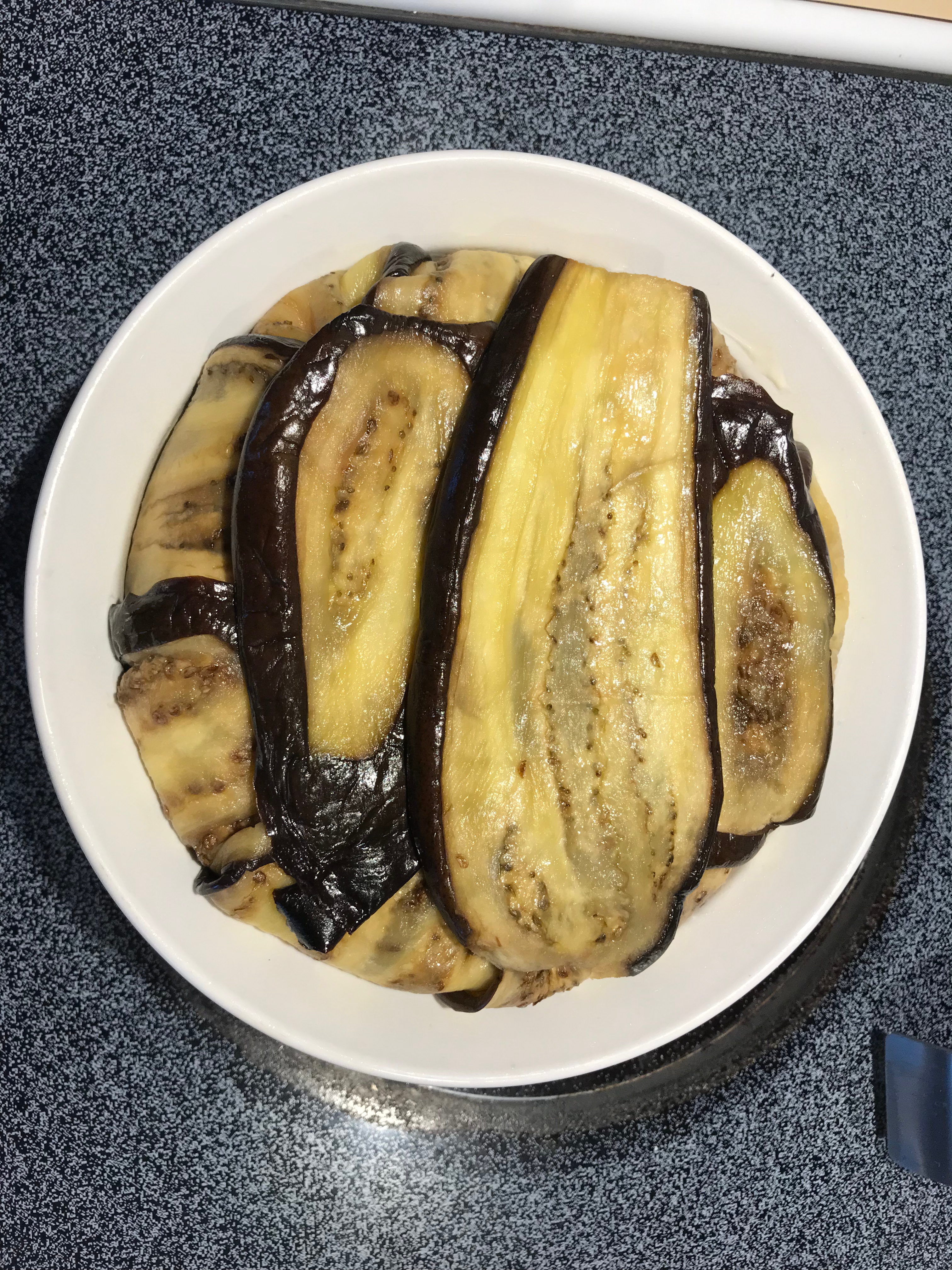
            Just look how pretty the end result is. It didn’t fall apart when unmolded, and tasted as good as it looked. The timbale isn’t necessarily for every day, but it was easier than I expected and would no doubt be a great way to show off for guests. Just beware that the slices aren’t as pretty as the whole.
Standard
Tagliatelle baked with two cheeses
food history, italian cuisine, pasta

Cook’s Tour of Italy Menu 54 (Pgs. 170 – 171): Tagliatelle Baked with Two Cheeses

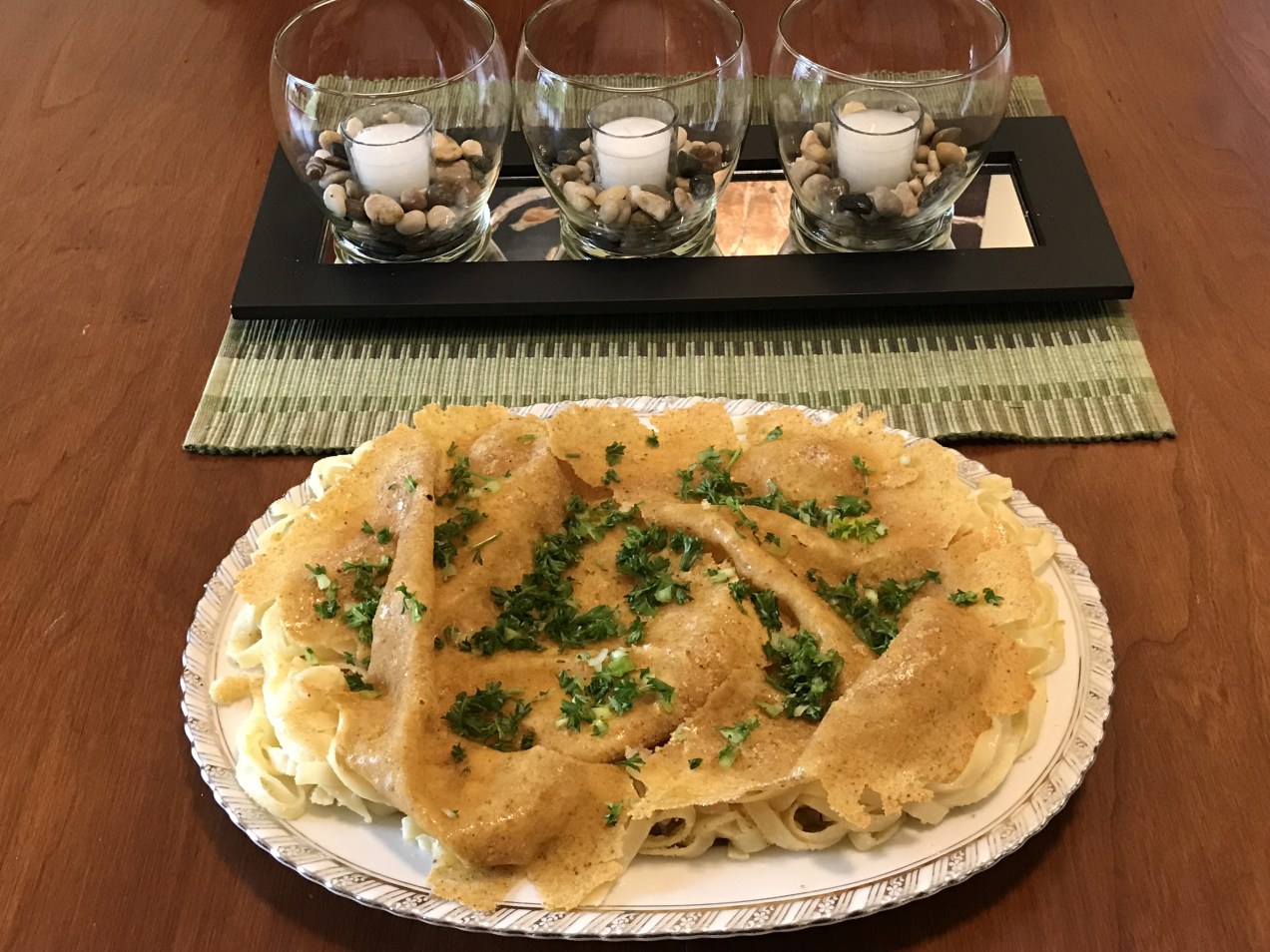
Two cheese baked tagliatelle

Region: Emilia-Romagna

            As mentioned before, Emilia-Romagna is known for its fresh pasta and dairy products. Fettuccine-like tagliatelle is frequently served with Bolognese ragu, which is never served with spaghetti. Wider pasta strands hold the sauce better. Tagliatelle can also be baked with cheese, as it is here. In this case, the two cheeses are Emilia-Romagna’s native parmesan, as well as fontina. More dairy is supplied by butter and cream.

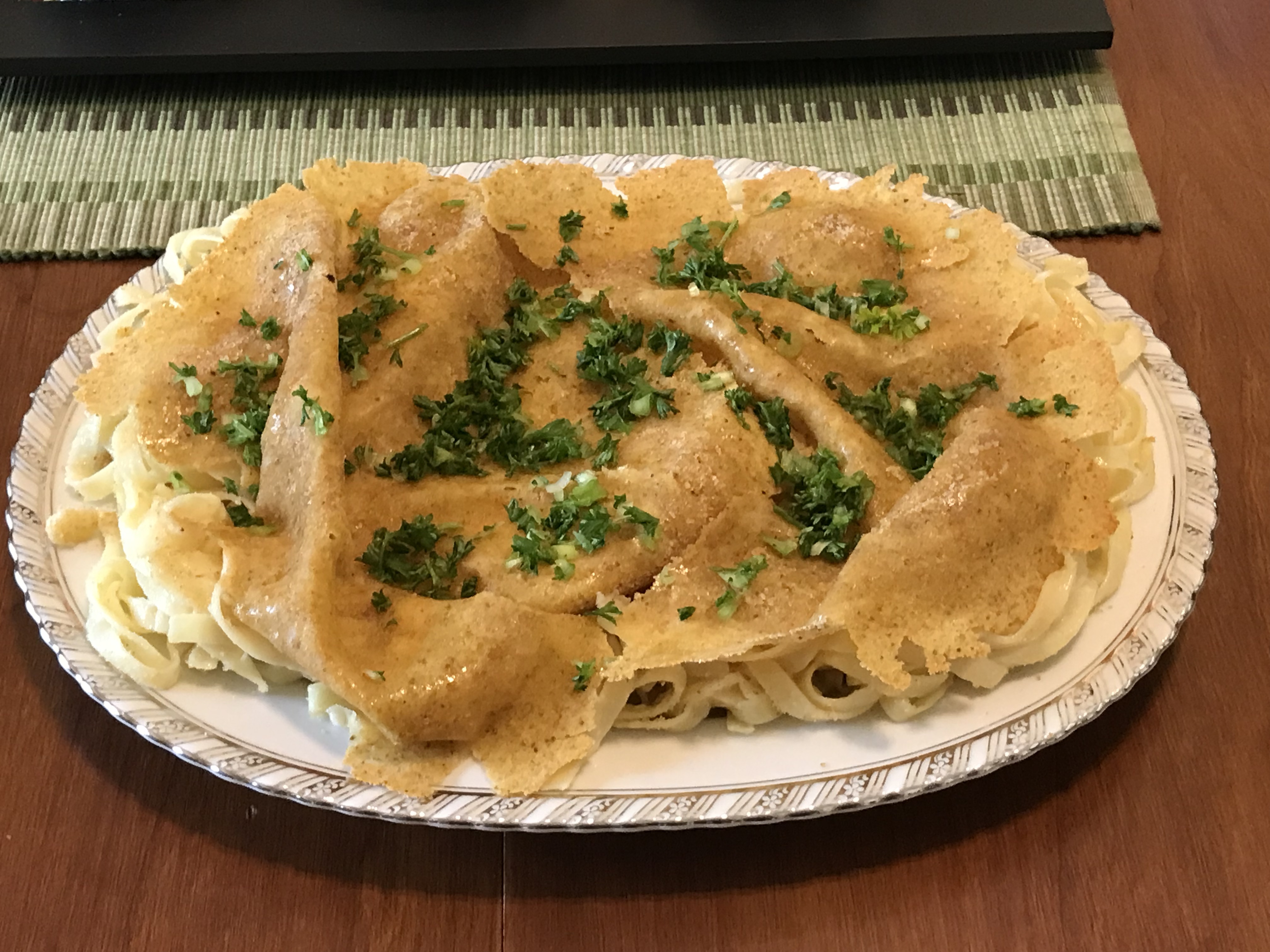
            Parmesan and fontina are both cow’s milk cheeses, which predominate in northern Italy. Here, the cheese is front and center. The only contrast comes from breadcrumbs lining the baking dish and a mix of scallions and parsley minced together. Interestingly, instead of sprinkling the breadcrumbs over the top, the baking pan is buttered, coated in a layer of crumbs, then a layer of egg, then another layer of crumbs. After baking, the whole pan is inverted onto a serving platter.

            I had an issue with the crumb layer sticking to the pan. It was easy to peel off, but the presentation wasn’t as pretty as it could be. And the texture wasn’t what I expected. It was more of an eggy film than the crisp crust I anticipated. Maybe it was supposed to be this way, maybe the extra egg I added because one didn’t fully coat the pan affected the texture. It was good, but in the future, I would just sprinkle the bread crumbs over the top. It’s easier and ensures that they stay crisp.

            This dish reminded me of alfredo pasta, but lighter and with a stronger flavor. The scallions and parsley added a pleasant fresh contrast, and a salad would balance things out nicely. So would a cooked vegetable like green beans, and/or a bowl of fruit for dessert.

Standard
Calabrian cuisine - chicken, spaghetti, and zucchini
food history, italian cuisine

Cook’s Tour of Italy Menu 77 (Pgs. 238 – 241): Menu for 4, Calabrian Coast

Region: South Mainland/Islands (Calabria)

Menu: Calabrian Onion Soup with Potatoes, Skewered “Tuna” with Lemon and Oregano, Spaghetti with Garlic and Chili, Baked Zucchini with Mozzarella, Roasted Grapes with Caciocavallo

Recommended Wine: Nozze d’Oro, Sicilian white

            Here is another southern Italian menu with potatoes. As discussed before, even though bread and pasta are more widely eaten there, people living in the region do occasionally eat potatoes. Like in neighboring Basilicata, Calabria has a long history of inequality and poverty, though tourism has improved the region’s economy in recent years. Directly across the Strait of Messina from Sicily, Calabrian farmers grow many similar crops, including olives and citrus fruits. Of particular note are bergamot oranges, whose aromatic peel gives earl grey tea its distinctive flavor.

            The soup was a mix of onions, potatoes, and chicken broth, flavored with a bit of butter and brandy. It had a surprisingly sweet edge to it, probably due to sautéing the onions first, caramelizing their sugars. After getting used to it, this was an interesting change of pace, especially when balanced with a bit of cheese, in this case Romano. Personally I prefer the Roman minestrone or the French soupe au pistou, but there was definitely nothing wrong with this.

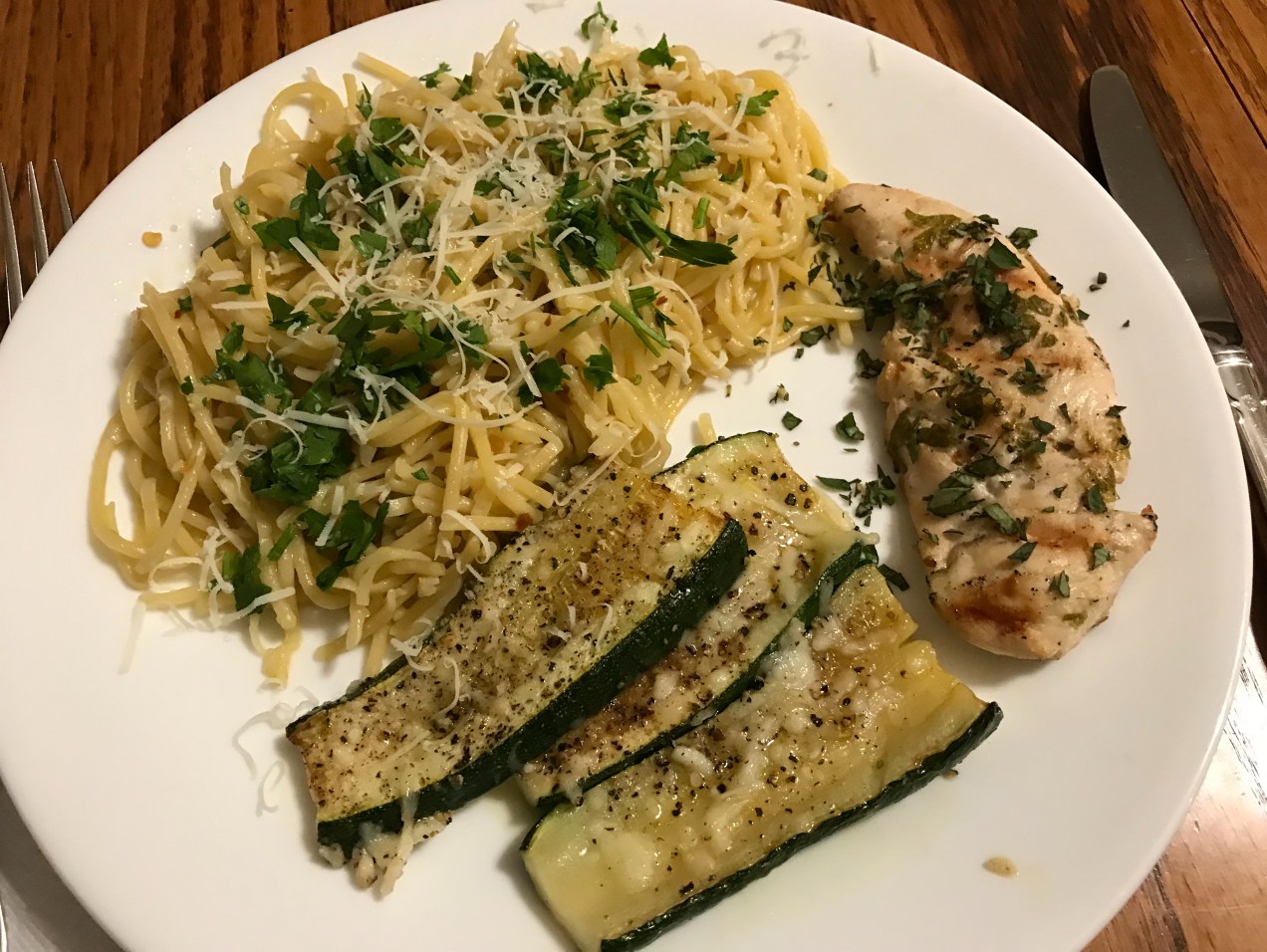
            Chicken replaced tuna with lemon and oregano, which go well with pretty much any protein. Centuries if not millennia of heavy fishing have made tuna rarer while factory farming has brought the price of chicken down, but at one time chicken was the pricier treat. Spaghetti with a simple mix of oil, minced garlic, and chili flakes is easy to make, uses pantry staples, and pairs well with either.

            It seemed a bit unusual to cook zucchini in the oven, for the simple fact that during the summer when it is in season, many people prefer not to turn the oven on. Maybe the situation is different in Italy, where people are more likely to open windows than rely on air conditioning, and where drier heat makes that feasible. Either way, I outright disregarded the advice to serve the zucchini on separate plates. It saves a few dishes, and the green color was a nice contrast with the chicken and pasta.

            Roasting grapes was an interesting experiment. They aren’t cooked for so long that they become raisins, which are more cost-effective to buy than to make. Rather, they bake just long enough to soften and collapse a bit, concentrating their sugars. I personally prefer them fresh where the skin has a bit of a crunch, but these are enjoyable. No caciocavallo was available.

            Overall, this would be a great special summer menu that isn’t difficult to make. If you’re worried about turning on the oven, I’m sure the zucchini could be grilled, with slices of mozzarella added at the end of cooking. And to be honest, there’s no need to mess with fresh grapes. Table (as opposed to wine) grapes are bred to be juicy and have that slight crunch as you bite through the skin. They’re best enjoyed as is, without bothering with the oven.

Standard
Uncategorized

Cook’s Tour of Italy Menu 76 (Pgs. 235 – 238): Lunch in Potenza

Region: South Mainland/Islands (Basilicata)

Menu: Spaghetti with Ginger and Garlic, Chicory Salad Mimosa, Sliced Oranges with Marsala, Enriched and Crisped Vanilla-Almond Cookies

Recommended Wine: Calabrian Red Ciro

            South of Naples and Amalfi is Basilicata, one of Italy’s least known and least developed regions. Between the rugged terrain and often harsh taxation, life has historically been difficult here. The traditional diet includes pasta, vegetables, olive oil and fruit, all of which are featured here. In a nod to increasing prosperity in the area, this menu ends with buttery almond cookies.

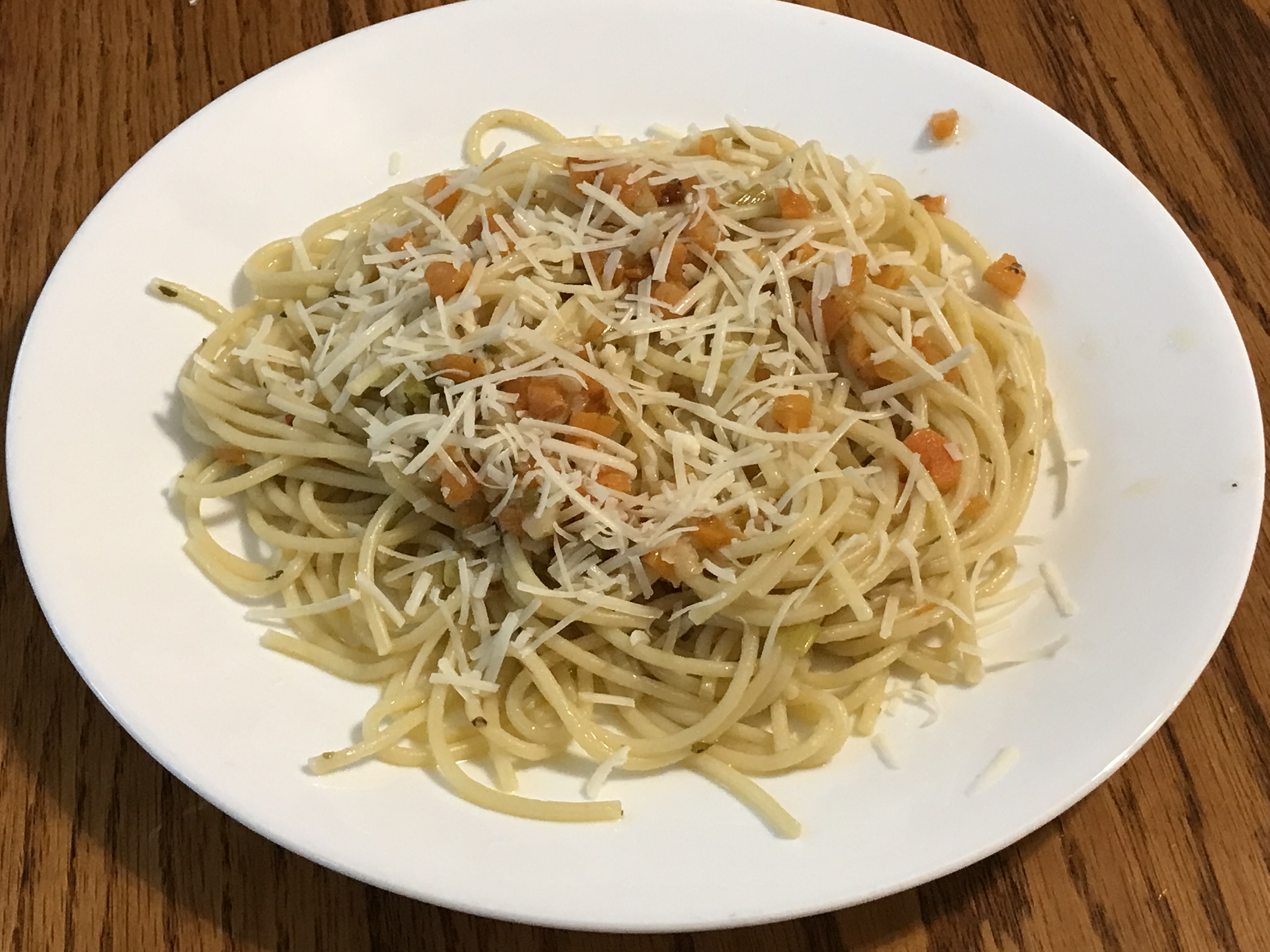
            Adding ginger to a pasta dish sounds strange at first, but it does give it an interesting flavor. Ginger and garlic work together to flavor the pasta, enhanced by oregano and hot pepper flakes, sweetened with carrots and vermouth, and enriched with olive oil, butter, and Romano cheese. The flavor was good, but the amount of water called for in the sauce made it very thin, causing it to pool at the bottom on the serving platter instead of sticking to the pasta. It was also a bit sweet from the vermouth.

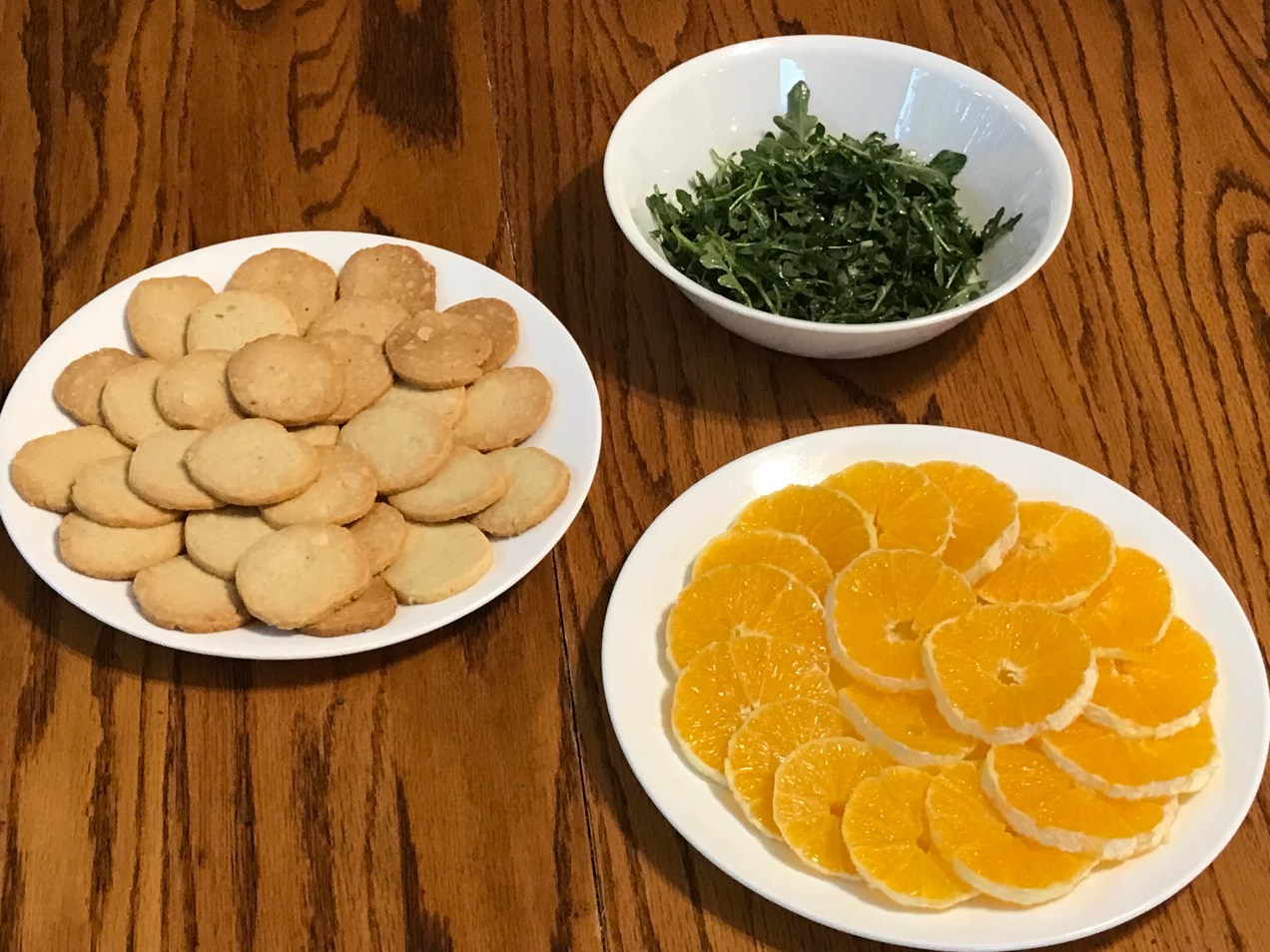
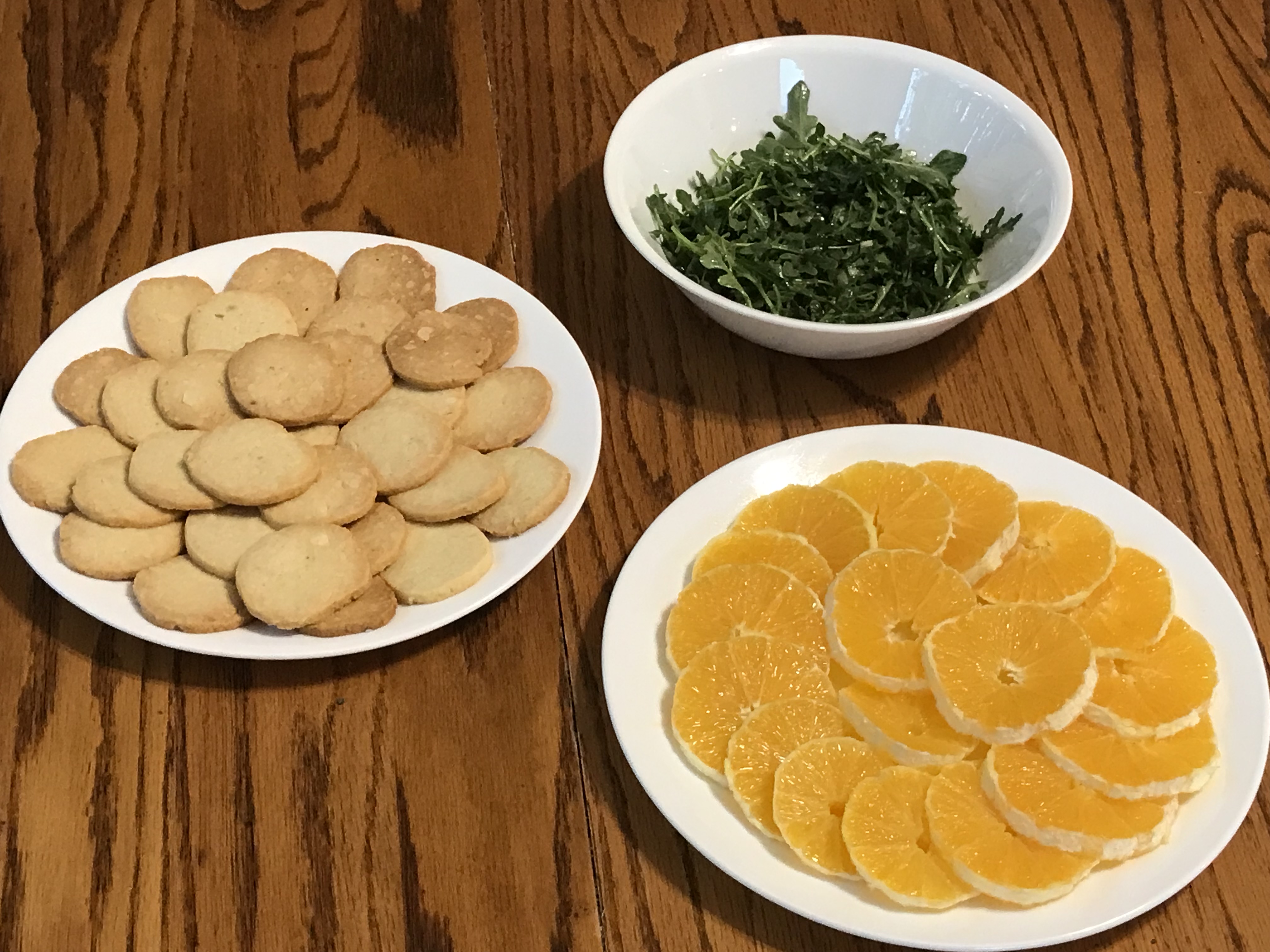
            The reason the salad is called “mimosa” is because of chopped hard-boiled egg yolks sprinkled over it. I omitted this here because of my dislike for hard-cooked eggs, particularly the yolks. I also substituted arugula for the chicory because it is not quite as bitter. The lemon juice dressing was still pretty sour, but it was a decent salad.

            Oranges grow all over southern Italy and are a popular dessert, especially in the winter. While they are often eaten plain, they can be embellished, as they are here with Marsala wine. Marsala is unique in that it is partially “cooked,” killing the yeast in the wine. As a result, it stays in good condition even after the bottle has been opened, at least for a while. This process also gives it a unique flavor. While I don’t drink much alcohol and am hardly a wine connoisseur, even I could pick out what seemed like briny and nutty flavors. Unfortunately, those flavors clashed with the oranges. A non-alcoholic experiment, with pineapple juice replacing the wine, was much better.

            Dessert had a slight glitch in the preparation. A buttery dough was rolled into logs, chilled, sliced, and baked on buttered baking sheets. That was all fine, but one thing I didn’t realize was that if the cookies weren’t removed from the sheets almost immediately after coming out of the oven they would stick. The first sheet of cookies ended up as a bunch of broken pieces. They were still delicious, but not exactly photo-worthy. The cookies from the second sheet were able to be removed intact, but an experiment a few days later with leftover dough proved that parchment paper worked better.

            Overall, this was a well-rounded menu, though I’m not sure if I’d make the pasta or salad again. The oranges and cookies, however, would be perfect for a Christmas spread. After the typically heavy main course and sides, the oranges would be a nice contrast; light and sweet with a bit of tartness. A little later, after everyone’s food has settled a bit, the cookies could be eaten with whatever other desserts are on offer.

Standard