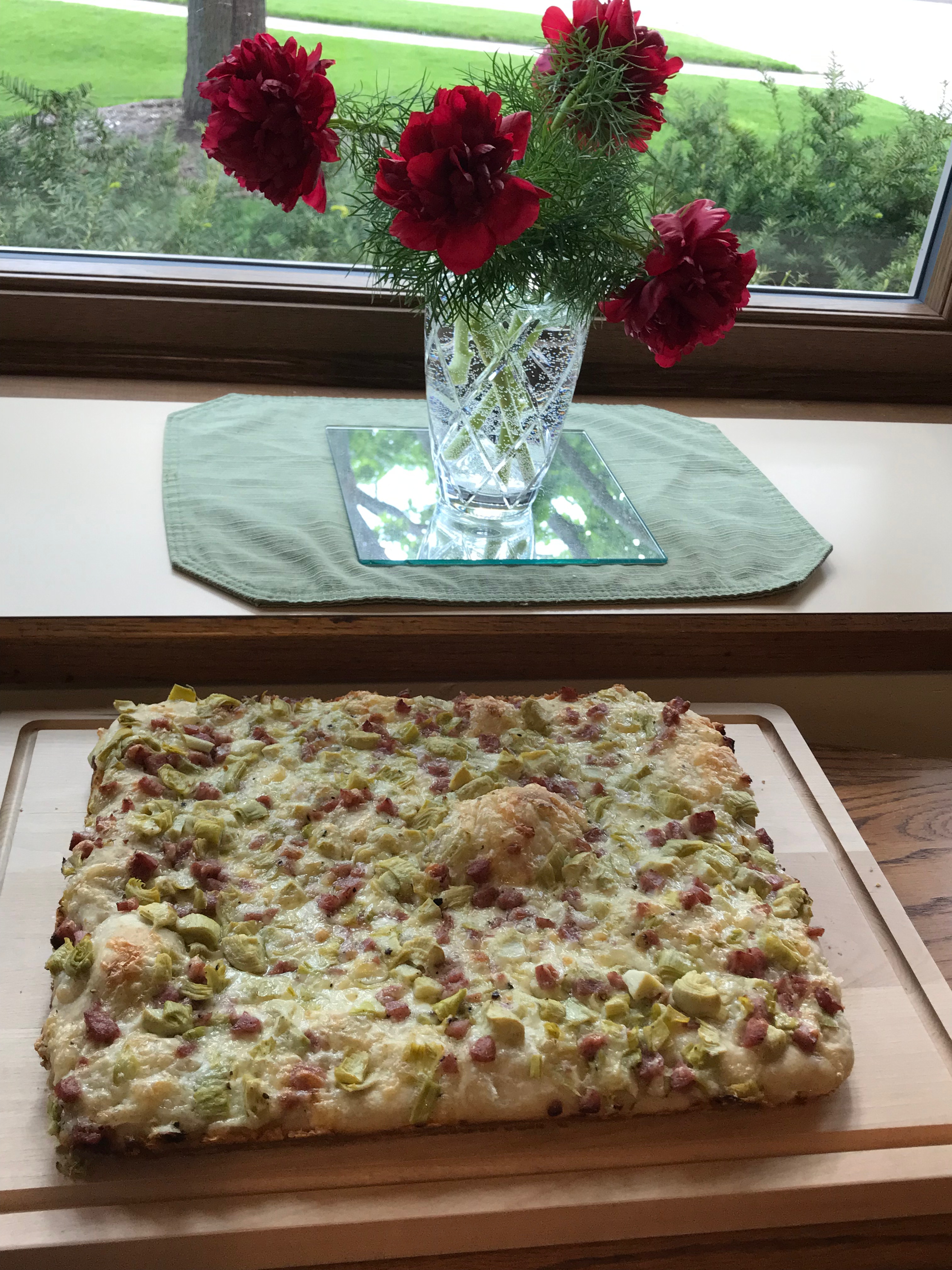
Add seasonal flowers for a lovely modern still life
Crazy as it sounds, ring bologna is actually a decent substitute for mortadella in a pinch. After all, mortadella originated in bologna. American “baloney” was an attempt to imitate it. The ring variety is better than the slices, and in either case, crisping it up in a pan gives the bologna a boost in flavor and texture. On this pizza, the oven takes care of that step for you.
If you make the dough the night before and leave it in the fridge, and if you still have garlic oil on hand (the recipe makes enough for several pizzas), this is the easiest pizza in the book. No vegetables need to be precooked; no herbs need to be minced. Just shred the fontina, rinse and chop up the canned artichokes, chop up the mortadella (or bologna) and you’re good to go.
Advertisements
The flavors and textures in this pizza are very well-balanced, between briny, slightly meaty artichokes, peppery bologna, creamy cheese, crispy crust, and garlic. On page 226, author Joe Famularo says the best way to get a good garlic flavor on a pizza without it scorching or being overwhelming is to use garlic-infused oil. And he’s absolutely right. The flavor is definitely there, but it doesn’t overpower the other flavors. Everything is in harmony.
A few months ago, I came across some ricotta salata while browsing at Woodman’s. Remembering that lack of it led me to improvise on sweet pepper pizza a few years ago, I decided to remake the recipe and give it a try. Plus, I had some unbleached flour and quick-rising yeast I wanted to use up before they went bad. At the time, I’d been trying to clear out the pantry, find a use for the ingredients pushed to the back, and therefore avoid food waste.
Recently I started watching Hoarders, which is enough to make anyone want to clean, even if they don’t have a problem. Many of the jam-packed kitchens came about because their owners liked to stock up when preferred items went on sale. There’s nothing wrong with that, as long as you don’t buy more than you can use before it goes bad. Having some extra cereal, pasta, crackers, and canned goods in the basement is handy. Just don’t overdo it.
Some items, like the cornmeal that I bought at the start of Covid, expired two or three years ago and weren’t salvageable. The yeast and unbleached flour were still good, but expiring soon, so it was as good a time as any to make pizza. I made the garlic oil that all the recipes use, stuck it in a jar in the fridge, and decided to start with a white pizza using the leftover provolone and some of the pecorino from the eggplant timbale (and leftover parmesan from some gnocchi, and some mozzarella already in the fridge).
Advertisements
When I went to put the dough in the intended pan, a large round sheet pan with a short “lip,” it wasn’t there. Turns out, it had started flaking and reached the end of its natural life. Looking at my other options, I settled on a roasting pan with slightly higher sides. If I spread the dough all the way to the edge, the surface area would be similar, just in rectangular form. Nothing wrong with that.
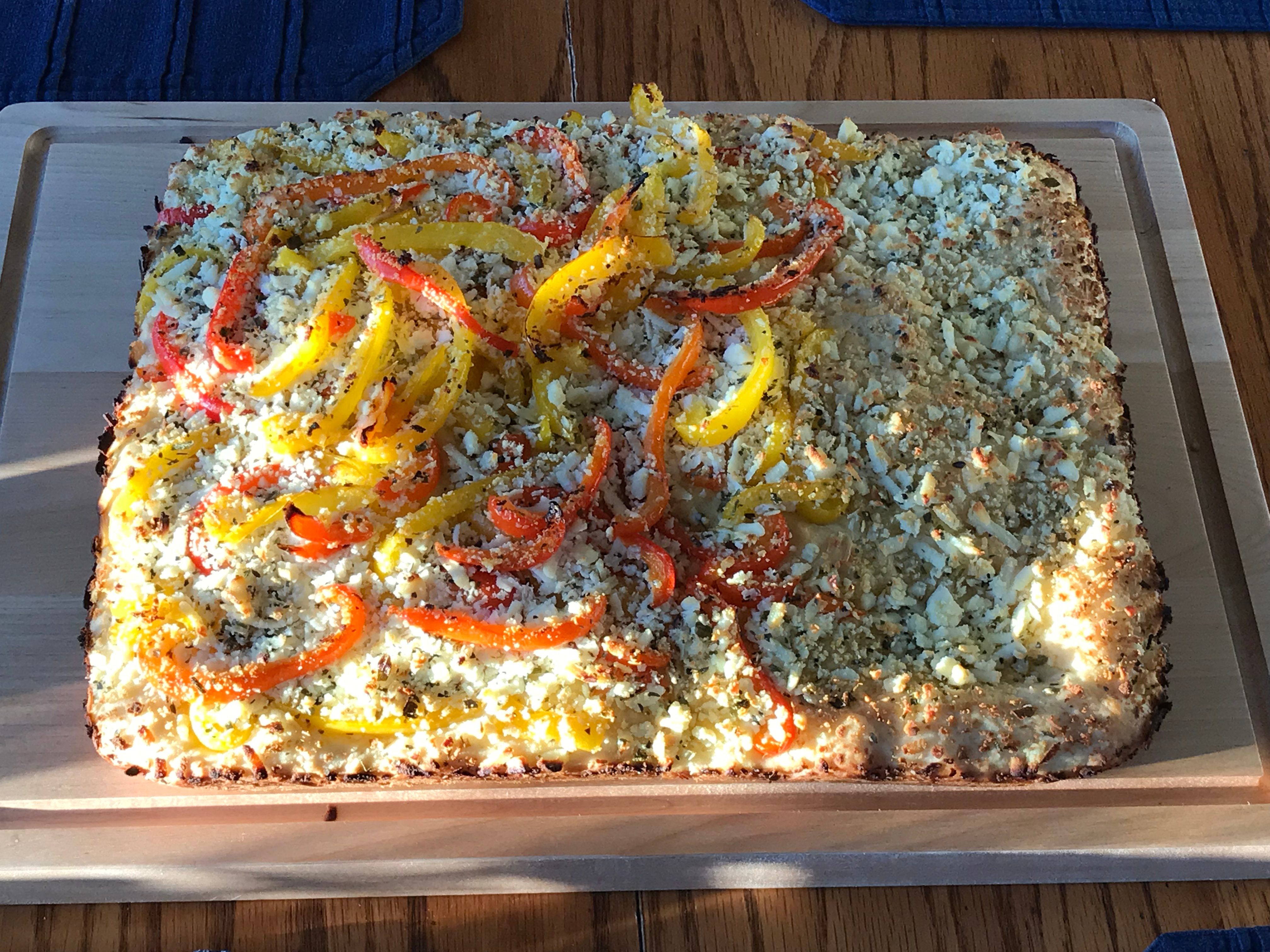
This turned out to be the best culinary misadventure in a while. Because this dough recipe produces a thick crust, I had never spread it to the edge of the pan before, in case the garlic oil in the topping dripped off onto the bottom of the oven. Being able to do so made a huge difference. The crust rose evenly instead of bulging in the middle, and the edges got extra golden and crispy. Everything was delicious, but the edges were phenomenal. And the pizza fit perfectly on the new, giant wooden cutting board.
After this success, I decided to make any future pizzas in this pan. The sweet pepper and ricotta salata pizza was up next, for the simple reason that peppers were on sale at the store. This was good, but a little dry, even with the garlic oil. For pizza, meltier cheeses with a bit more fat seem to be the way to go.
Finally, we have one of the most iconic Italian dishes: a pizza. Three pizza recipes are featured in the text, but none of them are the stereotypical takeout or delivery staple. None of these recipes have tomato sauce, pepperoni, or sausage, and only one of them has mozzarella cheese. Not that there is anything wrong with the American staple, far from it, but it is nice to have a change of pace from time to time. In this case we have pizza dough topped with garlic-infused oil, sauteed bell peppers, and ricotta salata mixed with herbs.
Pizza is an interesting dish with an unclear history. As discussed in the text on page 224, it does not have any special meaning and was originally commoners’ food. Bread dough with a few toppings to make it more interesting seems to have been around for hundreds of years if not longer, but perhaps because it was the food of peasants and poor urban dwellers, it was not written down. The earliest mention of it that I have found is an aristocratic recipe for a sweet dough with marzipan and crushed cookies from the 16th Century. Perhaps in the past the definition of pizza was broader than it is today. At any rate, the story goes that pizza became “respectable” in the 19th Century when a chef created the original “Pizza Margherita” for the queen at the time, Margherita of Savoy. From there, it’s popularity only grew.
While not quite as fast as takeout or delivery, this recipe is not particularly difficult. Most of the time required is in kneading the dough and letting it rise. A stand mixer with a dough hook saves a lot of time and mess for the first part. While it’s rising, there’s plenty of time to assemble/prepare the other ingredients and make the garlic oil, if there isn’t some already made from a previous pizza (the recipe makes enough for several). There are only two real tricks here. First, make sure the water is not too hot when adding it to the yeast. If it is, it will kill the yeast and the dough won’t rise properly. Second, infuse the garlic in the oil over very low heat to prevent the garlic from scorching and imparting that flavor to the finished product.
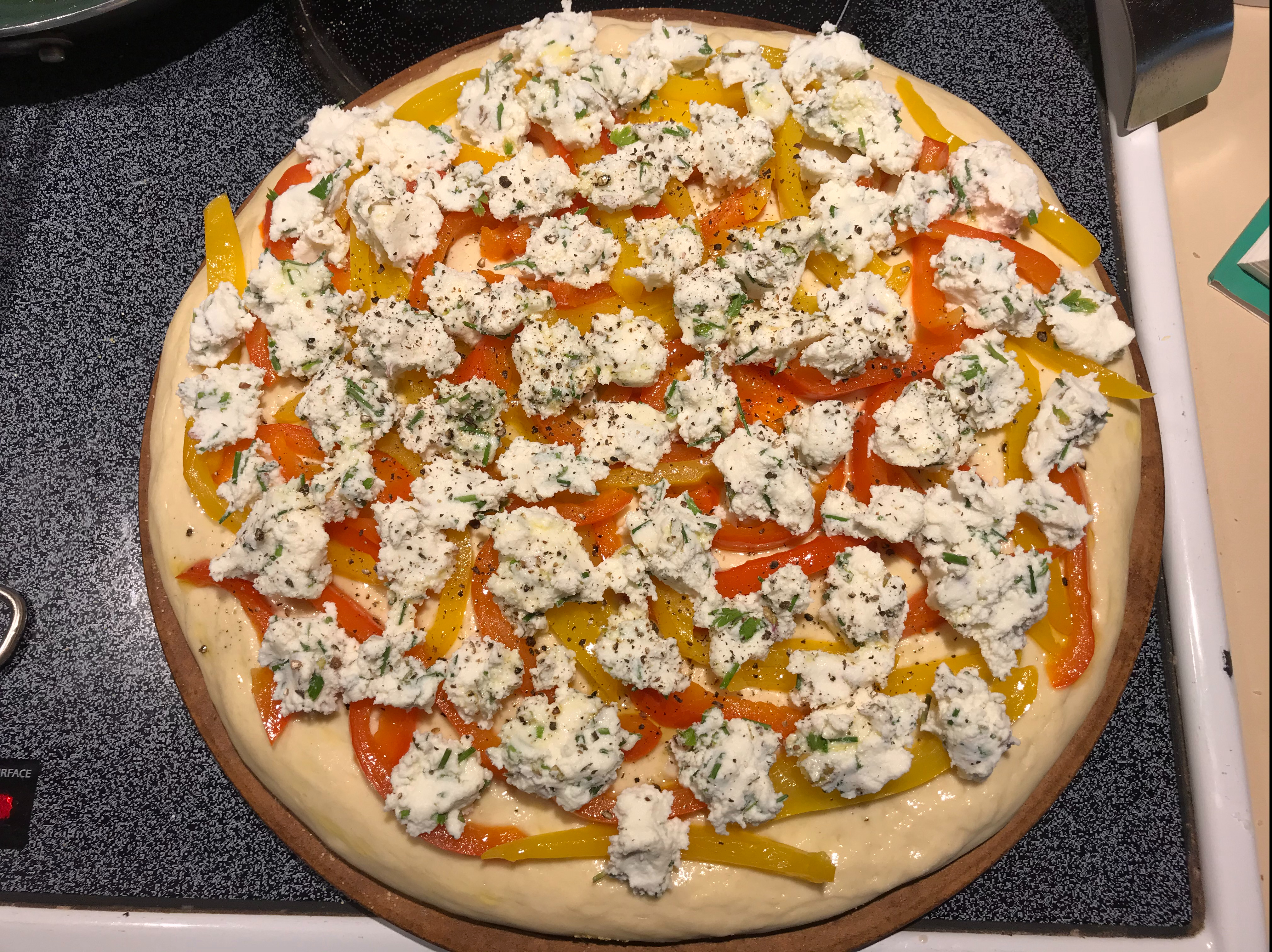
Since I could not find ricotta salata anywhere near me, I tried to make my own by mixing ricotta cheese with some extra salt, wrapping it in cheesecloth, and pressing it between two plates for a few days. The idea was to squeeze out some of the excess moisture, ideally enough to make the cheese firm and able to be grated. That didn’t quite work out as planned. Some moisture was soaked up by the cheesecloth, but the texture didn’t change significantly. I went ahead with the recipe anyway. Rather than mixing the herbs with the grated cheese, I just stirred them into the soft cheese and called it good. As there was no sprinkling this over the top of the pizza, I spaced globs of it on there as evenly as I could and hoped for the best.
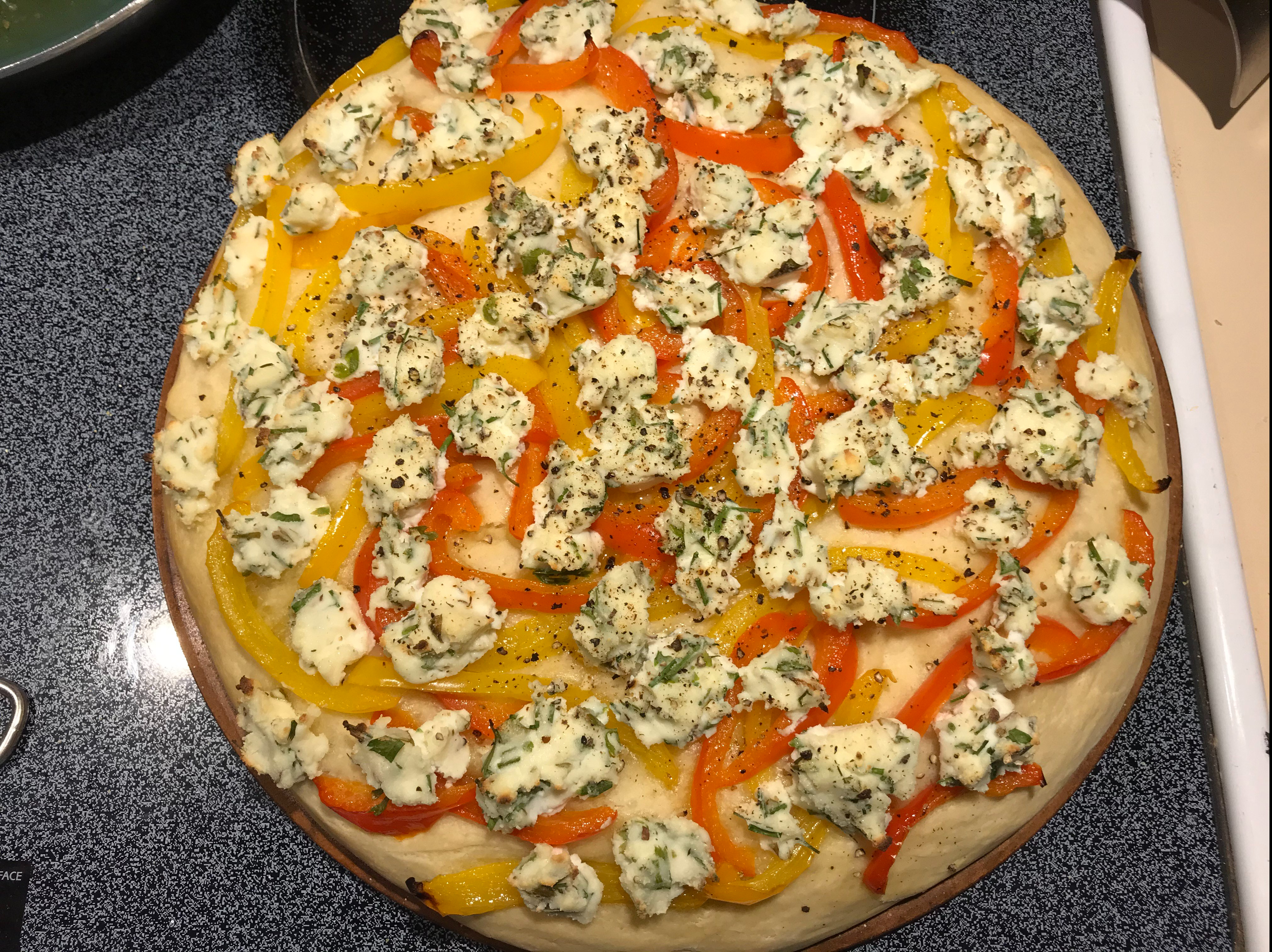
The finished product
The cheese didn’t spread out over the surface as I thought it might, but the pizza was still delicious. The crust crisped up well on the pizza stone, the garlic flavor was clearly there but not overpowering, and the outside parts of the cheese globs browned a bit for added flavor. At some point it would be nice to try this with actual ricotta salata, but in the meantime, the modified version is more than worth making again.

 Feasting Through Time