
1000 Foods (pgs. 510 – 511)
In art and drama, the forbidden fruit from the Garden of Eden is an apple. In reality, the Book of Genesis doesn’t specify what kind of fruit it was. It certainly could have been an apple, since apples were introduced early to the garden’s likely location in Mesopotamia, but there are other possibilities. Apricots, quinces, and dates all grew in the area, and because there were fig leaves in the garden, there must have been fig trees. Another possibility is the pomegranate.
Pomegranates have long been associated with fertility. Delicious and beautiful, they are packed with vitamins and antioxidants. When superfoods were all the rage 10 or 15 years ago, pomegranates were given that label along with the likes of blueberries, kale, quinoa, and acai berries. Even if pomegranates aren’t the miracle food they were claimed to be, they are still a healthy treat that conveniently comes into season during the winter.
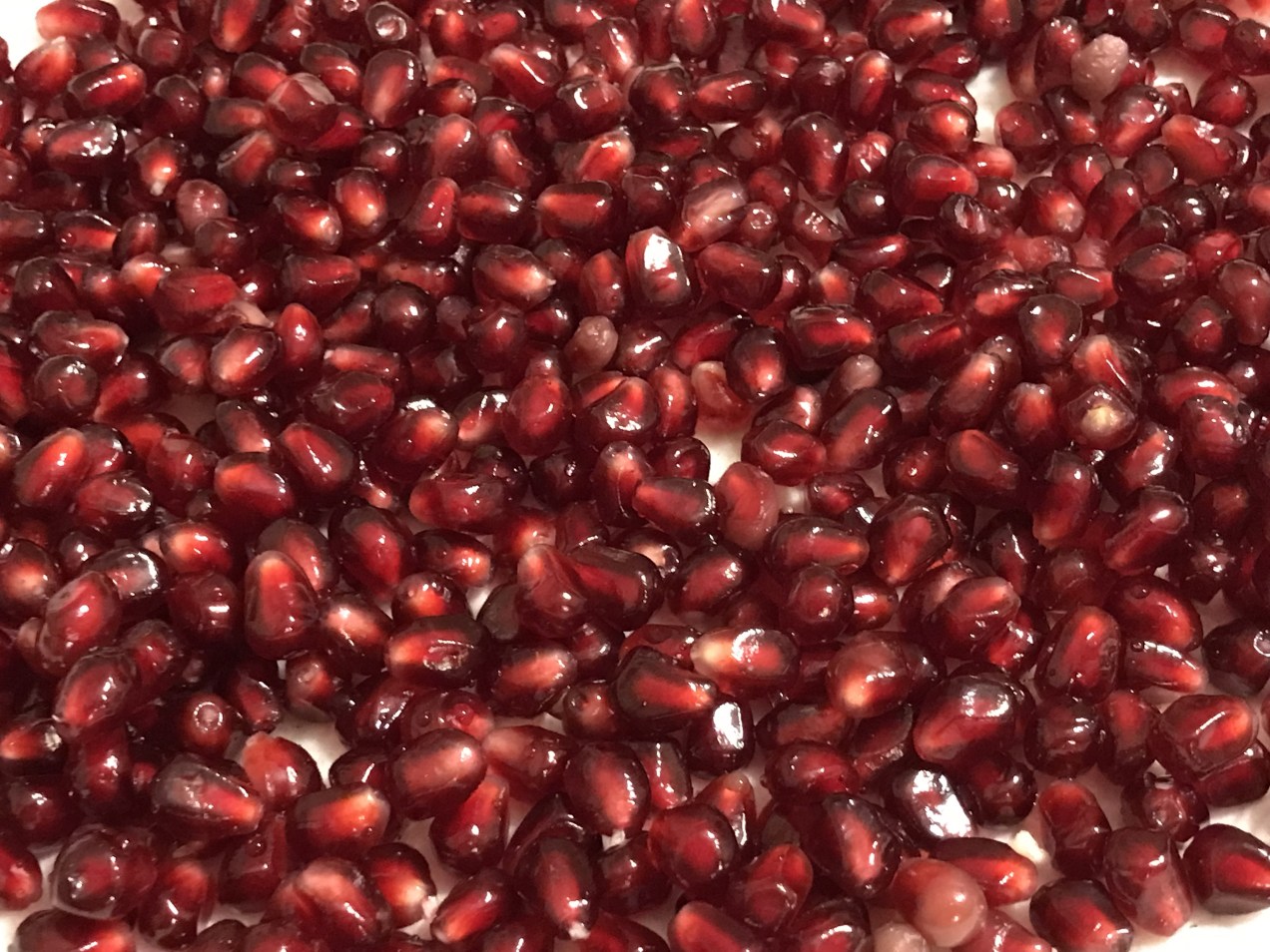
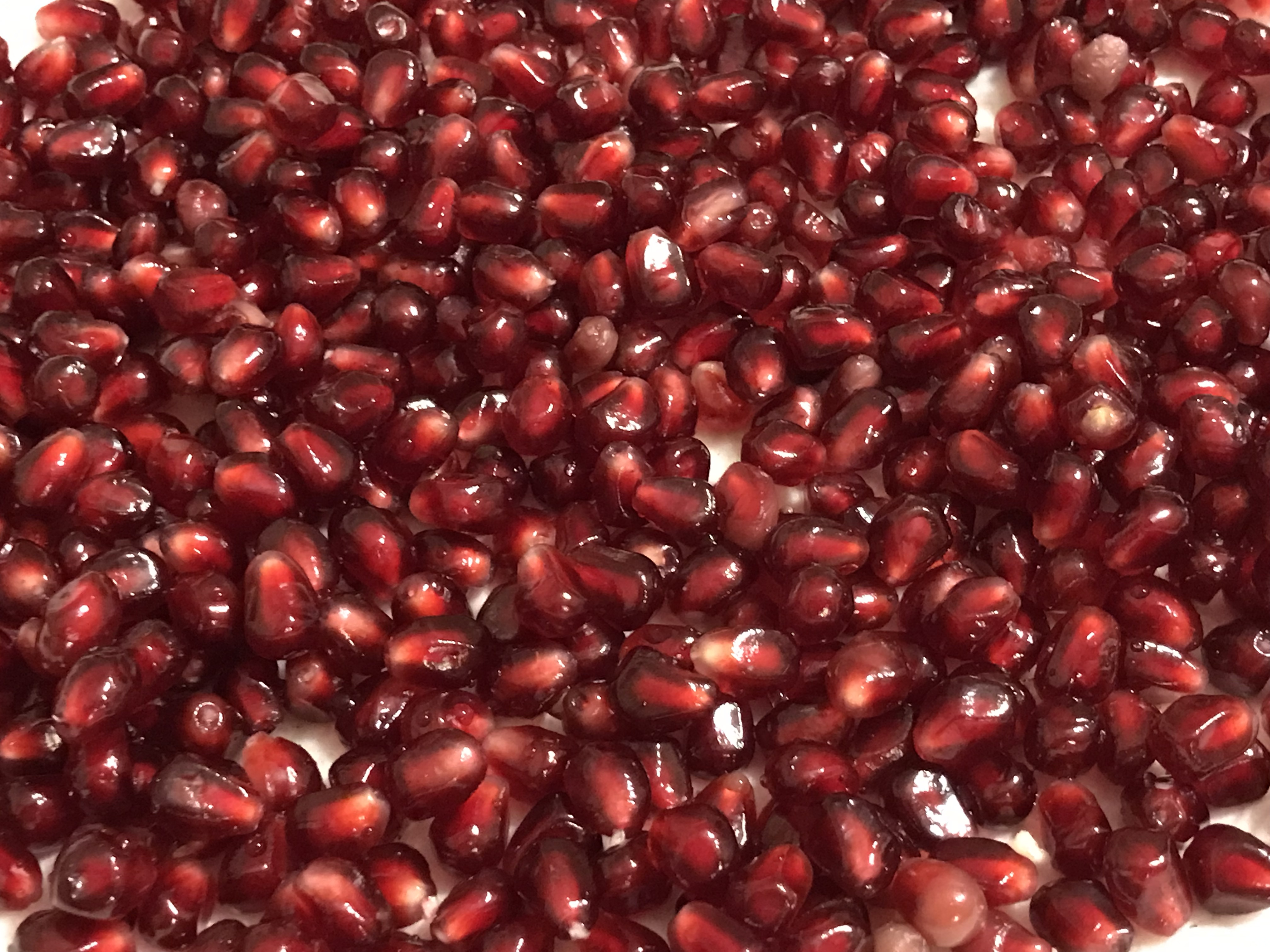
They are also a pain to clean. Inside the fruit are a bunch of tiny red arils, which contain the seeds. To get to these, the membrane surrounding them must be removed. There are a number of ways to do this. One of the easiest ways is to put sections of the fruit in a bowl of water to loosen the membrane, which floats as it’s worked free. This method also prevents juice from any broken arils from spraying, another major benefit since pomegranate juice leaves bright red, hard-to-remove stains.
The flavor makes all the trouble worth it. Pomegranate seeds are delicious sprinkled over yogurt, ice cream, other fruits, pudding, or trifle. In some middle eastern dishes, they are even used with meat or vegetables. But sometimes, it’s worth eating them on their own. As you bite into each aril, the sweet-tart, flavorful juice sprays onto the tongue, while the seeds provide a nice bit of texture. Thankfully, these delightful fruits are no longer forbidden, if they ever were.
 Feasting Through Time