
1000 Foods (pgs. 70 – 71)
As mentioned previously, despite its stuffy reputation, French cuisine has many unfussy, homestyle dishes. At one point, many of these were regional, country-style fare. Writers like Elizabeth David and especially Julia Child helped popularize them worldwide and make them “respectable.” Today, the likes of quiche, coq au vin, and cassoulet can be found at Michelin-starred restaurants alongside more traditional haute cuisine. Naturally, this means haute cuisine prices for dishes with often affordable ingredients.
Often, cassoulet does contain pricier ingredients like mutton, game birds, or duck confit, but it doesn’t have to. The only necessities are pork, beans, a heavy vessel for a long, slow bake, and a topping of breadcrumbs to form a “crust.” Native to southern France, cassoulet was originally a peasant dish. The cook would toss in whatever meats were available, with white beans to add filler and soak up the flavor. The cassoulet would be taken to the baker, who, in the days before modern kitchens, often had the only oven in town. For a small fee, the baker would bake the mixture for a few hours. Typically, when the cook returned to pick it up, they would buy a loaf of bread to go with it.
The exact recipe for cassoulet varied, no doubt based on personal preferences, what was available, and the economic resources to the family eating it. There are three main variations, all named after towns in southern France: Castelnaudry, Carcassonne, and Toulousain. Often Castelnaudry is pork-based, Carcassonne focuses on mutton and game fowl, and Toulousain on duck confit, or duck preserved in its own fat, but these are not hard and fast rules. If the last sounds strange for a peasant dish, preserving duck and other fowl like goose in its own fat was once a necessity, widespread in the region. More recently, it became trendy.
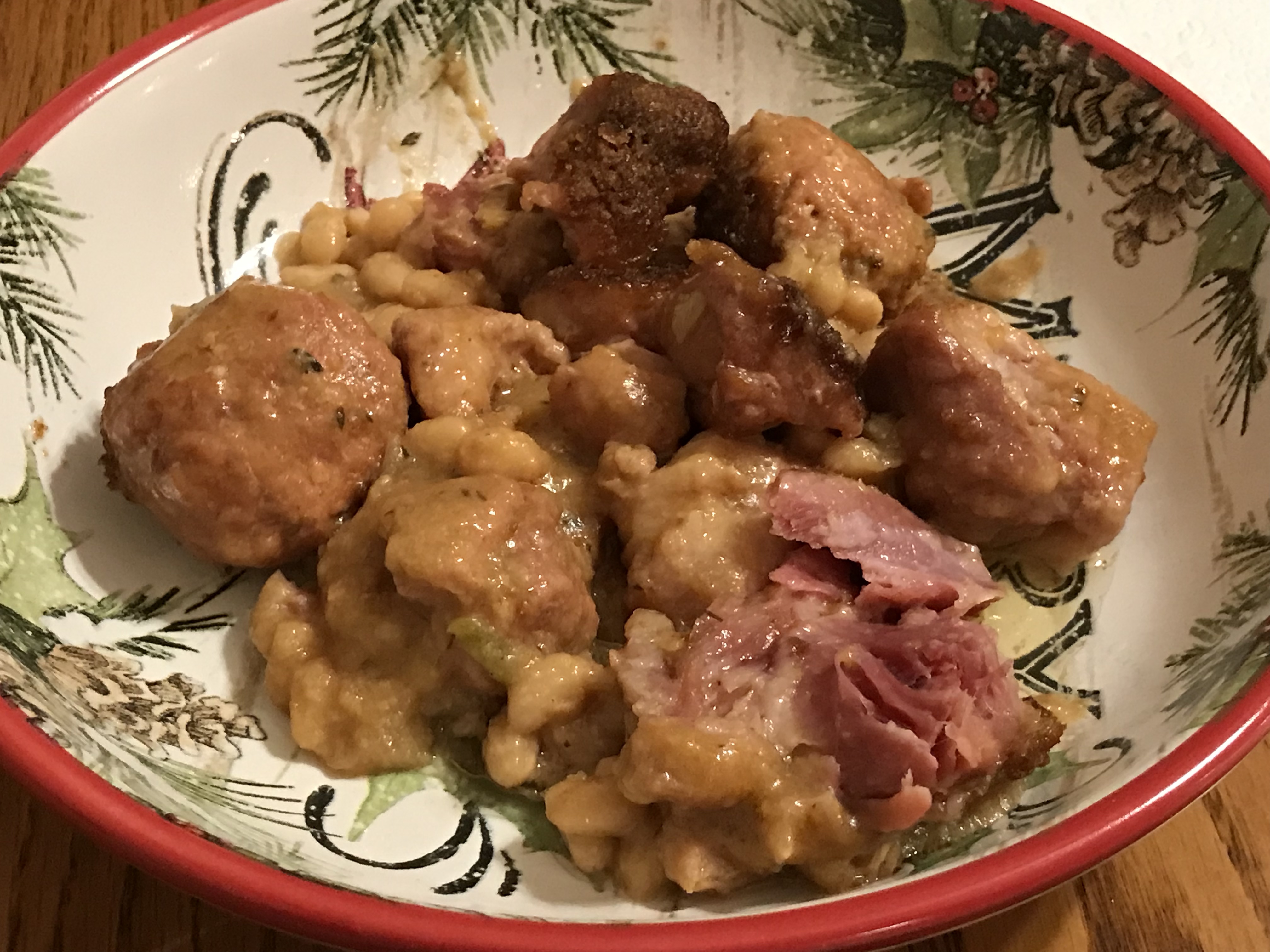
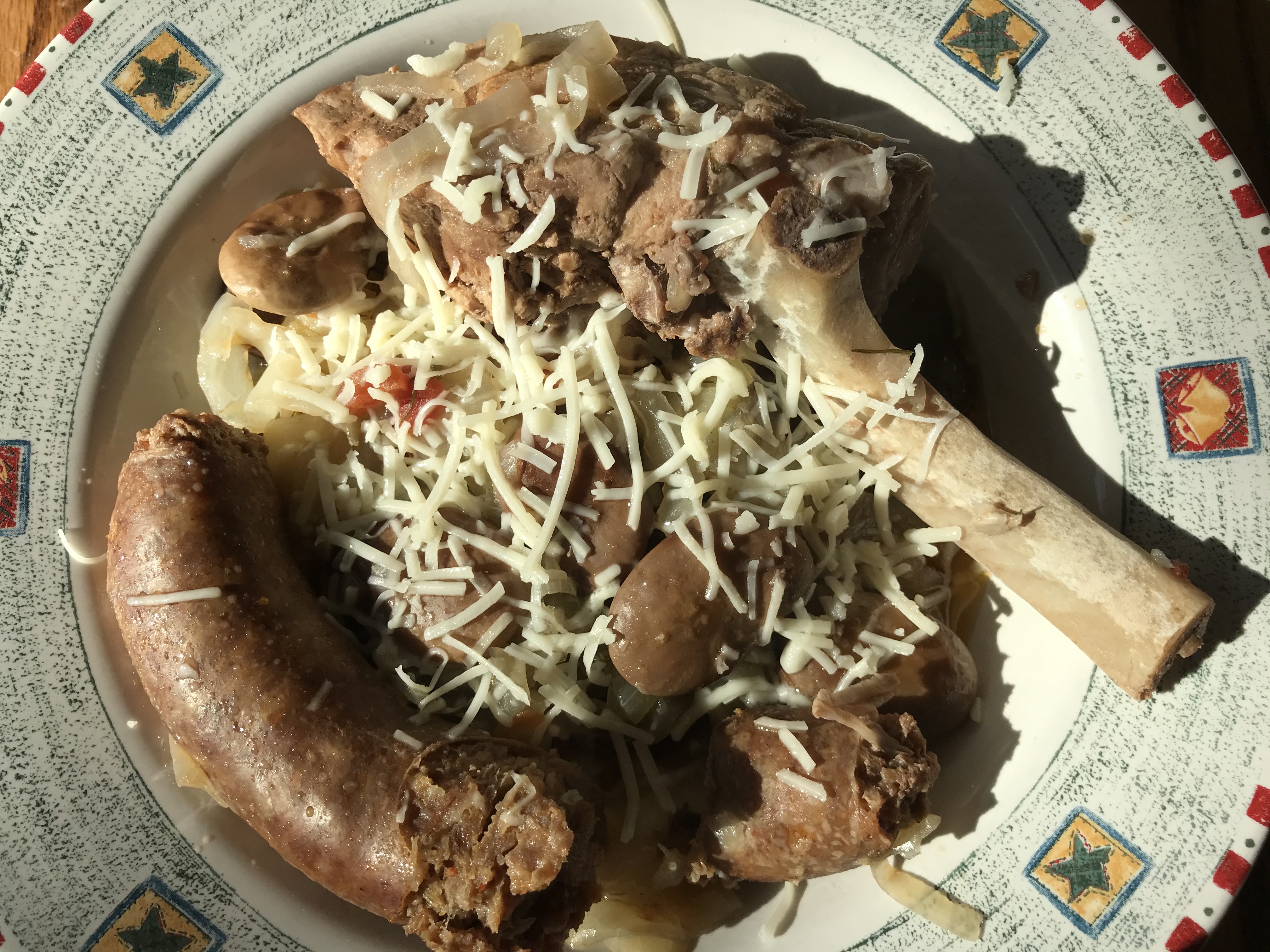
To stay in the spirit of what was once a humble dish, I stuck with pork, partly because of cost, partly because I didn’t want to search high and low for mutton and duck confit. And getting up early to hunt game birds just wasn’t going to happen. For the meats, I thawed out some pork butt from the freezer, brushed the extra salt off a few slices of homemade pancetta/salt pork, and picked up a pack of smoked ham shanks and hot Italian sausage meat from the grocery. To distribute it more evenly but keep it distinct, I formed loose sausage meat into meatballs rather than using whole sausages.
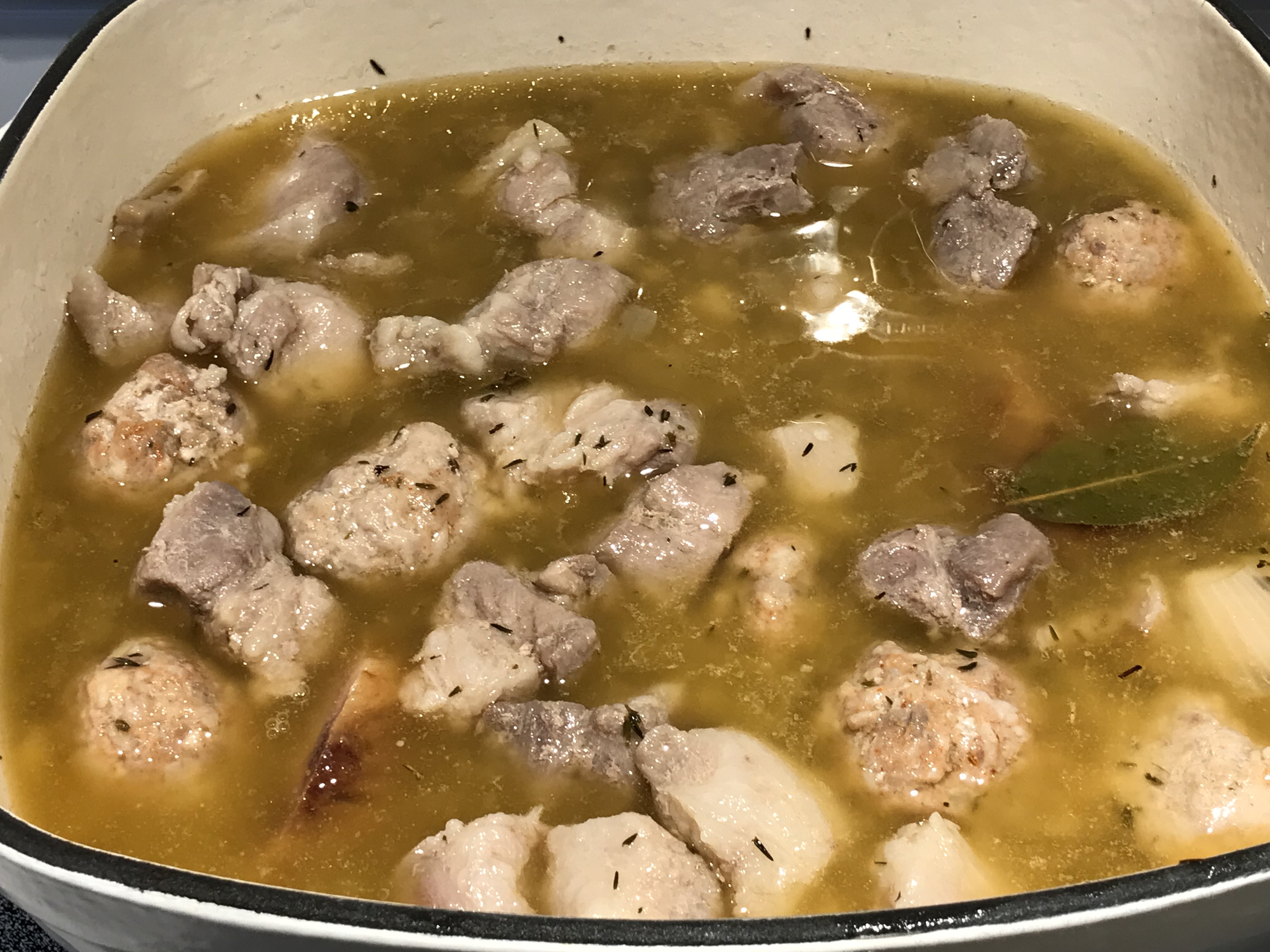
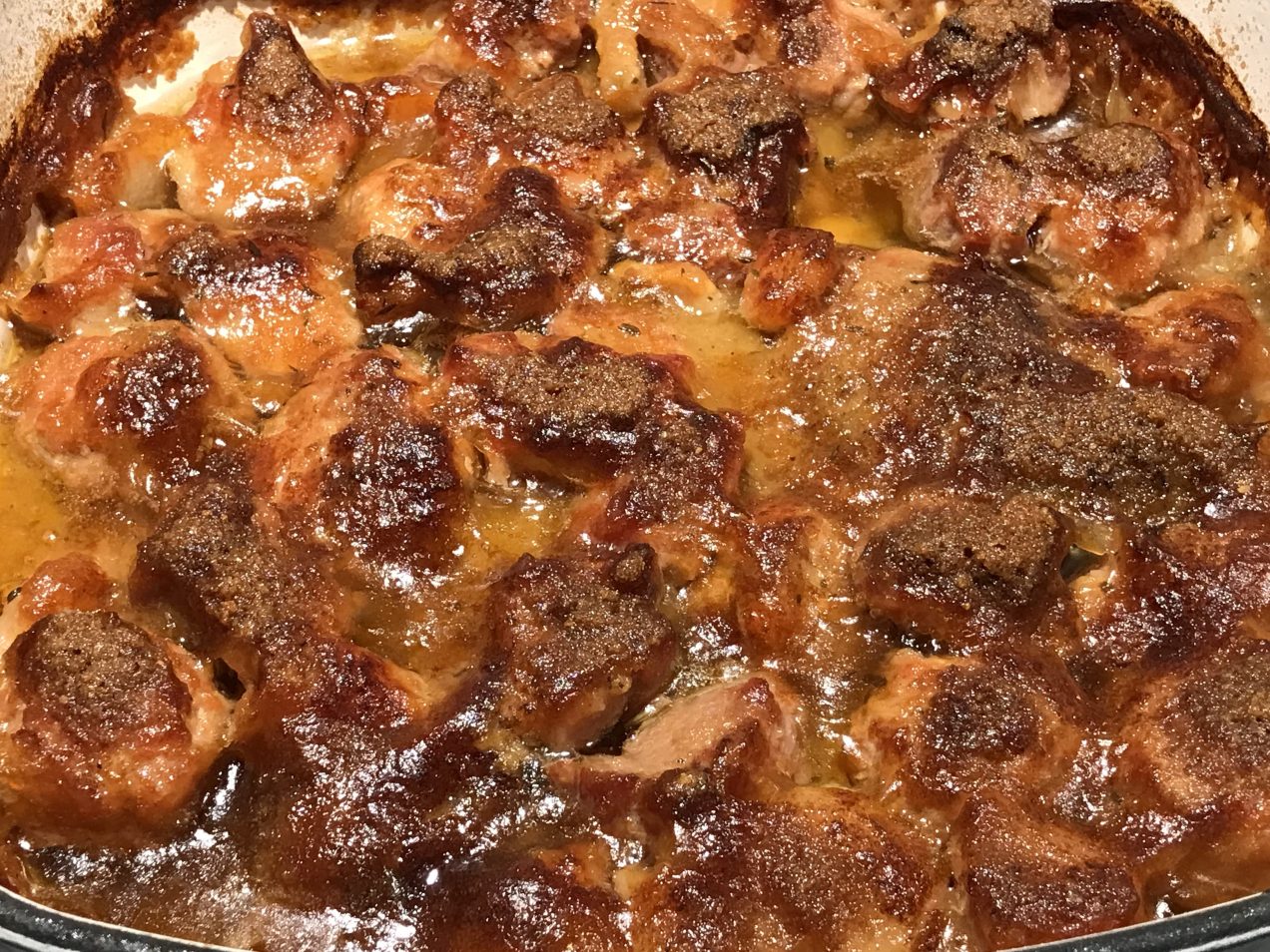
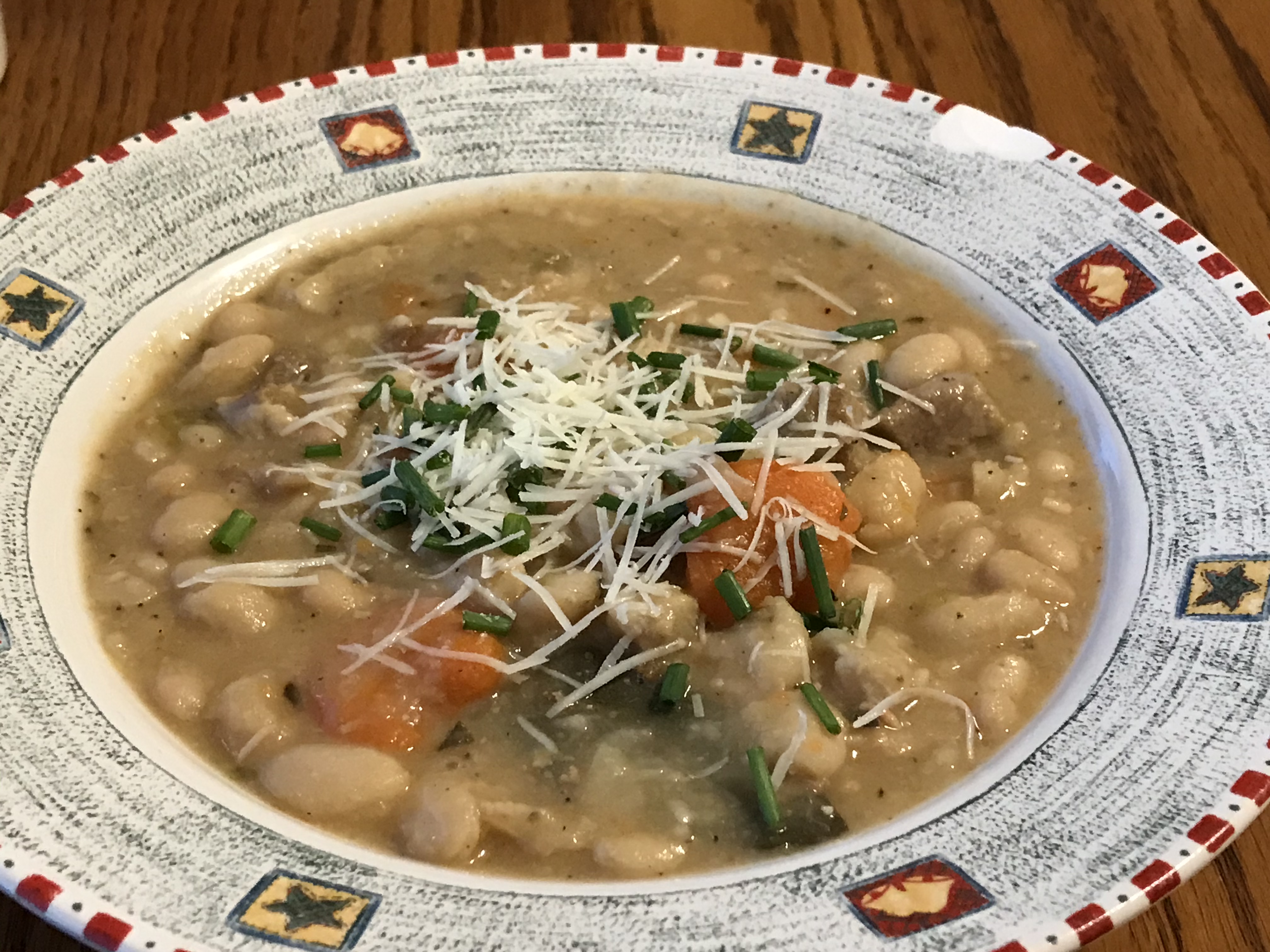
Part of the reason for making cassoulet was to try out my new toy from Christmas – a Dutch oven. What’s great about it is that, because it can go directly from the stove to the oven, the contents don’t need to be transferred from one pan to another. After browning the meat, being careful not to break the meatballs, I added a chopped onion, six minced garlic cloves, three bay leaves, three actual cloves, some pepper, a pound of soaked navy beans, a cup of water, and a quart of low-sodium beef broth. Everything got a topping of plain bread crumbs, then went into the oven at 325 for about three hours.

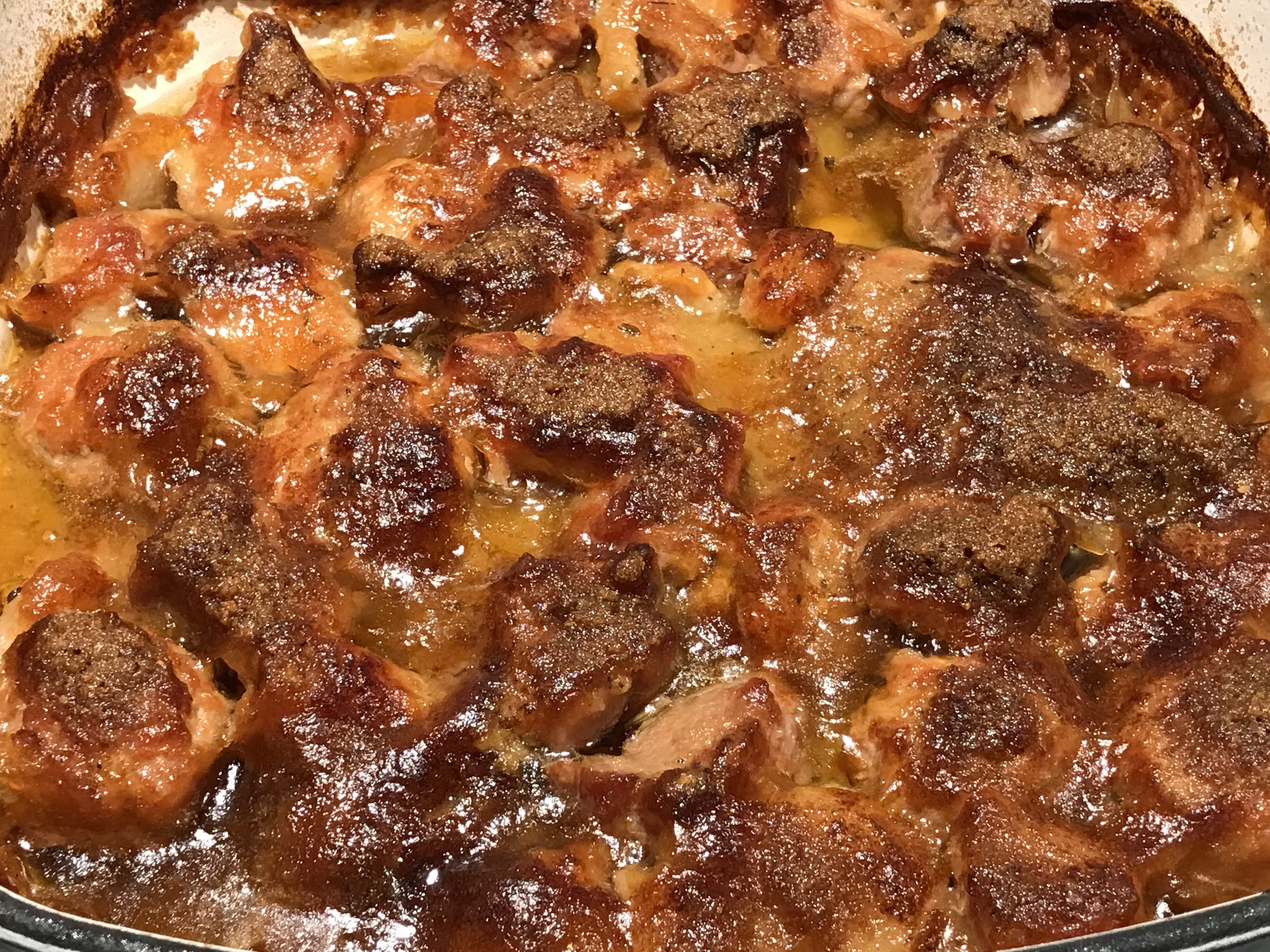
The cassoulet was definitely good, but I still need to perfect the recipe. The only real issue was that it was very salty, even though I didn’t add any extra. The only reason I can think of is the homemade pancetta that I used in place of salt pork. Does it need to be rinsed or even soaked before use? I’m not sure, but with the pork butt and sausage there is plenty of fat, and from the smoked ham shanks the cured pork flavor, making the pancetta unnecessary. A minor problem was that the breadcrumbs tended to sink, thickening the liquid rather than forming a crust. The cassoulet was still nice and crispy on top, but there is work to be done before I have a postable recipe. But with two and a half months of winter ahead, there is plenty of time to experiment. To hear about those experiments, remember to subscribe for free.

 Feasting Through Time