Aubergine en caton
appetizers, french cuisine, recipes, summer, vegetarian

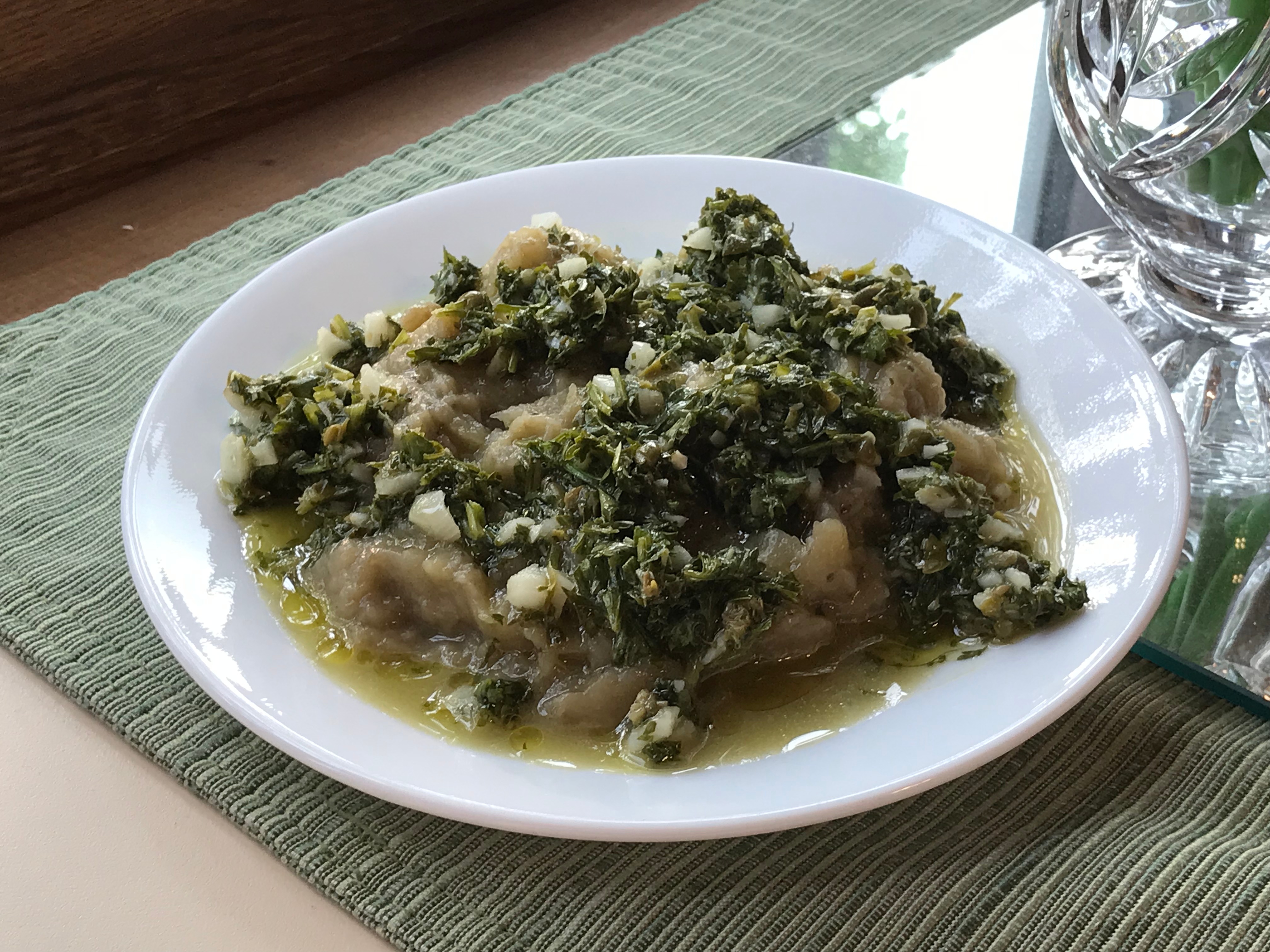
French Baba Ghanoush: Aubergine en Caton

Aubergine en caton

            By European standards, France is a large country. As with any nation with varied terrain and climate, it has a number of regional specialties. There are the dairy-heavy cuisines of Normandy and Brittany, Germanic-inspired dishes of Alsace in the northeast, and wine-based sauces and stews from the wine-growing regions of Burgundy and Bordeaux. And in the south, along the Mediterranean, is Provence, where many dishes resemble those from neighboring Liguria in Italy.

            Provence is one of the few French regions where olive trees can produce fruit. The oil is ubiquitous, including in a sauce for roasted eggplant. Other Mediterranean flavors come from lemon juice, capers, and a bit of anchovy. Before you get grossed out, it’s just a small amount of paste used as a flavor booster, not enough to make it taste “fishy.” All these other flavors, which are rather strong on their own, plus garlic and plenty of fresh parsley, balance it out.

            Aubergine is the French word for eggplant. Here it is cooked and pureed just like in baba ghanoush, except in the oven instead of over a wood fire, producing a lighter color and mild, slightly sweet flavor. Rather than mixed into the puree, the sauce is served over the top, for a greater contrast.

            As Mimi Sheraton suggested in 1000 Foods to Eat Before You Die on page 54, a simple description is sufficient to compose a recipe, at least for the sauce. It was the eggplant itself that gave me trouble. When cooking whole, which is necessary to keep the pulp a greenish color instead of browning, it takes a surprisingly long time to soften. At 400 degrees Fahrenheit (or just under 205 degrees Celsius), it took nearly an hour. Since it was a cool day that was fine, but on a hot summer day that would never be an option. Plus, using the oven for that long for one fairly small item doesn’t seem energy efficient.

            I considered ways to “pre-cook” the eggplant before finishing it off in the oven. After poking holes all over (to release steam and avoid an explosion), boiling or steaming would probably introduce too much water. But what about the microwave? They work by making water molecules move faster, creating friction and raising the temperature. And since the rays pass through the food, the center warms up much faster than with other cooking methods.

            For a vegetable like eggplant, which has a high water content, this worked like a charm. To avoid an explosion and mess, I poked the holes all the way through with the pointy end of a meat thermometer, giving plenty of openings for steam to escape. Just heat on a microwave safe plate, turn every two minutes, and be careful when handling. The eggplant steams inside the skin, creating the perfect silky texture with just the right amount of moisture.

            As it turned out, the oven wasn’t even required, making this interesting dish perfect for a hot day. When the eggplant is cool enough to handle, just cut in half, scoop out the pulp, puree it, and serve warm or at room temperature with the sauce. Accompany with bread, crackers, or crunchy vegetables.

            The sauce recipe is easy to double and can be kept in the refrigerator for several days. Don’t worry if the oil solidifies; it will turn liquid again as it warms up. This is common for vinaigrette-type dressings and sauces. Just get them out of the fridge half an hour to an hour or so before using, and they’ll be fine.

Ingredients:

  • 1 large eggplant, about 2 pounds
  • 3 tablespoons olive oil
  • Juice from ½ lemon
  • 1 clove garlic, minced
  • 2 tablespoons capers, minced
  • ¼ teaspoon anchovy paste
  • ½ bunch parsley, minced
  • Salt to taste

Directions:

  1. Combine all ingredients except eggplant, parsley, and salt in a bowl and whisk to dissolve anchovy paste and combine.
  2. Whisk in the parsley and taste for salt. The anchovy paste and capers are both salty, so you might not need it.
  3. Set sauce aside at room temperature, or refrigerate overnight. Bring to room temperature before serving.
  4. Poke holes all over the eggplant, all the way through. Place on a microwave-safe plate and cover with a paper towel. Microwave on high for 8 to 10 minutes, turning every 2 minutes, until a skewer slides easily into the flesh. Let rest until cool enough to handle.
  5. Cut eggplant in half and scoop flesh into bowl of a food processor. Process until smooth.
  6. Scoop eggplant puree onto a plate, spoon sauce over, and serve with bread, raw vegetables, and/or crackers.

            For more recipes and food history, sent right to your inbox, please like, subscribe, and/or share.

One-Time
Monthly
Yearly

Make a one-time donation

Make a monthly donation

Make a yearly donation

Choose an amount

$5.00
$15.00
$100.00
$5.00
$15.00
$100.00
$5.00
$15.00
$100.00

Or enter a custom amount

$

Your contribution is appreciated.

Your contribution is appreciated.

Your contribution is appreciated.

DonateDonate monthlyDonate yearly
Standard
food history, french cuisine, recipes, stew, vegetarian

Ratatouille + Recipe

Ratatouille, not made by rats

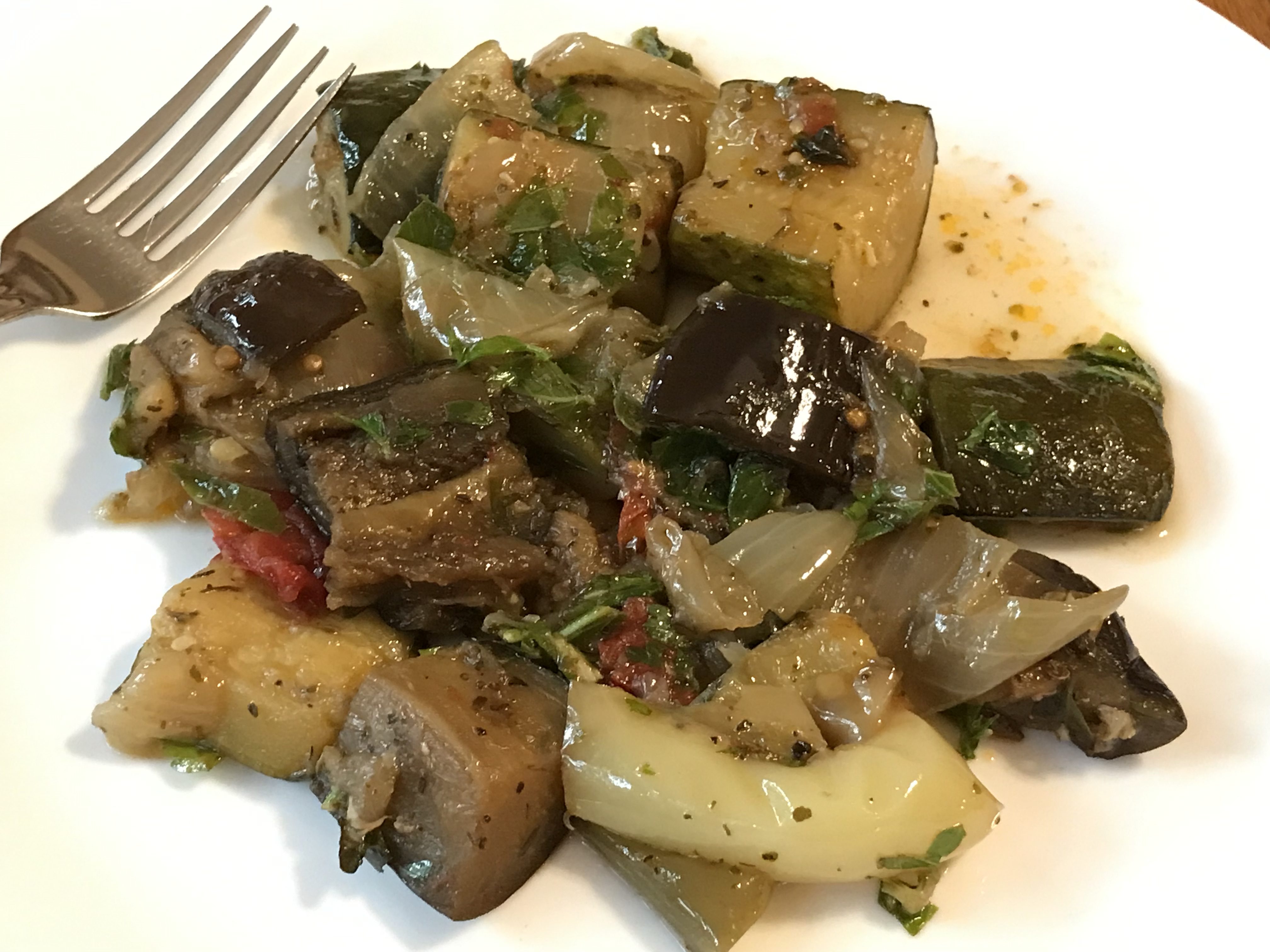
            Let’s revisit another late summer dish I made last year. Ratatouille, a rustic vegetable stew hailing from the same region of Southern France as soupe au pistou, is even easier to make. Mimi Sheraton describes it as one of 1,000 Foods to Eat Before You Die in the book of the same name. Unlike some of the foods in the book, no travel or specially ordered ingredients are required. It’s just vegetables commonly available at the store or farmer’s market, served with bread, pasta, or alongside meat, if desired.

            Many of the same ingredients, like eggplant, zucchini, tomatoes, garlic, and olive oil, are combined in similar ways all around the Mediterranean. One example is the Sicilian caponata, which also includes capers, vinegar, and typically celery. But you don’t have to be anywhere near the Mediterranean to enjoy ratatouille. Just make sure to make it in the summer, when the vegetables are at their best (and most affordable).

            Note that ratatouille can be baked in the oven, and many recipes use that method. I prefer the stovetop because it heats the kitchen less. Like most stews, ratatouille reheats very well, and leftovers make a great omelet filling.

            Ingredients:

  • 1 medium eggplant, cut into 1-inch cubes, tossed with 1 teaspoon salt, and left to sit for half an hour
  • 2 medium zucchini, sliced into roughly half-inch thick rounds
  • 1 green bell pepper, coarsely chopped
  • 1 yellow onion, coarsely chopped
  • 4 Roma tomatoes, coarsely chopped
  • 6 cloves garlic, peeled, crushed with the edge of a knife, and minced
  • ½ cup olive oil
  • 4 sprigs parsley, thick stems minced separately from leaves
  • 4 fresh basil leaves or more to taste, left whole until needed

            Directions:

  1. Combine the eggplant, zucchini, bell pepper, onion, tomatoes, garlic, olive oil, and minced parsley stems in a large pot with 2 tablespoons water.
  2. Bring to a simmer over medium low heat, then cook, stirring occasionally, for about 30 to 35 minutes.
  3. Mince the basil and add to the pot with the parsley leaves. Taste for salt, adding more if necessary, then simmer for 10 more minutes.
  4. Serve the ratatouille with bread, pasta, grilled meat, or all of the above. Sprinkle with additional parsley if desired.

            Eating the ratatouille while watching the movie of the same name is encouraged. It isn’t weird, I promise. For more recipes, subscribe below for free. And if you’re feeling extra generous and would like to support my work, I would be most grateful.

One-Time
Monthly
Yearly

Make a one-time donation

Make a monthly donation

Make a yearly donation

Choose an amount

$5.00
$15.00
$100.00
$5.00
$15.00
$100.00
$5.00
$15.00
$100.00

Or enter a custom amount

$

Your contribution is appreciated.

Your contribution is appreciated.

Your contribution is appreciated.

DonateDonate monthlyDonate yearly
Standard
food history, french cuisine, recipes, soup, stew, vegetarian

French Summer Vegetable Soup: Soupe au Pistou

Soupe au pistou, a southern French classic

            Last summer, in my exploration of 1000 Foods to Eat Before You Die by Mimi Sheraton, I made my own version of soupe au pistou, a southern French soup loaded with summer vegetables, and loved it. Now that it’s August and vegetables are at their peak, I made it again and recorded my recipe. Southern France is quite different from Paris, Normandy, Brittany, and the other northern regions, in climate, culture, and food. If a trip isn’t in the cards for the near future, some of the local cuisine will help us both imagine it. Maybe it will happen someday, but for now, think of rolling hills, olive trees, and enjoy the lack of crowds.

            Note that you can switch up the vegetables depending on what you like or have on hand. Just make sure to include tomatoes, onions, potatoes, white and green beans, pasta, and of course the pistou. Beyond that, feel free to add a sprinkle of cheese, or switch out the angel hair for other pasta, adjusting cooking time accordingly.

            Ingredients:

  • 8 ounces (about 1 ½ cups) navy or other small white beans, soaked and drained according to package directions
  • 1 onion, quartered and thinly sliced
  • 8 tablespoons (equal to ½ cup) olive oil
  • 2 Roma tomatoes, coarsely chopped
  • Salt
  • 6 small red or other waxy potatoes, cut into roughly ½ inch cubes
  • 2 carrots, sliced crosswise with the larger pieces cut in half
  • 2 zucchini, halved lengthwise and thinly sliced
  • 4 ounces green beans, cut into roughly 2-inch pieces
  • 4 ounces angel hair pasta, broken into roughly 2-inch pieces
  • 4 large cloves garlic, peeled and crushed with the side of a knife blade
  • 80 fresh basil leaves, about 2 cups loose
  • Grated parmesan cheese, if desired
  • Sprig of parsley, if desired

            Directions:

  1. Heat the olive oil in a large pot over medium heat. When hot, add the navy beans, onion, and a pinch of salt and sauté until the onions take on some color, stirring occasionally.
  2. Add the tomatoes and cook, stirring a few times, until they begin to break down.
  3. Add just enough water to cover the beans and vegetables and bring to a boil, then reduce heat to simmer. Cook with the lid tilted for 30 minutes, adding more water if necessary.
  4. Add the potatoes, carrots, another pinch of salt, and more water to cover the new additions. Simmer for another 30 minutes.
  5. For the pistou, combine the basil, garlic, ½ teaspoon salt, the remaining 4 tablespoons of olive oil, and, if desired, a bit of parmesan and a sprig of parsley, in a food processor and blend until smooth. It won’t look like a large amount, but a little goes a long way.
  6. Test the white beans. If they are soft, add the zucchini and green beans and taste for salt, adding more if necessary.
  7. Increase the heat to medium and cook for 5 minutes, add the angel hair, and cook for another 3 minutes. Serve the soup with the pistou and optional cheese.

            For more seasonal, global, and historical recipes, make sure to subscribe for free. Of course, if you want to donate and buy me some virtual vegetables, I’m not about to complain.

One-Time
Monthly
Yearly

Make a one-time donation

Make a monthly donation

Make a yearly donation

Choose an amount

$5.00
$15.00
$100.00
$5.00
$15.00
$100.00
$5.00
$15.00
$100.00

Or enter a custom amount

$

Your contribution is appreciated.

Your contribution is appreciated.

Your contribution is appreciated.

DonateDonate monthlyDonate yearly
Standard
food history, french cuisine

Delights of the Duty-Free Store: Paris

Macarons, Calissons, Nougat

1000 Foods (pgs. 80 – 82)

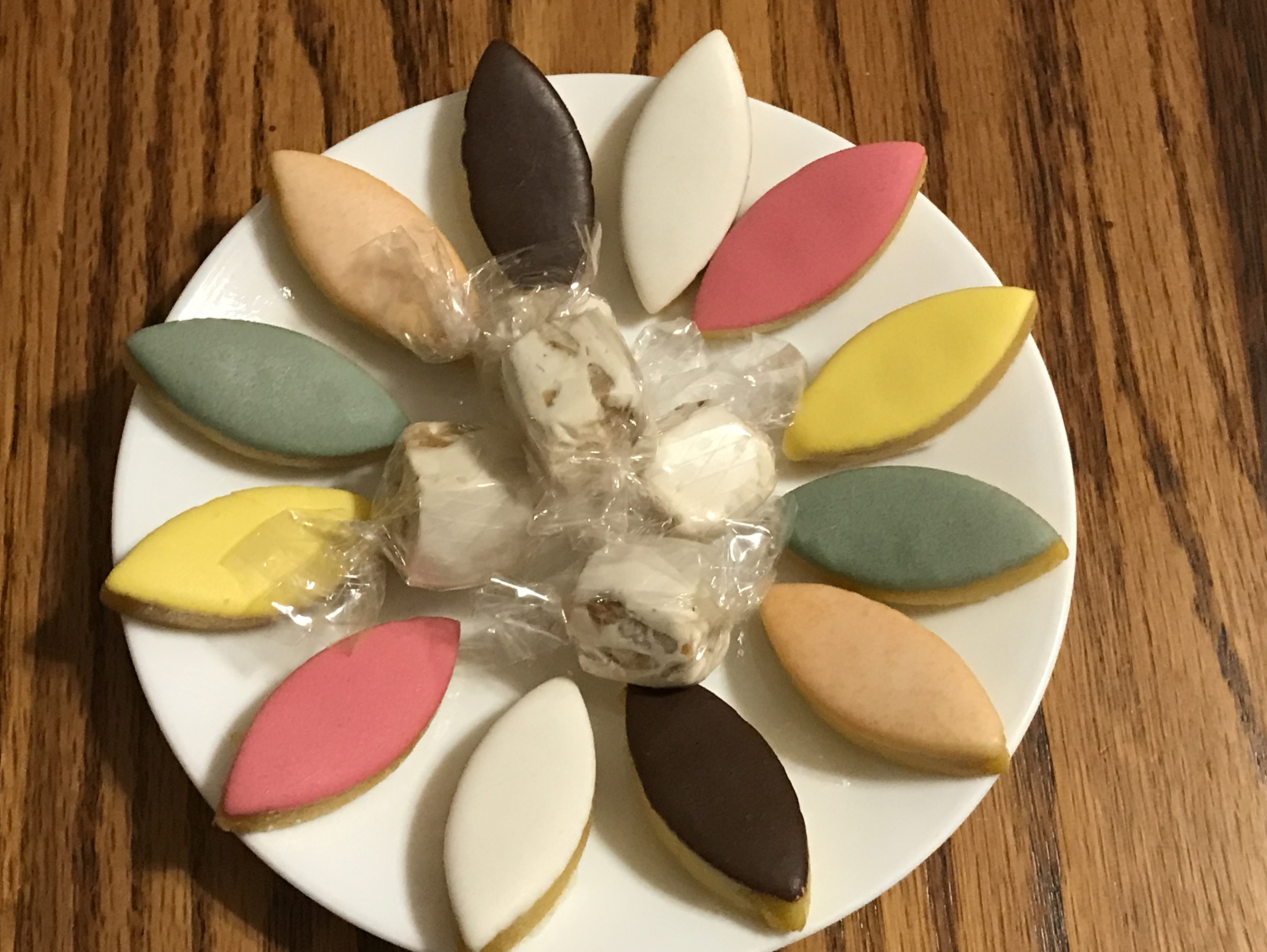
            Many people like to buy alcohol at the duty-free store. The Charles de Gaulle airport in Paris appears to be no exception, based on the relative amount of shelf space occupied. There were also an assortment of cheeses, pates, dried sausages, and confectionary. A few of the cheeses featured in 1000 Foods were in the cooler, but I wasn’t sure if they would be allowed through customs. Plus, the smell upon opening the cooler door was, for lack of a better term, “weird.” Kind of the like the camembert that I didn’t like. Attempting to carry it in my backpack for the 8-hour flight home, layover in Chicago, and then back to Green Bay didn’t seem like the best plan. Especially when there were so many amazing-looking sweet items. After perusing and admiring the displays, I settled on calissons and Montelimar nougat, which can be hard to find, plus macarons and a box of assorted mini chocolate batons, for good measure.

            Macarons have been extremely fashionable for the last decade or so. Their bright colors are cheerful, and the flavor possibilities are endless. The exact origin or macarons is unclear, but cookies have been made with ground almonds, sugar, and egg whites for centuries. At some point, the cookies became lighter and more meringue-like, and they began to be sandwiched together with a buttercream or ganache filling. As for the difference between macaron and macaroon, macaron = these colorful sandwich cookies, and macaroon = a simpler mix of almonds or coconut, sugar, and egg white. Usually. Both macarons or macaroons are easily made gluten-free, and the lack of wheat flour and chemical leavening make them a popular Passover dessert, when Jewish dietary laws forbid both.

            Properly made macarons are amazing, but are supposedly quite touchy to make. Relying on whipped egg whites for leavening is part of this. Another issue is that gluten makes it easier for a batter to trap air bubbles, which expand in the oven. Both of these factors increase the risk of the macarons not rising properly. Adding the fact they are based on expensive almond flour, macarons can be quite pricey. While a reasonably-priced, pre-packaged box cannot compare to the bakery variety, this mix of strawberry, lemon, and pistachio was pretty good.

Color-coded for your convenience

            Calissons are also almond-based. In addition to almond paste, their defining ingredient is candied melon. The gold standards are calissons d’Aix, made in the Provence region of southern France for hundreds of years. To legally use the coveted name, the calissons can only include almonds, sugar, and the candied cantaloupe-like melon, egg whites as a binder, plus a royal icing of egg white and sugar. Sometimes a bit of rose or orange flower water is added, but no other flavorings are permitted. While the ones I got weren’t calissons d’Aix, the primary ingredients were almonds and candied melon, making them a good representation of the confection. The different icing colors all have a different flavor. The white is the plain original. The other flavors are chocolate, raspberry, tangerine, lemon, and pistachio. At first, I wasn’t sure if I liked them. The melon is hard to taste, the almond is very subtle, and the texture was stickier than I expected. But as I kept chewing, the almond flavor and somewhat marzipan-like texture came through. I’d rather have marzipan, but the calissons were not bad at all.

            Continuing on a similar theme, traditional nougat is based on egg whites and sugar, loaded with toasted almonds. It isn’t actually in the book, but the nougat looked good. The variety from Montelimar, which this was, happens to be a particular favorite, so was definitely worth trying. It was nice and chewy, with the almonds cutting the sweetness and adding a pleasant crunch. Hands down, it was the best of the three. All three of the almond/sugar/egg white confections were enjoyable, explaining why those ingredients have been used together for so long. The chocolate was good too. Who needs alcohol when you can have sugar?

Seriously, who can resist?
Standard
Uncategorized

Summer in the South of France: Ratatouille, Cherry Clafoutis

Source: 1000 Foods (pgs. 124 – 125, 79 – 80)

            Ratatouille is a hilarious movie. It is also a delicious demonstration of Southern French history in a single dish. The garlic, onions, parsley, and olive oil were all available from the time Rome controlled the region, if not before. During the Middle Ages, dukes and counts in Southern France were as wealthy and powerful as the king in Paris, if not more so. Much of this wealth came from the area’s agricultural productivity, but trade was also important. Eggplants arrived via trade with the Arab world and became widespread around the Mediterranean. Basil also came from the East. The peppers, tomatoes, and zucchini came from the Americas before becoming traditional in Provence.

            Clafoutis is sort of like a cross between a cake and a custard. It begins with a batter similar to crepe batter to which fruit is added. Cherries are the most popular, but are not the only option. Unlike in cherry pie or black forest cake, sweet cherries are used. What’s most interesting about clafoutis is that traditionally, the cherries are unpitted to keep the red juice from running into and staining the cake. Supposedly the pits provide a bit of almond flavor due to compounds related to cyanide, which sounds scary but is in such small quantities that it’s not an issue. In fact, the quantities were so small that I couldn’t taste the almond flavor at all, but it wasn’t really necessary. The lightly sweet, soft crepe/custard with just a hint of vanilla was the perfect foil for the stronger flavor of the cherries. Not getting poisoned was nice too.

Standard
Uncategorized

Mediterranean Meets New World: Soupe au Pistou

Source: 1000 Foods (pgs. 134 – 135)

            Southeastern France has a lot in common with the northwest corner of Italy, and it’s not just that they’re both called their country’s Riviera. The neighboring regions share a similar climate and terrain, and even share a lot of history. In 218 BC, Hannibal crossed the region as he marched his army from Carthaginian territory in Spain to Italy. While he is most famous for marching his army and elephants over the Alps, there is an interesting story about when he crossed the Rhone River in Provence. Modern day France was mostly occupied by the Gauls, who were Celtic peoples organized into chiefdoms. Most of the chiefs felt more threatened by Rome than by Carthage (as Rome had recently conquered other Celtic peoples in the Liguria/Piedmont region) so they aided or tolerated Hannibal’s army. The problem was that there was a hostile group near a strategic river crossing and a Roman army was on its way to try and ambush him. A bit of trickery bought Hannibal enough time to get his army across, but when the elephants found themselves on specially-built rafts they freaked out and jumped off and/or capsized them. Fortunately for the Carthaginians, elephants are actually quite good swimmers and all made it across. By the time the Romans arrived, Hannibal and his army had disappeared into the Alps.

            Over the course of the war, which lasted from 218 to 202 BC, Rome conquered the French Riviera and most of Spain. It’s not clear how many grapevines were already grown in the region, but the Romans certainly introduced new varieties and encouraged their cultivation, along with olive trees. From Provence (the name came from the Latin provincia) vines spread northward, particularly once Julius Caesar conquered the rest of Gaul (modern France) in the 50s BC. Olive trees, though restricted to the coast that far north, were also introduced and became important to Provence’s economy.

            Pesto-type sauces were part of Ancient Roman cuisine and basil appeared in the Medieval Era, but what’s interesting about this soup is that most of the ingredients deemed essential originated in the Americas. White beans, green beans, potatoes, and tomatoes were all introduced after Columbus, and the latter two took a few centuries to catch on. Fortunately they did, because this soup is a balanced meal in a bowl. There’s starch in the potatoes, protein in the beans, vitamins and minerals in the vegetables, and a bit of fat from the olive oil.

            Ms. Sheraton explains that as long as there are both types of beans, potatoes, and tomatoes, the other vegetables can vary based on what’s available. Since it sounded like a chef’s choice kind of dish, I created my own plan from the general description. Onions, tomatoes, and white beans went in first, with enough water to cover by about an inch. For meatless vegetable soups it is important not to add too much water to avoid diluting the flavor. I added the potatoes about halfway through, then added the zucchini and green beans in the last few minutes to keep them from overcooking. The pistou, which is like a French pesto without pine nuts or walnuts, is added to the individual bowls at serving time.

            The soup was an amazing taste of summer. While the ingredients are generally available out of season, they both taste better and are more affordable at their summer peak. Tomatoes are especially seasonal, since shipping them any distance is much easier when they are underripe. At local farm stands they are ripe and red all the way through, all the vegetables are fresh, and the basil is my own. It thrives during the summer but does not do well when moved inside. I’ve tried that in the past without much success. It’s better to make maximum use of it now.

Standard