food history, french cuisine, recipes, soup, stew, vegetarian

French Summer Vegetable Soup: Soupe au Pistou

Soupe au pistou, a southern French classic

            Last summer, in my exploration of 1000 Foods to Eat Before You Die by Mimi Sheraton, I made my own version of soupe au pistou, a southern French soup loaded with summer vegetables, and loved it. Now that it’s August and vegetables are at their peak, I made it again and recorded my recipe. Southern France is quite different from Paris, Normandy, Brittany, and the other northern regions, in climate, culture, and food. If a trip isn’t in the cards for the near future, some of the local cuisine will help us both imagine it. Maybe it will happen someday, but for now, think of rolling hills, olive trees, and enjoy the lack of crowds.

            Note that you can switch up the vegetables depending on what you like or have on hand. Just make sure to include tomatoes, onions, potatoes, white and green beans, pasta, and of course the pistou. Beyond that, feel free to add a sprinkle of cheese, or switch out the angel hair for other pasta, adjusting cooking time accordingly.

            Ingredients:

  • 8 ounces (about 1 ½ cups) navy or other small white beans, soaked and drained according to package directions
  • 1 onion, quartered and thinly sliced
  • 8 tablespoons (equal to ½ cup) olive oil
  • 2 Roma tomatoes, coarsely chopped
  • Salt
  • 6 small red or other waxy potatoes, cut into roughly ½ inch cubes
  • 2 carrots, sliced crosswise with the larger pieces cut in half
  • 2 zucchini, halved lengthwise and thinly sliced
  • 4 ounces green beans, cut into roughly 2-inch pieces
  • 4 ounces angel hair pasta, broken into roughly 2-inch pieces
  • 4 large cloves garlic, peeled and crushed with the side of a knife blade
  • 80 fresh basil leaves, about 2 cups loose
  • Grated parmesan cheese, if desired
  • Sprig of parsley, if desired

            Directions:

  1. Heat the olive oil in a large pot over medium heat. When hot, add the navy beans, onion, and a pinch of salt and sauté until the onions take on some color, stirring occasionally.
  2. Add the tomatoes and cook, stirring a few times, until they begin to break down.
  3. Add just enough water to cover the beans and vegetables and bring to a boil, then reduce heat to simmer. Cook with the lid tilted for 30 minutes, adding more water if necessary.
  4. Add the potatoes, carrots, another pinch of salt, and more water to cover the new additions. Simmer for another 30 minutes.
  5. For the pistou, combine the basil, garlic, ½ teaspoon salt, the remaining 4 tablespoons of olive oil, and, if desired, a bit of parmesan and a sprig of parsley, in a food processor and blend until smooth. It won’t look like a large amount, but a little goes a long way.
  6. Test the white beans. If they are soft, add the zucchini and green beans and taste for salt, adding more if necessary.
  7. Increase the heat to medium and cook for 5 minutes, add the angel hair, and cook for another 3 minutes. Serve the soup with the pistou and optional cheese.

            For more seasonal, global, and historical recipes, make sure to subscribe for free. Of course, if you want to donate and buy me some virtual vegetables, I’m not about to complain.

One-Time
Monthly
Yearly

Make a one-time donation

Make a monthly donation

Make a yearly donation

Choose an amount

$5.00
$15.00
$100.00
$5.00
$15.00
$100.00
$5.00
$15.00
$100.00

Or enter a custom amount

$

Your contribution is appreciated.

Your contribution is appreciated.

Your contribution is appreciated.

DonateDonate monthlyDonate yearly
Standard
Patriotic pound cake trifle
american cuisine, british cuisine, dessert, food history, recipes

Patriotic Trifle: An American Spin on a British Classic

1000 Foods (pgs. 31 – 32) for information, recipe is my own creation

            While British cuisine doesn’t have a great reputation abroad, desserts are an exception to this rule. Drool-worthy examples abound on the Great British Baking Show (which you should never watch while hungry), and one of the classics is trifle. Trifles also appear multiple times in the Harry Potter series, typically at celebrations, and in the second book, Harry even ends up wearing one.

            The specifics vary by recipe, but they always include cake or ladyfinger biscuits, custard and/or whipped cream, and fruit and/or jam. Basically something starchy, something creamy, and something fruity. British versions usually include sherry or another fortified wine. Originally, this was to help revive stale cake. With modern recipes this is unnecessary, but a lot of people like the taste. I omit this for a family-friendly version and clearer fruit flavor, bursting with berries and vanilla.

            Wine and liquor were once extremely common dessert flavorings. Since the 19th Century, perhaps because of the temperance movement, vanilla has largely taken their place. Despite its boring reputation, vanilla blends extremely well with fruit, chocolate, caramel, cream, and pretty much anything else you might put in a dessert. For a beautiful, fresh, and surprisingly easy centerpiece, the essentials are a good pound cake, seasonal or frozen fruit, vanilla pudding, and homemade whipped cream.

            Strawberries make a particularly good trifle, because as the trifle sits in the refrigerator, the lightly sugared berries release lots of flavorful juice that soaks into the cake. If they aren’t in season, it’s better to use frozen, which tend to have a better flavor (and price) than the out-of-season fresh berries, which are usually picked underripe so they ship better and last longer on the shelf. This applies for any fruit, not just strawberries.

            Pound cake is another crucial ingredient, and you don’t have to make your own for success. The frozen Sara Lee pound cakes are excellent quality. I like to make my own vanilla pudding, but an instant mix still produces a special dessert if you’re crunched for time. Just avoid the sugar-free kind, and don’t make it with skim milk. And make your own whipped cream. It makes a huge difference, and with the cost of the spray bottles, it’s actually cheaper when you need a lot.

            For a full red, white, and blue effect, blueberries can be sprinkled over the top of the trifle or added between the layers. Since they don’t produce much juice, I usually stick with a strictly strawberry trifle, but I added them this time because they were in season and it was for the 4th of July. Just make sure to layer the trifle in a glass bowl if at all possible, to show it off to full effect.

To impress your guests, decorate the top with fruit.

            Note that the quantities in the recipe are not always specified. This is because different serving bowls have varying capacity, and everyone has their own preference for how much of each ingredient to add.

            Ingredients:

  • 1 pound cake, homemade or Sara Lee
  • Strawberries
  • 2 tablespoons sugar per quart of strawberries
  • Vanilla pudding, homemade or from a mix
  • Blueberries, optional
  • 1 cup whipping cream
  • 1 tablespoon powdered sugar per cup whipping cream
  • ½ teaspoon vanilla per cup whipping cream

            Directions:

  1. Hull and halve the strawberries, cutting any larger berries into quarters. Toss with the sugar and let stand while you prepare the other ingredients.
  2. Cut enough of the pound cake into cubes to cover the bottom of the serving bowl.
  3. Whip the cream with the powdered sugar and vanilla until soft peaks form.
  4. Layer the cake cubes in the bottom of the serving dish. Top with the strawberries and drizzle any liquid over all.
  5. Add the pudding over the strawberries, and top with the blueberries if using.
  6. Finish the trifle with the whipped cream, decorating the top with fruit if desired.

            If strawberry season is over but you have fresh peaches or raspberries, I’m sure they would also make an excellent trifle. And as always, don’t forget to subscribe to get posts sent to your inbox for free.

One-Time
Monthly
Yearly

Make a one-time donation

Make a monthly donation

Make a yearly donation

Choose an amount

$5.00
$15.00
$100.00
$5.00
$15.00
$100.00
$5.00
$15.00
$100.00

Or enter a custom amount

$

Your contribution is appreciated.

Your contribution is appreciated.

Your contribution is appreciated.

DonateDonate monthlyDonate yearly

Standard
Modified Cobb salad platter
american cuisine, food history, recipes

Cobb Salad: A Cold Main Course for Hot Weather

1000 Foods (pg. 547) for information, recipe is my own creation

            This upcoming weekend is supposed to be hot. At times like these, most people don’t want to heat up the kitchen by turning the oven on. Grilling, quick-cooking pasta, and stir-fry are all popular options for home cooks, as are a variety of cold salads.

            Supposedly, cobb salad was invented in California in the 1930s as a way to use up leftovers. Turning leftovers into salads was just as common then as now, though inexplicably this often involved mayonnaise and/or gelatin. Thankfully, cobb salad avoided this in favor of a vinaigrette flavored with lemon juice, Worcestershire sauce, and garlic. Original ingredients included hard-boiled eggs, blue cheese, chicken, bacon, avocado, and tomatoes, presented in rows for a striped effect.

            Inevitably, cobb salad’s popularity in Hollywood spread the recipe nationwide, with some variations. Since avocados were harder to find outside California, they were frequently omitted, and sometimes other diced ingredients like ham were added. Shredded cheese might replace the blue cheese, and some cooks might use the mayonnaise-based dressings popular at the time.

            For my own recipe, I made three adjustments. Since I don’t like boiled eggs or blue cheese, I replaced them with feta and lentils. The French-style green lentils I found at Woodman’s were particularly good, with an almost meaty flavor. And I omitted the tomatoes because they are not yet in season fresh.

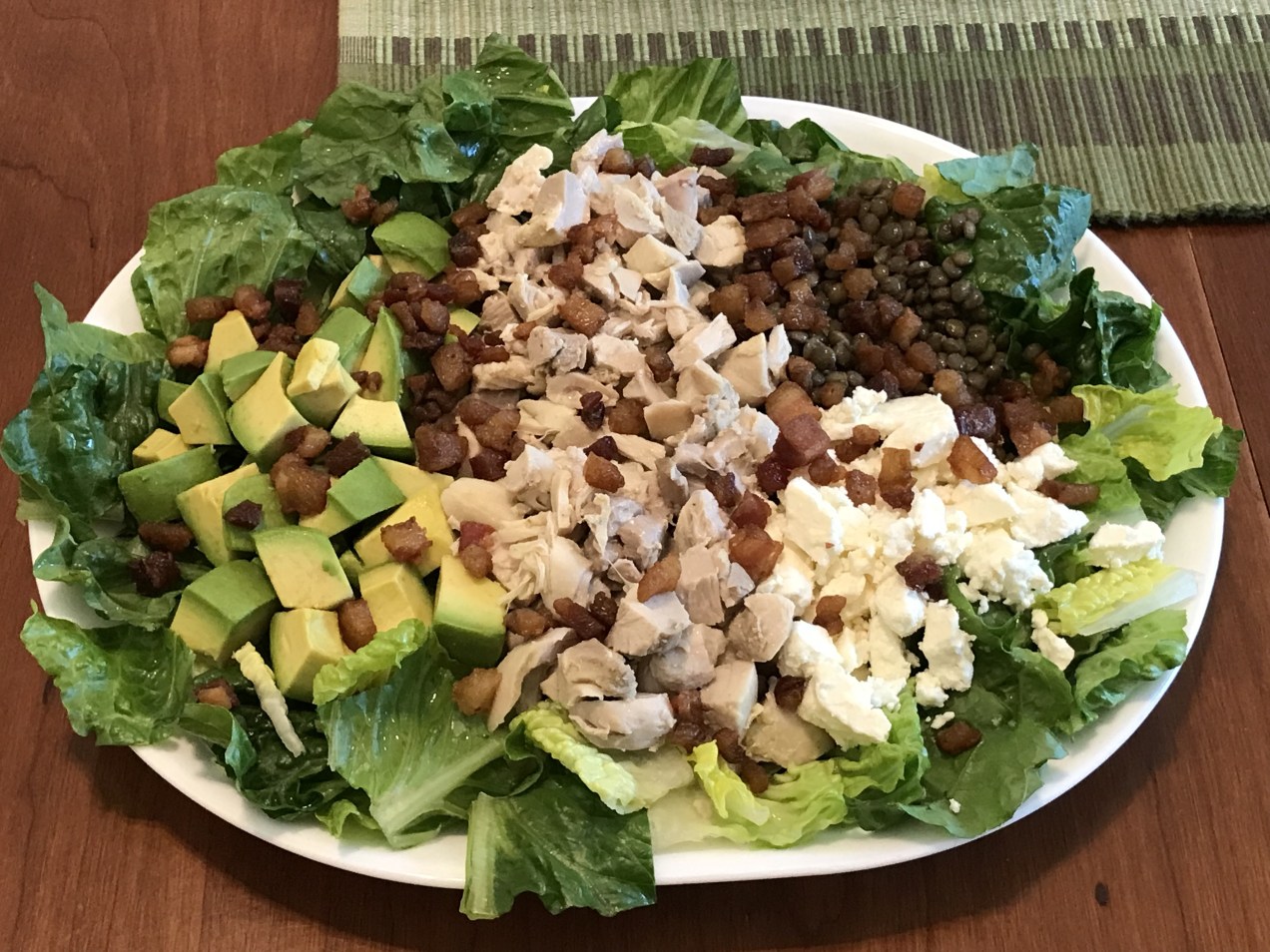
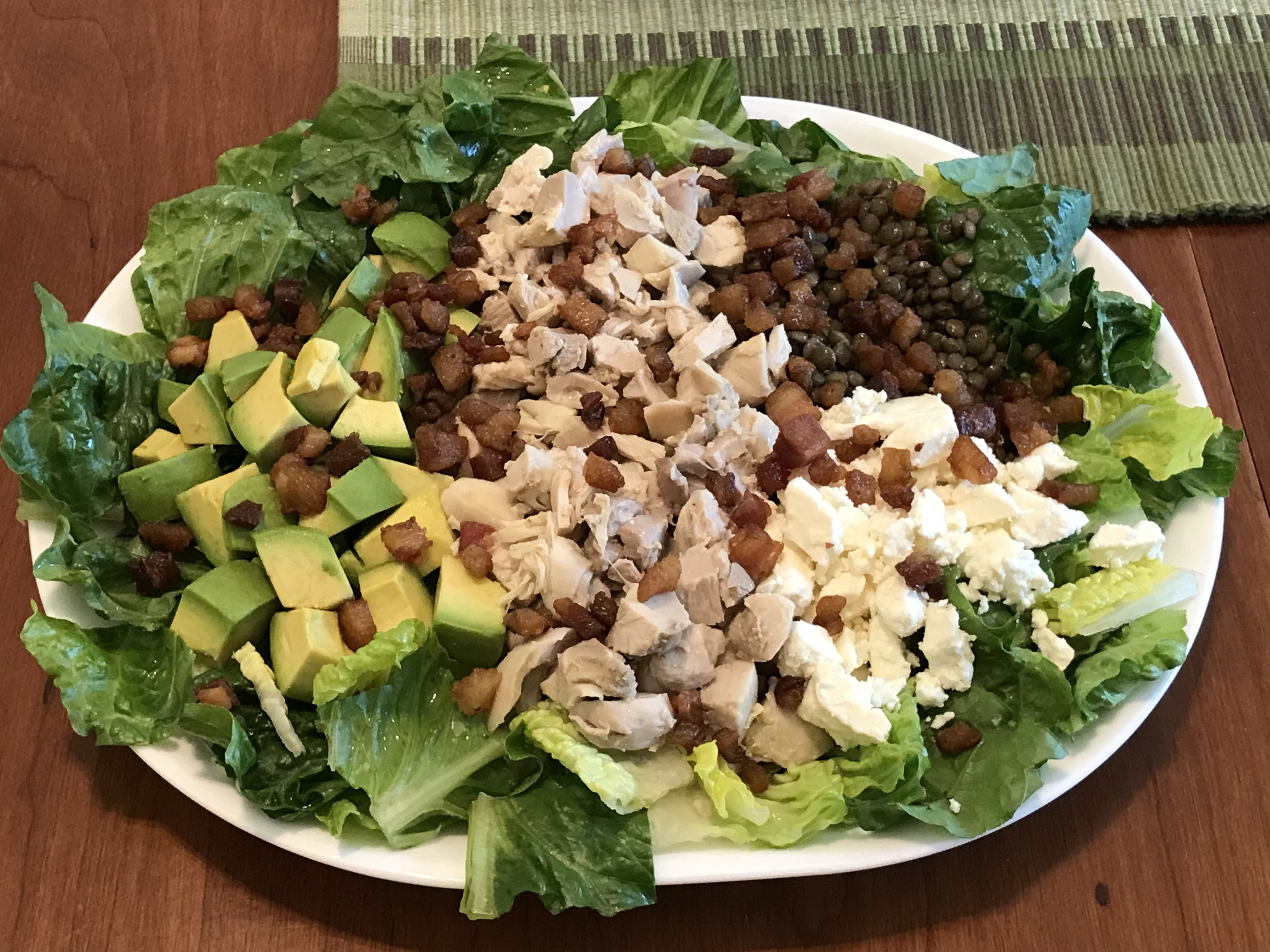
            The final result was a mix of chicken, avocados, bacon, feta cheese, lentils, and romaine lettuce with a flavorful vinaigrette. All the different textures and flavors contrasted well with each other, and the platter was just so pretty.

            Ingredients:

  • 1 head romaine lettuce, washed and torn into bite-sized pieces
  • About 1 pound boneless skinless chicken breasts or thighs, cooked, cooled, and cut into cubes
  • About 8 oz feta or blue cheese
  • About 8 oz bacon, sliced across the grain into roughly 1-inch pieces, cooked, drained, and cooled
  • 1 cup French-style green lentils (I used Bob’s Red Mill brand) cooked and cooled, or a few chopped hard-boiled eggs
  • 2 ripe avocados, halved, seeded, and cut into cubes
  • Sliced ripe tomatoes, if in season
  • Juice of ½ lemon
  • 1 tbsp red or white wine vinegar
  • 4 tbsp olive oil
  • 1 or 2 cloves garlic, peeled and crushed with the side of a knife
  • A few dashes Worcestershire sauce
  • Salt and pepper to taste

            Directions:

  1. For the dressing: combine the lemon juice, vinegar, olive oil, garlic, Worcestershire sauce, salt, and pepper in a bowl and beat together with a fork. Let rest for at least an hour to infuse the garlic flavor.
  2. Arrange the remaining ingredients either on a platter or individual plates. Rows are the most traditional, but feel free to let your creativity run wild.
  3. Remove the garlic cloves from the dressing. Whisk the dressing and pour over the salad before the liquids separate. Serve.

            To get posts sent directly to your inbox, don’t forget to subscribe. And if you want to support my work with a one-time or recurring donation, I’m not going to complain.

One-Time
Monthly
Yearly

Make a one-time donation

Make a monthly donation

Make a yearly donation

Choose an amount

$5.00
$15.00
$100.00
$5.00
$15.00
$100.00
$5.00
$15.00
$100.00

Or enter a custom amount

$

Your contribution is appreciated.

Your contribution is appreciated.

Your contribution is appreciated.

DonateDonate monthlyDonate yearly
Standard
food history, french cuisine, recipes

Using Up the Wine: Oeufs en Meurette (eggs poached in red wine)

1000 Foods (pg. 106) for information, recipe is my own creation

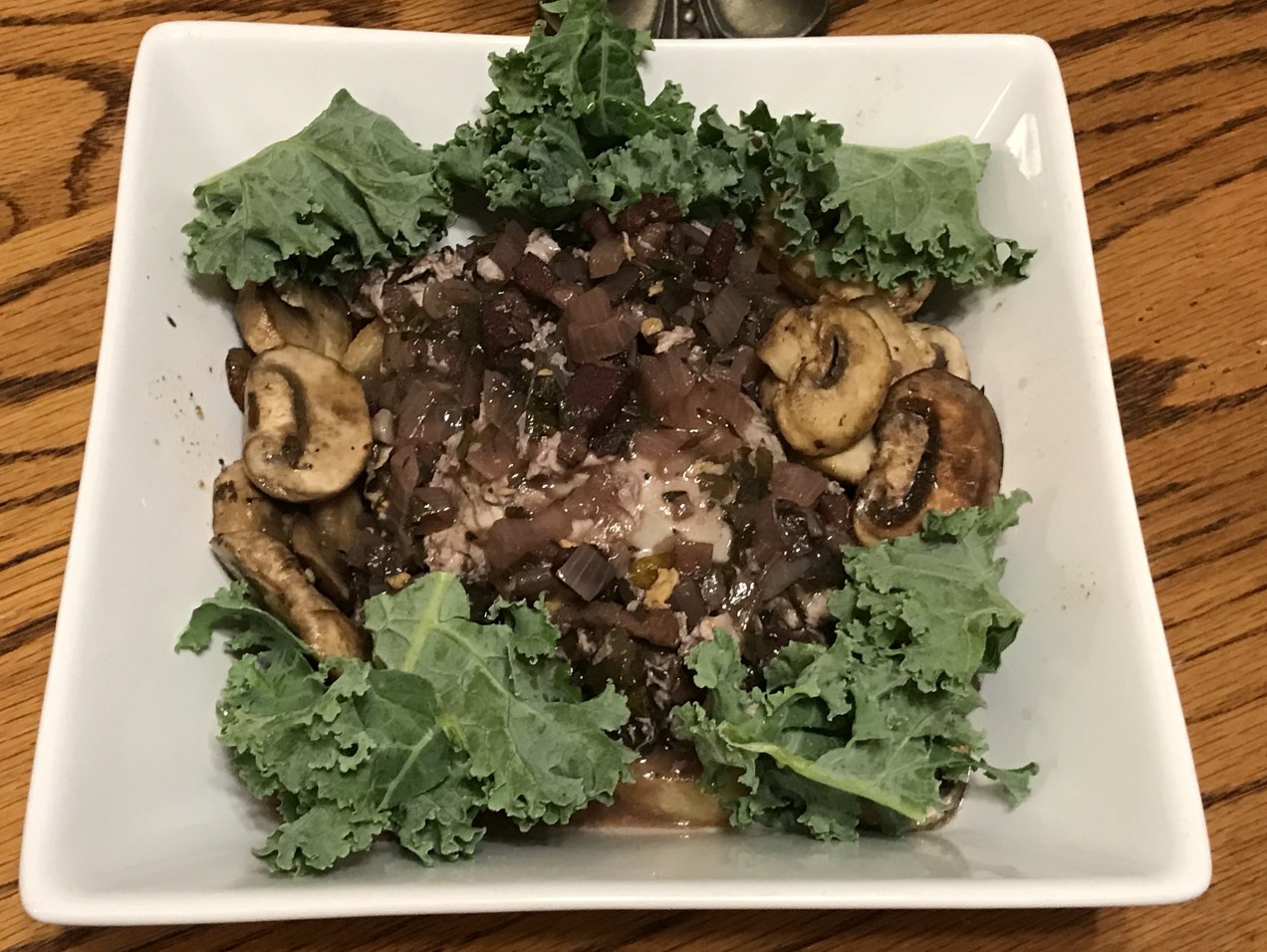
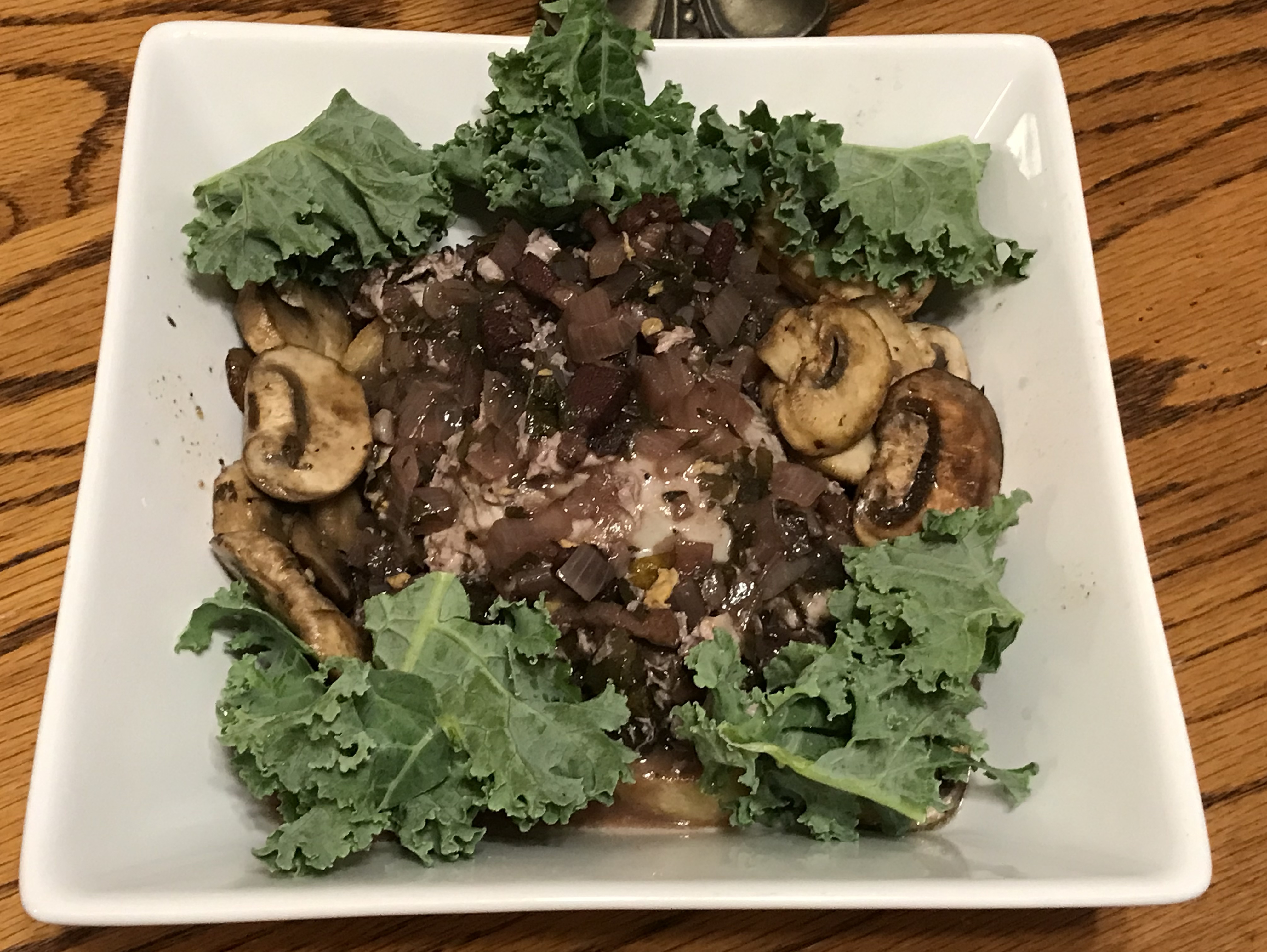
            After making the beef burgundy, I had about a third of a bottle of the wine left over. Not wanting to waste it but not really wanting to drink it either (too dry), I chose to make another dish from the French region of Burgundy: oeufs en meurette. These are basically eggs poached in a mix of wine, beef broth, and aromatics, which is then reduced to form a sauce. The eggs are served with toast to soak up the sauce and runny yolks, and are often garnished with sauteed onions or mushrooms.

            Even though I don’t usually like poached eggs, this was really good. The egg yolks blended into the sauce once the eggs were cut, making their runniness less apparent. All the butter, to toast the bread, sauté the mushrooms, and make roux to thicken the sauce probably helped too. The leftover sauce was even better with scrambled eggs. As an extra garnish, I added some kale, which holds up next to the hot ingredients much better than lettuce.

Ingredients:

  • 4 pieces thick-cut bacon, cut into matchsticks across the grain
  • 1 shallot, peeled, crushed with a chef’s knife, and minced
  • 2 cloves garlic, peeled, crushed with a chef’s knife, and minced
  • 1 cup red burgundy or other pinot noir (you don’t need an expensive bottle, mid or even medium-low priced is fine)
  • 2 bay leaves, broken in half
  • ½ teaspoon dried thyme or 1 ½ teaspoons fresh
  • Minced fresh parsley, if desired
  • 1 cup beef broth
  • 4 eggs
  • 1 tbsp softened butter, plus enough to coat skillet
  • 1 tbsp flour
  • 8 oz sliced mushrooms
  • 2 pieces thickly sliced white bread, such as Texas toast

            Directions:

  1. Brown the bacon over medium-low heat in a medium saucepan until enough fat has been rendered to coat the bottom. Add the shallots and cook until soft. Then add the garlic and cook until it takes on some color.
  2. Add the wine, bay leaves, and thyme to the saucepan and scrape the bottom with a rubber spatula. Add the broth and parsley, salt and pepper to taste, and bring to a simmer.
  3. Meanwhile, make a paste with a tablespoon each of butter and flour.
  4. Melt enough butter in the skillet to coat it, and brown the toast to the desired color over medium heat. Place each piece in a wide individual serving bowl.
  5. Add more butter to the skillet if needed along with the mushrooms. Salt and pepper to taste. Cook over medium-low heat, stirring occasionally, while you poach the eggs and reduce the sauce.
  6. Break the eggs into a bowl, and if strands of egg white in the sauce bother you, hold each in a fine-mesh strainer for a few seconds to let the loose part of the white drain.
  7. Carefully add the eggs to the wine and broth mixture, stirring gently. Poach just until the whites are firm, then remove them with a slotted spoon and place two over each piece of toast.
  8. Turn the heat up to medium, and add the butter and flour paste to the poaching liquid. Cook, stirring frequently, until the sauce is slightly thickened.
  9. Ladle sauce over each serving, adding mushrooms for garnish. If desired, you can also add some greens or parsley.

            And as always, to get recipes and posts sent straight to your inbox, make sure to subscribe for free. Or, if you’re feeling particularly generous, there’s a form for donations as well.

One-Time
Monthly
Yearly

Make a one-time donation

Make a monthly donation

Make a yearly donation

Choose an amount

$5.00
$15.00
$100.00
$5.00
$15.00
$100.00
$5.00
$15.00
$100.00

Or enter a custom amount

$

Your contribution is appreciated.

Your contribution is appreciated.

Your contribution is appreciated.

DonateDonate monthlyDonate yearly

Standard
egyptian cuisine, food history, recipes, stew, vegetarian

Egyptian “Tacos”: Ful Medames (fava bean stew)

1000 Foods (pgs. 708 – 709) for information, recipe is my own creation

            There’s no liver or chianti with these fava beans. To be honest, neither sounds appealing. The purpose of the liver is to filter toxins from the body, and supposedly chianti is a fairly dry wine. But fava beans on their own sound much better. Historically, most people across the Mediterranean and Middle East ate a largely vegetarian diet by necessity. Beans of all sorts provided essential protein and vitamins, which brings to mind an interesting story. Supposedly, the Ancient Greek mathematician Pythagoras hated beans but advocated a vegetarian diet. Balanced nutrition would still be possible if eggs and dairy were allowed, but Pythagoras definitely made things more difficult for himself.

            Supposedly, he even thought that beans were evil. Crazy as that probably sounds, there might have been a logical (okay, semi-logical) explanation. A small percentage of people don’t produce a particular enzyme that breaks down a chemical naturally occurring in fava beans. If someone with this gene does eat them, they become ill. Since this gene is most common in people living near the Mediterranean, Pythagoras likely knew a few people who suffered from it. It’s unclear why he decided that other types of beans were also evil, but maybe it was just a phobia. At a time and place where legumes were an essential source of protein, it would have been an unfortunate one.

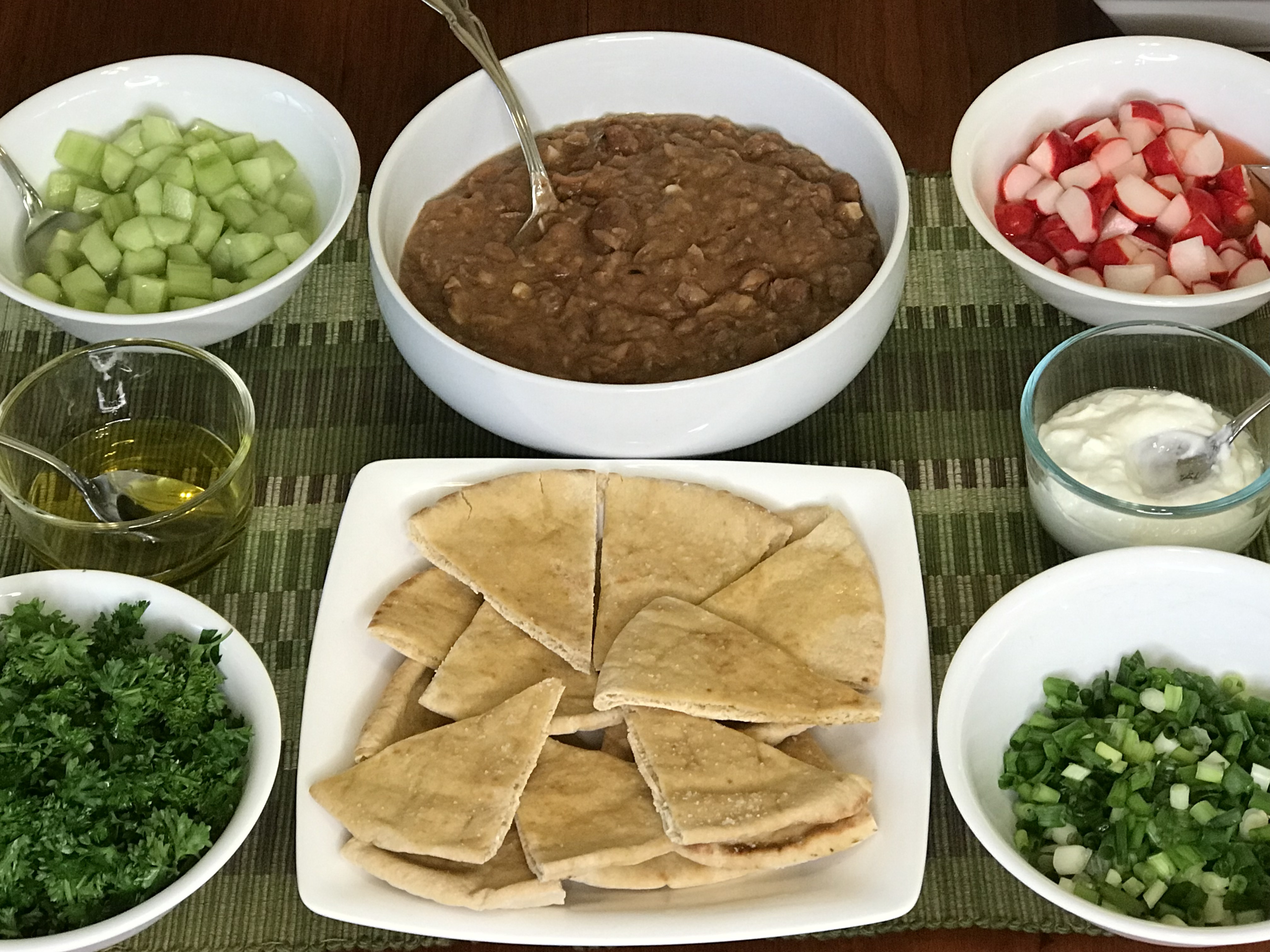
            Fava beans, also called broad beans, have a long history in Egypt as a staple food, especially for the poor. Sometimes, when prices were high, the government would even subsidize them to ensure they remained affordable. Ful medames, a basic fava bean “porridge,” is often eaten for breakfast with a variety of toppings. The beans can be enhanced with butter, oil, onions, boiled eggs, and/or herbs, depending on what’s available and affordable. It seems like a strange choice for breakfast, but the protein helps keep you full until lunchtime. Some bread provides carbs for balance, as well as a vehicle for soaking up the juice. Pitas are the traditional choice.

            The beans, flavored with garlic and cumin and cooked until partially broken down, come to resemble refried beans. Combined with pita bread and assorted toppings, they bear a distinct resemblance to vegetarian tacos in a way, hence the description. While it’s a bit messy and time-consuming for breakfast, ful medames make a great vegetarian lunch or dinner, filling but fresh. And it’s customizable. Each person can add the toppings they wish.

            Ingredients:

  • 1 large can (about 30 ounces) fava beans, drained and rinsed
  • Water or broth
  • 2 cloves garlic, crushed and minced
  • ½ teaspoon cumin
  • Pinch hot pepper flakes, to taste
  • Salt and pepper to taste
  • Bread for serving (especially pitas, lightly warmed in oven with olive oil and salt)

Toppings (optional):

  • Flaxseed, olive, or untoasted sesame oil, or butter
  • Chopped parsley and/or cilantro
  • Minced onions, raw or sauteed, or scallions
  • Lemon juice
  • Plain yogurt
  • Vegetables (I used radishes and cucumbers), chopped, with vinegar and lemon juice to cover and a pinch of salt, and marinated in refrigerator for a few hours
  • Chopped hard-boiled eggs (I do not like them, but they are a common accompaniment, so enjoy (?) if desired)

            Directions:

  1. Place drained beans, garlic, cumin, and hot pepper flakes in a small to medium saucepan. Add enough water or broth to cover, about 1 ½ cups.
  2. Bring to a soft boil over medium heat, then reduce heat to low and simmer, uncovered, for about 20 minutes, stirring occasionally and gently breaking up the beans.
  3. When the beans have the texture of refried beans, remove from heat and serve in bowls. Pass desired toppings and plenty of bread.
  4. This recipe makes two good-sized servings, but is easy to multiply for larger groups. Make sure to have at least one pita per person.

            For free posts and recipes sent straight to your inbox, be sure to subscribe.

Standard
middle eastern cuisine, recipes, vegetarian

Lent Friday Special: Shakshuka (eggs in tomato sauce)

1000 Foods (pg. 697) for information, recipe is my own creation

            Lent recently ended, along with its associated dietary restrictions. Fortunately for those of us inclined to follow Lent Friday fasting rules, eggs and dairy products have been permitted for the last few hundred years. Fish fries are always an option, but for an easy dinner at home that follows both the letter and spirit of Lent, it’s hard to beat eggs. (Or cheese, but that’s a topic for another post. Seriously, instead of fried fish sandwiches, fast food places should offer fried cheese as a meat alternative. I guarantee there’s a market for it.) They’re quick-cooking and versatile, perfect for an evening when you’re tired after the work week. An easy, quick-cooking egg recipe is the Middle Eastern dish shakshuka.

            Tomatoes aren’t just for Italian food. Once they were introduced to the Mediterranean, they were widely adopted across the Middle East and North Africa. The plants thrive in the abundant sunshine, as do sweet and hot peppers. One use for them is in shakshuka, a thick, spicy tomato sauce used to poach or scramble eggs. It’s often a breakfast dish in the Middle East, but also makes a great vegetarian lunch or dinner. The prettiest appearance comes from poaching the eggs whole, producing a mix of red, white, and yellow. Personally, I prefer to scramble the eggs and pour them into wells in the sauce. Either way, a sprinkle of cilantro brightens it up and adds even more color. If you happen to have the gene that makes cilantro taste like soap, I’m sure chopped parsley would be a good substitute. This should be served alongside some bread.

            Ingredients:

  • 1 – 2 tablespoons olive oil
  • 1 onion, chopped
  • 1 green pepper, chopped
  • 2 garlic cloves, smashed and minced
  • ½ teaspoon red pepper flakes
  • ½ teaspoon cumin
  • 1 can (about 15 – 16 oz) crushed tomatoes (not tomato sauce)
  • 4 eggs
  • 2 tablespoons milk
  • 1 bunch cilantro (also called fresh coriander), chopped
  • Bread, for serving

            Directions:

  1. Heat the olive oil in a large skillet over medium heat, then add the onions and peppers with a pinch of salt, sautéing until soft.
  2. Add the garlic, red pepper flakes, and cumin, stirring for about a minute. Stir in the crushed tomatoes.
  3. Reduce the heat to medium-low. Cook for about 10 minutes, stirring occasionally, until the sauce thickens.
  4. Meanwhile, beat the eggs with the milk and a pinch of salt.
  5. Make four “wells” in the sauce, then pour in the eggs, dividing evenly. If the wells overflow a bit, that’s fine. Cover the pan and cook until the eggs are set, about 5 – 8 minutes.
  6. Sprinkle with about half the cilantro, setting aside the remainder for anyone who wants extra. Serve with bread.

This quantity serves two people, but to feed more, just add another two eggs and one tablespoon milk per person. If serving more than four, double the sauce and use two skillets. And for more fun facts and recipes, make sure to subscribe for free.

Standard
german cuisine, recipes, stew

Nothing to Do with Ground Beef: Hamburger Aalsuppe (Hamburg eel soup)

1000 Foods (pgs. 292 – 293) for information, recipe is my own creation, but lacks eels

            Like other places in Northern Europe, the German city of Hamburg gets quite cold and dreary during the winter months. A specialty found there is eel soup, with chicken, beef, ham, vegetables, dried fruit, vinegar, and raspberry jam. If it sounds crazy, recall that combining sweet and savory flavors like meat and fruit used to be common in European dishes and is still popular in other parts of the world. Turkey and cranberry sauce, sauerbraten, and Swedish meatballs with lingonberry jam are some modern examples of this principle.

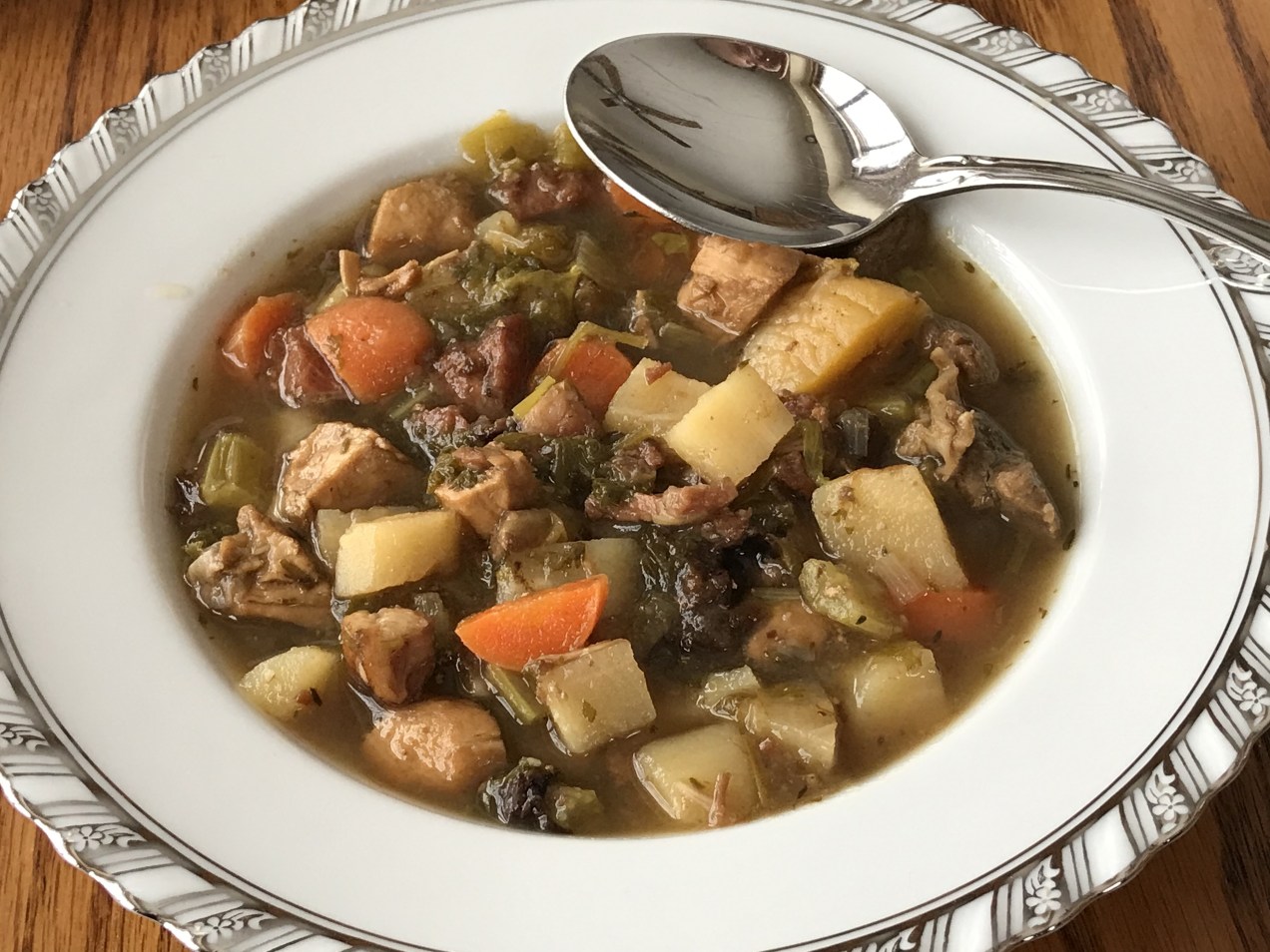
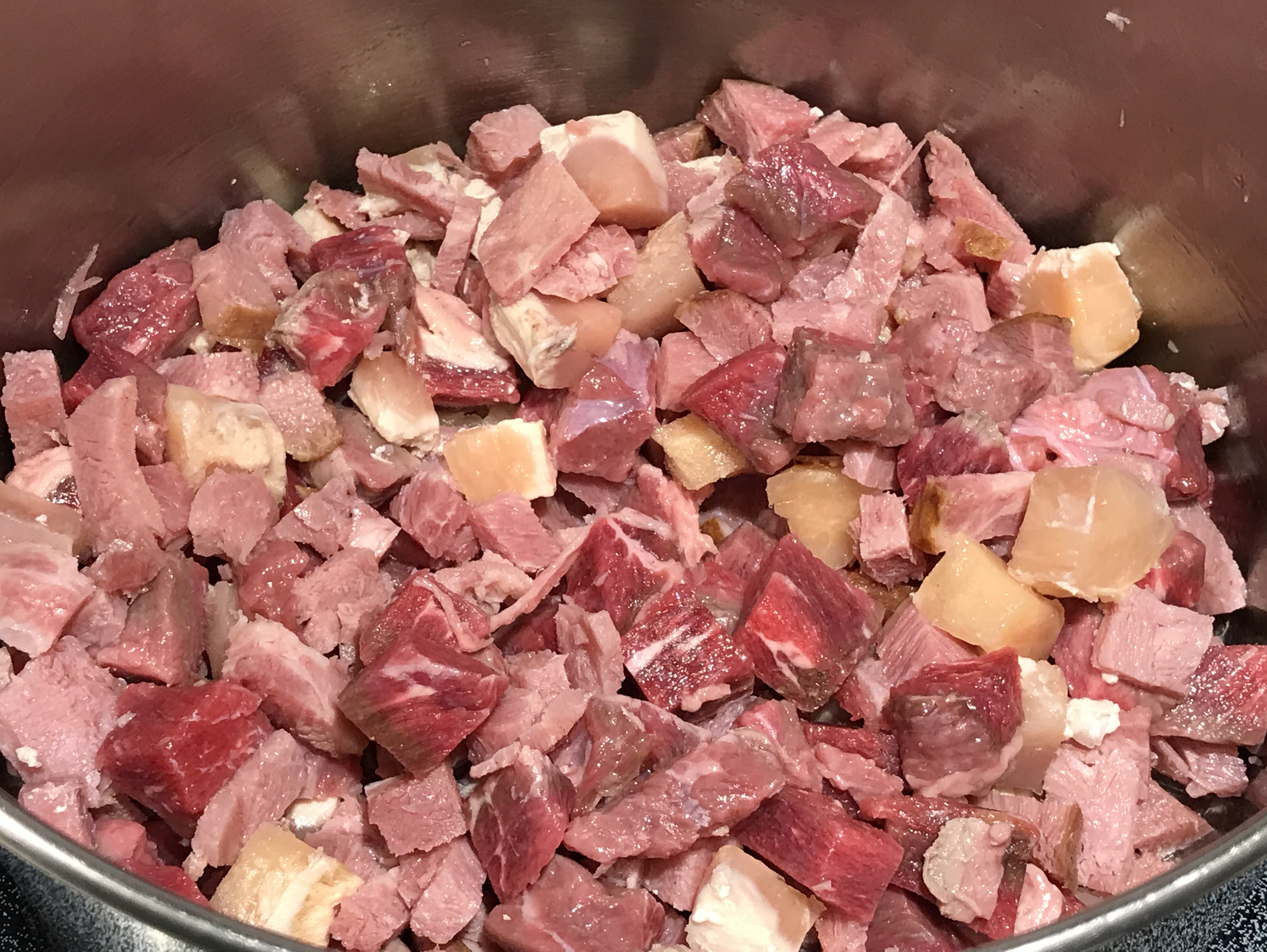
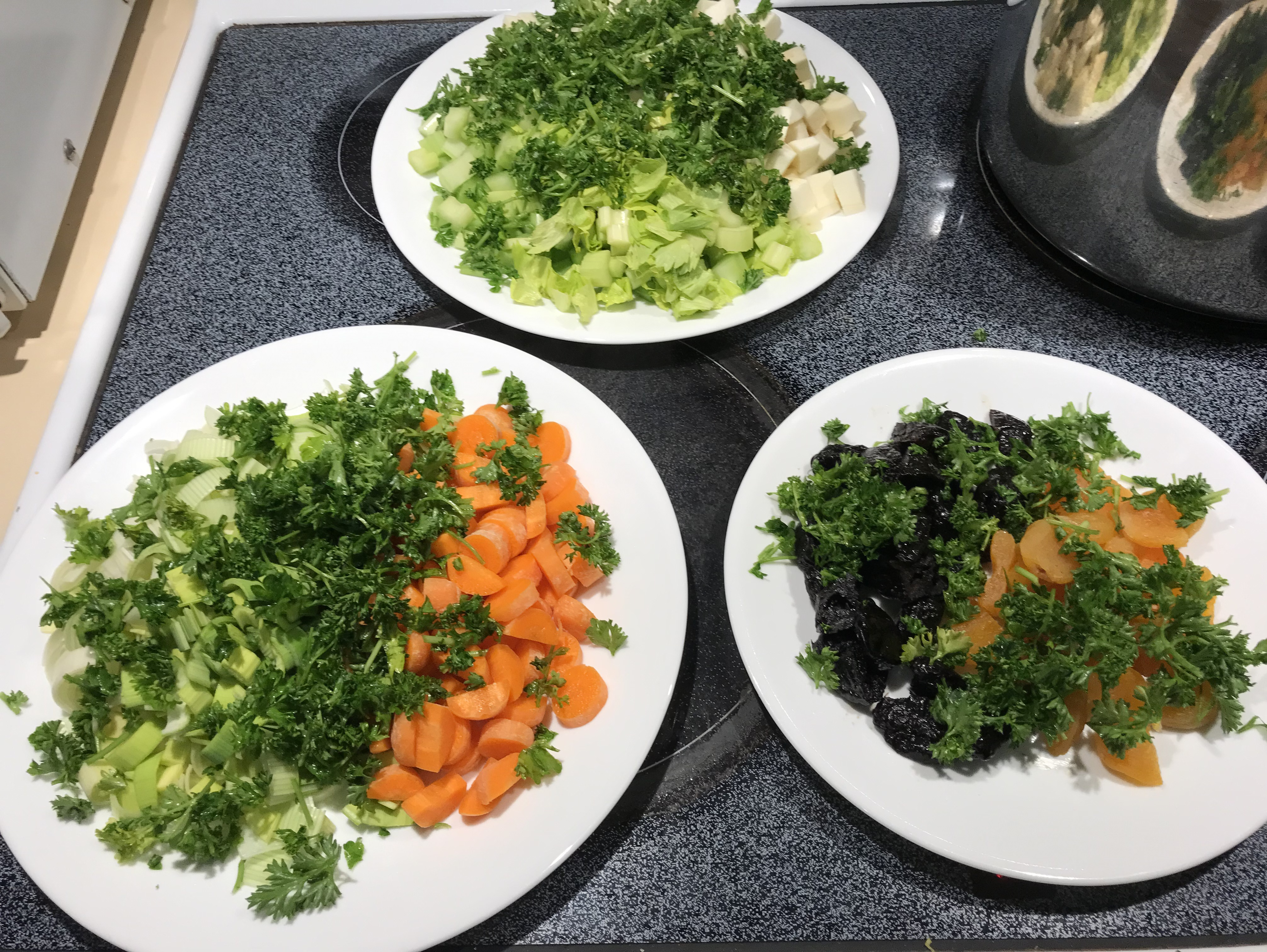
            Since eels are hard to find where I live, I decided to make “eel” soup without them, because the flavor combination sounded interesting. For the base, there’s beef chuck, ham, chicken, onions, bay leaves, and thyme. To prevent overcooking, carrots, celery, parsnips, leeks, parsley, prunes, and dried apricots are added a bit later. At the end of cooking, the soup gets a finishing touch of vinegar and jam. You can also add mini dumplings.

            For a dish that sounds so weird, the eel-less eel soup is actually delicious. The vinegar and jam give it a sweet-tart flavor resembling sauerbraten.

            Here’s what you need to make your own eel-less eel soup:

  • 1 pound beef chuck or similar cut, cubed
  • 2 chicken breasts or 4 thighs, cubed
  • 1 pound ham, chopped
  • 1 yellow onion, chopped
  • 2 bay leaves
  • 1 teaspoon dried thyme or 3 teaspoons fresh
  • 2 carrots, washed, halved, and sliced
  • 2 ribs celery, with some leaves if possible, sliced
  • 4 parsnips, peeled and chopped
  • 12 prunes, halved
  • 12 dried apricots, halved
  • 1 leek, halved and sliced crosswise
  • 1 bunch parsley, chopped
  • ¼ cup vinegar (I particularly like apple cider vinegar)
  • 2 tablespoons raspberry jam

            To make it:

  1. Put the beef, chicken, and ham into a large pot and turn on the burner to medium, stirring frequently. When it starts to brown, add 1 cup of water and scrape any browned bits off the bottom of the pot.
  2. Add the onion, bay leaves, thyme, a pinch of salt, and enough water to cover. Simmer for about 45 minutes.
  3. Add the carrots, celery, parsnips, leek, prunes, apricots, and parsley. Stir and add more water to cover. Simmer for another 45 minutes.
  4. When the meat, vegetables, and fruit are tender, add the vinegar to the soup, followed by the jam, and stir to combine.

            And remember, subscribing is free, and you’ll get a notification whenever there’s a new post.

Standard
egyptian cuisine, food history, recipes, vegetarian

Egyptian Rice and Beans: Kosheri

1000 Foods (pg. 711) for information, recipe is my own creation

            Kosheri or Kushari has nothing to do with kosher rules, but the Israelites may well have eaten an early variant in Egypt. Their Egyptian neighbors may have been eating it over a thousand years earlier, in the 3rd Millennium BC. Records indicate that wheat, barley, lentils, garlic, and onions were cooked together in clay pots for a combination of starch and protein. Ancient Egyptians may have added flavorings like butter, fat, or vinegar to make things more interesting, depending on what they could afford. At a time and place when most people ate little meat, the lentils were an essential source of protein.

            Even today, the starch/lentil combination is common in Egypt, particularly among those with less disposable income. Kosheri is a popular street food, often eaten for lunch. Rice, introduced at some point in the early centuries AD, is now the grain, pasta is added, sometimes browned in butter, and spicy tomato sauce is an essential flavoring. Interestingly, even though hot peppers didn’t really catch on in most of Europe when they were introduced from the Americas, Africans and Asians adopted them quickly and in much greater quantities. And presumably, early modern Egyptians found that tomatoes thrived in the sun and rich soil by the Nile.

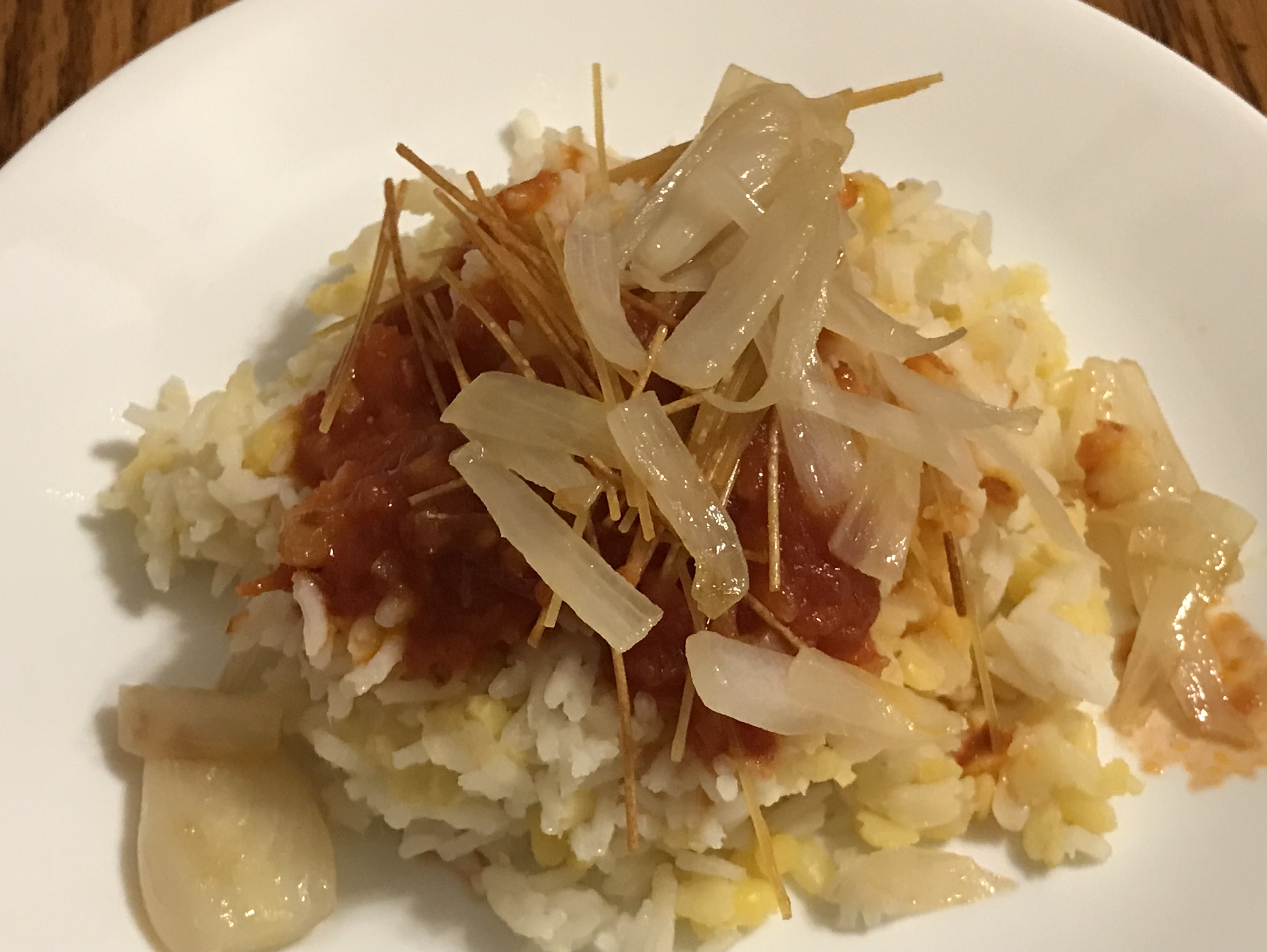
            To make kosheri, there are four elements needed: the rice/lentil mixture, tomato sauce flavored with garlic, vinegar, and hot pepper, onions browned in butter, and broken vermicelli (angel hair pasta), also browned in butter. Mimi Sheraton suggested that mastic was an essential flavoring so I tried it, but personally I think the kosheri is better without. It’s a balanced and flavorful vegetarian dish, and if the butter is replaced with oil, could even be made vegan.

            Here’s the recipe I developed. You need:

  • 2 cups long-grain rice
  • 1 cup lentils (I used the yellow variety, but other kinds would work)
  • Pinch mastic (optional, has a bit of a piney flavor)
  • Pinch salt
  • 1 tablespoon canola or vegetable oil
  • 6 cloves garlic, crushed and minced
  • ¼ cup vinegar (any kind but balsamic, which is too sweet)
  • 1 can crushed tomatoes, about 16 ounces
  • 1 yellow onion, peeled and thinly sliced
  • 4 tablespoons butter
  • 4 ounces vermicelli, broken into roughly 1-inch pieces

            To make it:

  1. For the sauce, heat the oil in a saucepan. When hot, add the garlic and cook until it starts to brown. Then add the vinegar and scrape the bottom of the pan.
  2. Stir in the crushed tomatoes, and leave sauce to simmer, stirring occasionally, while you prepare the rest of the ingredients.
  3. If using the mastic, grind it with a pinch of salt to reduce sticking.
  4. Bring 4 cups water to a boil, then add the lentils, salt, and optional mastic, partially cover the pot, and cook for 15 minutes.
  5. Add the rice and another cup of water, fully cover the pot, and cook another 15 minutes.
  6. Melt 2 tablespoons of the butter in a skillet over medium heat. Add the vermicelli and cook, stirring frequently, until the pasta browns. Empty the pasta onto a plate, but don’t wipe out the pan.
  7. Add the rest of the butter. When it’s melted, add the onions and cook, stirring frequently, until browned and reduced in volume.
  8. To serve the kosheri, add a portion of the rice/lentil mixture to each plate. Top with tomato sauce, sauteed onions, and browned vermicelli to taste.

            For more recipes, be sure to subscribe. It’s free, and you’ll get a notification whenever there’s a new post.

Standard
food history, jamaican cuisine, recipes

Jamaican “Sorrel” Punch: Ruby Red for the January Blues

1000 Foods (pgs. 693 – 694)

            Let’s face it: January can be depressing. Thanksgiving, Christmas, and New Year’s are over, Valentine’s Day is six weeks off, and in much of the northern hemisphere, it’s cold and the landscape is barren. In some places, such as Venice and New Orleans, this is Carnival season, but in others, people are going on a diet to lose those Christmas pounds. Something cheery is needed.

            Hibiscus flowers are lovely. Native to India, British sailors and botanists introduced them to the other tropical and subtropical parts of their empire in the 18th and 19th Centuries. Once the flowers reached Jamaica, locals appreciated them for more than just their beauty. Hibiscus blossoms are also edible. For some reason, they are called “sorrel” in Jamaica, India, and the Middle East when they are eaten. Most likely, this is due to the herb sorrel and hibiscus flowers both having a sour flavor. Hibiscus is also fruity, and, when steeped in hot water, produces a lovely red infusion.

            In Jamaica, dried hibiscus blossoms are used to make a popular Christmas punch. In the US, many Latin American groceries carry them. Once the mixture is brewed, often with ginger and/or other spices, it is sweetened and sometimes spiked with rum. Even though Christmas is over, sorrel punch seems like a good new year’s or anytime beverage. And honestly, the bright color and flavor would be a great antidote for the “January blues” and a nice contrast with typically heavy winter dishes. Plus, hibiscus is rich in vitamin C, helpful after the germs you’ve probably been exposed to over the holidays. It’s also rich in iron, which the vitamin C helps the body absorb.

            For sorrel punch, I began with Jillian Atkinson’s recipe on Serious Eats (https://www.seriouseats.com/jamaican-sorrel-hibiscus-drink), but modified it to quantities and ingredients I had available. I used one quart (4 cups) of water, 2oz of dried hibiscus flowers, about 2.5oz sliced candied ginger, 3 whole cloves, and three small pinches of ground allspice. After boiling for 8 minutes, the mixture cools on the stove, then is chilled overnight to finish infusing. To prevent any metal flavor from leaching into the punch, I transferred it to a plastic container.

            After infusing overnight, the punch is strained and sweetened to taste. The recipe uses a simple syrup of sugar and water, but I just stirred four tablespoons of sugar into the mix, which seems to be about the right balance. It takes a bit longer to dissolve, but that quantity will dissolve eventually. The punch was best when diluted with about 1 part water to 2 parts hibiscus infusion, but that can be adjusted to taste. It’s often spiked with Jamaican rum, but is perfectly good without it, making sorrel punch a great festive drink for those who wish to abstain from alcohol.

Looks like red wine, probably stains like it

            Hibiscus has an interesting flavor, slightly floral, but distinctly fruity, almost like cranberry. The infusion is pretty sour on its own, so adding a bit of sugar balances it out. The ginger and cloves gave it a pleasant flavor like mulled cranberry cider, but a bit different. It’s hard to describe. The best way to find out more is to try it.

Standard
american cuisine, food history, recipes

Divine Citrus Refreshment: Ambrosia

1000 Foods (pgs. 519 – 520)

            According to Greek mythology, ambrosia was what the gods ate on Mt. Olympus. In the US, particularly the Southeast, it came to mean a mixture of oranges and grated coconut. It’s especially popular at Christmastime, peak season for oranges. In the past, difficulties with transportation made oranges and other citrus fruits relatively expensive in areas where they couldn’t be grown. As transportation improved in the late 19th Century and prices dropped, cooks in the US Southeast developed a layered dessert with sliced oranges and shredded coconut. A bit of powdered sugar helps the orange slices release some of their juices.

            Sometimes other fruits or a bit of liquor is added, but the oranges and coconut are always central. Presumably, this is the type of ambrosia featured in To Kill a Mockingbird, set in Alabama in the 1930s. Along with the ambrosia, Aunt Alexandra fixed three kinds of meat and two cakes. Presumably there was also bread, rolls, biscuits, or cornbread, and some sort of vegetables. In the 1950s, with the explosion in available convenience food, a mix of canned fruit, coconut, sometimes pecans and/or marshmallows, cool whip, and occasionally mayonnaise was developed. Without the mayonnaise, that actually sounds pretty good, but here we have the original, basic version.

Doesn’t that look divine?

            It’s super simple to make. All you need are oranges, shredded coconut, and powdered sugar. I used five oranges and about a cup of coconut, soaked in hot water for about fifteen minutes to soften. The oranges are peeled, quartered, sliced, and layered in a glass serving dish. The slices are sprinkled with a bit of powdered sugar, then a layer of coconut, repeated until the oranges are used up. On the last layer of oranges is just the powdered sugar. The ambrosia is so pretty, and tastes just as good.

Standard