According to Greek mythology, ambrosia was what the gods ate on Mt. Olympus. In the US, particularly the Southeast, it came to mean a mixture of oranges and grated coconut. It’s especially popular at Christmastime, peak season for oranges. In the past, difficulties with transportation made oranges and other citrus fruits relatively expensive in areas where they couldn’t be grown. As transportation improved in the late 19th Century and prices dropped, cooks in the US Southeast developed a layered dessert with sliced oranges and shredded coconut. A bit of powdered sugar helps the orange slices release some of their juices.
Sometimes other fruits or a bit of liquor is added, but the oranges and coconut are always central. Presumably, this is the type of ambrosia featured in To Kill a Mockingbird, set in Alabama in the 1930s. Along with the ambrosia, Aunt Alexandra fixed three kinds of meat and two cakes. Presumably there was also bread, rolls, biscuits, or cornbread, and some sort of vegetables. In the 1950s, with the explosion in available convenience food, a mix of canned fruit, coconut, sometimes pecans and/or marshmallows, cool whip, and occasionally mayonnaise was developed. Without the mayonnaise, that actually sounds pretty good, but here we have the original, basic version.
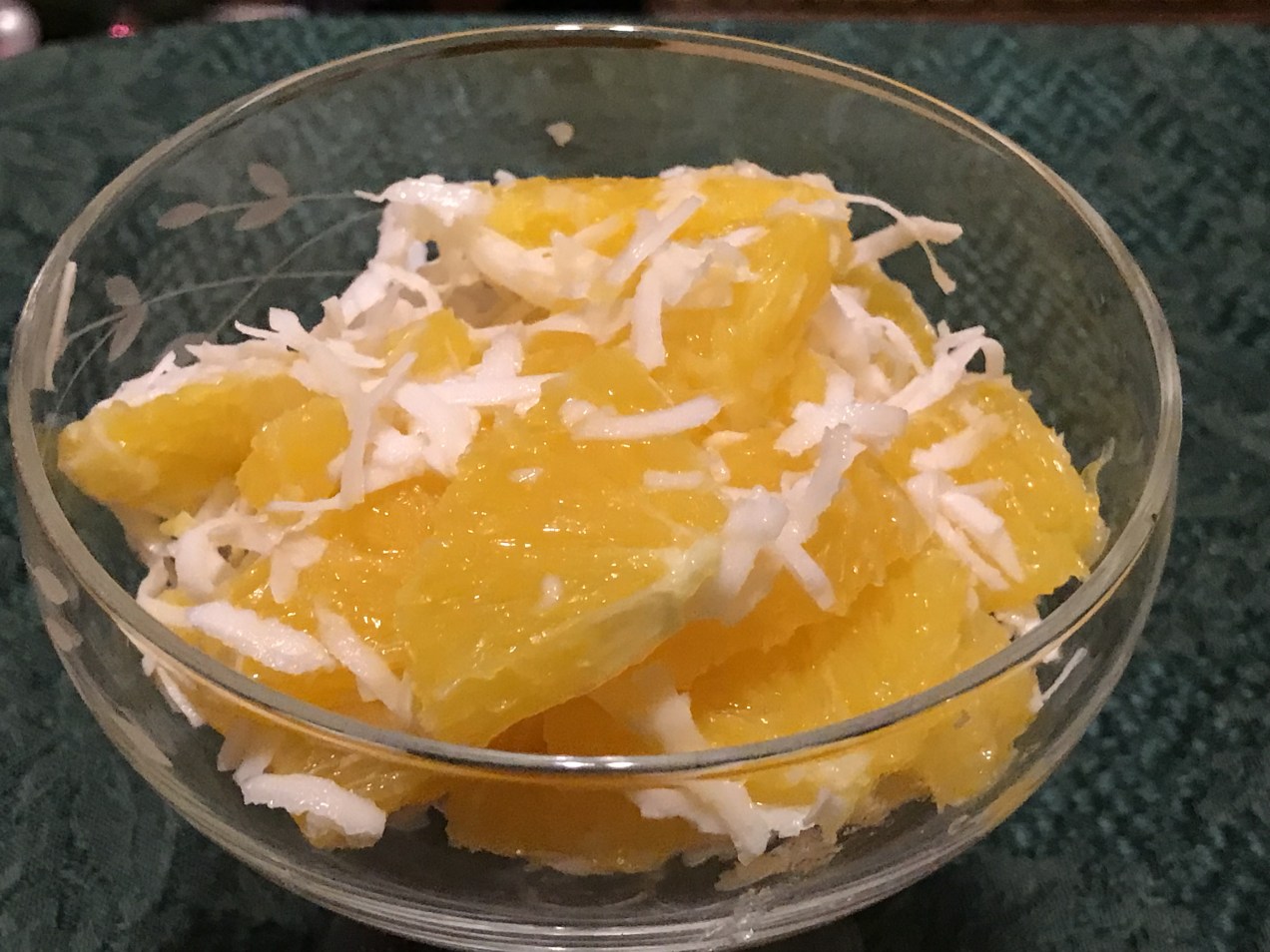
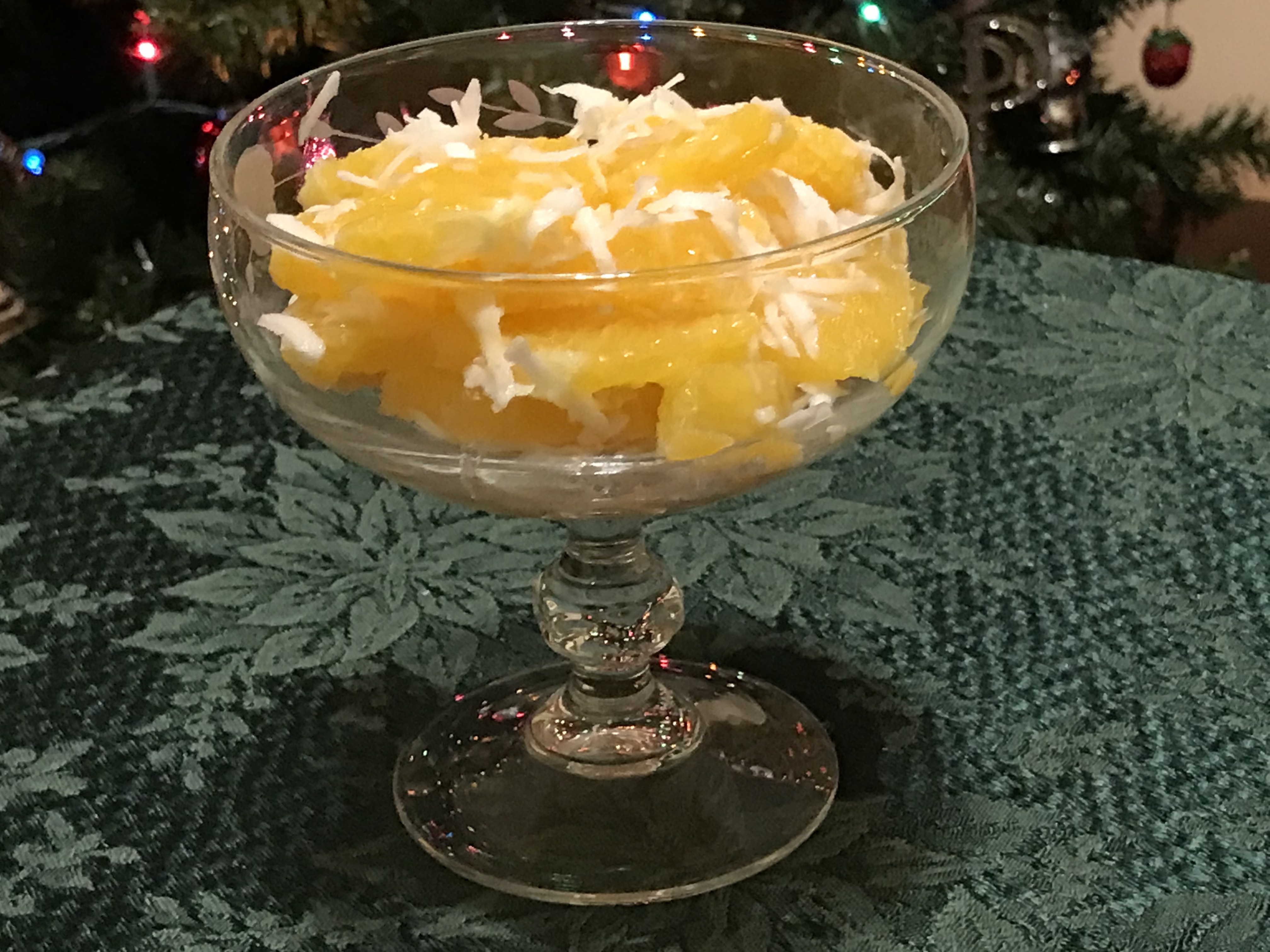
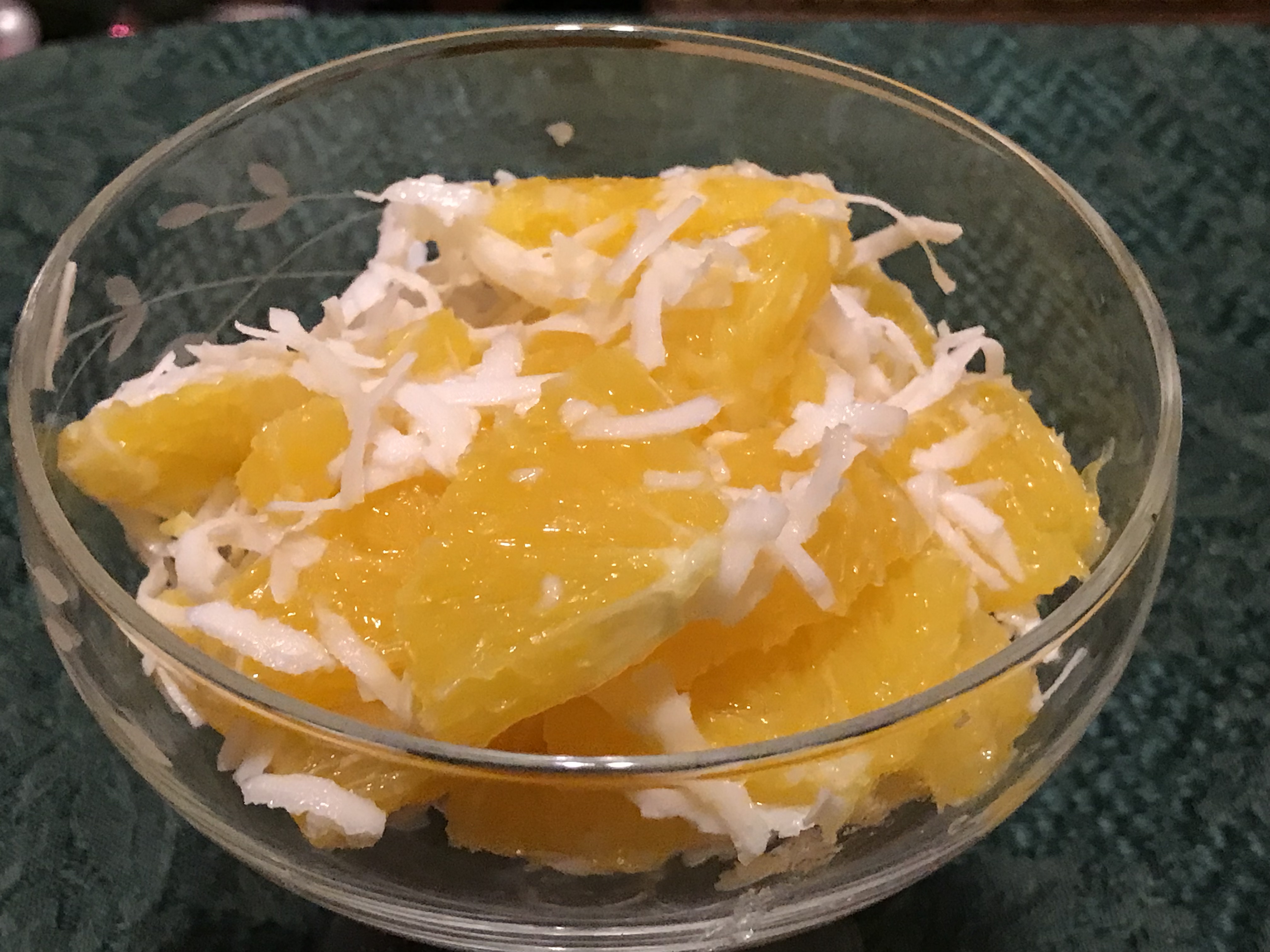
Doesn’t that look divine?
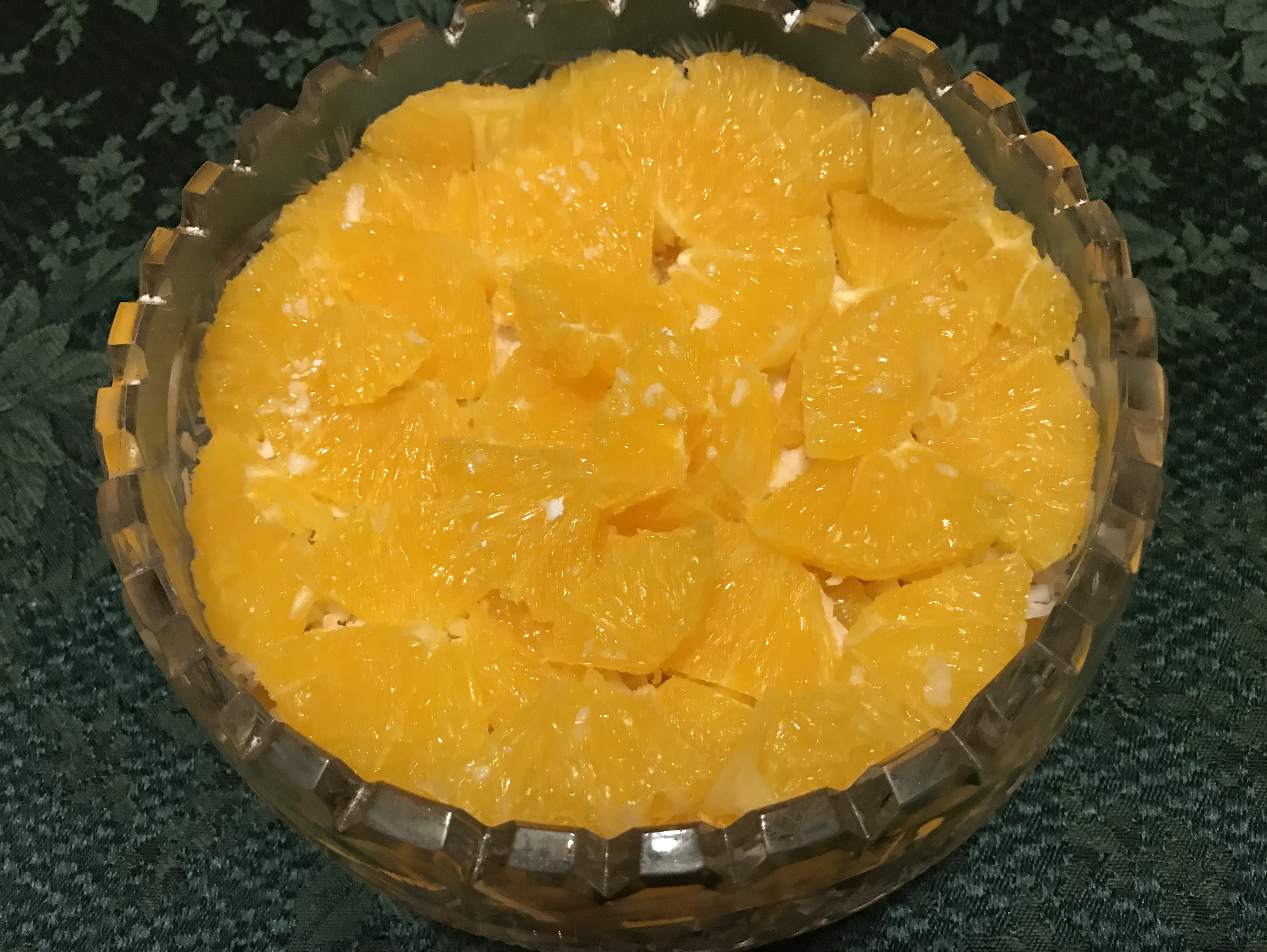
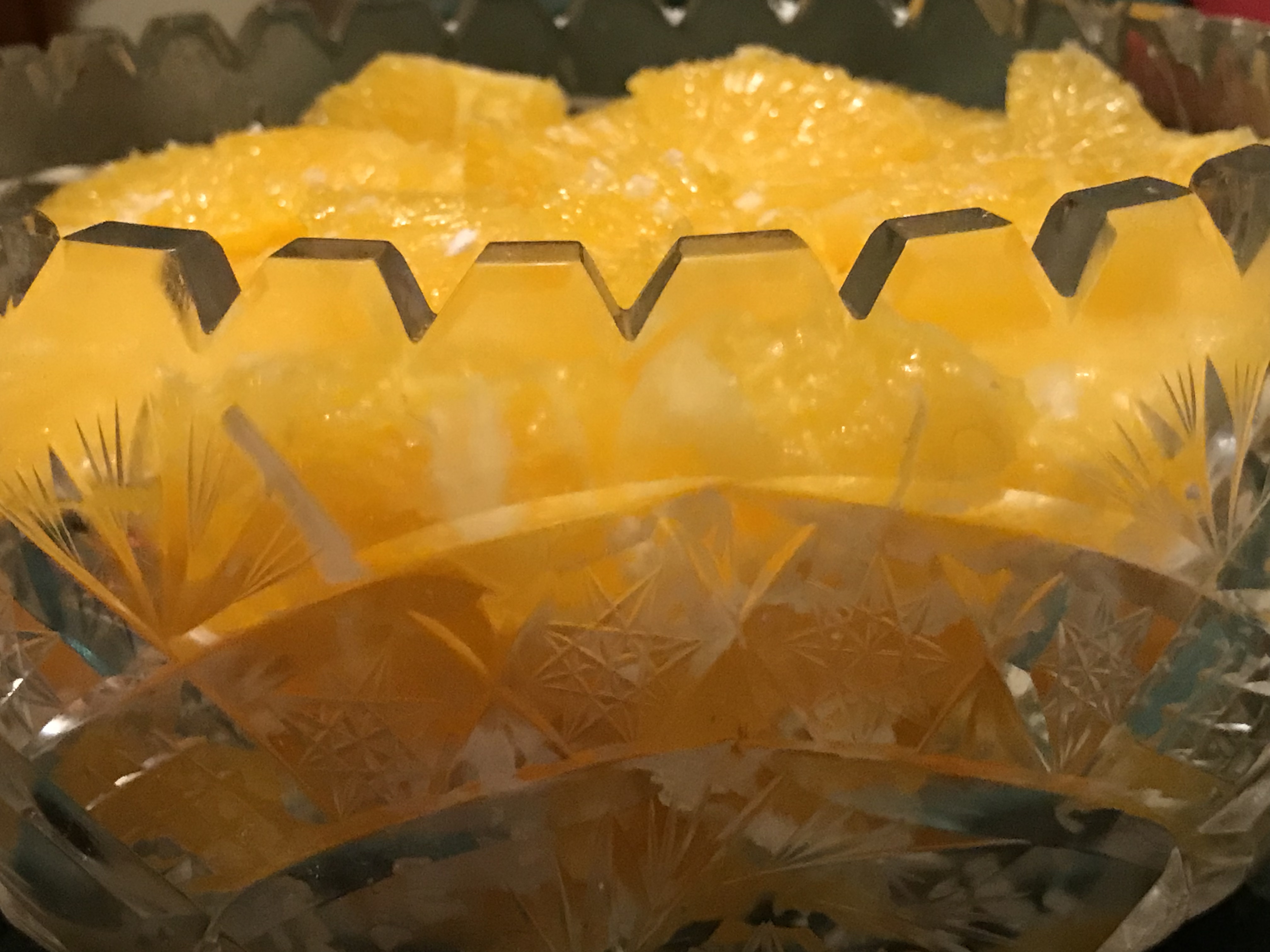
It’s super simple to make. All you need are oranges, shredded coconut, and powdered sugar. I used five oranges and about a cup of coconut, soaked in hot water for about fifteen minutes to soften. The oranges are peeled, quartered, sliced, and layered in a glass serving dish. The slices are sprinkled with a bit of powdered sugar, then a layer of coconut, repeated until the oranges are used up. On the last layer of oranges is just the powdered sugar. The ambrosia is so pretty, and tastes just as good.
When people think of Spanish cuisine, chances are they think of paella, gazpacho, and tapas. Deeper thought might recall acorn-fed ham, chorizo, olla podrida, and bitter “Seville” oranges, or other typically “Mediterranean” foods. But these dishes are not the whole story. Like France and Italy (and the US, China, and probably any other decent-sized country), Spain has its own regional climates and cuisines. Galicia, in the northwest corner, is one such region. Like neighboring Asturias to the east, Galicia has a cooler climate and more rain than the rest of the country. Like Normandy in some ways, the land is favorable for cattle raising and apple trees, there is enough rain to successfully grow corn, and seafood is widely available. An excellent description of Spanish regional cuisine can be found in Claudia Roden’s The Food of Spain.
Advertisements
Galicia and Asturias were populated with Celtic-speaking peoples at some point in the last few centuries BC. It’s unclear what language the previous inhabitants spoke, and how much they intermarried and assimilated with the newcomers, but the region retained its Celtic character for centuries. Greek and Phoenician trading colonies were mainly in the south and east, and when Hannibal’s father and brother conquered much of the country in the late 3rd Century BC, they too focused on these areas. The Romans conquered the Carthaginian holdings in Spain soon after, but wasn’t until the 1st Century AD, almost 300 years later, that they fully controlled Galicia. As the Western Roman Empire fell apart, the Visigoths came to control the old Roman province. In the early 8th Century, Muslim armies from North Africa captured most of Iberia, but most of Asturias remained independent, and Galicia was reconquered quickly. The Reconquista originated in these regions, and they retained their unique culture.
Hilly, mountainous terrain made these regions harder to conquer, but could also make life harder for the average resident. Historically, most of the population was required by economic necessity to eat a largely vegetarian diet. Except for feast days and other special occasions, meat was usually a flavoring as much as a source of protein. Across Spain, there are a variety of slow-cooked soups and stews, where cured pork products flavor vegetables and beans. In caldo Gallego, which translates as “Galician soup/stew,” chorizo and salty smoked pork are the meats, while beans add more protein and onions more flavor. The vegetables are potatoes and a kale-type cabbage. In other words, a good choice for eating healthy in the winter.
Advertisements
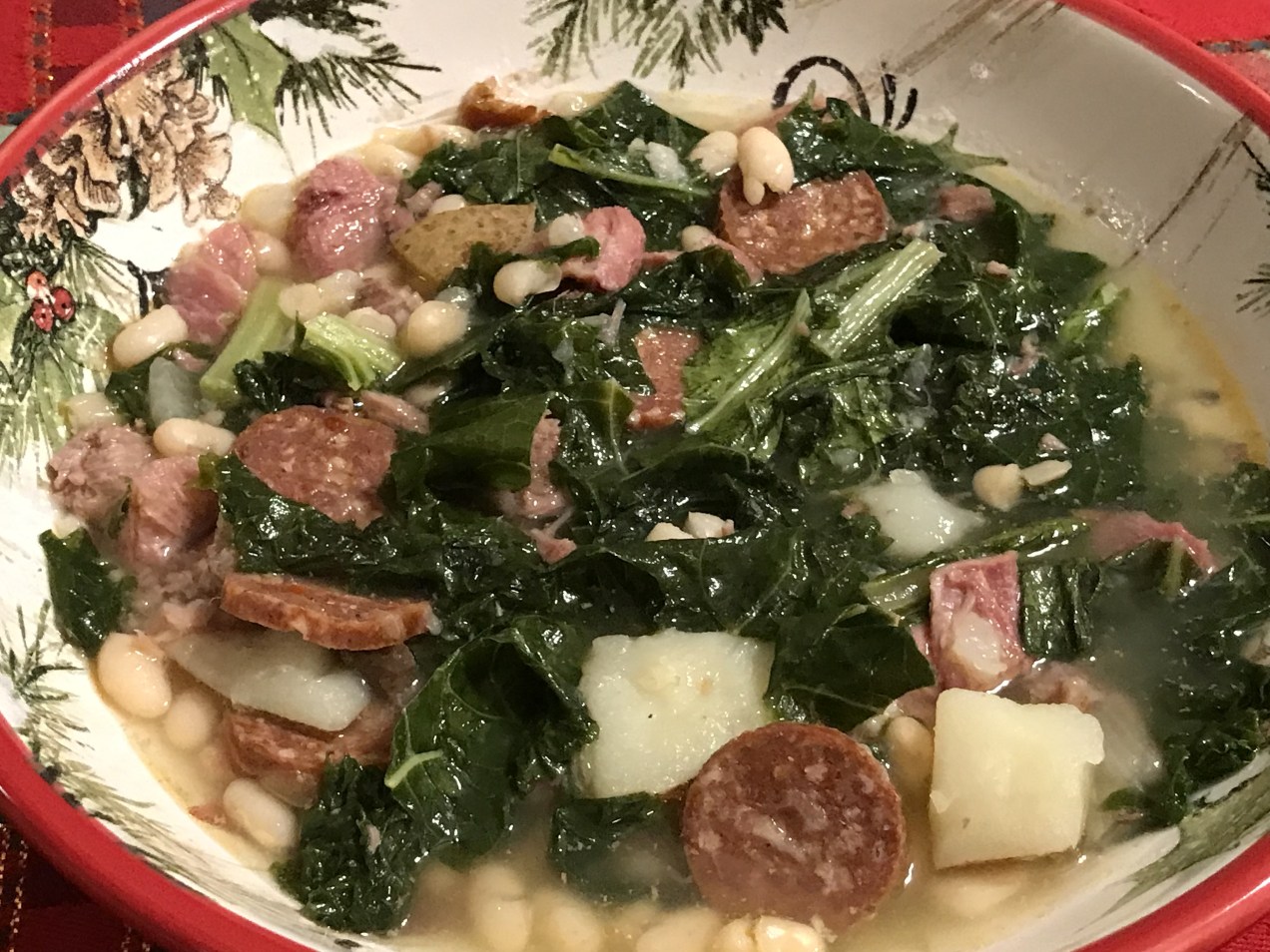
To make it, I first simmered some smoked ham shanks to tenderize and extract some of their flavor. After removing the meat and putting it back in the pot, I added the beans, onions, and chorizo nuggets. When the beans were almost done, I added the potatoes, then, at the last minute, kale and turnip greens. Everything was cooked properly, nothing was overdone, and the flavors blended together well. The only thing I couldn’t understand was the level of salt. Neither the ham nor the chorizo was that salty, and I didn’t add any extra. Was pre-soaking the beans in salted water to blame? Maybe I added more salt to the soaking water than I thought, or was supposed to rinse the beans. The stew was still good, and historically most winter dishes would have been salty from using preserved ingredients, but next time, I’ll be more careful and remember to rinse the beans.
If you wish to make this yourself, here is the recipe I developed. You’ll need:
1 package smoked ham shanks (2 pieces)
8 oz dry Spanish-style chorizo, sliced
8 oz dried white beans (navy or great northern), soaked overnight in water to cover with 1 tsp salt and drained
2 yellow onions, coarsely chopped
2 medium potatoes (I used russets, but other varieties will work)
1 bunch kale, coarsely chopped
1 bunch turnip greens, coarsely chopped
And here is how to make it. The stew takes a few hours to cook, but most of that isn’t active time.
Place the ham shanks in a large pot, with just enough water to cover. Bring water to a boil, then simmer for about 1 hour, until the meat is falling off the bones.
Remove the ham shanks from the broth. When cool enough to handle, pull off and coarsely chop the meat, returning it to the pot. Discard the bones, but if you can extract the marrow, add that to the stew as well.
Add the chorizo, beans, and onions to the pot and cook for about an hour, until the beans are almost soft, stirring occasionally.
Cut the potatoes into roughly 1/2 inch cubes and add to the stew, cooking for 20 to 30 minutes, until tender. If they break down a bit, that’s fine, since this thickens the stew.
About 10 minutes before serving, add the kale and turnip greens. Once they’ve wilted and cooked down, the stew is ready.
Ladle the stew into bowls and serve with bread, if desired.
If you thought this was interesting or want more recipes, subscribe to get new content in your email. It’s free, it won’t cost you anything, you have nothing to lose, and did I mention it’s free? This is the first full recipe I’ve developed, but there will be many more to come.


 Feasting Through Time