Uncategorized

Cook’s Tour of Italy Menu 6 (Pgs. 31 – 36): Easter Dinner in Rome

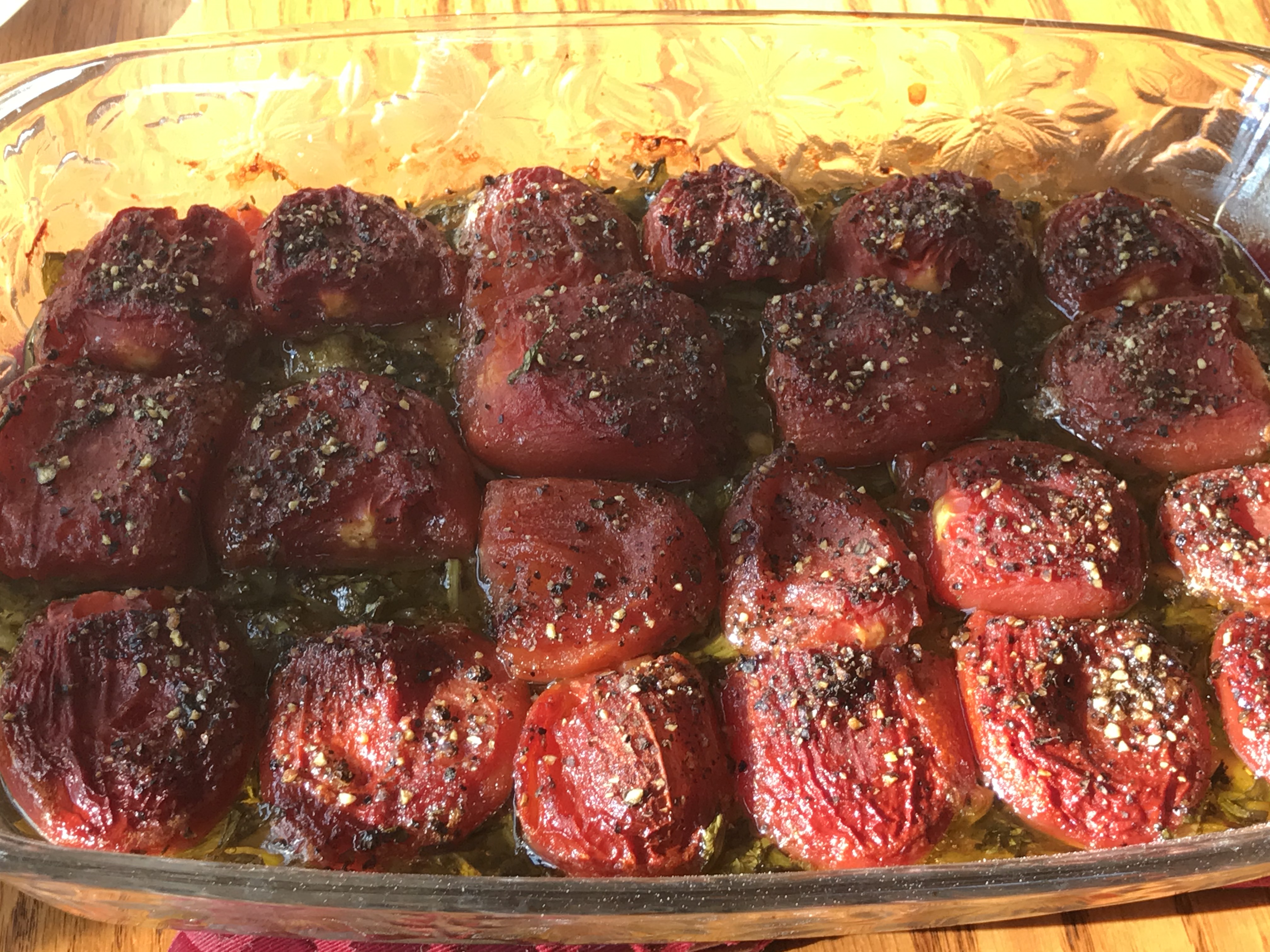
Menu: Asparagus Soup with Amaretti and Crisped Leeks, Lasagna Squares with Braised Broccoli Rabe, Butterflied Roasted Leg of Lamb, Slow-Cooked Plum Tomatoes, Spring Greens with Mint, Ricotta Cheesecake

Recommended Wine: Dry Castelli White (like Frascati), Campanian Taurasi (ruby-red with plum, berry, spice and vanilla flavors)

            Of all the menus I have tackled, this is perhaps the most ambitious yet. Previous posts cover a combination of ordinary and Sunday dishes. This is a holiday feast. We are invited to imagine Easter in Rome, with bright decorations and flowers everywhere. In Rome, spring lamb is the typical Easter roast, heavily seasoned with rosemary. The menu also includes other spring classics like asparagus and fresh greens, along with a unique lasagna dish, slow-roasted tomatoes with garlic and herbs, and a ricotta cheesecake with a few different flavoring options. If you prefer, artichokes, another Roman favorite, can replace the soup or salad.

            As a whole, this menu is a taste of Roman food history. As mentioned in a previous post a while back, the Ancient Romans were fond of their produce. Among other vegetables, they loved asparagus, leeks, and lettuce. Asparagus and early lettuce are typically some of the first vegetables available in the spring, which is also the time for lambs and suckling pigs. Historically, milk and egg production dropped during the winter months before rising again, which is probably how eggs came to be associated with Easter. Even in ancient times, before Christianity, Romans could enjoy lamb with fresh herbs, asparagus, salad, and ricotta cheesecake in the spring.

            There is some debate on whether or not the ancients had a form of pasta, but if they did, its widespread use was a Medieval innovation. Trade with various Muslim states, especially in Sicily, brought rosemary, increased almond cultivation, lemons, bitter oranges, and sugar to Italy. Medieval Europeans loved almonds and used them extensively, especially during Lent, when almond milk frequently replaced dairy. As sugar became more widespread (though still a huge luxury) during the Late Middle Ages, it was incorporated into the variety of cookies and confections being developed.

            The Columbian Exchange changed everything. Maize, chocolate, vanilla, turkeys, potatoes, tomatoes, peppers and zucchini all arrived from the Americas, though not all were accepted right away. Peppers and tomatoes in particular took a long time to become widespread, but by the late 19th century, they were ubiquitous in Southern Italian cuisine, along with zucchini. Meanwhile, dramatically increased sugar supplies made the proliferation of new pastries and confections possible. These soon became linked to another new introduction, coffee, from the Middle East and East Africa.

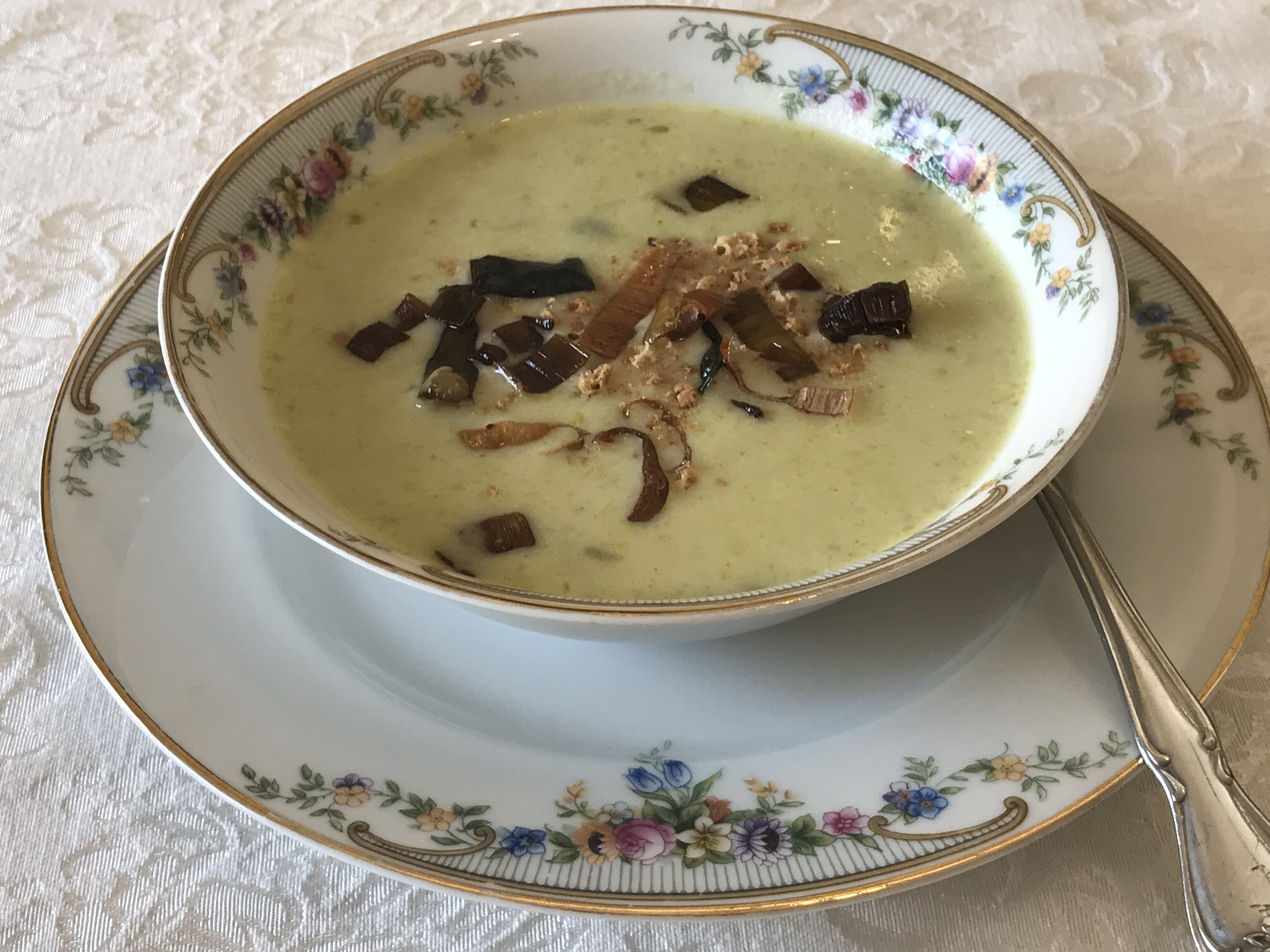
            What is essentially a cream of asparagus soup, flavored with leeks and thickened with potatoes, is served with two interesting garnishes. First is crushed amaretti; crunchy almond cookies with a slightly meringue-like texture. The other is sliced leeks, fried until lightly browned and crispy. This combination might sound strange, but the sweet, crunchy cookie crumbs are a nice contrast to the soup and the crisped leeks were quite addictive. The flavor was a balance of asparagus and leeks, with neither overpowering the other, accented by a bit of almond. The only thing I would change is to maybe use a bit less liquid, as the soup was fairly thin, but that’s a matter of personal preference.
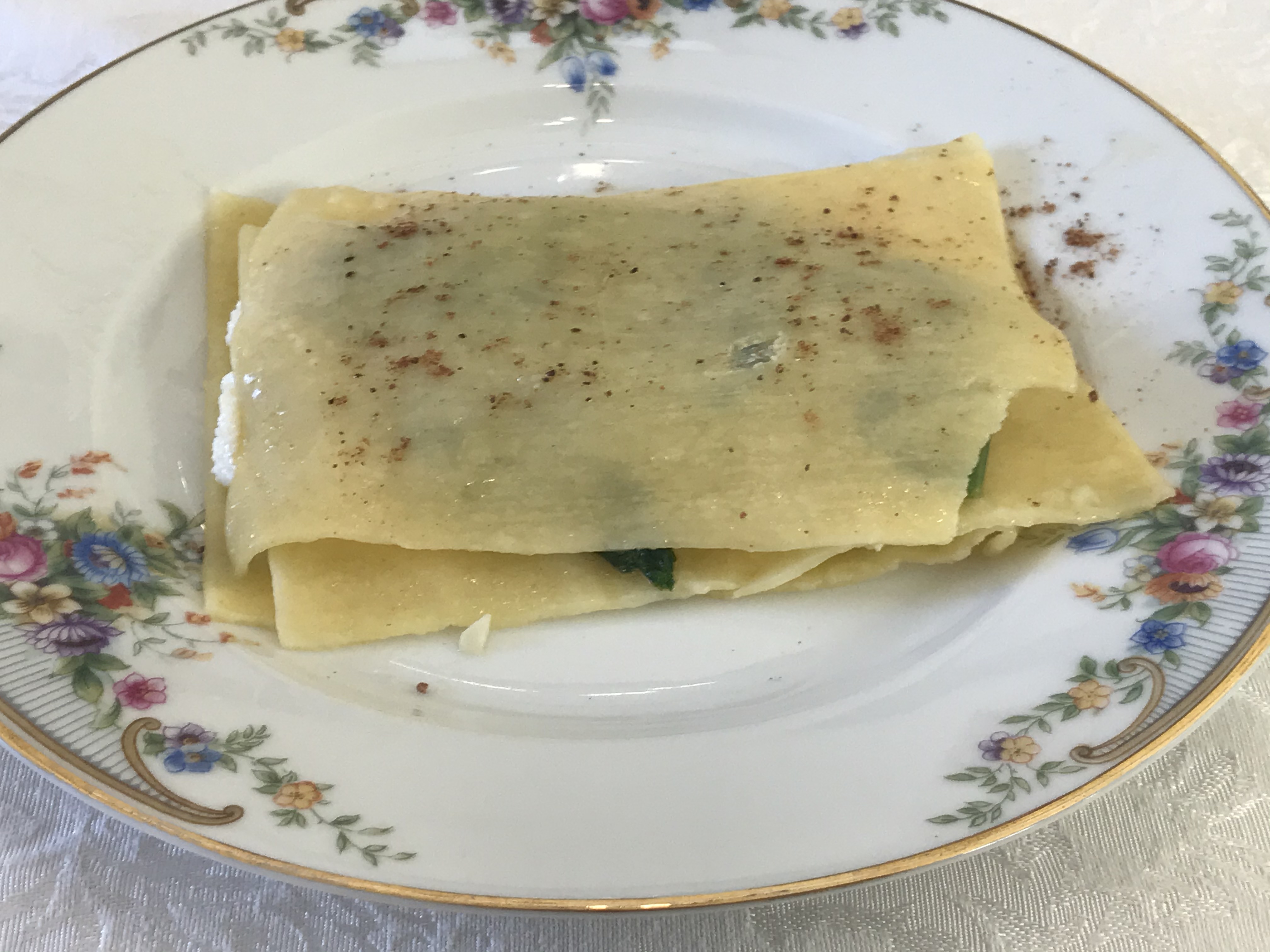
            For the pasta course, we have an interesting spin on lasagna. Rather than layered and baked in a single pan, fresh pasta squares and broccoli rabe (here replaced with mustard greens) are cooked separately, then layered with ricotta on each individual plate. While this method did free up oven space for the other dishes, it involved more work at mealtime. Only a few of the pasta squares can cook at a time, and they cook in about a minute. Once finished, each batch is placed in a bowl with a bit of butter to stay hot and hopefully avoid sticking. This was still a bit of an issue, and the ricotta, which was not heated, cooled down the finished dish. It was still pretty good, but more warm/lukewarm than hot.

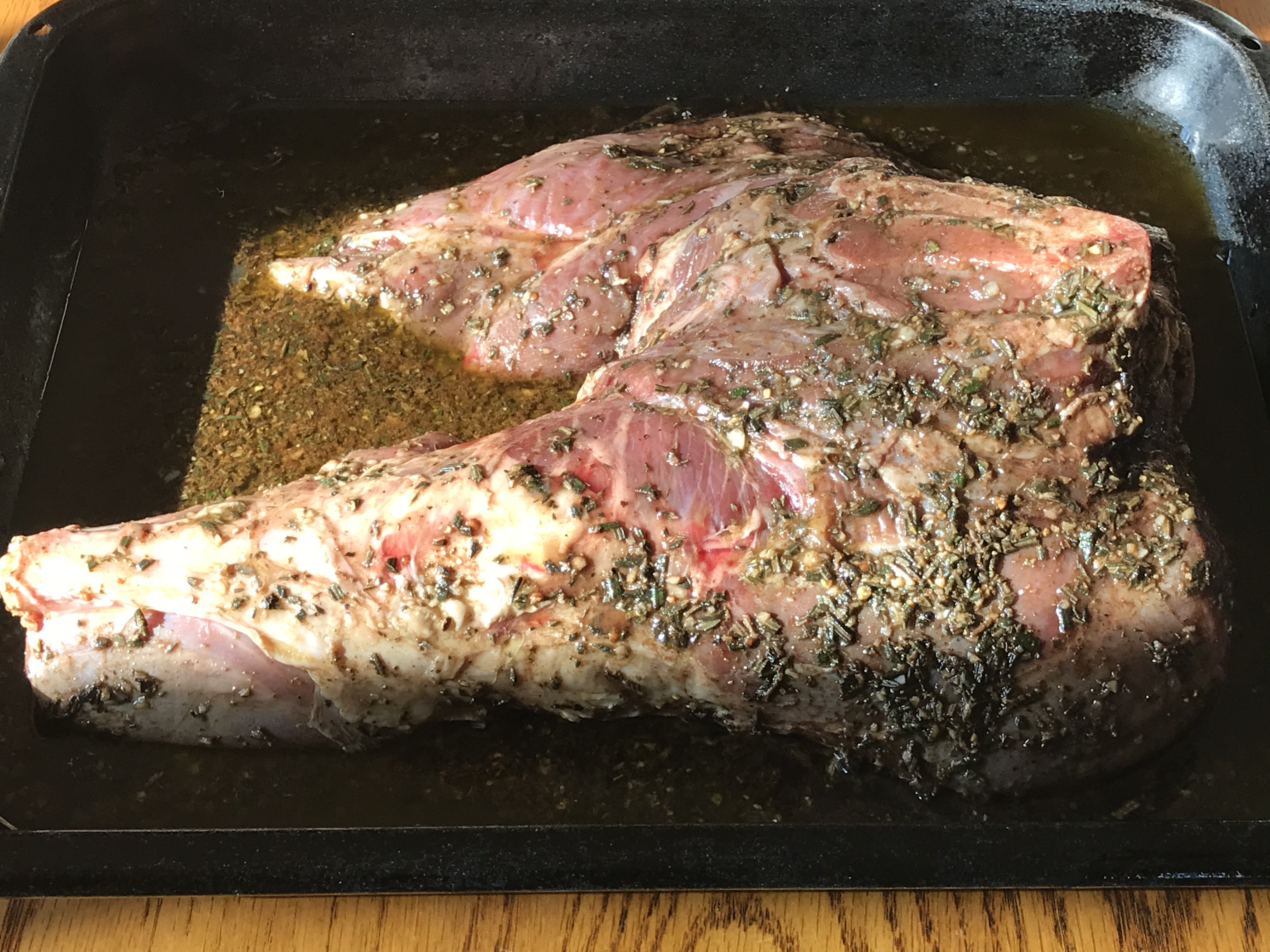
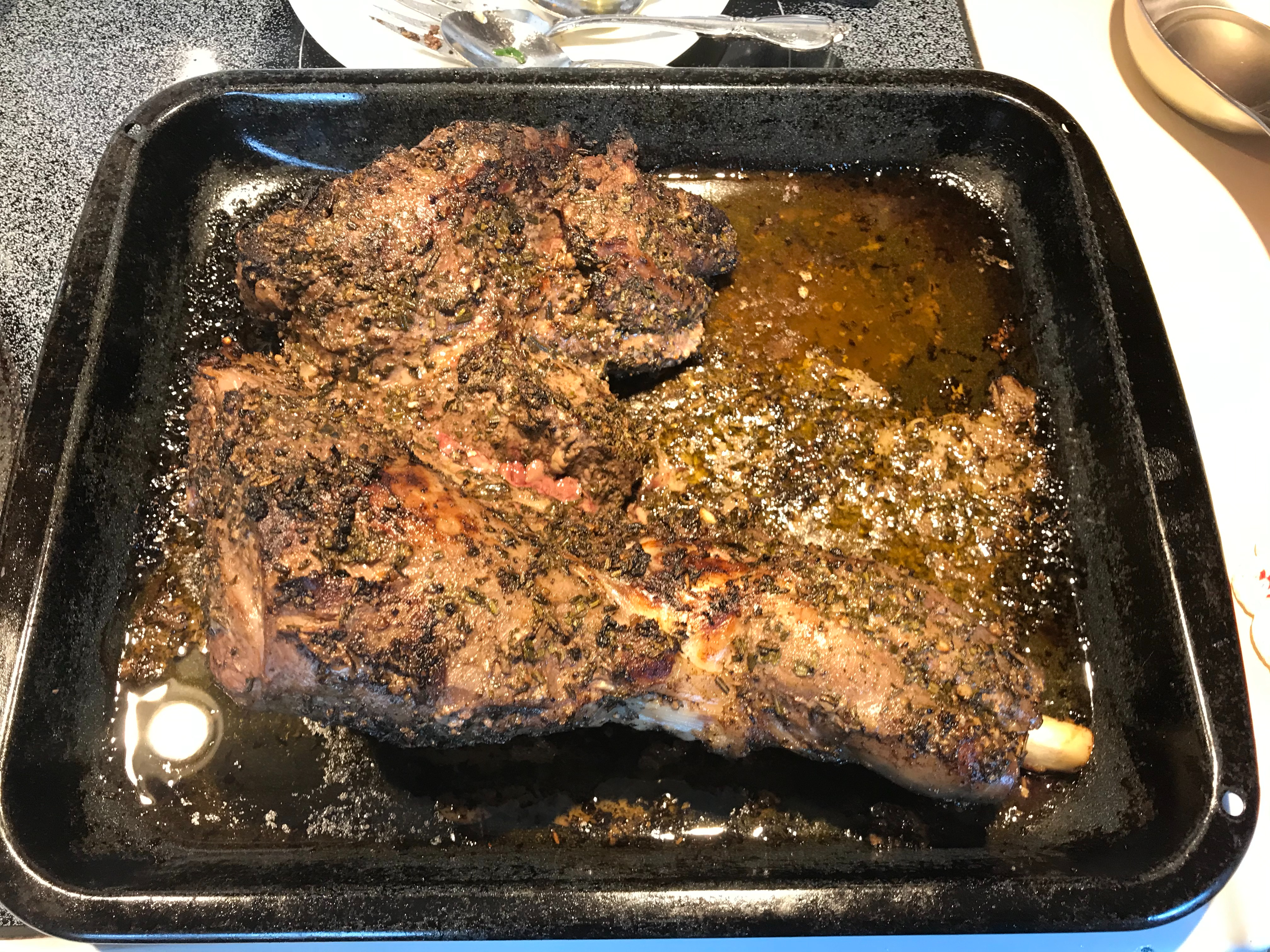
            The lamb was the most technically challenging dish on the menu. Originally, I planned to get a few lamb chops and marinate them rather than use a leg of lamb, but since the latter was on sale for a really good price I decided to try it. (I’m a few months behind on posting, this was around Easter). The recipe says to ask the butcher to butterfly and trim it, but since I bought it frozen and shrink-wrapped that wasn’t an option. After letting it thaw for a few days, I would have to try and hope for the best. To be honest, I think I did a pretty good job, at least as far as getting it to lay flatter in the roasting pan, which was the point. After marinating overnight in a mix of vinegar, oil, garlic and herbs, it was broiled and occasionally basted with the marinade. The seasonings gave the meat a great flavor, and the sweet, acidic tomatoes worked really well alongside the rich, distinctive flavor of the lamb.
            The salad, a mix of spring greens and arugula with a bit of mint, had a vinegar and oil dressing with a bit of garlic and anchovy. Since the amount of anchovy was small, it did not taste fishy, rather, it just added another layer of flavor. I wouldn’t have thought of putting mint in a salad, but it worked really well with the other flavors.

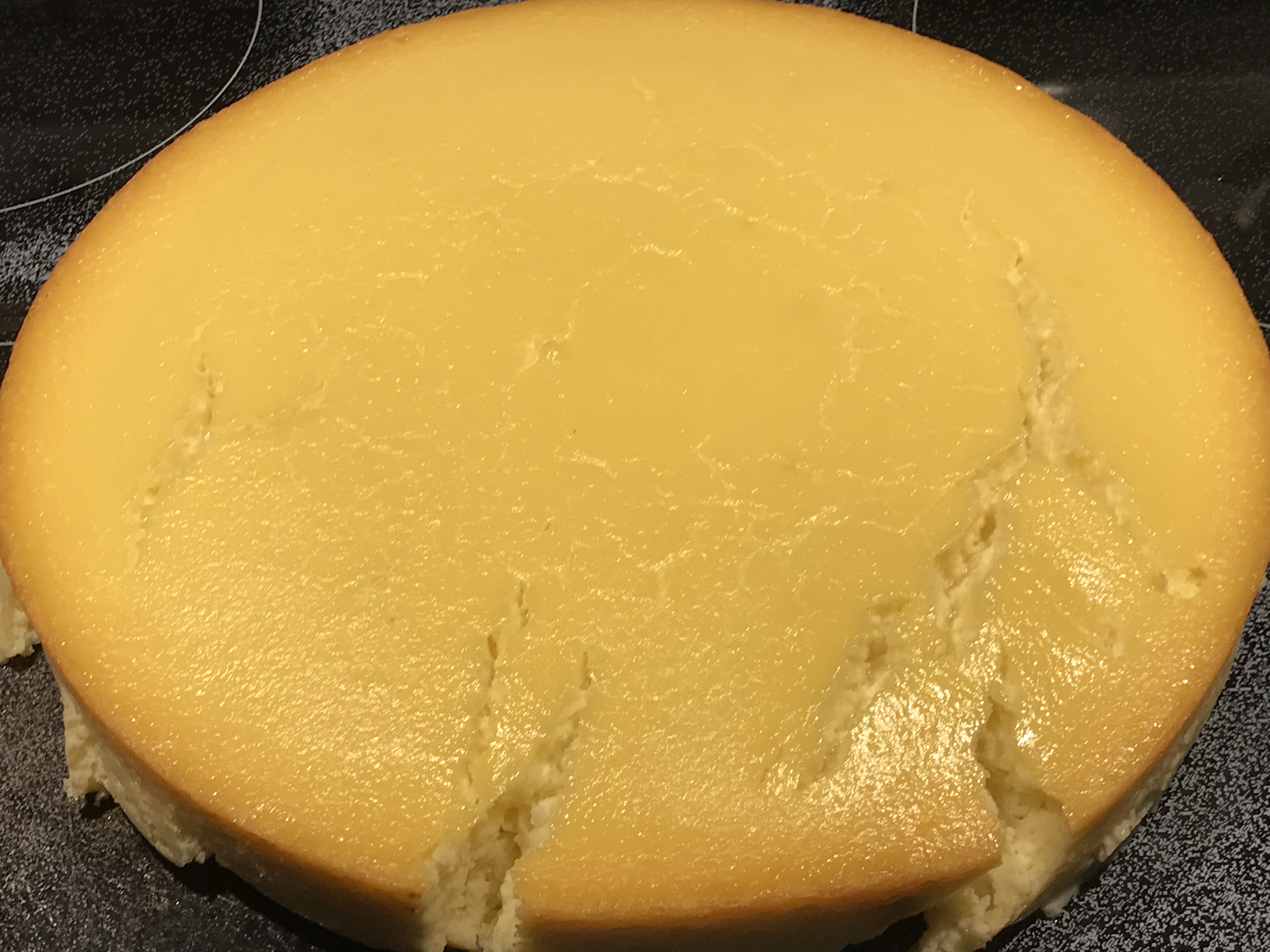
            I did have a few difficulties with the cheesecake. The recipe instructs the cook to line the bottom of a springform pan with a piece of buttered parchment paper and serve the cheesecake while still slightly warm. A few different flavoring options are available; chopped candied peel, vanilla bean, or fruit-flavored brandy. I chose candied lemon peel, which seemed perfect for spring. For some reason, after the designated amount of time, it was nowhere near done. Even after some extra time at a low temperature to try and firm it up, there was still a lot of liquid in the center, but at that point we decided that maybe that’s the way it’s supposed to be and had some anyway. It was still pretty good, but the middle part was still pretty soupy and the lemon flavor seemed somewhat weak.

            A night in the refrigerator transformed the cheesecake. Chilling firmed it up and made it easier to slice, while the extra time gave the homemade candied lemon peel a chance to infuse its flavor. Though not a requirement, I would recommend making this a day beforehand and serving it cold. If making this again, I would probably reduce the sugar slightly and add a tablespoon of flour to help bind it together. Still, the whole menu was a thoroughly enjoyable taste of spring.

Standard
Uncategorized

Cook’s Tour of Italy Menu 3 (Pgs. 21 – 25): Special Dinner in Rome, Trastevere

Menu: Arugula Salad with Bacon and Hazelnuts, Roman-Style Gnocchi, Fig, Walnut, and Almond Tart

Recommended Wine: Montepulciano d’Abruzzo, Purplish-Ruby with Berry and Spice Aromas

            We are now invited to imagine dinner with a friend of Mr. Famularo’s at her home in Rome’s Trastevere district, across the Tiber from the historical city center. Though space is limited inside her apartment, it has a balcony overlooking a courtyard garden. For most of the year, it is warm enough to eat and socialize there, where the air is perfumed with roses and jasmine. (Text, page 22) Imagine that the pandemic is finally over and you can socialize without worry.

            The original menu is one of indulgence for a small group, featuring foie gras, a favorite since ancient times. There are two options for how to serve this, both on an arugula salad garnished with toasted hazelnuts. The recipe has the foie gras sauteed in butter, then served on top the salad. Another option in the recipe header, for those who aren’t able to obtain or don’t want to work with pieces of foie gras, is to use slices of foie gras terrine. I found the statement that the slices of terrine “of course are not to be sauteed” somewhat amusing. This would not have been obvious to me, though I’m not an award-winning cookbook author whose taken multiple trips abroad with a career spanning decades. Or maybe I’m just an unsophisticated barbarian. Supposedly, the pieces of foie gras are frequently sold in convenient 2-ounce serving size containers and the terrine is available in most supermarket delis.

            Maybe that’s true in New York City, but I have never seen either of those things at any supermarket or deli. Granted, I have never actually looked for them, but before the pandemic I browsed a number of grocery stores and meat markets to see what sort of interesting things they had. I’ve seen beef liver, chicken livers, beef tongue, whole Christmas geese, and even pigs’ feet, but no foie gras anything. At any rate, with the price and method of production, I wouldn’t buy it anyway. Thus, I needed to find a substitute ingredient.

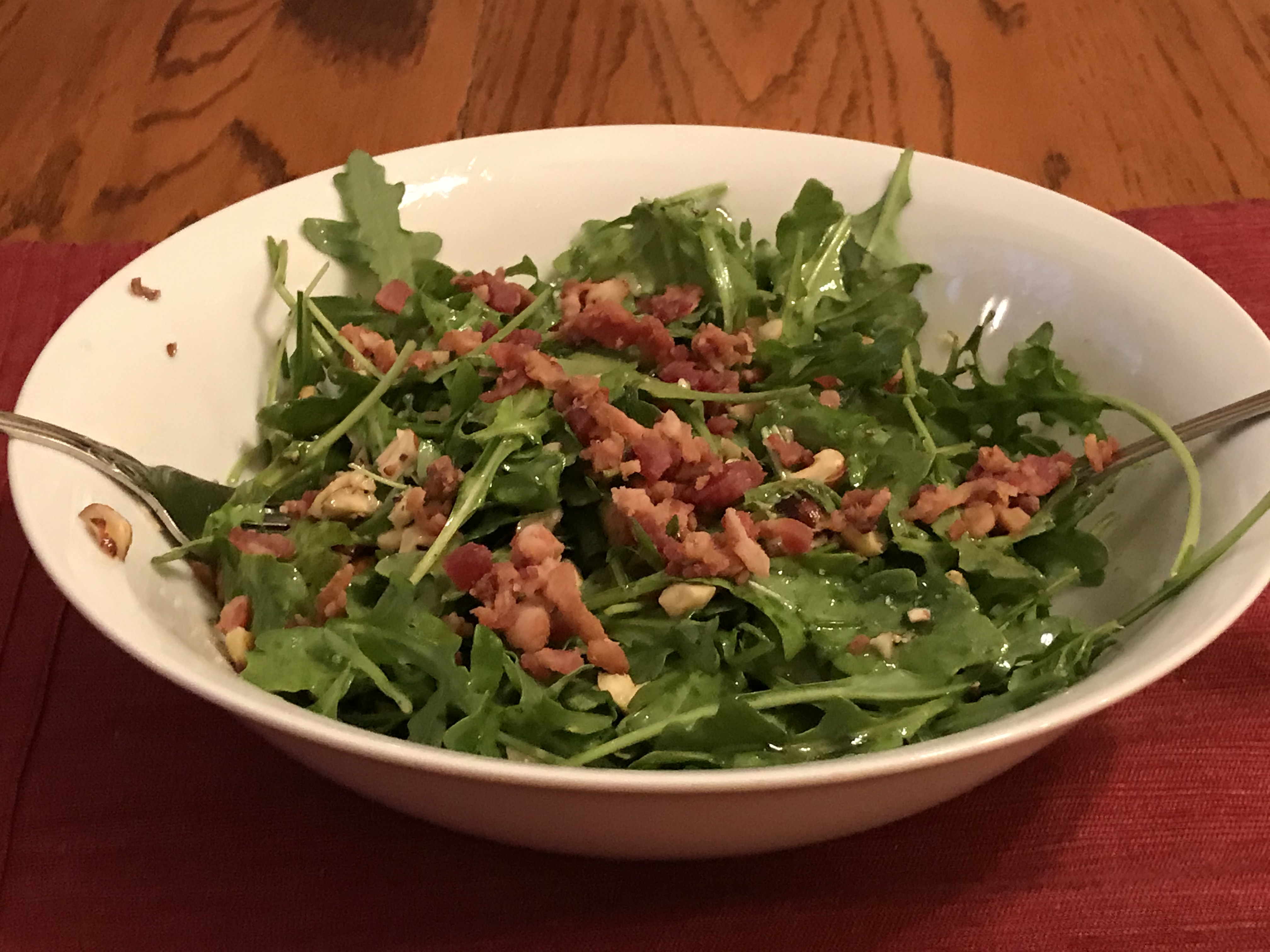
            My first thought was to use chicken livers. Many large supermarkets have them, they aren’t expensive, and while not the same as fat-engorged duck or goose liver, they are still livers and still from poultry. If I could get over my squeamishness about eating liver, I could sauté them with extra butter to bring the fat level closer to that of actual foie gras. As it turns out, I’m not quite ready to go that far. As detailed in the previous post, I’ve eaten oxtail and loved it. I don’t think beef tongue would be an issue (it’s just another muscle). I’d even be willing to try pigs’ feet if they were cooked in a way to get the skin nice and crispy. Liver is still another story, though, especially knowing what the liver does. Besides, chicken livers look really unappetizing. In the end, I settled on bacon pieces. While not remotely the same thing as foie gras, it’s a good choice on almost any salad. All of the other salad ingredients were unchanged. Unsurprisingly, the blend of peppery arugula, salty bacon, and crunchy, toasty hazelnuts, accented with a vinaigrette, was delicious.

            The next course was Roman-style gnocchi. Gnocchi are Italy’s version of the dumpling, the starchy filler to soak up the flavor of whatever it’s cooked with, found in various forms around the world. In most parts of Italy they are potato-based. What makes the Roman kind special is that they are made with semolina flour cooked in milk with nutmeg. Parmesan cheese and eggs are added to bind the mixture before it is cooled and cut into rounds. These are then topped with butter and more parmesan cheese and baked. I had some difficulty with these. The mixture didn’t firm up as much as I expected during cooling, which made cutting the circles out (with a glass) difficult. I ultimately resorted to forming them manually and layering them on the baking pan. My hands were a mess after this, but it worked pretty well. The end result was slightly crispy on the outside, soft and almost custardy on the inside, and delightfully rich.

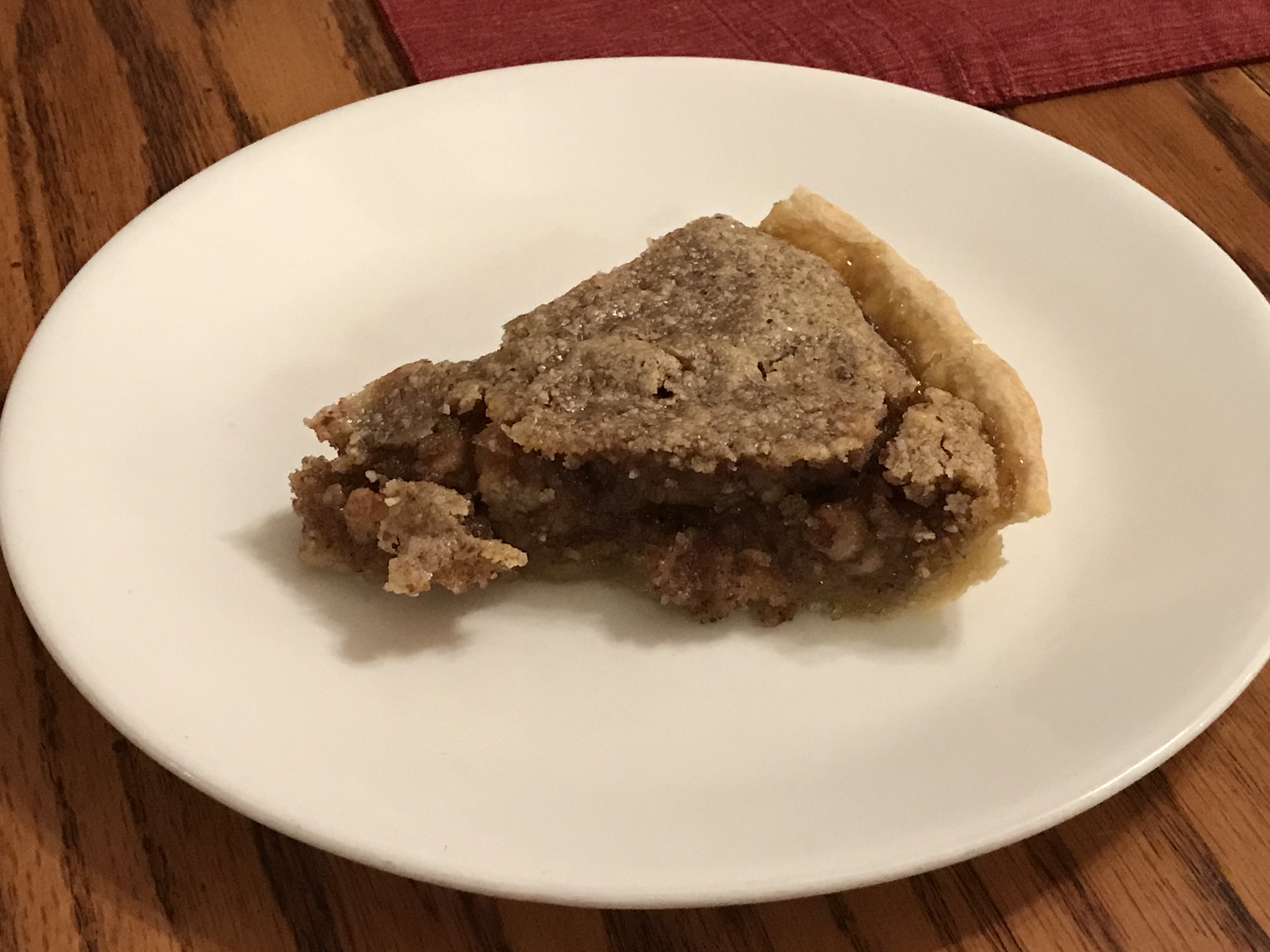
            Dessert was a pastry tart, this time with a layer of fig jam and another of ground almonds and walnuts, held together with eggs and sweetened. If you own the book, you might notice that the recipe calls for pine nuts, not walnuts. The thing is, pine nuts are really expensive. The recipe calls for over a cup, the little packets and bottles of them only contain around a third of that, and they each cost around four dollars. This would add up to at least twelve dollars just for pine nuts, and walnuts are a fraction of the cost. Plus, I’ve come to realize that most pine nuts, even from Italian brands, come from China. With recent aggression in the South China Sea, the broken treaty with Hong Kong, and the worst genocide since the Holocaust being conducted against Turkic-speaking Muslims in the western Xinjiang province, I would prefer to avoid buying Chinese goods whenever possible. It can’t be avoided entirely, but the more people forego Chinese goods in favor of alternatives, the more economic pressure will be put on the government. If enough people are committed, maybe they will be forced to reconsider their policies. Now, I wouldn’t normally get into politics on a food blog. However, this is more than politics. It is an issue of basic decency and treating other people like human beings. While no one can solve the issue on their own, everyone can do something. One easy way to start is to use American-grown California walnuts. Their flavor and texture makes for excellent pesto, and according to several episodes of The Great British Baking Show, figs and walnuts are a winning combination.

            And they are. The fig jam and almond mixture are both pretty sweet, with the former being even sweeter than most other jams. Unlike almonds and pecans, walnuts don’t have much of a sweet flavor, making them an excellent choice to provide contrast. The tart was still a bit sweeter than I would have preferred, but the optional unsweetened whipped cream helped with this. Overall, it was really good. I opted to make the pastry rather than use a prepared pie shell. Called pasta frolla, it baked up nice and crispy. The crunch from the pastry and walnuts contrasted with the soft jam and almond mixture, and everything worked well together. I might reduce the sugar slightly if I were to make this again, but that’s just a matter of personal preference. A cup of coffee or tea adds further contrast.

Standard
Uncategorized

Cook’s Tour of Italy Menu 7 (Pgs. 36 – 37): Braised Oxtail Stew

            So-called “variety meats” are often disregarded today, but in the past, when animal protein was more expensive relative to income, they were widely consumed. Some parts, like tripe, were poverty food even then, while others, like sweetbreads, were considered delicacies. Yet others, like liver, seem to have been viewed in a similar way to tougher, more inexpensive cuts of meat: not fine banquet fare, but perfectly good for informal and everyday meals.

            This appears to have been the case with oxtail. It turns up again and again in old recipes, almost always in soups and stews, which makes perfect sense. It contains a lot of collagen, so it is not very tender initially. As it cooks, the collagen breaks down, imparting an incredible body to the broth. Plus, soup and stew are excellent ways to stretch a small or modest amount of meat to feed more people. Oxtail was made for economical ingenuity.

            Versions of oxtail stew are found across the globe, but the Roman variation features wine, tomatoes, and celery. If you don’t have or don’t want to use wine, a viable replacement is grape juice with a tablespoon of vinegar per cup. It’s still a little sweeter than it would be if dry wine were used, but I used this substitution and it worked well.

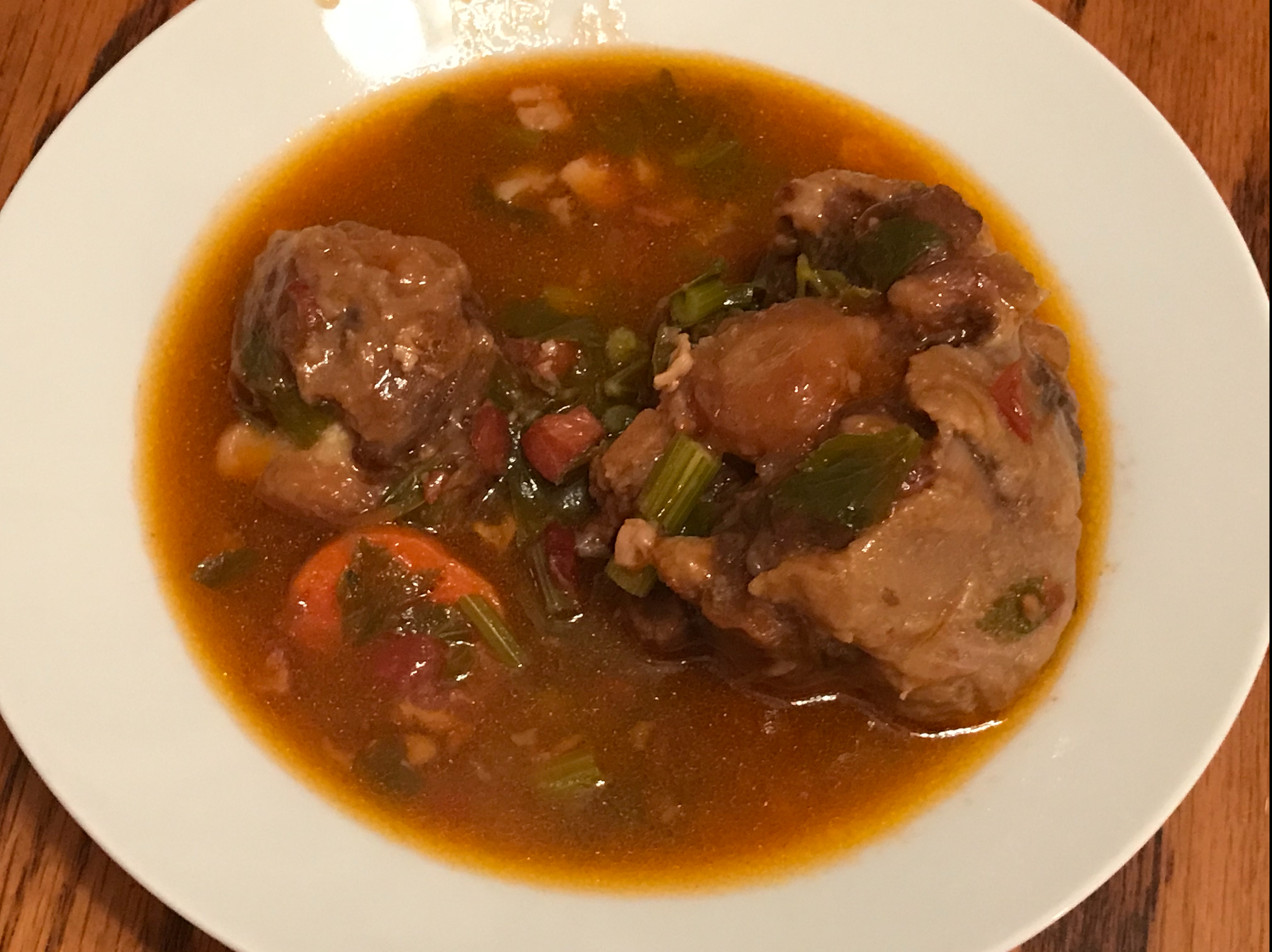
            The dish started with the common flavor base of vegetables and pancetta/bacon. A bit of celery was added now, most was set aside to be separately cooked and added later. After browning, the oxtails are added to the pot, along with the tomatoes and wine. This all simmers for a few hours, with some of the broth being added periodically. Near the end of the cooking time, the rest of the celery is added. I’m not sure why the celery needs to be cooked separately rather than added directly to the pot, but I followed the recipe as closely as possible.

            The taste and texture of this stew were both remarkable. The combination of broth, grape juice, tomatoes, and aromatics lent a pleasant, slightly sweet-tart flavor, while the collagen from the oxtail created a rich, almost sticky body. It was definitely messy to eat, though, since the meat stuck to the bones despite its tenderness and could not easily be removed with a fork and knife. Fingers and a lot of patience were required. That’s not to say I wouldn’t make it again. Add some bread and maybe a salad, and it’s clear why this dish remains so popular. Just make sure you have plenty of napkins.

Standard
Uncategorized

Cook’s Tour of Italy Menu 2 (Pgs. 18 – 21): Meal at Home, Monteporzio (Just Outside Rome)

Menu: Roman Minestrone, “Sole” Fillets Wrapped in Leeks with Brussels Sprouts, Orange Panna Cotta with Blueberry Sauce

Recommended Wine: Verdicchio from near Rome or Virtu Romane

            Returning to the Eternal City, we have a menu enjoyed at the home of two of Mr. Famularo’s friends, who both happen to be chefs. The first course is a minestrone typical of the Rome/Lazio region, with beef broth, chopped cooked beef, red beans, red wine, assorted vegetables, and a small pasta called pastina. The friends’ restaurant, which features updated and reinvented Roman cuisine, provides the inspiration for the second course: pieces of sole filet, wrapped in leek leaves and tied with string, braised and served with buttery sauce and brussels sprouts. Dessert is a classic originally from the Piedmont region and now found all over Italy: panna cotta, in this case lightly flavored with orange and served with a blueberry-orange sauce.

            The really nice thing about this menu is that the soup, panna cotta, and blueberry sauce can be made ahead. In fact, as is often the case with soups, it is best to make the minestrone ahead by a day or two to allow time for the flavors to meld. This is especially useful here, since the process of assembling the fish dish is somewhat time-consuming. The leeks need to be cleaned and blanched, the fish cut into pieces that can be wrapped by the leek leaves, and the fish and leeks assembled and tied into “packets,” that can then be braised in the skillet. The final effect is really pretty, but it does take time.

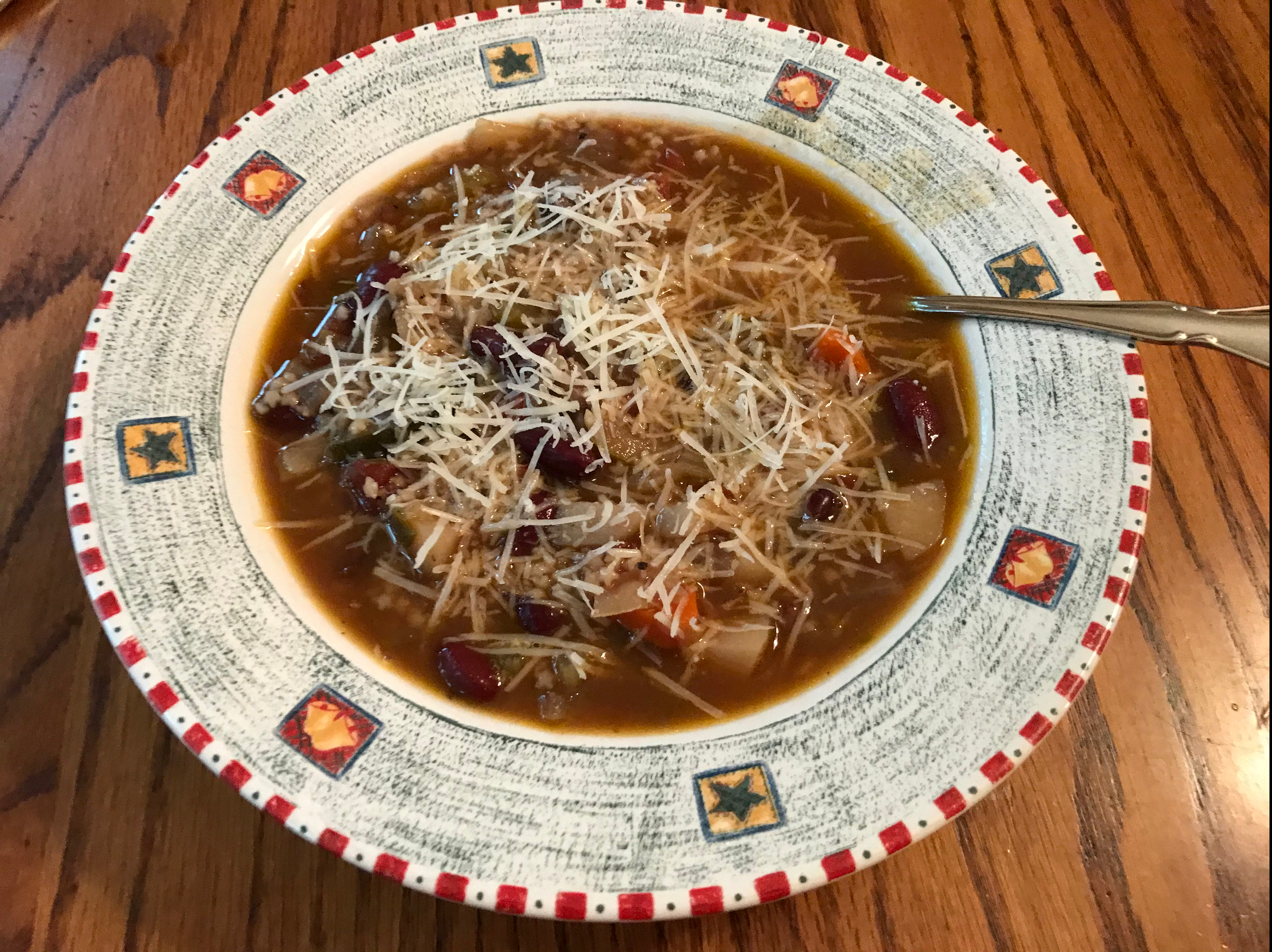
            The soup was another excellent one. While it was good immediately after cooking, it really came into its own upon reheating the next day. I had been a bit worried about the pastina getting mushy, but it maintained a good texture while soaking up the flavor of the broth. As discussed on Pages 18 – 19, each region has its own typical style of minestrone and each cook has their own variation. They all have a variety of vegetables, a starch and/or legume to add substance (which could be rice, pasta, or a few different types of beans), and various flavoring agents. Sometimes meat is added, particularly leftover. Regardless of the particular variation, minestrone is a great historical example of peasant ingenuity in the kitchen. The other ingredients allowed the cook to stretch the more expensive meat, while providing a nutritious, satisfying meal.

Roman minestrone

            Sea fish was not particularly important in Early Rome. The city is located about 15 miles inland, so providing fresh seafood was a bit of a logistical challenge. Shipping it up the Tiber from the port at Ostia, presumably kept alive in tanks of water, was possible but expensive. During the Early Republic, even the rich ate a largely vegetarian diet. Much of the limited animal protein came from eggs, cheese, freshwater fish, and a variety of pork products. During the Late Republic, saltwater fish and especially shellfish became fashionable. Sources from the era describe banquets featuring mountains of oysters and sea urchins as starters, and aristocrats were known to spend fortunes on a single particularly fine red mullet. While some of these accounts were probably exaggerated for comic or shock value, parody often has at least some basis in reality.

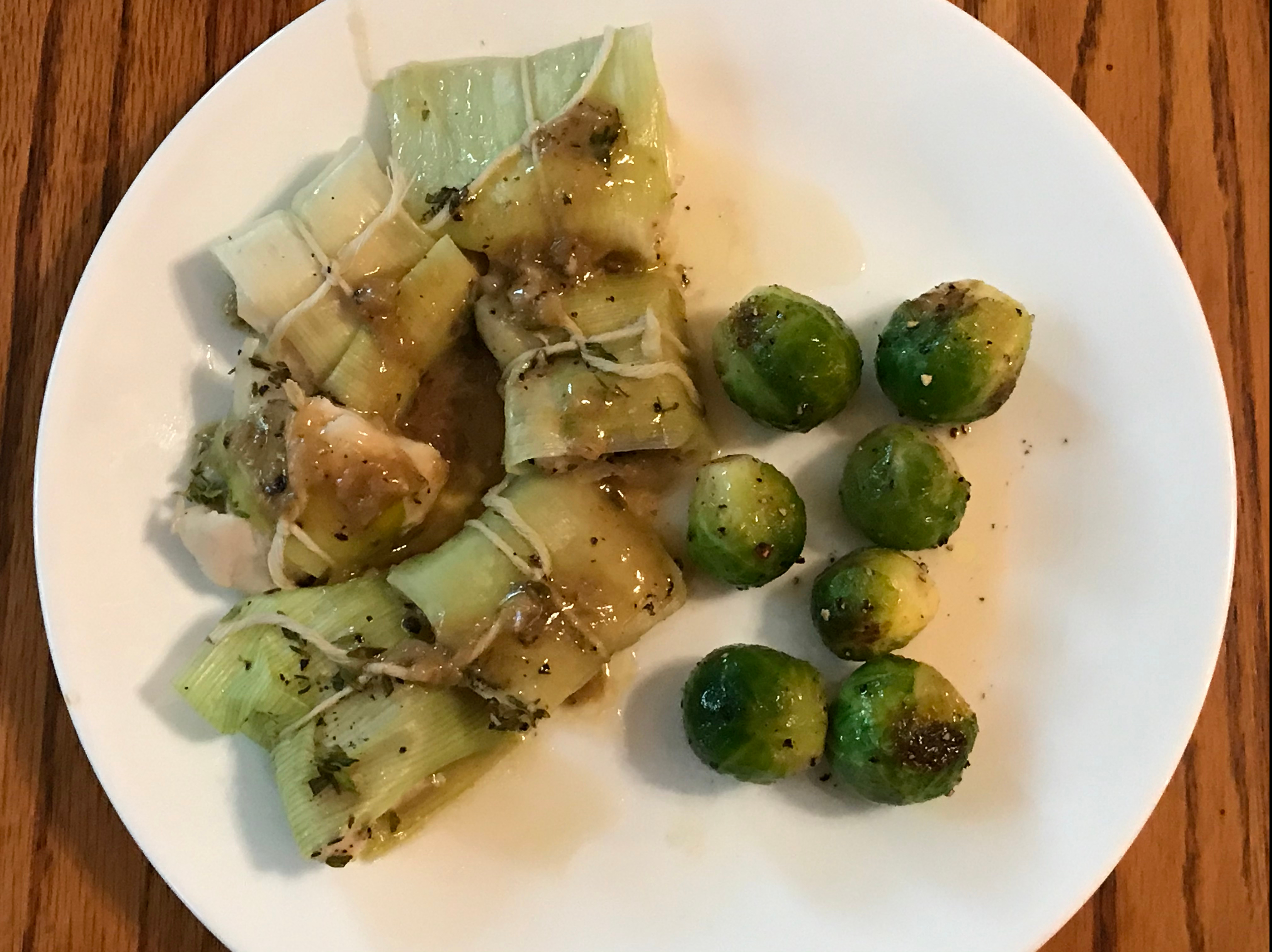
            The fish dish here was very tasty, though dealing with the tied packets on the plate was a bit of a hassle. Due to the price and difficulty finding sole, I used farmed catfish, which is apparently a reasonable substitute. It cooked up mild and flaky but tender, enhanced by the leeks and buttery, shallot-flavored sauce. The brussels sprouts were a great accompaniment, their flavor boosted by being cooked in the water the leeks were braised in.

Panna cotta and sauce

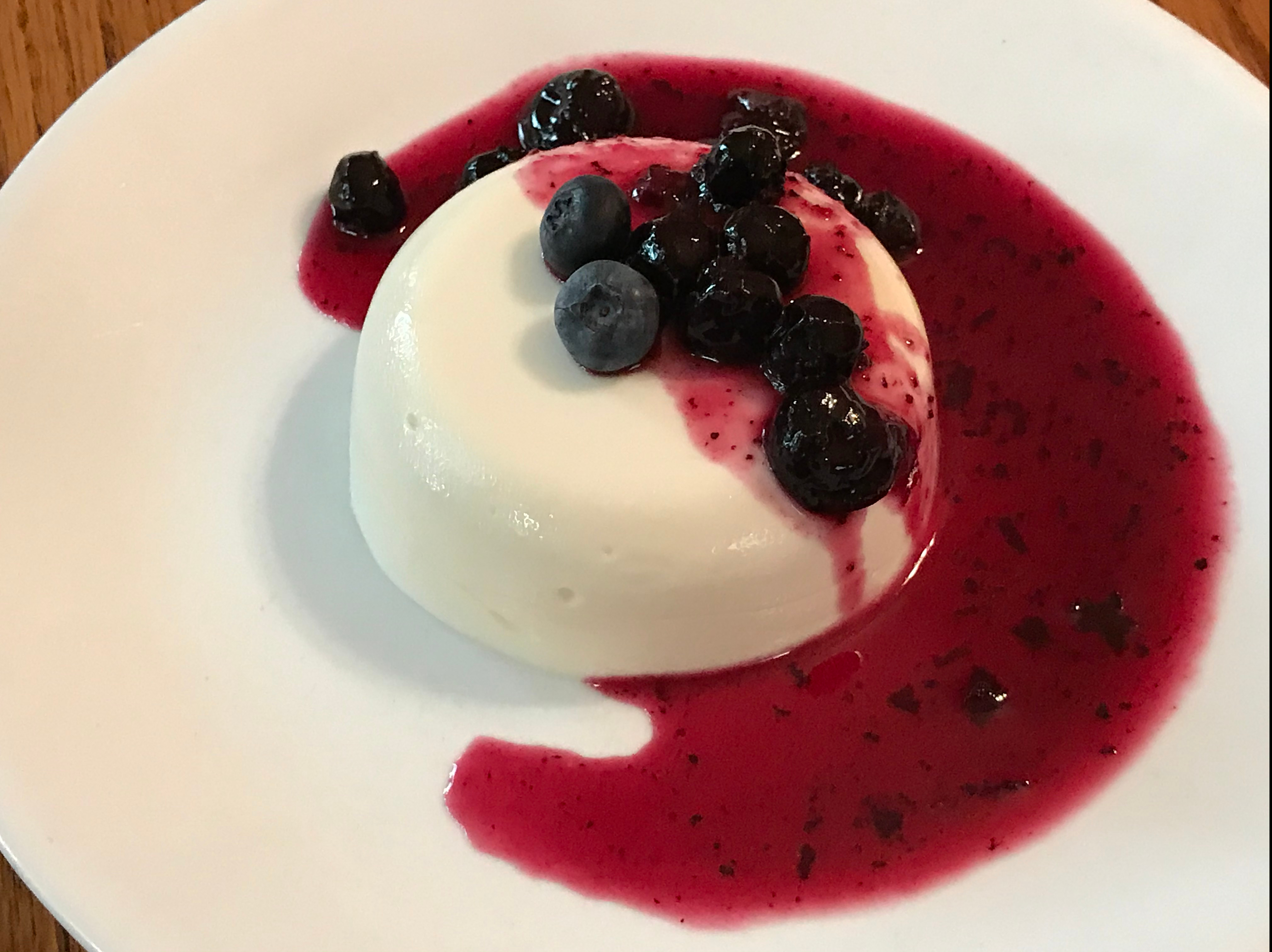
            Panna cotta is in the same family of desserts as pudding and custard. What makes it unique is that it is set with gelatin rather than thickened with egg or cornstarch. As a result, despite the name meaning “cooked cream,” the ingredients don’t have to be cooked for long. The cream or half-and-half just needs to be heated enough to dissolve the gelatin and sugar. At its simplest, panna cotta consists of just half-and-half or milk and cream, sugar, and gelatin. Vanilla is usually included as well, and fresh fruit or fruit-based sauce are the most common toppings. Here, the custard includes sour cream, cream cheese, and a touch of orange, giving it a cheesecake-like quality. The desserts are served topped with a blueberry-orange sauce. The combined flavors were very good, and there was a fair amount of extra sauce left over. Fortunately, these kinds of sauces freeze and thaw well. The leftovers would be worth trying over pancakes, waffles, or ice cream.

Standard