


Region: Liguria/Piedmont
Menu: Genovese Squid Salad with Vegetables, Focaccia with Sage, Chocolate Mocha Ricotta Cheesecake
Recommended Wine: Cinque Terre
Squid might seem like a strange salad ingredient, but various seafood salads are common in Genoa and the rest of Liguria. With hilly terrain and mountains close to the sea limiting grazing land, seafood has long been a staple in the Ligurian diet. One of the most elaborate preparations is a Christmas Eve specialty called cappon magro, or “lean capon.” At one time, Christmas Eve was a “lean” or meatless day, as was the rest of Advent. To compensate for the lack of meat, cooks for wealthy clients created numerous elaborate seafood dishes. Some of these specialties included “ham” made of salmon, “bacon” made with different colors of fish layered together, “game birds” made of spiced pike, and custard made with fish and almond milk.
Liturgical fasting has a fascinating history. As Christianity spread around the Mediterranean, meat was more of a luxury than fish, so replacing meat with fish made sense. This changed once Christianity reached Northern Europe, especially inland regions, and over the centuries those who could afford to do so increasingly followed the letter of the law, but not its spirit. By the Late Middle Ages, what could be considered “fish” was truly mind-boggling.
Considering whales and dolphins as fish was probably an honest mistake, but I’m not sure how the confusion persisted. Surely whoever was responsible for preparing them noticed that they lacked gills and had lungs like a cow or pig, but maybe animals were classified by where they lived rather than how they breathed. Other “fish” included beavers and barnacle geese, which were believed to come from barnacles instead of eggs, though this was doubted by many people, including at least one Pope. If you’re wondering, barnacle geese do hatch from eggs, but since they nest in the Arctic no Europeans saw the evidence until the 16th Century. By the time that confusion was cleared up, Spanish settlers in South America had decided that the capybara counted as a fish because it spends a lot of time in the water. Apparently, the fact that they look more like giant guinea pigs than fish was irrelevant.
There is no doubt, however, that squid counts as a fish. In this salad, it is baked, combined with potatoes, cooked vegetables, and a vinaigrette dressing, and served slightly warm. While the dish didn’t stand out like some that I’ve tried, it had a nice balance between protein, starch, and vegetable, none of the flavors overpowered the others, and the leftovers were almost as good cold the next day. And based on everything I’ve learned, the mix of seafood and fresh vegetables is very Ligurian.
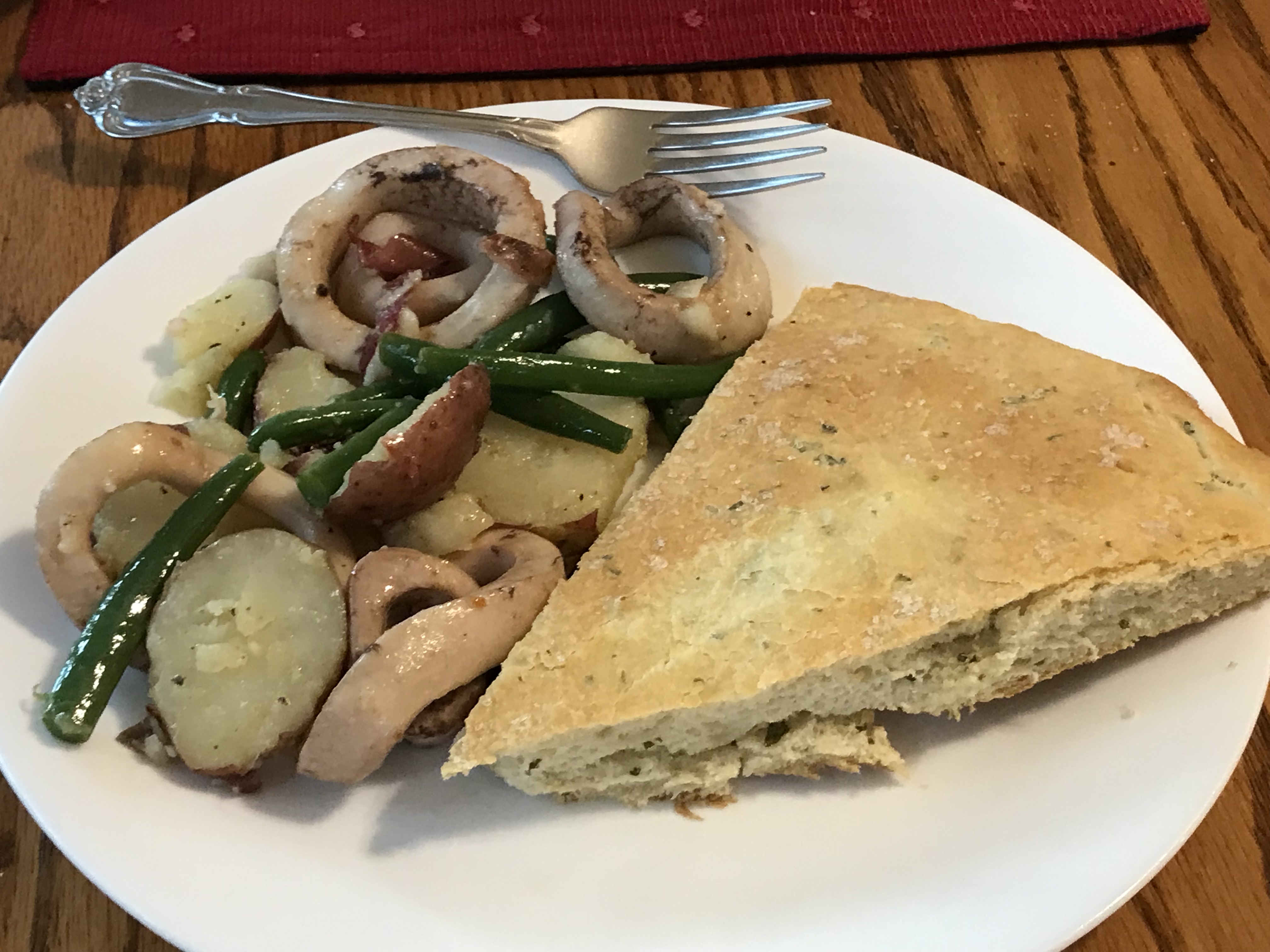
So is the focaccia, with lots of olive oil and herbs. Personally, I had some trouble with it. Despite following the recipe exactly, it wasn’t thick and spongy like what you find in the store and see on cooking shows. It was thinner and crispy, almost like a hand-tossed pizza crust. It still tasted great, but I couldn’t figure out what went wrong. Maybe the recipe is for a different variety of focaccia. With the number of bread varieties in Italy, that would not be surprising.
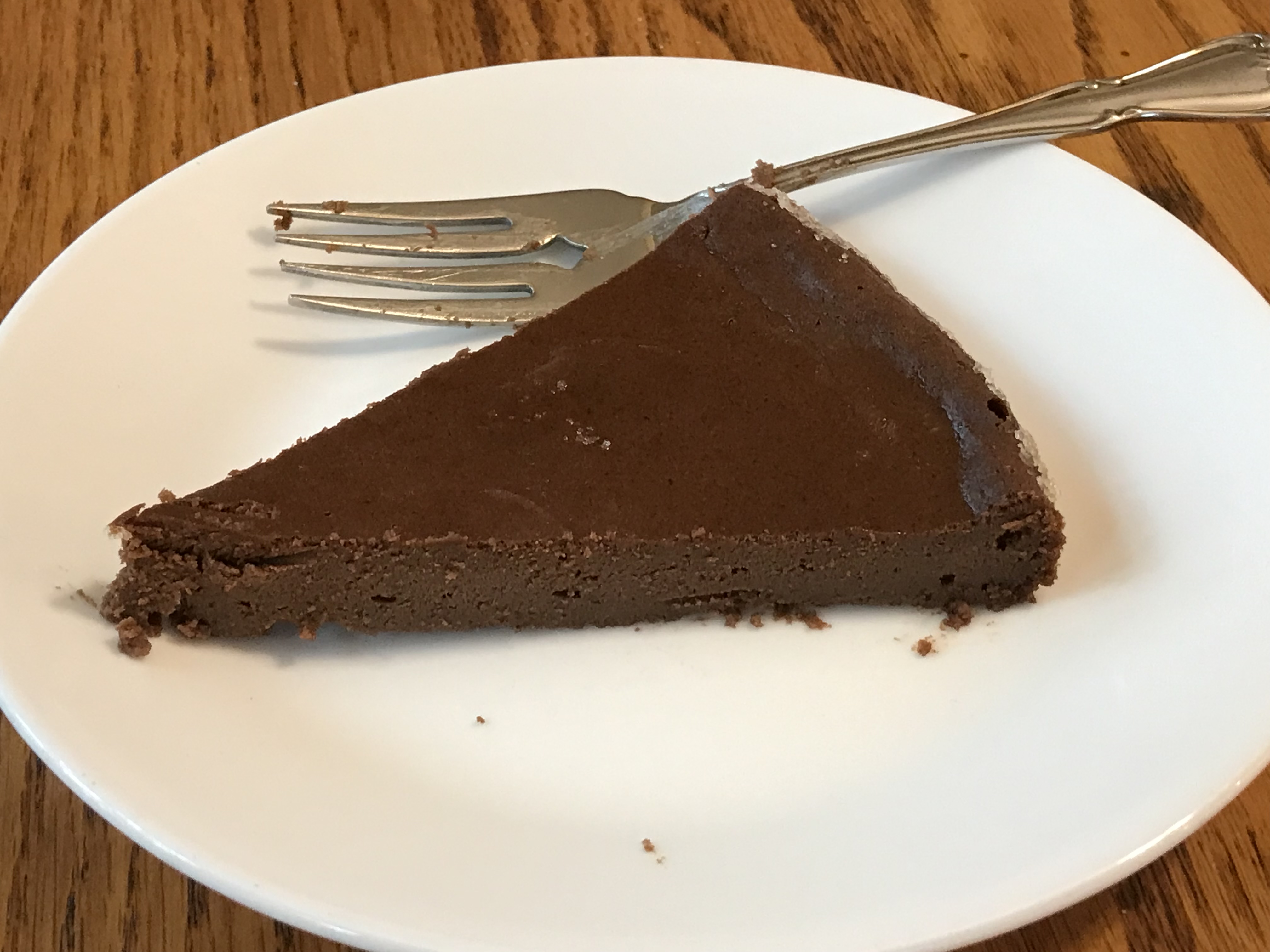
I do know what went wrong with the cheesecake. The recipe called for a 6-inch springform pan, which I do not have. Rather than buy a new piece of equipment, I just used a regular springform pan, set the timer for less, and kept a close eye on the progress. It was good that I did, because even the shorter time was plenty. Many people would probably consider it overbaked, but it wasn’t burnt and I liked the firmer texture. The mocha flavor was excellent and it was a generally nice dessert.
 Feasting Through Time