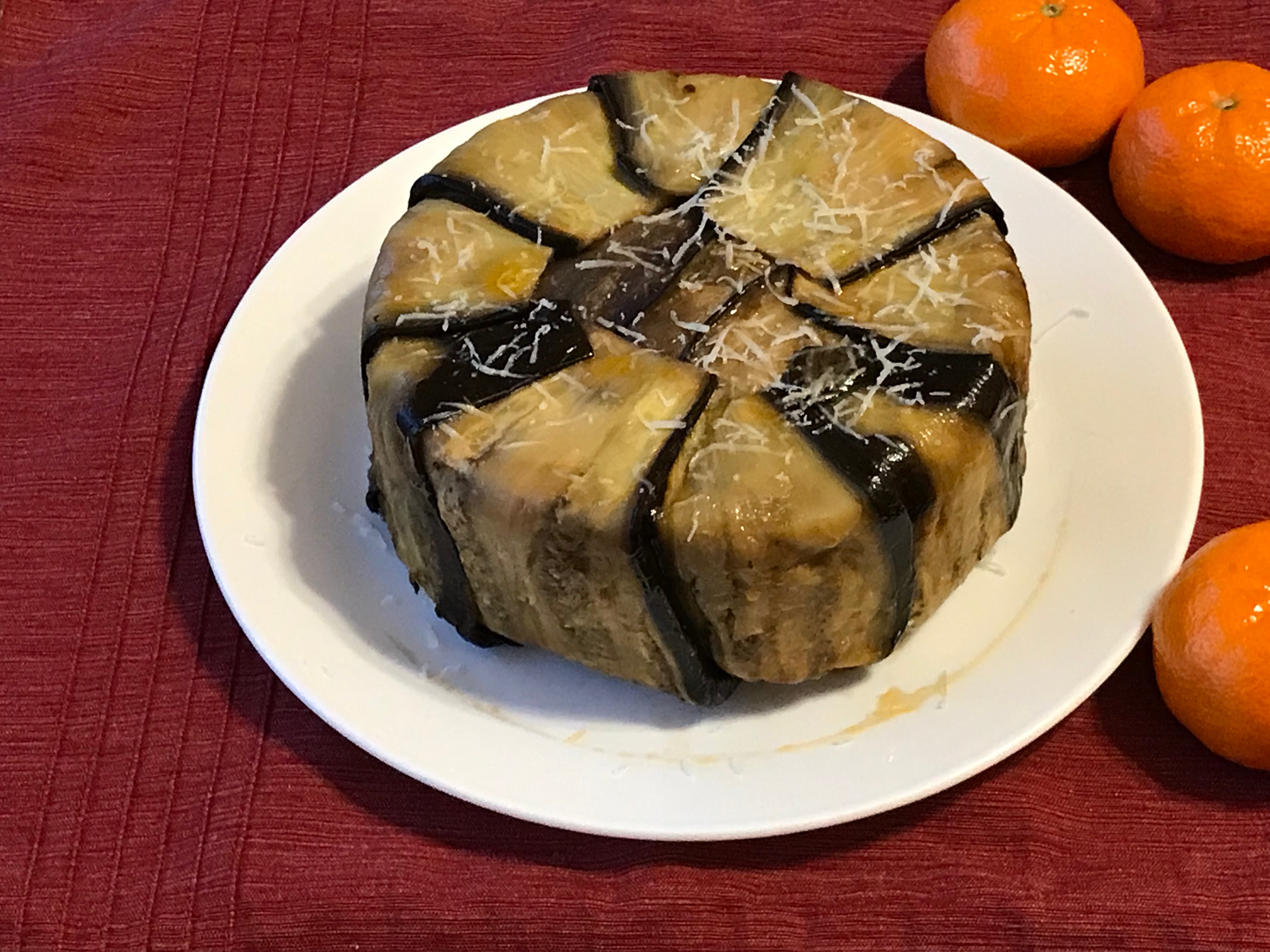
Eggplant Timbale
food history, italian cuisine, pasta, vegetarian

Cook’s Tour of Italy Menu 84 (Pgs. 264 – 265): Timbale of Eggplant and Pasta

Eggplant Timbale

Region: South Mainland/Islands (Sicily)

            As far as I can tell, the plain English definition of timbale is “food, encased in a different type of food, cooked in a mold, then turned out onto a platter to serve.” Timbales, or timballos in Italian, are popular in Sicily, probably originating in the kitchens of wealthy aristocrats. Elaborate versions might include a pastry crust, or rice molded precariously around a complex filling of meats, cheeses, vegetables, and eggs.

            The recipe here is much simpler, a mix of pasta, tomato sauce, cheese, and eggs, stuffed into an eggplant “shell.” There are two time-consuming steps, preparing the eggplant (slicing super thin, salting, and broiling) and making the homemade tomato sauce, but both can be done ahead of time. In fact, it isn’t a bad idea to make extra sauce, set aside what’s needed for the timbale, and have the rest with meatballs (and the gnocchi you made to clear the semolina flour out of the pantry). It’s also helpful to grate the cheese a day ahead. (And make the hard-boiled eggs the recipe calls for but I omitted.)

            If all of this is done, this fancy-looking timbale is actually feasible for a weeknight. While the water boils and the pasta cooks, you can butter the baking dish, line it with overlapping eggplant slices, and warm the tomato sauce. Then it’s just a matter of mixing the filling, packing it into the mold, covering it with more eggplant slices, and baking.

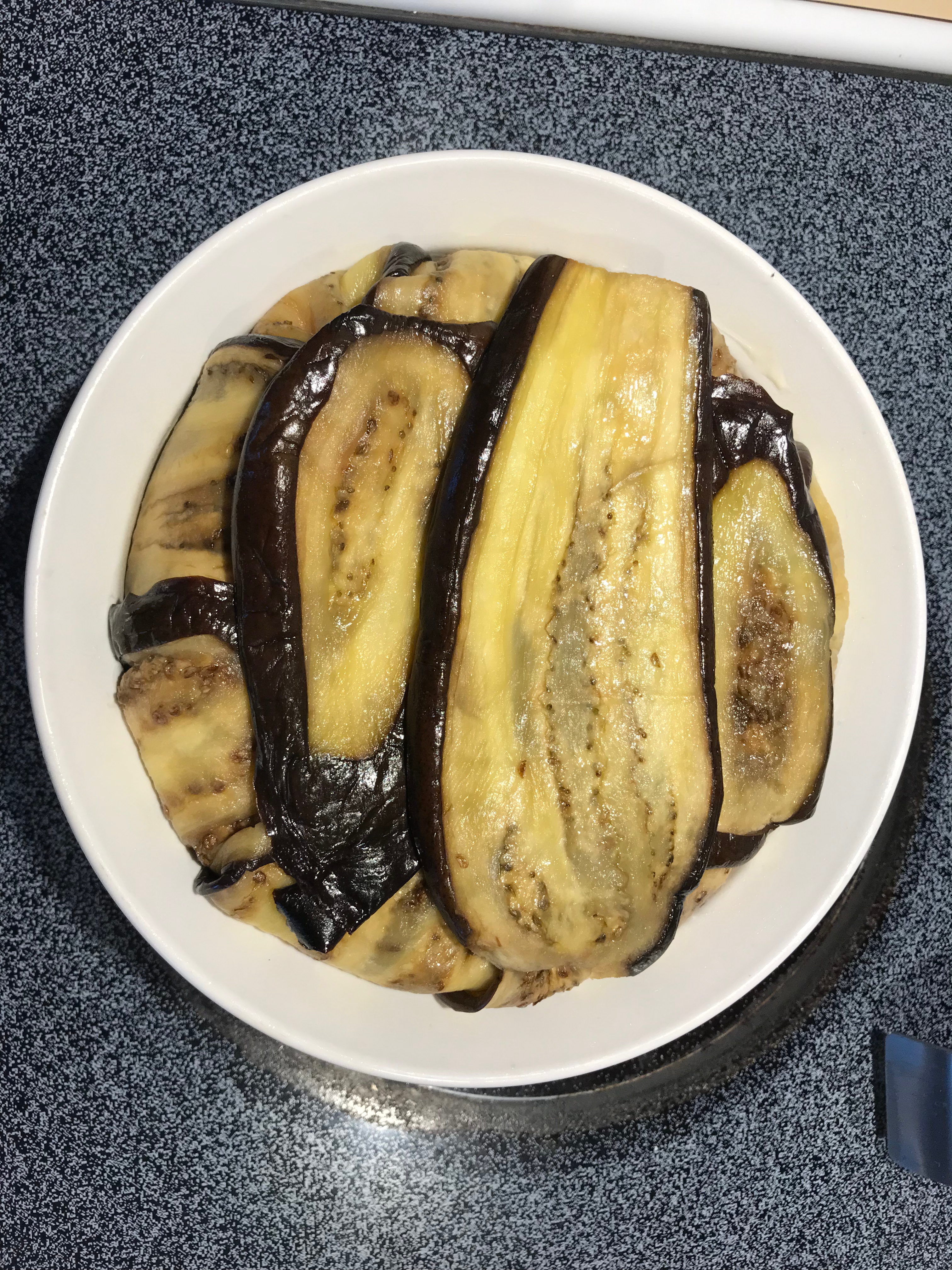
            Just look how pretty the end result is. It didn’t fall apart when unmolded, and tasted as good as it looked. The timbale isn’t necessarily for every day, but it was easier than I expected and would no doubt be a great way to show off for guests. Just beware that the slices aren’t as pretty as the whole.
Standard
Uncategorized

Cook’s Tour of Italy Menu 79: Operatic Pasta in Sicily

Region: South Mainland/Islands (Sicily)

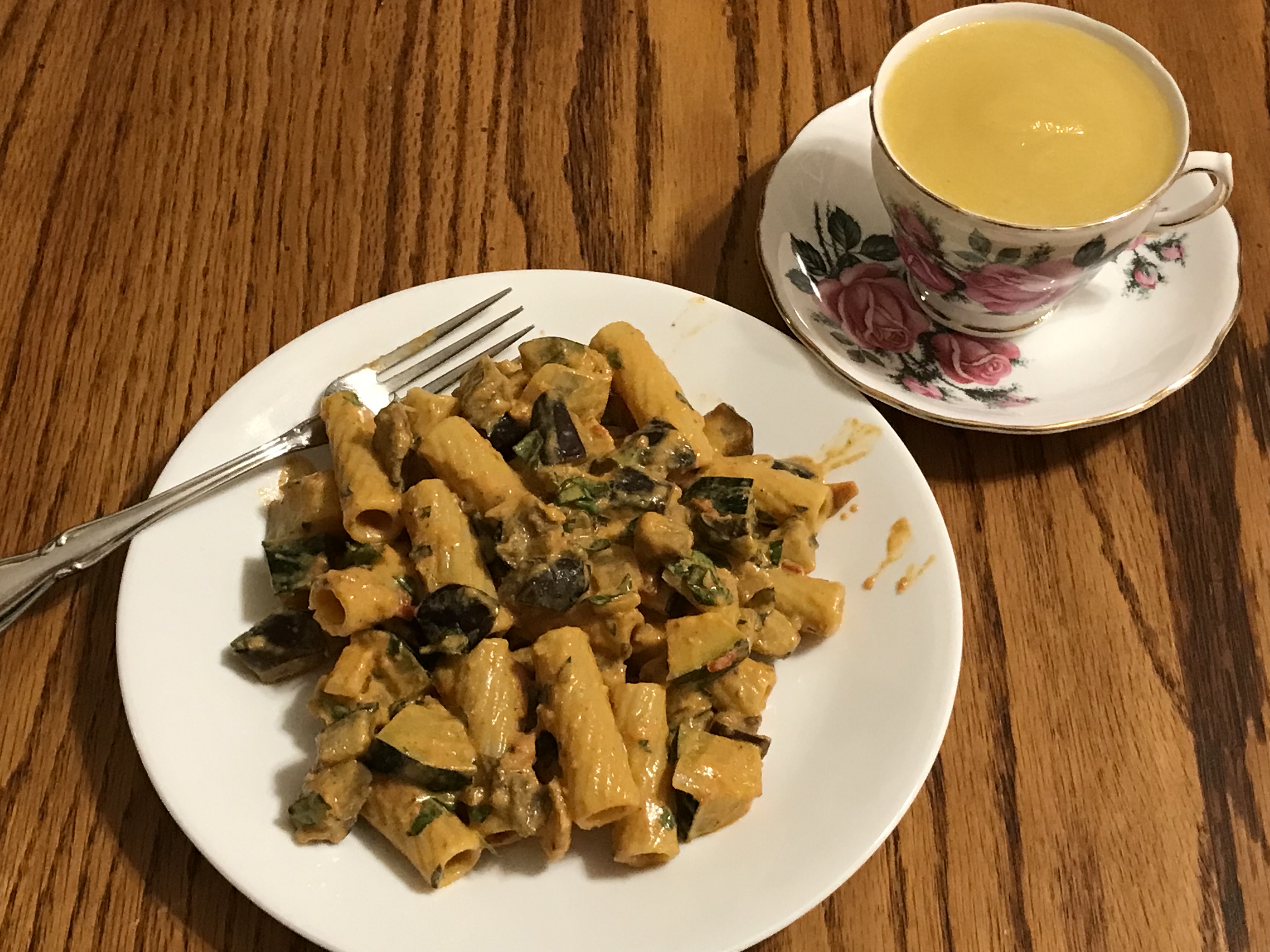
Menu: Rigatoni with Eggplant in a Creamy Curry Sauce, Salad of Assorted Lettuces with Capers and Tarragon, Peach “Soup” with Marsala

Recommended Wine: Sicilian Rosso del Conte

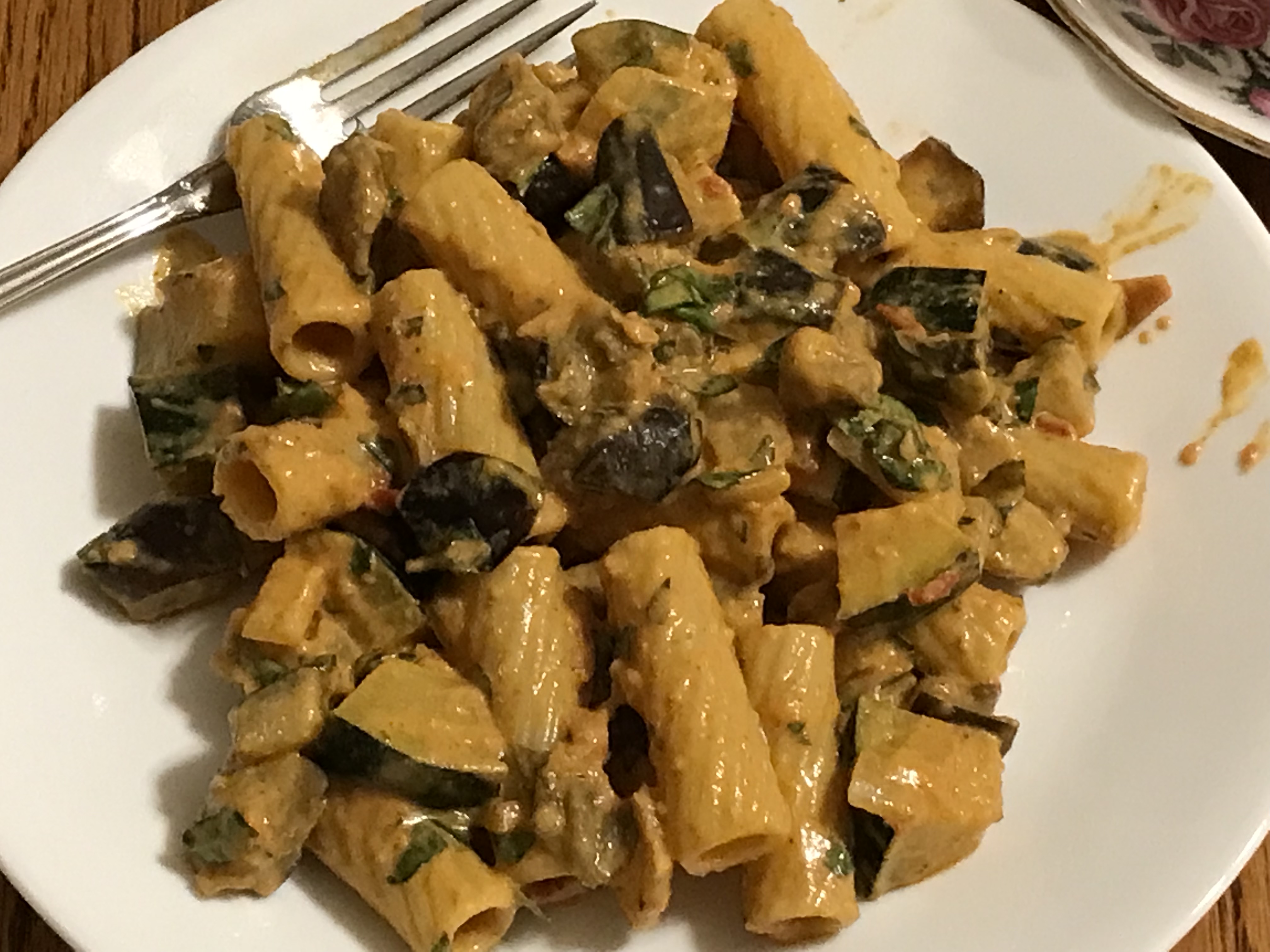
            Sicily has been known for the quality of its wheat since antiquity. Good agricultural land drew colonists from the Greek city-states, and it was one of the main granaries of the Roman Empire. The hard durum wheat grown there makes particularly good dried pasta, which is prepared in a huge number of different ways. One popular recipe uses sardines for pasta con sarde. A recipe with perhaps more universal appeal is pasta alla Norma, with tomatoes, eggplant, and zucchini, and named after a famous opera. This particular variation is enhanced with curry powder and enriched with half-and-half.

            The flavor was good, but using a zucchini the size of my lower arm from fingertips to elbow was not the best choice. When they get that big, zucchini tend to get tough. This one had a distinctly woody texture and peel that was a bit hard to cut through. But as long as I ate around the zucchini, the pasta, eggplant, and creamy tomato-curry sauce was worked well together. I wouldn’t have thought of putting curry in a pasta dish, but it turned out to be a good combination.

            Capers grow wild all around the Mediterranean. The buds, preserved in salt or pickled in brine, have a strong, olive-like flavor. As long as they are used in small amounts, capers are an interesting enhancement for meat, fish, and vegetables. A few of them chopped up added a salty bite to the salad dressing. They have been popular since the days of Ancient Rome, when strong, salty flavors were particularly appreciated.

            Peaches originated in China and spread west from there. By the time of the Roman Empire, they had reached the Mediterranean. Sweet, juicy, and perishable, they were often viewed as somewhat luxurious compared to fruits that could be effectively dried or cellared. Heavily associated with summer, fresh peaches are difficult to ship even today, at least when fully ripe. As a result, out-of-season specimens are often picked underripe and tend to be pricey. This recipe avoids those problems by using frozen peaches, which are usually the best choice during the rest of the year.

            In an interesting twist on tradition, here the peaches are used to make a dessert “soup,” with a bit of sugar and marsala. Personally, I didn’t like the flavor or texture. The peaches clashed with the marsala, and pureed soups in general are not my favorite. Replacing the marsala with a bit of lemon juice helped with the flavor, but didn’t solve the texture issues. Sometimes a new idea works, but sometimes it’s better to stick with tradition.

Standard