

Region: South Mainland/Islands (Sicily)
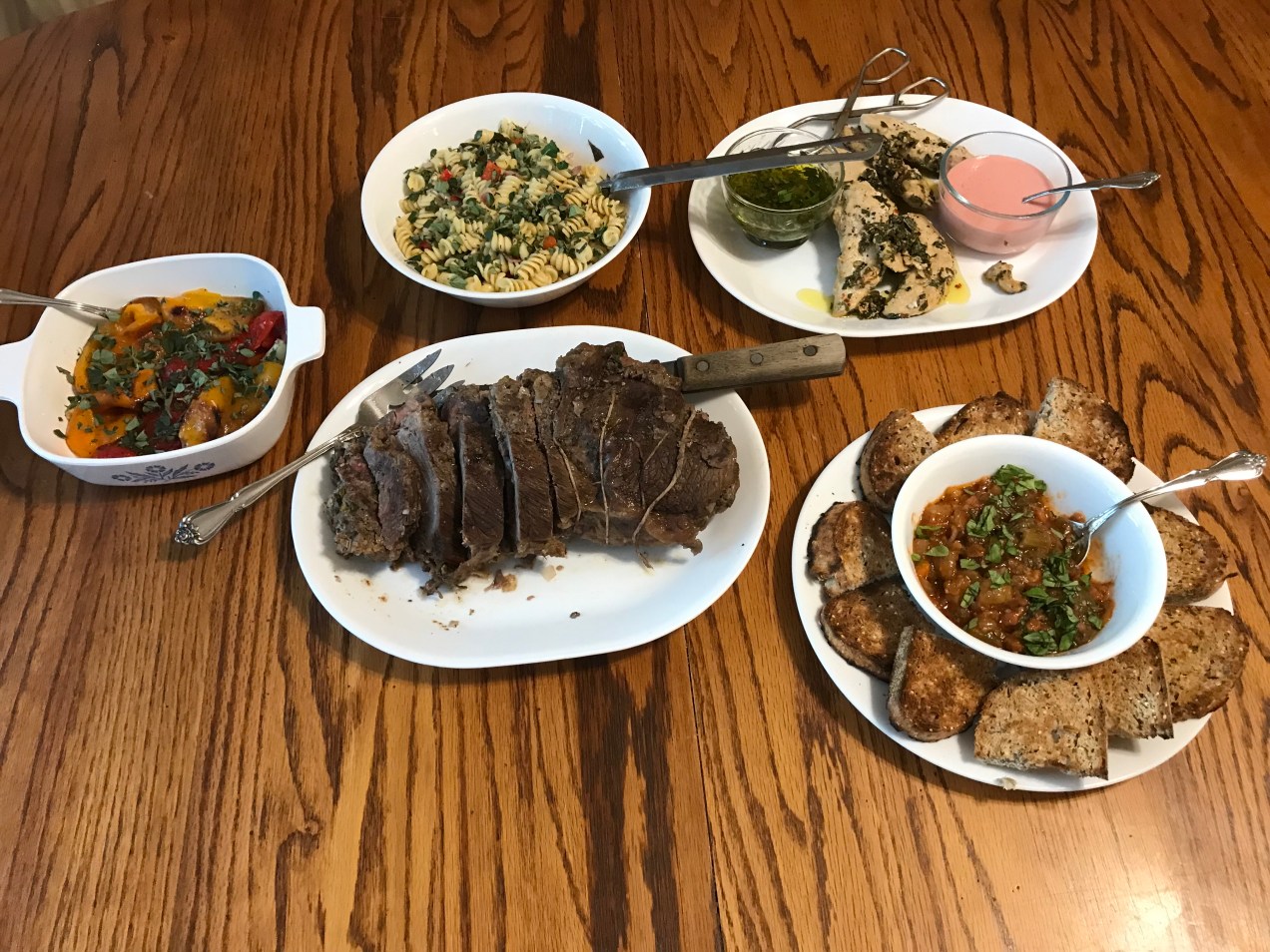
Menu: Caponata, Roasted Red, Orange and Yellow Peppers, Rotelle Pasta Salad with Cucumber Sauce, Sicilian Stuffed Beef Roll, Chicken with Blood Orange and Caper-Anchovy Sauces, Sicilian Cream Cake
Recommended Wine: Vino di Tavola di Sicilia or Corvo Rosso for red, Greco di Tufo Vignadangelo (from near Naples) for white
We remain in Sicily to celebrate the Feast of the Assumption, which falls on August 15 each year. At that time of year, the weather is hot and fresh produce abounds, making a produce-heavy picnic, able to be made ahead and eaten at room temperature, a natural choice for the occasion. To celebrate Sicilian-style, we have a feast full of the region’s famous dishes and flavors: caponata, blood oranges, capers, anchovies, and a cake filled with ricotta, chocolate, and candied fruit. It was a substantial undertaking, but more than worth it for the amazing taste of history.
Caponata, a sweet-and-sour eggplant dish with celery and onions, demonstrates Sicilian cuisine’s history perfectly. The agrodolce, or sweet-and-sour, flavor has a long history. In ancient times it usually came from vinegar and either honey or grape must, which is boiled-down grape juice. The taste for sweet-and-sour continued into the Middle Ages, when citrus fruits and sugar were introduced and verjuice (the sour juice pressed from unripe grapes) became common. As mentioned previously, eggplant was introduced during this period as well. Another sweet and sour ingredient, tomatoes, were introduced a few centuries later, after Columbus, finally making the version here possible. With a homemade tomato sauce to coat the vegetables, the caponata required several steps, but it could all be done ahead of time.
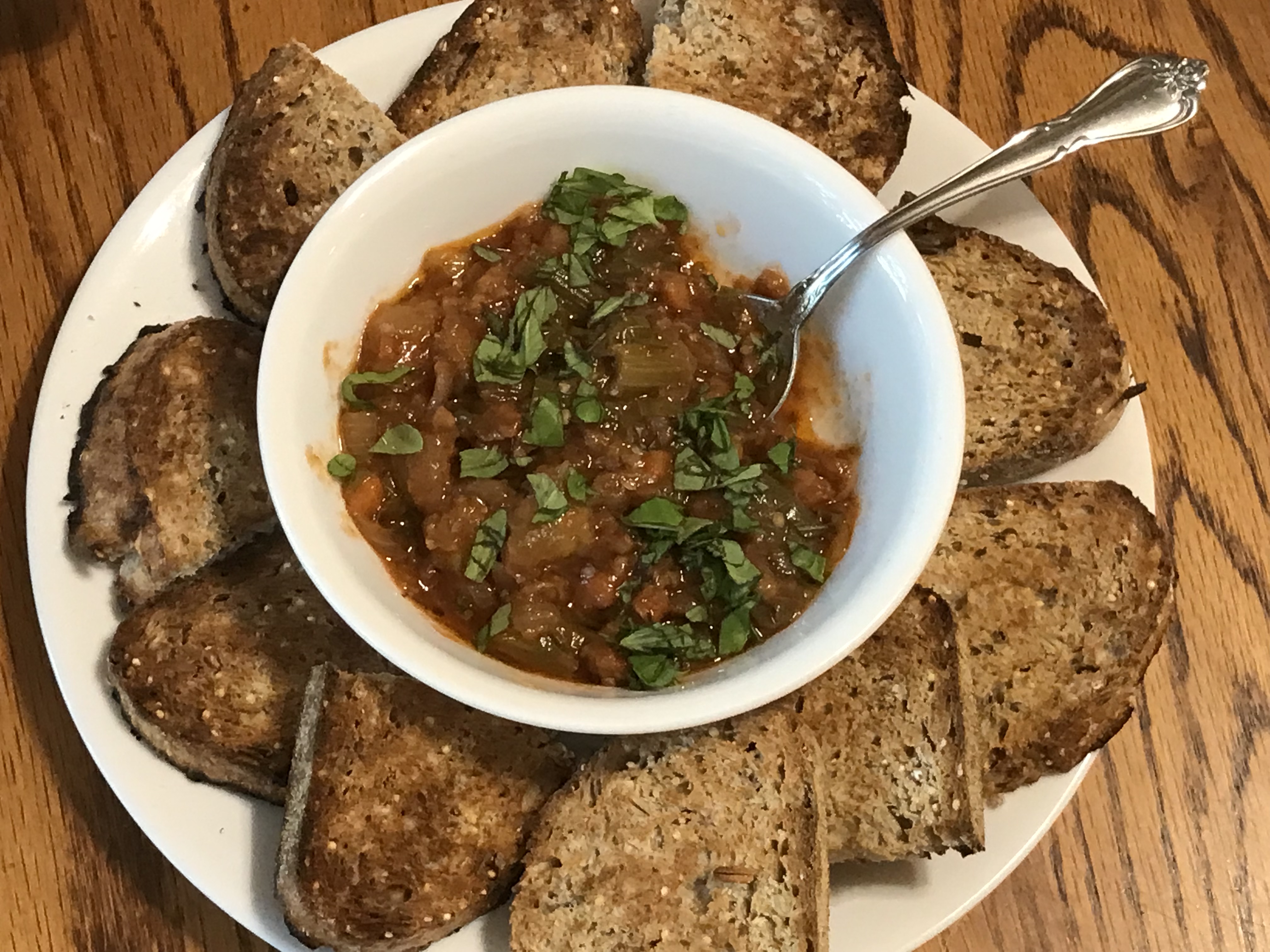
The flavor was good, but the quantity of vinegar added gave it a really sour edge. Maybe I’m just not used to it, but I found it difficult to eat much of it at once. The recommended pieces of toast were really a necessity to balance things out. I used a crusty bakery wheat/multigrain bread, which has more flavor than white Italian bread and can stand up to the vinegary caponata. A bit of cheese, though not called for in the recipe, further balances the punch.
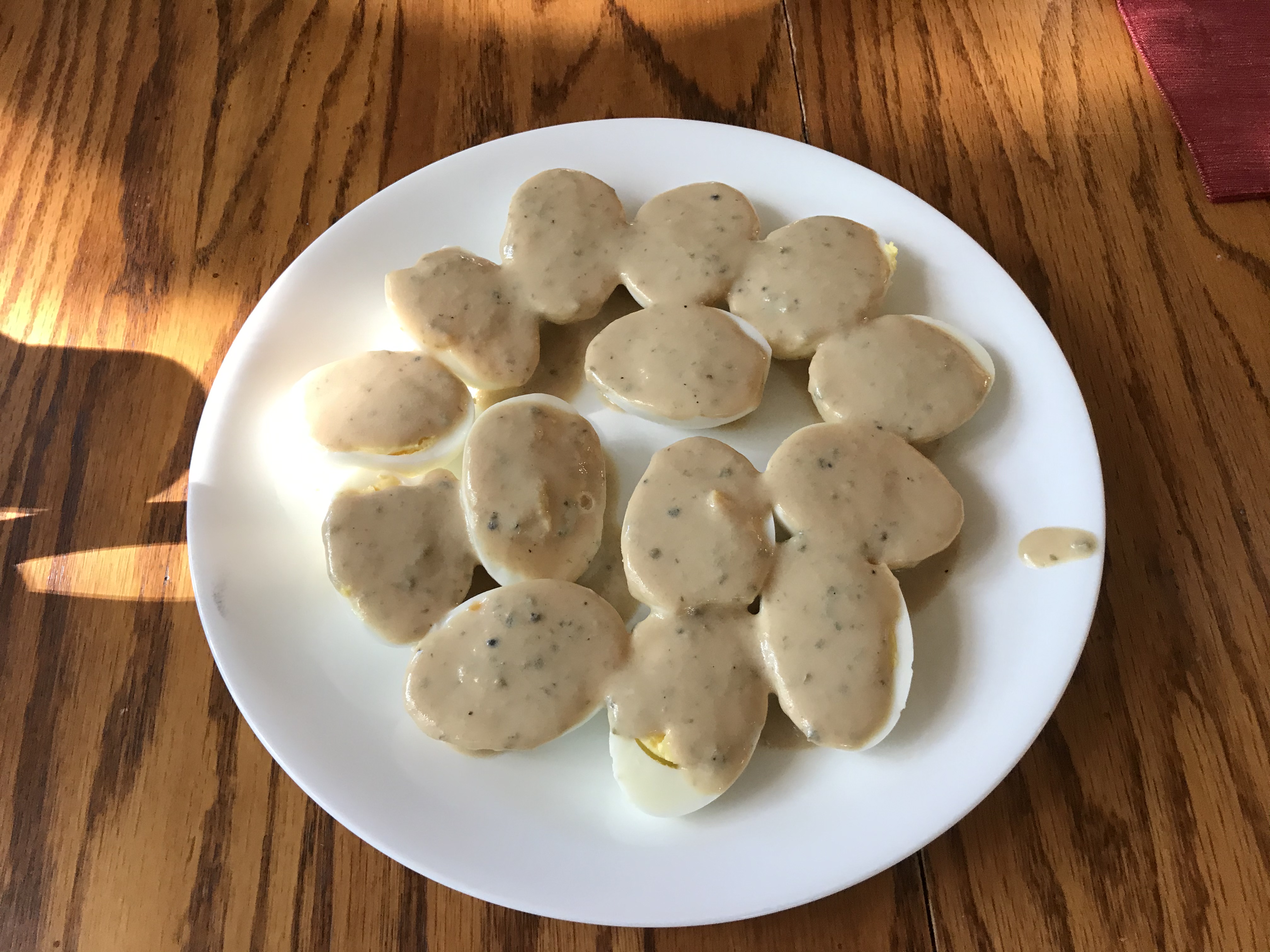
Like the caponata, the roasted peppers could be done beforehand and left to marinate in vinegar, oil, salt and pepper. If you have the book, you might notice that the actual recipe has the roasted bell pepper halves stuffed with tuna mousse. While the ingredients (tuna, butter, and a little cognac) sound reasonable enough, I had no desire to try it. After the eggs with tuna mayonnaise, I’ve learned my lesson. To avoid omitting a dish, I roasted the peppers just like the recipe called for and marinated them unstuffed. And they were great. Since they all got eaten the first night, I would call that a success.

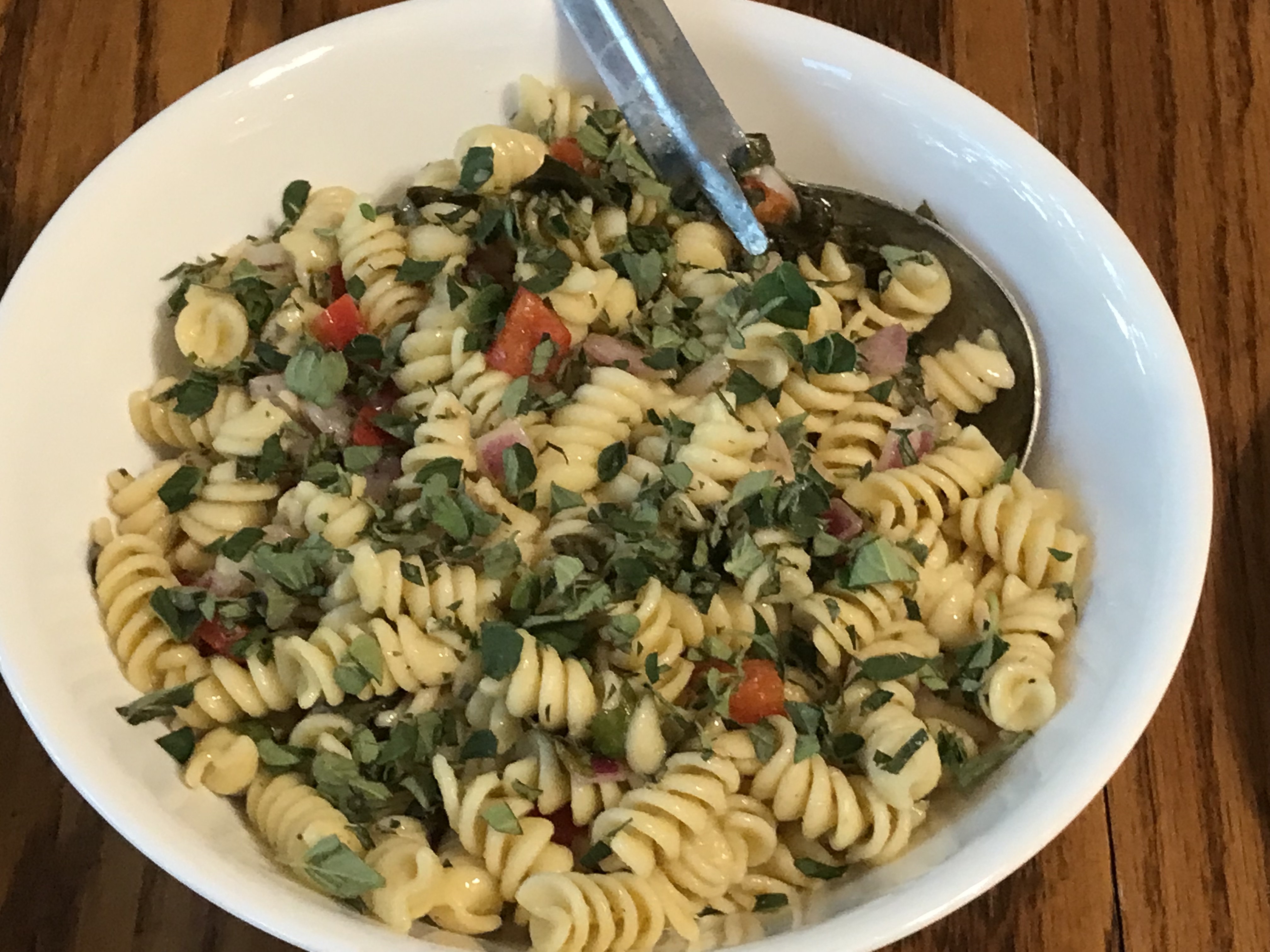
Another success was the pasta salad. While I don’t mind it, pasta salad is not normally one of my favorites, but this was wonderful. Most of the ingredients are pretty typical: pasta, onions, diced bell pepper, vinegar, oil, and herbs. The lack of bottled salad dressing helps, and lots of fresh basil really brightens things up. What makes this recipe unique is the sugar and pureed cucumber in the dressing. The little bit of sweetness doesn’t give a real strong sweet and sour flavor, but balances things out nicely, and the cucumber adds even more freshness. We all loved it. And it was so pretty.
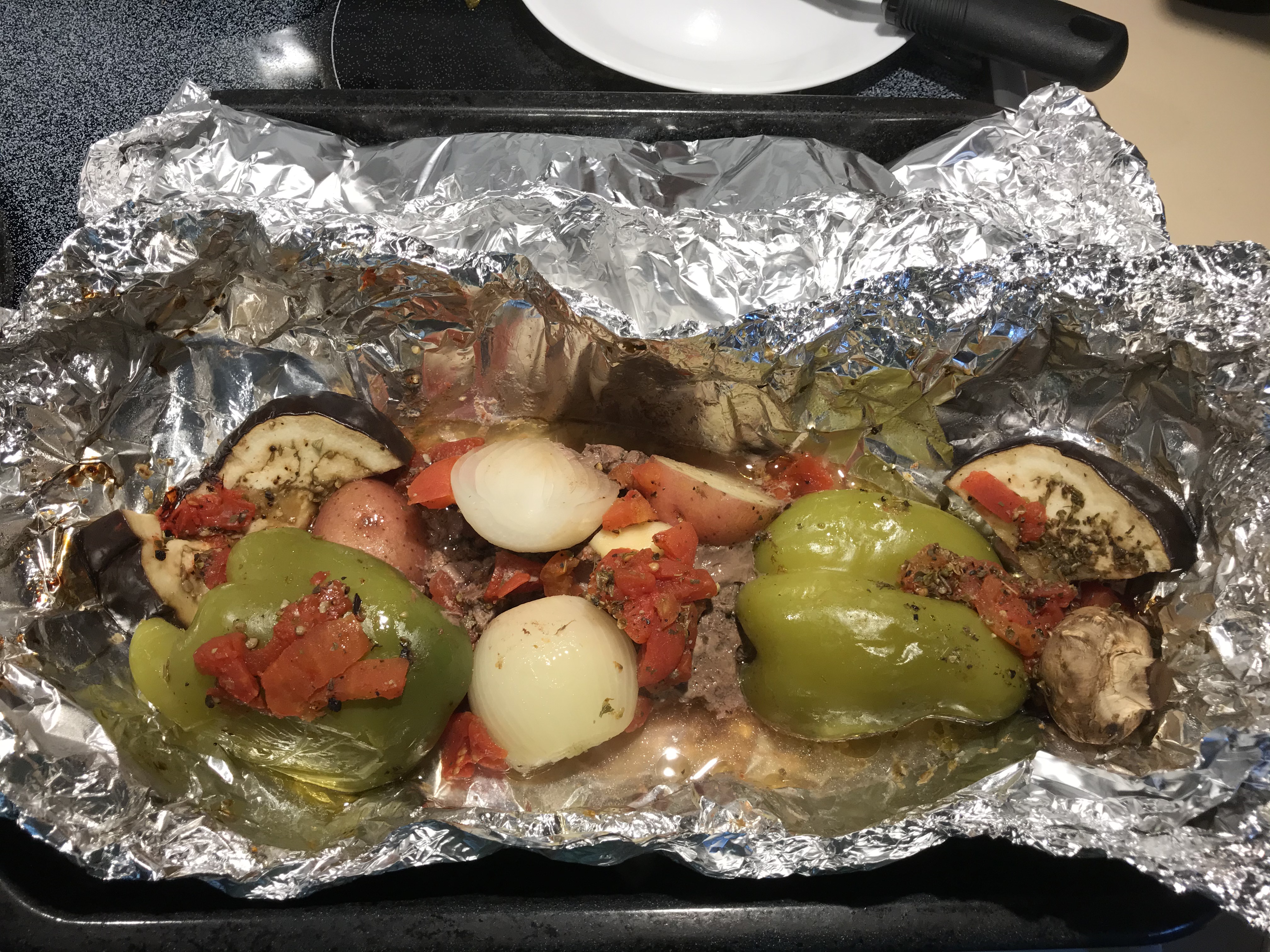
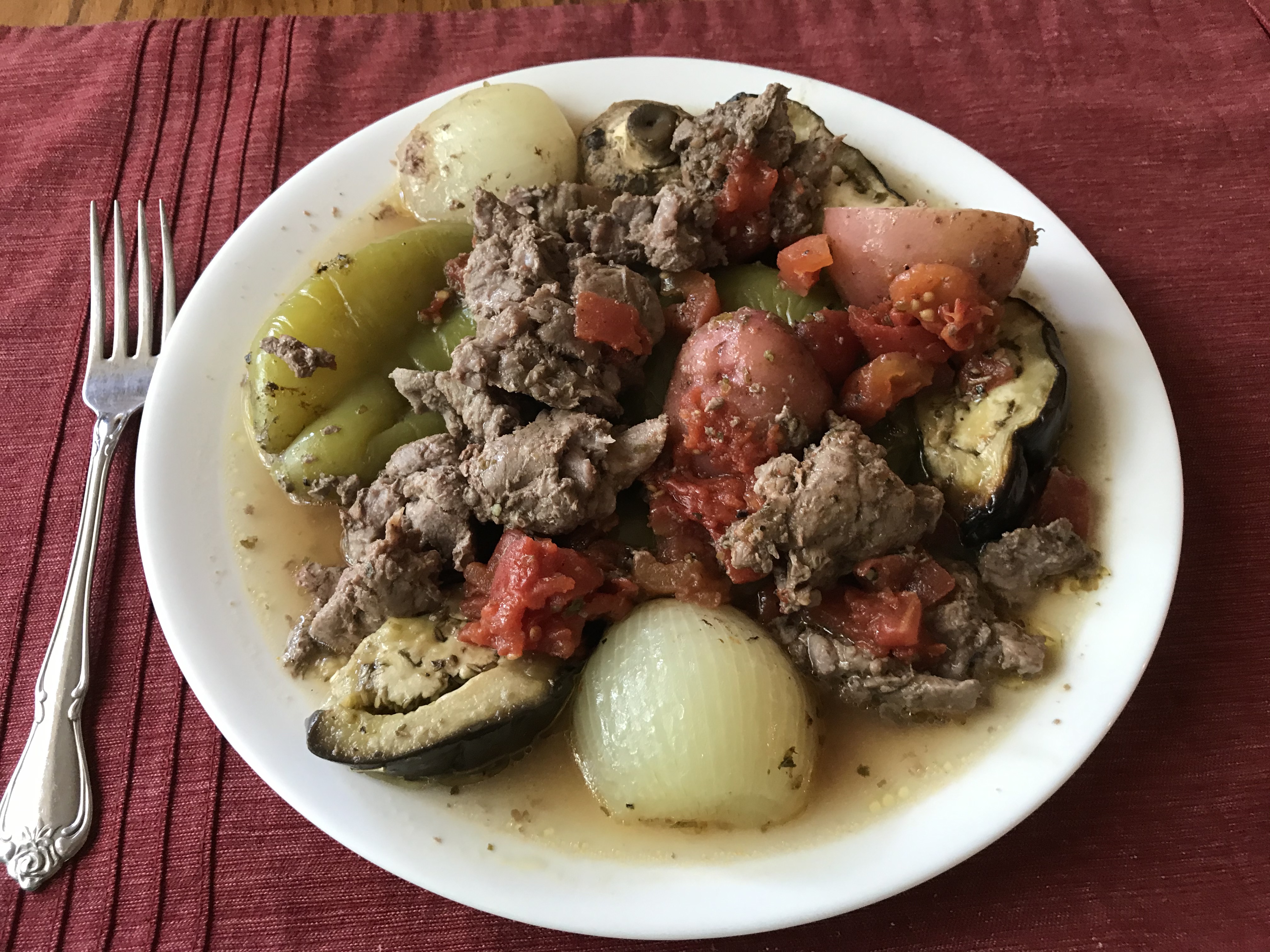
The beef roll, a substantial piece of meat stuffed with more meat, sausage, eggs, cheese, herbs, and a bit of nutmeg, almost certainly has an aristocratic background, though the ingredients are affordable to more people today. This was a bit more technically challenging. After flattening a lean piece of beef, the ground meat mixture is spread over it, followed by sprinklings of cheese and herbs. From what I can tell, the next step is supposed to be to roll it up into a spiral. That didn’t exactly happen. I must not have flattened it enough, since I could only just manage to form a circle around the filling, though the effect was still quite impressive, if I do say so myself. Then I narrowly dodged a catastrophic mishap.
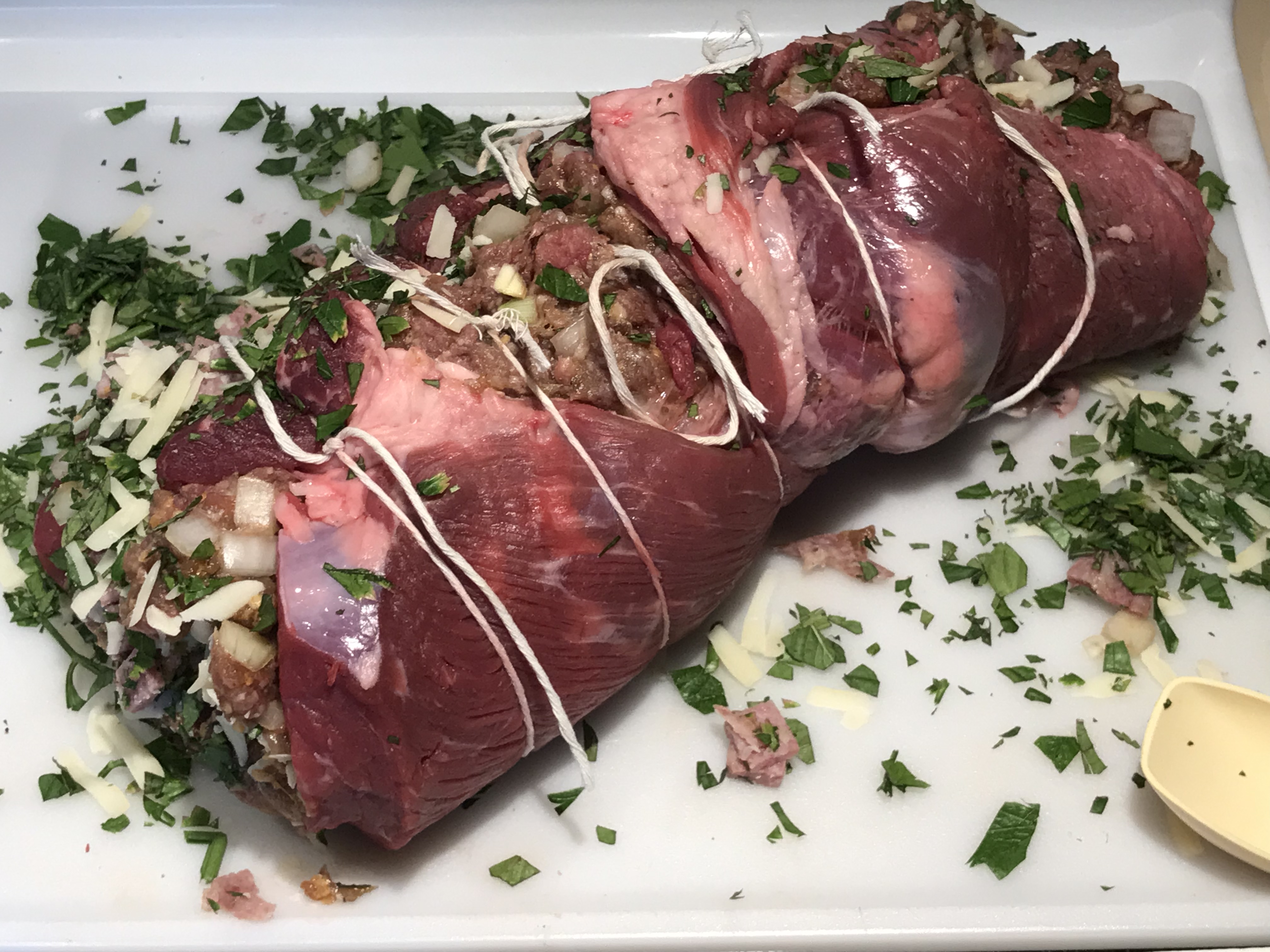
At the time, we were dog sitting for my uncle’s then 9-month-old yellow lab puppy. In other words, constantly looking for food, and big enough to put her head on the edge of the table. I was working on the beef roll while the dog was outside and put the platter on the table, since the stove and counter were pretty cluttered. Then the dog was let in. I decided to keep working while having half an eye on her, but when I turned around for a second, she took the chance to jump up and get her mouth right by the roll, ready to take a bite. After that near miss, I made room on the stove. Then the browning and braising went without issue.
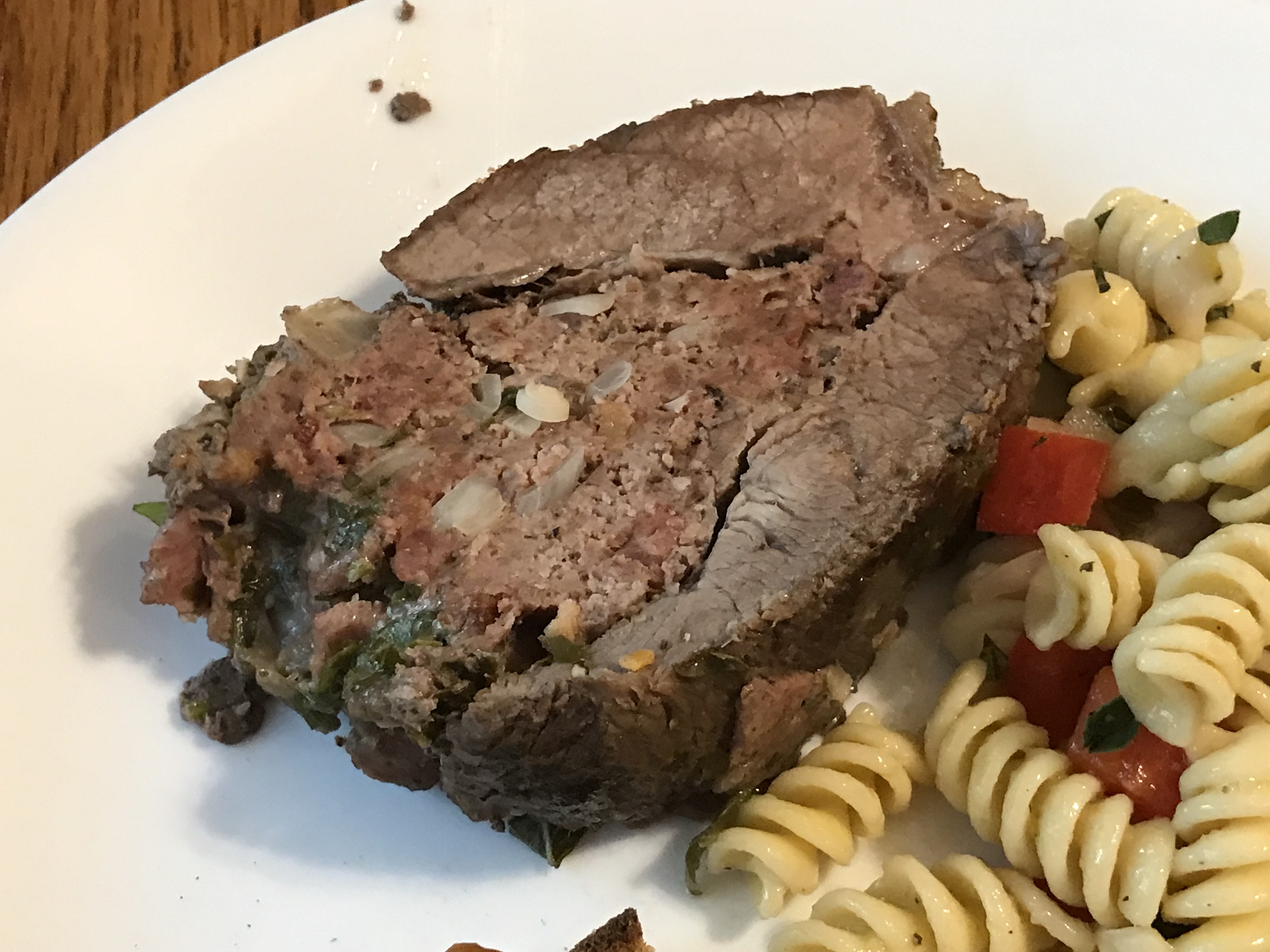
For some reason, the meat was still a little tough. Maybe it had something to do with the fact that the roll was too tall for the pan cover to fit on completely. Regardless, it had a good flavor and excellent filling. Unlike the other dishes, which contained lots of basil and/or oregano, this one was flavored with parsley and mint (and probably a bit of canine saliva) and lacked the sweet-sour flavor of the other dishes. After lots of vinegar in the caponata and more in the peppers and pasta salad, this was a nice change of pace. As for the texture, slowly reheating the leftovers in a saucepan with the braising liquid tenderized the meat significantly.
For the next dish, we are back to tart, acidic flavors and I did something that I’ve done a few times in this project: replace seafood with chicken. There are a few reasons for doing this. First, it’s a lot cheaper. The recipe here calls for swordfish, which is traditional to Sicily but quite pricey. While the two don’t taste the same, the neutral flavor of chicken goes with pretty much anything. And there weren’t pieces of swordfish conveniently in the freezer, ready to cook.
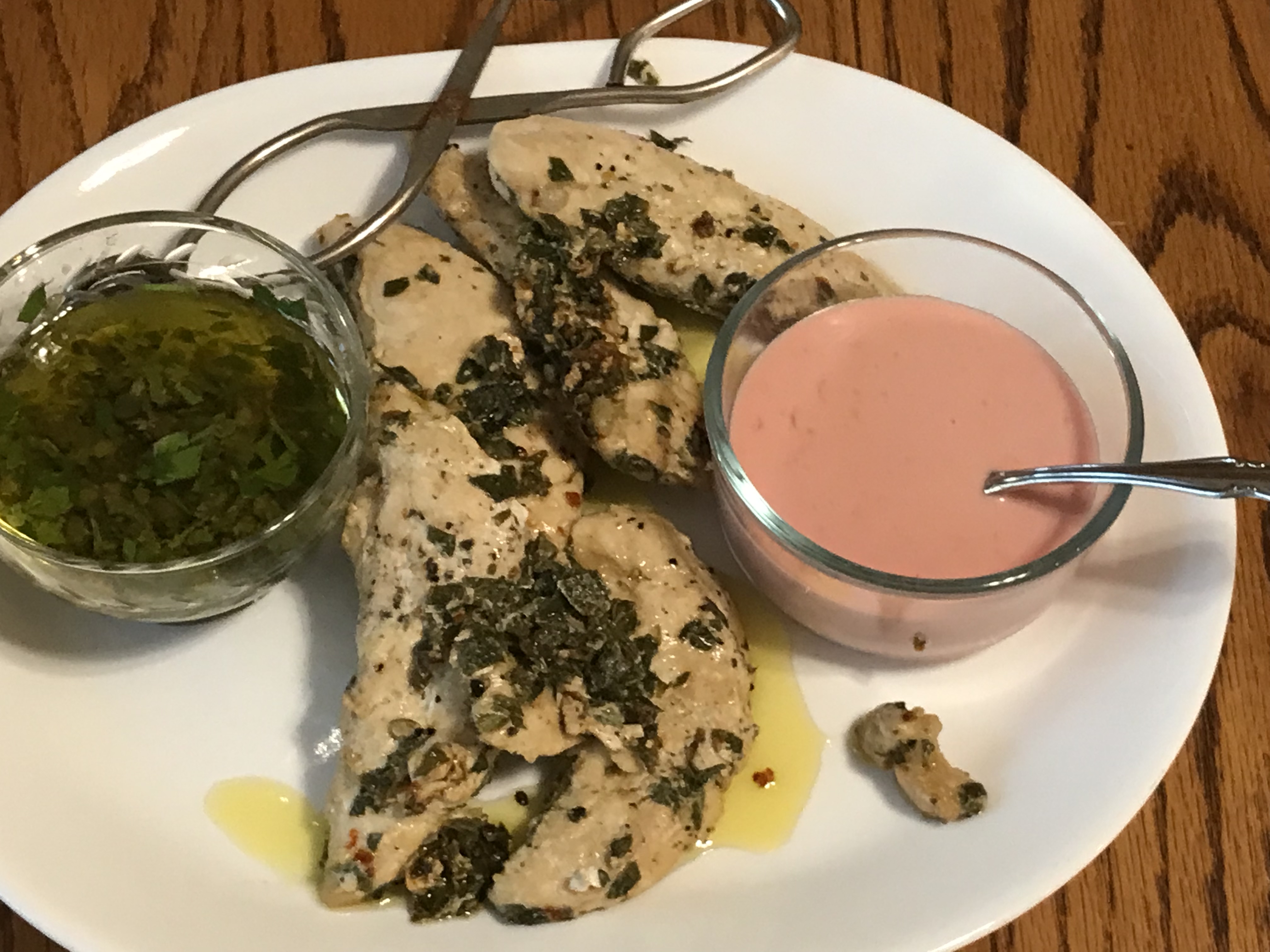
Just as the recipe called for, I cooked the chicken with lemon juice, salt, pepper, and herbs. It was served with two sauces: a homemade mayonnaise, tinted with blood orange juice, and a thin vinegar-based anchovy-caper sauce. The chicken was good, but to be honest, neither sauce was my favorite. The homemade mayonnaise was better than store-bought (in the sense that it didn’t gross me out), but still wasn’t to my personal taste, and the blood orange flavor was barely detectable. I would have preferred the juice directly squeezed onto the chicken, where its flavor would be more pronounced. The caper-anchovy sauce was a bit better, but the salty, vinegary, briny flavor was pretty strong, except in very small amounts.
My favorite part of the feast, as is often the case, was dessert, though the pasta salad and beef roll weren’t far behind. Sicilian cassata is traditionally made by lining a bowl with sponge cake pieces, adding a sweet ricotta filling full of candied fruit and chopped chocolate, covering the filling with more cake pieces, then weighting it all in the refrigerator overnight. The next day, it is typically covered with a green pistachio marzipan. This particular recipe skipped the marzipan icing in favor of a simple sprinkle of powdered sugar. It was definitely a bit fiddly to put together, but the end result was beautiful and delicious.
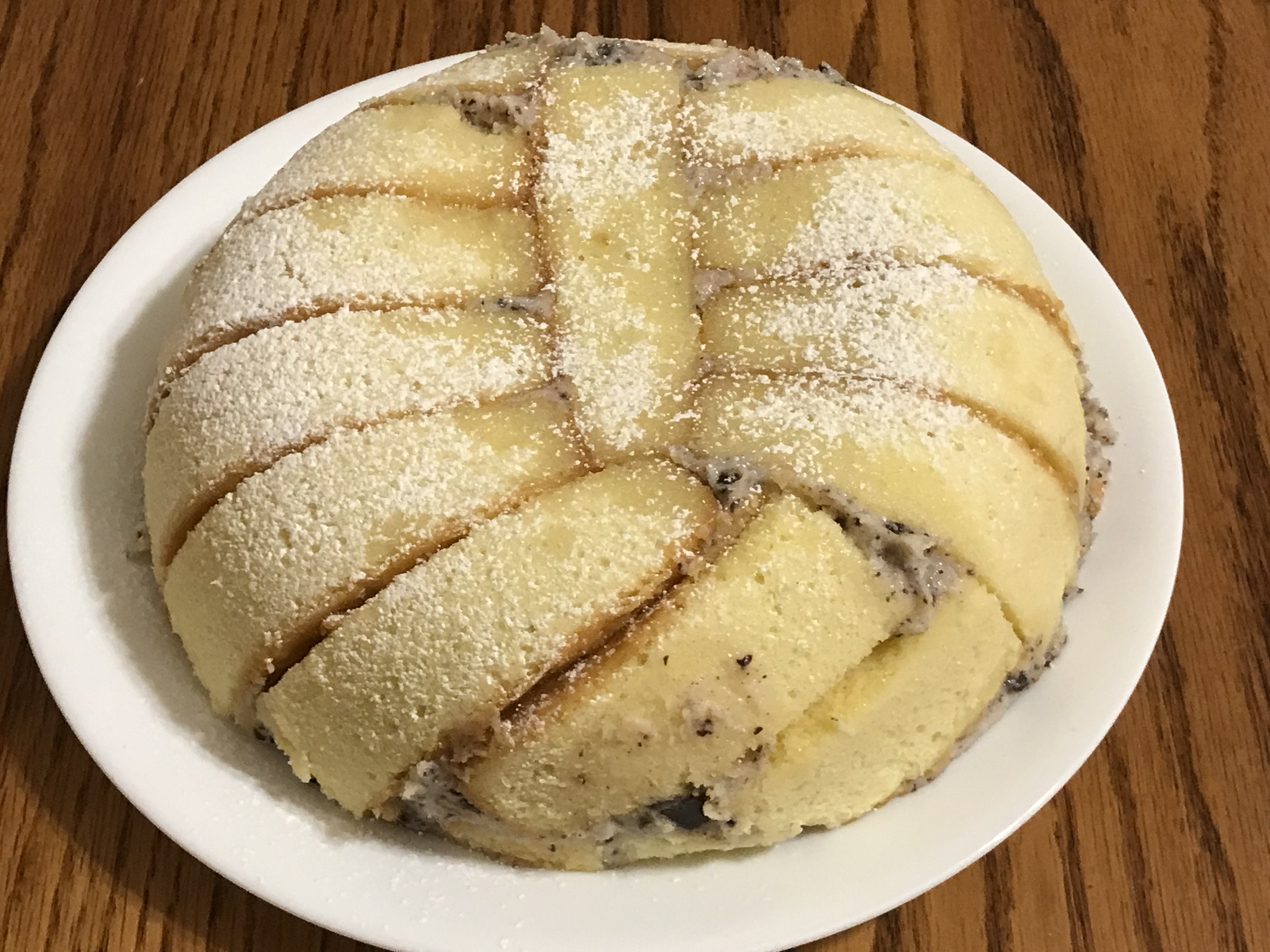
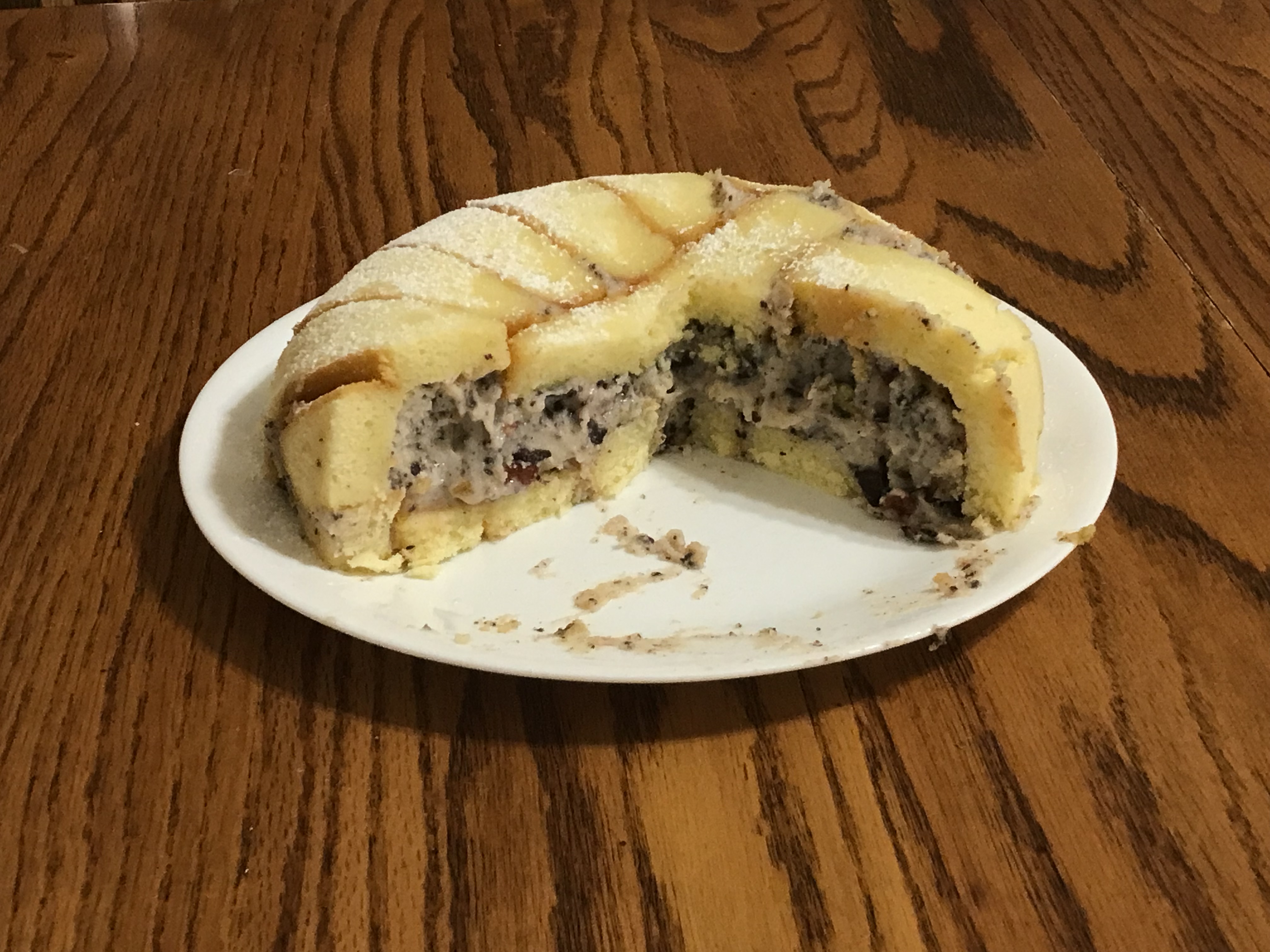
On its own, the sponge cake can be a bit dry, so it really benefits from being pressed overnight with the filling. Scented with vanilla and orange and loaded with candied fruit, it is a little on the sweet side, but making the chocolate bittersweet and adding some extra pistachios balanced it out. This was definitely another of my favorite desserts from the book, though unlike the apricots from the previous post, it is too complicated to make on a regular basis. But that’s fine, since it was never designed to be an everyday cake. The whole menu is designed for a celebration.
 Feasting Through Time