As far as I can tell, the plain English definition of timbale is “food, encased in a different type of food, cooked in a mold, then turned out onto a platter to serve.” Timbales, or timballos in Italian, are popular in Sicily, probably originating in the kitchens of wealthy aristocrats. Elaborate versions might include a pastry crust, or rice molded precariously around a complex filling of meats, cheeses, vegetables, and eggs.
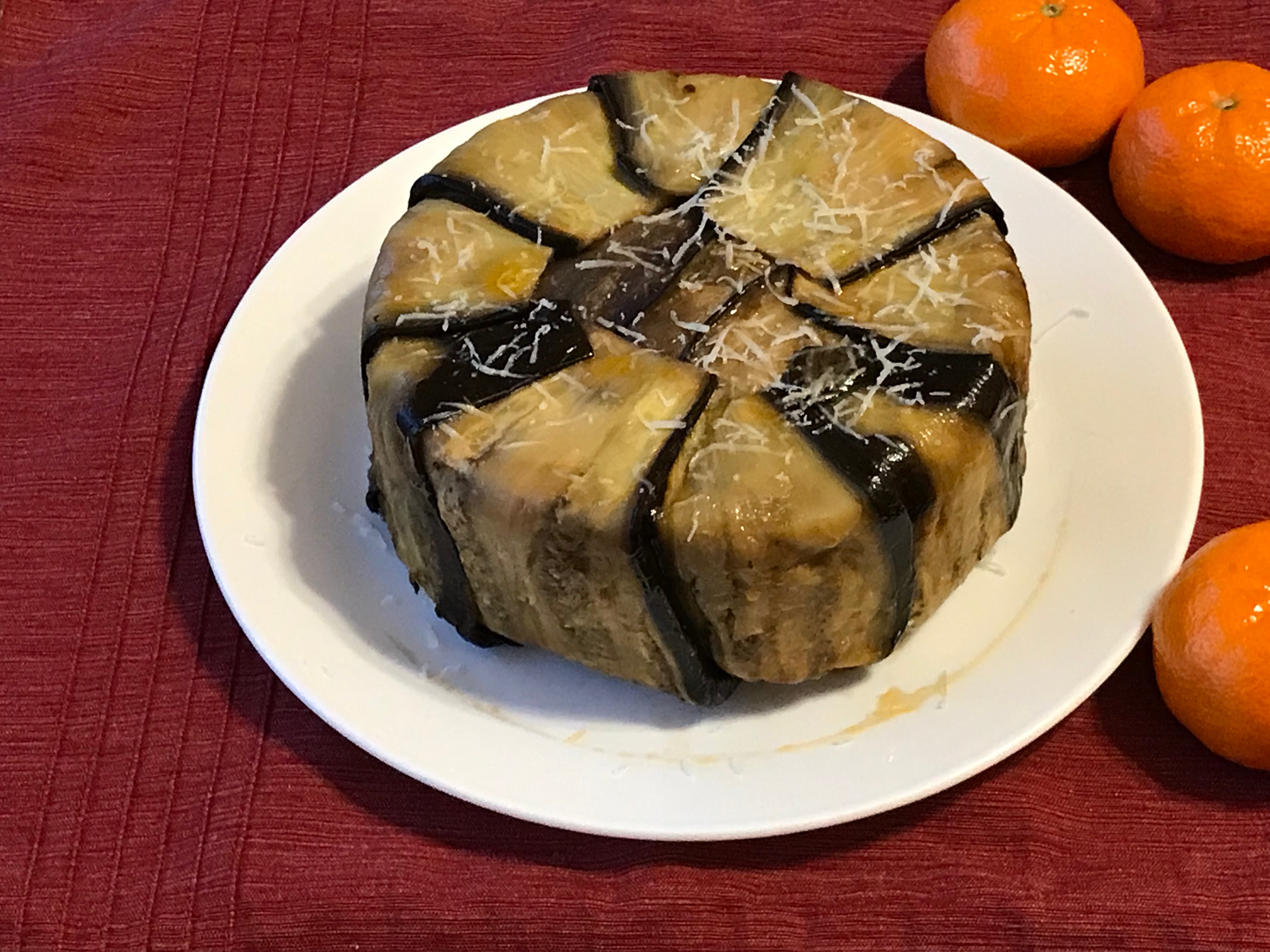
The recipe here is much simpler, a mix of pasta, tomato sauce, cheese, and eggs, stuffed into an eggplant “shell.” There are two time-consuming steps, preparing the eggplant (slicing super thin, salting, and broiling) and making the homemade tomato sauce, but both can be done ahead of time. In fact, it isn’t a bad idea to make extra sauce, set aside what’s needed for the timbale, and have the rest with meatballs (and the gnocchi you made to clear the semolina flour out of the pantry). It’s also helpful to grate the cheese a day ahead. (And make the hard-boiled eggs the recipe calls for but I omitted.)
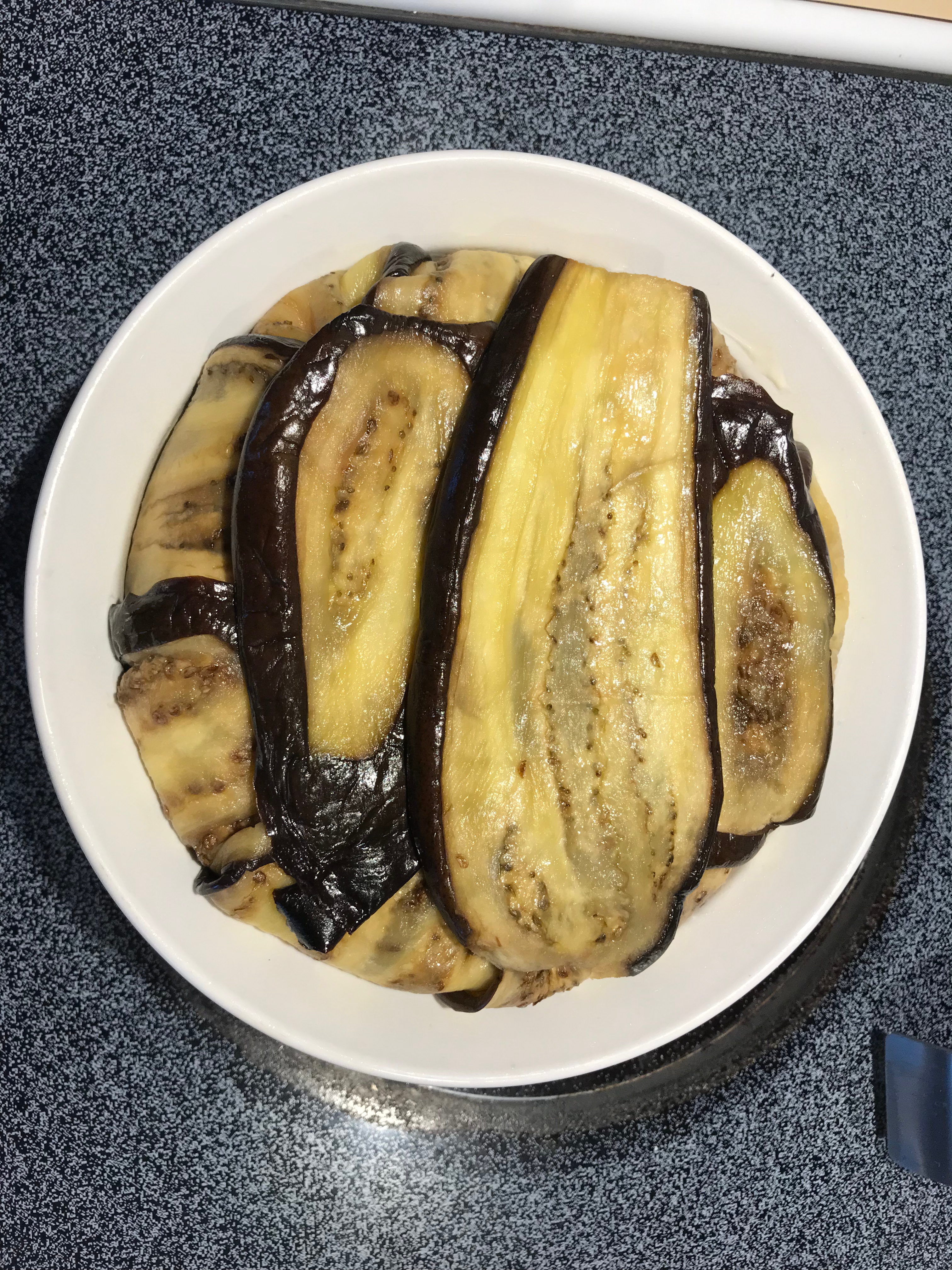
If all of this is done, this fancy-looking timbale is actually feasible for a weeknight. While the water boils and the pasta cooks, you can butter the baking dish, line it with overlapping eggplant slices, and warm the tomato sauce. Then it’s just a matter of mixing the filling, packing it into the mold, covering it with more eggplant slices, and baking.
How the dish is linedReady for the oven
Just look how pretty the end result is. It didn’t fall apart when unmolded, and tasted as good as it looked. The timbale isn’t necessarily for every day, but it was easier than I expected and would no doubt be a great way to show off for guests. Just beware that the slices aren’t as pretty as the whole.
Menu: Rigatoni with Eggplant in a Creamy Curry Sauce, Salad of Assorted Lettuces with Capers and Tarragon, Peach “Soup” with Marsala
Recommended Wine: Sicilian Rosso del Conte
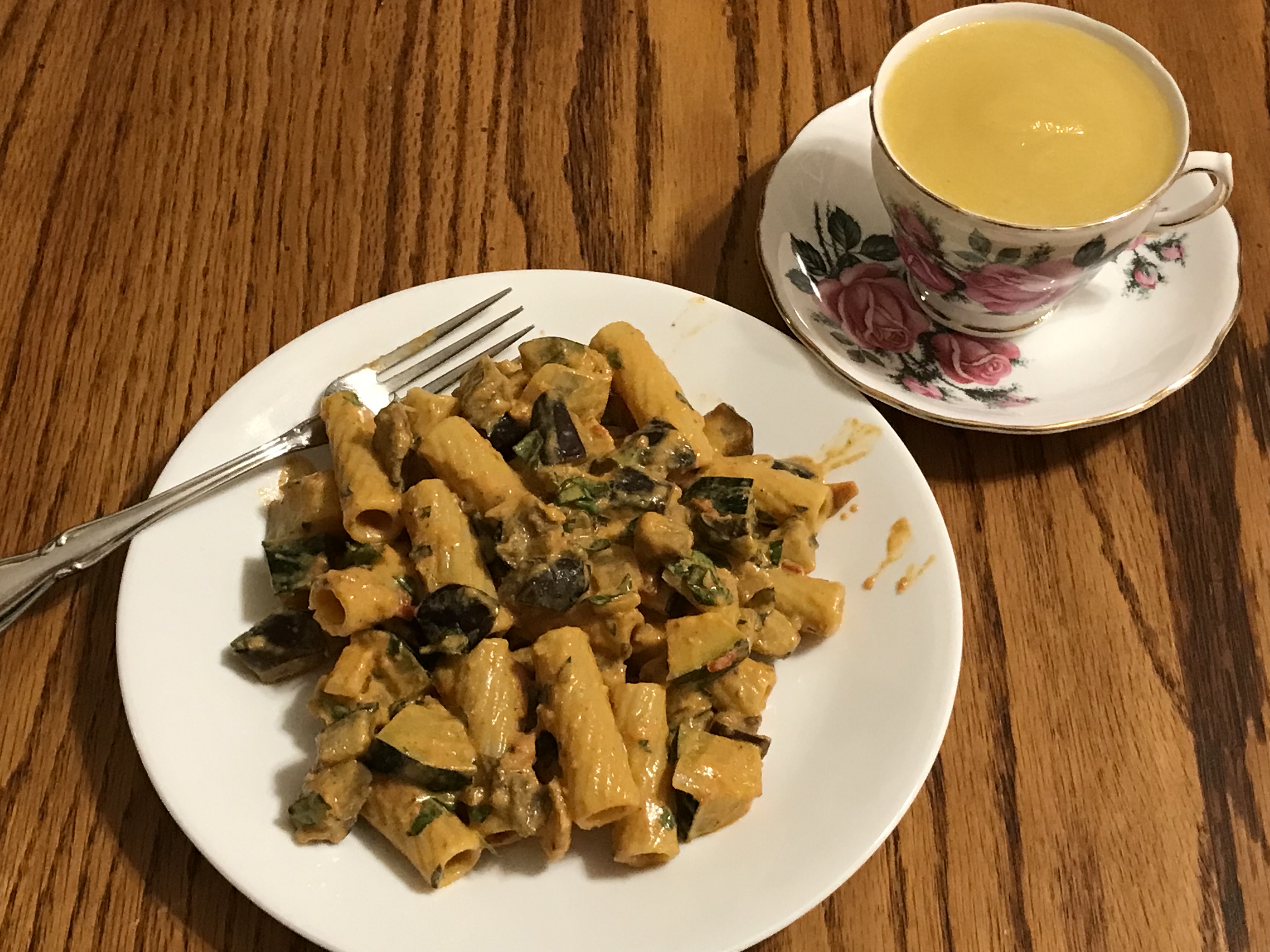
Sicily has been known for the quality of its wheat since antiquity. Good agricultural land drew colonists from the Greek city-states, and it was one of the main granaries of the Roman Empire. The hard durum wheat grown there makes particularly good dried pasta, which is prepared in a huge number of different ways. One popular recipe uses sardines for pasta con sarde. A recipe with perhaps more universal appeal is pasta alla Norma, with tomatoes, eggplant, and zucchini, and named after a famous opera. This particular variation is enhanced with curry powder and enriched with half-and-half.
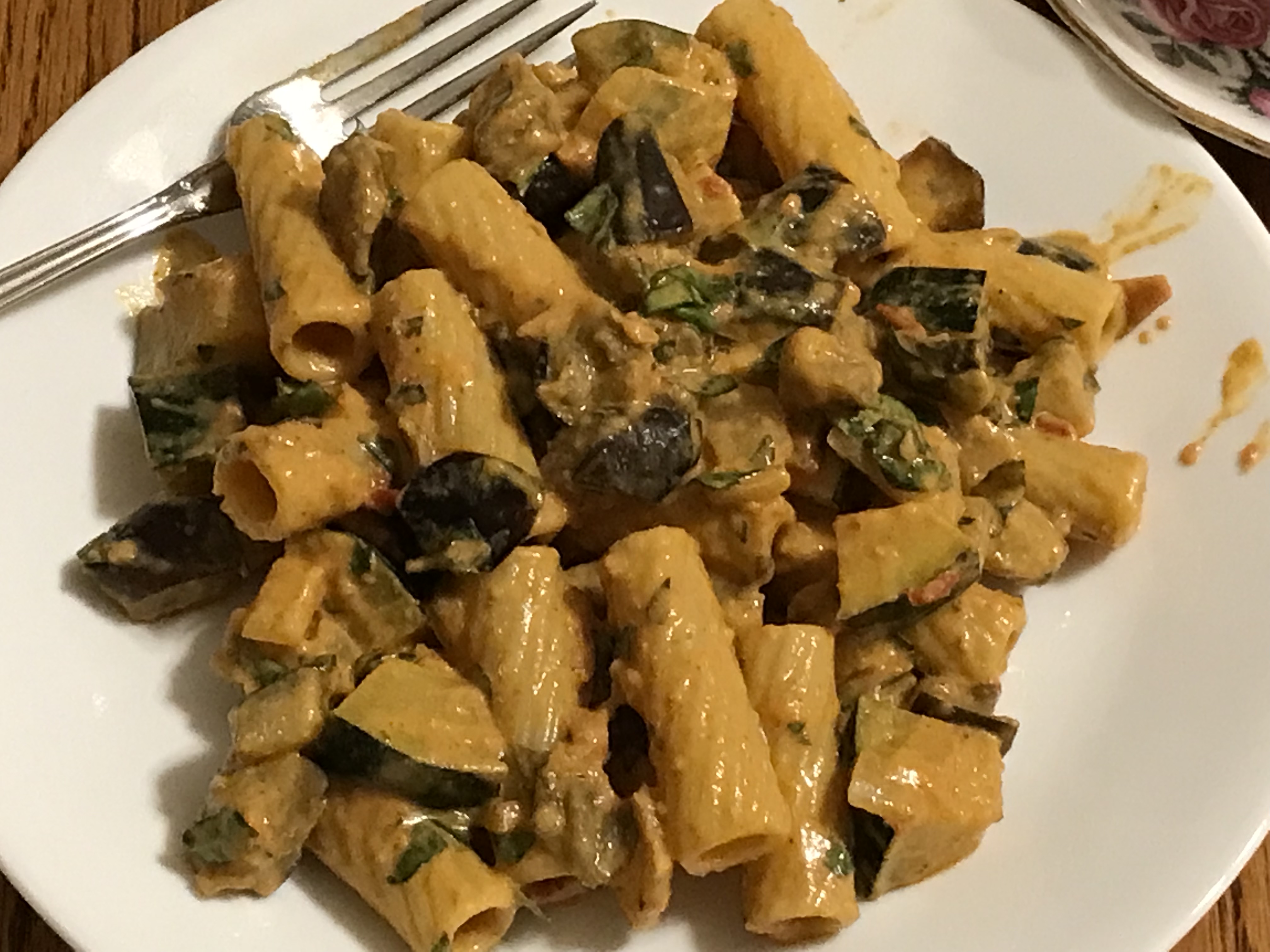
The flavor was good, but using a zucchini the size of my lower arm from fingertips to elbow was not the best choice. When they get that big, zucchini tend to get tough. This one had a distinctly woody texture and peel that was a bit hard to cut through. But as long as I ate around the zucchini, the pasta, eggplant, and creamy tomato-curry sauce was worked well together. I wouldn’t have thought of putting curry in a pasta dish, but it turned out to be a good combination.
Capers grow wild all around the Mediterranean. The buds, preserved in salt or pickled in brine, have a strong, olive-like flavor. As long as they are used in small amounts, capers are an interesting enhancement for meat, fish, and vegetables. A few of them chopped up added a salty bite to the salad dressing. They have been popular since the days of Ancient Rome, when strong, salty flavors were particularly appreciated.
Peaches originated in China and spread west from there. By the time of the Roman Empire, they had reached the Mediterranean. Sweet, juicy, and perishable, they were often viewed as somewhat luxurious compared to fruits that could be effectively dried or cellared. Heavily associated with summer, fresh peaches are difficult to ship even today, at least when fully ripe. As a result, out-of-season specimens are often picked underripe and tend to be pricey. This recipe avoids those problems by using frozen peaches, which are usually the best choice during the rest of the year.
In an interesting twist on tradition, here the peaches are used to make a dessert “soup,” with a bit of sugar and marsala. Personally, I didn’t like the flavor or texture. The peaches clashed with the marsala, and pureed soups in general are not my favorite. Replacing the marsala with a bit of lemon juice helped with the flavor, but didn’t solve the texture issues. Sometimes a new idea works, but sometimes it’s better to stick with tradition.
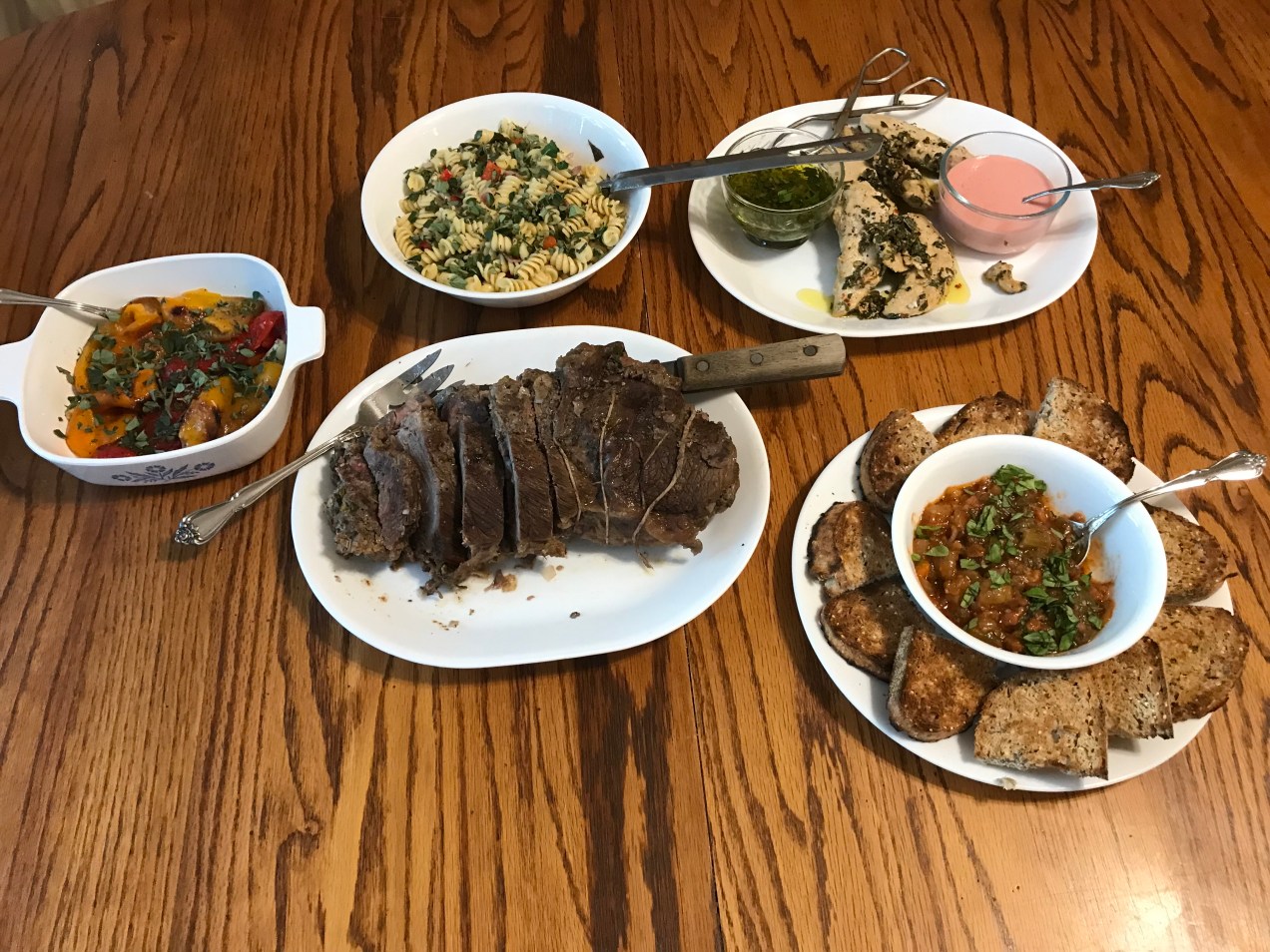
Menu: Caponata, Roasted Red, Orange and Yellow Peppers, Rotelle Pasta Salad with Cucumber Sauce, Sicilian Stuffed Beef Roll, Chicken with Blood Orange and Caper-Anchovy Sauces, Sicilian Cream Cake
Recommended Wine: Vino di Tavola di Sicilia or Corvo Rosso for red, Greco di Tufo Vignadangelo (from near Naples) for white
We remain in Sicily to celebrate the Feast of the Assumption, which falls on August 15 each year. At that time of year, the weather is hot and fresh produce abounds, making a produce-heavy picnic, able to be made ahead and eaten at room temperature, a natural choice for the occasion. To celebrate Sicilian-style, we have a feast full of the region’s famous dishes and flavors: caponata, blood oranges, capers, anchovies, and a cake filled with ricotta, chocolate, and candied fruit. It was a substantial undertaking, but more than worth it for the amazing taste of history.
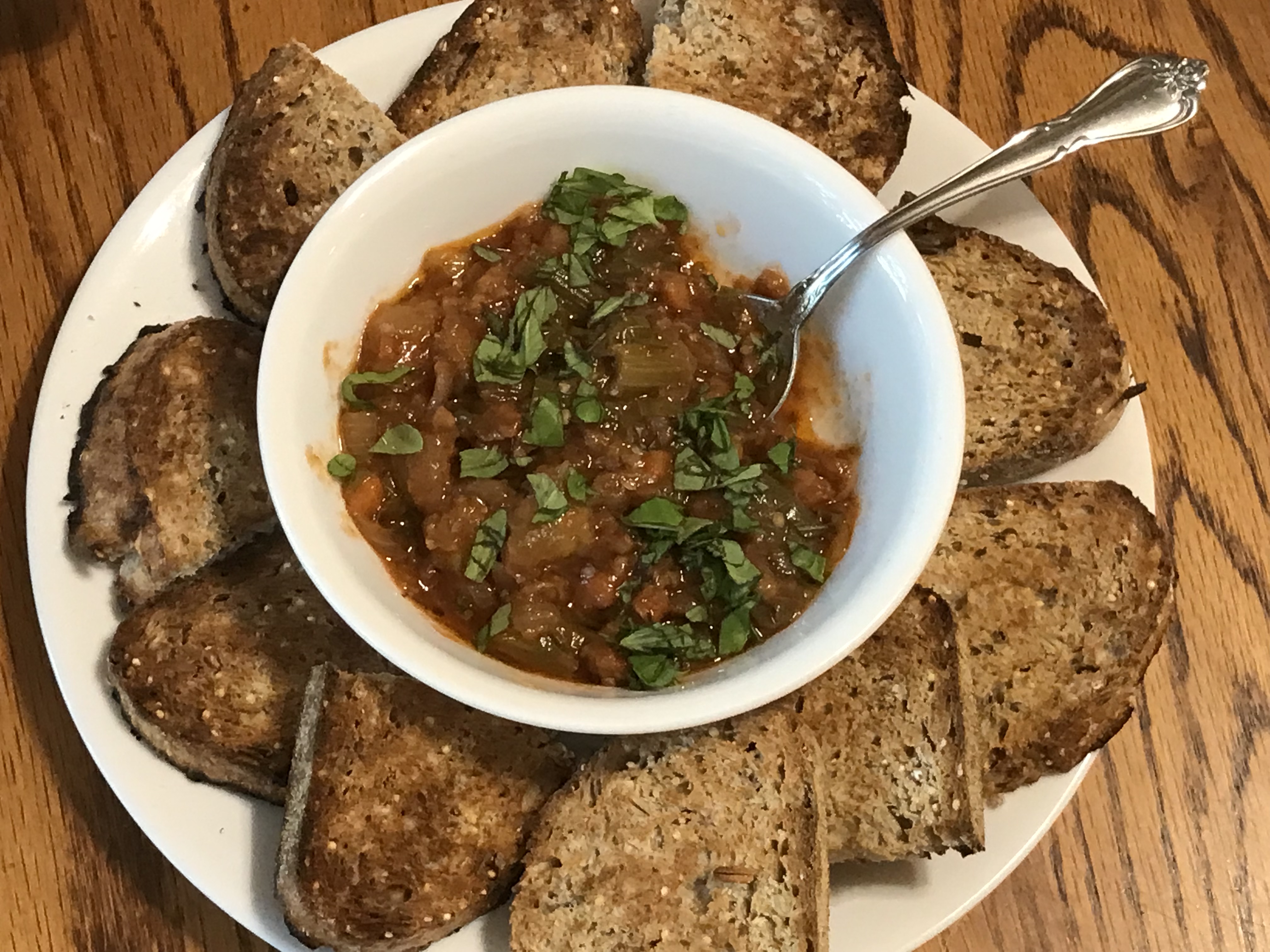
Caponata, a sweet-and-sour eggplant dish with celery and onions, demonstrates Sicilian cuisine’s history perfectly. The agrodolce, or sweet-and-sour, flavor has a long history. In ancient times it usually came from vinegar and either honey or grape must, which is boiled-down grape juice. The taste for sweet-and-sour continued into the Middle Ages, when citrus fruits and sugar were introduced and verjuice (the sour juice pressed from unripe grapes) became common. As mentioned previously, eggplant was introduced during this period as well. Another sweet and sour ingredient, tomatoes, were introduced a few centuries later, after Columbus, finally making the version here possible. With a homemade tomato sauce to coat the vegetables, the caponata required several steps, but it could all be done ahead of time.
The flavor was good, but the quantity of vinegar added gave it a really sour edge. Maybe I’m just not used to it, but I found it difficult to eat much of it at once. The recommended pieces of toast were really a necessity to balance things out. I used a crusty bakery wheat/multigrain bread, which has more flavor than white Italian bread and can stand up to the vinegary caponata. A bit of cheese, though not called for in the recipe, further balances the punch.
Like the caponata, the roasted peppers could be done beforehand and left to marinate in vinegar, oil, salt and pepper. If you have the book, you might notice that the actual recipe has the roasted bell pepper halves stuffed with tuna mousse. While the ingredients (tuna, butter, and a little cognac) sound reasonable enough, I had no desire to try it. After the eggs with tuna mayonnaise, I’ve learned my lesson. To avoid omitting a dish, I roasted the peppers just like the recipe called for and marinated them unstuffed. And they were great. Since they all got eaten the first night, I would call that a success.
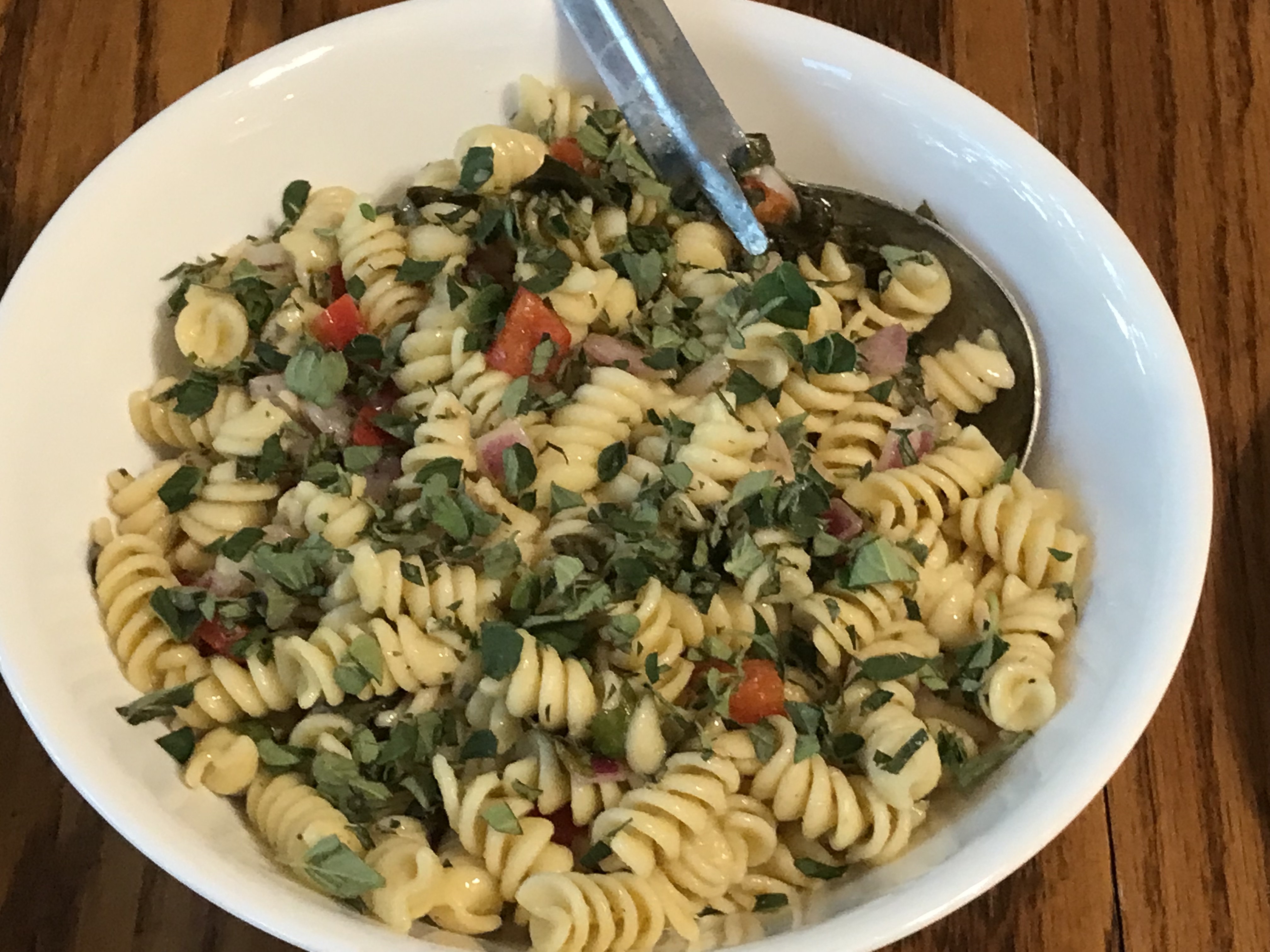
Another success was the pasta salad. While I don’t mind it, pasta salad is not normally one of my favorites, but this was wonderful. Most of the ingredients are pretty typical: pasta, onions, diced bell pepper, vinegar, oil, and herbs. The lack of bottled salad dressing helps, and lots of fresh basil really brightens things up. What makes this recipe unique is the sugar and pureed cucumber in the dressing. The little bit of sweetness doesn’t give a real strong sweet and sour flavor, but balances things out nicely, and the cucumber adds even more freshness. We all loved it. And it was so pretty.
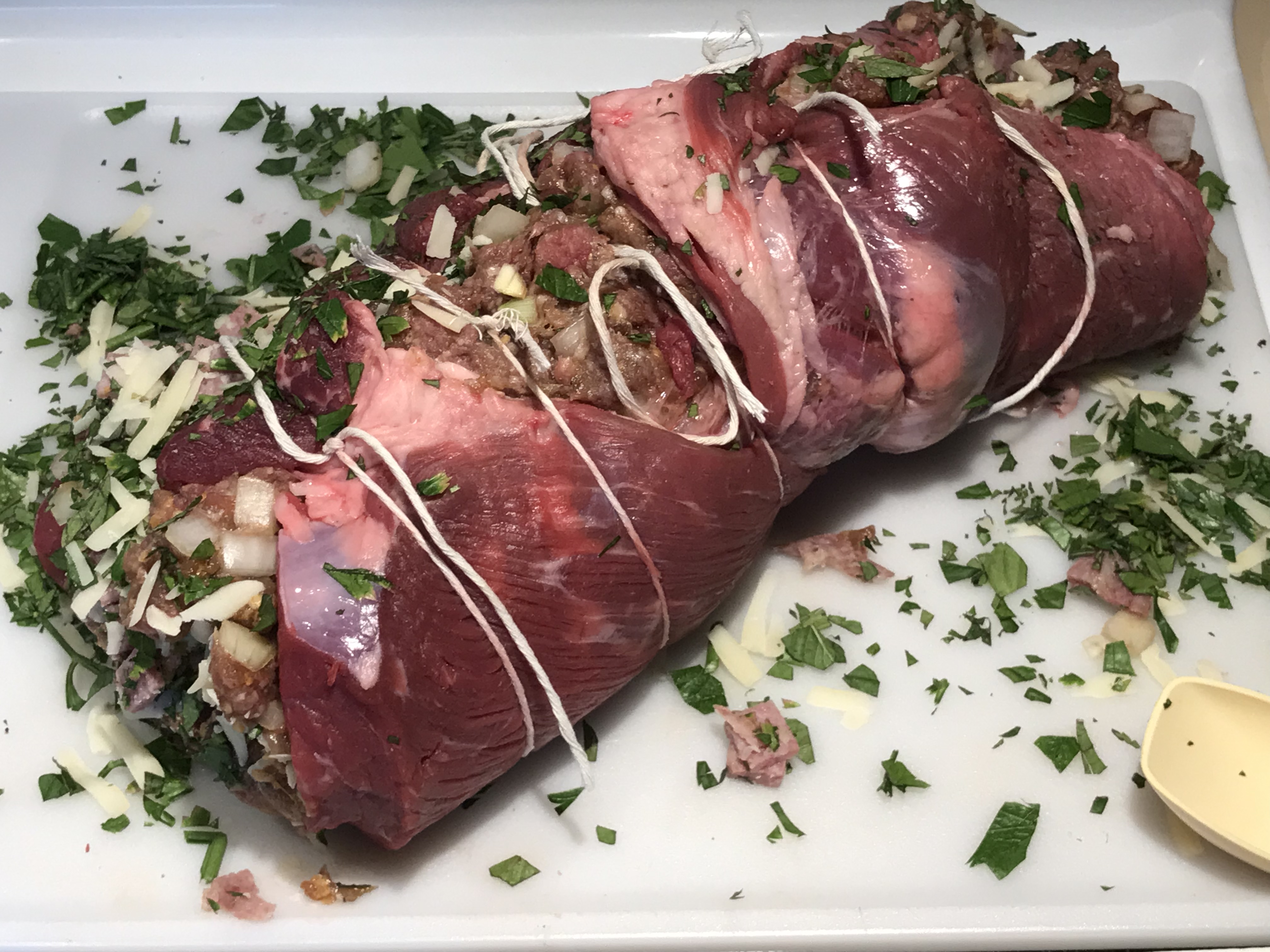
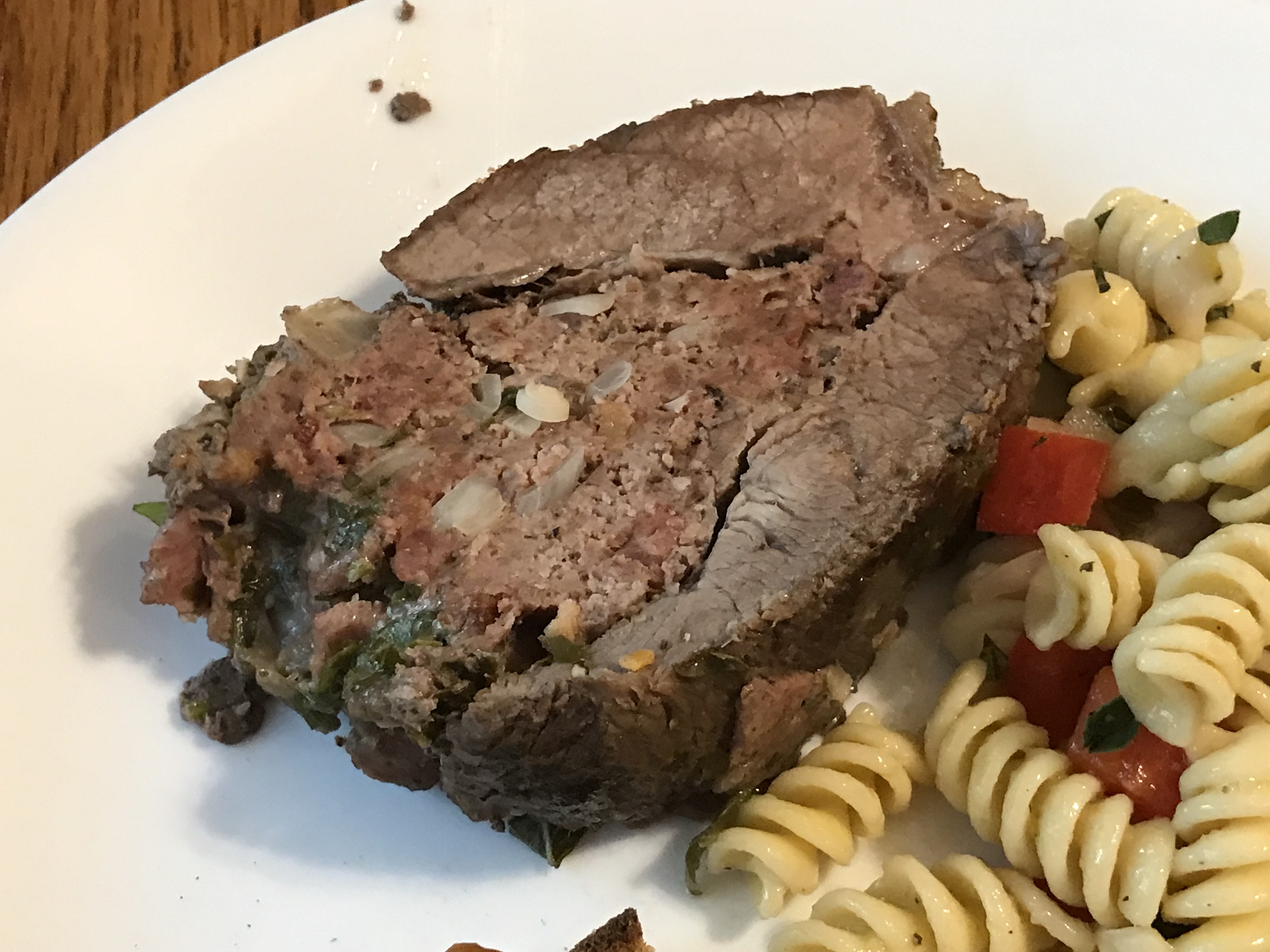
The beef roll, a substantial piece of meat stuffed with more meat, sausage, eggs, cheese, herbs, and a bit of nutmeg, almost certainly has an aristocratic background, though the ingredients are affordable to more people today. This was a bit more technically challenging. After flattening a lean piece of beef, the ground meat mixture is spread over it, followed by sprinklings of cheese and herbs. From what I can tell, the next step is supposed to be to roll it up into a spiral. That didn’t exactly happen. I must not have flattened it enough, since I could only just manage to form a circle around the filling, though the effect was still quite impressive, if I do say so myself. Then I narrowly dodged a catastrophic mishap.
At the time, we were dog sitting for my uncle’s then 9-month-old yellow lab puppy. In other words, constantly looking for food, and big enough to put her head on the edge of the table. I was working on the beef roll while the dog was outside and put the platter on the table, since the stove and counter were pretty cluttered. Then the dog was let in. I decided to keep working while having half an eye on her, but when I turned around for a second, she took the chance to jump up and get her mouth right by the roll, ready to take a bite. After that near miss, I made room on the stove. Then the browning and braising went without issue.
For some reason, the meat was still a little tough. Maybe it had something to do with the fact that the roll was too tall for the pan cover to fit on completely. Regardless, it had a good flavor and excellent filling. Unlike the other dishes, which contained lots of basil and/or oregano, this one was flavored with parsley and mint (and probably a bit of canine saliva) and lacked the sweet-sour flavor of the other dishes. After lots of vinegar in the caponata and more in the peppers and pasta salad, this was a nice change of pace. As for the texture, slowly reheating the leftovers in a saucepan with the braising liquid tenderized the meat significantly.
For the next dish, we are back to tart, acidic flavors and I did something that I’ve done a few times in this project: replace seafood with chicken. There are a few reasons for doing this. First, it’s a lot cheaper. The recipe here calls for swordfish, which is traditional to Sicily but quite pricey. While the two don’t taste the same, the neutral flavor of chicken goes with pretty much anything. And there weren’t pieces of swordfish conveniently in the freezer, ready to cook.
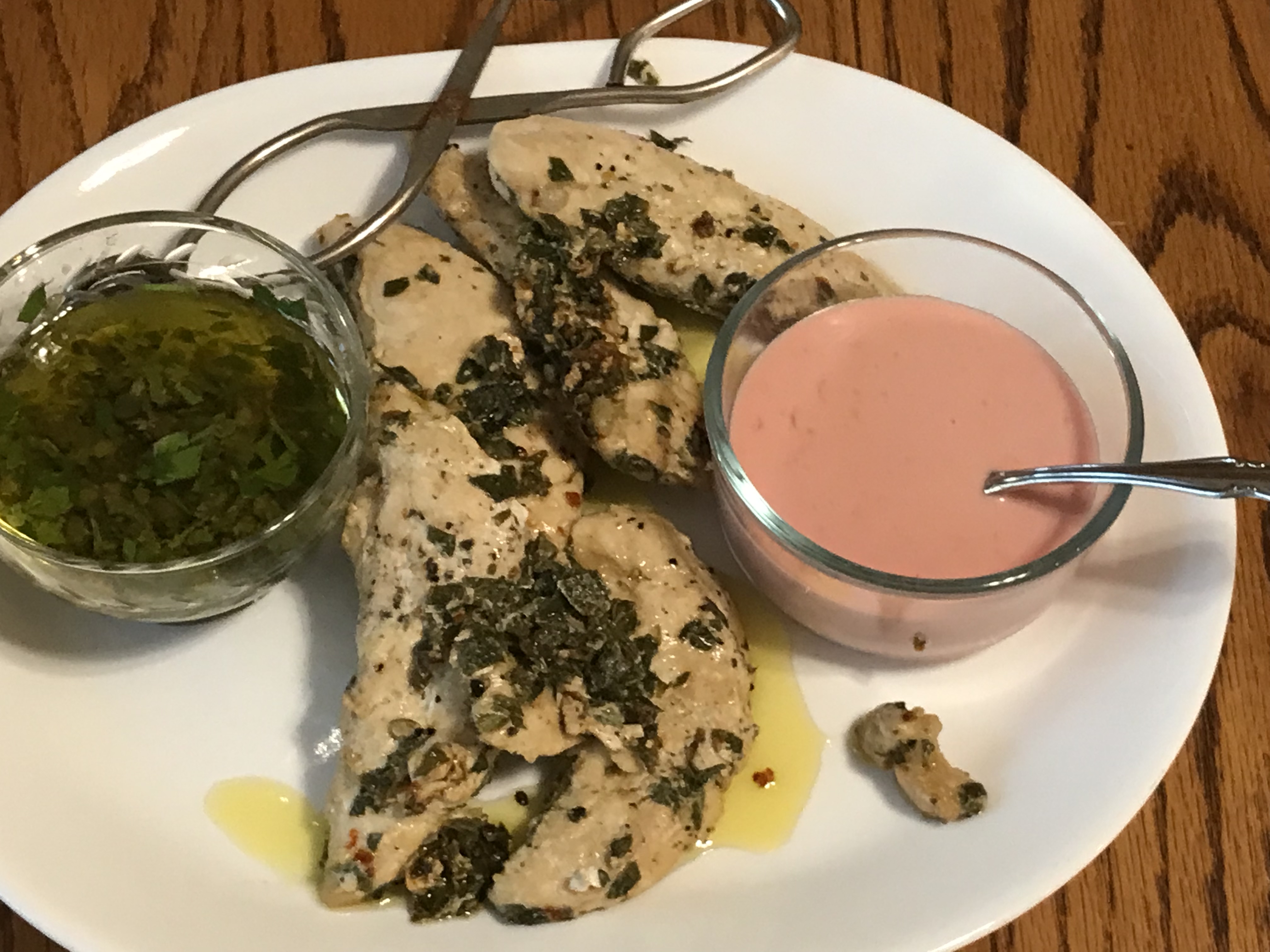
Just as the recipe called for, I cooked the chicken with lemon juice, salt, pepper, and herbs. It was served with two sauces: a homemade mayonnaise, tinted with blood orange juice, and a thin vinegar-based anchovy-caper sauce. The chicken was good, but to be honest, neither sauce was my favorite. The homemade mayonnaise was better than store-bought (in the sense that it didn’t gross me out), but still wasn’t to my personal taste, and the blood orange flavor was barely detectable. I would have preferred the juice directly squeezed onto the chicken, where its flavor would be more pronounced. The caper-anchovy sauce was a bit better, but the salty, vinegary, briny flavor was pretty strong, except in very small amounts.
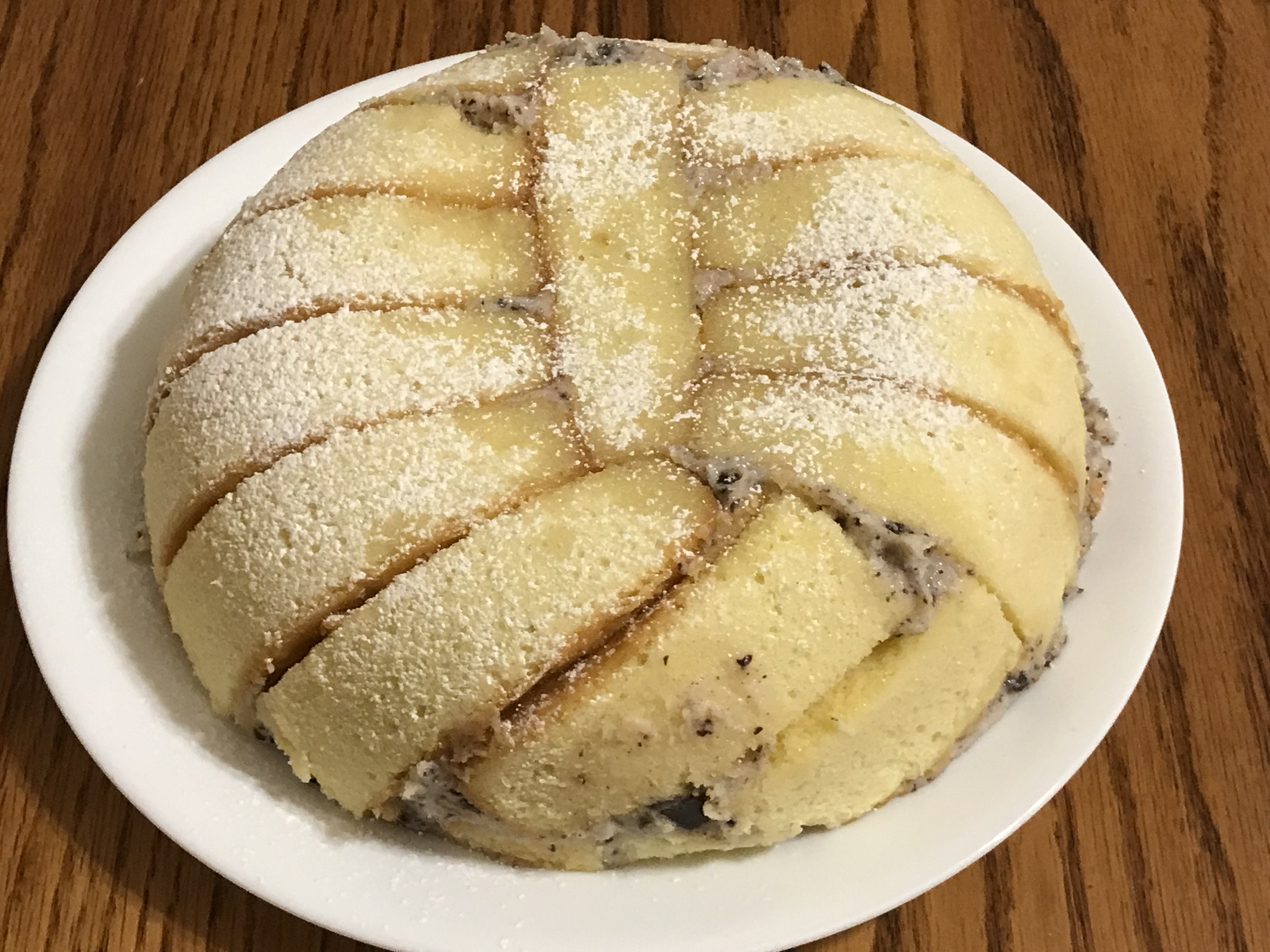
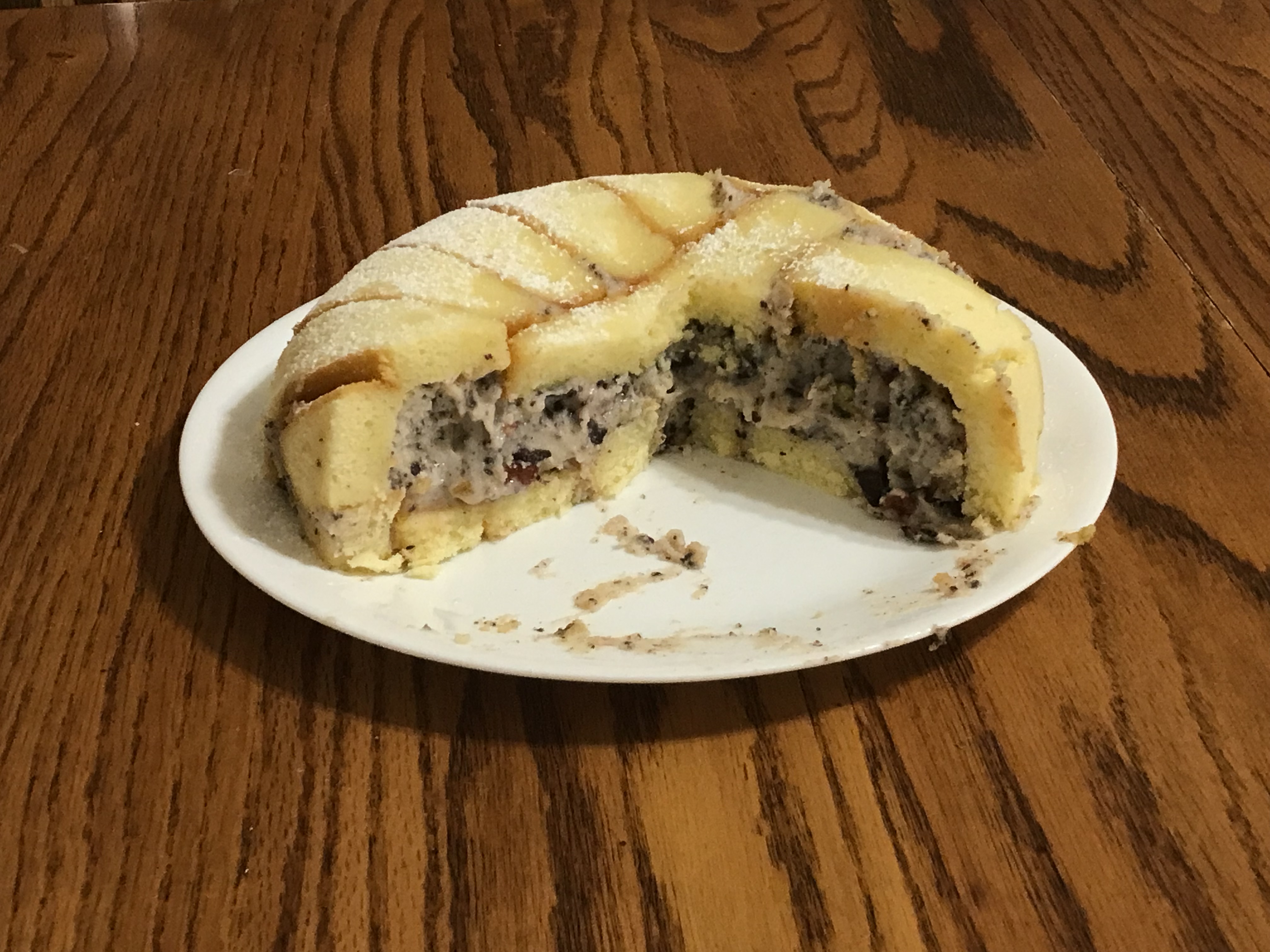
My favorite part of the feast, as is often the case, was dessert, though the pasta salad and beef roll weren’t far behind. Sicilian cassata is traditionally made by lining a bowl with sponge cake pieces, adding a sweet ricotta filling full of candied fruit and chopped chocolate, covering the filling with more cake pieces, then weighting it all in the refrigerator overnight. The next day, it is typically covered with a green pistachio marzipan. This particular recipe skipped the marzipan icing in favor of a simple sprinkle of powdered sugar. It was definitely a bit fiddly to put together, but the end result was beautiful and delicious.
On its own, the sponge cake can be a bit dry, so it really benefits from being pressed overnight with the filling. Scented with vanilla and orange and loaded with candied fruit, it is a little on the sweet side, but making the chocolate bittersweet and adding some extra pistachios balanced it out. This was definitely another of my favorite desserts from the book, though unlike the apricots from the previous post, it is too complicated to make on a regular basis. But that’s fine, since it was never designed to be an everyday cake. The whole menu is designed for a celebration.
Menu: Eggs with Tuna Mayonnaise, Greek-Style Lamb and Vegetables, Apricots with Amaretti Crumbs and Cream
Recommended Wine: Primitivo di Manduria (red from Southern Italy)
Finally, we venture to Sicily, home of some of the most well-known Italian food. There are two sides to traditional Sicilian cuisine. One is the rich, elaborate fare traditionally reserved for the small elite, featuring pies, meats, molded dishes and pastries. The other is the ingenious peasant fare, designed to make the most of humble ingredients. Bread, pasta, vegetables, and legumes, accented with things like vinegar, olives, capers, anchovies and citrus fruits, helped compensate for the low levels of animal protein. Despite the island being a sought-after (and fought-over) breadbasket, featuring some of the most dazzling royal and noble courts from ancient times onward, the peasantry has frequently been among the poorest in Europe.
This may seem like a paradox at first glance, but this pattern is common throughout history. Highly productive agricultural regions, like Naples, Sicily, and the Ile-de-France region around Paris have had some of the wealthiest and most sophisticated elites of their time, but not usually the most prosperous peasants. Higher yields meant higher taxes and greater social inequality. In some cases, commoners had lower standards of living than those in more marginal areas. Throughout its history, Sicily has been one of those cases.
The history of Sicily could fill several scholarly volumes, but here’s a brief summary. As a large, fertile, centrally located island, it was unsurprisingly fought over by every power that passed through the area. From antiquity there were native Italic peoples plus all the usual suspects: Greeks, Phoenicians, Carthaginians, and Romans. The island played a crucial role in turning the tide of the Peloponnesian War, which lasted from 431 – 404 BC, pitting Athens and its not-always-willing allies against Sparta and other states that felt threatened by Athenian expansion over the course of the 5th Century BC. Until Athens overreached with the Sicilian Expedition from 415 – 413 BC, it had generally held the upper hand. After an attempted conquest of Syracuse went disastrously wrong (I’ll go into details in a later post, since it’s a fascinating story), Athens was predominantly on the defensive and was ultimately defeated.
A battleground for centuries between Greeks and Phoenicians, Sicily was conquered by the Romans during the First Punic War between 264 and 241 BC. It was an important and wealthy Roman province until the 5th Century AD, when it was captured by Vandals, a Germanic people who had found a new home in North Africa. The Byzantine Empire (the surviving eastern half of the Roman Empire after the western half fell) under Emperor Justinian I recaptured the island in the 6th Century, only to lose it again in the 9th and 10th, this time to the Arabs. A spectacular flowering of arts, culture, and scholarship occurred during the century and a half or so of Arab rule. It was also during this time that citrus fruits, for which the land is so famous today, were introduced, alongside rice, sugar, spinach, and eggplants. Pasta also appears to have been introduced during this period. Then came the Normans, who conquered much of Southern Italy and the Middle East as well as England. In 1282, a revolt called the Sicilian Vespers allowed the Kingdom of Aragon to capture the island and hold it into the 18th Century.
It was during the late 15th and early 16th Centuries, when Aragon was united with Castile, that New World crops and animals began crossing the Atlantic. While Castile sponsored expeditions to the Americas, Aragon was drawn into the Italian Wars, starting when Charles VIII of France invaded Naples in 1494. Columbus and his men brought plant and animal specimens back to the court of the famed Ferdinand and Isabella, from where they were presumably transported to Naples and Sicily over the next few decades. While not all of the new arrivals were quickly embraced (turkeys were within a decade, tomatoes and potatoes took a few centuries), by the end of the 18th Century, maize, tomatoes, peppers, zucchini, and chocolate had transformed Sicilian cuisine.
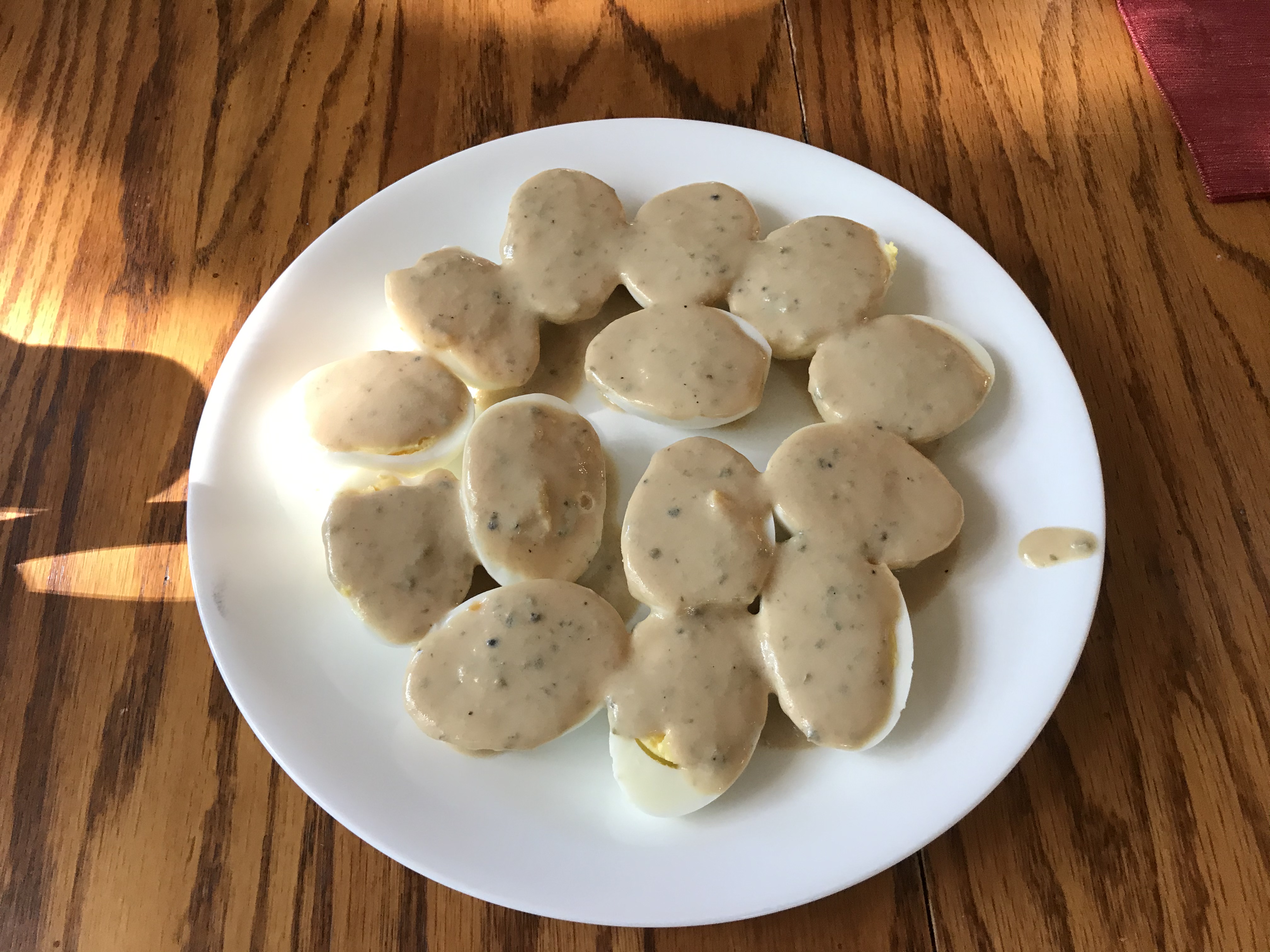
Turning from history to food, we start with the only dish from this project that I truly hated: eggs with tuna mayonnaise. It may not sound too bad if you like hard-boiled eggs, which I do not. Their taste is objectively fine, but the smell is too much for me to get over. The kitchen and fridge ended up reeking of sulfur, and the sauce didn’t improve things. It starts with mayonnaise, another food I don’t like, though the homemade kind used here is better than store-bought. After using egg yolks to emulsify vinegar and lemon juice with oil, canned tuna and capers are blended in. The end result is an unappealing light tan sludge, full of classic Sicilian flavors. If you’re wondering why I made this, given my distaste for hard-boiled eggs and mayonnaise, there are two reasons. First, it’s part of the menu, which for this project I try to follow as closely as possible. Second, these are supposedly a classic Italian appetizer, so I thought they were worth a try. As it turned out, they weren’t. My fellow diner thought they were pretty good and really liked the sauce, but I could only manage a little nibble. While foods that stick around tend to do so because some people like them, nothing suits everyone’s personal taste. Lesson learned, never again. From here, things could only improve.
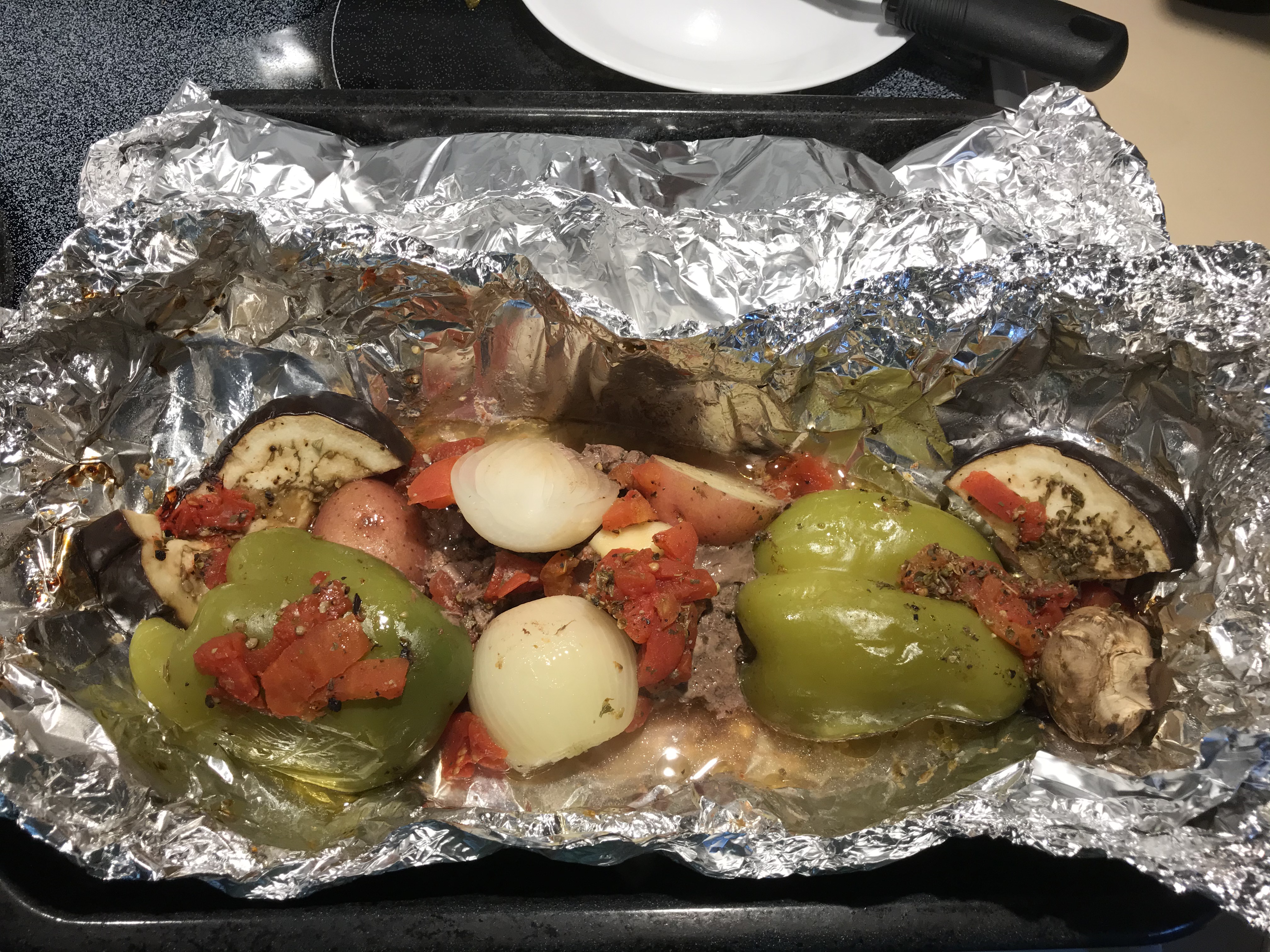
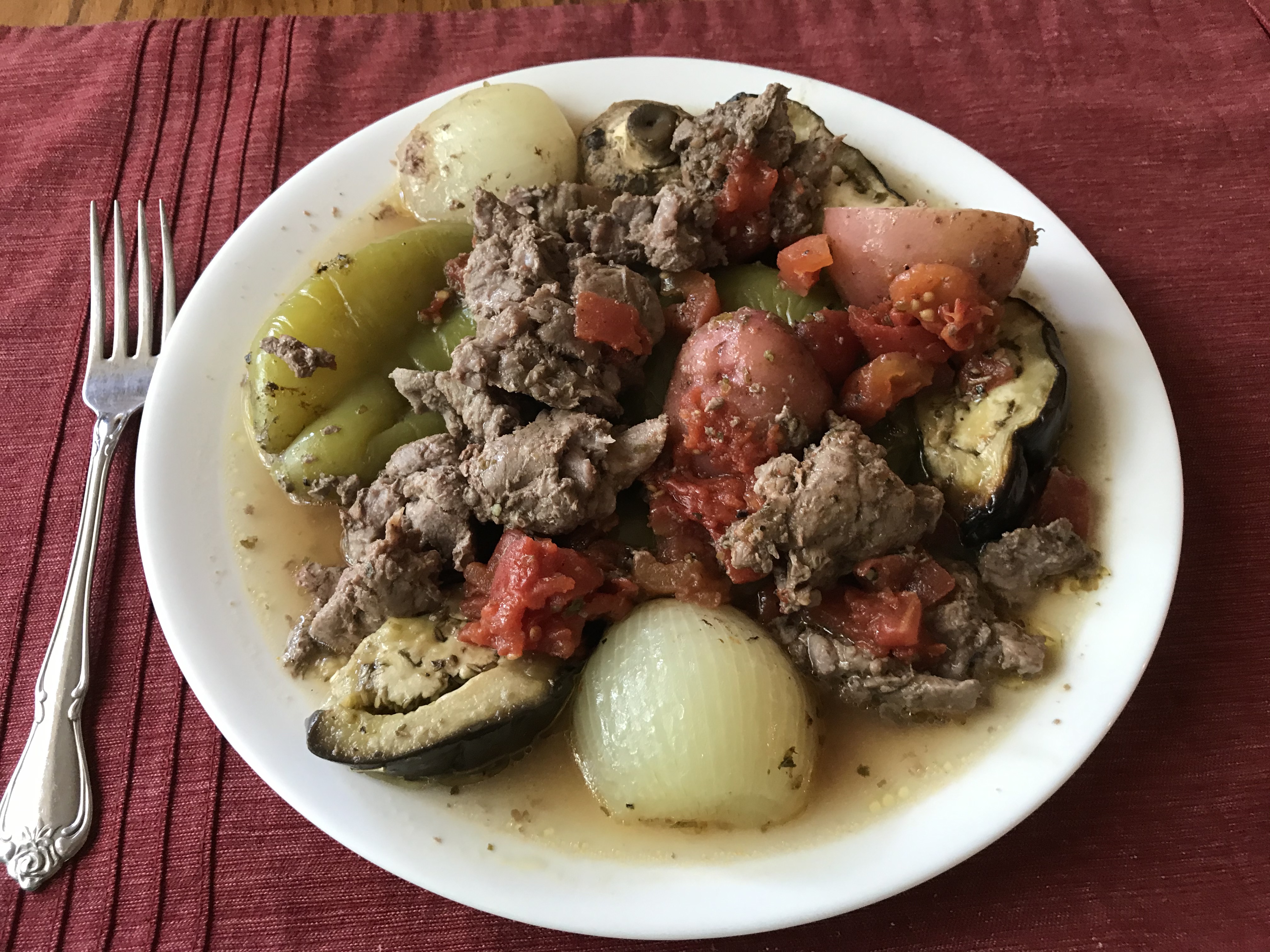
And they did improve. The main course was a lamb “stew,” cooked in foil packets. The meat and vegetables were flavored with salt, pepper, oregano, and a bit of garlic. I personally thought it could use a little more seasoning, but that’s just a matter of personal preference. Maybe mincing the garlic, rather than just halving it, would help the flavors meld a bit more. Still, the meat was nice and tender and the vegetables were neither under nor overcooked. This dish would be worth making again, experimenting with a few minor modifications.
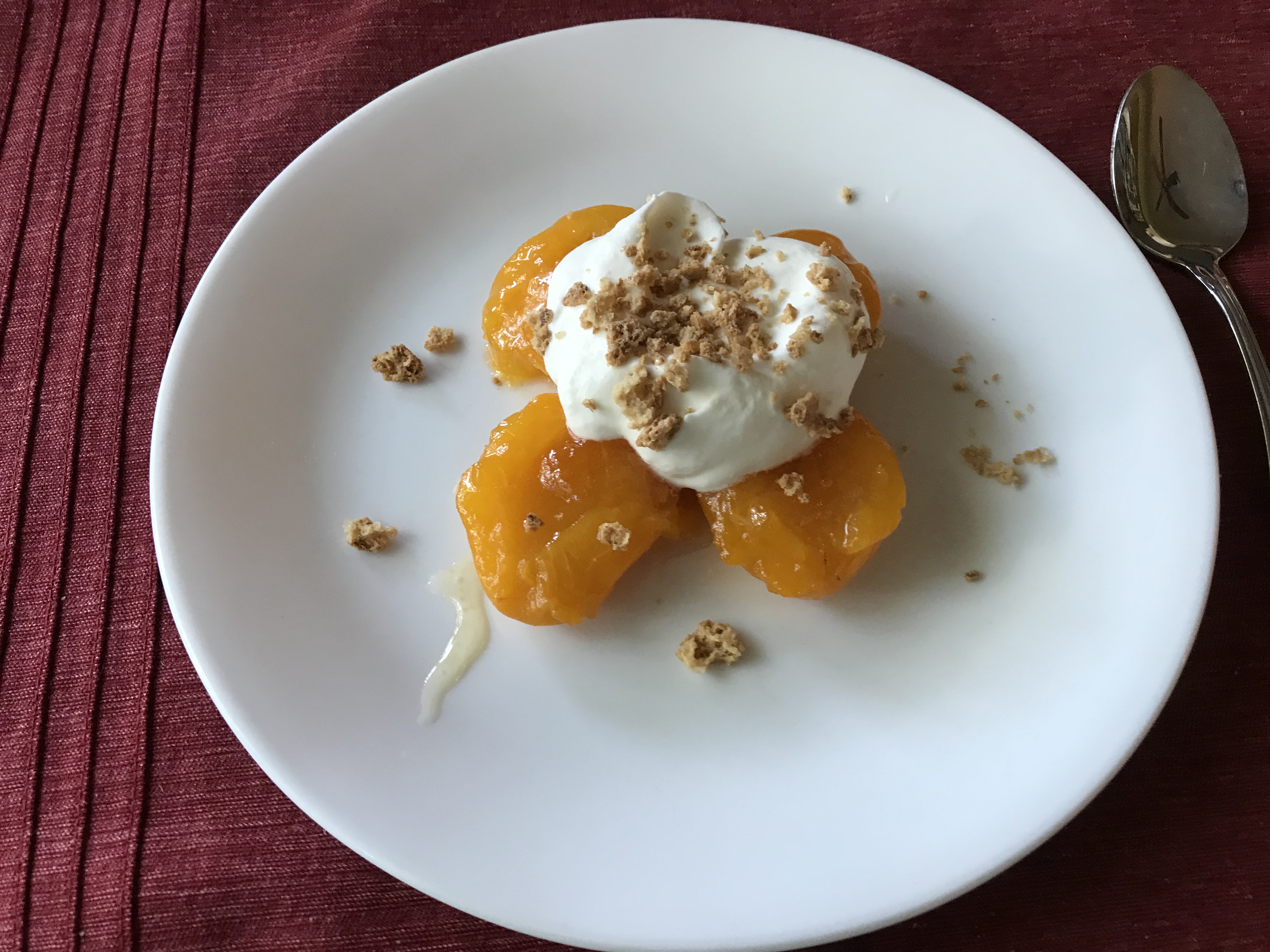
Finally, there was a spectacular dessert, which is actually why I decided to make the menu in the first place. It features poached apricots, which get their name from the Latin word praecox, meaning early, since they ripen before most other fruits. The fresh variety, which Mr. Famularo recommends, is not always available where I live, so when I saw them in the store, I decided I had to try them. In the original recipe, they are poached in a mixture of wine and hazelnut liqueur and more liqueur is added to flavor the whipped cream. As I didn’t want to buy an entire bottle of either, I substituted grape juice and hazelnut syrup, reducing the sugar to compensate. The result was fantastic. The balance between the sweet-tart apricots, syrupy sauce, cream and amaretti crumbs was just perfect, and the hazelnut flavor infused throughout made the dish. I’m sure that other fruits would work in this dessert, possibly with adjusted poaching time. It is too good to restrict to apricot season.






 Feasting Through Time