Uncategorized

Cook’s Tour of Italy Menu 64 (Pgs. 204 – 207): Neapolitan Macaroni Menu

Region: Naples/Adriatic Coast

Menu: Penne with Pork Tomato Sauce, Sliced Pork, Carrots with Marsala, Romaine Watercress and Snow Peas with Lemon, Almond-Orange Meringue Cookies

Recommended Wine: Gragnano

            Ragu, a rich sauce with tomatoes and meat, is popular all over Italy, but two main styles are most famous. The first, Bologna-style, is more of a meat sauce flavored with tomatoes and is popular across the North. The second, Neapolitan-style, is a tomato sauce flavored with meat, which is then served as a separate course. Variations of this second style are prevalent across the South, and here we have a basic version, flavored with pork shoulder. The difference in the two styles probably has to do with the fact that in the historically less affluent South, there was more incentive for diners to fill up on pasta before serving the meat.

            This brings up an important point about typical Italian meal structure. The number of courses included depends on if it is an everyday or celebratory meal, but they usually follow a specific sequence: antipasti (appetizers), primi (pasta, risotto, polenta, or another starch or soup), secondi (meat or fish) with contorni (vegetable sides), salad, fruit and cheese (the most typical dessert), and dolci (sweets). If meat or fish is included (it may or may not be), it is always served after the starch. Here we have pasta with the tomato sauce as a first course, sliced pork for the second with carrots as a side, followed by salad, then cookies.

            Humans and pigs have a fascinating history. First domesticated around 8000 BC, pigs quickly proved their value to early farming peoples. While they didn’t provide wool, surplus milk for human use, or pull plows, pigs mature quickly and breed much faster than sheep, goats, or cattle. This made them the most efficient source of meat, making up for their shortcomings in other regards. Plus, they could eat almost anything. Despite all this, pork taboos have been widespread across the Middle East for thousands of years.

            At first glance, this is baffling. After all, this is where pigs were first domesticated. People in the earliest Mesopotamian civilizations ate pork without issue. Evidence suggests it was fed to workers building the pyramids. But over time, more and more taboos appeared, particularly after 1000 BC. There were some complete prohibitions like in the Hebrew Bible. In other cases, pork was seen as an inferior food for those who couldn’t afford meat otherwise, or an unclean food that was fine for the common people but unfit for priests and nobles. At the same time in Europe, where pigs had been introduced, and in China, where they were domesticated independently, no such problems arose and pork continued to be eaten widely.

            There are a number of theories for this. One is that centuries of environmental damage in the Middle East reduced the area suitable for raising pigs. Another is that the introduction of chickens, which eat similar food, are small enough to eat at a single meal, and also produce eggs, made pigs unnecessary. Regardless, pigs remained essential in Europe, where they had plenty of woodland to forage in. Plus, in the cooler climate, preserving the meat as bacon, ham, or sausage was easier to do.

            In cuisines where meat is limited, pork often acts as much as a flavoring as a source of protein. Cured pork products are frequently used for this, but here fresh pork shoulder or butt is used. After the meat is cooked, it is kept warm while the sauce is eaten with the pasta. If serving pasta first is to encourage people to fill up before having any meat, this dish did its job. The pork flavor was clearly present and provided an incredible richness to the sauce. Saving room for the other courses took substantial willpower. As expected, the sliced pork that followed was excellent; very tender and flavorful.
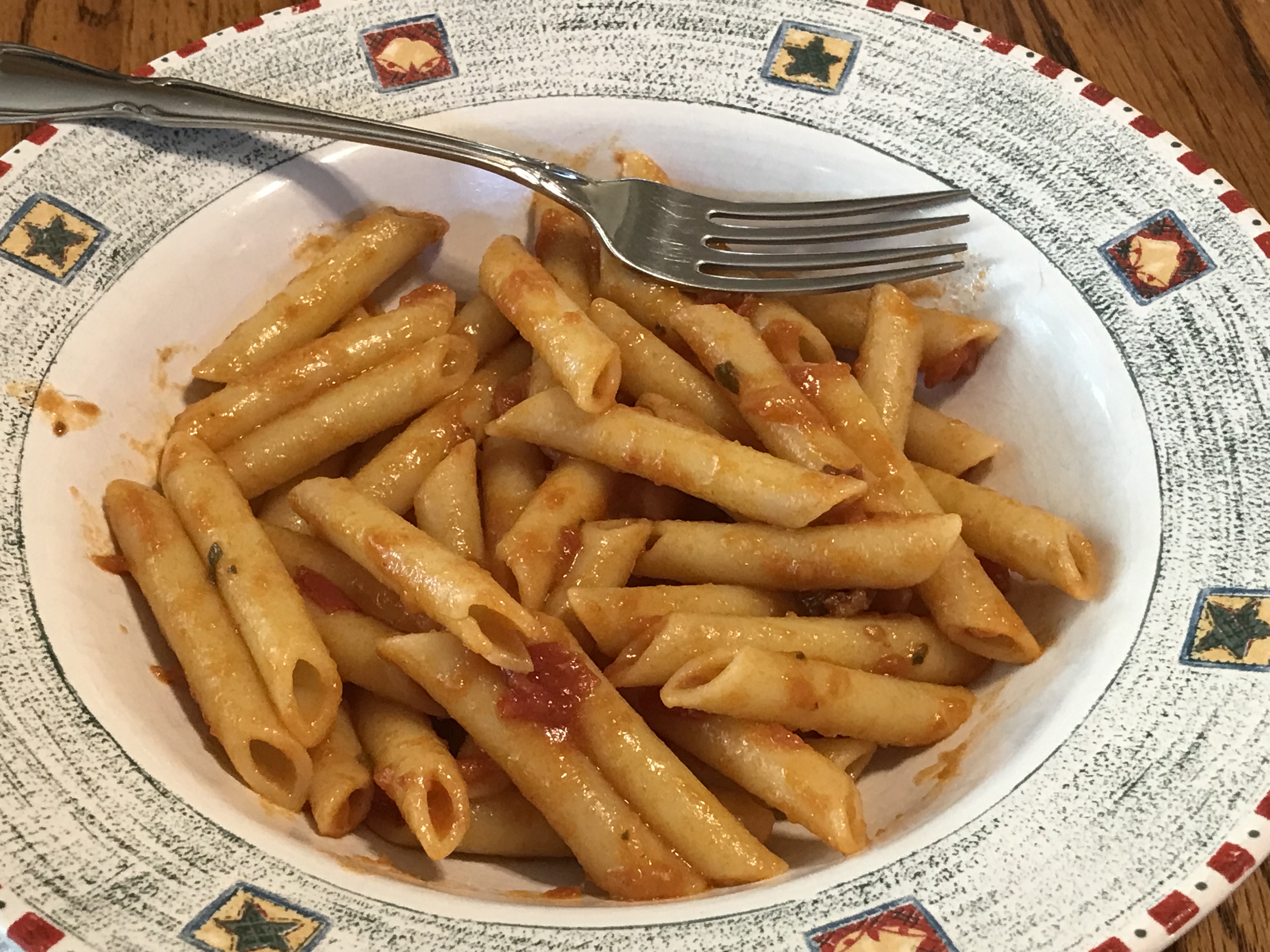
            Carrots might seem surprising in an Italian menu, but they were eaten as far back as Ancient Rome, though they might not have been orange. New varieties were introduced from the east in the Middle Ages, though the story about the orange carrot being created by the Dutch to honor their ruling family in the 17th Century seems unlikely to be true. A drawing in a 6th Century manuscript clearly shows an orange carrot, though during the Renaissance white, yellow, red and purple carrots were also common. These other colors have recently regained popularity in a big way, even becoming trendy. Hopefully this particular trend sticks, as each of the varieties has a slightly different flavor, and they are just so pretty. But for this menu, we have regular orange carrots, cooked with a bit of sugar and marsala, and topped with minced scallions.
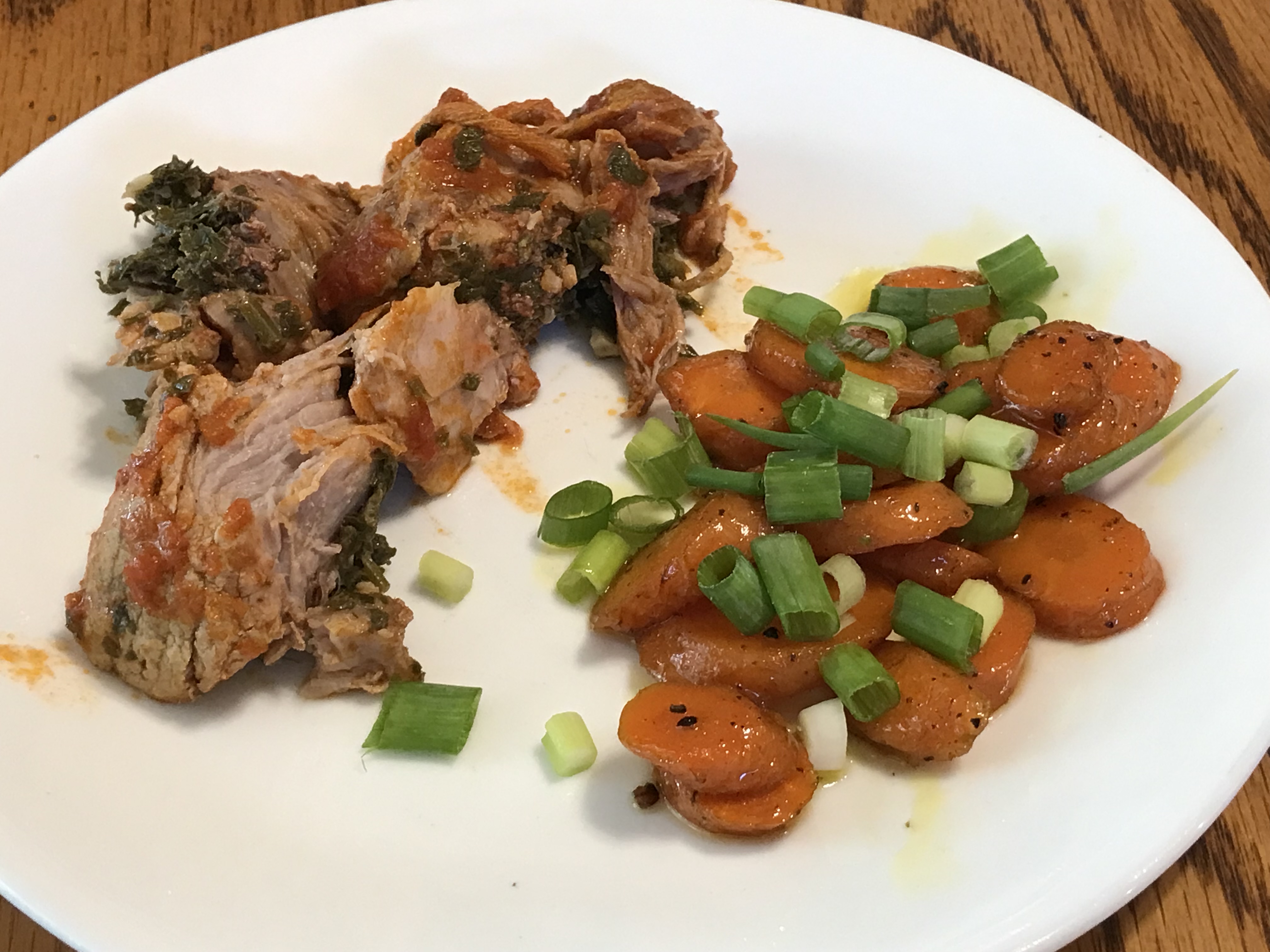
            Every now and then, there is a dish that makes me think “Whoa, I made this?” This was one of those dishes. The marsala worked a lot better with carrots than with oranges, and the sugar produced a lightly browned glaze, and everything worked together for an incredible depth of flavor. A sprinkling of scallions on top added a nice contrast in taste and color. Though made with affordable ingredients, these would fit right in on a fancy restaurant menu. The advantage of making them at home is that you can have a normal portion size, leftovers, and avoid the restaurant markup in cost.
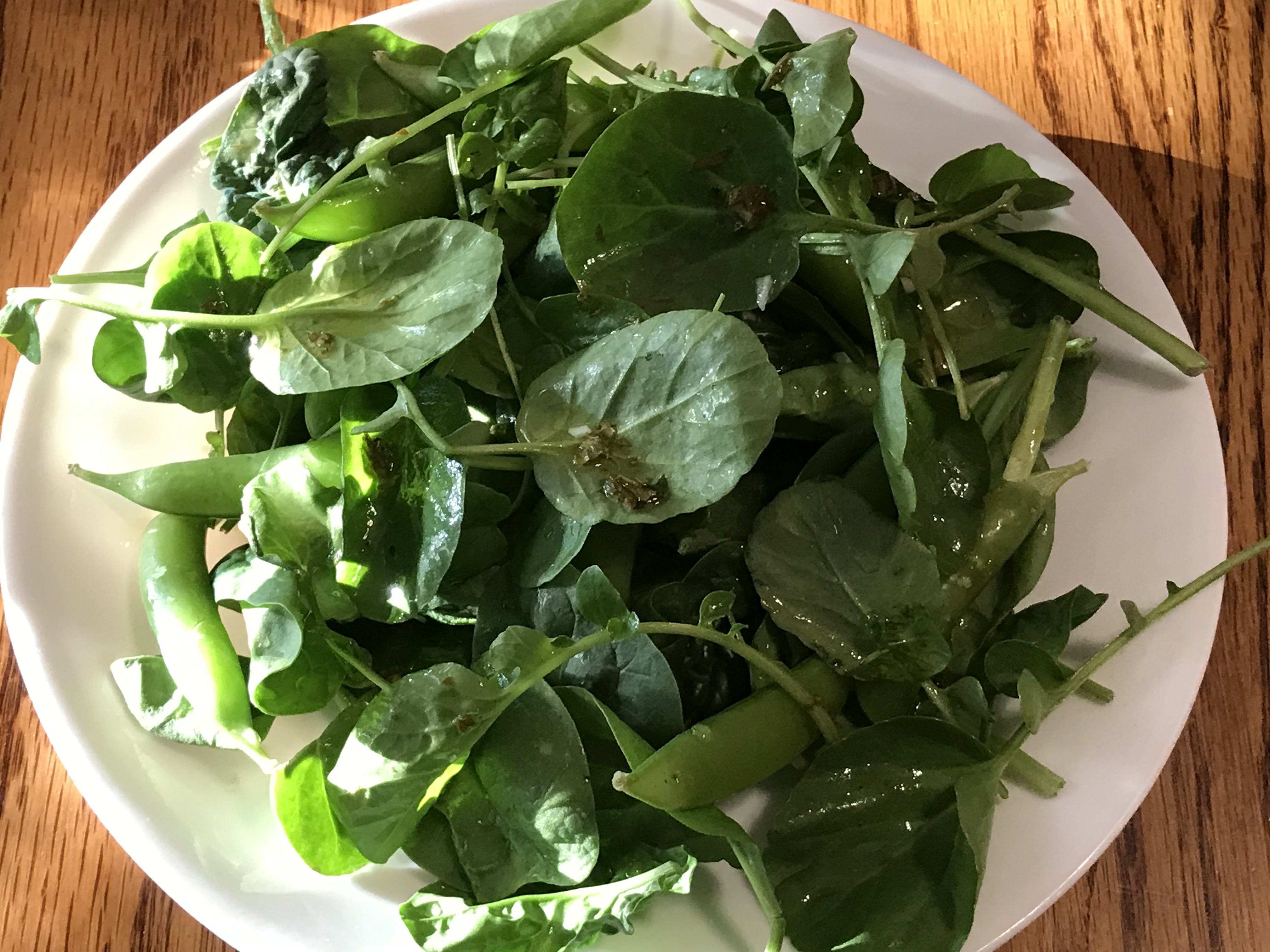
            Watercress and snow peas provided interesting contrasts for the salad; peppery for the watercress, sweet and crunchy for the snow peas. The dressing was a bit too sour, but in small quantities worked fine.
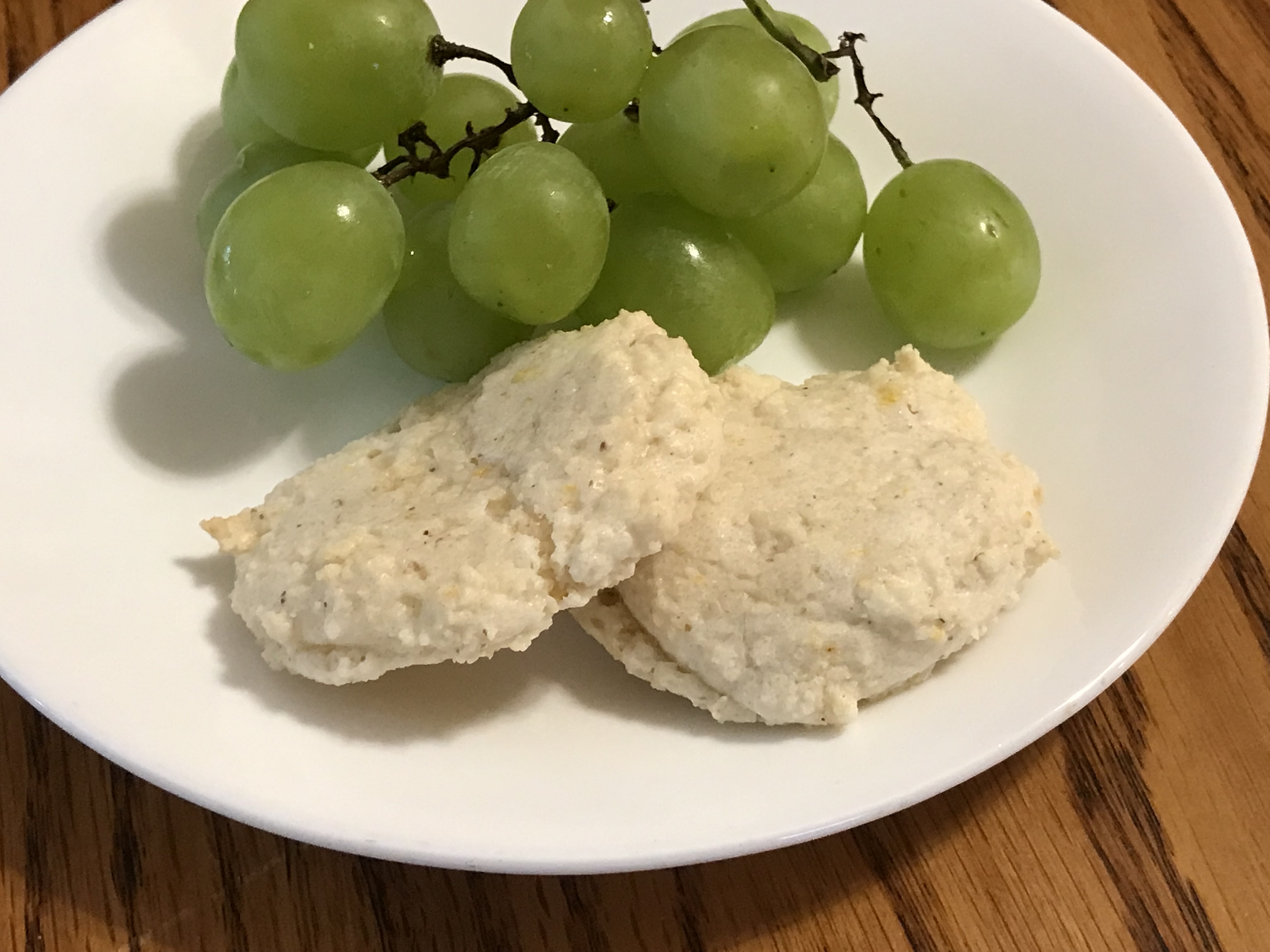
            The cookies were based on a meringue, which is a whipped mixture of sugar and egg whites. As pointed out in the book, these were sort of like the ricciarelli from Siena, with almonds and orange peel. They reminded me of macarons, with a crispy outside and chewy inside, though these were supposed to be crunchy. I suspect that humidity may have played a role in the texture not quite matching up, since meringue is known to be touchy on humid days. However they were supposed to turn out, they were delicious. Maybe I’ll tackle actual macarons at some point in the future.
Standard
Uncategorized

Cook’s Tour of Italy Menu 76 (Pgs. 235 – 238): Lunch in Potenza

Region: South Mainland/Islands (Basilicata)

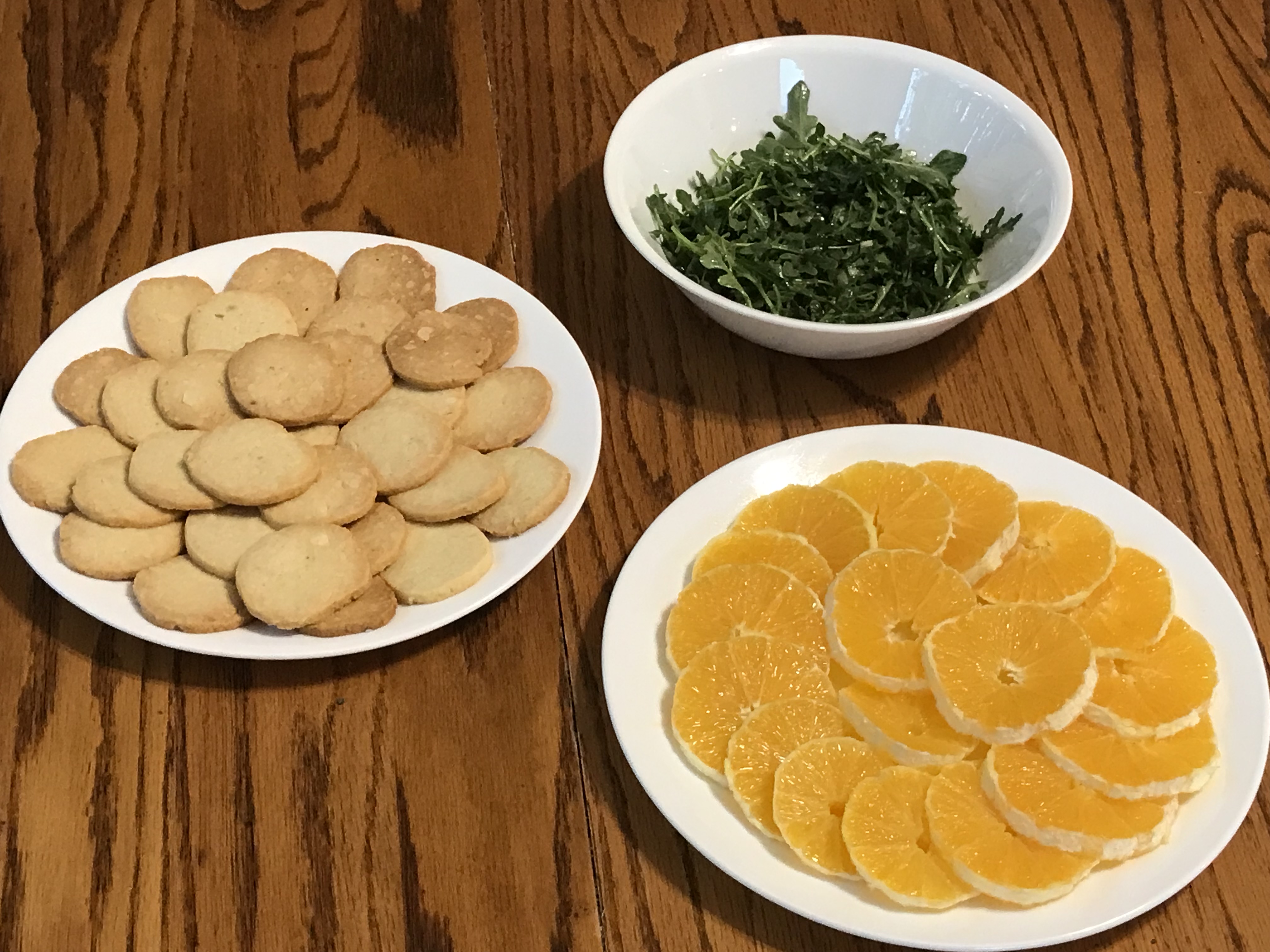
Menu: Spaghetti with Ginger and Garlic, Chicory Salad Mimosa, Sliced Oranges with Marsala, Enriched and Crisped Vanilla-Almond Cookies

Recommended Wine: Calabrian Red Ciro

            South of Naples and Amalfi is Basilicata, one of Italy’s least known and least developed regions. Between the rugged terrain and often harsh taxation, life has historically been difficult here. The traditional diet includes pasta, vegetables, olive oil and fruit, all of which are featured here. In a nod to increasing prosperity in the area, this menu ends with buttery almond cookies.

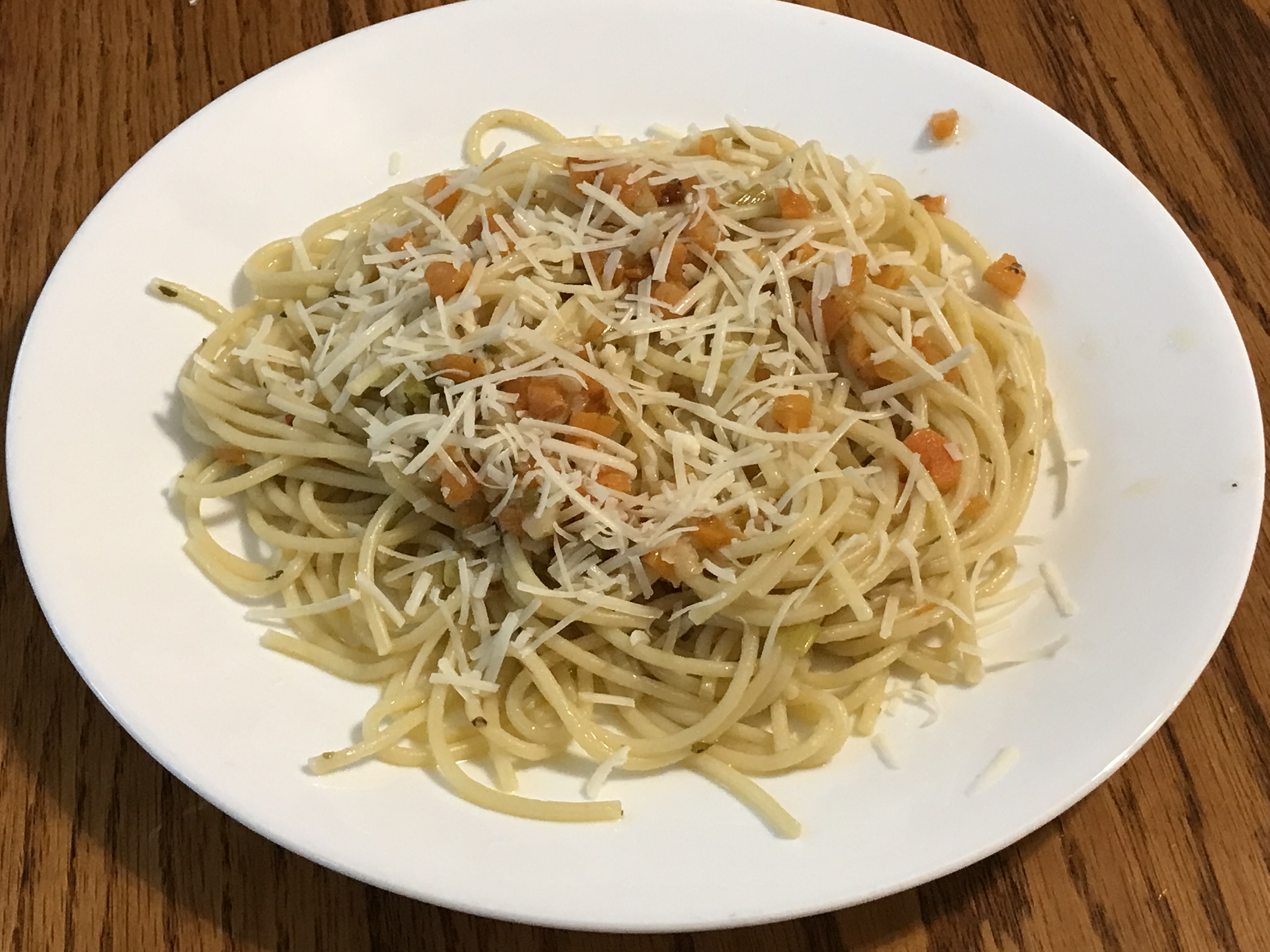
            Adding ginger to a pasta dish sounds strange at first, but it does give it an interesting flavor. Ginger and garlic work together to flavor the pasta, enhanced by oregano and hot pepper flakes, sweetened with carrots and vermouth, and enriched with olive oil, butter, and Romano cheese. The flavor was good, but the amount of water called for in the sauce made it very thin, causing it to pool at the bottom on the serving platter instead of sticking to the pasta. It was also a bit sweet from the vermouth.

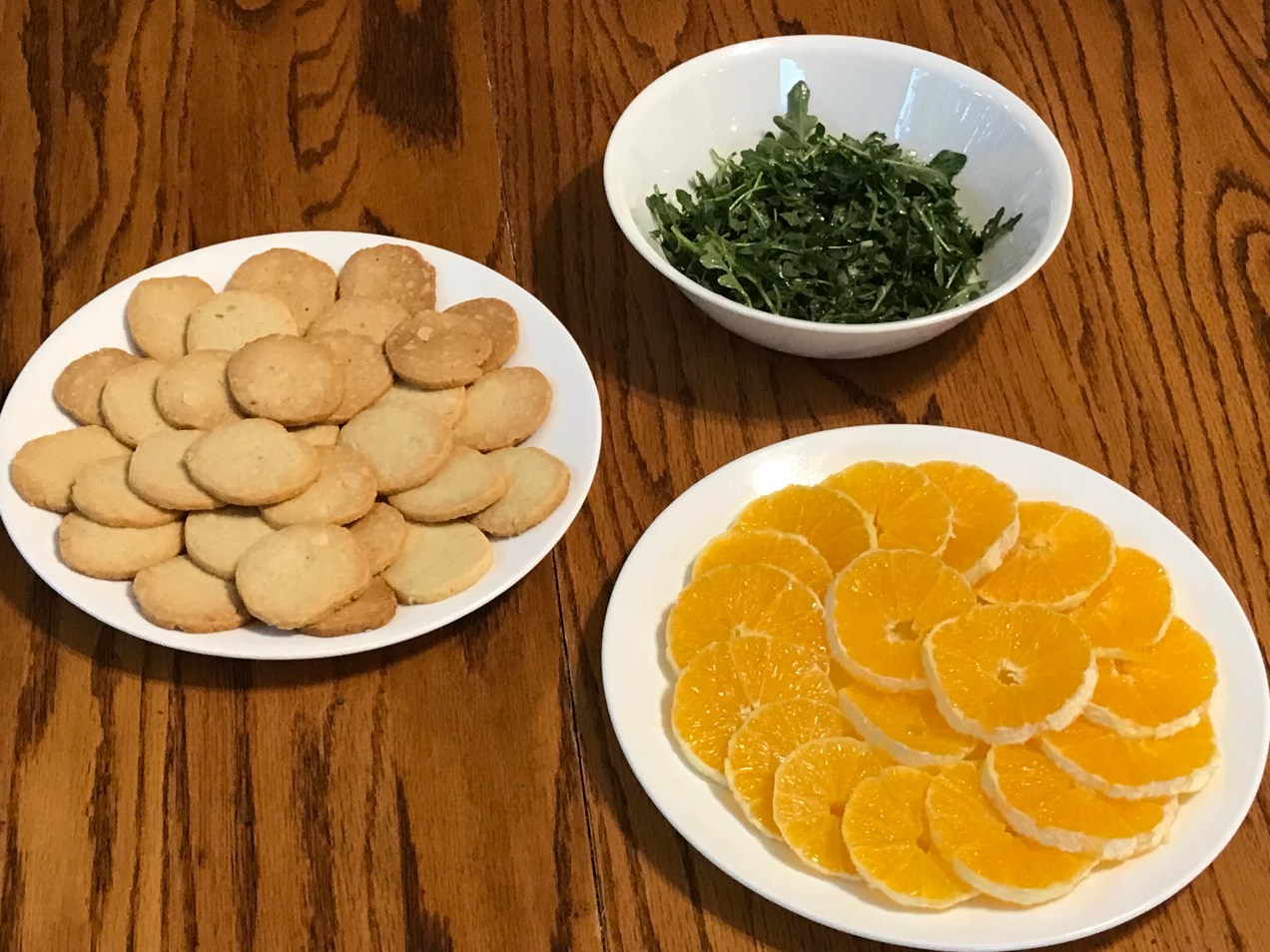
            The reason the salad is called “mimosa” is because of chopped hard-boiled egg yolks sprinkled over it. I omitted this here because of my dislike for hard-cooked eggs, particularly the yolks. I also substituted arugula for the chicory because it is not quite as bitter. The lemon juice dressing was still pretty sour, but it was a decent salad.

            Oranges grow all over southern Italy and are a popular dessert, especially in the winter. While they are often eaten plain, they can be embellished, as they are here with Marsala wine. Marsala is unique in that it is partially “cooked,” killing the yeast in the wine. As a result, it stays in good condition even after the bottle has been opened, at least for a while. This process also gives it a unique flavor. While I don’t drink much alcohol and am hardly a wine connoisseur, even I could pick out what seemed like briny and nutty flavors. Unfortunately, those flavors clashed with the oranges. A non-alcoholic experiment, with pineapple juice replacing the wine, was much better.

            Dessert had a slight glitch in the preparation. A buttery dough was rolled into logs, chilled, sliced, and baked on buttered baking sheets. That was all fine, but one thing I didn’t realize was that if the cookies weren’t removed from the sheets almost immediately after coming out of the oven they would stick. The first sheet of cookies ended up as a bunch of broken pieces. They were still delicious, but not exactly photo-worthy. The cookies from the second sheet were able to be removed intact, but an experiment a few days later with leftover dough proved that parchment paper worked better.

            Overall, this was a well-rounded menu, though I’m not sure if I’d make the pasta or salad again. The oranges and cookies, however, would be perfect for a Christmas spread. After the typically heavy main course and sides, the oranges would be a nice contrast; light and sweet with a bit of tartness. A little later, after everyone’s food has settled a bit, the cookies could be eaten with whatever other desserts are on offer.

Standard
Uncategorized

Cook’s Tour of Italy Menu 68 (Pgs. 217 – 220): Menu for 4, Near Brindisi

Region: Naples/Adriatic South (Along the Adriatic Coast)

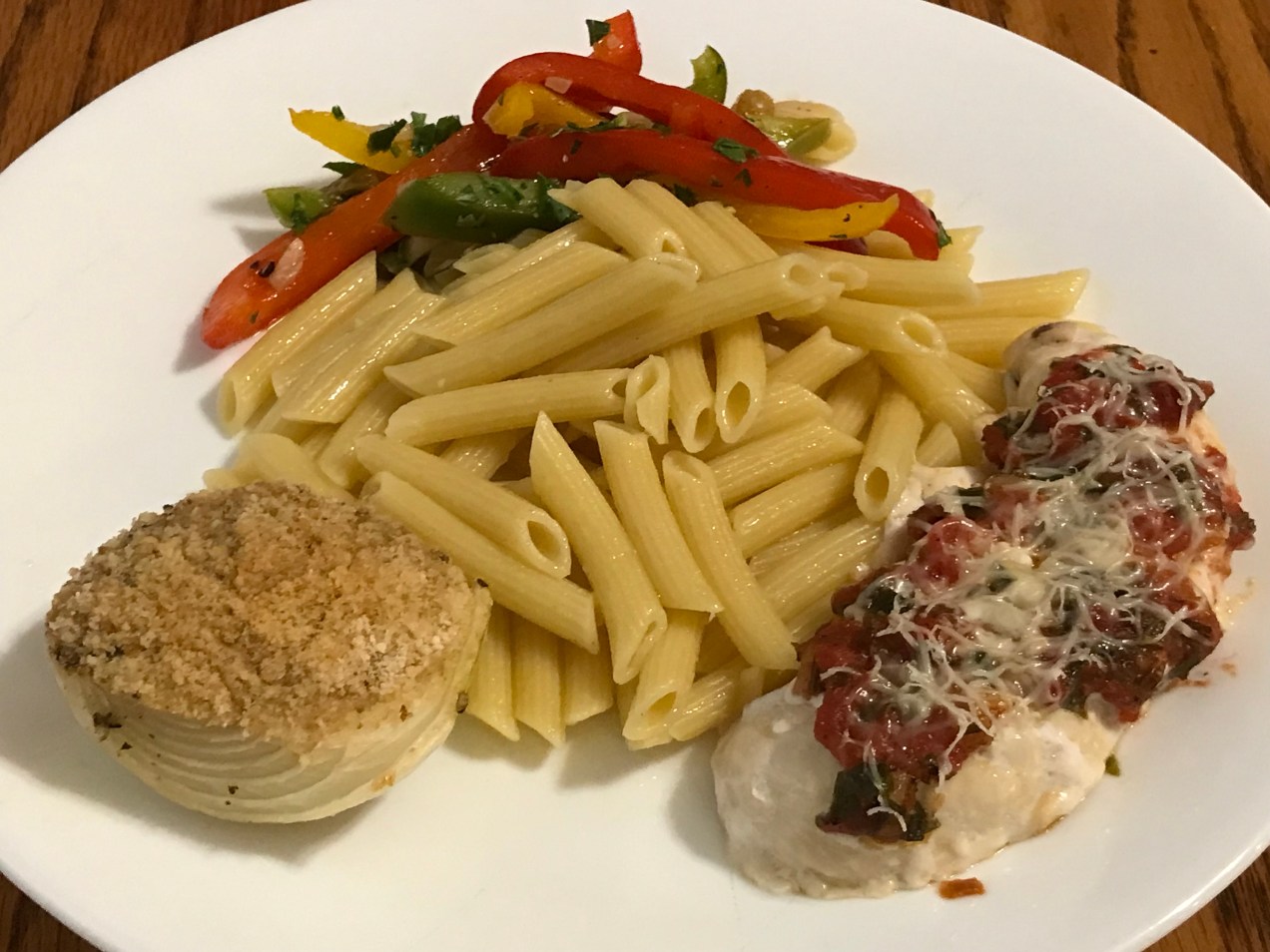
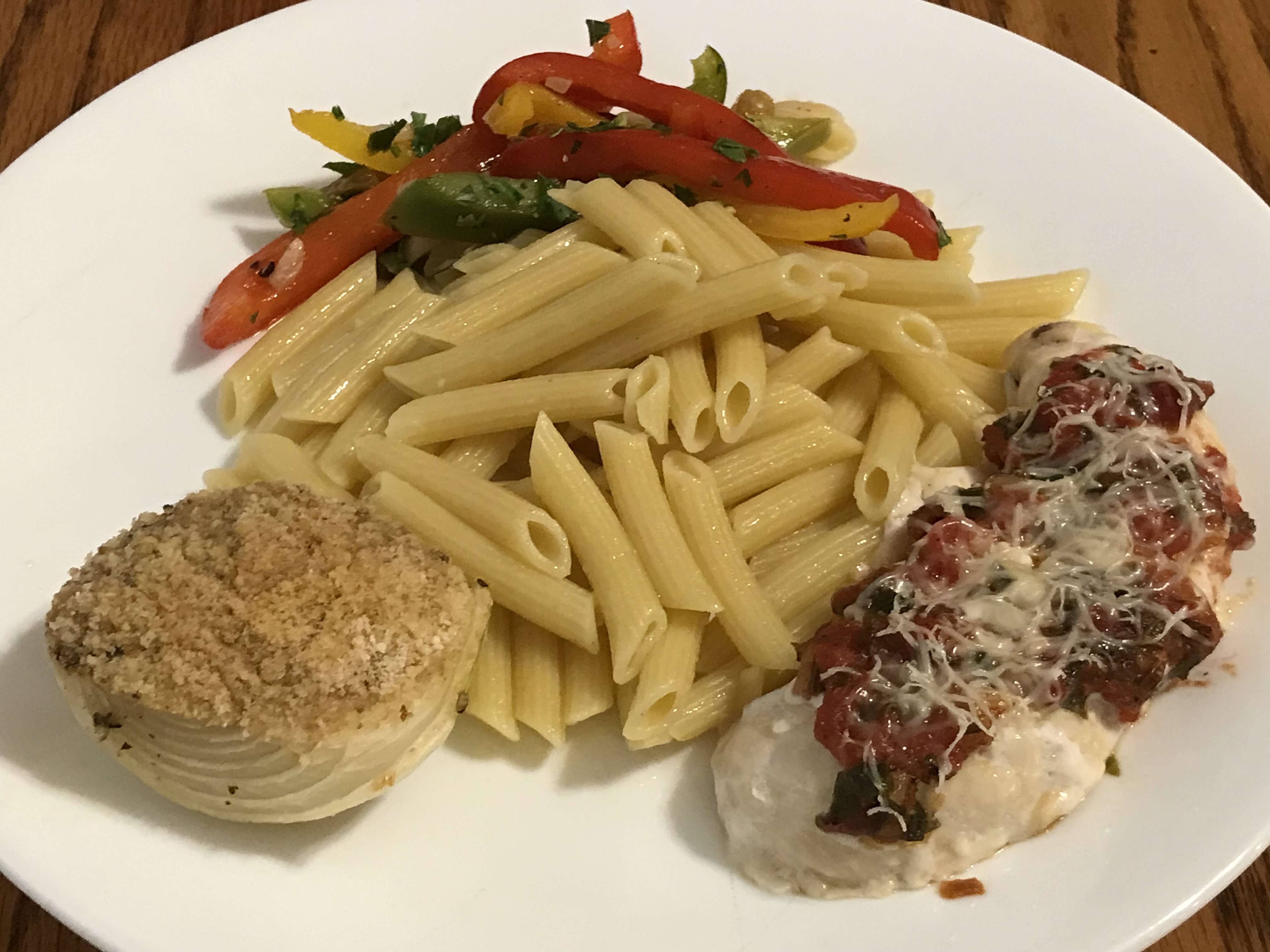
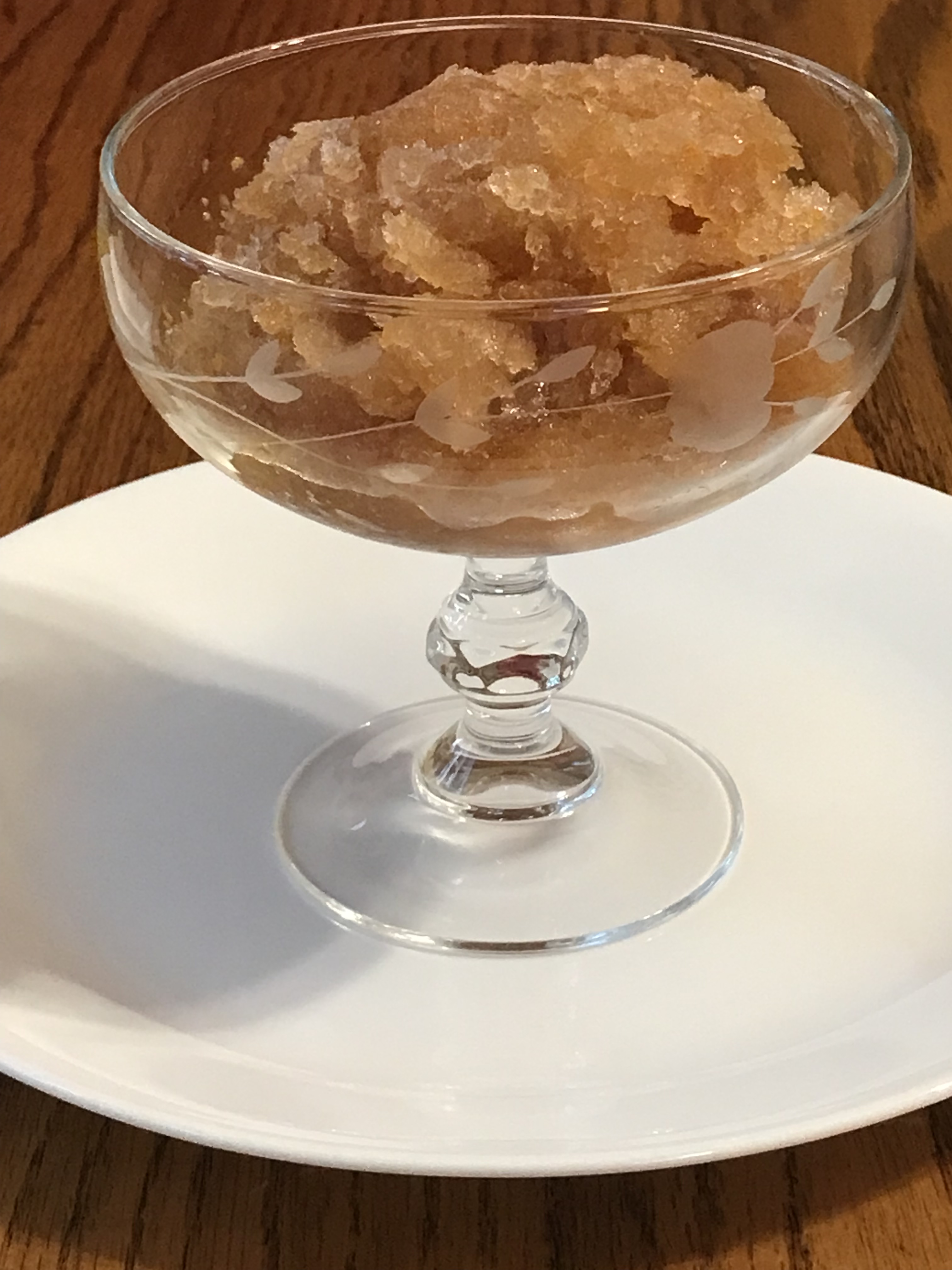
Menu: Peppers with Almonds, Basilicata Style, Chicken with Spicy Herbed Tomatoes, Baked Caramelized Onions, Tangerine Sherbet with Lemon

Recommended Wine: Campanaro Fiano di Acellino (from near Naples) or Greco di Tufo Vignadangelo

            The Adriatic Coast has a long history. The area was home to a number of Greek city-states in the first millennium BC, as was most of Southern Italy. During the 3rd Century BC, as the Romans moved into the area, the city-states brought in their ally Pyrrhus of Epirus. Despite a series of tactical victories, King Pyrrhus lost too many troops to sustain the war, thus giving rise to the term Pyrrhic victory. The region was subsequently part of the Roman Empire, then the Gothic Kingdom of Italy. In the 6th Century AD, it was the launching point of Byzantine Emperor Justinian’s attempt to retake the Western Empire. Though the Lombards took the region soon after, followed by the Franks under Charlemagne, Byzantine enclaves remained into the 11th Century, when the Normans captured the region.

            On a side note, the rise and fall of the Normans is one of the more fascinating stories in Medieval history. After a spectacular rise in the 11th Century, they reached the peak of their power in the 12th. At one point, they controlled not only their native Normandy, but also England, much of Western France, Southern Italy, Sicily, and the Crusader States in the Holy Land. But in the 1180s, territories began slipping from their grasp. After the loss of the Kingdom of Jerusalem in 1187, the rest of the Crusader States followed by 1291, when their final stronghold of Acre was captured by the Mamluk forces, who were based in Egypt. The Anglo-Norman kings lost Normandy itself in 1204. Sicily was lost in 1282. In the late 14th Century, during the Hundred Years’ War between France and England, the Normans living in France began to see themselves as French, while the Anglo-Normans became truly English. By the end of the Middle Ages, the Normans were what they were a few hundred years before: a unique local culture, but restricted to Northwestern France and subject to the French king.

            In the 15th Century, the forces of Aragon, who had conquered Sicily in the 13th Century, conquered the Kingdom of Naples, gaining control of the southern half of mainland Italy. Soon after, in 1480, the Ottoman Empire attempted to invade Italy through the region, occupying the city of Otranto. Though the arrival of reinforcements halted the invasion and the death of Sultan Mehmed II ended it for good, hundreds of the local population were martyred during the yearlong occupation. For most of the next 400 years, Spanish Habsburgs and then Bourbons controlled the area. Italy was finally unified in the 1860s.

            The cuisine here is much like in the rest of Southern Italy, with lots of olive oil, vegetables, citrus fruits, and some seafood. To be completely honest, this was not my favorite menu, although I would make the chicken again. The spicy tomato sauce added a nice flavor and kept the meat from drying out. As I have in the past, I replaced the pricey seafood (in this case lobster) with chicken. Pretty much any protein tastes good with tomato sauce and cheese, so there’s no reason to break the bank. As the menu seemed to lack a starch, I added some plain pasta to accompany the stronger-flavored dishes.

            While typically associated with meat or seafood, sweet and sour sauces can and historically have been used on a wide range of foods, including vegetables. Personally, though, the sweet and sour peppers were not to my taste. There was nothing wrong with them, but I like peppers better in an omelet, stuffed, or in stuffed pepper soup. The onions were also a bit of a disappointment. It may have been due to the type of onions, but they never became melt-in-your-mouth soft in the oven like they were supposed to, even with some extra time. Despite this, the leftover peppers and onions made a pretty good omelet filling the next day.

            The sherbet/sorbet didn’t turn out quite like I would have hoped, though some modifications I made may be to blame. To make it non-alcoholic, I replaced the lemon liqueur with a lemon syrup and the wine with sparkling juice. I was concerned that removing the alcohol would make the mixture freeze too solid, but the extra sugar in the syrup was enough to avoid that problem, which is why it was included. If you’re curious, both alcohol and sugar lower the freezing point of water-based liquids. The final flavor was decent, but too sweet to eat on its own, almost like marmalade. When combined with lemon-flavored sparkling water, however, it became like a slush and was fairly enjoyable, though I’m not sure I’d go through the trouble of making it again.

Standard
Uncategorized

Cook’s Tour of Italy Menu 71 (Pg. 227): Broccoli Rabe and Goat Cheese Pizza

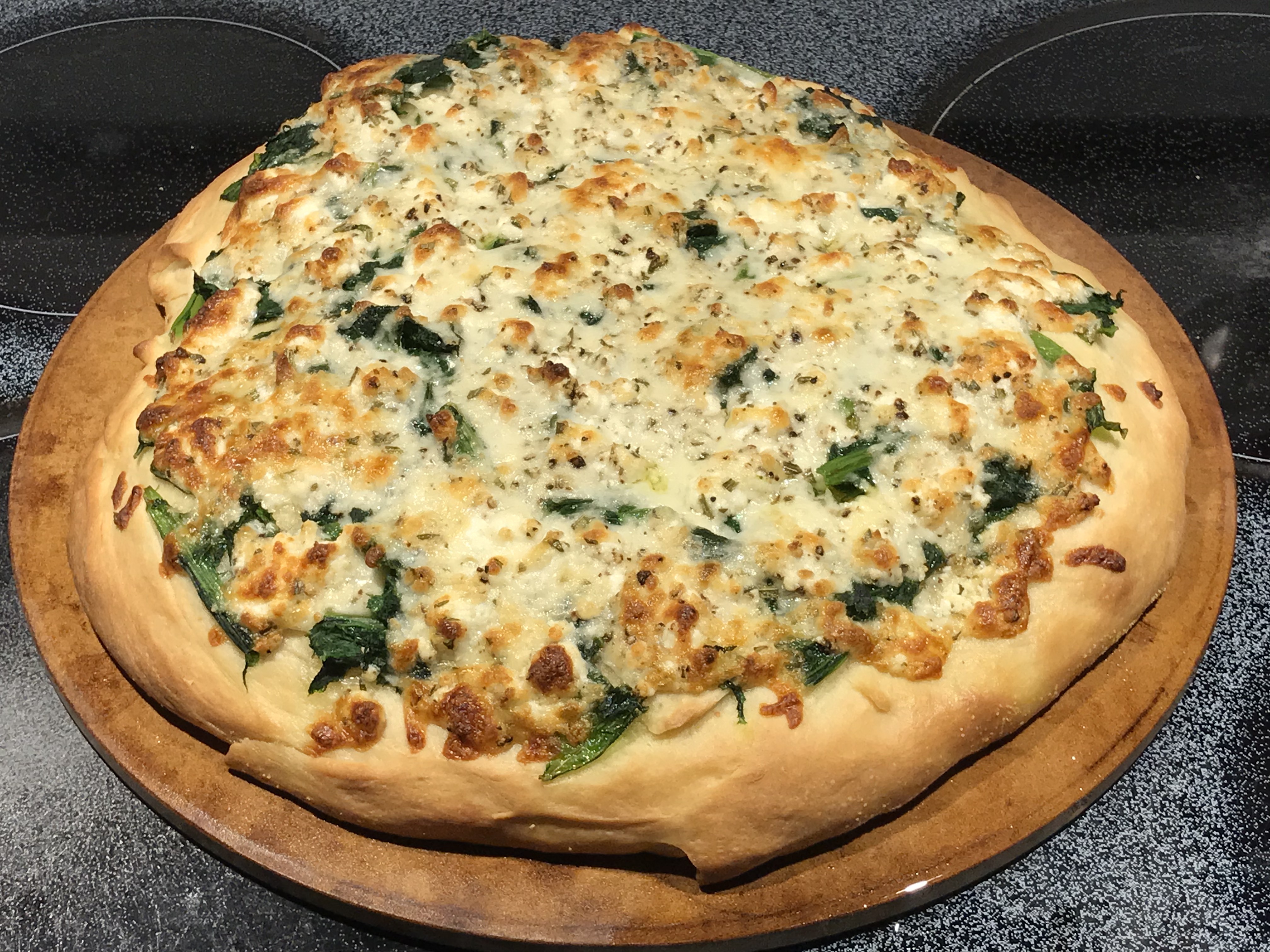
            This is another interesting, tomato-less pizza. Topped with broccoli rabe and goat cheese, it has notable bitter and tangy flavors. A thick, mild-flavored crust, garlic-infused olive oil, mozzarella, and rosemary help balance them out. One thing to note is that broccoli rabe is not the same as broccoli or broccolini. It is actually an entirely different plant, with a strong, bitter flavor that needs to be tempered by cooking. As broccoli rabe is difficult to find where I live, I used mustard greens, which supposedly have a similar flavor. They ended up a little bland, but I think that could be dealt with by reducing the blanching time. Overall, this was pretty good, but I liked the last pizza better.

Standard
Uncategorized

Cook’s Tour of Italy Menu 74 (Pgs. 228 – 229): Mozzarella Meatloaf

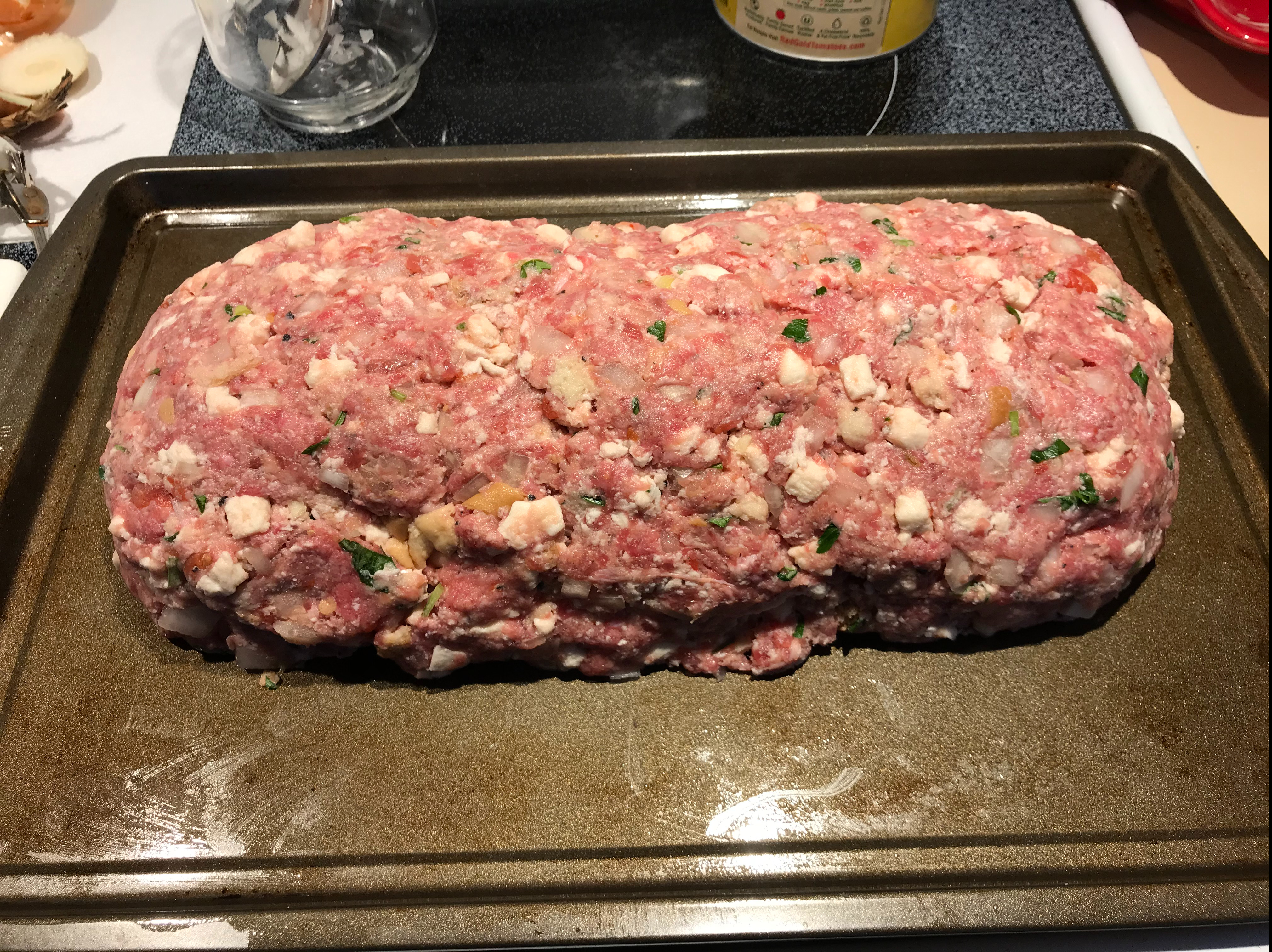
            Returning again to the South, we have what is essentially a giant, elongated meatball. The name, polpettone, is even similar to the word for meatballs, polpette. A mix of ground beef, Italian sausage, bread, parsley, eggs, fresh mozzarella, and grated Romano cheese is formed into a loaf shape and baked. The result can apparently be served warm or cold, on a sandwich if desired, with an optional tomato sauce. Since it was a weekend afternoon and I wasn’t exactly busy, I opted to make the tomato sauce on page 175 to go with it. Any left over could be used for pasta.

            This was fantastic. I never considered the choice of warm or cold, since it was the middle of winter and the idea of cold meatloaf is odd to me. After pulling it out of the oven, I let it rest for a few minutes while the intoxicating aroma saturated the kitchen, then sliced and dished it up, still piping hot. It did fall apart a little bit (it’s usually easier and neater to slice cooled food), but the taste was the important part. The flavors melded together beautifully, fat in the sausage and moisture in the mozzarella kept it from drying out, and the sweet, acidic tomato sauce was the perfect contrast to the rich meatloaf. Ultimately there was just enough sauce for the leftovers the next day. I used up the leftover ground beef and sausage to make another a few days later and we devoured it that one too. This recipe is just that good.

Standard
Uncategorized

Cook’s Tour of Italy Menu 67 (Pgs. 214 – 218): Menu for 6, Monopoli, South of Bari

Menu: Marinated Cannellini Beans with Oregano and Crisp Salami, “Grilled Eel” with Thyme, Zucchini Pudding, Assorted Melon with “Caprini” Cheese

Recommended Wine: Fiano de Avellino or Taurasi (White Wines), or Greco di Tufo

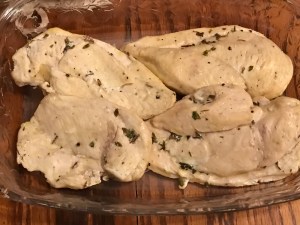
            Returning to the southern Adriatic coast, near Bari, we have another seafood menu. Since I have no idea where to find eel, I used the seasoning in the recipe on chicken, and since it was raining, I used a grill pan and cooked it in the oven. Apparently, conger eel is relatively available in American fish markets (pg. 216), but I suspect that is probably only true on the coasts and in the big cities. I doubt that I could find it any closer than Chicago, which is three hours away from where I live. With the worst pandemic in a century still raging, the journey is simply not going to happen. Maybe at some point I’ll try it with eel, a favorite of both the Greeks and Romans, but for now, adapting is necessary.

            The beans, marinated with vinegar, oil, and oregano and served with pieces of crisped salami are pretty good, but it was the zucchini dish that really stood out. Shredded zucchini is salted and squeezed out to remove the excess moisture (which could split the custard) before being mixed with eggs, half-and-half, basil, and diced red peppers. The end result is a cross between a quiche and a custard, with a creamy texture and mild vegetable flavors. Ultimately, it was one of my favorite recipes from the book.

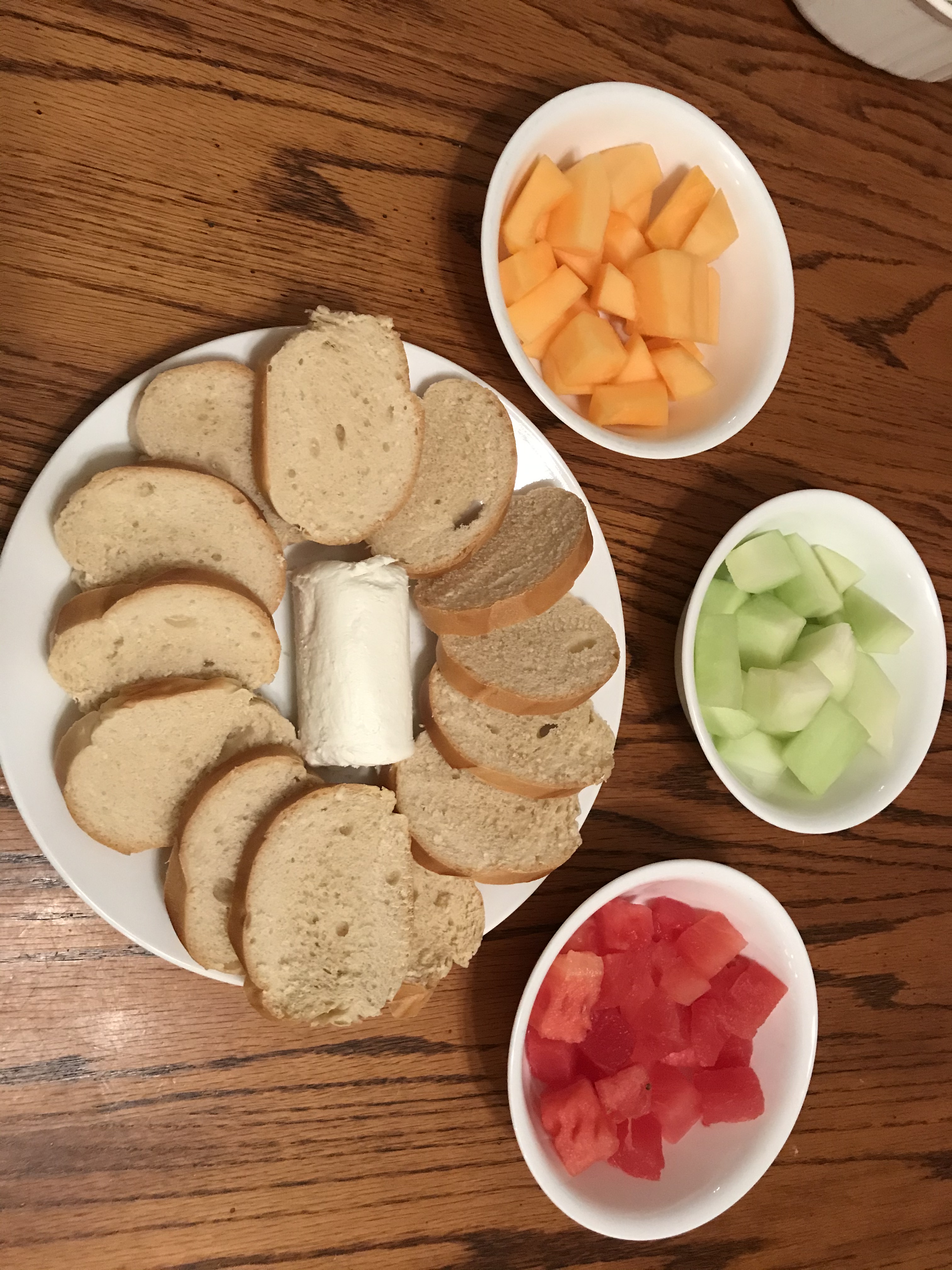
            For dessert, we have an authentically Italian fruit and cheese combination. Watermelon, cantaloupe, and honeydew are served alongside toasted bread and caprini cheese, which, as you might infer from its name, is a goat cheese. As caprini is hard to find in the US, I replaced it with a regular goat cheese, with good results. The cheese makes for a more substantial dessert than fruit alone, while the fruit provides sweetness without a bunch of sugar. If you want a sweet but semi-substantial dessert while watching how much sugar you’re eating, this combination checks all the boxes.

Standard
Uncategorized

Cook’s Tour of Italy Menu 66 (Pgs. 211 – 214): Menu for 4, Apulia (Adriatic South)

Menu: Potato and Zucchini Soup, Shrimp in Olive Oil and Lemon Juice with Rosemary, Red Bell Peppers Stuffed with Pine Nuts and Golden Raisins, Roasted Figs with Almonds and Chocolate

Recommended Wine: Terradora Di Paolo, Fiano Di Avellino from Campania

            Heading south again, we enter the region of Apulia, now called Puglia, in the Southeast along the Adriatic Coast. Despite being across the Apennines on the other side of the peninsula, the food here has a lot of similarities to that from the Naples region (Campania). In both places, pasta, vegetables, olive oil, and fruit are staples, supplemented with smaller amounts of meat, dairy, and seafood. These ingredients are often prepared differently, however. While bold, exuberant flavors dominate around Naples, Puglia tends to favor more clear, straightforward flavors. (Text, pg. 211)

            Like much of Southern Italy, Apulia was part of Magna Graecia and had a number of Greek colonies from the 7th to 3rd Centuries BC. As discussed on page 210, the Greek influence is stronger here than in Naples. At first this seems surprising, since Naples was also a Greek colony. In fact, its original Greek name, Neapolis, roughly translates as “New City.” I suspect, but cannot be sure, that geography had something to do with the difference. The coast of Apulia is more or less directly across a strait from the Greek mainland, while Naples is on the opposite side of the peninsula and only about 120 miles from Rome over relatively flat terrain. As a result, though Apulia did eventually Romanize to a degree, the process was slower and less thorough, with more lingering Greek influences.

            Many elements of this menu have a long history. Seafood has been an essential element in the diet in most coastal regions since before agriculture. Olive oil was essential in the Ancient Mediterranean, and the recipes of the Roman gourmet Apicius frequently contain anchovies or fish sauce. Raisins and pine nuts were frequent additions to sauces and stuffings both in the Ancient and Medieval world. Other fruits and nuts, including almonds and figs, have always been popular desserts.

            In fact, in his bestselling book Guns, Germs, and Steel, the anthropologist Jared Diamond discusses how figs were domesticated thousands of years before apples. Basically, fig trees can self-pollinate and produce seeds yielding identical offspring, making breeding the trees fairly straightforward for early farmers. Apple trees, on the other hand, tend to pollinate other apple trees, usually producing offspring different from the parent. To ensure identical offspring, the much more complicated technique of grafting is required. This process was not mastered until the Classical Period around 500 BC, so until then, apple trees remained more or less wild, though widespread. Meanwhile, the ancients had been feasting on domesticated figs, both fresh and dried, for millennia.

            A few elements, such as the lemon and rosemary in the shrimp, are Medieval introductions, but most of this menu would not be possible without ingredients originally from the Americas. Potatoes, zucchini, peppers, and chocolate were brought to Europe by the Spanish in the 16th Century but took a while to catch on. By the end of the century, hot chocolate was fairly common among the wealthy in Spain, and in the next century spread throughout Europe. Since the historic Kingdom of Naples, which included pretty much all of Italy south of Rome, was controlled by Spain for most of the Early Modern Period, these New World ingredients may have been arrived sooner in Puglia than in many parts of Europe. Still, with the exception of chocolate, they were not widely consumed until the 18th Century.

            Since peppers and potatoes (and tomatoes, for that matter) are in the same family as deadly nightshade, they were viewed with suspicion at first and only eaten out of necessity. As author Ken Albala explains in Food in Early Modern Europe, their high yields helped peppers and especially tomatoes catch on throughout Southern Europe, but for some reason, potatoes took even longer. Despite their hardiness, yield, and versatility, most Europeans were only starting to accept them in the late 18th Century.

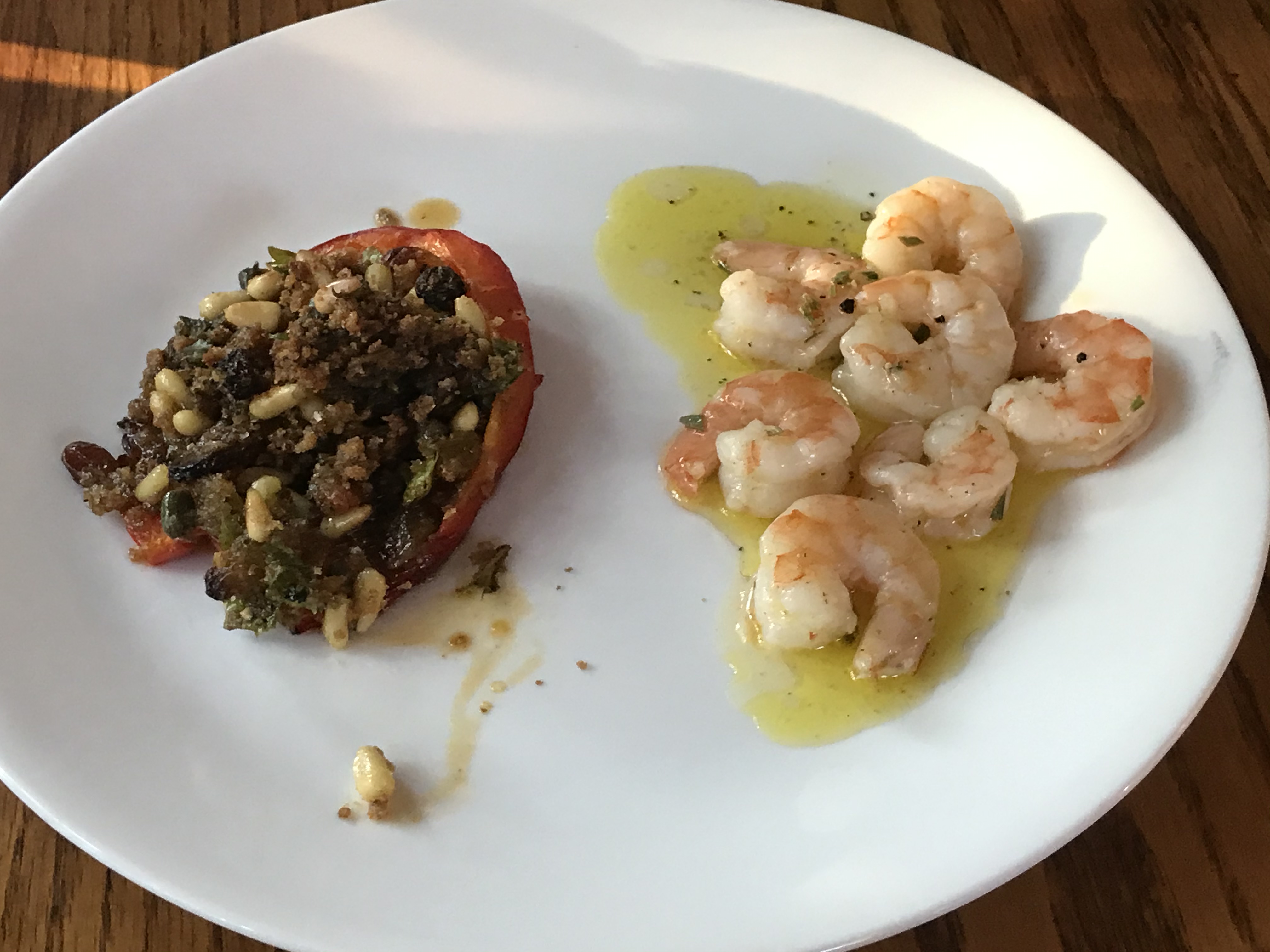
            Now, let’s look at the menu. It features a number of southern Italian staples, including zucchini, dried pasta, seafood, olive oil, citrus fruit, peppers, and figs. Due to a timing miscalculation, the shrimp and peppers were eaten before the soup. The shrimp were cooked for a few minutes in boiling water, then cooled and marinated in lemon juice, olive oil, and rosemary. After being roasted and peeled, the peppers were stuffed with a mixture of breadcrumbs, raisins, pine nuts, parsley, and a bit of anchovy, then baked. This was all good, but pretty salty. As in most of the book’s recipes, salt and pepper are to taste, but I seem to have used a bit much, especially for the peppers. Plus, the anchovy flavor in the peppers was a bit strong. The raisins in the stuffing helped cut through this, but if I were to make them again, I think I would not only be more careful with the salt, but also reduce the amount of anchovy.

Shrimp and stuffed peppers

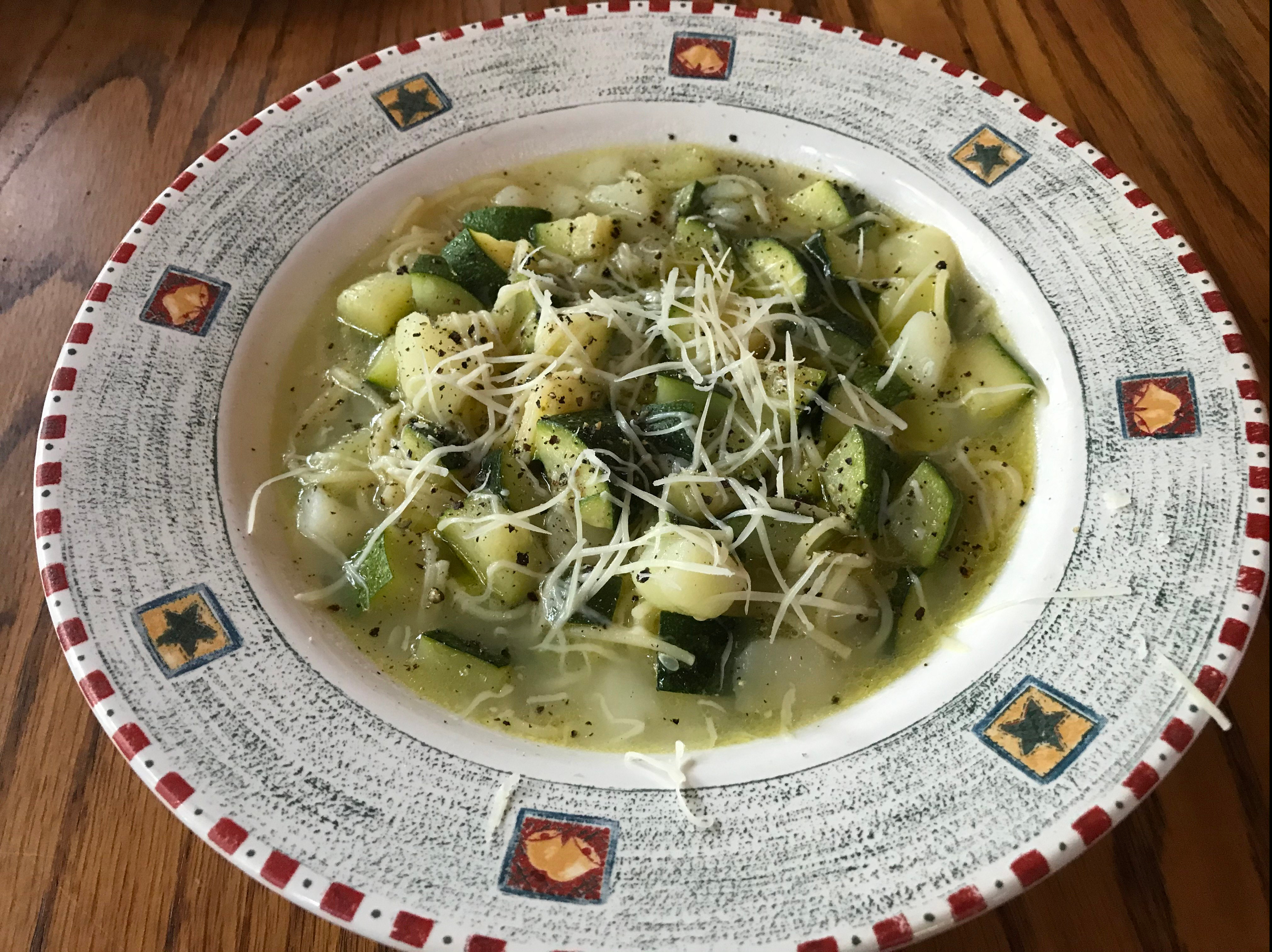
            After the salty, strong flavors, the soup was really nice contrast. It’s simply a mix of potatoes, zucchini and vermicelli, cooked in salted water with a little olive oil, topped with a sprinkle of Parmesan cheese and black pepper. On page 211, Mr. Famularo describes a friend’s skepticism upon being told about the soup, wondering how it had any flavor, but then enjoying it to the point of it becoming a favorite. Upon reading the recipe, I had a similar initial reaction. I thought that without at least a bit of onion, it would be extremely bland, but it all worked together. The flavor is mild, but the large quantity of vegetables for the amount of water ensures that the broth doesn’t taste like water. The vermicelli and olive oil add body, while the cheese and pepper add another layer of depth. I was surprised by how much I enjoyed it.

Potato and zucchini soup

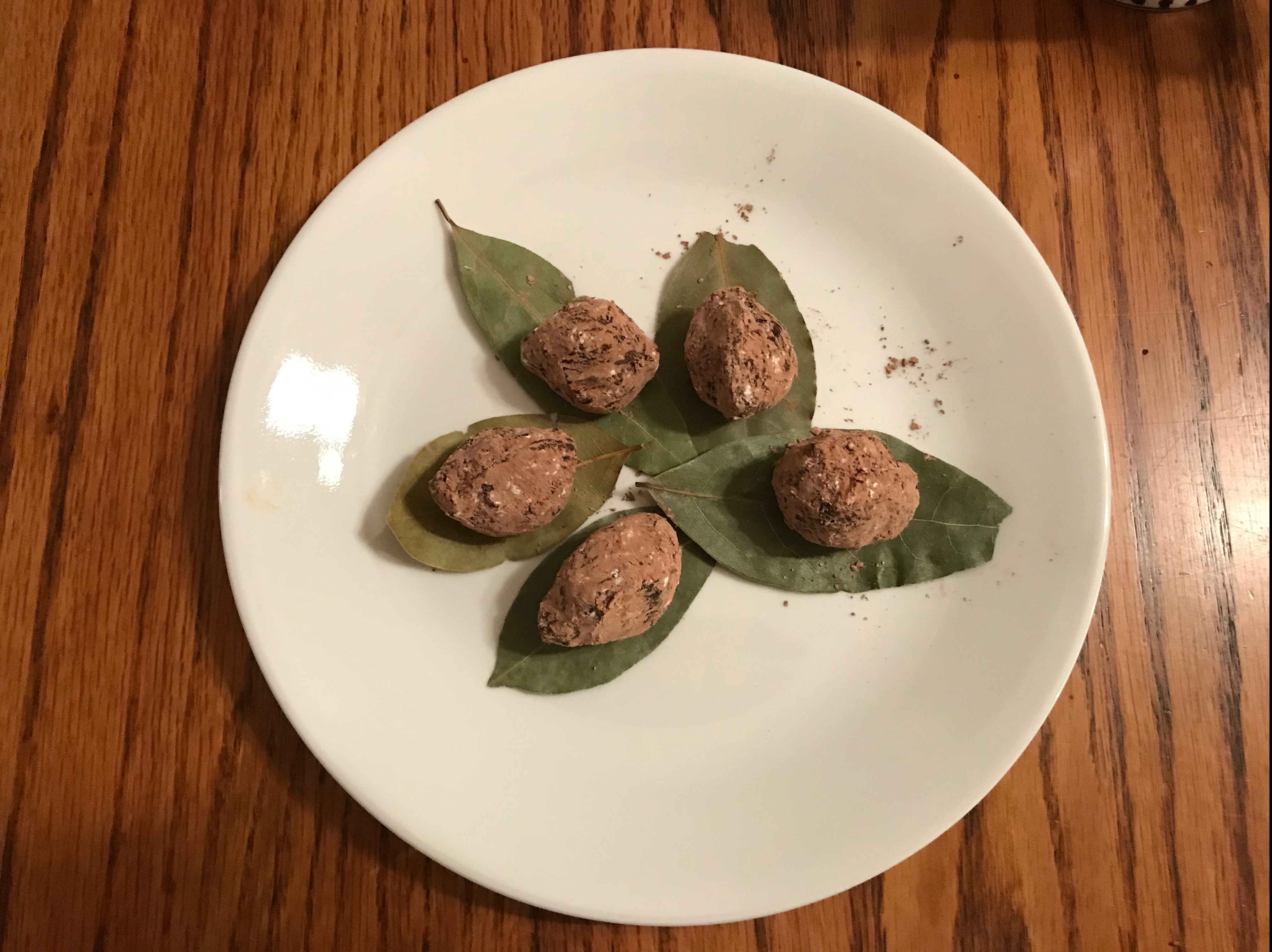
            The stuffed, roasted figs were a bit time-consuming to make, but they can be made ahead and last for several days in an airtight container. Each dried fig has a pocket cut in the side, which is then stuffed with a roasted almond, a small piece of dark chocolate, a few fennel seeds, and a few small pieces of candied peel. After baking, they are rolled in a mix of cocoa powder and powdered sugar while still hot and stored in an airtight container with bay leaves. These were definitely different, but quite enjoyable. The figs and candied peel are quite sweet, but the fennel and dark chocolate help balance that, while the almonds provide a nice crunch. Overall, this was a tasty and balanced dinner.

Stuffed roasted figs
Standard