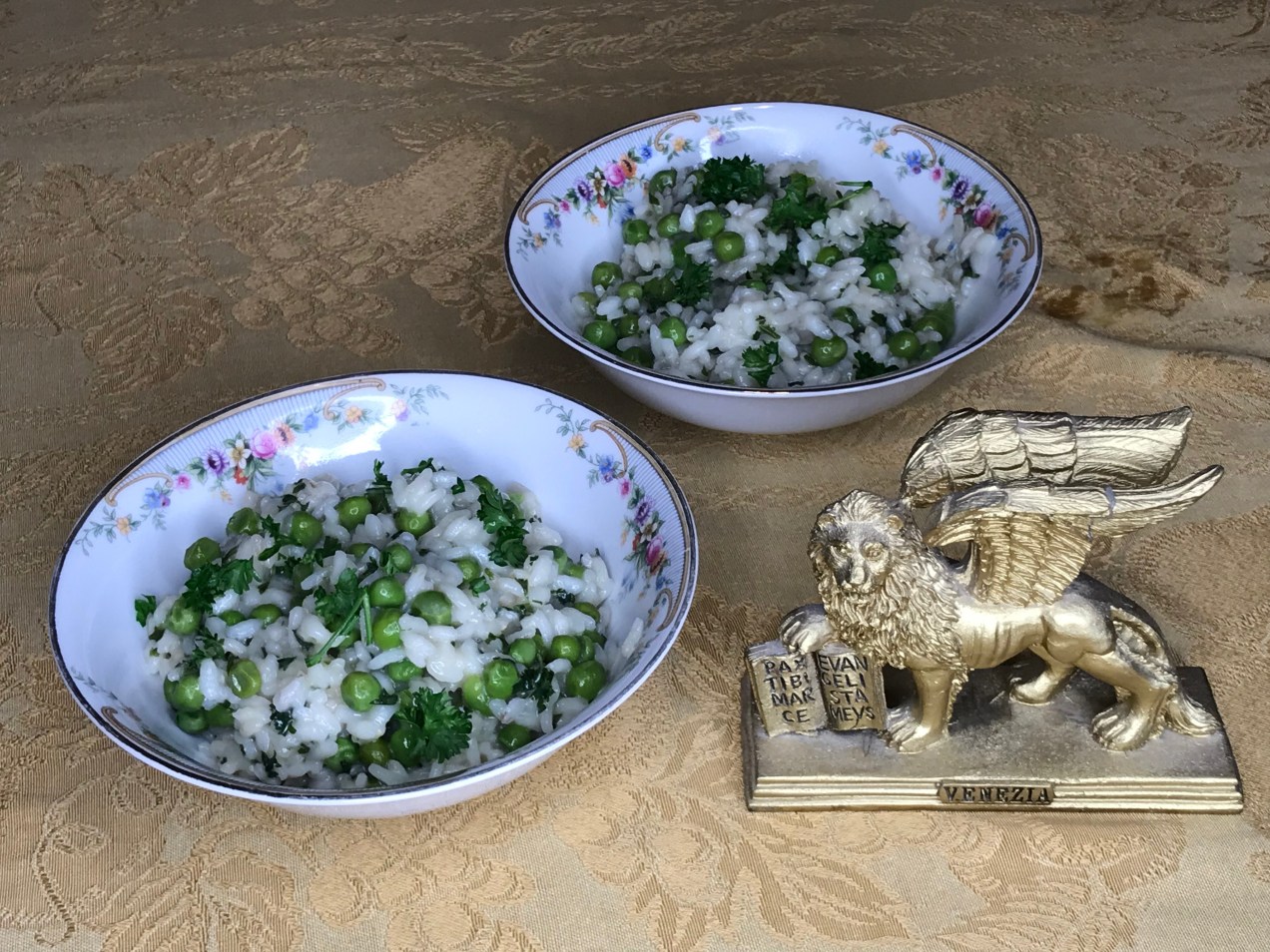
Risotto verde
food history, italian cuisine, recipes, rice, spring, vegetarian

Risotto Verde: The Taste of Spring

Risotto verde

            Among the numerous varieties of risotto, there are a few classics, as detailed in 1000 Foods to Eat Before You Die on pages 233 – 234. Risotto bianco is the basic kind, made simply with rice, butter, a little onion or shallot, white wine, broth, parmesan cheese, and maybe some pancetta or bacon. Milanese is colored a bright golden yellow with saffron. Nero is colored black with squid ink. Piedmontese is enhanced with white truffles. Other varieties might include seafood, mushrooms, or vegetables.

            As you can probably guess, risotto verde is meant to be green. Frequently a spring specialty, it gets its color from parsley and either sweet green peas or asparagus. It’s very fresh-tasting and, when made with frozen peas, surprisingly quick and easy to prepare. To keep everything bright and fresh, I didn’t use any pancetta for my own recipe.

            Technically, you’re not “supposed” to reheat risotto, because it thickens upon standing and can become “gluey.” I’ve never had this problem, or maybe the texture upon reheating just doesn’t bother me. Just add a few drops of water before putting it in the microwave. It will still be a great accompaniment to your chicken sandwich for lunch, and it’s way healthier than chips.

Ingredients:

  • 4 tablespoons (or ¼ cup) butter, or 2 tablespoons each butter and olive oil
  • 1 shallot or ¼ onion, minced
  • 1 ½ cups arborio or other short-grain rice
  • 4 tablespoons (or ¼ cup) dry white wine (something light like pinot grigio), or replace with extra broth
  • 4 – 5 cups chicken or vegetable broth (broth made from poaching chicken works great here)
  • 1 10-ounce bag frozen peas
  • Half bunch parsley, large stems removed, minced
  • 1 cup grated parmesan cheese

Directions:

  1. Combine the broth and peas in a medium saucepan and bring to a boil. Turn off heat, but leave on the stove.
  2. Melt the butter in a large skillet over medium heat. When bubbling, add shallot or onion and sauté for about 2 minutes, until softened.
  3. Add the rice and cook, stirring constantly, until coated and translucent, about 2 minutes.
  4. Stir in the wine and cook, stirring constantly, until evaporated, another 2 or 3 minutes.
  5. Add the broth and peas, a ladleful at a time, stirring constantly, waiting for each to absorb before adding the next. Stir in the parsley about halfway through, saving a little to sprinkle on top at serving time.
  6. After adding 4 cups of broth, the risotto should be slightly liquid. If it seems too thick, add a little more broth.
  7. Remove from the heat, stir in the parmesan, sprinkle with remaining parsley, and serve immediately.

For more recipes, history, and fun facts sent directly to your inbox, please like, subscribe, and/or share.

One-Time
Monthly
Yearly

Make a one-time donation

Make a monthly donation

Make a yearly donation

Choose an amount

$5.00
$15.00
$100.00
$5.00
$15.00
$100.00
$5.00
$15.00
$100.00

Or enter a custom amount

$

Your contribution is appreciated.

Your contribution is appreciated.

Your contribution is appreciated.

DonateDonate monthlyDonate yearly
Standard
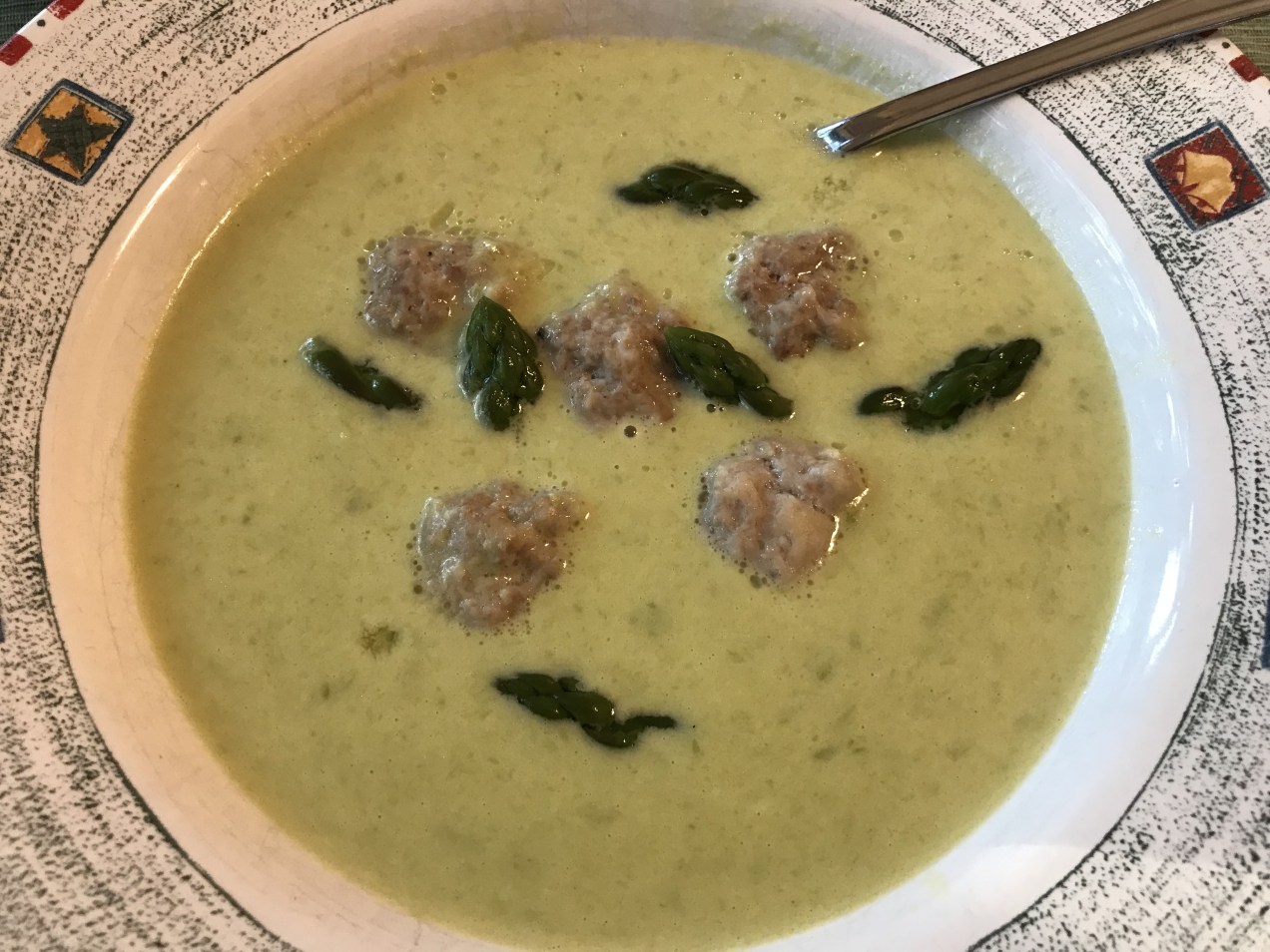
Aspargessuppe - Danish asparagus soup with mock veal dumplings
danish cuisine, food history, soup

Aspargessuppe: Danish Spring Asparagus Soup

1000 Foods (pgs. 344 – 346), recipe found in text

            Ever since the days of Ancient Rome, asparagus has been a symbol of spring and early summer. Ready sooner than most other vegetables, it seems to be especially popular in northern Europe, where long winters mean a longer season without fresh produce. Perhaps this makes people eager to enjoy everything about summer while they can.

            An interesting Danish recipe for asparagus is a soup enriched with veal dumplings and garnished with asparagus tips. Supposedly, it is not as common as it used to be, at least in restaurants. Most likely, this has to do with how fiddly it is to make. The recipe in the text requires at least five saucepans – one to cook and puree the asparagus, one to heat cream or half-and-half, one to heat broth, one to make a combination bechamel/velouté sauce, and one to cook the dumplings. Egg yolks are added at the last minute. Once they are, the soup has to be heated very carefully to prevent curdling.

            I don’t have five saucepans, and I assume most other people don’t either. If the broth and cream are heated in the microwave, the number can be reduced to a more manageable three. You can save another step by not straining the pureed asparagus. The soup won’t be as smooth, but I personally prefer for it to have a bit more texture.

            The first thickener is a combination of two of the French “mother sauces,” bechamel and velouté. Both use a butter and flour mix called roux to thicken a liquid. For bechamel, or white sauce, the liquid is milk, and for velouté, it is a light broth, typically poultry or fish. Yes, velouté is essentially gravy, but using the French term makes it sound fancy. Additional thickening comes from tempered egg yolks. About half of the soup is gradually whisked into the beaten egg yolks to bring them up to temperature, then the mix is added to the pot and heated carefully.

            This was an excellent soup. The asparagus flavor was clear and distinct, enriched but not overpowered by the bechamel/velouté and egg yolks. For some reason, the combined beef and pork “veal” dumplings didn’t puff up like they were supposed to. I suspect this was because I had previously frozen them and didn’t allow adequate time to thaw before cooking, but they still tasted good. For an easier recipe, the soup would be just as good plain. As with most asparagus soup recipes, the asparagus tips are set aside after cooking, reserved as the perfect garnish.

One-Time
Monthly
Yearly

Make a one-time donation

Make a monthly donation

Make a yearly donation

Choose an amount

$5.00
$15.00
$100.00
$5.00
$15.00
$100.00
$5.00
$15.00
$100.00

Or enter a custom amount

$

Your contribution is appreciated.

Your contribution is appreciated.

Your contribution is appreciated.

DonateDonate monthlyDonate yearly
Standard