
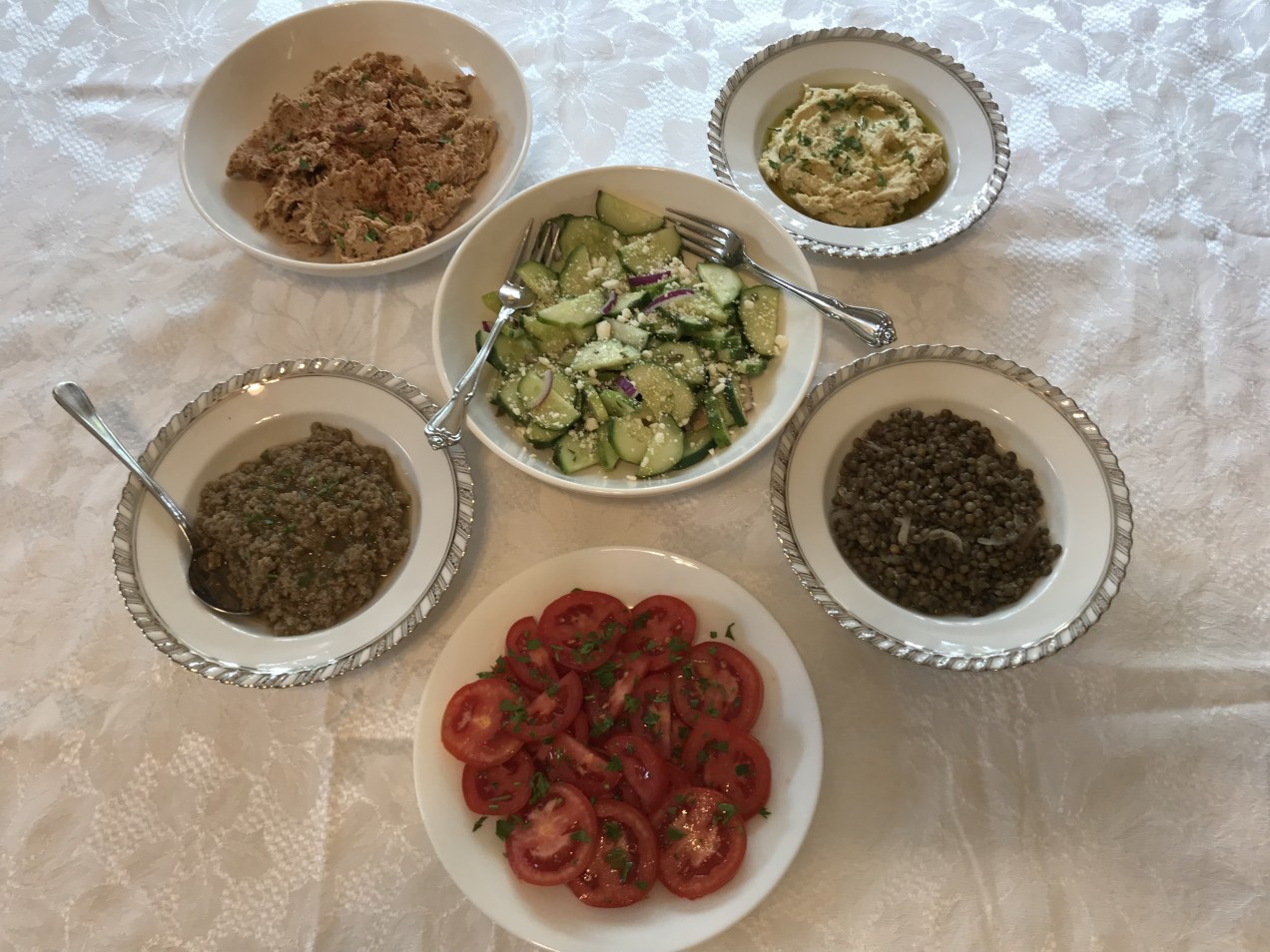
Menu: Hummus, Tahini Dip, Tomato Salad, Cucumber Salad, French-Style Lentil Salad, Turkish-Style Chicken with Walnut Sauce (last two recipes in subsequent posts)
Just as Spain has tapas and Italy has antipasti, Greece and the Middle East have meze. Reading through Mimi Sheraton’s description of the different varieties in 1000 Foods to Eat Before You Die (on pages 498 – 500), it became abundantly clear they would be perfect for entertaining a crowd, particularly during the summer. Most of the common varieties are served cold or at room temperature, and so could be made ahead. Only a few need last minute cooking, and many require no cooking at all. For a barbecue, meze would be ideal to either nibble before the other food comes off the grill or to serve alongside the main dishes.
Because meze are traditional over such a large area, with diverse landscapes, climates, and traditions, the variety is endless. Common options include olives, vegetable and legume salads, sausages, various dips like hummus or baba ghanoush, fish, stuffed grape leaves, fried items, tabbouleh, and phyllo pastry turnovers, alongside more local specialties. A large proportion of meze are flavored with lemon, garlic, olive oil, or fresh herbs.
Meze usually serve as a leisurely meal on their own, so having a variety with some substantial dishes is important. So is plenty of pita bread. For a representative summer/early fall selection, I chose hummus (a classic and always a favorite), tahini dip (interesting on its own), tomato, cucumber, and lentil salads, and Cerkez tavugu (Turkish chicken with walnut sauce). As long as you have a food processor, this entire menu is easy to put together. It’s a good idea to make the hummus, tahini dip, lentil salad, and chicken dish a day ahead to allow time for flavors to meld.

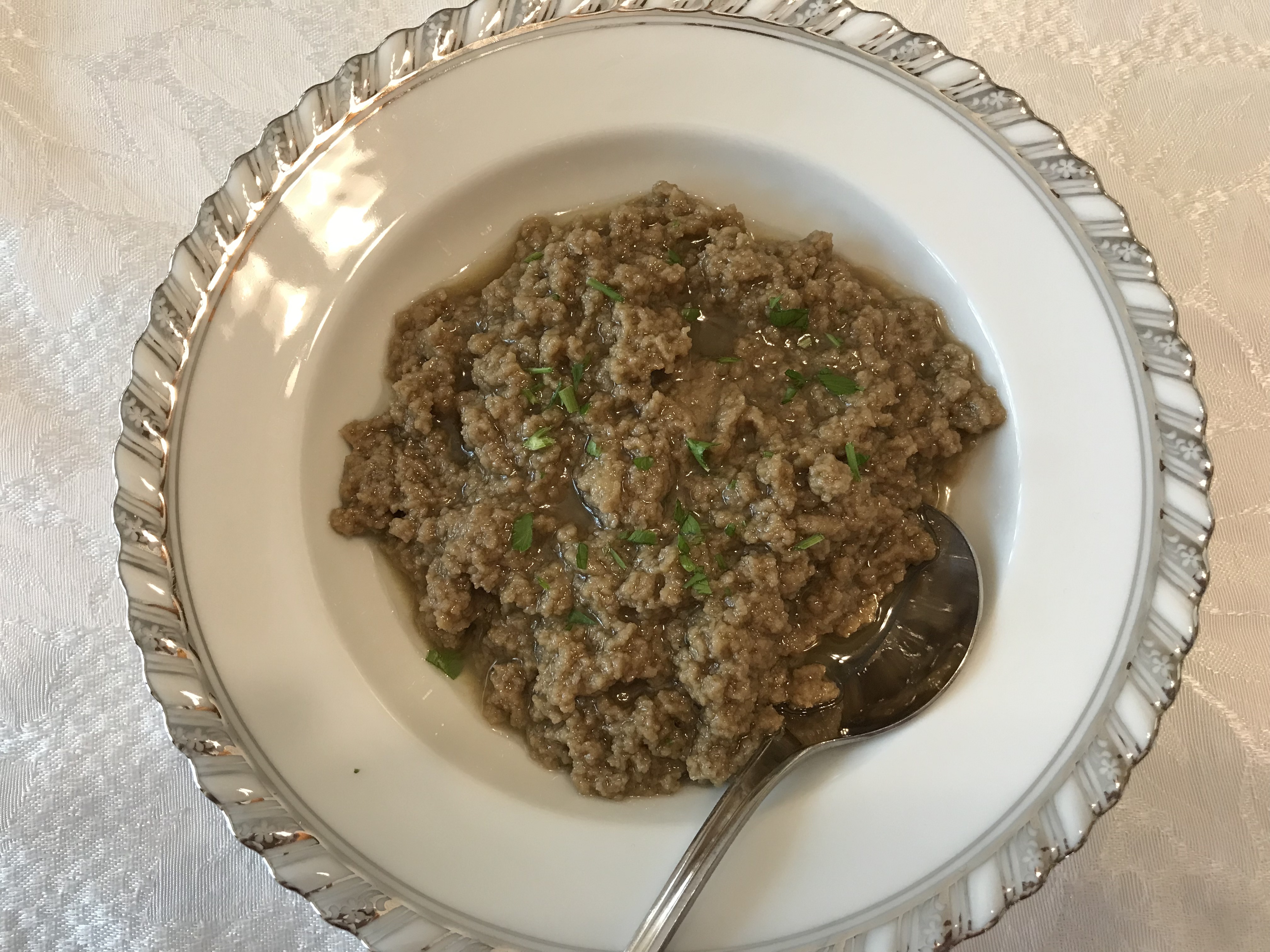
To make hummus:
Across the Middle East, hummus is frequently eaten as a main dish with pita bread. The idea makes perfect sense. Historically, people got much more protein from legumes like chickpeas than from meat. Comparatively speaking, the chickpeas and flavorings were relatively affordable staples. True connoisseurs say that the best hummus is made with a mortar and pestle, with dried chickpeas, but to save time, canned chickpeas and a food processor make a delicious, protein and vitamin-packed snack or meal.
Ingredients:
- 1 can chickpeas/garbanzo beans (about 15.5 ounces), drained
- 4 cloves garlic (peeled, crushed with the side of a knife, and roughly chopped
- ½ cup tahini (sesame seed paste)
- Juice of ½ to 1 lemon
- ¼ cup olive oil, plus more to drizzle if desired
- Chopped parsley to garnish, if desired
- Pita bread and/or vegetables, for serving
Directions:
- Combine the chickpeas, garlic, tahini, and juice of ½ lemon in the bowl of a food processor with a pinch of salt. Process to make a thick, slightly gritty paste, scraping bowl as necessary.
- With the motor running, slowly add the olive oil through the feed tube. Once the oil is incorporated, taste for salt and lemon, adding more if necessary.
- Add water to thin hummus to the desired consistency. ¼ cup produces a thick paste, for a thinner paste, use ½ cup.
- Spoon hummus into a bowl. If desired, drizzle with olive oil and garnish with parsley, olives, roasted peppers, etc. (In the Middle East, pomegranate seeds are a popular garnish).
- Serve with pita bread and/or vegetables for dipping.
To make tahini dip:
Tahini actually makes a fascinating, although distinctly bitter, dip on its own. Personally I prefer it sweetened for halva or used for hummus, but the bittersweet flavor is beloved across the Middle East. Here its flavor is further enhanced with garlic, salt, and lemon juice. All you have to do is crush 1 garlic clove with ¼ teaspoon salt in a mortar and pestle until it becomes a sticky paste. Stir the garlic paste into ½ cup of tahini, and mix in 2 teaspoons lemon juice and 2 tablespoons water. The paste will appear to “seize,” just keep stirring to smooth it out. Don’t add more water, which will make the oil separate out. Place in a bowl and serve with pita bread and/or vegetables (during the late summer and early fall, fresh carrots are particularly tasty).
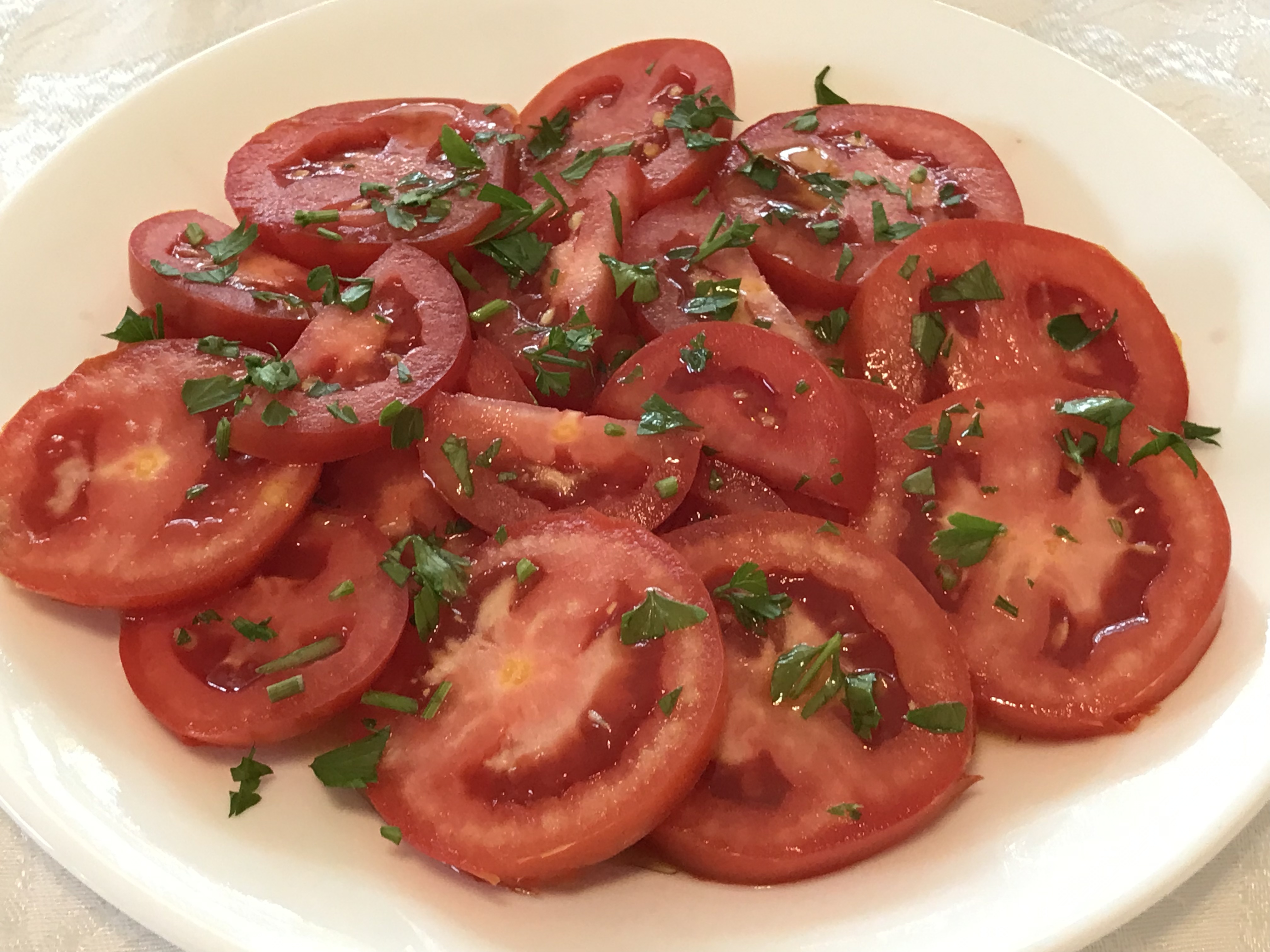
To make tomato salad:
First, make sure you have fresh seasonal tomatoes. If so, cut them into chunks or thin slices, place on a plate, drizzle with olive oil, salt and pepper to taste, and garnish with chopped parsley for a beautiful red and green effect. (If tomatoes aren’t in season, choose a different meze dish for the best flavor.)
To make cucumber salad:
Cucumbers, with their mild flavor and high water content, are quite refreshing, which reminds me of a story I heard recently. During the early centuries AD, Christian ascetics competed with each other, seeing who could eat the least food, go the longest without sleep, and so on. This was particularly common in the deserts of Egypt and Syria. In one instance, an ascetic tested his resolve by sitting in the hot sun with a cucumber and seeing how long he could go without eating it. He lasted for several days (presumably he had some water), at which point I shudder to think of the condition of the cucumber.
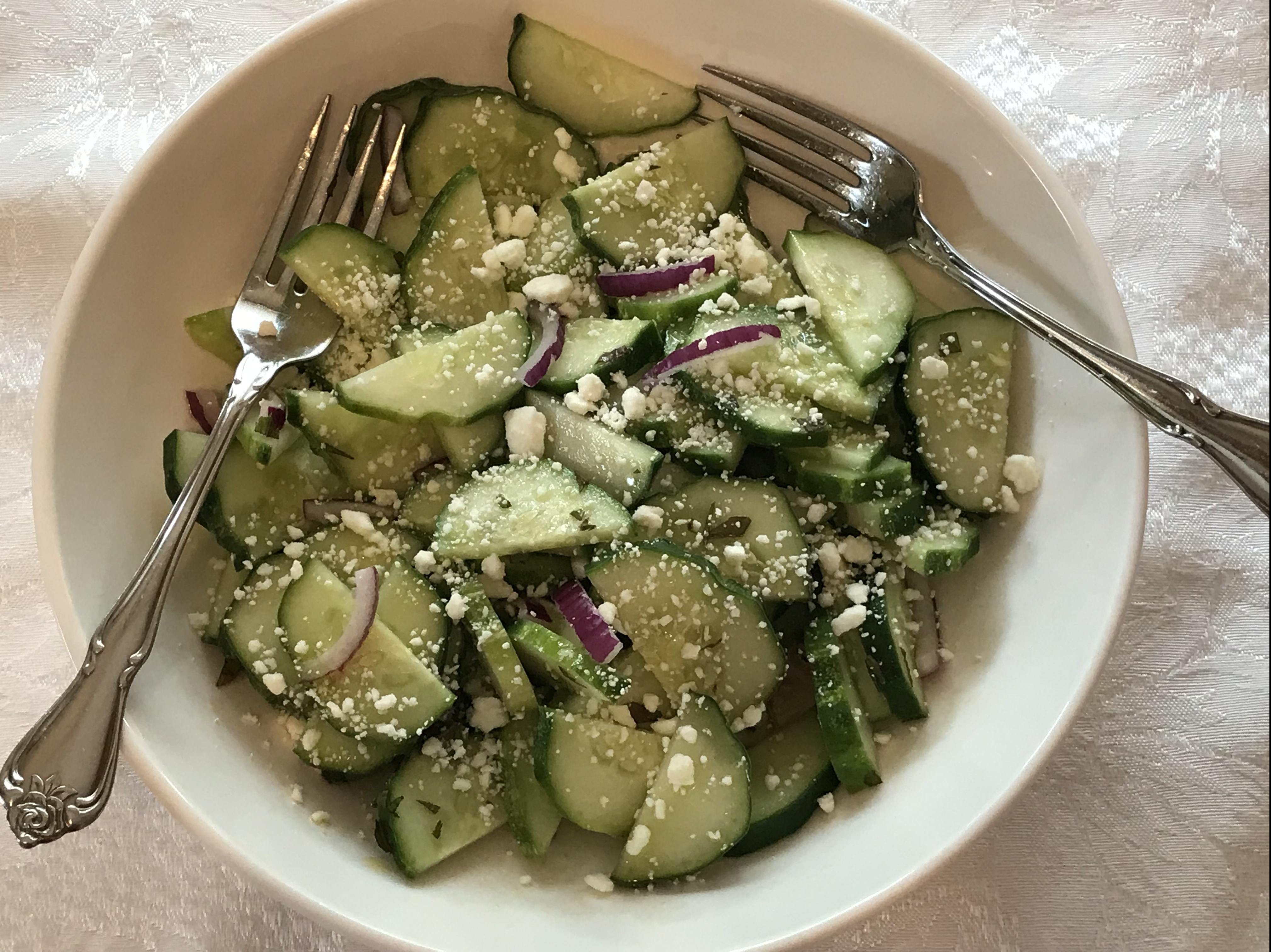
For a better-tasting salad, use 2 large or 4 small cucumbers. Peel them if desired, and slice thinly. Toss with ¼ red onion, also thinly sliced, 2 tbsp olive oil, 1 tbsp red or white wine vinegar, and a few finely chopped mint leaves. If desired, add a few crumbles of feta cheese.
Another common way to prepare cucumbers for meze is to combine with yogurt. Next time, I’ll have a recipe for green lentil salad, so be sure to subscribe.
Make a one-time donation
Make a monthly donation
Make a yearly donation
Choose an amount
Or enter a custom amount
Your contribution is appreciated.
Your contribution is appreciated.
Your contribution is appreciated.
DonateDonate monthlyDonate yearly
 Feasting Through Time