food history, italian cuisine

Cook’s Tour of Italy Menu 15 (Pgs. 62 – 66): Menu for 8, La Foce

Region: Tuscany

Menu: Cantaloupe with Prosciutto, Lasagnette with Meat Sauce, Fennel and Watercress Salad, Orange Ring Cake

Recommended Wine: Vino Nobile de Montepulciano (like Chianti, but with some white grapes mixed in with the red)

            Believe it or not, at one time, doctors thought melons were unhealthy and even dangerous. During the Middle Ages and Renaissance, raw produce in general was mistrusted. In the 15th and 16th Centuries, when salads and beautifully-arranged platters of fresh fruit became fashionable, doctors freaked out, thinking the trend would make their patients sick. People did sometimes get sick after eating fresh, raw fruit, but the problem wasn’t the fruit itself. Most likely, the water used to wash it was contaminated, or cooks didn’t adequately clean their work surfaces.

            Melons were even implicated in the death of a 15th Century pope. The story goes that in July 1471, Pope Paul II ate two large melons, and died shortly thereafter. Sources don’t say what kind of melons they were, what was meant by large (most fruits and vegetables were smaller at the time), or the timeframe they were eaten over. Since Rome gets really hot in July and this was before air conditioning, His Holiness probably found them refreshing, and may not have had much appetite for other food. If that was the case, eating two melons the size of small modern cantaloupes over the course of a hot day sort of makes sense.

Delicious treat, or heartless killer?

            Supposedly, cantaloupes originated in either Persia (modern Iran) or Armenia before being brought to the Mediterranean. Regardless of what doctors thought, people living there, especially Italians, went crazy for them. During the hot summer months, when melons were at their peak, people found them irresistible. Supposedly, eating them with a bit of salty ham or some wine reduced the risk, which is where melon and prosciutto came from. Personally, I think prosciutto is stringy and overpriced, so had the melon plain. It was good as always, but was definitely different as an appetizer.
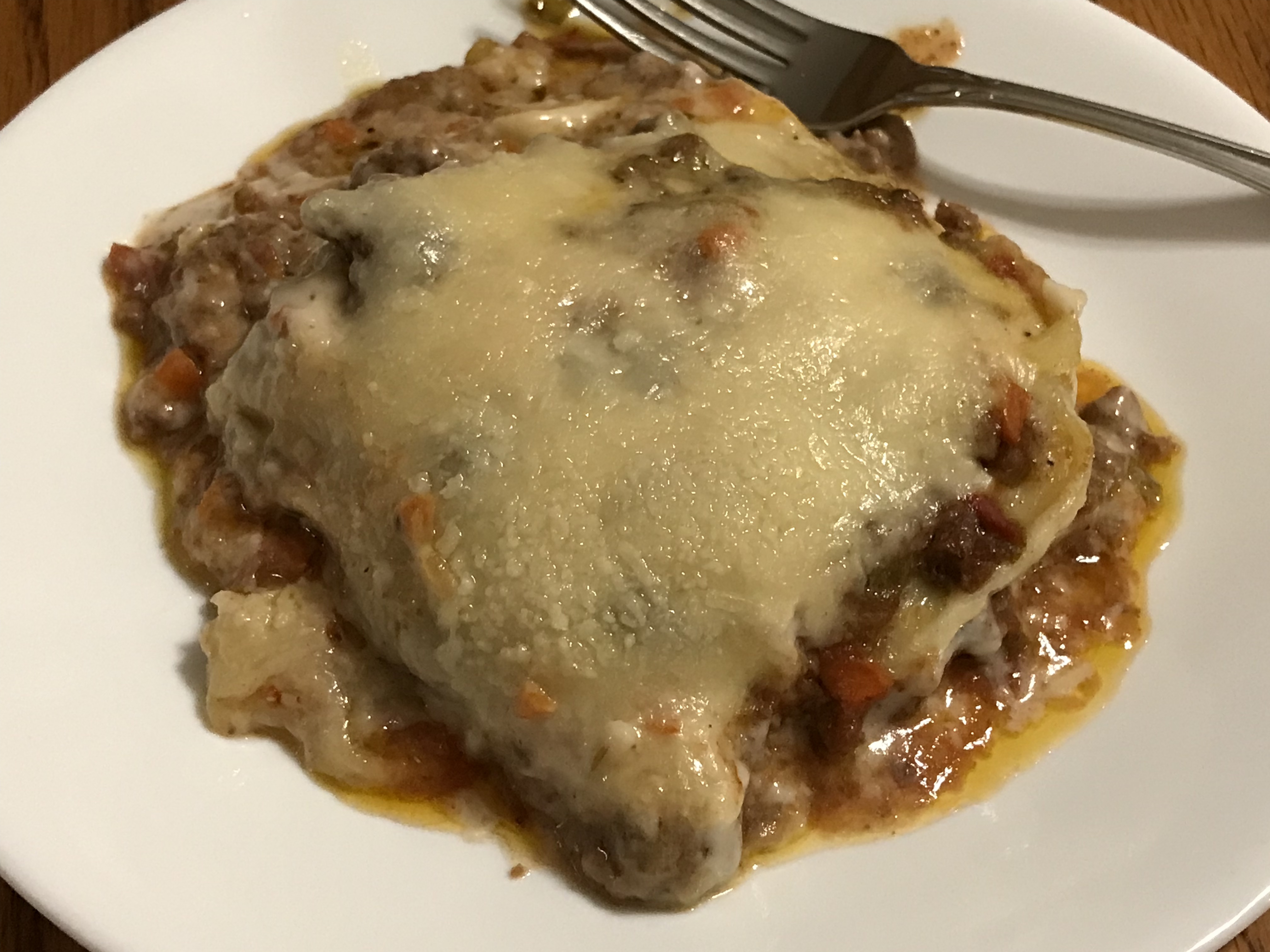
            The name “lasagnette” suggests a miniature lasagna, but this recipe filled a full pan. Like the Bologna-style lasagna, this one used a ragu with a high proportion of meat to tomato, bechamel sauce, and parmesan cheese. I think there must have been a typo in the bechamel recipe. It calls for one cup flour to three of milk. At that ratio, a sticky dough-like substance forms, not a sauce. It was salvageable with extra milk, whisking, and straining the lumps out, but it probably would have been easier to restart with a different bechamel recipe. Everything else with the lasagna went smoothly, and it was quite tasty, but I still prefer the mozzarella and ricotta version. Maybe if I made my own pasta dough instead of purchasing it, I would feel differently.
Instrument of fraud

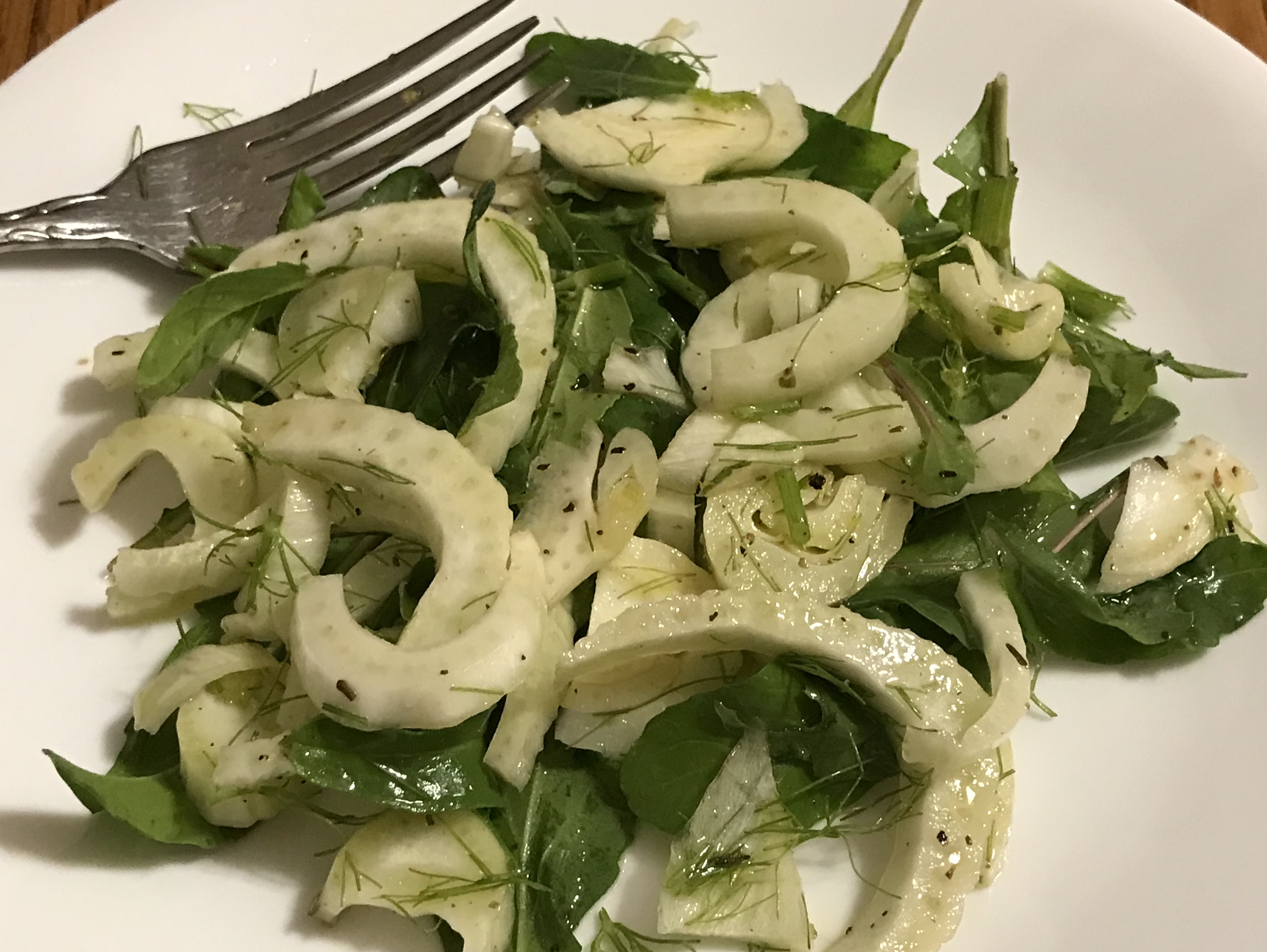
            The fennel and watercress made for a fascinating combination. Supposedly, Medieval Florentine wine merchants would give potential buyers fennel to snack on, hoping it would overwhelm their taste buds and make wine faults less noticeable. Here the sweet, licorice-like flavor served no such nefarious purpose. The watercress was distinctly peppery, much like arugula, which was a nice contrast with the fennel.

As the author says, the secret is the syrup. And the whipped cream.

            Everything was good, but the orange ring cake was incredible. The cake itself is flavored with grated orange peel, which seems to be popular in Italian recipes. The juice, meanwhile, goes into a syrup with lemon juice, which gets drizzled on the hot cake after baking. It was delicious, and would probably be even better if holes were poked in the cake first to let the syrup soak in more. Whipped cream was a delightful contrast to the sweet and tart flavor, in a fascinating change of pace from regular chocolate and yellow cakes. Not that there’s anything wrong with those, especially with fluffy homemade chocolate frosting, but the orange cake was delicious and pretty.
Standard
food history, italian cuisine

Cook’s Tour of Italy Menu 12 (Pgs. 48 – 52): Restaurant-Style Dinner in Pisa

Region: Tuscany

Menu: Yellow Pepper Soup, Chicken with Ricotta and Tarragon Under the Skin, Green Beans with Pancetta and Savory, Tiramisu with Amaretto

Recommended Wine: Young Chianti (Tuscan red) or Lacrima d’Arno (local white)

            The world-famous Leaning Tower of Pisa was originally designed to be a bell tower. In the Middle Ages, Pisa was one of Europe’s leading naval powers, rivaling Genoa and Venice. Pisan fleets battled Arab emirs in Sicily and Sardinia, eventually gaining control over much of the latter. During the 11th and 12th centuries, Pisa was flourishing from trade and ready to show off. To do so, they built a fabulous cathedral complex. As was common at the time, the baptistry and bell tower were built separate from the main cathedral. The bell tower was built on soft soil and soon began to tilt, hence the nickname.

            The main cathedral is a prime example of Romanesque architecture, characterized by heavy construction, rounded arches, and relatively small windows. It was built in the late 11th and early 12th Century, around the same time as St. Mark’s in Venice. I haven’t been to Pisa, but based on pictures, the interiors are similar. Byzantine-style mosaics and gold leaf decoration are reminders of just how important both trade and the Ancient Roman influence were on Medieval architecture. In the 13th Century, Gothic architecture, with soaring ceilings, pointed arches, flying buttresses, and dazzling stained glass windows, came to dominate Europe, but many Romanesque elements made a comeback in the Renaissance. In the 19th Century, there was a neo-Gothic trend. Who knows what the future might bring?

            As far as food is concerned, Pisa seems to have a lot in common with the rest of Tuscany, with more seafood included. This is hardly surprising, since unlike Florence, Siena, and Lucca, Pisa is close to the coast, where the Arno River flows into the sea. By controlling this strategic port, the city was the gateway between western Mediterranean merchants and Tuscany’s hill towns. Here the protein is chicken, specifically Cornish hens, served with green beans, preceded by yellow pepper soup, and followed by tiramisu.

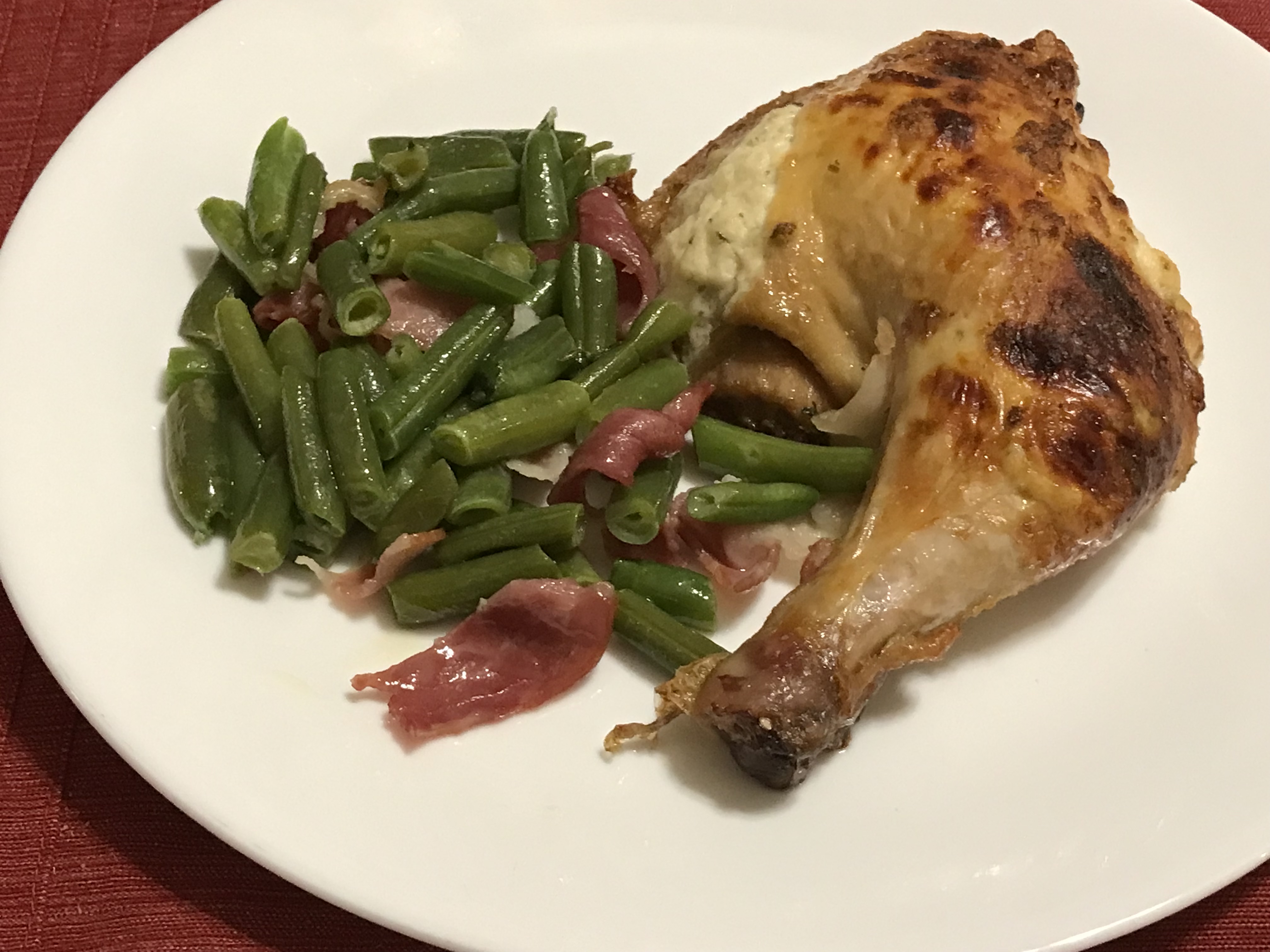
            Only the chicken dish could date back to Pisa’s Medieval glory days. The Ancient Romans had chicken, ricotta cheese, and a variety of herbs, as did later Tuscans. The wealthy, who were most likely to eat chicken or other poultry, often preferred spices or fruit with it, but may have eaten it with these less prestigious flavorings when they weren’t trying to impress someone. I replaced the halved Cornish hens with chicken thigh/leg quarters, since they’re easier to eat. The tarragon didn’t necessarily have a distinctive flavor, but the dish as a whole was enjoyable.

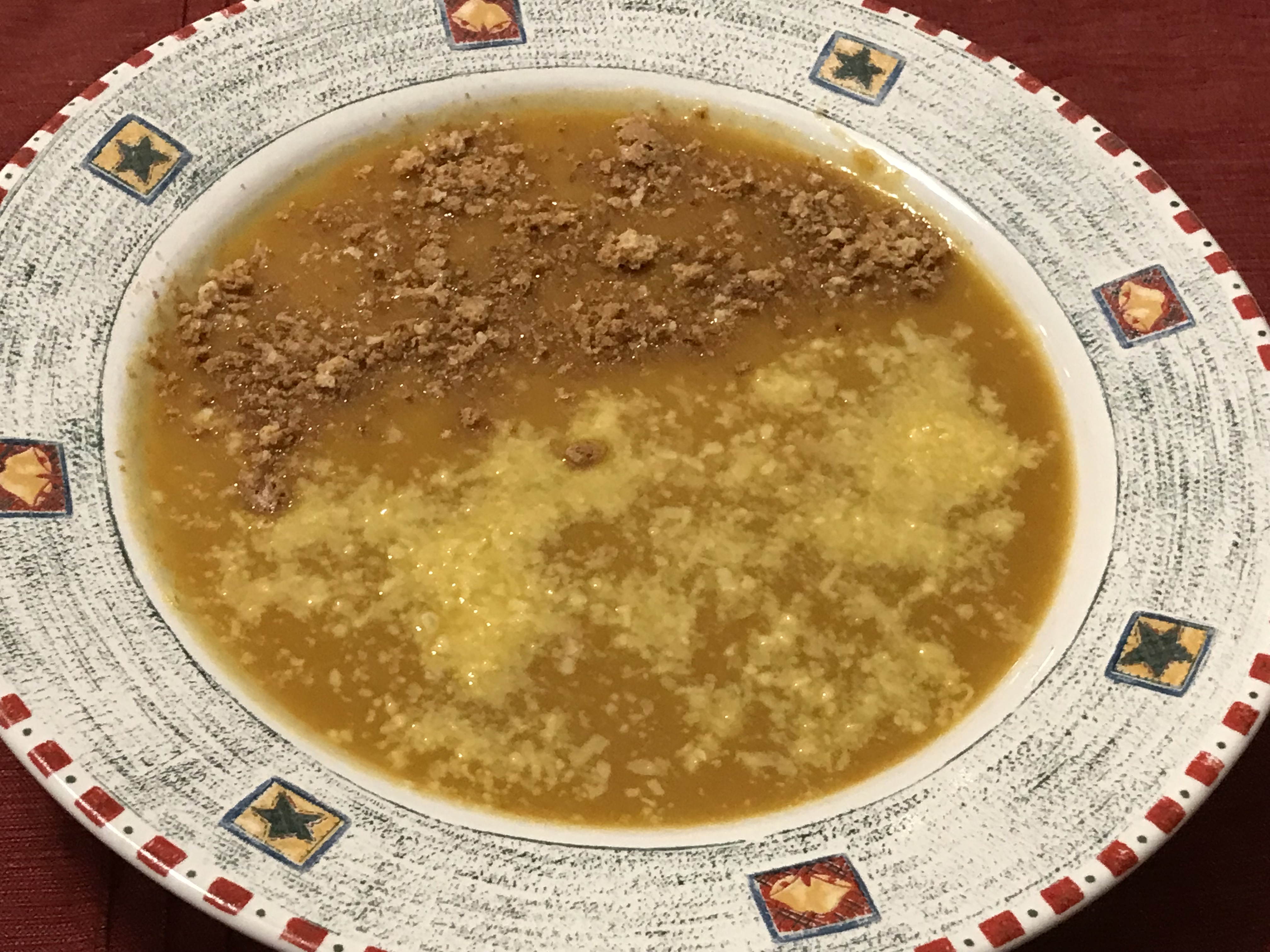
            The yellow peppers in the soup, plus the potatoes used to thicken it, came from the Americas, but the topping is Medieval in character. Half of each serving is topped with grated parmesan, half with crushed amaretti. This combination of sweet and savory is less common than it once was, at least in western cuisines, but it worked well here. The soup tasted good, though I would have preferred a bit more texture.

            Pancetta is much like unsmoked bacon, and green beans with bacon are hard to mess up. I used bacon pieces that I already had rather than buy pancetta. The marjoram/savory didn’t affect the flavor much, but the dish wasn’t lacking in it. New world green beans and old world cured pork work perfectly with each other.

Tasted better than it looked

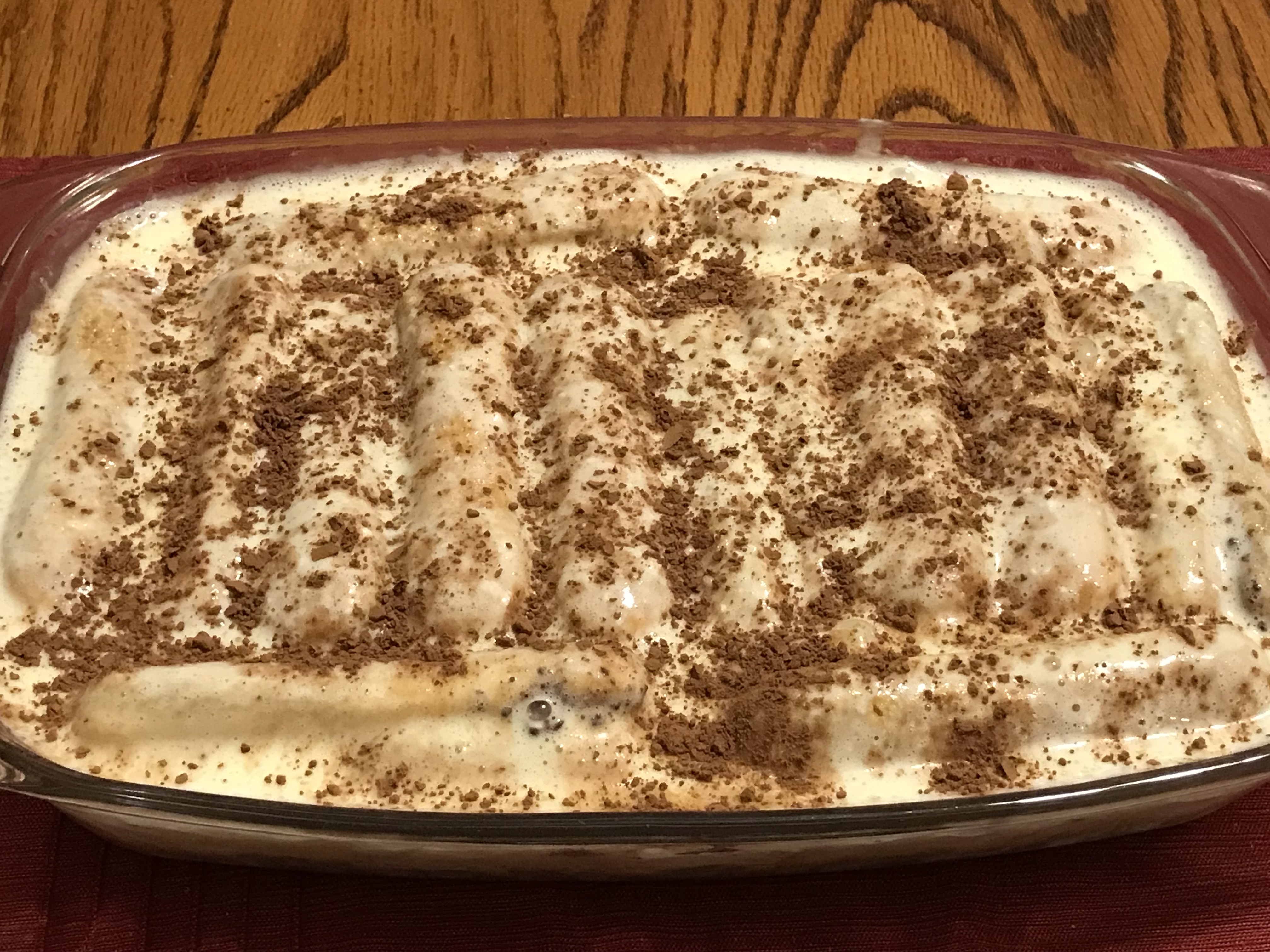
            The coffee in tiramisu originally came from East Africa, then spread to the Middle East. Coffee seems to have reached Europe in the late 16th Century via Venetian trade with the Ottoman Empire. Tiramisu came later, in the 20th Century. Supposedly, the layered dessert of ladyfinger biscuits, coffee, mascarpone custard, and grated chocolate or cocoa powder was invented in the Veneto region around the middle of the century. Its name means “pick-me-up,” which the coffee, sugar, and chocolate achieve. Presumably, the common variation where liquor or fortified wine is added with the coffee is less effective in this regard. Since I didn’t have amaretto and didn’t want to buy a whole bottle for one recipe, I added a few drops of almond extract to the coffee instead.

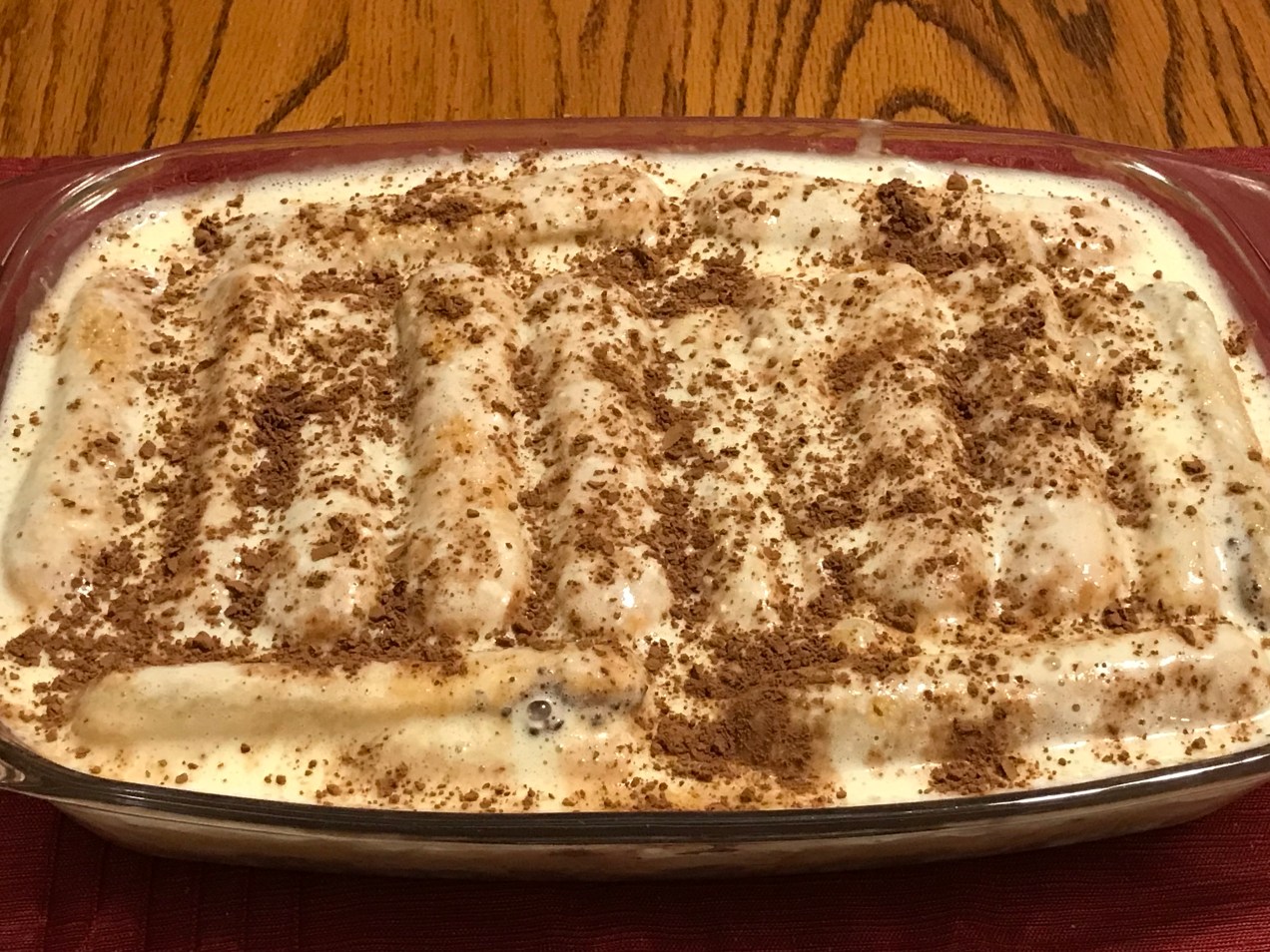
Ladyfingers, swimming in a custard lake

            The flavor was great, but the custard was runny. That was my fault. Rather than mix the egg yolks/sugar/mascarpone first, clean the mixer bowl, then whip the egg whites separately before folding them in, I mixed everything together and assumed some extra mixing time would whip in enough air. It didn’t work as hoped. The custard was runny, becoming a lake under the ladyfingers, instead of a blanket over them. I guess that’s what I get for cutting corners. It was still delicious.

Standard