food history, italian cuisine

Cook’s Tour of Italy Menu 15 (Pgs. 62 – 66): Menu for 8, La Foce

Region: Tuscany

Menu: Cantaloupe with Prosciutto, Lasagnette with Meat Sauce, Fennel and Watercress Salad, Orange Ring Cake

Recommended Wine: Vino Nobile de Montepulciano (like Chianti, but with some white grapes mixed in with the red)

            Believe it or not, at one time, doctors thought melons were unhealthy and even dangerous. During the Middle Ages and Renaissance, raw produce in general was mistrusted. In the 15th and 16th Centuries, when salads and beautifully-arranged platters of fresh fruit became fashionable, doctors freaked out, thinking the trend would make their patients sick. People did sometimes get sick after eating fresh, raw fruit, but the problem wasn’t the fruit itself. Most likely, the water used to wash it was contaminated, or cooks didn’t adequately clean their work surfaces.

            Melons were even implicated in the death of a 15th Century pope. The story goes that in July 1471, Pope Paul II ate two large melons, and died shortly thereafter. Sources don’t say what kind of melons they were, what was meant by large (most fruits and vegetables were smaller at the time), or the timeframe they were eaten over. Since Rome gets really hot in July and this was before air conditioning, His Holiness probably found them refreshing, and may not have had much appetite for other food. If that was the case, eating two melons the size of small modern cantaloupes over the course of a hot day sort of makes sense.

Delicious treat, or heartless killer?

            Supposedly, cantaloupes originated in either Persia (modern Iran) or Armenia before being brought to the Mediterranean. Regardless of what doctors thought, people living there, especially Italians, went crazy for them. During the hot summer months, when melons were at their peak, people found them irresistible. Supposedly, eating them with a bit of salty ham or some wine reduced the risk, which is where melon and prosciutto came from. Personally, I think prosciutto is stringy and overpriced, so had the melon plain. It was good as always, but was definitely different as an appetizer.
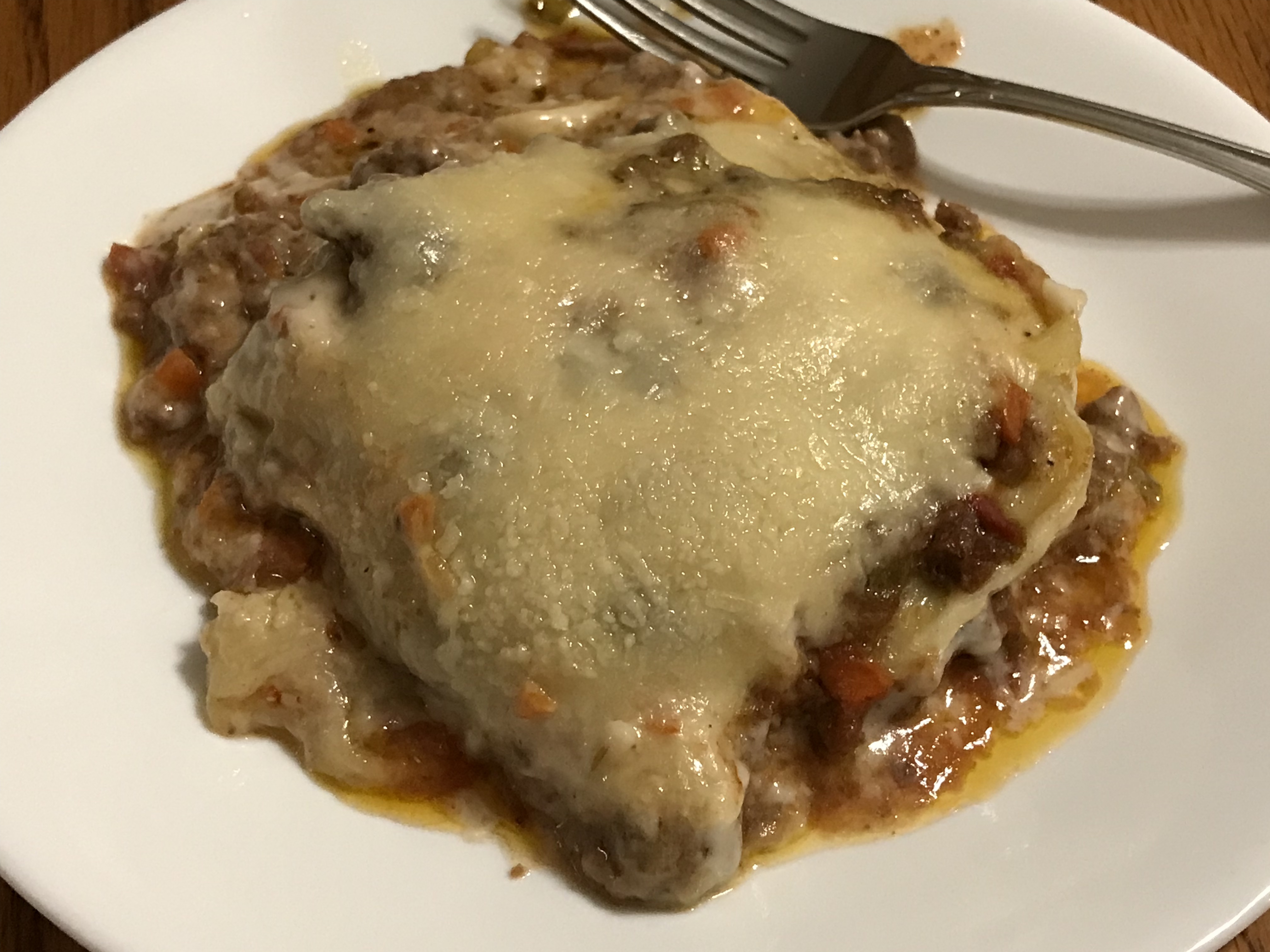
            The name “lasagnette” suggests a miniature lasagna, but this recipe filled a full pan. Like the Bologna-style lasagna, this one used a ragu with a high proportion of meat to tomato, bechamel sauce, and parmesan cheese. I think there must have been a typo in the bechamel recipe. It calls for one cup flour to three of milk. At that ratio, a sticky dough-like substance forms, not a sauce. It was salvageable with extra milk, whisking, and straining the lumps out, but it probably would have been easier to restart with a different bechamel recipe. Everything else with the lasagna went smoothly, and it was quite tasty, but I still prefer the mozzarella and ricotta version. Maybe if I made my own pasta dough instead of purchasing it, I would feel differently.
Instrument of fraud

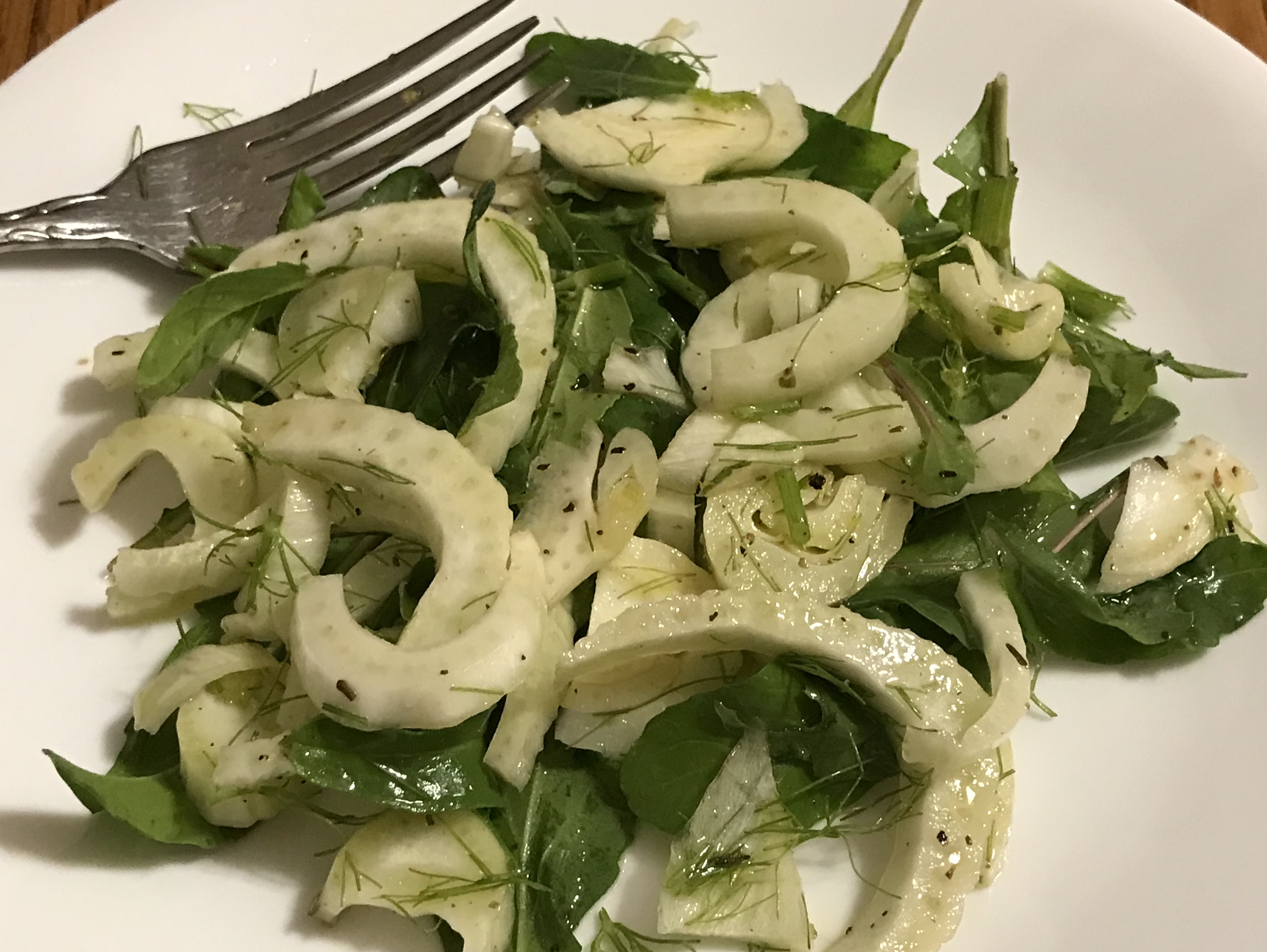
            The fennel and watercress made for a fascinating combination. Supposedly, Medieval Florentine wine merchants would give potential buyers fennel to snack on, hoping it would overwhelm their taste buds and make wine faults less noticeable. Here the sweet, licorice-like flavor served no such nefarious purpose. The watercress was distinctly peppery, much like arugula, which was a nice contrast with the fennel.

As the author says, the secret is the syrup. And the whipped cream.

            Everything was good, but the orange ring cake was incredible. The cake itself is flavored with grated orange peel, which seems to be popular in Italian recipes. The juice, meanwhile, goes into a syrup with lemon juice, which gets drizzled on the hot cake after baking. It was delicious, and would probably be even better if holes were poked in the cake first to let the syrup soak in more. Whipped cream was a delightful contrast to the sweet and tart flavor, in a fascinating change of pace from regular chocolate and yellow cakes. Not that there’s anything wrong with those, especially with fluffy homemade chocolate frosting, but the orange cake was delicious and pretty.

Standard
food history, italian cuisine

Italian Christmas Treats After Christmas

Panettone, Pandoro, Panforte

1000 Foods (pgs. 214, 215)

            Looking at the names of these three treats, you probably noticed something. The all start with the word part “pan,” Italian (and Spanish) for bread. Festive breads, especially sweet enriched breads, have long been Christmas specialties. Before baking powder was invented, breads and cakes were strictly leavened with yeast. As sugar was much more expensive in the past, dried fruits were a frequent addition to make them sweeter. Panforte isn’t actually a bread at all, but still has the name.

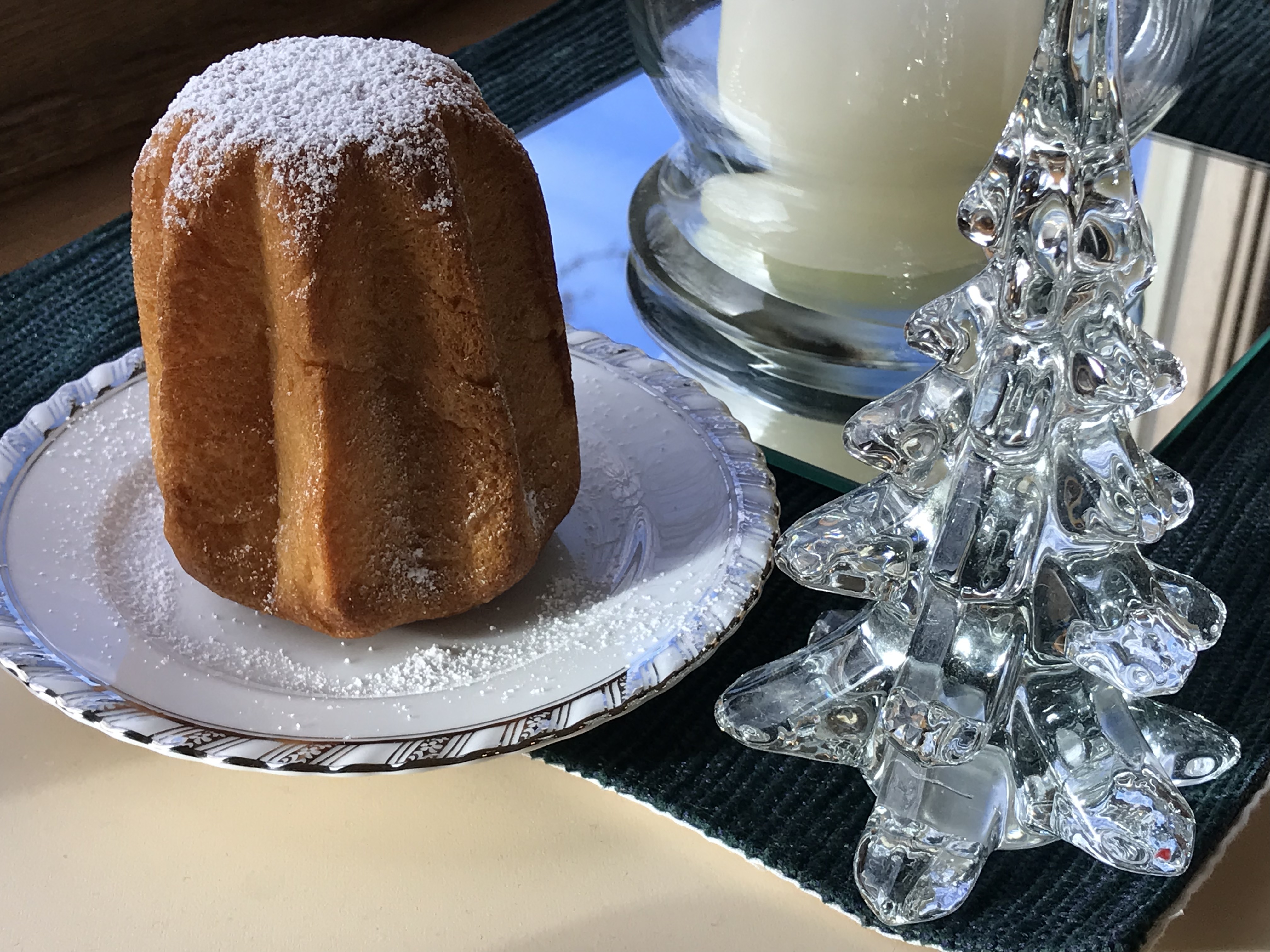
            Panettone is a perfect example of these sweet, special occasion breads. Its exact origin is unclear, and there are many stories, but one thing is certain: it was invented in Milan. The dough is enriched with lots of butter and egg yolks, which give the finished panettone a lovely golden color. Flavor comes from a combination of sugar, assorted dried and candied fruit, and warm spices. Occasionally saffron is included to make the yellow color even stronger. Over time, panettone spread from Milan to the rest of Italy, then to the rest of the world. In most places, people seem to purchase their panettone, rather than make it themselves. At World Market, I’ve seen pumpkin spice and chocolate varieties, but decided to stick to the original. They even have mini versions, for those who want a taste without a lot of extra.

            There were also mini versions of pandoro, native to Verona. It’s a vanilla-scented bread/cake, whose named literally translates to “golden bread.” Verona is located in the Veneto region of northern Italy along the Adige River, about halfway between Milan and Venice. In the Middle Ages, Verona was an influential city in its own right, trading and fighting with the other city-states that ruled most of Italy north of Rome. At one point, Milan ruled Verona, allowing another opportunity for Milanese culinary influences to spread. The Veronese not only adopted panettone, but developed their own variation.

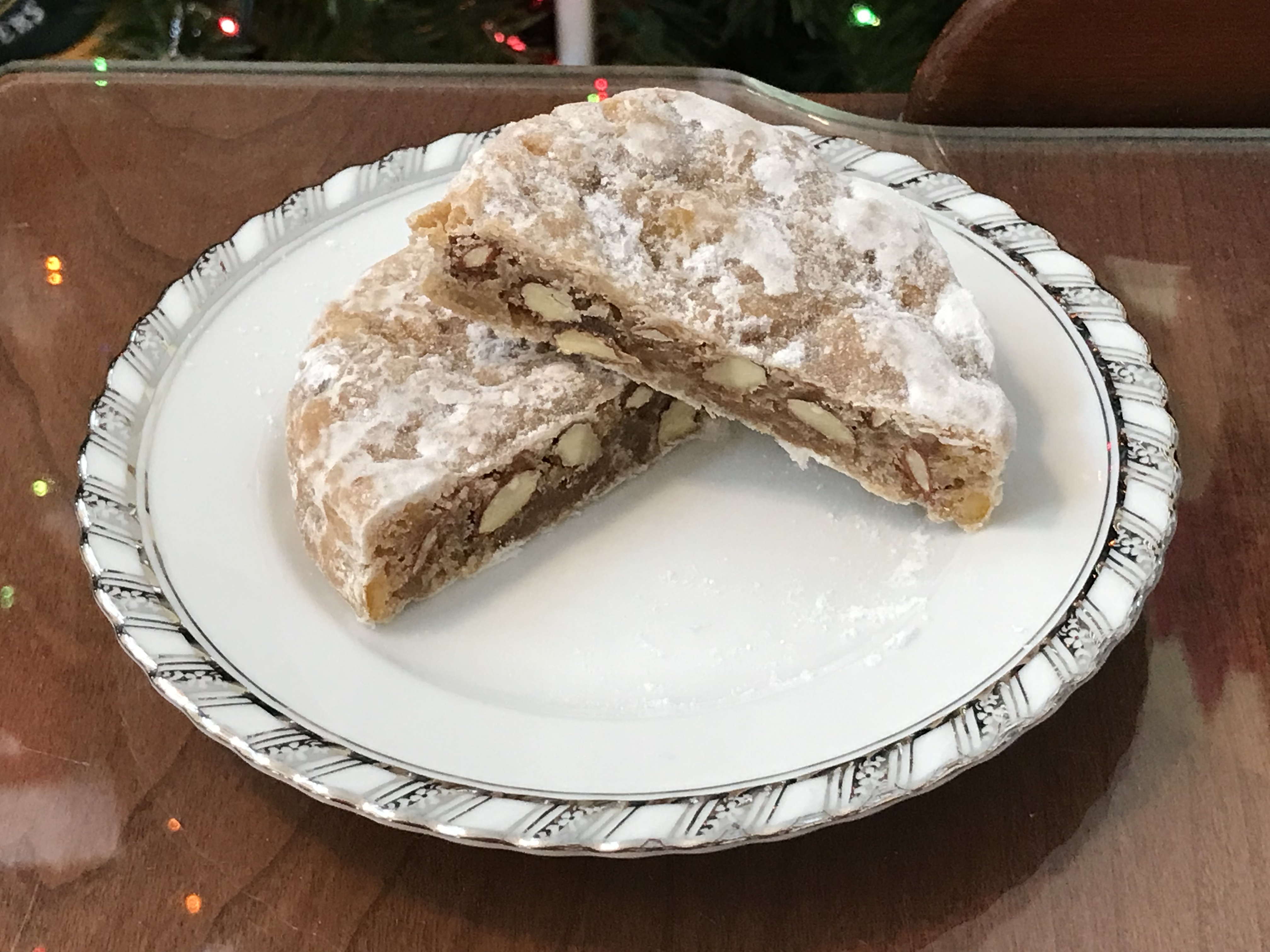
            Further south is Siena, home of panforte. In the 13th and early 14th centuries, Siena vied with Florence and Pisa to dominate Tuscany. Florence pretty much always came out on top, but Siena managed to put up quite a fight. Some of the greatest artists of the Late Middle Ages, whose work would eventually pave the way for the Renaissance, lived and worked there. By 1348, construction was underway on what was to be the largest cathedral in Europe. Then the plague struck.

Not a rice cake

            The Black Death first arrived in Sicily in late 1347. Over the next six years, it reached every corner of Europe. Mortality rates varied, but tended to be higher in urban areas, where there were enough hosts for the bacteria responsible to keep circulating. Heavily urbanized Italy was among the worst affected. Many of the large cities had death tolls of 50 or 60 percent, compared to the continental average of about one third. Records suggest that Siena lost about 80 percent of its population. Even if some losses came from citizens fleeing to the countryside, the death toll was devastating. Siena never fully recovered. The cathedral remains unfinished to this day. Tuscany as a whole suffered greatly, but the story wasn’t over.

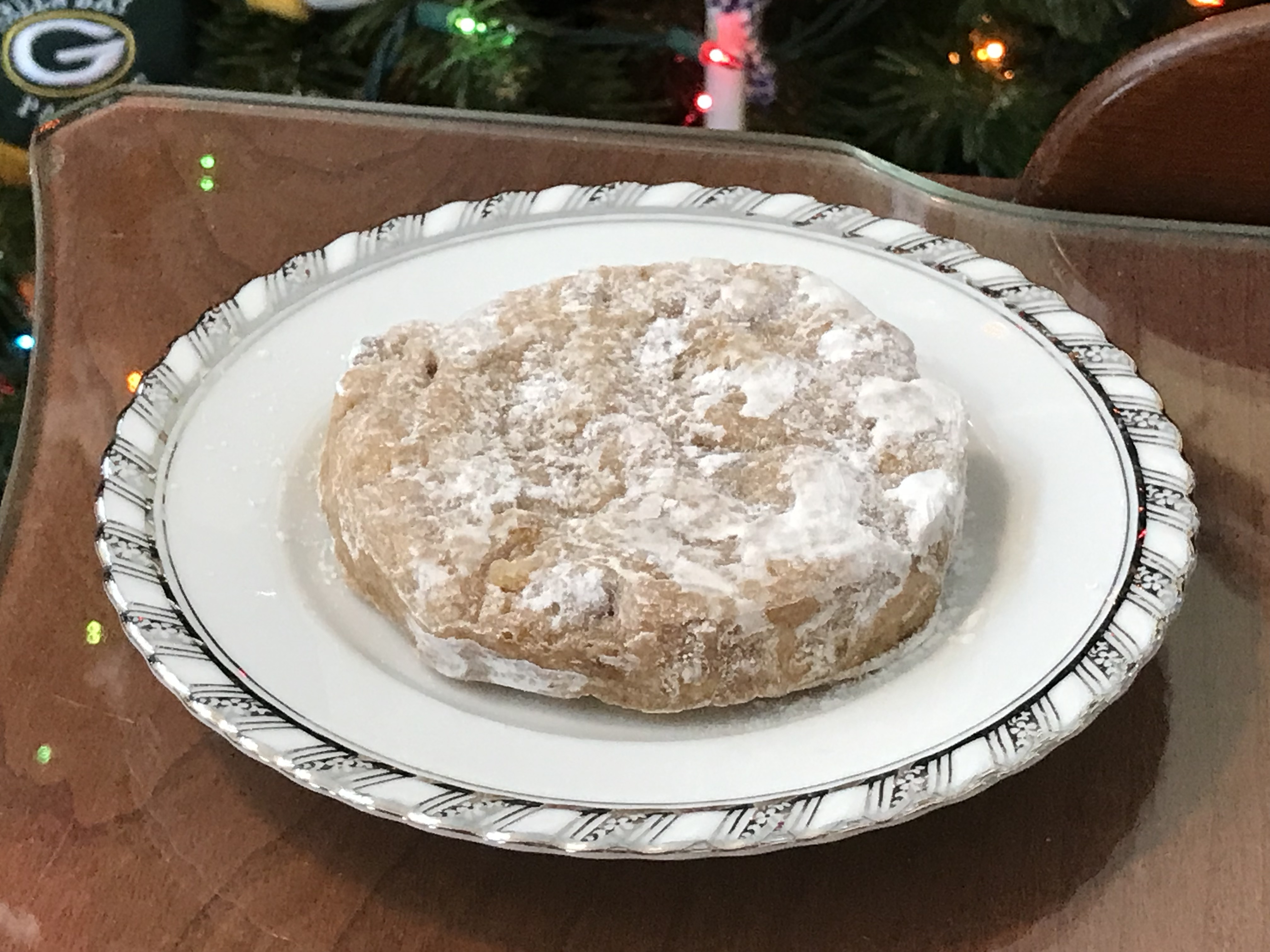
            Florence rebounded, becoming the birthplace of the Renaissance. Even Siena, despite its setbacks, produced a few more great artists of its own. In the culinary sphere, Siena contributed the almond cookies called riciarelli, and panforte. Despite its name, panforte is made of nuts and dried fruit, not bread. The mix is spiced much like panettone, and honey holds everything together. Conveniently, World Market also carries those in miniature.

            All three were pleasantly sweet and festive. It took a while to get used to the panettone and pandoro, since they were kind of a cross between bread and cake. With the exception of cinnamon rolls, sweet yeast-leavened breads are not as common in America as in Europe. The rich vanilla pandoro and warmly spicy, fruity panettone and panforte were enjoyable, but I still prefer the usual holiday treats – peppermint cookies, buttery cutouts, brownies with peppermint ice cream, the toffee-coated cereal the neighbors brought over, etc. And candy. Lots of candy.

Standard
food history, italian cuisine

Cook’s Tour of Italy Menu 12 (Pgs. 48 – 52): Restaurant-Style Dinner in Pisa

Region: Tuscany

Menu: Yellow Pepper Soup, Chicken with Ricotta and Tarragon Under the Skin, Green Beans with Pancetta and Savory, Tiramisu with Amaretto

Recommended Wine: Young Chianti (Tuscan red) or Lacrima d’Arno (local white)

            The world-famous Leaning Tower of Pisa was originally designed to be a bell tower. In the Middle Ages, Pisa was one of Europe’s leading naval powers, rivaling Genoa and Venice. Pisan fleets battled Arab emirs in Sicily and Sardinia, eventually gaining control over much of the latter. During the 11th and 12th centuries, Pisa was flourishing from trade and ready to show off. To do so, they built a fabulous cathedral complex. As was common at the time, the baptistry and bell tower were built separate from the main cathedral. The bell tower was built on soft soil and soon began to tilt, hence the nickname.

            The main cathedral is a prime example of Romanesque architecture, characterized by heavy construction, rounded arches, and relatively small windows. It was built in the late 11th and early 12th Century, around the same time as St. Mark’s in Venice. I haven’t been to Pisa, but based on pictures, the interiors are similar. Byzantine-style mosaics and gold leaf decoration are reminders of just how important both trade and the Ancient Roman influence were on Medieval architecture. In the 13th Century, Gothic architecture, with soaring ceilings, pointed arches, flying buttresses, and dazzling stained glass windows, came to dominate Europe, but many Romanesque elements made a comeback in the Renaissance. In the 19th Century, there was a neo-Gothic trend. Who knows what the future might bring?

            As far as food is concerned, Pisa seems to have a lot in common with the rest of Tuscany, with more seafood included. This is hardly surprising, since unlike Florence, Siena, and Lucca, Pisa is close to the coast, where the Arno River flows into the sea. By controlling this strategic port, the city was the gateway between western Mediterranean merchants and Tuscany’s hill towns. Here the protein is chicken, specifically Cornish hens, served with green beans, preceded by yellow pepper soup, and followed by tiramisu.

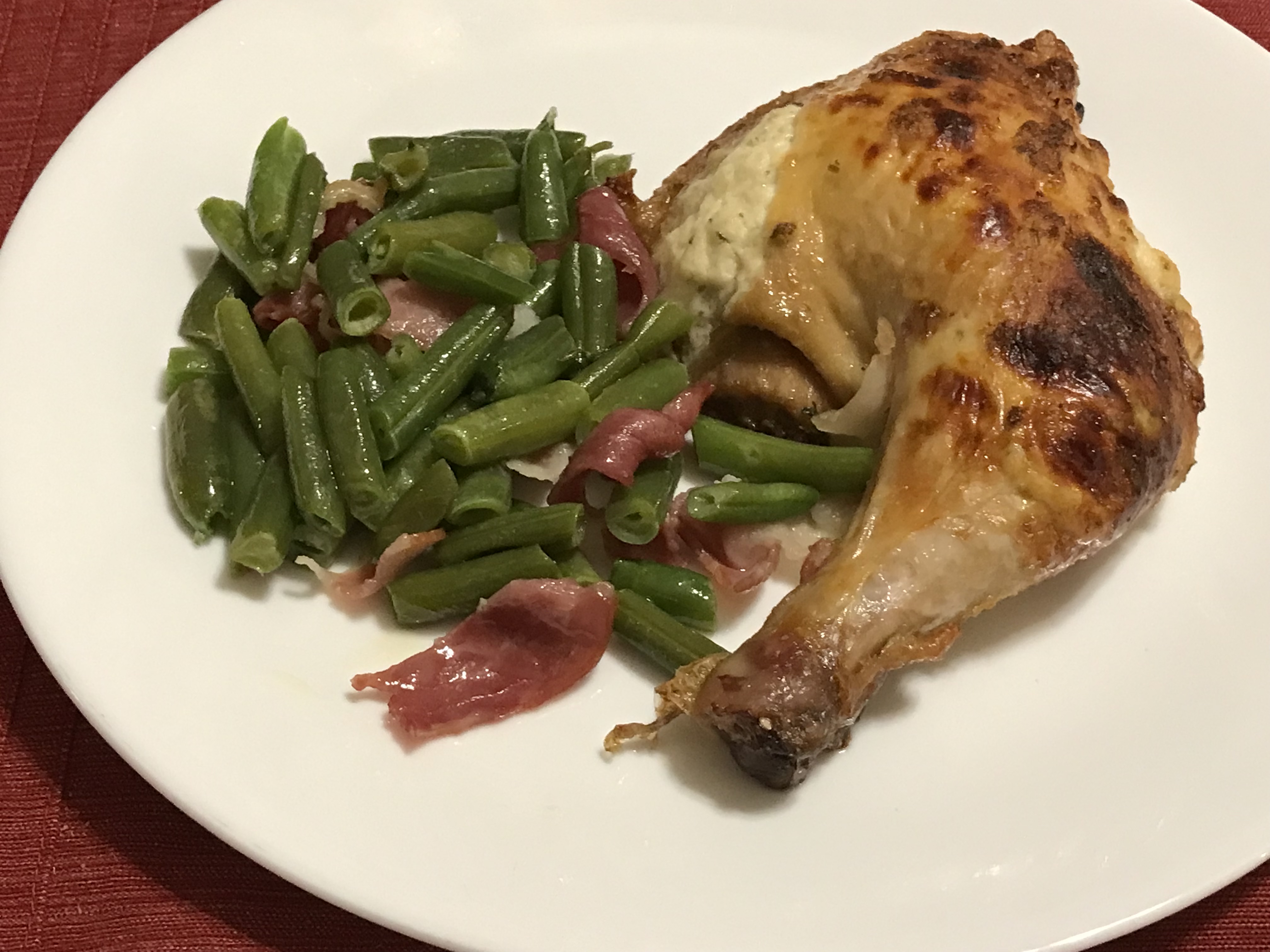
            Only the chicken dish could date back to Pisa’s Medieval glory days. The Ancient Romans had chicken, ricotta cheese, and a variety of herbs, as did later Tuscans. The wealthy, who were most likely to eat chicken or other poultry, often preferred spices or fruit with it, but may have eaten it with these less prestigious flavorings when they weren’t trying to impress someone. I replaced the halved Cornish hens with chicken thigh/leg quarters, since they’re easier to eat. The tarragon didn’t necessarily have a distinctive flavor, but the dish as a whole was enjoyable.

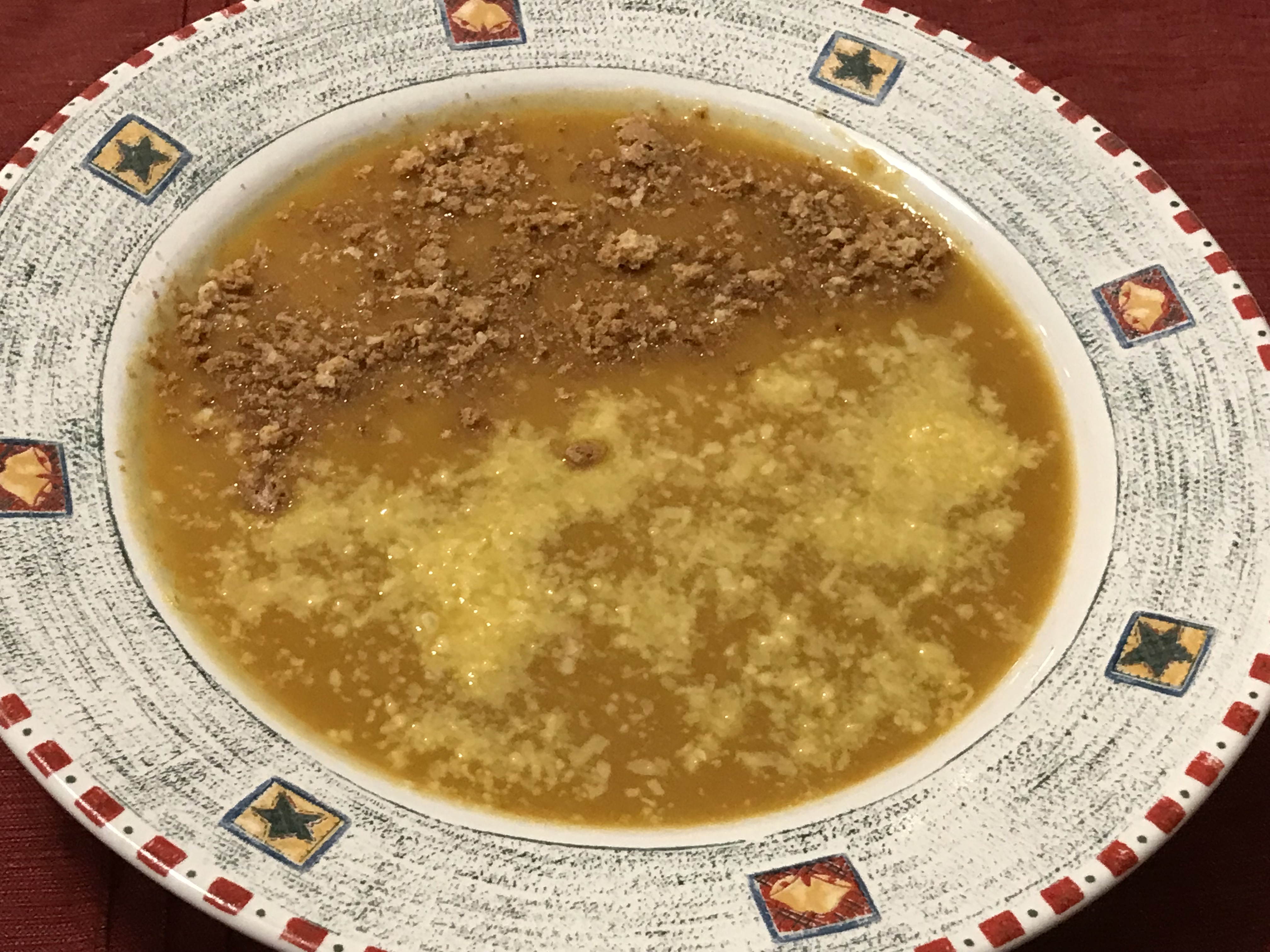
            The yellow peppers in the soup, plus the potatoes used to thicken it, came from the Americas, but the topping is Medieval in character. Half of each serving is topped with grated parmesan, half with crushed amaretti. This combination of sweet and savory is less common than it once was, at least in western cuisines, but it worked well here. The soup tasted good, though I would have preferred a bit more texture.

            Pancetta is much like unsmoked bacon, and green beans with bacon are hard to mess up. I used bacon pieces that I already had rather than buy pancetta. The marjoram/savory didn’t affect the flavor much, but the dish wasn’t lacking in it. New world green beans and old world cured pork work perfectly with each other.

Tasted better than it looked

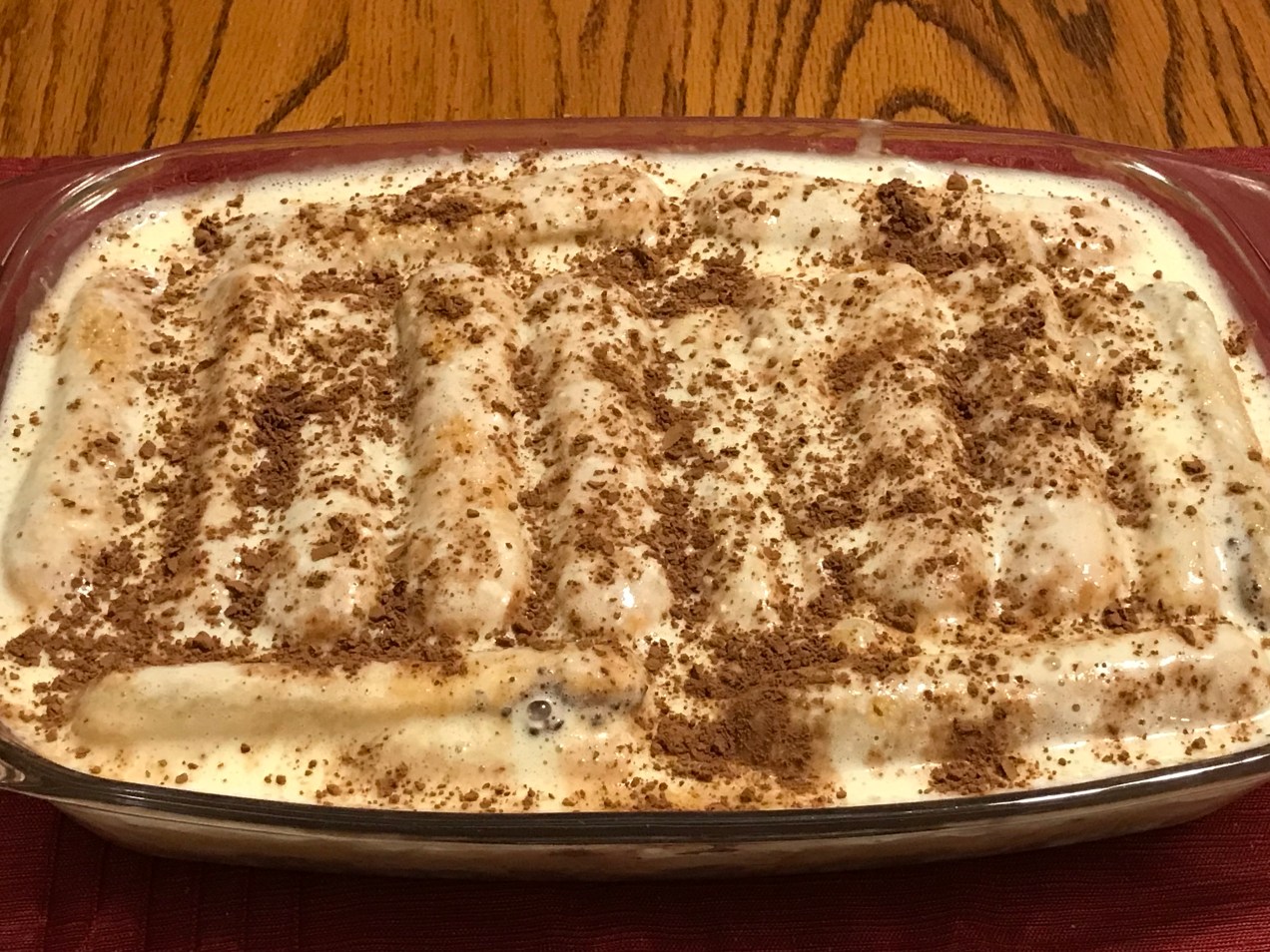
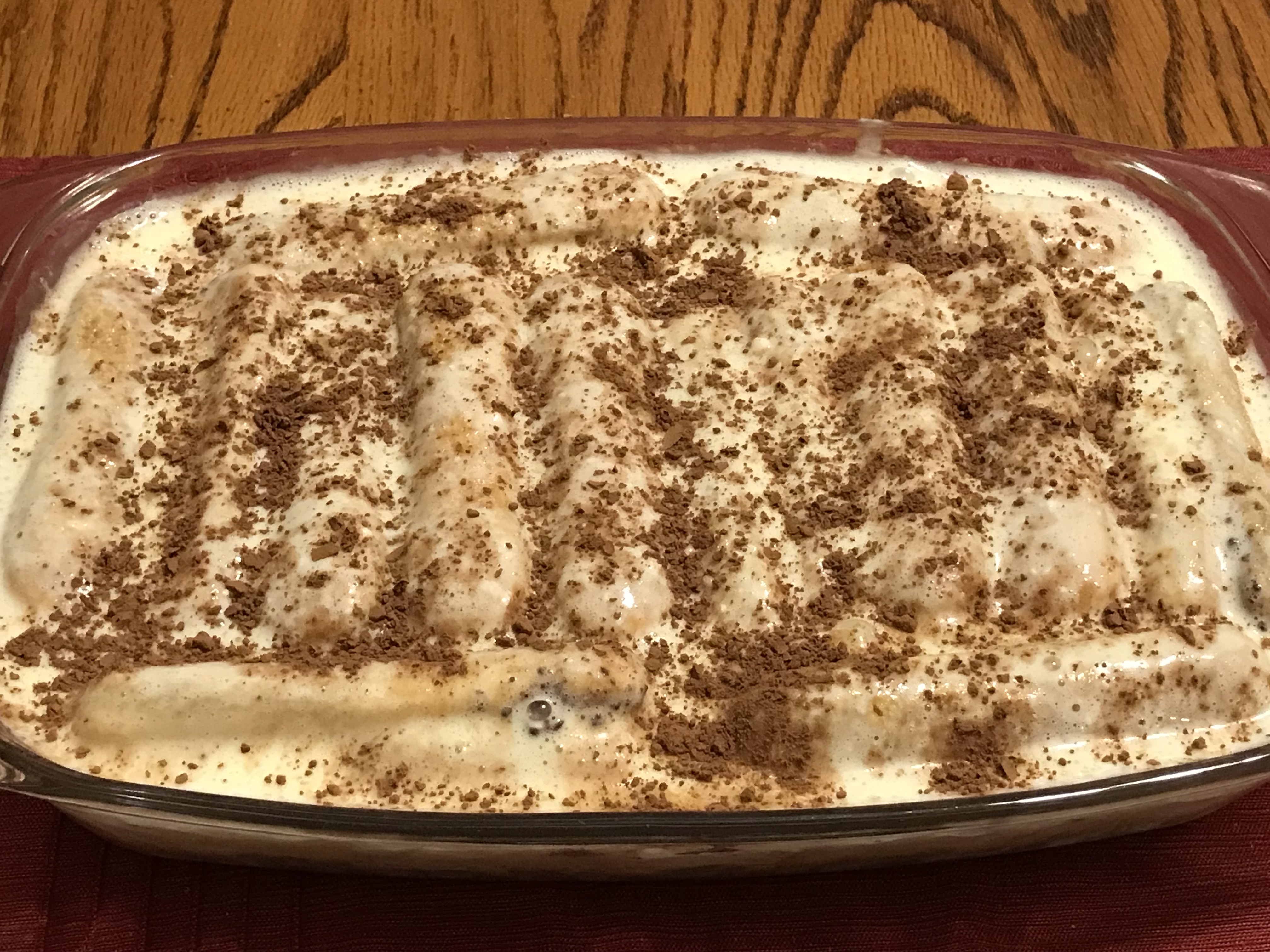
            The coffee in tiramisu originally came from East Africa, then spread to the Middle East. Coffee seems to have reached Europe in the late 16th Century via Venetian trade with the Ottoman Empire. Tiramisu came later, in the 20th Century. Supposedly, the layered dessert of ladyfinger biscuits, coffee, mascarpone custard, and grated chocolate or cocoa powder was invented in the Veneto region around the middle of the century. Its name means “pick-me-up,” which the coffee, sugar, and chocolate achieve. Presumably, the common variation where liquor or fortified wine is added with the coffee is less effective in this regard. Since I didn’t have amaretto and didn’t want to buy a whole bottle for one recipe, I added a few drops of almond extract to the coffee instead.

Ladyfingers, swimming in a custard lake

            The flavor was great, but the custard was runny. That was my fault. Rather than mix the egg yolks/sugar/mascarpone first, clean the mixer bowl, then whip the egg whites separately before folding them in, I mixed everything together and assumed some extra mixing time would whip in enough air. It didn’t work as hoped. The custard was runny, becoming a lake under the ladyfingers, instead of a blanket over them. I guess that’s what I get for cutting corners. It was still delicious.

Standard
Uncategorized

More Stale Bread and Tomatoes: Crostini

Source: 1000 Foods (pg. 185)

            In many cultures, toast is a common breakfast food. This probably originated with people wanting to revive and use up the previous day’s bread that was starting to get stale. It’s also quick and easy to make before the morning’s work, whether in a field or an office. Toasting causes the Maillard Reaction, which browns the bread and adds flavor. In Italy, small, thin slices are called crostini, while slightly thicker ones are called bruschetta.

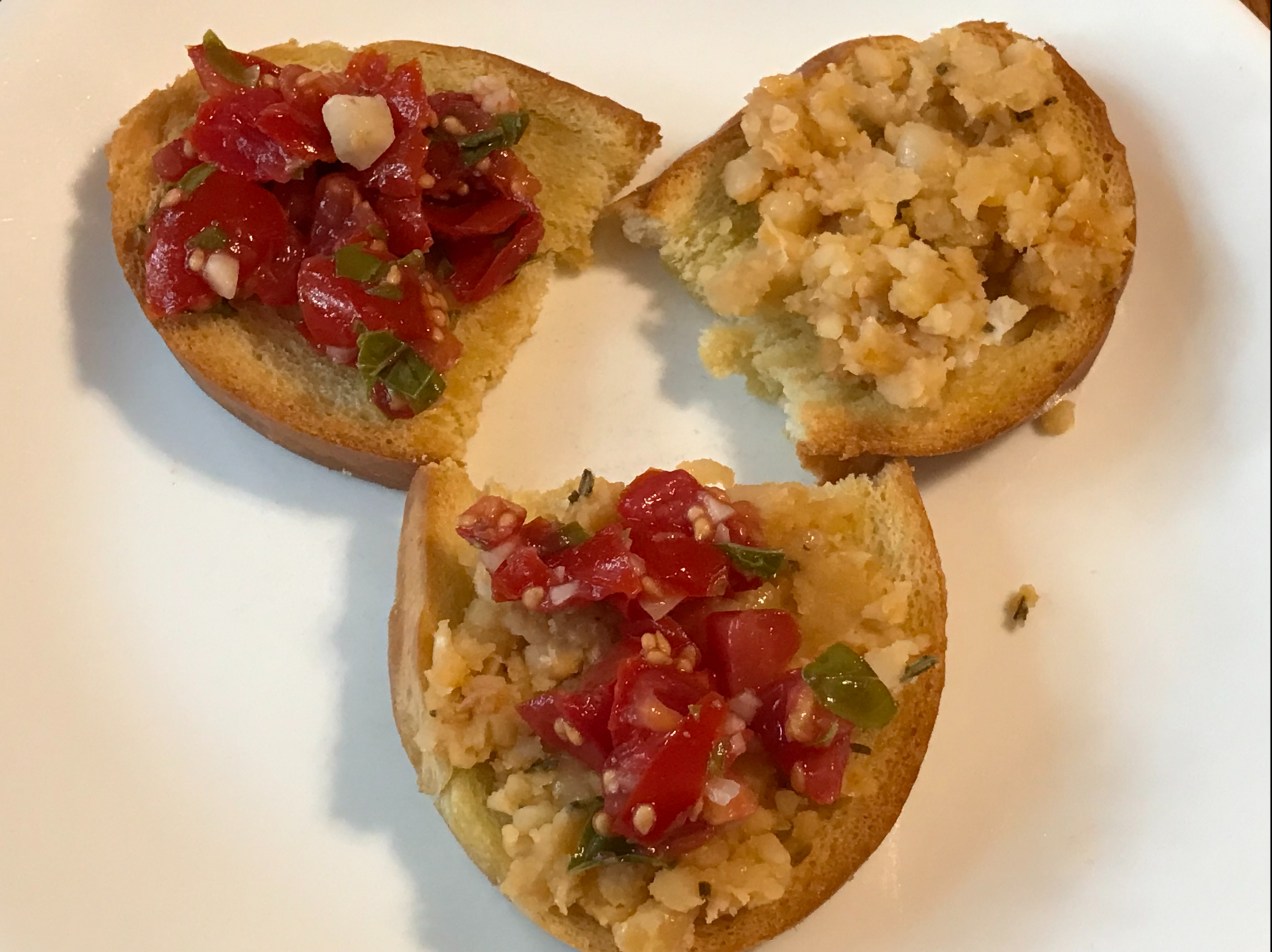
            Whatever you call it, toasted bread is a great vehicle for whatever toppings might be desired. One of the most popular toppings is a mixture of tomatoes, basil, and garlic. Southern French tapenade is made from olives. In Tuscany, one popular topping is made from chicken livers. Another is made from white beans, which Tuscans are famous for consuming in all sorts of ways. While the book was full of praise for the chicken liver version, I couldn’t bring myself to try it. Maybe I’ll manage it someday in the future, but with what they look like and knowing what the liver does, we’ll see.

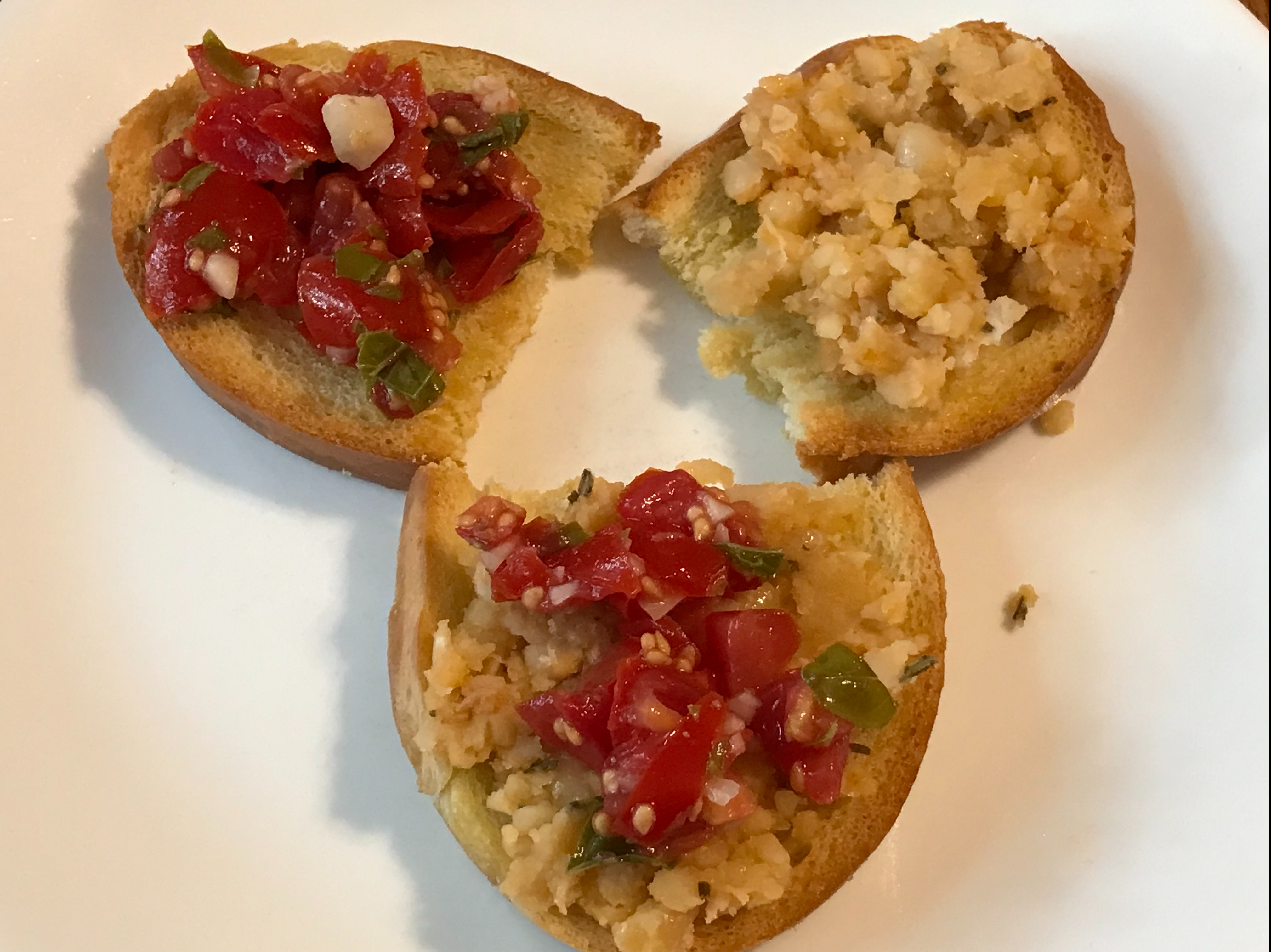
            The white bean version was very tasty. Roughly mashing the beans with olive oil, garlic, lemon juice, herbs, and a bit of tomato and hot pepper produces a wonderful savory spread. The soft beans and crisp crostini contrast and complement each other. Despite my usual dislike of tomato-forward dishes, I even enjoyed the tomato-basil version. It was at once sweet and sour from the tomatoes, aromatic from the basil, and pungent from the garlic. I probably added a bit too much garlic, but it was still delicious. The best crostini, however, had some of both toppings. The richness of the beans with the intensity of the tomato mixture was just about the perfect combination. Just make sure to brush your teeth after.

Standard
Uncategorized

Cook’s Tour of Italy Menu 16 (Pg. 67): Tuscan Roast Pork with Rosemary

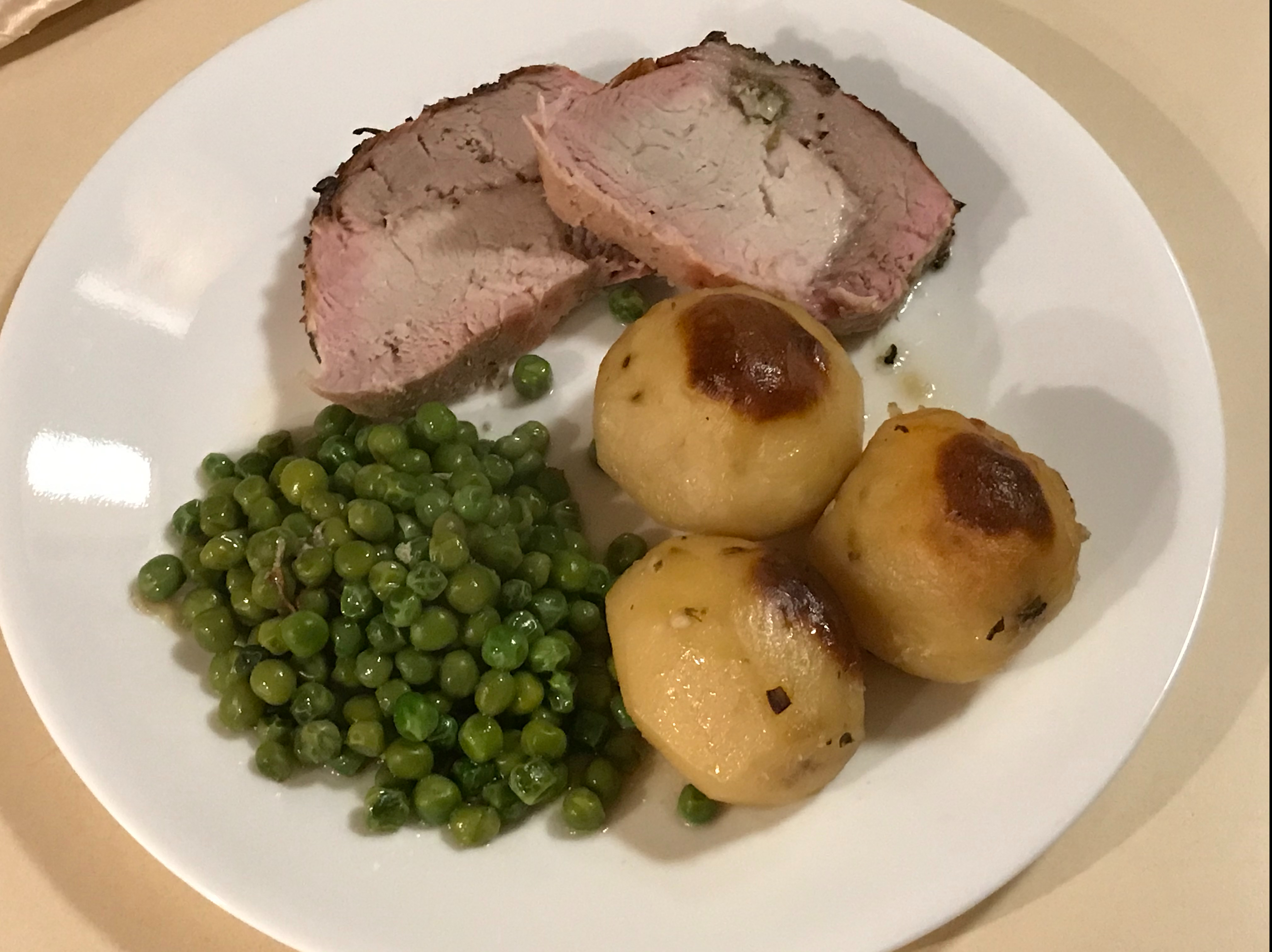
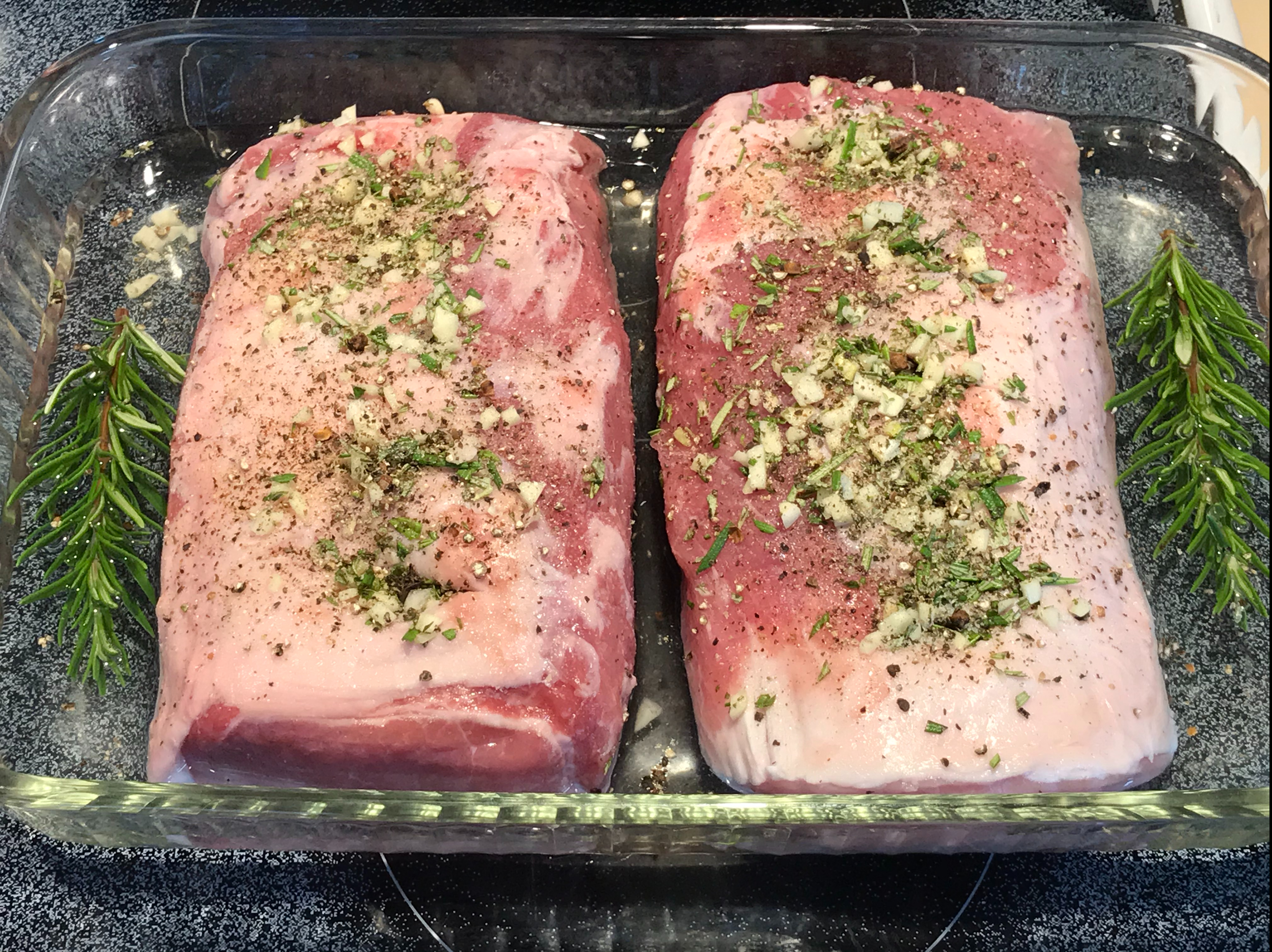
            Here is a Tuscan recipe that highlights the diversity of Italian cuisine. Featuring pork, potatoes, and peas, roasted and basted in a water bath, it wouldn’t look out of place at a US Midwestern supper club. Cuts are made in the pork, which are then stuffed with a mix of chopped garlic and herbs and stuck with cloves. Water is added to the pan, not enough to cover, but enough to keep the meat from drying out during a long cooking in a hot oven. Since the water will never get hotter than 212 degrees Fahrenheit and absorbs a lot of heat, the pork cooks slowly and stays wonderfully tender while the exposed top exterior crisps up. Just make sure to put whatever side of the meat has more fat on top. Not only will the melting fat keep the meat from drying out, it forms a delightfully crispy, crackly layer.

            Gradually the water absorbs juices from the meat, the melting fat, and the flavors of garlic, rosemary, and cloves, becoming more concentrated and flavorful as evaporation continues. Peeled new potatoes are added to soak up all the flavors, eventually followed by peas. Normally I do not bother peeling new or red potatoes, but it does help them absorb the flavor of the broth. When everything was finished the potatoes had a browned, crispy layer like the meat and the aroma saturated the kitchen. Unsurprisingly, it was a perfect cold-weather dinner.

Standard
Uncategorized

Cook’s Tour of Italy Menu 11 (Pgs. 45 – 48): Florentine Steak Dinner, Florence (Tuscany)

Menu: Tuscan Style Kale Soup, Grilled Porterhouse Steak, Grilled Chicory and Smoked Mozzarella, Praline Mousse Cake

Recommended Wine: Brunello di Montalcino or other big Italian red

            Here we have a number of Tuscan specialties: bread, olive oil, green vegetables, and the famous Florentine steak. Mentioned as far back as the Middle Ages, these steaks are cooked very rare and served simply, with just salt, pepper, a brushing of olive oil, and a squeeze of lemon, to avoid interfering with their natural taste. They are basically a thick-cut porterhouse, sourced from a special breed of cattle called Chianina. These are massive white beasts, with exquisite marbling and flavor. Unlike other grilled and roasted meats, Florentine steaks are not common everyday fare, but a favorite treat, both for native Florentines and visitors alike. While Chianina beef is hard to find in the US, this menu features a similar steak, served with kale soup, grilled chicory, and what is essentially a flourless chocolate cake with a layer of mousse.

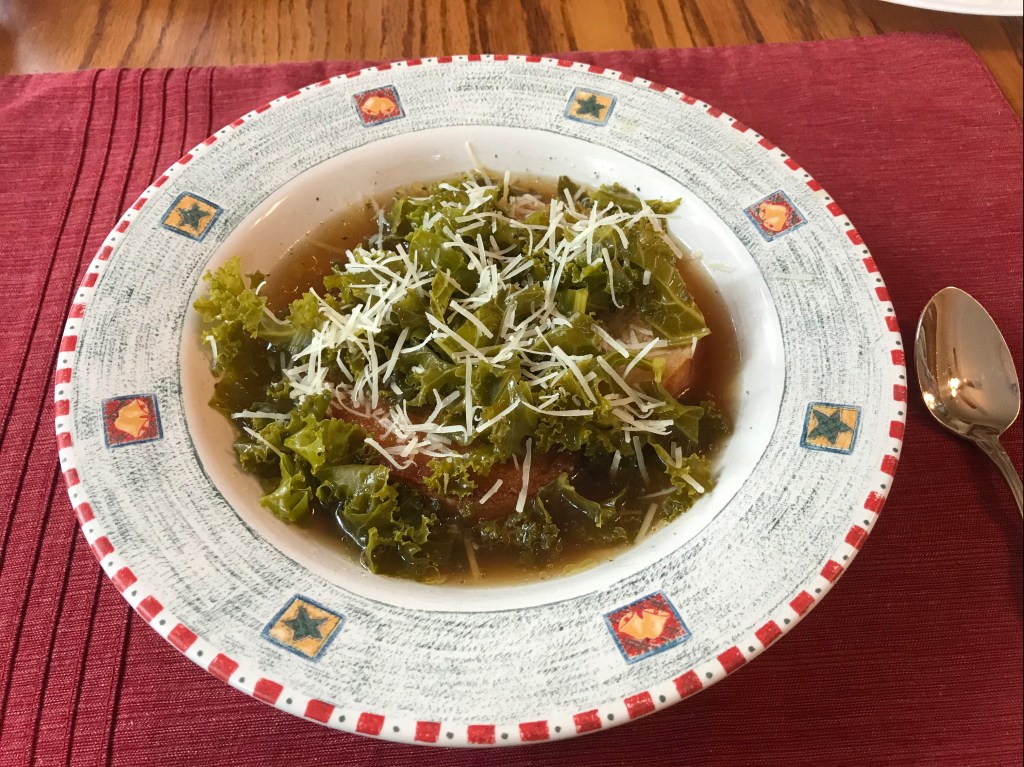
            The soup is a fine example of the rustic simplicity of many Tuscan dishes. The kale, in this case harvested a few hours before from a pot on the deck, is cooked in a mixture of chicken and beef broth. Meanwhile, slices of Italian bread are toasted under the broiler and rubbed with garlic. Pieces of toast are then placed in the soup bowls, given a sprinkling of salt, pepper, and olive oil, topped with the cooked kale, and given a bit more salt, pepper and oil before being finished with the broth and a sprinkle of parmesan cheese. The layered effect this gave the soup was both interesting and pretty, and it tasted as good as it looked.

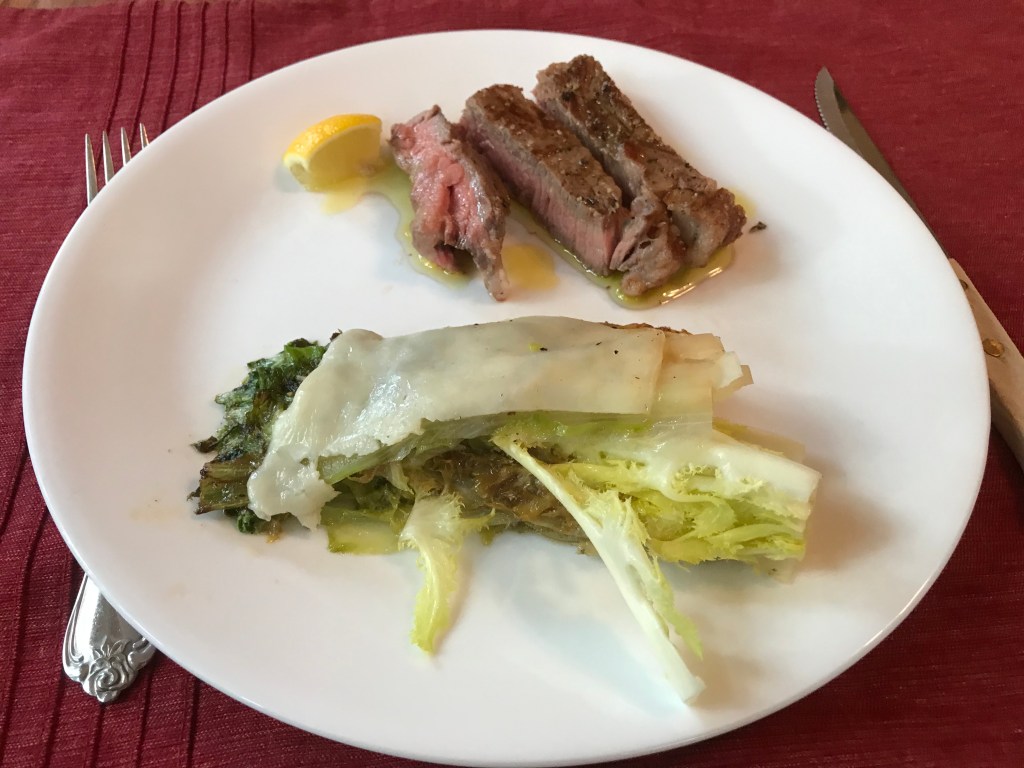
            The second course was also fairly easy to make. For the steak, the recipe provides directions for using a charcoal grill, but provides an alternative on a gas grill. First, the meat is seared close to the coals, then moved further away to cook for a few minutes, with the procedure repeated for the second side. Since the gas grill I have access to does not have a way to move the meat closer or further from the heat, I had to improvise. To have better control of the temperature, I used a skillet instead, raising and lowering the heat. This worked pretty well. Though the meat ended up more medium than rare, it remained tender and had a nice sear on the outside. Topped with garlic-infused olive oil (which is really quick and easy to make in a small skillet or saucepan) and a squeeze of fresh lemon, it was delicious.

            On a side note, the recipe may have been affected further by using a smaller steak. Though it looked to be at least an inch thick, as was needed, it was just under 1 ½ pounds, rather than the 3-pound monster steak the recipe called for. Since the original recipe is designed to serve six and I was only serving three people, this seemed reasonable, plus the 1.3 or 1.4 pounder was the largest steak available at the supermarket. While I made the full batch of soup in order to have leftovers, steak does not reheat particularly well, so I didn’t make a second one. When the really good sale price is $10.49/lb, you want to make sure you enjoy it at its best.

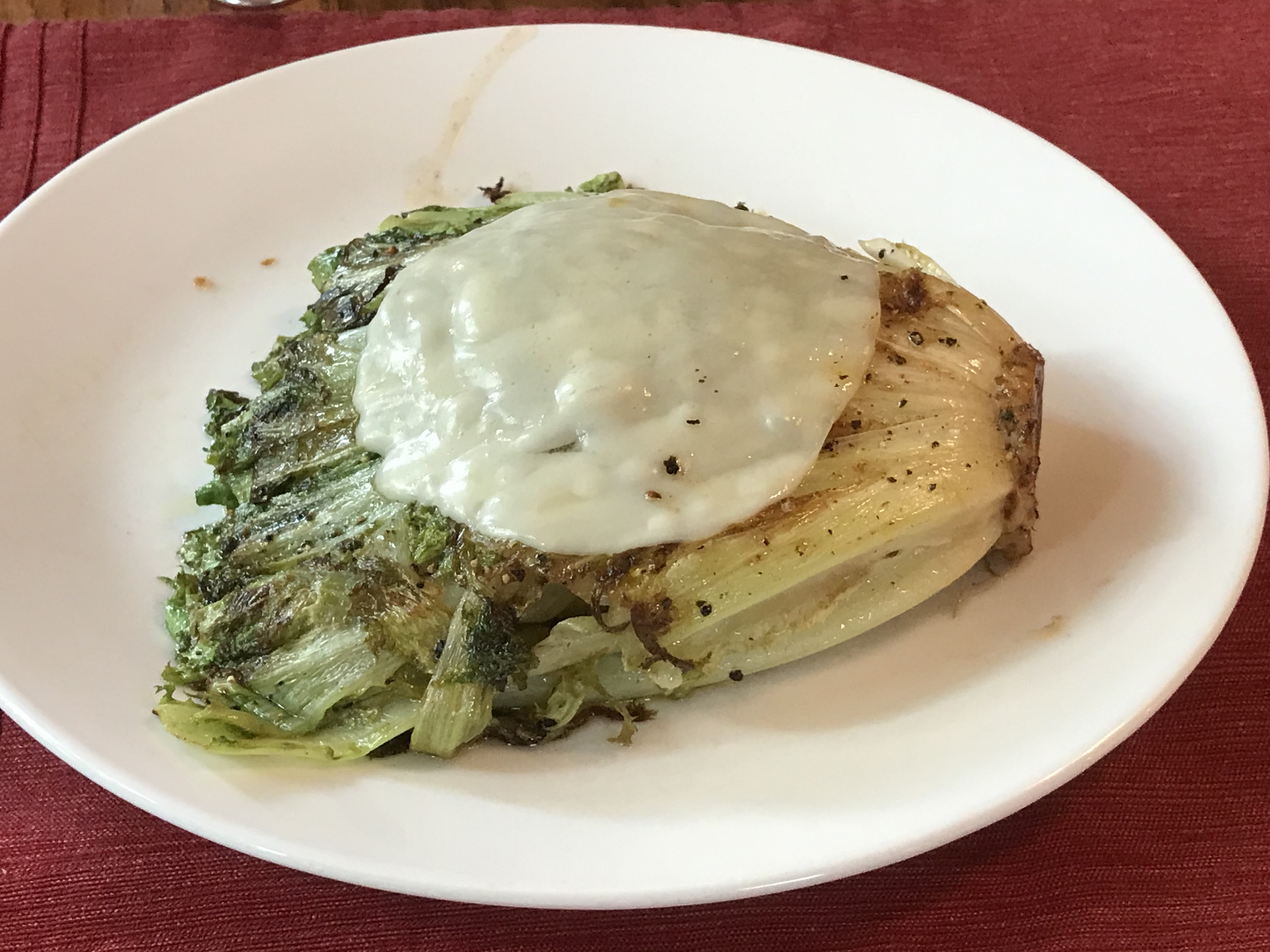
            Since the steak needed time to rest before slicing, I used the already-hot skillet to cook the chicory. Also called curly endive, it is a slightly bitter green. The darker, more bitter outer leaves are removed and either reserved for another use or discarded, while the lighter yellow and white hearts are seared briefly over very high heat with olive oil, salt, and pepper. Once removed from the heat source, a thin slice of smoked mozzarella is added on top to melt. The store didn’t have smoked mozzarella, so I got a deli pack of lightly smoked provolone. I only needed one slice, but provolone makes really good grilled cheese, the perfect accompaniment to leftover soup or a salad of the leftover chicory leaves.

            I wouldn’t have thought of cooking greens in the skillet, but the chicory turned out really well. The quick sear cuts the bitterness and imparts a bit of a roasted flavor while creating a perfect crisp-tender texture, soft enough to cut easily but with a bit of crunch. The bit of melty smoked cheese was a nice finishing touch, but if unavailable, the dish would still be fantastic without it.

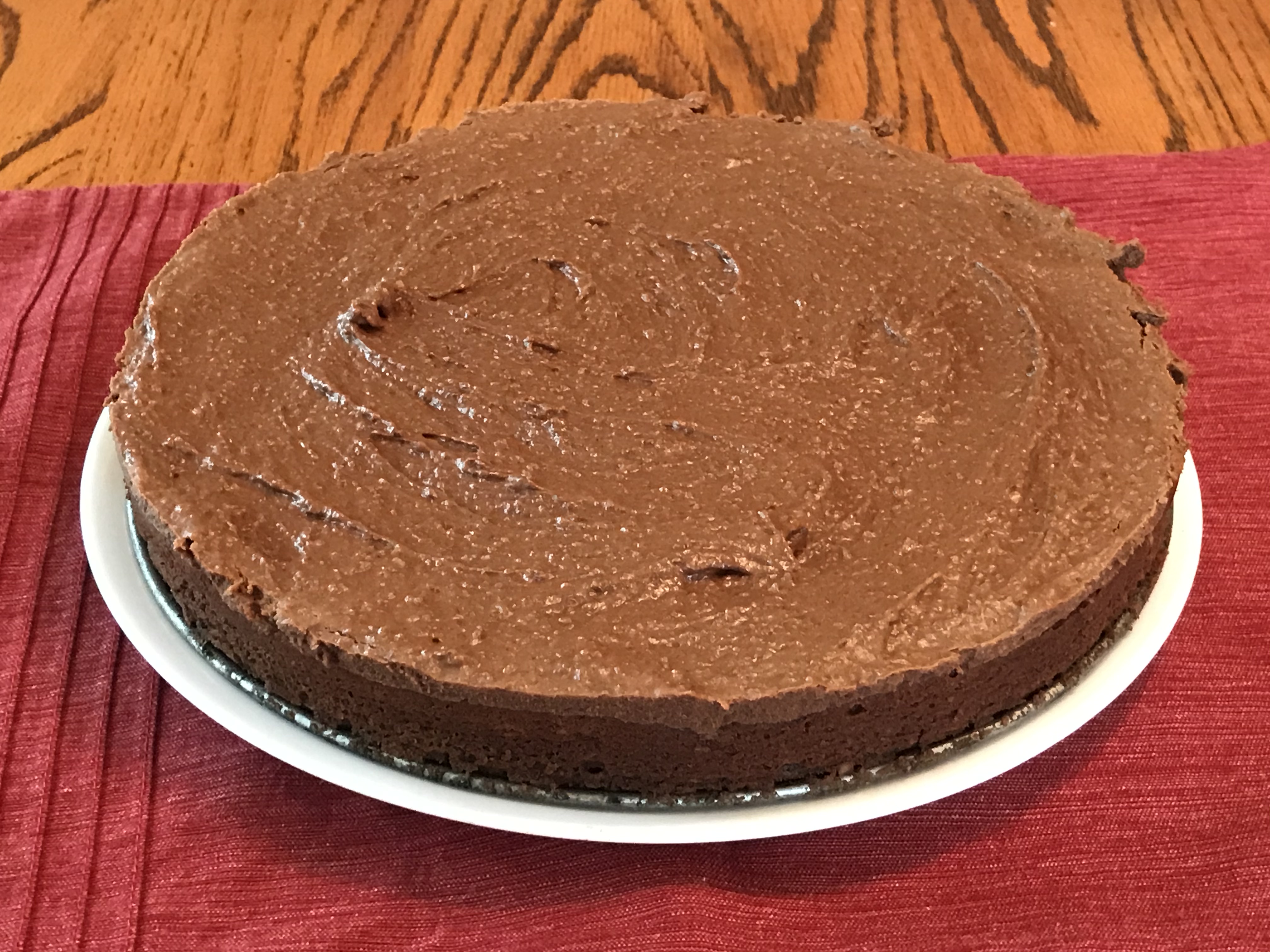
            The cake was one of the best desserts from the book. It contains no flour, rather it is held together by ground almonds. The volume comes from adequately beating the butter, sugar, and egg yolks, then, after adding the almonds and melted bittersweet chocolate, carefully folding in the beaten egg whites. Half of the mixture is baked and cooled, acquiring a brownie-like texture. The other half is then spread over the top. After chilling overnight to firm up the mousse, the cake is served. The flavor is perfect, with just the right balance of sweet and bitter. Though excellent as is, a bit of almond extract, some whipped cream, and/or fresh berries to cut through the intensity and richness would be nice additions. But as with the rest of this menu, it’s really hard to go wrong.

Standard
Uncategorized

Cook’s Tour of Italy Menu 13 (Pgs. 52 – 57): Menu for 4, Lucca (Tuscany)

Menu: Lucca-Style Penne Pasta in Timbale, “Veal” Scallops with Ham and Sage, Roasted Broccoli and Cauliflower, Peach “Cobbler,” Purple Plum Ice Cream

Recommended Wine: Tuscan Chianti

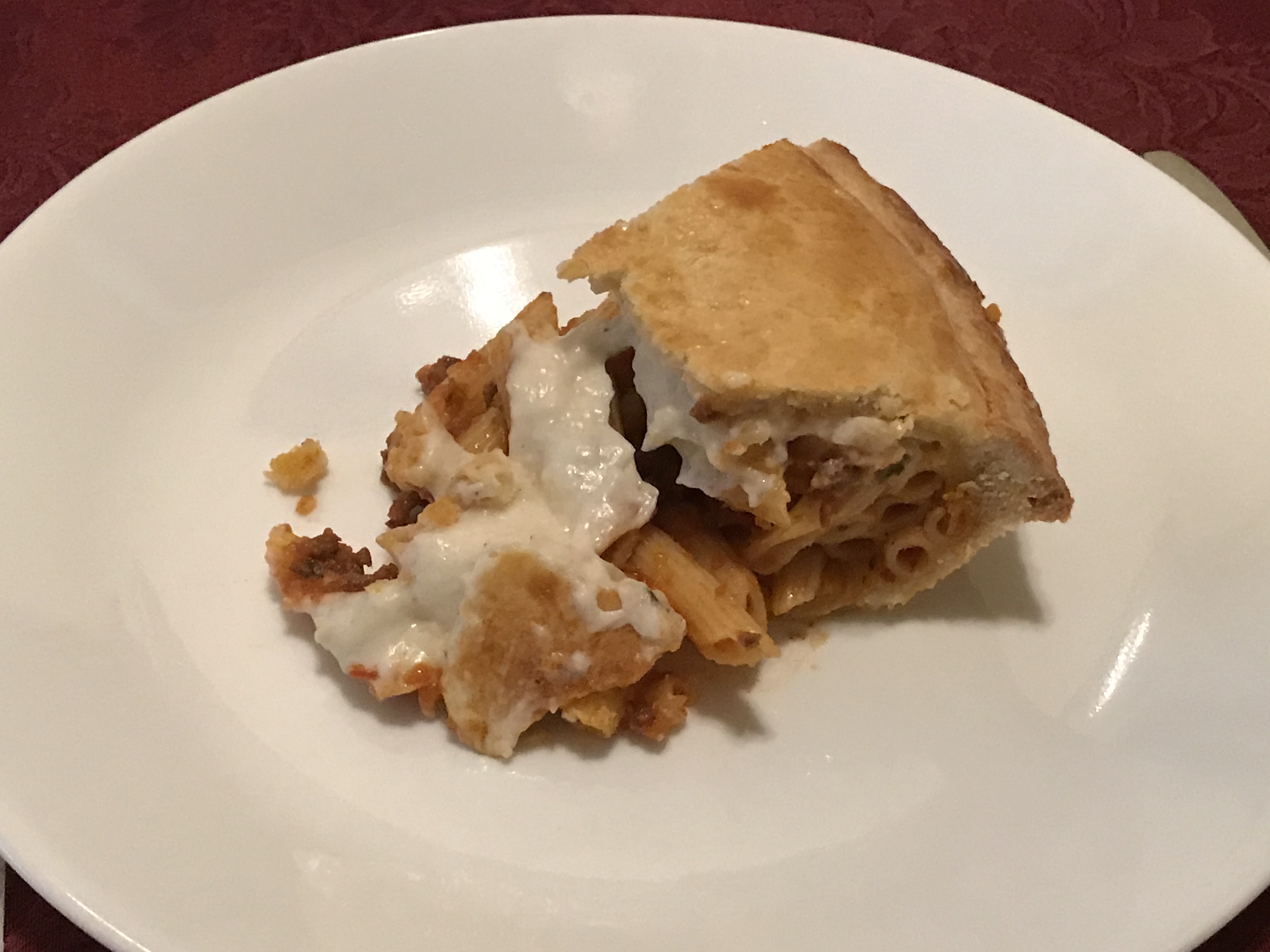
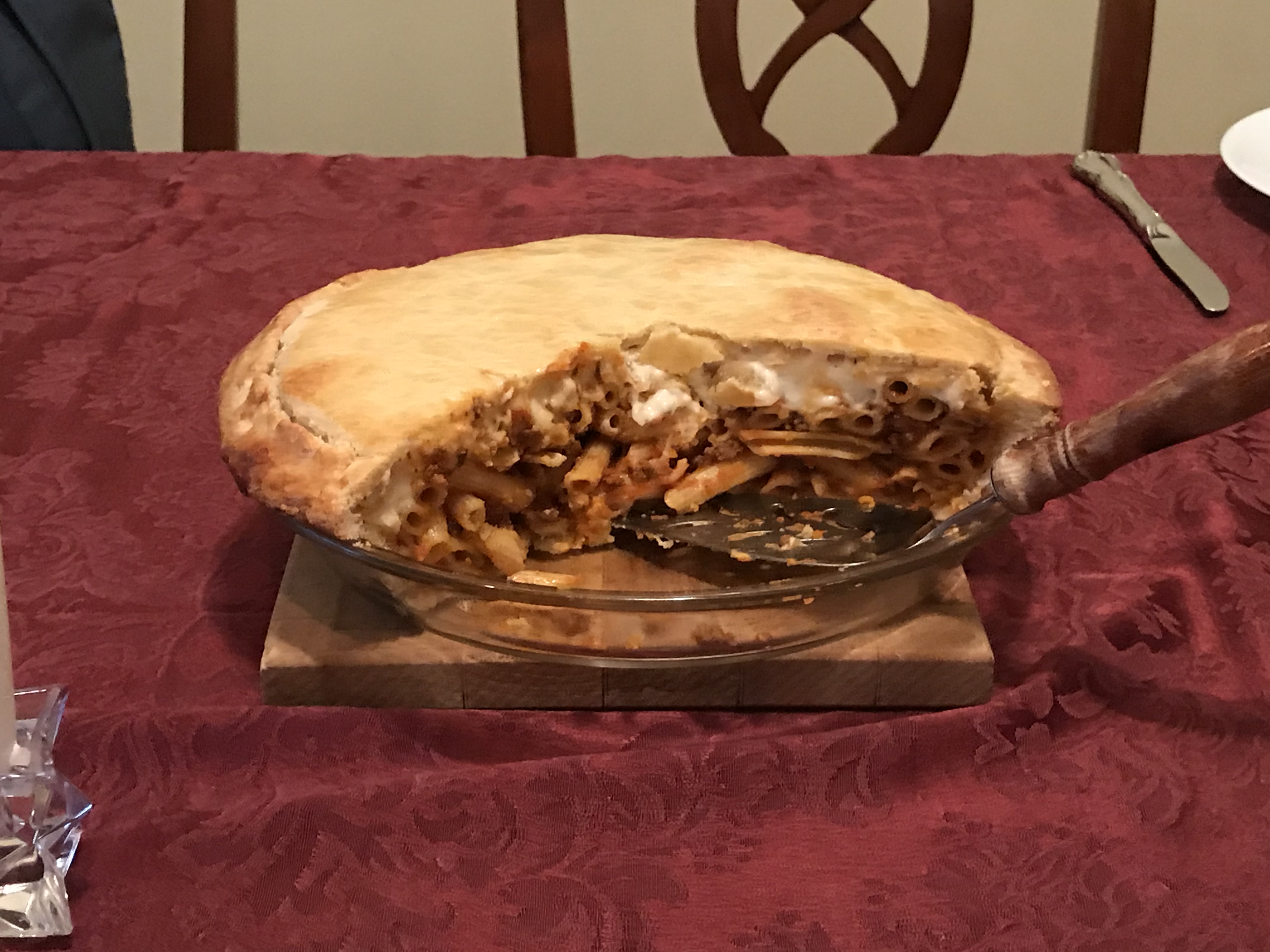
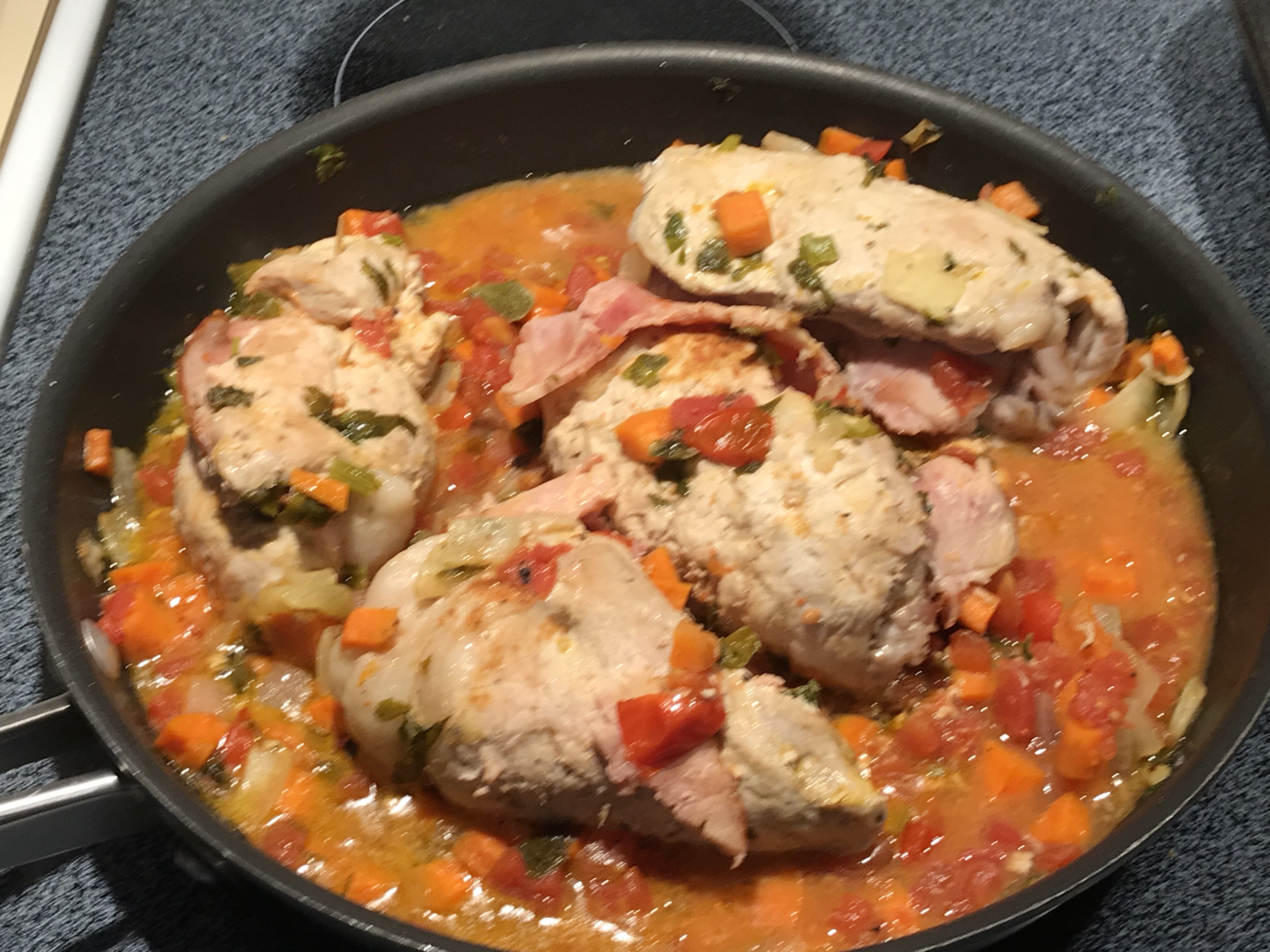
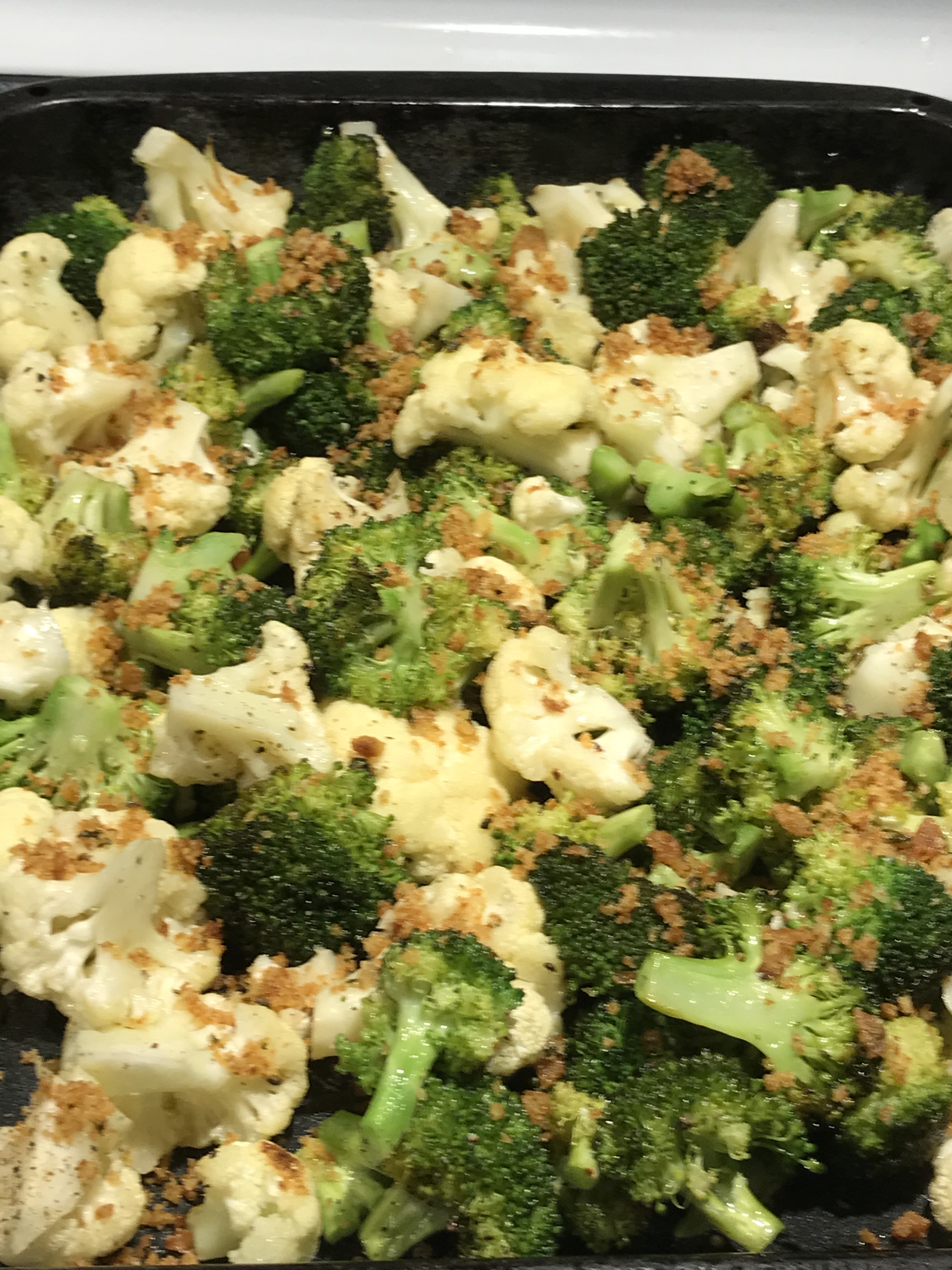
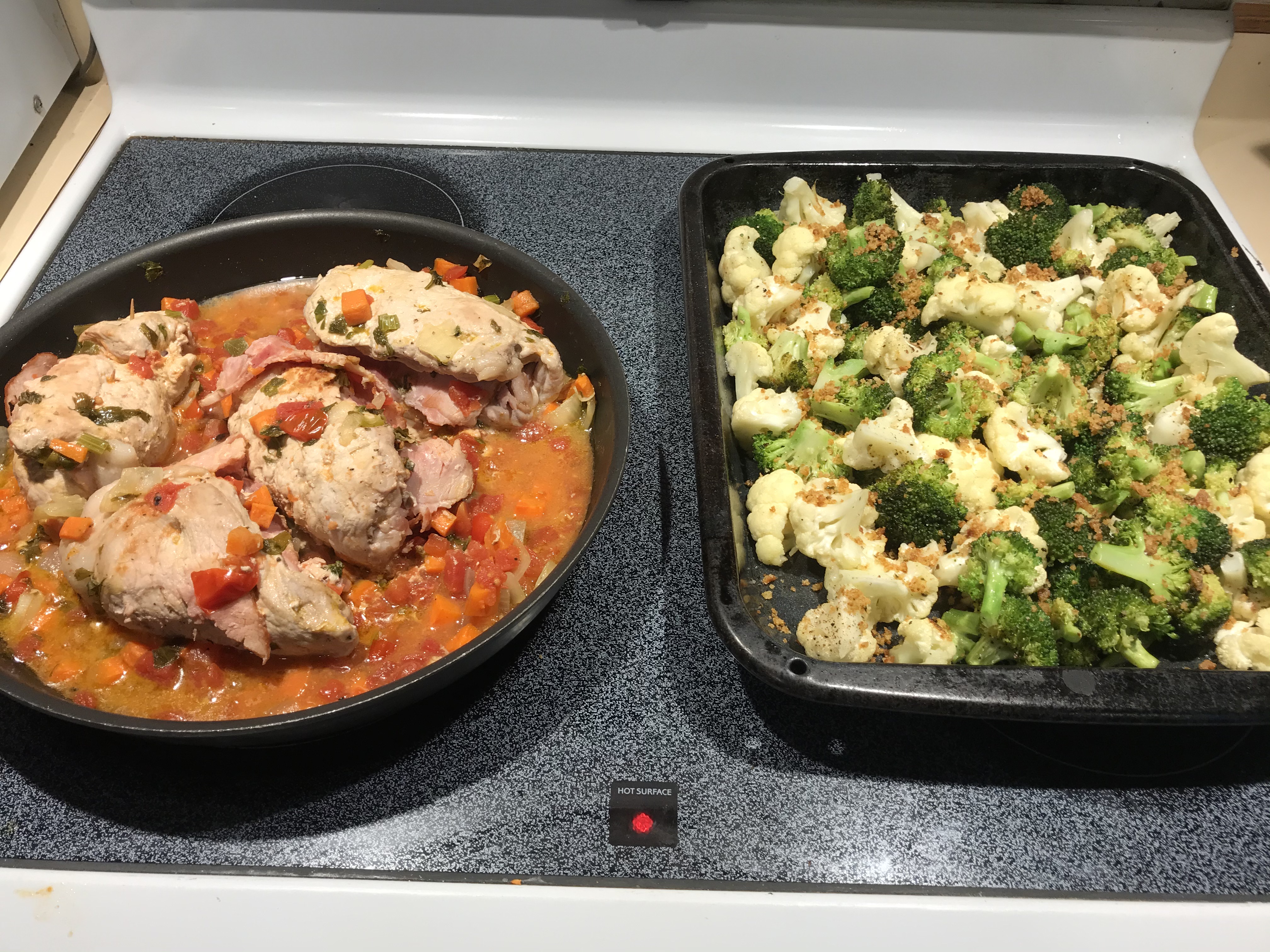
            Back in Tuscany, this time in Lucca, we have another interesting menu, based on dishes served at the home of two of Mr. Famularo’s American friends who live there. It starts with a mix of pasta with meat sauce, topped with bechamel and parmesan, and encased in a sweet pastry crust flavored with lemon peel. This is followed by “veal” scallops, pounded thin, rolled with ham and sage, and braised in a mix of vegetables, white wine, and tomatoes. To the side is oven-roasted broccoli and cauliflower, topped with breadcrumbs. For dessert, there is a peach cobbler-type dish and purple plum gelato.

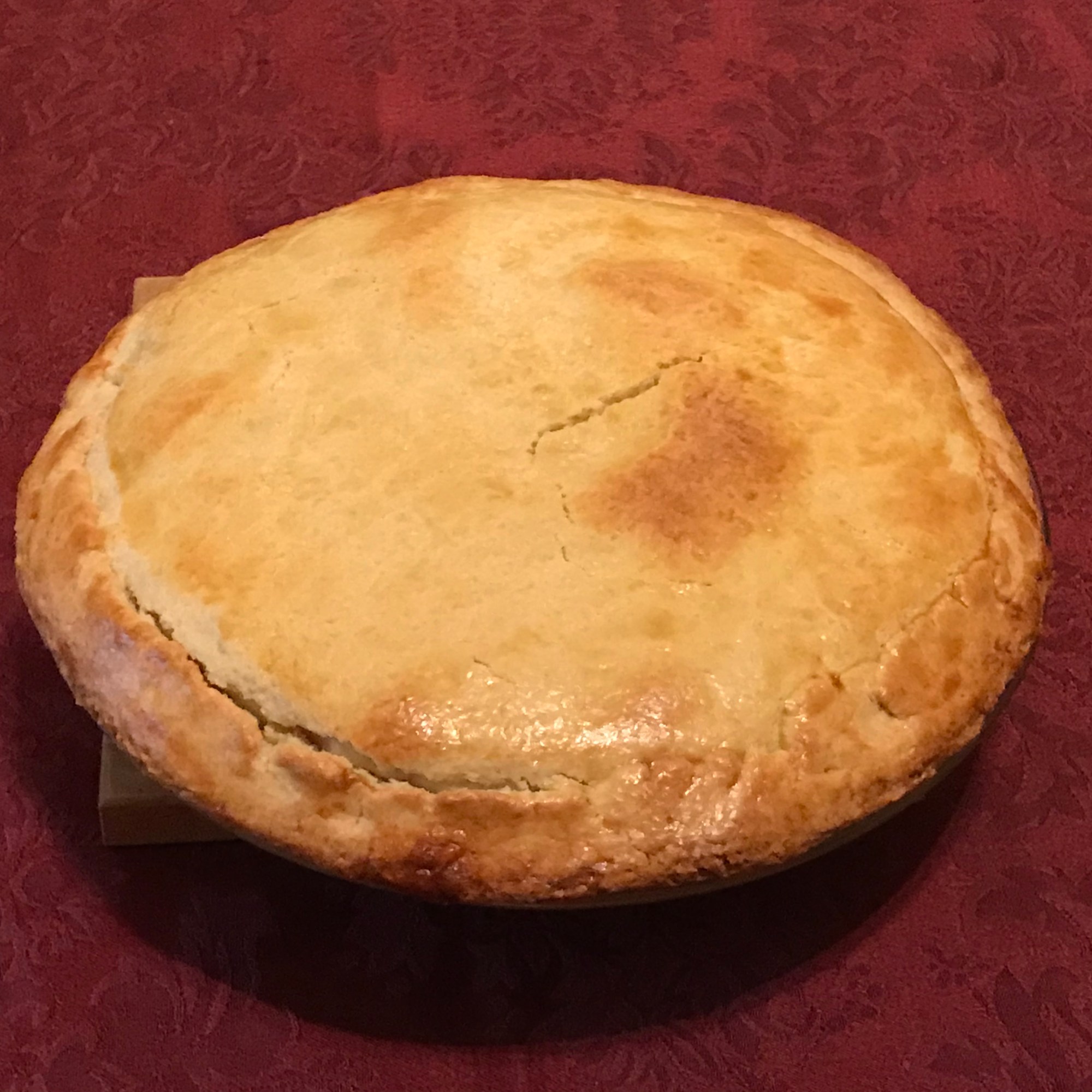
            The pie was really interesting. The pre-cooked penne pasta is combined with a tomato meat sauce, placed in a pastry shell, topped with a nutmeg-scented bechamel sauce, sprinkled with parmesan cheese, sealed with a second piece of pastry on top, and baked. The tomato sauce recipe makes a bit more than needed, but if the recipe is doubled you can get a second meal out of it with some extra pasta. Though I forgot to add the parmesan until after I’d already sealed the pie, it tasted just fine without. The crust was sweet, almost cookie-like, but it worked with everything else, the bechamel seemingly tying everything together. This crust recipe would be even better with a fruit filling.

            After flattening and rolling the boneless pork chops (in place of veal scallops), the second course came together without difficulty. The carrots, onions, and celery flavored the braising liquid and pork. I’m not sure I would bother making the meat rolls again, though. They were good, but the vegetables and braising liquid would give just as good a flavor to plain pork or chicken pieces without the hassle of pounding and rolling. The broccoli and cauliflower, oven-roasted with just salt, pepper, and olive oil, then topped with toasted breadcrumbs, is simple and delicious. Just make sure that if the breadcrumbs are pre-made and frozen that they are brought to room temperature before sprinkling.

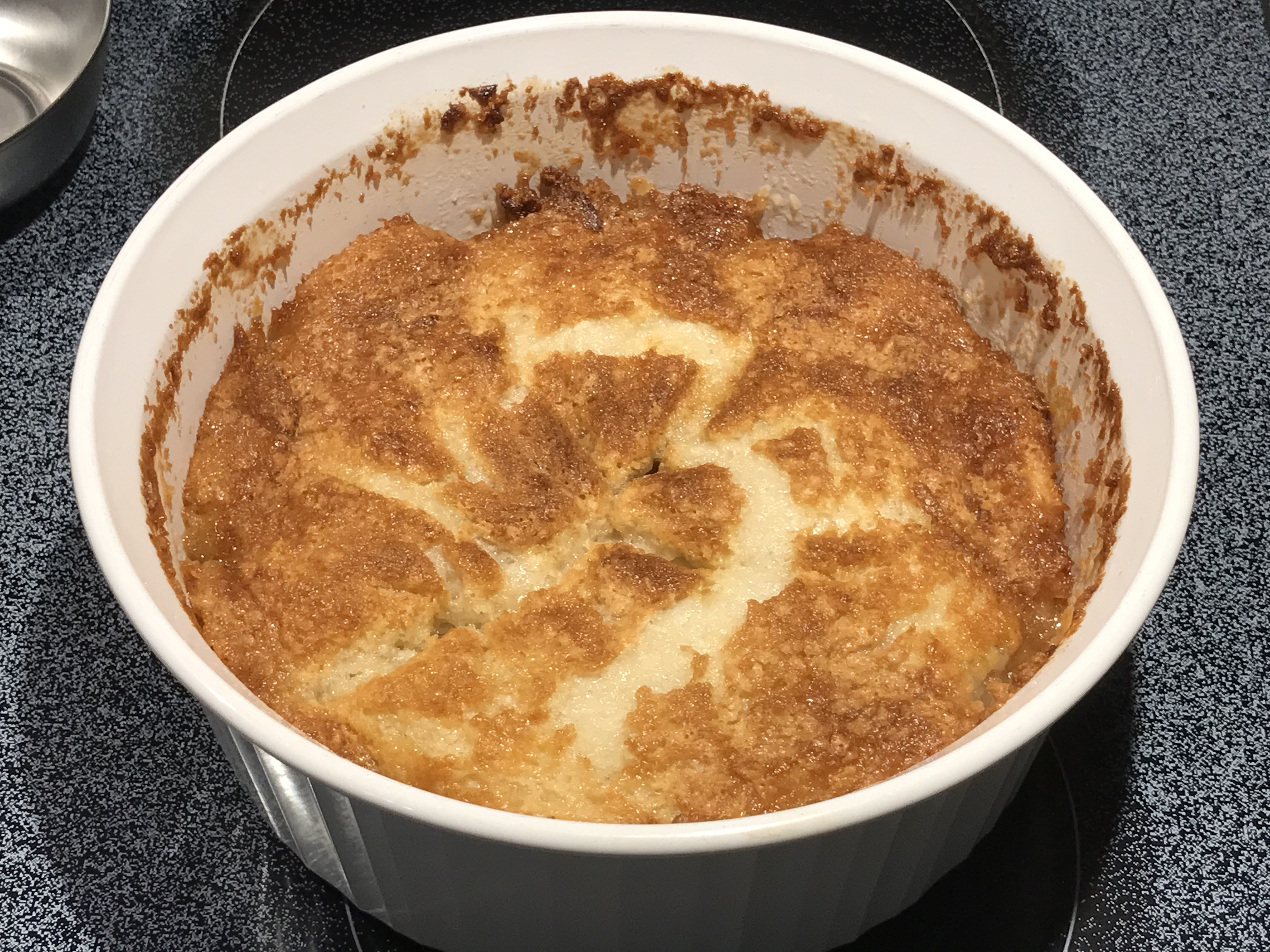
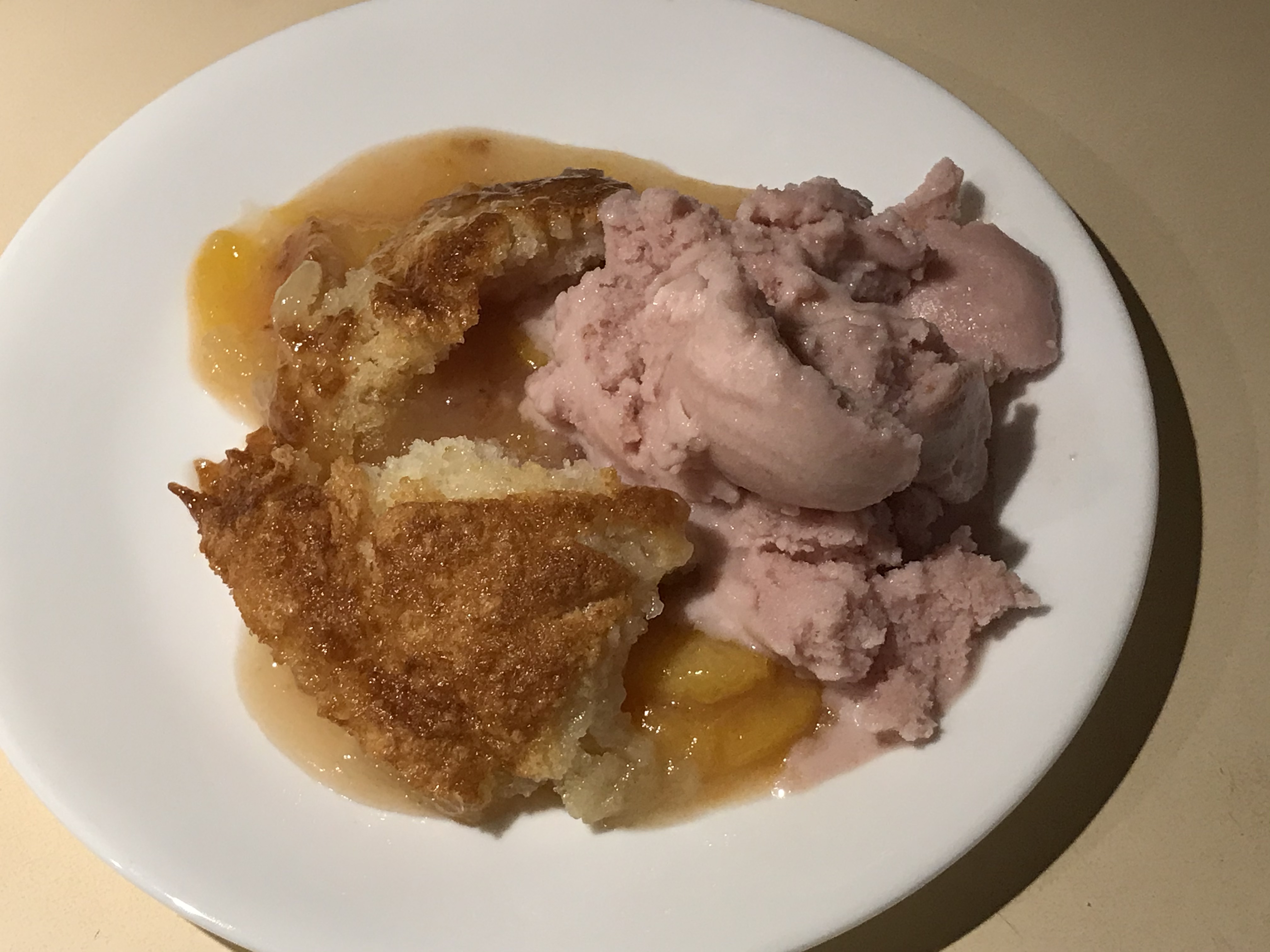
            Dessert was not quite as good as the other courses, though there was certainly nothing wrong with it. The issue was that the cobbler dish was a bit too sugary, both in the peaches and the topping, overwhelming the other flavors. The “crust” did end up with a nice angel food-like texture and the ice cream helped cut the sweetness, but I think fresh peaches would be better in a regular crust or, better yet, the pastry from which the pie was made. Made with just sweetened plum puree and milk, the ice cream had a flavor between sorbet and frozen yogurt. It was an interesting change of pace, but not as sweet or creamy as one might expect. Still, this all made for a highly enjoyable dinner.

Standard
Uncategorized

Cook’s Tour of Italy Menu 10 (Pgs. 41 – 44): Dinner in Radda-in-Chianti (Tuscany)

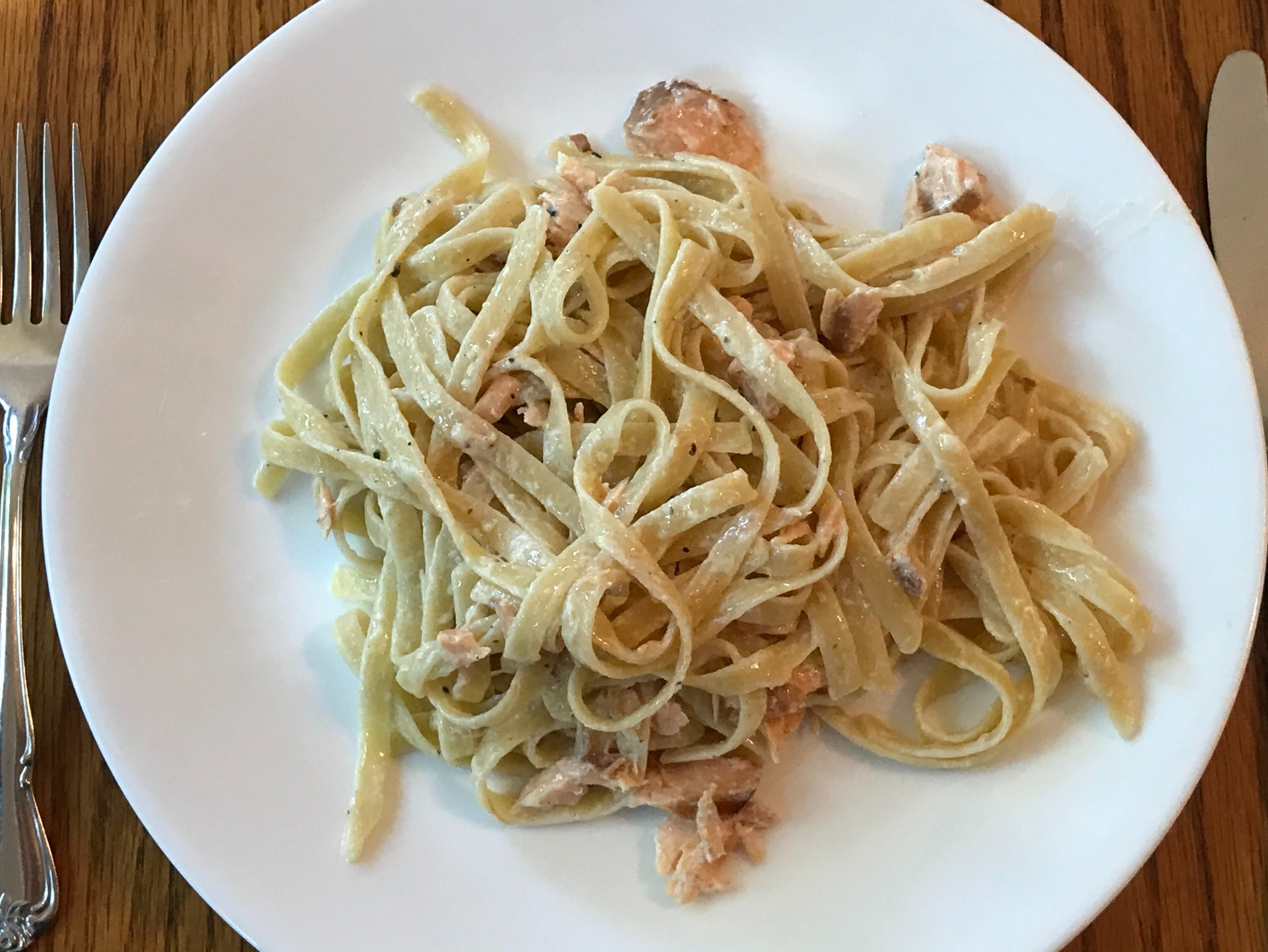
Menu: A Country Spinach Pie, Fettuccine with Smoked Salmon, Sugared Red and White Grapes, Almond Biscotti without Vin Santo

Recommended Wine: Dry White like Vernaccia di San Gimignano

IMG_2721

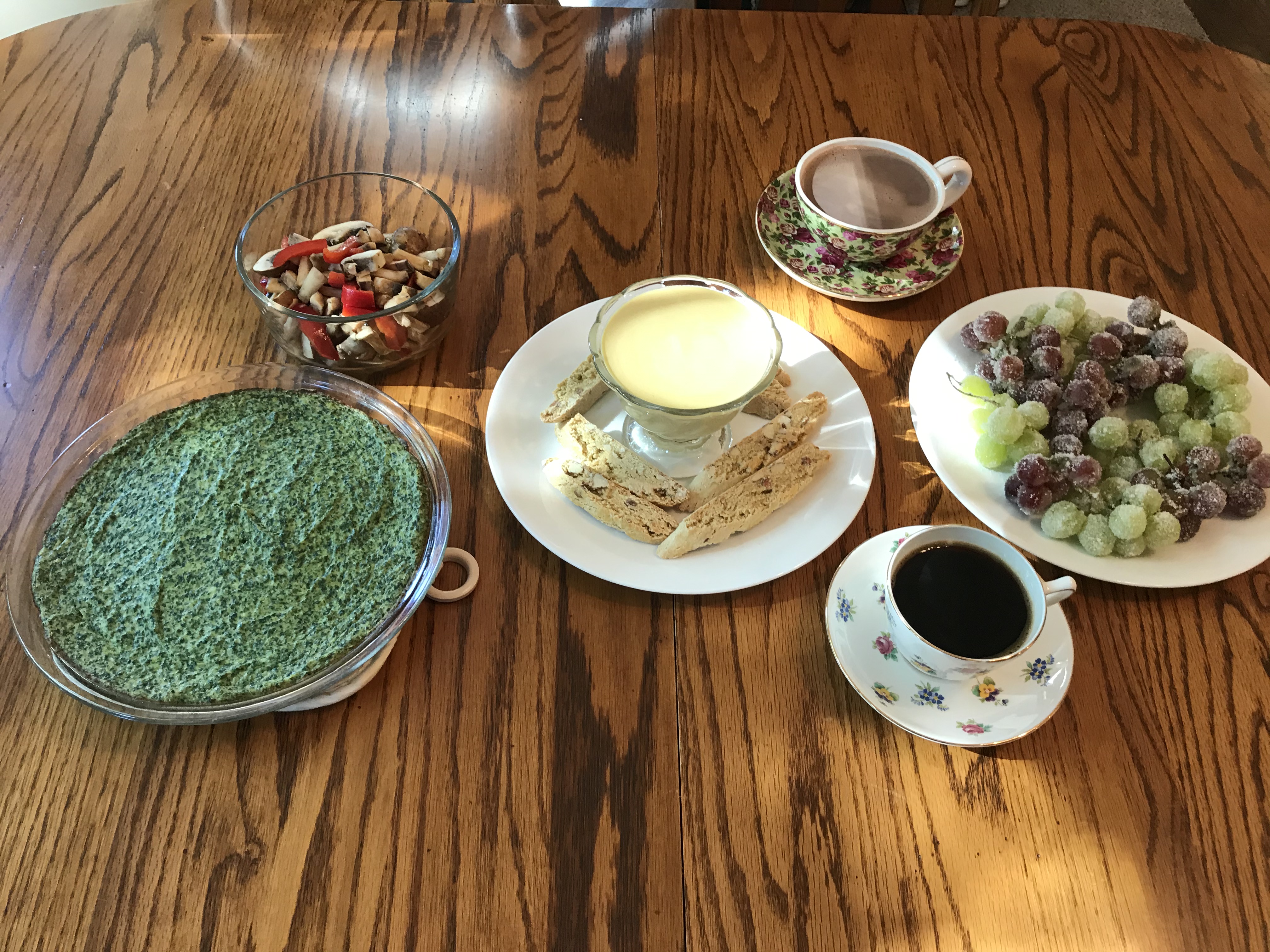
Due to a number of good summer menus, we remain in Tuscany for a meal in a pretty village in the Chianti region. Featuring a crustless, quiche-like spinach tart, something like fettuccine alfredo with smoked salmon, grapes with a crackly sugar coating, and biscotti, this menu demonstrates both Tuscan specialties and more national dishes. As stated in the text on page 43, the pasta dish is found across Italy. Grapes are as well, and not just in wine. The tart and the biscotti are more regional, as is the Vin Santo frequently served with the biscotti.

The crustless spinach tart seems to be a direct descendent of the Ancient Roman patina, something between an omelet or custard. There are several recipes for patinas in Apicius, often with pureed vegetables or vegetable juice mixed in with the eggs. The taste for green vegetables also goes back to Ancient times. While the spinach, basil, and nutmeg are Medieval introductions, similar recipes in Apicius feature lettuce or asparagus, almost always with pepper, and sometimes with ricotta cheese. Favorite vegetables in Tuscany today include spinach, chard, and especially black kale. (Text, Pg. 41 and 46) The optional mushrooms in the topping were another favorite of the Romans.

The biscotti is a more recent addition to the region’s cuisine and the cream sauce much more recent, but fruit and wine for dessert has a long history. A variety of ancient sources make clear that fresh and/or dried fruit were favorite desserts, and raisin wine similar to Vin Santo, pressed from partially dried grapes, is a frequent addition to sauces in Apicius. Vin Santo itself, along with sugared fruit, has been known since the Renaissance.

The tart was pretty good, though the texture was slightly odd. With only two eggs and an egg white to a pound of ricotta and 12 oz of spinach, it had a creamy texture but wasn’t quite like a quiche. It held together kind of like a cheesecake, but it was rather soft. The flavor was good, with onions, basil, and a bit of nutmeg, but the tart would have been better with a crust. The garnish of mushrooms (leftover stems from the last menu, mostly) and red bell pepper, dressed in olive oil and lemon juice, provided a flavor and texture contrast.

IMG_2725

The pasta was also enjoyable, though the smoky flavor of the fish took some getting used to. Part of this may have been due to the type I used. The recipe called for thinly sliced smoked salmon cut into squares, but the only type I could find was in a small chunk. I adapted by flaking it with my fingers and continuing with the recipe, but maybe that kind is smoked more heavily. Or maybe I’m just not used to the taste of smoked fish. Regardless, it worked really well with the pasta, half and half, and parmesan cheese, and the flavor grew on me as I kept eating it.

IMG_2724

My favorite part, however, was dessert: sugared red and white grapes and almond biscotti. The grapes turned out to be quite a revelation. They are first dipped in beaten egg whites, then sugar to coat. The end product is just gorgeous, with a frosted, sparkly look. After a few hours, the sugar becomes like a crackly crust, and the grapes are even better the next day. While this is certainly not the healthiest way to enjoy fruit, it is a nice treat and would look beautiful on a cheese tray. The biscotti had a great flavor from the almonds, which got nice and toasty during the baking, and were quite addictive. Just be forewarned that the dough is really thick and takes a long time to come together if you mix it with a wooden spoon and knead it by hand. It even gave my stand mixer, which can handle just about anything, a bit of a workout.

In Tuscany, the biscotti are often served with Vin Santo, a sweet dessert wine with some similar flavors to marsala. As I didn’t want to go multiple places to try and find it, I made a custard with a small amount of marsala to dip it into. I also make a cup each of hot cocoa and coffee in case I didn’t like the custard. As it turned out, I’m glad I did. Even with a small amount of wine, added at the start to cook off the alcohol, and a fair amount of milk, I just can’t get used to the taste of wine custard. I much prefer the biscotti with coffee or cocoa. They retained a nice crunch even after dipping. It’s clear why these are so popular.

Standard
Uncategorized

Cook’s Tour of Italy Menu 14 (Pgs.57 – 62): Tuscan Picnic in Pienza

Menu: Bacon Frittata with Parsley, Fresh Beans with Tuna, Herbed Chicken on the Grill, Baked Mushrooms with Hazelnuts, Marinated Swiss Chard Stalks Wrapped in the Leaves, Sienese Ricciarelli Cookies

Recommended Wines: Terre di Tufi (straw-yellow, fruity white), Chianti Classico (red)

IMG_2719

Now imagine a Tuscan picnic, in the shade of a chestnut tree, near a Renaissance Papal residence. (Text, pg. 58) That is what we are to think of when enjoying this spread, which can be made entirely ahead of time. This would be quite a bit to make on one day, so spreading it out and bringing everything to room temperature before serving makes sense. I made the cookies and the biscotti for the next menu a few days beforehand, both at the same time to avoid wasting egg whites or yolks. The day before I put the chicken in to marinate, mixed together the beans and tuna, and made the swiss chard wraps. That just left the frittata and stuffed mushrooms to make the day of, plus grilling the chicken.

There were a few bumps in the road with this. I was under the impression that the herb/oil marinade would be more paste-like, rather than with visible pieces in the oil, but since the herbs were supposed to be minced, not put in the food processor, I stuck with it. The recipe also called for weighting the chicken down with a foil-wrapped brick or similar, which I did not have, so it went onto the grill without. This may have been a good thing, since that could have potentially forced out more of the oil, worsening the mini flare-ups that kept occurring. Due to this, I didn’t drizzle on a mix of olive oil and lemon juice periodically while cooking, just added a few splashes of lemon juice. While the chicken didn’t develop the herb “crust” it was supposed to, it was still tender and had a good flavor.

The marinated beans and tuna was an interesting and surprisingly good combination. In the past, the image of canned tuna I had in my mind was of a cat food-like homogeneous mass, but in reality it was flakes and bits of fish in a little bit of olive oil. I haven’t fully overcome the old mental image, but having it in dishes like this helps. The beans, tuna, vinegar, oil, onion, and herbs combine and balance each other out quite well.

IMG_2712

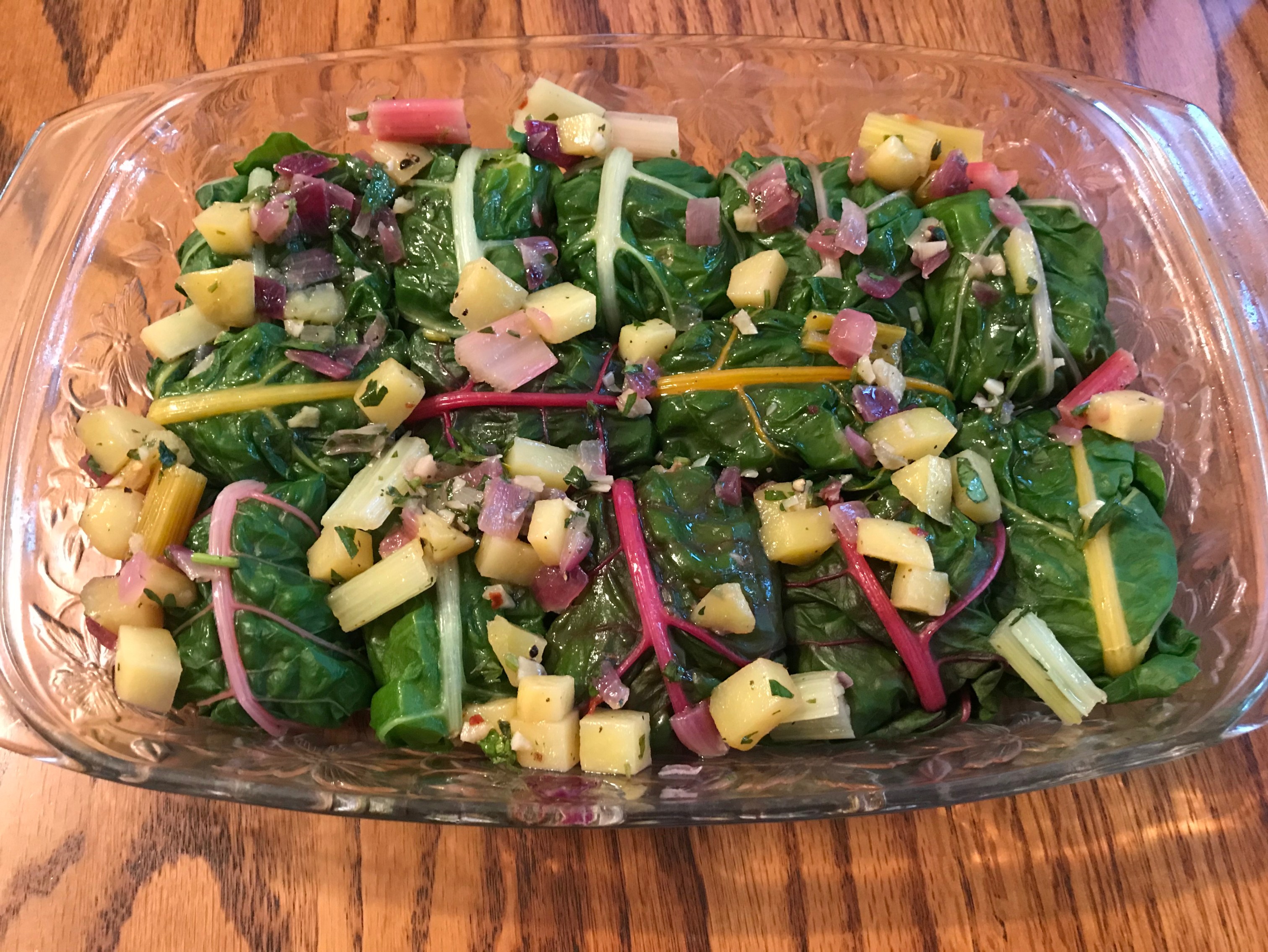
Perhaps the most interesting dish was the Swiss chard wraps, with a mix of lightly cooked stems, sautéed potatoes and onions, and a vinaigrette dressing wrapped in blanched Swiss chard leaves. The combination of potatoes, onions, and lightly sweetened dressing tasted a bit like German potato salad without the bacon. Wrapped in chard leaves with different colored veins, it was so pretty. I liked them best the first evening when still slightly warm, but they were still good when brought back to room temperature from the refrigerator the second day.

IMG_2709

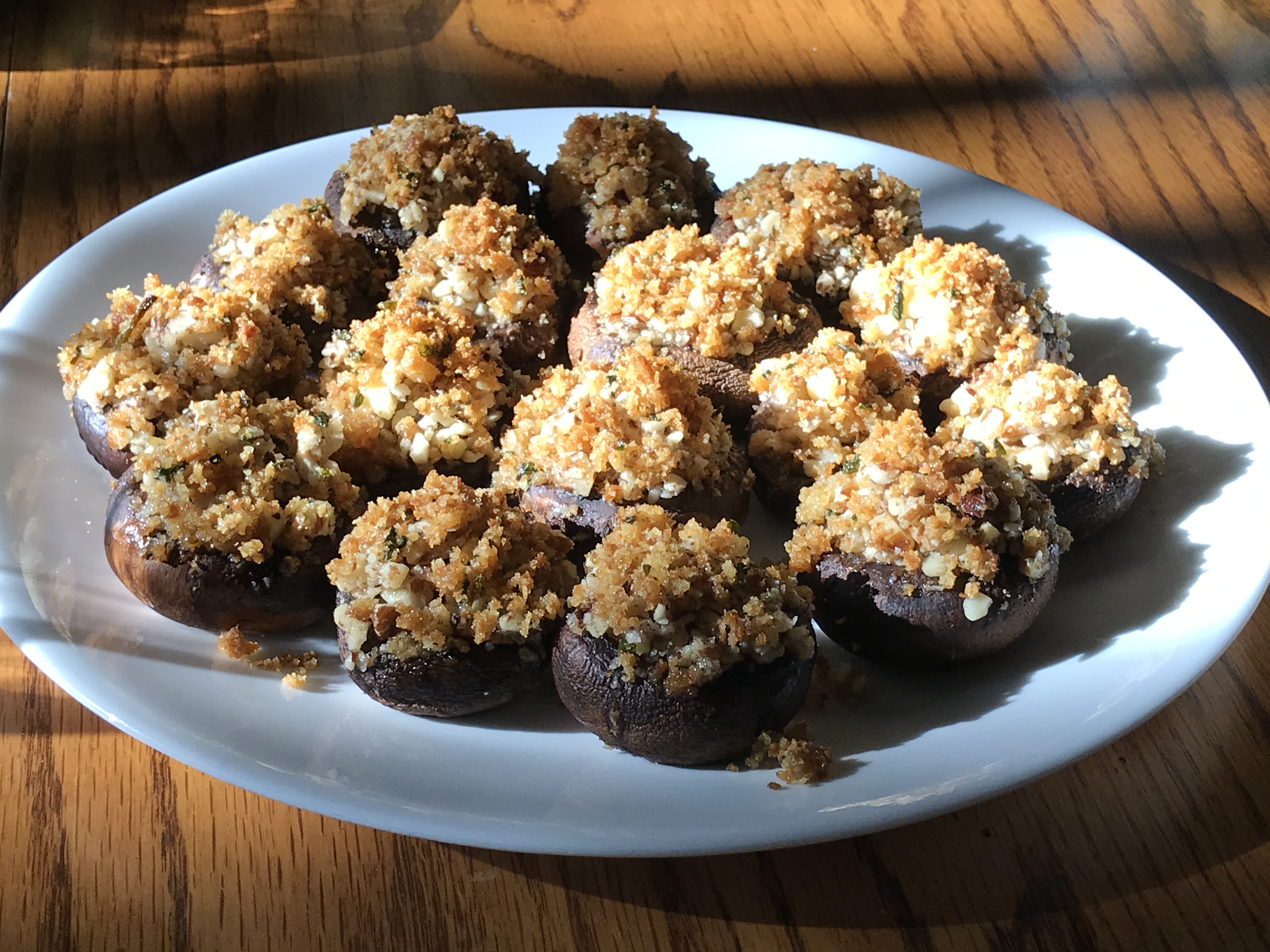
I think my favorite of the dishes was the baked mushrooms with hazelnuts. They’re basically mushroom caps sprinkled with lemon juice, salt, and pepper, filled with finely chopped hazelnuts sautéed in butter, topped with breadcrumbs, and baked. Since I had extra mushrooms and had made a big batch of breadcrumbs, I doubled the recipe. On tasting them, I was really glad I did. They take a little bit of time to assemble, but the taste is nothing short of incredible. With the meaty-tasting mushrooms and rich hazelnuts, they might even make a good vegetarian entrée.

IMG_2713

The menu notes suggest making the frittata the morning of the picnic and keeping it at room temperature until ready to eat. While frittatas are frequently eaten at room temperature or cold, particularly for picnics, the idea of something like a cold omelet does not sound particularly appealing. To save time in the afternoon/evening I did make it in the late morning, but served it for lunch, since there would be plenty of food at dinner time. Like the other dishes, it was very tasty. Bacon and eggs always go well together, and the parsley and parmesan cheese mixed in added even more flavor. I did accidentally over-salt the eggs given the amount of salt in the pancetta cubes and parmesan, but it was still good. I would definitely make it again, just being careful with the salt.

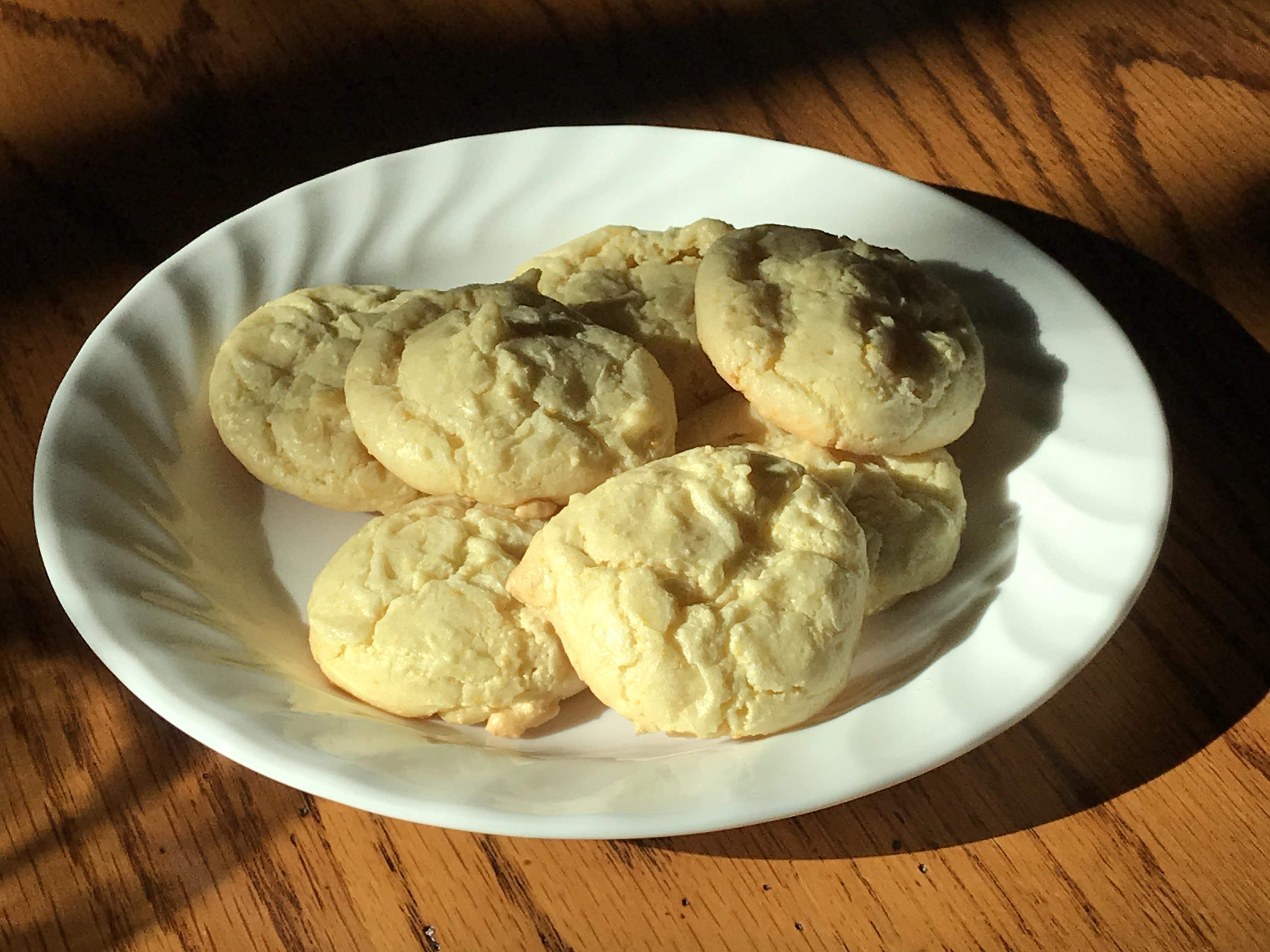
The cookies, called ricciarelli in Siena, were quite a hit. The recipe makes 20 of them, but you may notice that there are a lot fewer on the plate in the image. That’s what tends to happen when you make baked goods ahead of time. Based on almond paste and flavored with a bit of orange zest, they are given a meringue-like quality from powdered sugar and egg whites. Best of all, they are not difficult to make and hold up well in an airtight container for a few days.

IMG_2715

An overall review is as follows. The frittata would be good at a picnic, but also makes an excellent lunch for two or three people. Beans and tuna work surprisingly well together. The chicken has a great flavor and would suit most people’s tastes, even picky eaters. Hazelnuts and mushrooms seem like an odd combination, but the soft mushrooms and crunchy hazelnuts are an incredible match. The Swiss chard wraps are beautiful and tasty. For a finale, the cookies are one of the best recipes in a while.
 

Standard
Uncategorized

Cook’s Tour of Italy Menu 19 (Pgs. 69 – 70): White Beans and Mushrooms (Tuscany)

Menu: White Beans and Mushrooms, Orange and Grapefruit Salad

IMG_2641

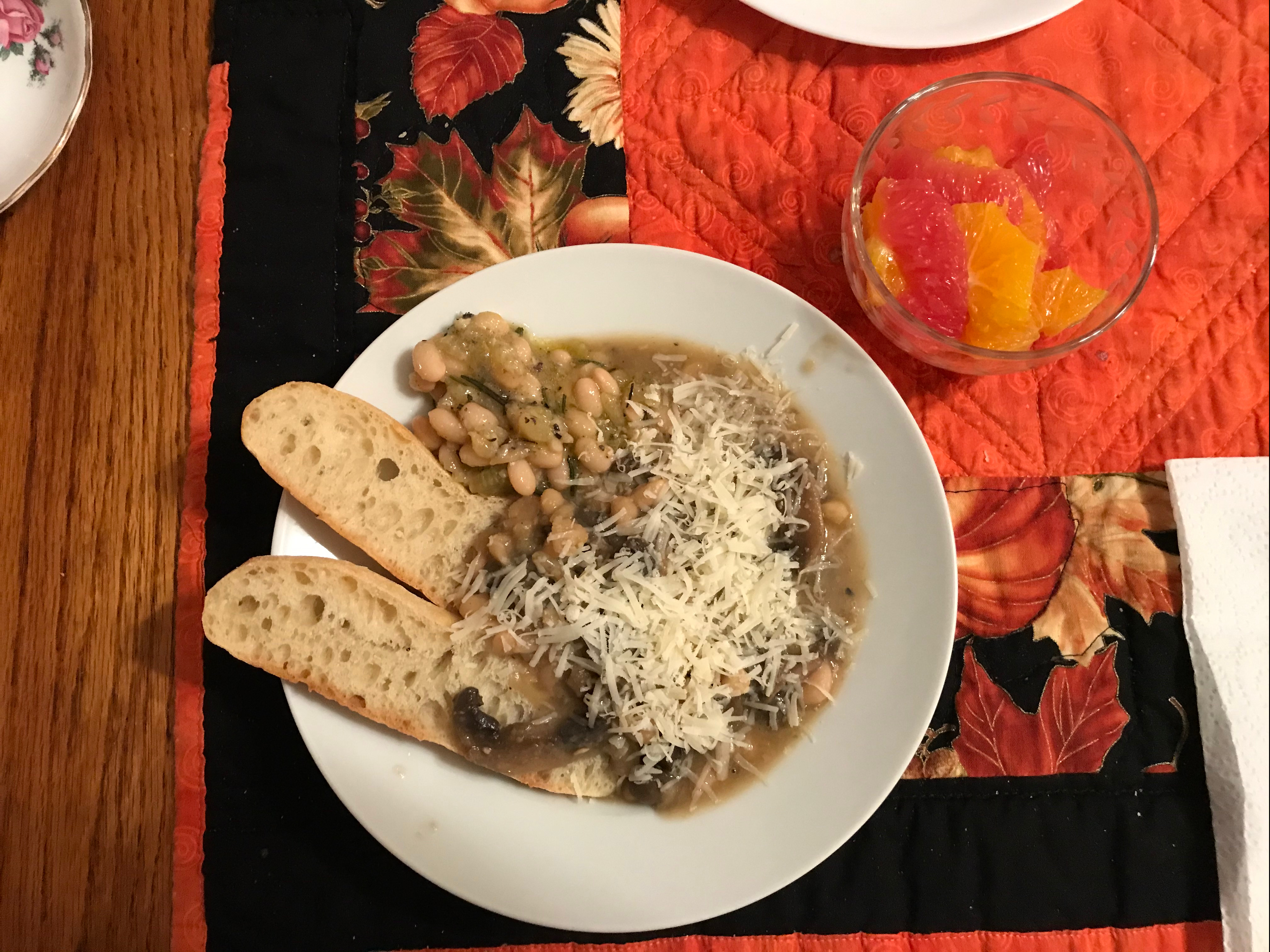
Remaining in Tuscany, we have another bean-based stew, served with bruschetta and parmesan cheese. Like elsewhere in Italy, the pre-modern population of Tuscany ate little meat, getting much of their protein from legumes. Even now, when meat is more widely consumed, beans remain a central part of the diet. Prior to Columbus, this would have been mainly peas, lentils, and fava beans, with white navy and cannellini beans becoming favored after their introduction from the New World. They are part of antipasti, side dishes, and most of all, soups and stews with a variety of ingredients. Here, they are included in a vegetarian stew with fresh and dried mushrooms.

This has to be one of the most satisfying meatless entrées I’ve ever tried. After the beans are cooked with celery, onions, garlic, and vegetable broth, some are removed and marinated with vinegar, olive oil, and rosemary. The rest are mashed or partially pureed in the pot before adding sautéed mushrooms. Each dish of beans and mushrooms is served with a spoonful of the marinated beans, a couple pieces of garlic-rubbed toast, and a sprinkle of parmesan cheese.

All of the flavors were balanced, with a nice contrast between the somewhat rich “stew” and acidic and herbal qualities of the marinated beans. The mix of protein from the beans, carbohydrates from the bread, and fat from the olive oil made the dish filling and satisfying, with the toasted bread adding a crunchy contrast to the otherwise soft dish. Really, I can’t praise this dish highly enough. It’s great as is, but the optional orange and grapefruit salad is a good accompaniment.

Standard