Uncategorized

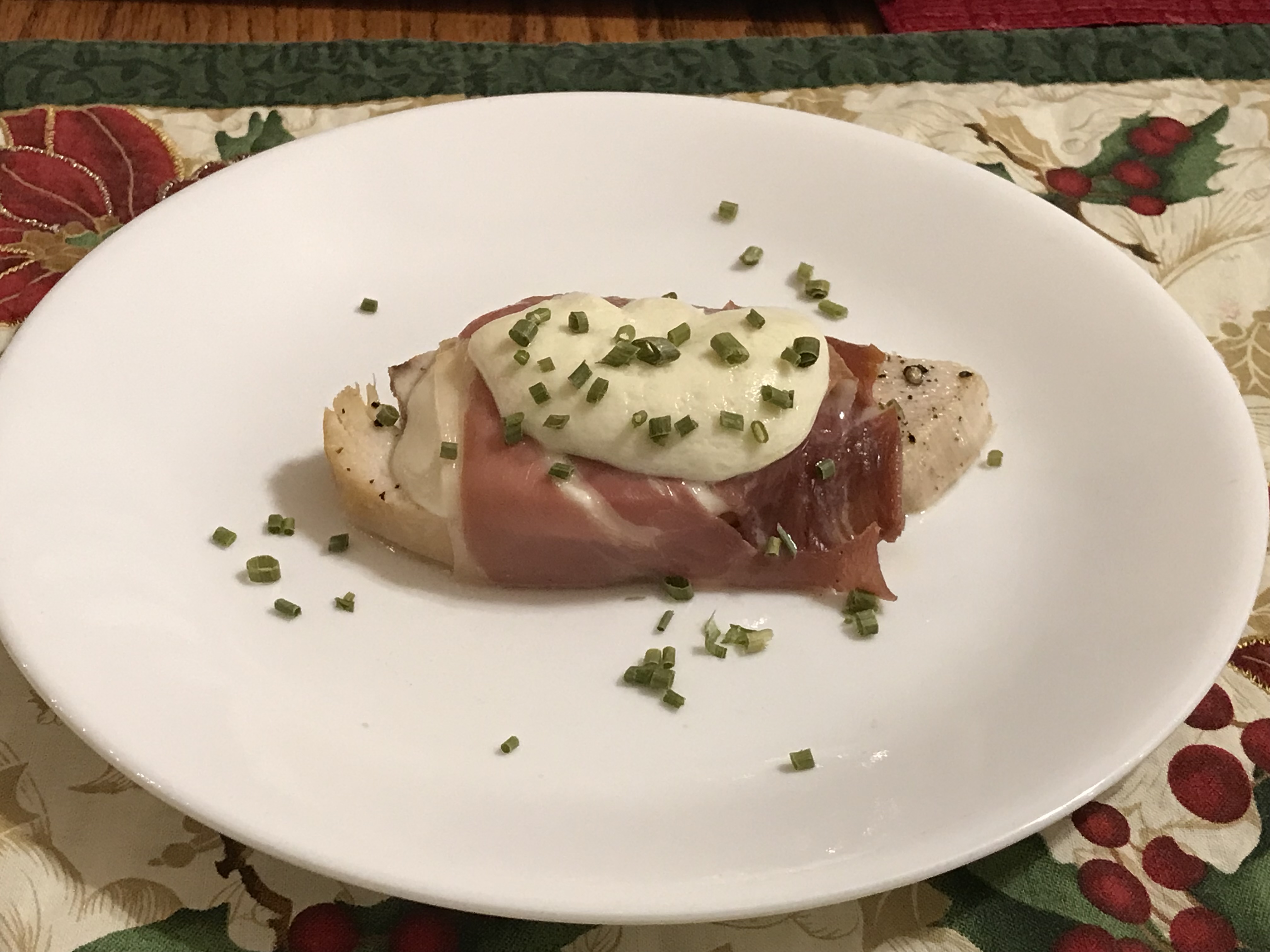
Cook’s Tour of Italy Menu 45 (Pgs. 139 – 140): Turkey Breast Baked with Prosciutto and Cheese to Resemble a Cardinal’s Hat

Region: Veneto

Menu: Prosciutto-Wrapped Turkey Breast with Cheese, Marinated Tomatoes

            Compared to most other forms of poultry, turkeys are a recent arrival in Europe. Native to North America, they were first brought back to Europe by Columbus at some point during the 1490s. Unlike tomatoes, potatoes, and chocolate, which took decades or even centuries to become widespread, the turkey caught on pretty much right away. Turkeys were being raised in Spain within 20 years and were popular in England by Shakespeare’s time.

            The reason for this is probably due to Medieval and Renaissance dining customs. At the time, the “noblest” foods were the various types of fowl, and the variety consumed was astounding. Along with chickens, geese, and ducks, kings and nobles raised pigeons on their estates, hunted pheasants and quails, and even ate things like larks, cranes, and herons. For banquets, the centerpiece would be the biggest, showiest bird they could find, often a swan or peacock. While these displays were impressive, particularly when the roasted birds were sewn back into their feathers to arrive at the table looking alive, most sources suggest that neither of them tasted particularly good. When another impressively-sized bird that did taste good became available, it’s hardly surprising that it became popular immediately.

            Contrary to what most people think of when they hear the phrase “Italian food,” roast turkey is actually a popular Christmas dish in many parts of the country. Here is a simpler preparation, where a slice of turkey breast is wrapped in prosciutto, topped with cheese, broiled, then topped with marinated tomatoes or beets. This is supposed to resemble a Cardinal’s hat, but admittedly, I’m having trouble seeing it. I’m not sure if this played a role, but I did make a minor adjustment. The recipe called for slices of raw turkey breast, but since I had leftover roast turkey, that was what I used. I was a little worried about it drying out, but the prosciutto and cheese kept that from happening. It was pretty good, but I’m not sure if I’d make this again, given all of the other dishes that can be made with leftover turkey.
Standard
Uncategorized

Cook’s Tour of Italy Menu 38 (Pgs. 121 – 125): Dinner for 4, Venice

Region: Veneto

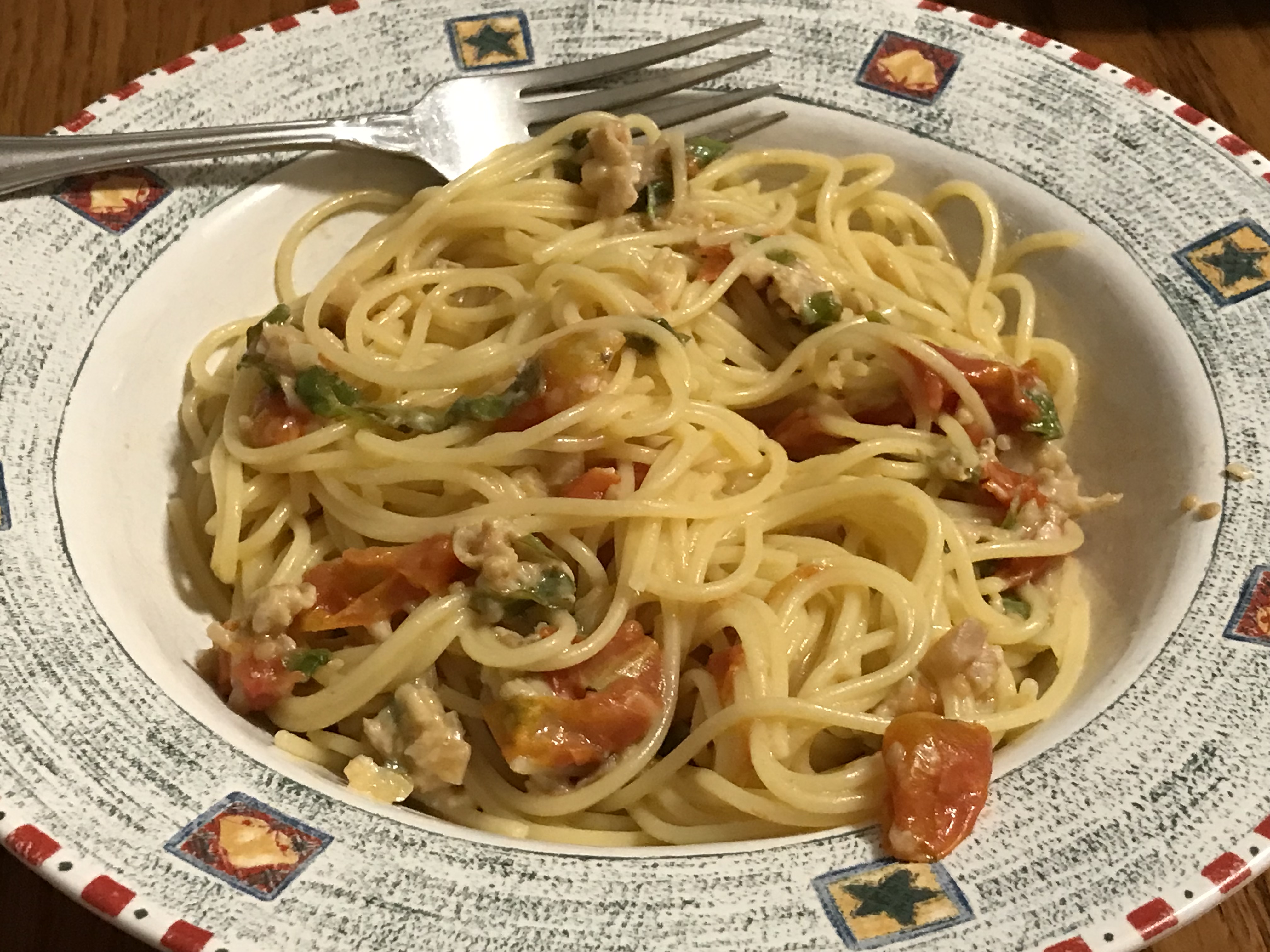
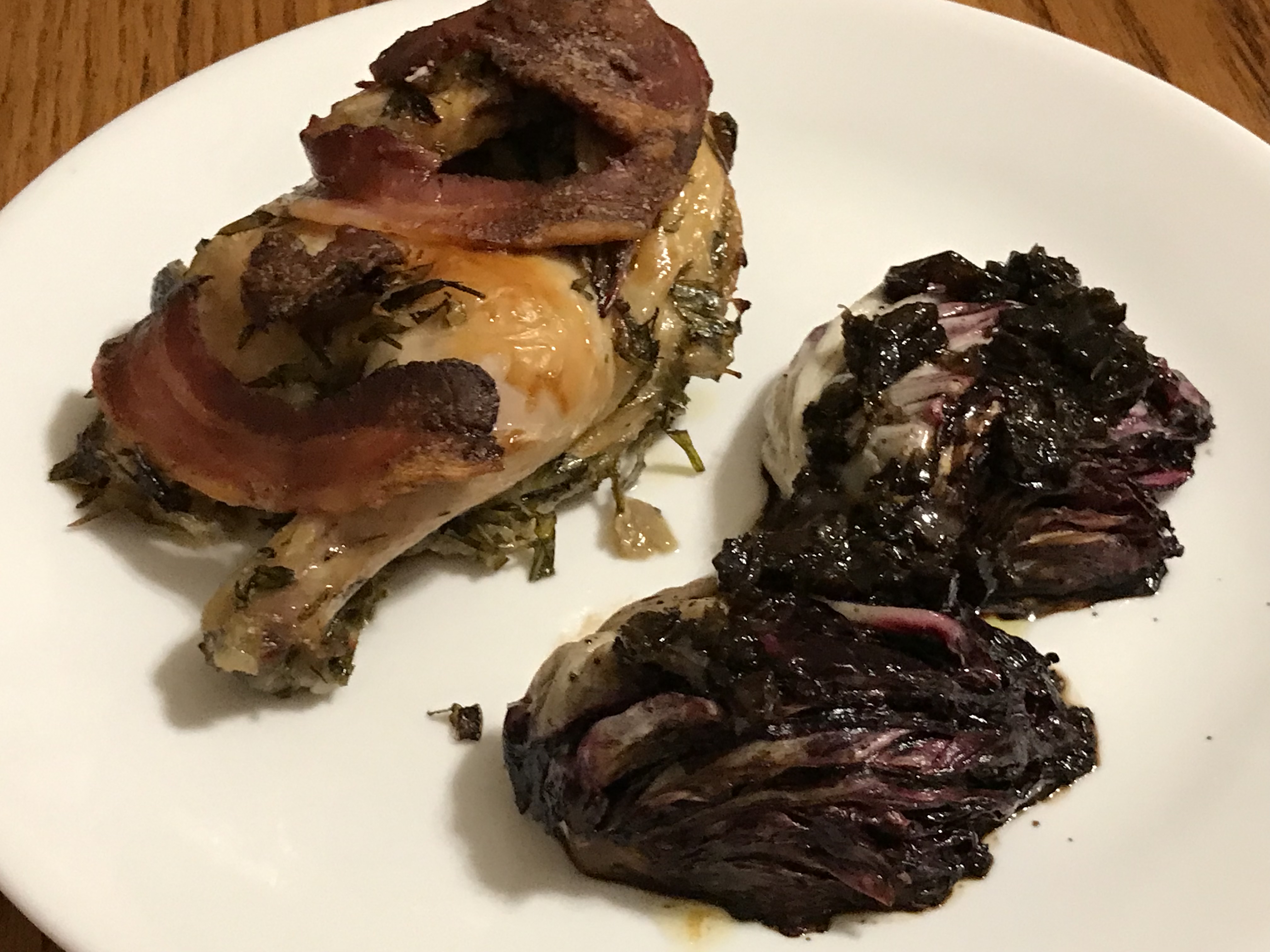
Menu: Thin Spaghetti with Tomato-Clam Sauce and Fresh Basil, Cornish Hens with Herbs and Pancetta, Marinated and Sauteed Radicchio, “Zabaglione” with Fresh Berries

Recommended Wine: San Leonardo (a Bordeaux-like red from Trentino)

            Venetian cuisine is most famous for seafood and rice, but they are not its sole components. Pasta, though not as popular as rice and polenta, is common, served with all manner of fish and shellfish, or sometimes beans for a vegetarian dish. Meat and vegetable specialties include liver and onions, smothered cabbage, and radicchio. Combined with things like creamed, whipped salt cod and cuttlefish stew, these elements of Venetian cuisine are far from the tomato-heavy dishes popular further south.

            Exactly why tomato sauces are so much more popular in the South than in the North when tomatoes can be grown throughout Italy is not entirely clear, but I have a theory. In another cookbook, I found a map showing where each starch (bread, rice, polenta, and fresh and dried pasta) is most common. Overlaid on the map were lines showing where sauces are mostly tomato-based, which bore a striking resemblance to a map of Spanish possessions in Italy in the 16th and 17th Centuries. In other words, Sicily, Sardinia, and the southern half of the mainland were under Spanish control during the two centuries of the Columbian Exchange. Since it was Spanish explorers who first brought these new foods to Europe, it would make sense that these foods would have arrived sooner and spread faster in regions they controlled. While this theory doesn’t explain everything (especially why corn caught on sooner and more thoroughly in the North, which was not under Spanish control), it could have been a contributing factor.

            Regardless, tomato sauces are not unheard of in the North. This menu features an interesting one, made with cherry tomatoes and enriched with clams. Clam sauces are not usually my favorite, and after my experience with the deviled eggs I considered omitting them. Ultimately, I’m glad I didn’t. The tomato really cut the “fishiness,” while the clams and a sprinkle of parmesan cheese added substance. I was surprised by how much I enjoyed it. Similar success came with the Cornish hens (an option to use instead of quail), though I omitted the truffle oil. It’s pretty hard to go wrong with chicken, herbs, and bacon.

            The radicchio was not as successful. Though it is one of the most popular vegetables in Venice and other parts of Northeast Italy, I found it way too bitter. The balsamic vinegar, shallots, and lemon zest in the sauce helped some, and a small bite of radicchio with each bite of chicken provided a nice contrast, but the bitter taste was still hard to get used to. It must be an acquired taste.

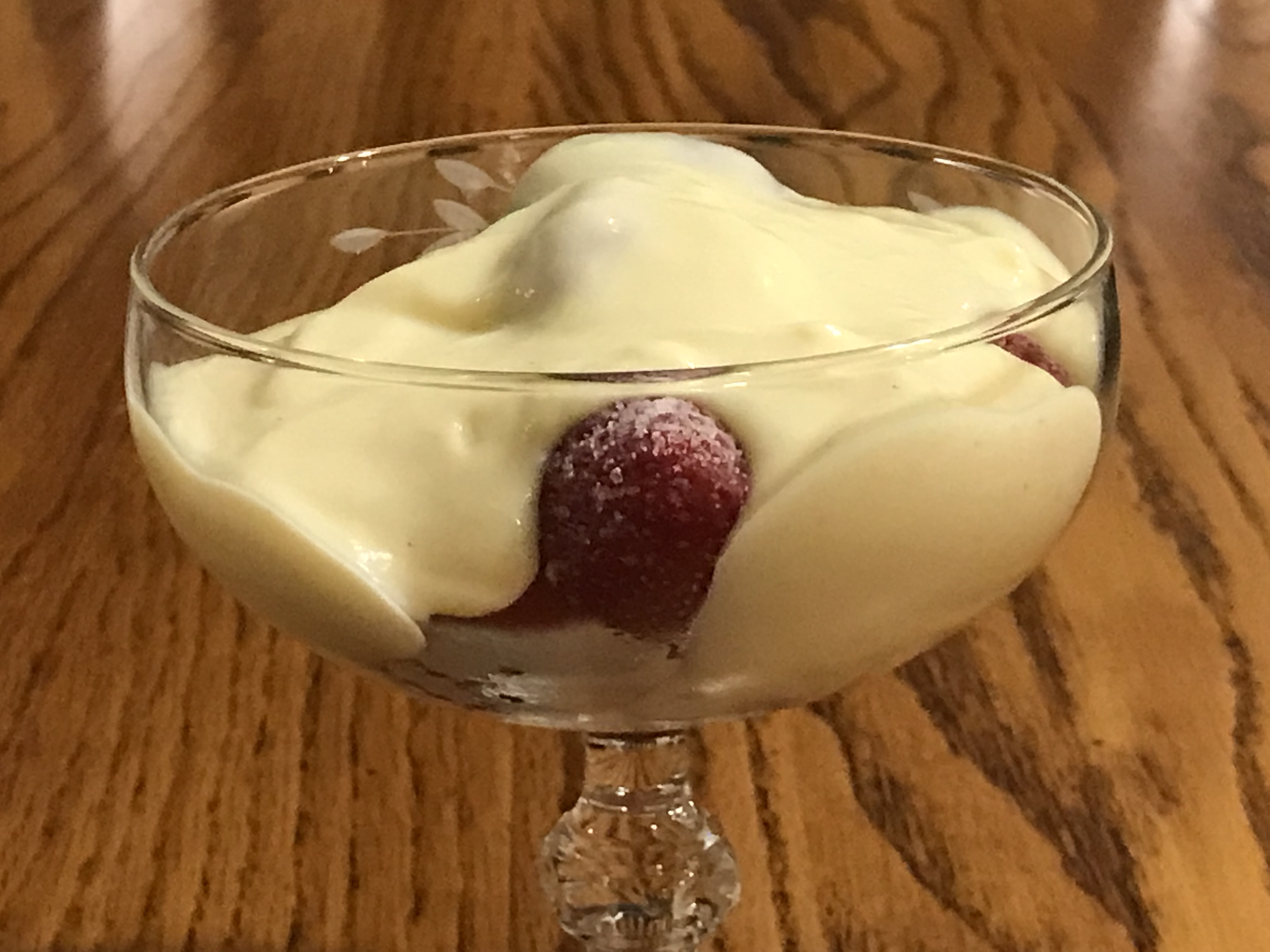
            Dessert was slightly modified from the text. It still consisted of fresh berries with a custard sauce, just a different type of custard sauce. The recipe calls for zabaglione, which, as mentioned in previous posts, is a custard made with wine instead of milk. For some reason, the mix of egg yolks and wine thickens more as it’s heated than a milk-based custard does. This particular zabaglione recipe also includes grappa, a type of brandy made from grape seeds and skins, pressed to extract any remaining juice. It was invented in the region and is often used to preserve fresh berries. (Text, pg. 124) Thus, berries with a grappa-infused custard are a natural choice for dessert.

            However, as also mentioned in previous posts, I don’t personally care for zabaglione. As replacing the wine with milk produces a very thin custard that doesn’t thicken adequately without curdling the eggs, a replacement was necessary. I chose homemade vanilla pudding as the closest alternative. While not quite the same, it’s a good match with the berries, and a fine ending to a Venetian-style dinner.

Standard
Uncategorized

Cook’s Tour of Italy Menu 43 (Pgs. 137 – 138): Shrimp and “Bass” Risotto with Saffron

            With its abundance of seafood and rice, it is no surprise that Venetian cuisine would feature a number of seafood risottos. Here things are kept simple with shrimp and pieces of bass or other white fish, enhanced with zucchini, shallots and parmesan cheese, but in Venice the options are nearly limitless. One especially interesting example, called risotto nero, is colored black with squid or cuttlefish ink. For this recipe, the color is a surprisingly bright yellow, courtesy of saffron.

            Saffron has a fascinating history. Grown around the Mediterranean since ancient times, its prestige was nonetheless on the level of “exotic” spices from Asia. There were two reasons for this. First, it is really labor-intensive, with each saffron crocus yielding a few strands of the spice. It’s true allure, however, is its color. When added to a bit of liquid, it produces a brilliant golden hue. During the Middle Ages and Renaissance, it was often used to create “gilded” dishes for banquets. While stirring the threads and their steeping liquid into the dish, the color showed itself by degrees, starting with a pale, creamy yellow, gradually deepening into the color shown in the picture.

            Historically, saffron was considered to have medicinal qualities. Unfortunately, in this recipe it gave a distinct medicinal edge to the flavor. In addition, the fish broth used in the recipe is enhanced by simmering with shrimp shells. I’m not sure if it was the brand of broth I used (since I opted not to make my own) or the shrimp shells, but it gave off a powerful fishy aroma while simmering that lingered in the kitchen. Before adding it to the risotto I diluted it to compensate for what boiled off and reduce the strength, but the taste was still strongly fishy and medicinal.

            You might be thinking that fish is supposed to taste fishy, but many white fish like what I used (I think it was haddock, but I can’t remember for sure. It was on sale in the freezer section) have a fairly mild taste. I personally prefer it on the relatively rare occasions that I eat seafood, but that is a matter of personal taste. Unlike many Italian cooks, who view it as culinary heresy, Mr. Famularo has no issue with combining seafood and dairy. The addition of parmesan cheese and butter really helped balance things out. The shrimp weren’t overcooked, the fish cooked up nice and flaky, and the finished dish was actually quite enjoyable once I got used to the strong flavors. That said, if I made this again I’d reduce the amount of saffron. And probably skip the fish broth altogether.

Standard
Uncategorized

Cook’s Tour of Italy Menu 41 (Pgs. 132 – 135): Trattoria Menu, Near Vicenza (Veneto)

Menu: Fresh Asparagus Soup, Ricotta Gnocchi with a Light Picante Tomato Shrimp Sauce, Cubes of Butternut Squash with Cinnamon, Stewed Figs with Ice Cream

Recommended Wine: Muller-Thurgau from Trento, a Yellowish Fruity White

            We now return to the mainland of the Veneto region, famous for a variety of fruits and vegetables (text, page 132). Fitting with that theme, this menu features asparagus, butternut squash, and figs, prepared in interesting ways. Asparagus soup is thickened with semolina flour, and steamed squash is served with butter and cinnamon. In the original recipe, fresh figs are drizzled in kirsch, but since I could not find either of those items, I adapted by stewing dried figs in cherry juice and serving them over ice cream. While not like the original, this adaptation retained the flavors of figs and cherries.

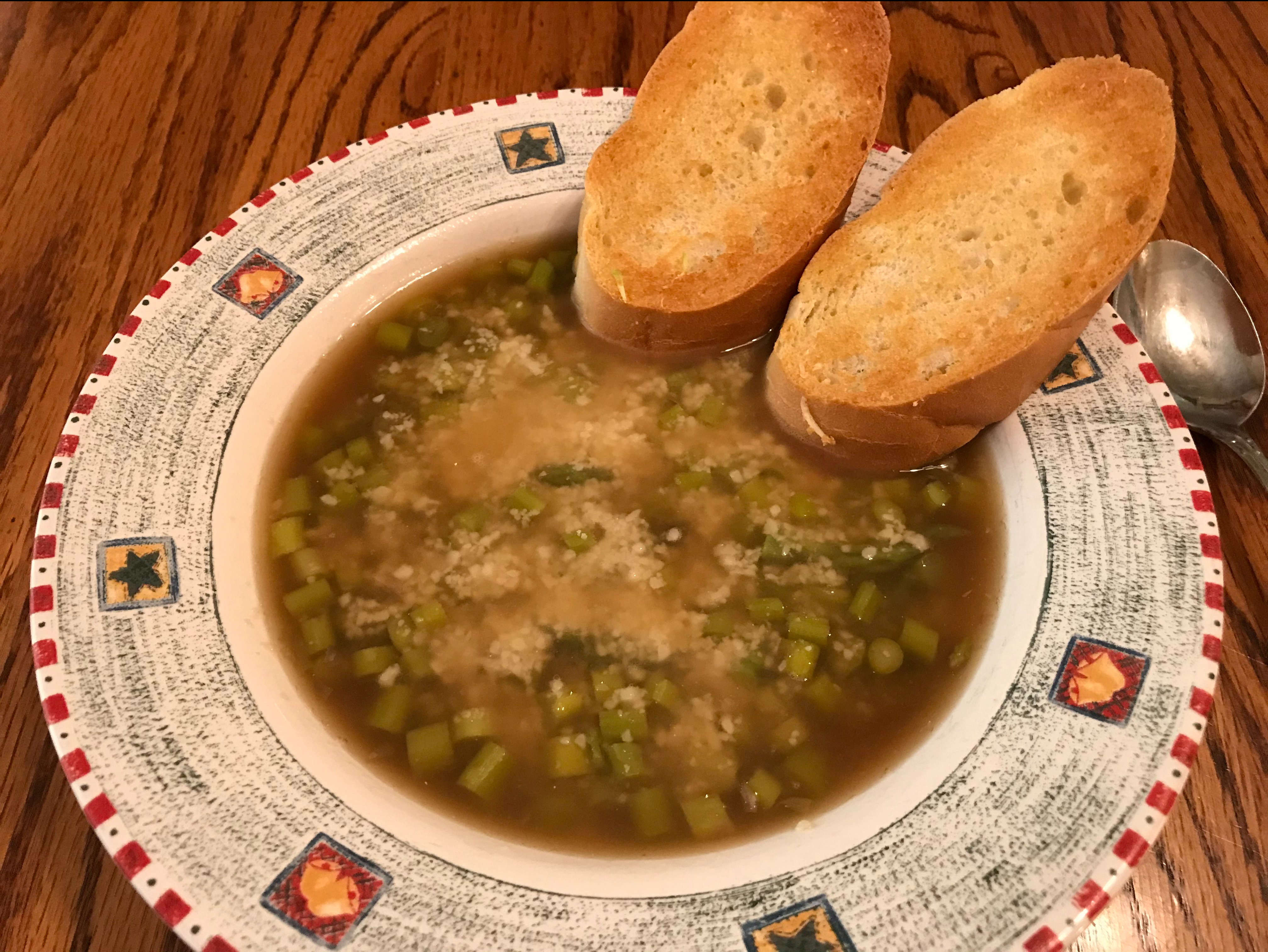
            The soup is composed of just five ingredients: chicken and beef broth, semolina flour, thinly sliced asparagus, and grated parmesan cheese. Just bring the broth to boiling, add the semolina and let it cook, stirring occasionally. Once that’s thickened, add the sliced asparagus stems, and after a few more minutes, add the tips. Serve with a sprinkle of parmesan cheese and the recommended piece of garlic-rubbed toast. The squash is even simpler: just cube, steam, drizzle with melted butter, and sprinkle with cinnamon.

Asparagus soup

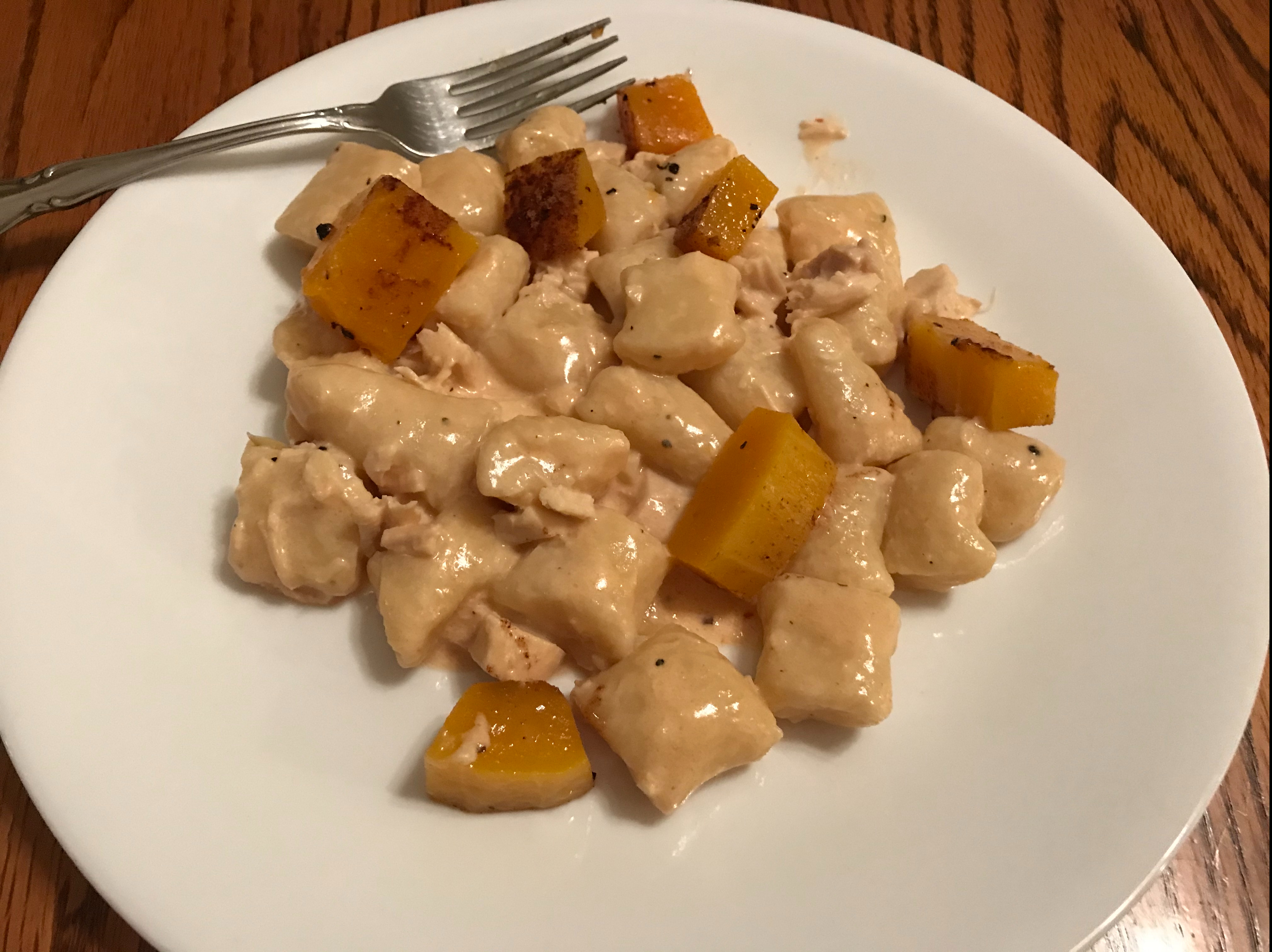
            The gnocchi were a bit more complicated to make, but not overly so. It’s possible to mix up the dough ahead of time, then just roll it out and cut it just before cooking. Contrary to its name, the sauce is not very spicy. A creamy base is flavored with a bit of onion, garlic, and red pepper, with a bit of tomato paste providing a lovely color. In an attempt to appeal to pickier diners, I did modify the recipe somewhat. The actual recipe calls for adding some fish broth and bouillon to the cream sauce, along with chopped cooked shrimp. For convenience and broader appeal, I used chicken broth and leftover rotisserie chicken. The pickier diner still didn’t care for it, but it was worth a try.

Squash and gnocchi

            None of this was difficult to make, and with the exception of gnocchi, it was not particularly time-consuming either. While the soup simmered and squash steamed, there was plenty of time to cook the gnocchi and make the sauce. Even better, this time I managed to time things right and we could enjoy the food in the order it’s supposed to be eaten in.

Stewed figs and ice cream

            I’ve never seen a soup thickened with semolina before, but it worked really well to add a bit of extra body without diluting the asparagus flavor. The gnocchi tasted kind of like homemade mac and cheese in little dumplings, with a creamy, chickeny sauce. These were especially good alongside the sweet, buttery squash. The figs were a nice closing to the dinner. The tartness from the cherry juice acted as a bit of a palate cleanser, while the sweetness from the figs and ice cream kept it from being overwhelming. This was yet another excellent dinner.

Standard
Uncategorized

Cook’s Tour of Italy Menu 37 (Pgs. 117 – 121): Doge’s Menu, Venetian Countryside

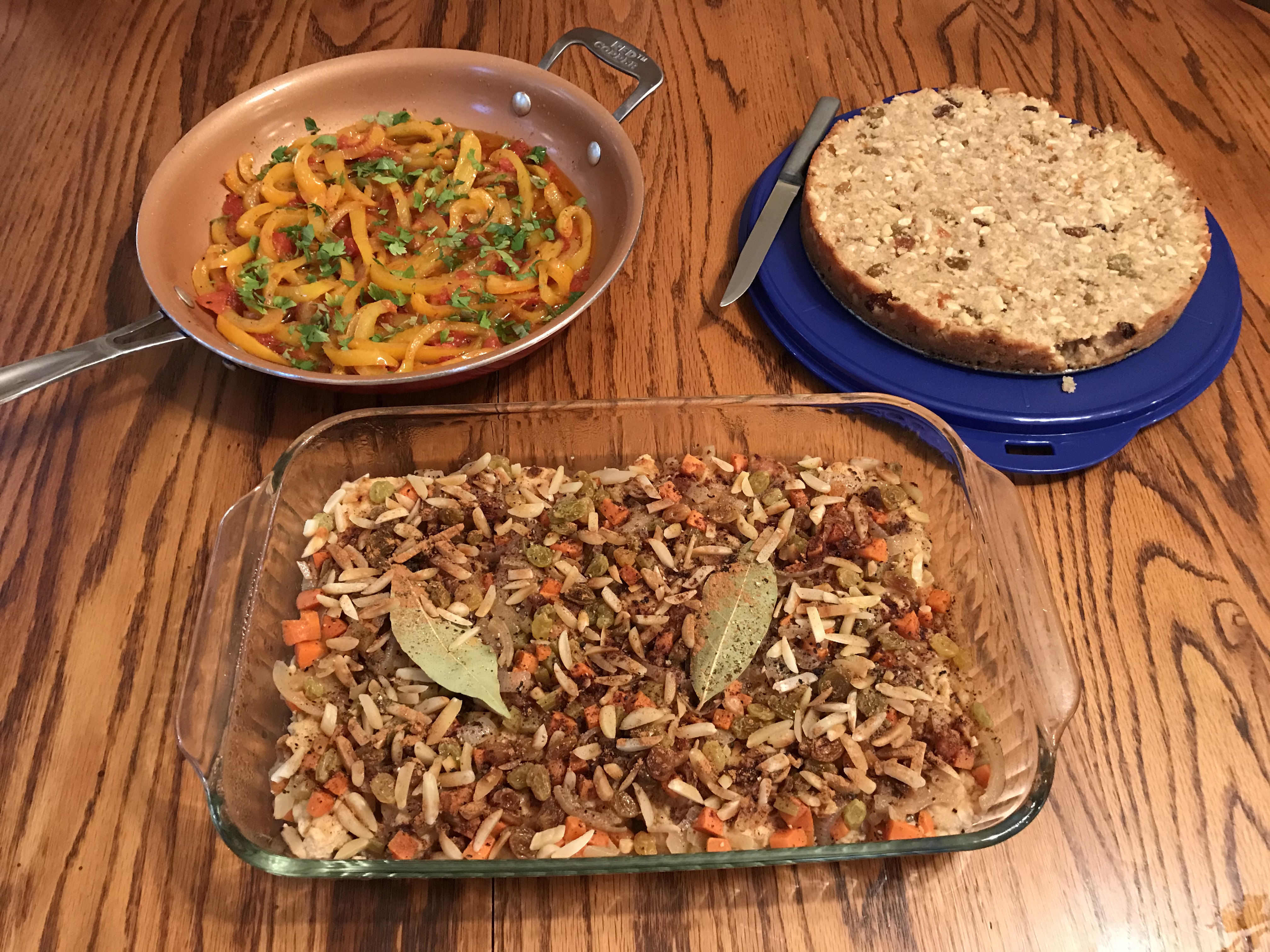
Menu: Rice and Pea Risotto, Fried Marinated “Sole” in Sweet and Sour Sauce, Stewed Sweet Peppers, Venetian Nut Cake

Recommended Wine: Soave (white wine from near Verona)

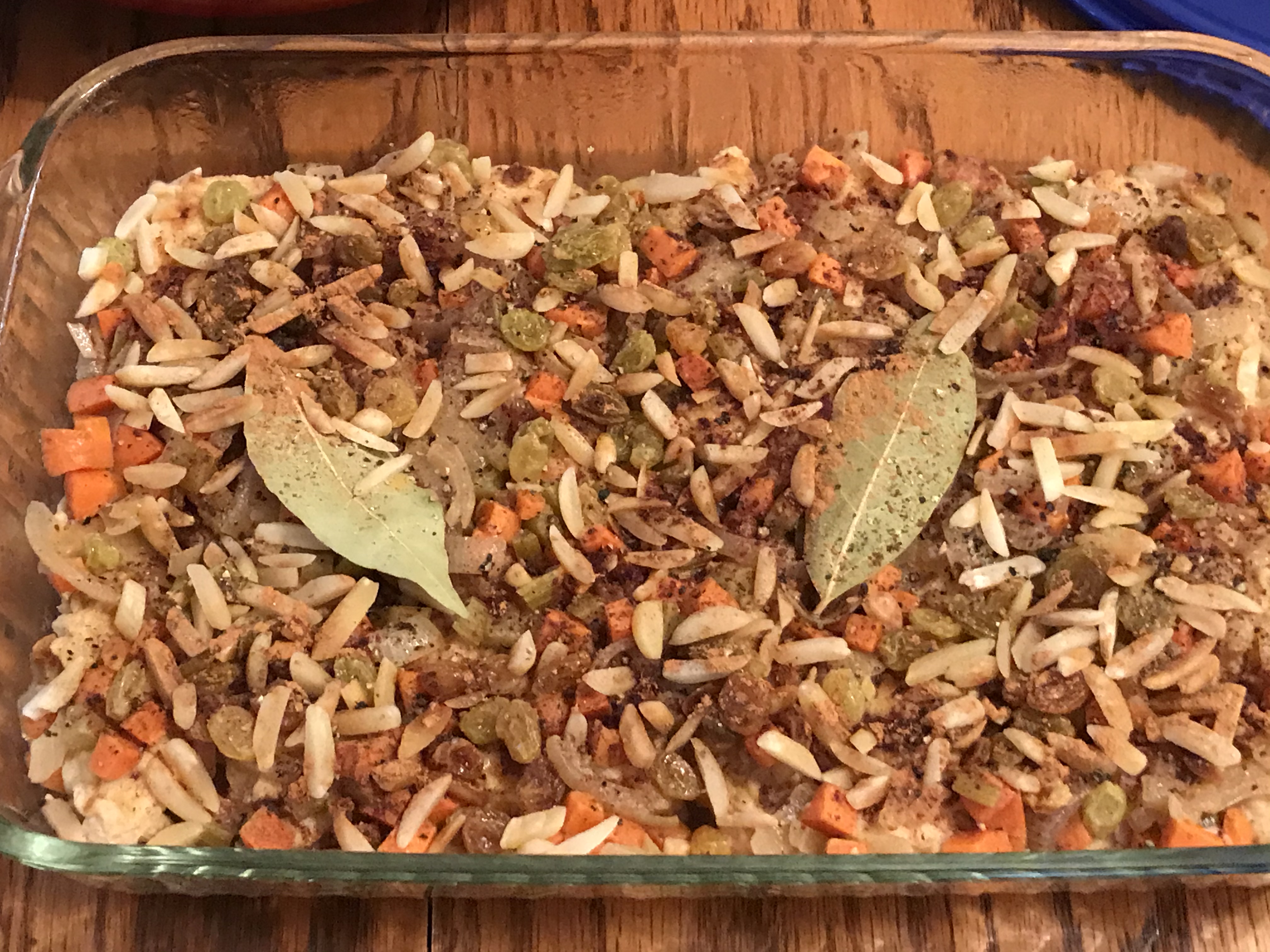
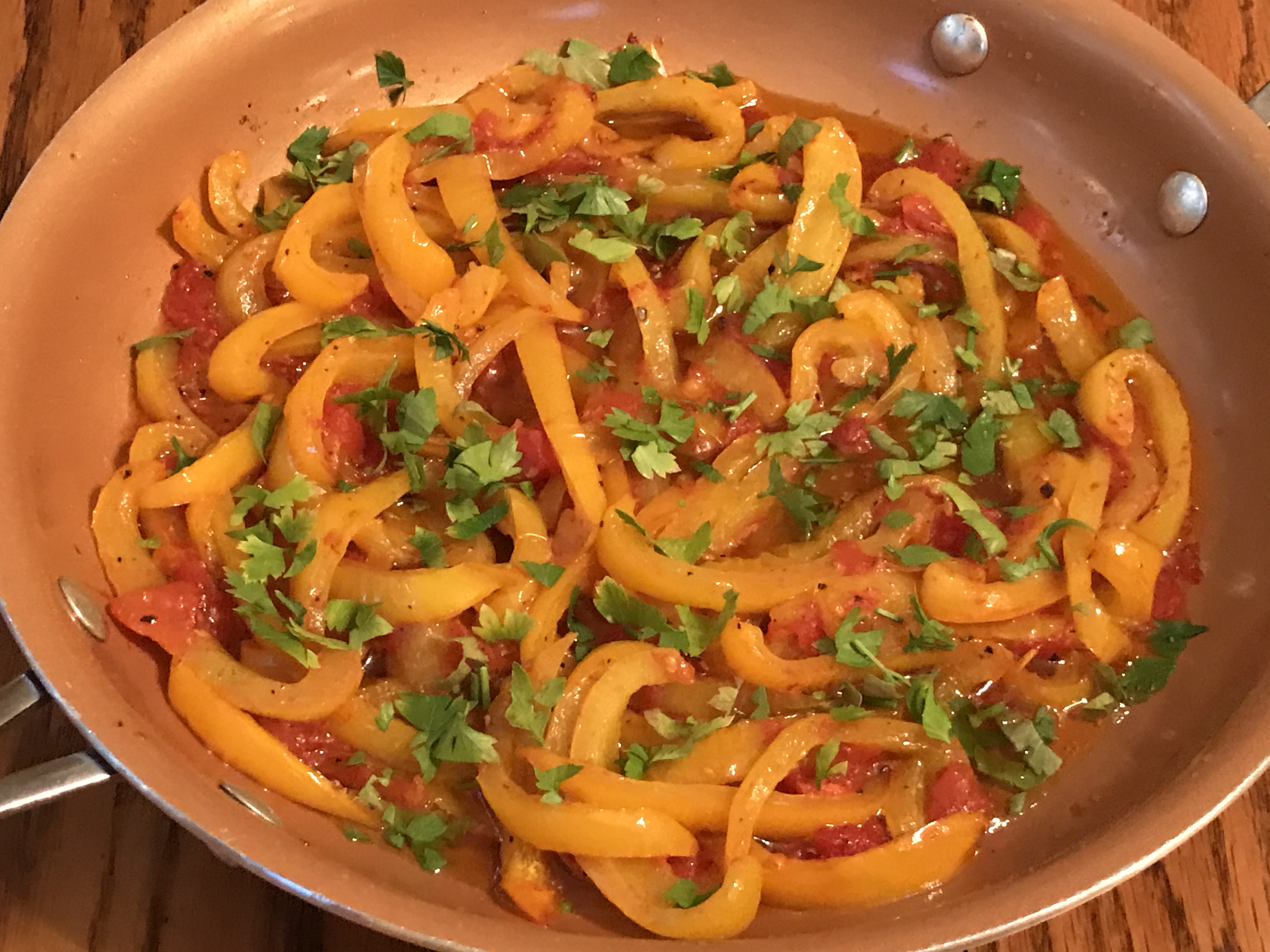
            This menu here includes two Venetian classics; rice and peas (risi e bisi) and fried fish, topped with golden raisins, pine nuts, and a sprinkle of spices, marinated in a vinegary, sweet and sour sauce. Alongside these dishes are sweet yellow peppers stewed with tomatoes and a Venetian cake popular around Carnival time, loaded with nuts, golden raisins, and candied peel. All of the dishes except for the risotto can be made ahead, and the fish is in fact served cold after two days of marinating. For reasons of cost and convenience, I replaced the fish with halved chicken breast pieces.

            The fish dish is historically quite interesting. As mentioned in previous posts, sweet and sour sauces have a long ancient and medieval history, and vinegar, the main component in the sauce, is both a flavoring agent and a preservative. Historically, the fish would be fried, then covered in vinegar. According to late 18th and early 19th century British cookbook authors (this method of preservation was quite widely used), fish could be preserved for up to a year this way. While I am not sure if this would actually work, I have no intention of finding out one way or the other. Thankfully, the fish here is just marinated for two days to gain flavor.

            To be completely honest, I was not a big fan of the flavor. The vinegar was very strong, and the sweetness of the raisins was not quite enough to cut through it. The almonds sprinkled over the top (as a replacement for pine nuts, which are a lot more expensive) provided a nice crunch, but the coating on the chicken pieces became a soggy, sour, sponge-like layer, rather than having the crispy texture characteristic of frying. This must be an acquired taste, because seafood dishes with sweet and sour sauces are very popular in the Venice region.

            The risotto has an entirely different flavor. Made with short-grain rice, sweet green peas, pancetta, parmesan cheese, and a mixture of chicken and beef broth, it is much milder. The sweet green peas, a favorite across Italy in the springtime, were a novelty in 17th Century France. When they arrived in Venice is not clear, but regardless, the risotto is a springtime classic, and on tasting it, the reason is obvious. When fresh peas are not in season (or if you don’t want to bother shelling them), frozen peas can be used, though many Venetians would say that is inauthentic.

            For another dish with a sweet and sour flavor but different from the fish dish, sweet yellow peppers are sliced thin and sauteed with tomatoes and garlic. This was much more balanced than the “fish” and quite good. The flavor was somewhat reminiscent of fajita vegetables, interestingly enough. Any leftovers would definitely be good on tacos, fajitas, burritos, or the like.

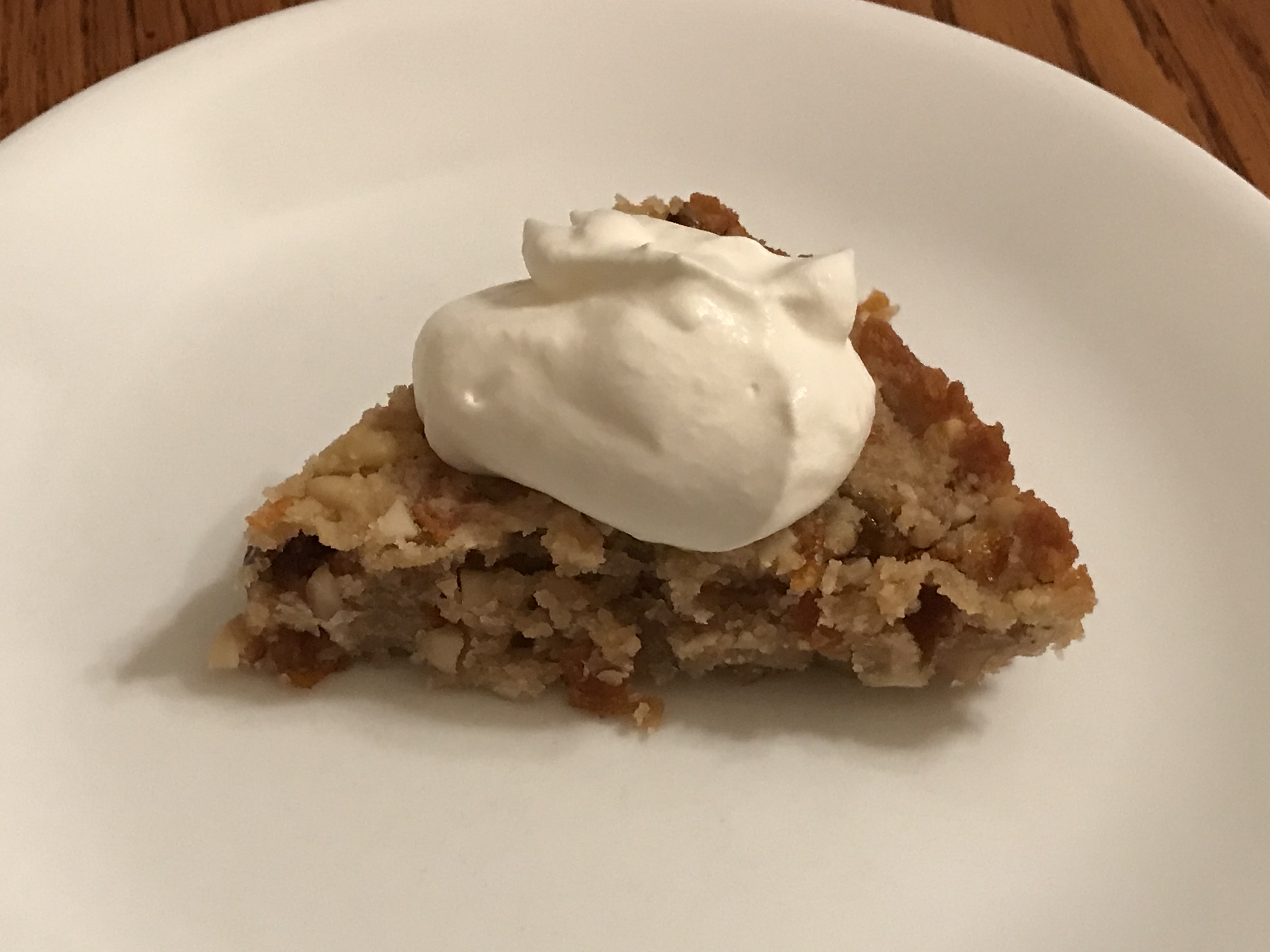
            The cake was a really interesting mix of sponge cake crumbs, almonds, walnuts, pine nuts, golden raisins, and candied peel, held together by a sugar syrup. The base is a genoise sponge. In this recipe, as in the original version, no baking powder or baking soda is used. The rise comes solely from air beaten into the eggs. The trick is to avoid forcing the air out upon folding in the flour. I have not yet mastered this and ended up with a cross between a cake and a pancake, but it was a rather tasty pancake. Since it was to be used as crumbs, the lack of rise was not a big deal.

            The final product was flavorful, but between the cake crumbs, candied peel, and sugar syrup, was overly sweet. In addition, the sugar syrup was not a particularly strong binder at room temperature, so the cake was very crumbly. A solution for this was found by accident. As the cake is so rich and sweet, it is difficult for two people to finish before it would go bad, so I stored the extra in the freezer. This firmed up the syrup and made the cake easier to eat, and the optional unsweetened whipped cream helped balance the sweetness.

Standard
Uncategorized

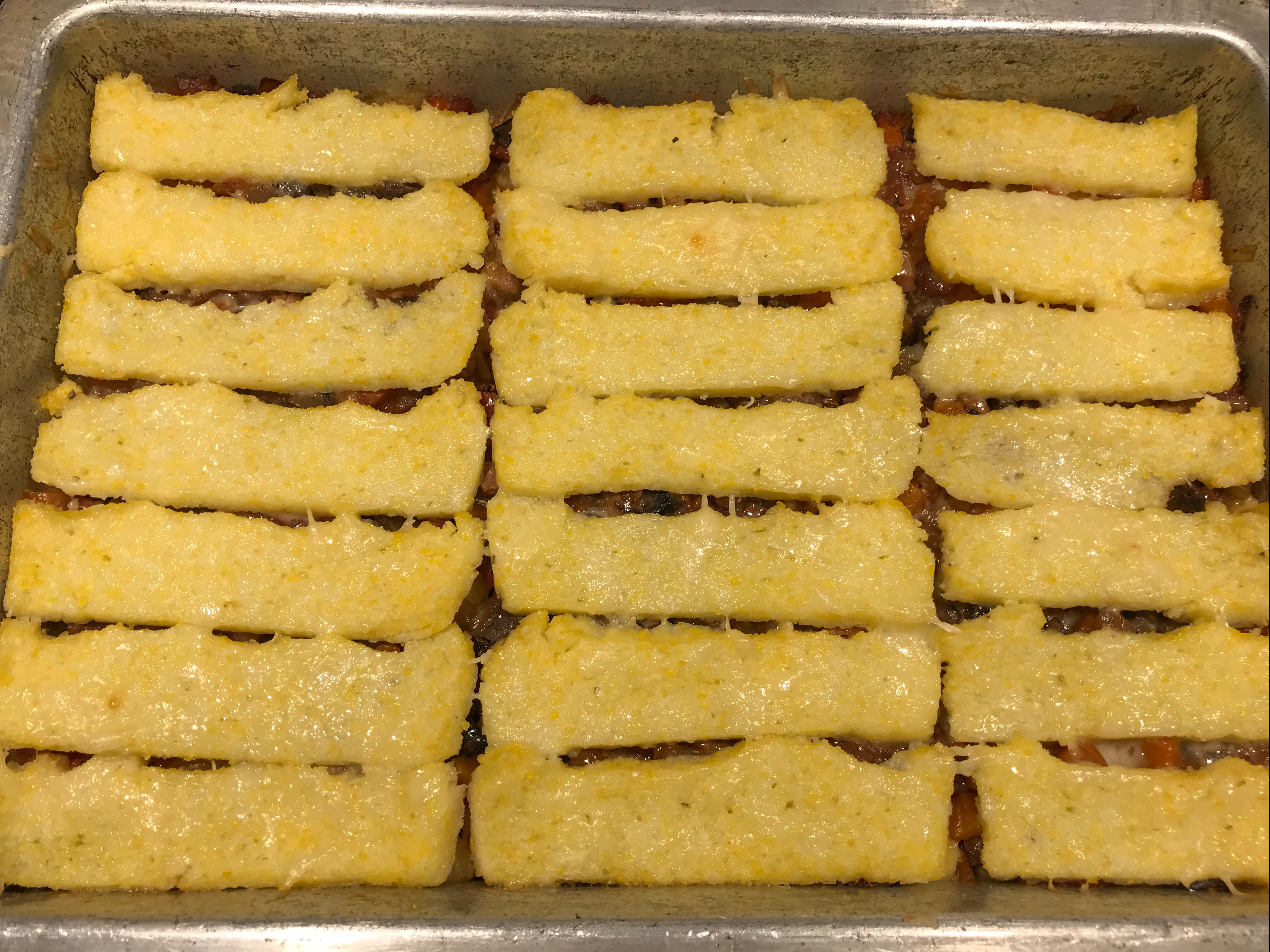
Cook’s Tour of Italy Menu 42 (Pgs. 136 – 137): Layered, Baked Polenta, Venetian Style (Venice)

Menu: Polenta Layered with Vegetables, Salt Pork, and Parmesan

IMG_2648

Remaining in Venice, we now focus on another Venetian staple, polenta. As mentioned in the last post, polenta is at least as popular as pasta in various parts of Northern Italy. While evidence suggests that a form of polenta existed since at least Roman times, likely made of barley, millet or spelt, corn became the grain of choice after it was introduced in the 16th Century. Exactly why corn caught on in the North while pasta caught on sooner and more thoroughly in the South is unclear, but regardless, polenta is a Northern staple.

Though often a side dish, frequently served alongside meat, here it is a main course. After the corn mixture is cooked, it is poured into loaf pans to chill and firm up before being sliced. The slices are layered in a pan with a sauce made of salt pork (which looks and tastes a lot like unsmoked bacon), carrot, onion, celery, and rehydrated dried mushrooms with their soaking liquid. The three layers of polenta and two layers of sauce are topped with a layer of grated parmesan cheese.

IMG_2649

This wasn’t particularly difficult to make, but was a bit time-consuming and fiddly. It is necessary to stir really well as you are adding the polenta to the boiling water or it will get lumpy, and sometimes it still does. Meanwhile, you need to watch out for steam as the bubbles rise to the surface and pop. Finally, you need to slice the polenta really thin to get three layers in the pan. The sauce, which has a texture kind of like chunky salsa, came together without difficulty. Overall, it was pretty good; balanced and flavorful. I didn’t like it as much as some of the other recipes, but most of the other recipes set a pretty high bar.

Standard
Uncategorized

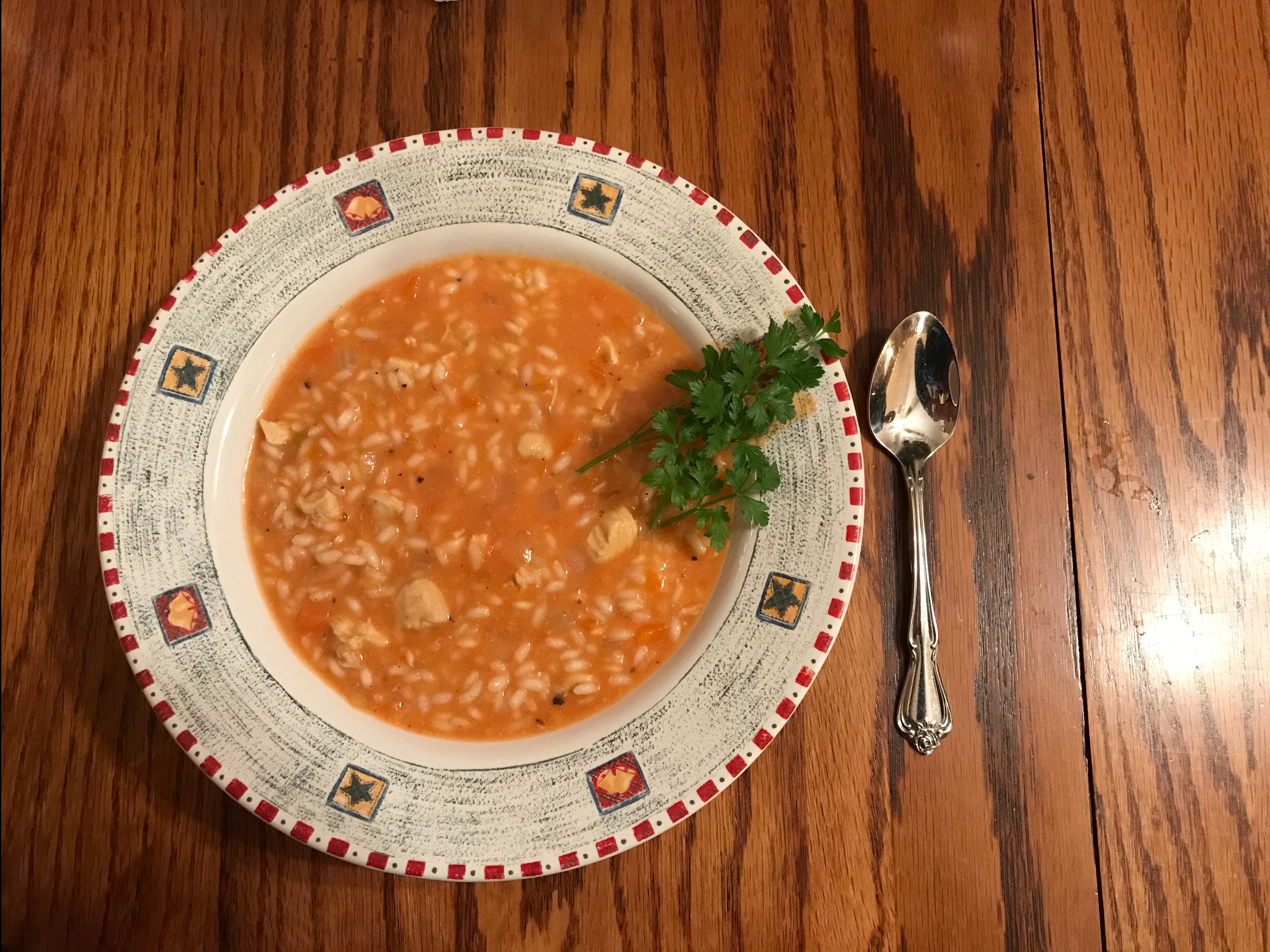
Cook’s Tour of Italy Menu 44 (Pgs. 138 – 139): Chicken Risotto with Vegetables, Venetian Style (Venice)

Menu: Risotto with Chicken and Vegetables

IMG_2647

Heading northeast, we cross Emilia-Romagna to the Veneto region, most well-known for Venice, but also home to Verona, Vicenza, Trieste, and other notable cities. Unlike Rome, Florence, Milan, Naples, or their historical rival Genoa, Venice was not an established city in the Roman era. Exact dates of foundation vary, but the most common story seems to be that the city was established in the 5th Century AD by those fleeing barbarian raids on the mainland. After a century and a half or so of Byzantine rule in the 6th and 7th Centuries, the first Doge was elected either at the end of the 7th or start of the 8th Century (the jury is still out on whether the first Doge was real or legendary) and the republic began its rise.

From its earliest days, Venice relied on trade, and in his work The Venetians, author Paul Strathearn explains why. Essentially, it boiled down to the fact that space was limited on the islands in the lagoon, limiting how much food could be grown and, to a lesser degree, how many goods could be produced. Trade both provided the necessary food and made the republic wealthy. For centuries, Venice was the main point of import for “exotic” goods from Asia, including spices, sugar, incense, and silk.

Another luxury import during the Middle Ages was rice, which gradually began to be cultivated in Italy as its popularity grew. The wealthy loved it, particularly cooked in almond milk. As supply expanded, the price dropped, making rice widely available to all classes. Today, in many parts of Northern Italy, risotto and polenta are more popular than pasta, and this includes Venice. Rice, polenta, vegetables, and seafood in various combinations are staples in Venetian cookery, which is very different from what is typically thought of as “Italian.”

The best way to think of this dish is probably “Venetian chicken and rice.” With a flavoring base of carrot, onion, and celery, which occurs in many recipes in the book, the risotto includes chicken, chicken broth, tomato puree, butter, and parmesan cheese. The end result is creamy but not too rich, and flavorful without being overpowering. The tomato flavor is present but not dominant, melding into all the other flavors. Additional virtues for this recipe are that it is not very difficult to make and uses easy to find, affordable ingredients. I would definitely make this again.

Standard