food history, german cuisine, stew

Pre-Potato Winter Stew: Frankischer Grunkern (with green spelt)

1000 Foods (pgs. 288 – 289)

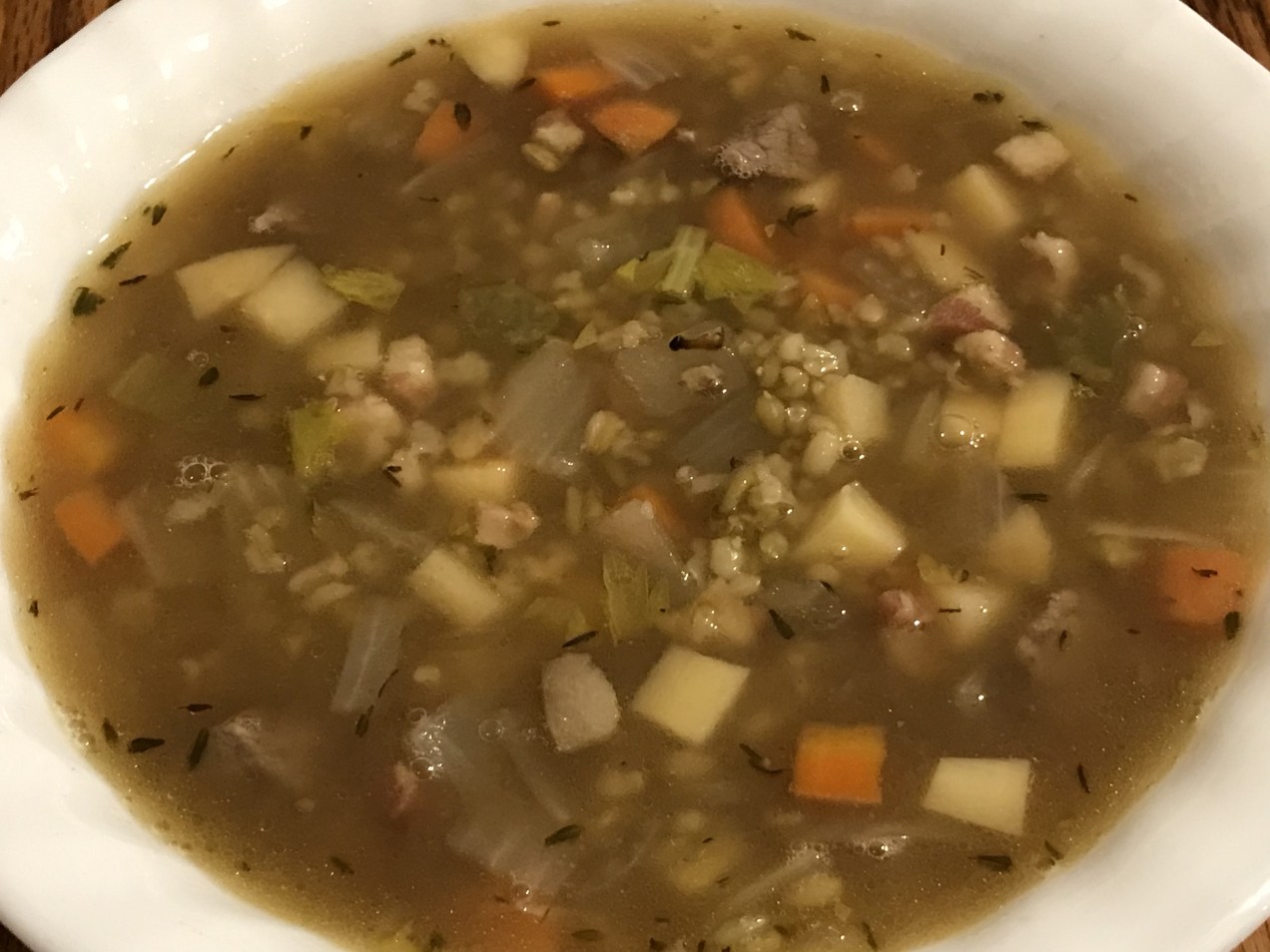
            Imagine, for a moment, that you’re making stew on a cold day. It has beef, onions, carrots, celery, and parsnips, plus some butter and minced bacon to brown the meat and vegetables before adding liquid. Most people would think of adding potatoes at this point, and some cooks do, but they aren’t the key ingredient. That particular honor goes to grunkern, or green spelt. A specialty of Baden-Wurttemberg in the southwestern corner of Germany, the stew contains starch, protein, fat, vitamins, and flavor in one bowl.

            Spelt is an ancient variety of wheat that’s been grown for thousands of years. The German word grunkern sounds very similar to “green corn,” because the grain is harvested before it’s fully ripe. In Europe, corn can mean any type of grain, not just maize and sweet corn. Exactly how green spelt was discovered is unclear. Perhaps one summer grain supplies were running low and the harvest was still a few weeks or months away, so some farmers harvested a bit of their grain early. Interestingly, grunkern doesn’t seem to be widespread in European cuisines. Maybe it was more popular before potatoes, which are also ready before the main grain harvest, were introduced from the Americas, but that’s just speculation.

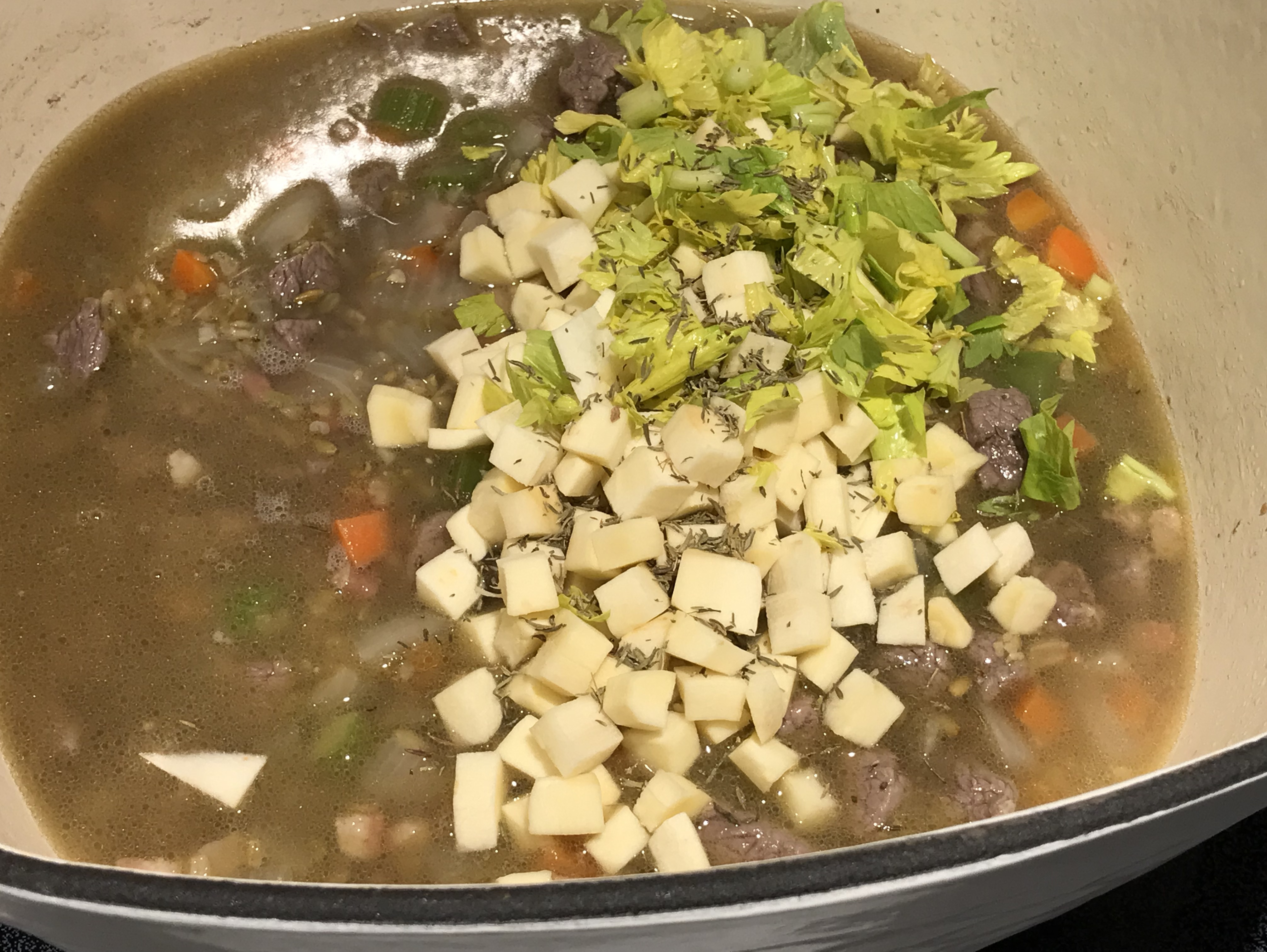
            The full recipe can be found in 1000 Foods to Eat Before You Die on pages 288 – 289, but here’s a summary. Butter is melted on the stove, then bacon, onion, carrots, and celery are added. You can add the beef or pork at this point to brown, which I did. Then soaked grunkern is added, with optional leek and parsnip, along with celery leaves and the meat, if it hasn’t been added already. This is followed by a bit of thyme, pepper, and either broth or water. I omitted the leek but added a minced parsnip, celery leaves, dried thyme, and beef broth. The recipe called for salt, but that can be added later to taste. Since I used salted butter and broth instead of water, adding extra at this point was unnecessary. Then everything simmers for a little over an hour.
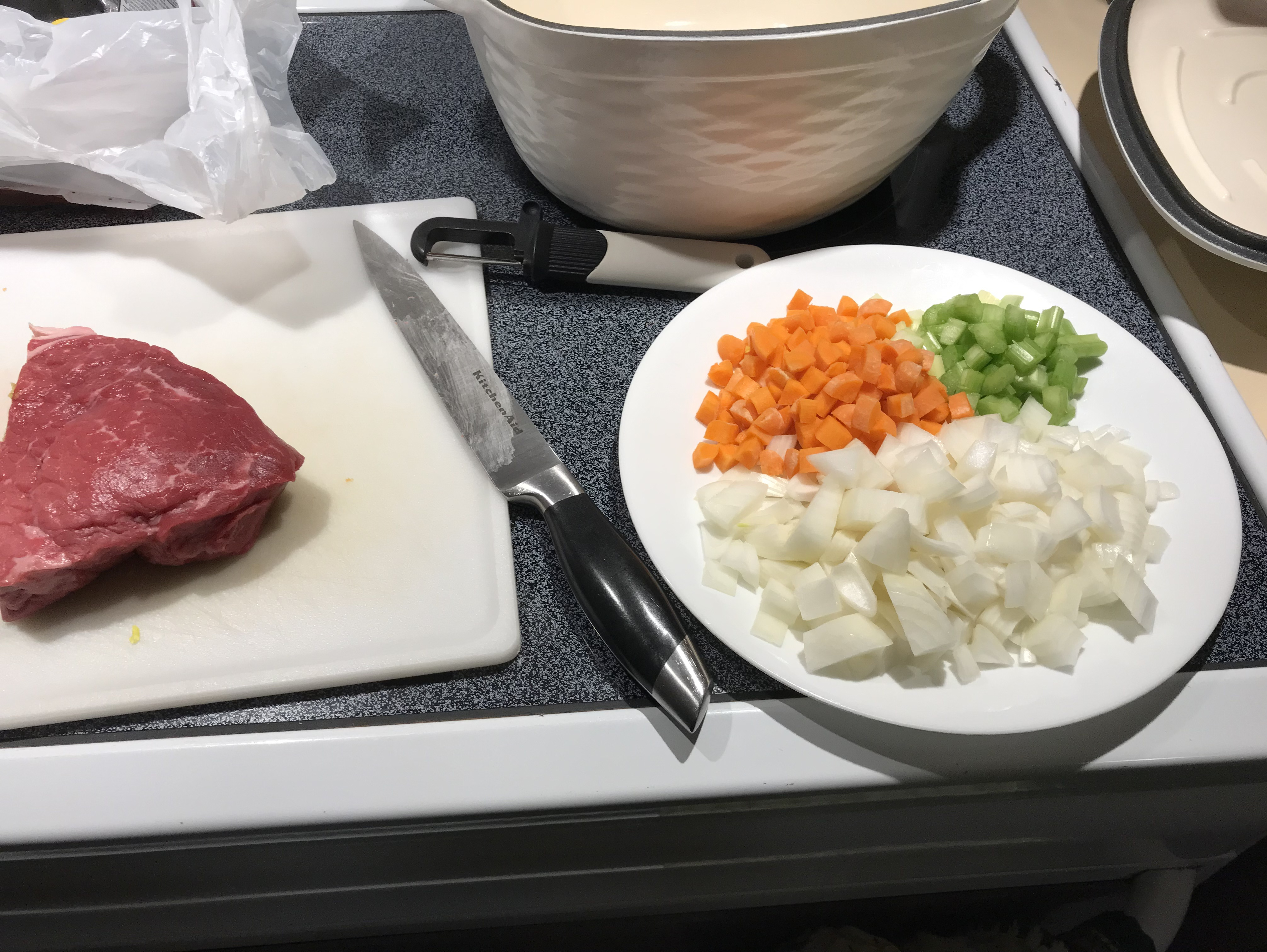
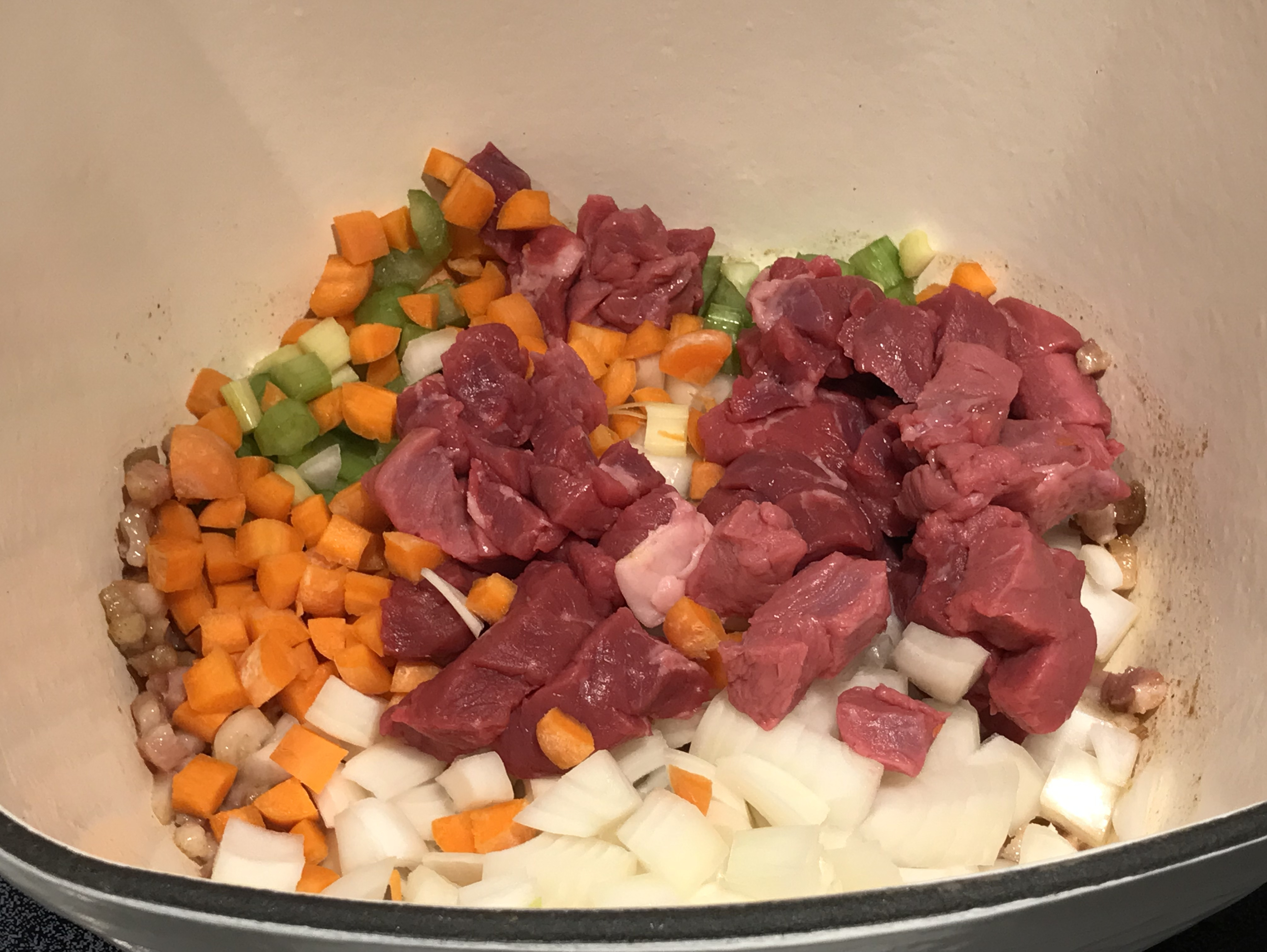
            One thing that surprised me about this recipe was how little meat it uses. For 4 to 6 servings, it only called for 8 ounces beef or pork. That’s less than 2 ounces per serving, contrary to the stereotype of German food. Even though Germans have historically had more meat available per person that many other Europeans, large servings were an occasional treat, particularly during the Early Modern Era and into the 19th Century, after large-scale population growth and before industrial agriculture. So we have a stew with plenty of grain and root vegetables, with some beef and bacon as enhancements.

            Overall, this soup is highly enjoyable. My favorite from this project is still beef-mushroom-barley, but this was an interesting change of pace. Like barley, the grunkern swells up in storage and upon reheating, so a bit of extra broth or water might be necessary. If you have trouble finding green spelt or grunkern, which I couldn’t find even online, try looking in a Middle Eastern food store. There it’s called freekeh, but the product is the same. Ziyad brand is one of the most widely available.

            Next time there will be another soup recipe, so be sure to subscribe. Did I mention it’s free?
Standard
Uncategorized

Northern Spain’s Winter Stew: Caldo Gallego (Updated with Recipe)

1000 Foods (pg. 255)

            When people think of Spanish cuisine, chances are they think of paella, gazpacho, and tapas. Deeper thought might recall acorn-fed ham, chorizo, olla podrida, and bitter “Seville” oranges, or other typically “Mediterranean” foods. But these dishes are not the whole story. Like France and Italy (and the US, China, and probably any other decent-sized country), Spain has its own regional climates and cuisines. Galicia, in the northwest corner, is one such region. Like neighboring Asturias to the east, Galicia has a cooler climate and more rain than the rest of the country. Like Normandy in some ways, the land is favorable for cattle raising and apple trees, there is enough rain to successfully grow corn, and seafood is widely available. An excellent description of Spanish regional cuisine can be found in Claudia Roden’s The Food of Spain.

Advertisements

            Galicia and Asturias were populated with Celtic-speaking peoples at some point in the last few centuries BC. It’s unclear what language the previous inhabitants spoke, and how much they intermarried and assimilated with the newcomers, but the region retained its Celtic character for centuries. Greek and Phoenician trading colonies were mainly in the south and east, and when Hannibal’s father and brother conquered much of the country in the late 3rd Century BC, they too focused on these areas. The Romans conquered the Carthaginian holdings in Spain soon after, but wasn’t until the 1st Century AD, almost 300 years later, that they fully controlled Galicia. As the Western Roman Empire fell apart, the Visigoths came to control the old Roman province. In the early 8th Century, Muslim armies from North Africa captured most of Iberia, but most of Asturias remained independent, and Galicia was reconquered quickly. The Reconquista originated in these regions, and they retained their unique culture.

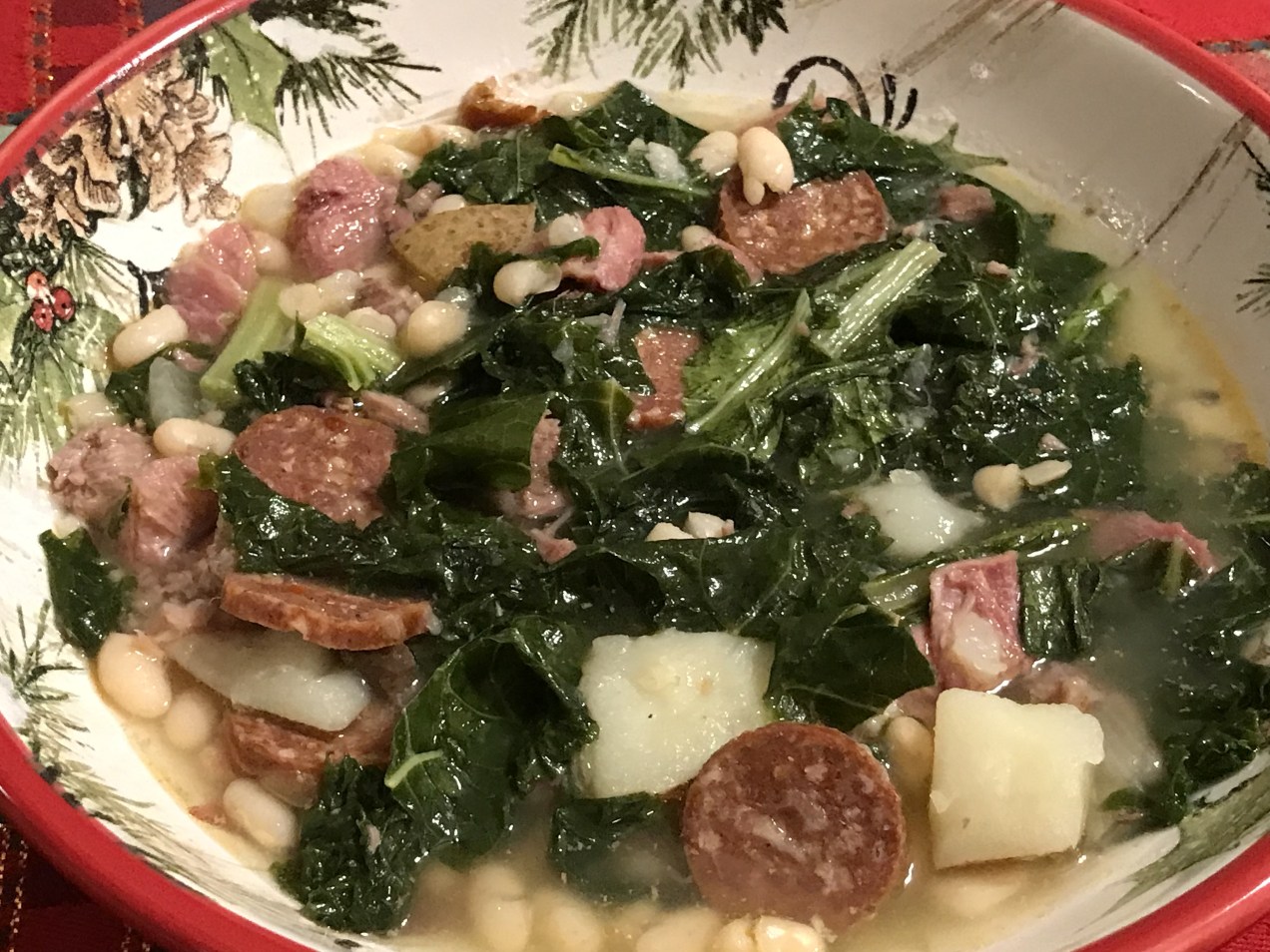
            Hilly, mountainous terrain made these regions harder to conquer, but could also make life harder for the average resident. Historically, most of the population was required by economic necessity to eat a largely vegetarian diet. Except for feast days and other special occasions, meat was usually a flavoring as much as a source of protein. Across Spain, there are a variety of slow-cooked soups and stews, where cured pork products flavor vegetables and beans. In caldo Gallego, which translates as “Galician soup/stew,” chorizo and salty smoked pork are the meats, while beans add more protein and onions more flavor. The vegetables are potatoes and a kale-type cabbage. In other words, a good choice for eating healthy in the winter.

Advertisements

            To make it, I first simmered some smoked ham shanks to tenderize and extract some of their flavor. After removing the meat and putting it back in the pot, I added the beans, onions, and chorizo nuggets. When the beans were almost done, I added the potatoes, then, at the last minute, kale and turnip greens. Everything was cooked properly, nothing was overdone, and the flavors blended together well. The only thing I couldn’t understand was the level of salt. Neither the ham nor the chorizo was that salty, and I didn’t add any extra. Was pre-soaking the beans in salted water to blame? Maybe I added more salt to the soaking water than I thought, or was supposed to rinse the beans. The stew was still good, and historically most winter dishes would have been salty from using preserved ingredients, but next time, I’ll be more careful and remember to rinse the beans.

If you wish to make this yourself, here is the recipe I developed. You’ll need:

  • 1 package smoked ham shanks (2 pieces)
  • 8 oz dry Spanish-style chorizo, sliced
  • 8 oz dried white beans (navy or great northern), soaked overnight in water to cover with 1 tsp salt and drained
  • 2 yellow onions, coarsely chopped
  • 2 medium potatoes (I used russets, but other varieties will work)
  • 1 bunch kale, coarsely chopped
  • 1 bunch turnip greens, coarsely chopped

And here is how to make it. The stew takes a few hours to cook, but most of that isn’t active time.

  1. Place the ham shanks in a large pot, with just enough water to cover. Bring water to a boil, then simmer for about 1 hour, until the meat is falling off the bones.
  2. Remove the ham shanks from the broth. When cool enough to handle, pull off and coarsely chop the meat, returning it to the pot. Discard the bones, but if you can extract the marrow, add that to the stew as well.
  3. Add the chorizo, beans, and onions to the pot and cook for about an hour, until the beans are almost soft, stirring occasionally.
  4. Cut the potatoes into roughly 1/2 inch cubes and add to the stew, cooking for 20 to 30 minutes, until tender. If they break down a bit, that’s fine, since this thickens the stew.
  5. About 10 minutes before serving, add the kale and turnip greens. Once they’ve wilted and cooked down, the stew is ready.
  6. Ladle the stew into bowls and serve with bread, if desired.

If you thought this was interesting or want more recipes, subscribe to get new content in your email. It’s free, it won’t cost you anything, you have nothing to lose, and did I mention it’s free? This is the first full recipe I’ve developed, but there will be many more to come.

Standard