
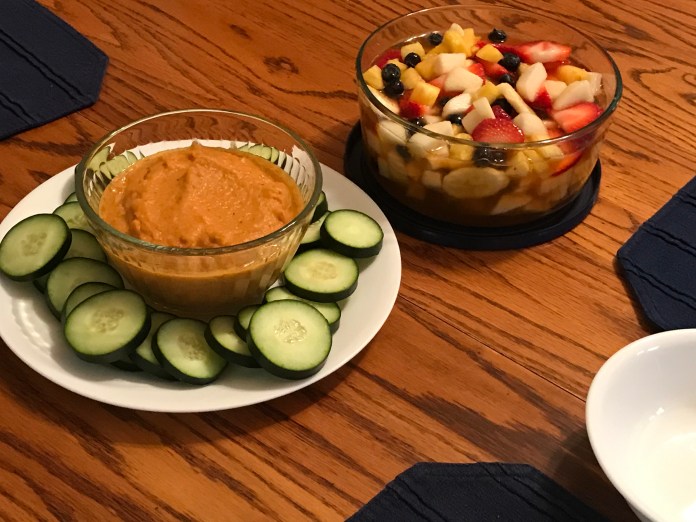
Menu: Roasted Pepper and Eggplant Puree Appetizer, Pasta Bows with Fresh Spinach, Mushrooms, and Cream, Fruit Compote with Citrus Sauce
Recommended Wine: Chardonnay from Ronc di Juri in Friuli
The Veneto region is not just Venice. Perhaps the most well-known of the region’s mainland cities is Verona, famous as the setting of Shakespeare’s Romeo and Juliet. While it is unclear exactly when the story was supposed to take place and Shakespeare probably never visited Italy, the feuding families really did exist and their mansions, now tourist attractions, still stand in the city today. It seems the story evolved over a few centuries, so perhaps the precise date is not important. For Shakespeare, the focus was always on the characters.
Variants of the tale of star-crossed lovers have existed for centuries if not millennia and the names Romeo and Giulietta/Juliet are used from around 1300 all the way to Shakespeare’s time in the late 16th/early 17th centuries (he probably wrote his version in the 1590s). If you want a semi-specific timeframe, I would place the story between 1349 and 1405, and here’s why. The mansions that supposedly belonged to the two families are late medieval, built in the 13th and 14th centuries (Text, pgs. 126 and 128). In addition, “Prince Escalus” is typically assumed to be a member of the Della Scala family, who ruled the city until 1405, when it was conquered by Venice. As the text implies him to be a ruler of an independent city-state with feuding aristocratic factions, it could therefore not be set later than 1405.
Due to mention of the plague, which first struck Verona in 1348 and is described in a familiar way, I would place the story in 1349 at the absolute earliest. This is further supported by the statement that Juliet is an only surviving child out of what is implied to have been several. While this would have been a tragically common occurrence at any point before the medical advances of the 19th and 20th centuries, the chance would have been even higher in the immediate aftermath of the plague, which recurred several times in the 14thcentury after the first outbreak. Thus, we have a timeframe of 1349 to 1405.
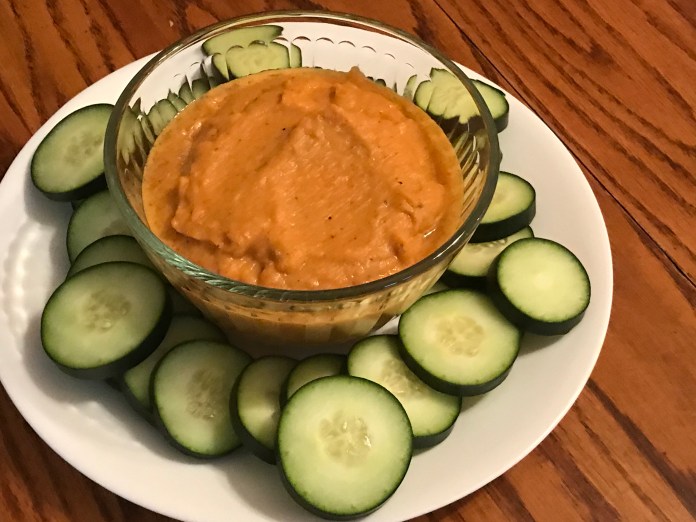
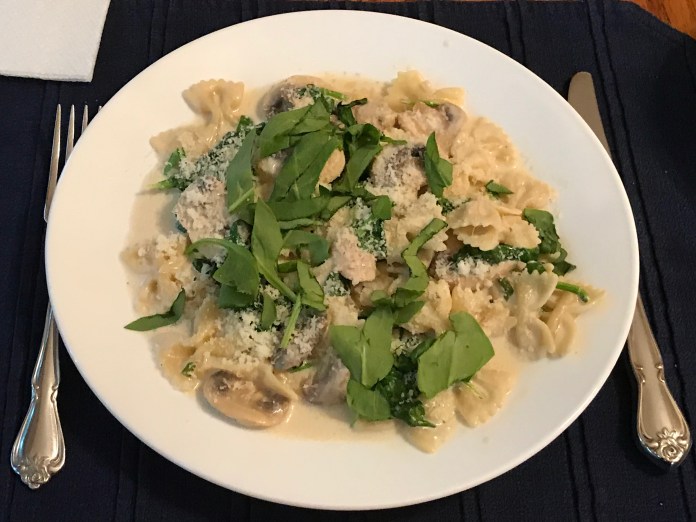
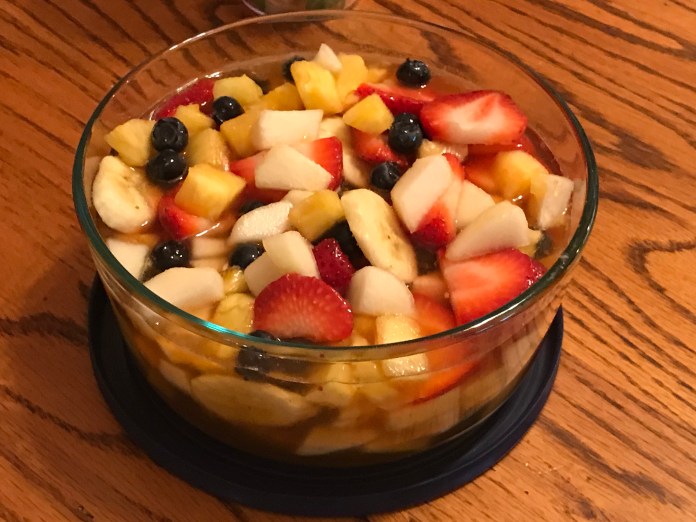
The history lesson aside, let’s turn to the menu. There’s a pureed mix of eggplant, roasted red peppers, garlic, and lemon that’s sort of like a red pepper baba ghanoush, served on slices of cucumber to start, followed by pasta bows and spinach with a mushroom cream sauce. Dessert is a mix of sliced strawberries and bananas, chopped pears and pineapple, and blueberries, dressed in a syrup of sugar, lemon, and orange juice.
Returning to history, most of this would not have been possible during the most likely historical timeframe or likely to be served even during Shakespeare’s time. The red peppers and pineapple were imports from the New World. Like tomatoes, peppers took a while to catch on in Europe (though hot peppers quickly became popular in Africa and Asia), and pineapples were still centerpieces at royal banquets in the late 17thCentury. Likewise, cream sauces were uncommon until the later part of the 17th Century and mushrooms were viewed with suspicion. It is unclear when eggplants and bananas reached Northern Italy, though the former had been introduced to Sicily centuries before by the Arabs and a few 17th and 18th Century still life banquet scenes depict bananas.
What would match with either the 14th or 16th Century, however, are the citrus juices and sugar. Sugar was a status symbol, beloved by all who could afford it, whose number gradually increased over the centuries. During the Middle Ages it was so expensive it was used like a spice. Even as supply expanded from the 15thCentury onward, it remained a luxury for a few more centuries. As mentioned in a previous post, sugar and citrus fruit fit right in with the Medieval taste for sweet and sour, inherited from the Ancient Romans. The popularity of lemons and oranges also increased over time, especially near the Mediterranean, where shorter shipping times and fewer stops meant lower prices. All of the dishes in this menu contain lemon juice, and the sauce for the fruit is fragrant with both lemon and orange juice.
Regardless of historical accuracy, this was all very enjoyable. I managed to roast the peppers without setting off the smoke alarm this time, and after briefly struggling to stuff two halved garlic cloves into cuts made in the eggplant, the baking, combining, and pureeing went without difficulty. The mix was good on the cucumbers, but I think I liked the leftovers even better on crackers the next day.
Once the prep work was done, the pasta was super simple: just make the sauce, cook the pasta to al dente, toss the cooked pasta with the spinach to wilt it slightly, add the sauce, and toss to coat. The sauce started with a base of garlic and mushrooms sautéed in butter, to which a bit of marsala and lemon juice were added and allowed to cook for ten minutes to evaporate the alcohol. Cream was then added and allowed to heat through before combining with the pasta. All was then topped with a sprinkle of parmesan cheese. The pasta was excellent, though the sour taste from the lemon juice was maybe a little on the strong side. A slight reduction in lemon might benefit the sauce, but that would be a matter of personal taste. Mr. Famularo says on page 127 that he thinks Juliet would prefer this dish to potato gnocchi, and I am inclined to agree.
The dessert was another treat. Though the mix here was strawberries, blueberries, pears, pineapple, and banana, anything in season would probably work. The lemon juice in the syrup prevents or slows browning, the sugar smooths out the taste of any especially tart fruit, and the juices combined add just a little more flavor. The recipe makes more syrup than is needed for the quantity of fruit, so any leftovers can be saved and used as needed. Just make sure not to add it too early, as sitting in the syrup too long can make the fruit turn soggy.
Overall, this was a great menu to appreciate the summer produce coming into the stores. Even if not necessarily historical to Shakespeare’s time, that doesn’t really matter here. If given access to the foods mentioned here, there is every reason to believe Juliet would have enjoyed them.
 Feasting Through Time
Sounds lovely! The history is very interesting, too.