
Menu: Spaghetti with Basil Pesto, Ligurian Vegetable Salad, Ice Cream with “Sambuca” and Espresso
Recommended Wine: Fresh, delicate white like Vermentino, and/or spicy red
Northwest of Tuscany is the coastal region of Liguria. Situated on a narrow plain between mountains and the sea, the cities there have long turned to maritime enterprises. Foremost among them is Genoa, rival of Venice for centuries, from the High Middle Ages (and possibly even before) into the Early Modern Era. During a series of wars in the 13th and 14th Centuries the Genoese usually seemed to come out second-best but were always able to give the Venetians a run for their money. They wrestled over trading rights in Constantinople, Alexandria, the Levant, Cyprus, and the Black Sea. In the 14th Century, the Genoese even launched ships on the landlocked Caspian Sea and established trading colonies in Northern Europe as far east as Poland. During one battle in 1298, Genoa triumphed and captured several thousand Venetian prisoners, including Marco Polo. While imprisoned awaiting ransom, Polo began telling stories to entertain his fellow prisoners, including a chivalric romance author with whom he would later collaborate.
By the end of the 14th Century, defeats at sea and internal strife led to Genoa becoming a satellite of its neighbors, alternatively France and Milan, while the Venetian trading (and later territorial) empire approached its zenith. Despite this loss of independence, Genoa’s trade and shipping remained vibrant. Genoese navigators, including Christopher Columbus, were instrumental in many of the Spanish and Portuguese voyages of exploration. A revival in Genoese banking brought renewed prosperity in the 16th Century, and a Genoese contingent was part of the Holy League’s fleet at the Battle of Lepanto in 1571. While the Ottoman Empire quickly rebuilt its fleet, the morale boost the victory gave to the European powers was substantial. Even in the 16th Century, though, rivalry between the Genoese and Venetian contingents led to significant tension.
In addition to their historic rivalry, Venice and Genoa seem to have very different food traditions. From a historical and geographic perspective, this is surprising. Both cities were main points of import for “exotic” Asian goods like spices and sugar during the Middle Ages. Due to their coastal locations and maritime background, both regions’ cuisines feature a variety of seafood. But while Venetian cuisine featured and still features spices, sweet and sour sauces, seafood, rice, and polenta, Ligurian cuisine favors green herbs, vegetables, bread, particularly focaccia, pasta, olives and olive oil, and lower levels of seafood. The last part of this might be due to Venice’s location on a group of islands in a shallow, productive lagoon, while the seafloor near Genoa drops sharply, leading to lower levels of productivity. Why the Genoese tend to prefer herbs over spices is unclear, but as a result, the cities’ cuisines are distinct and unique.
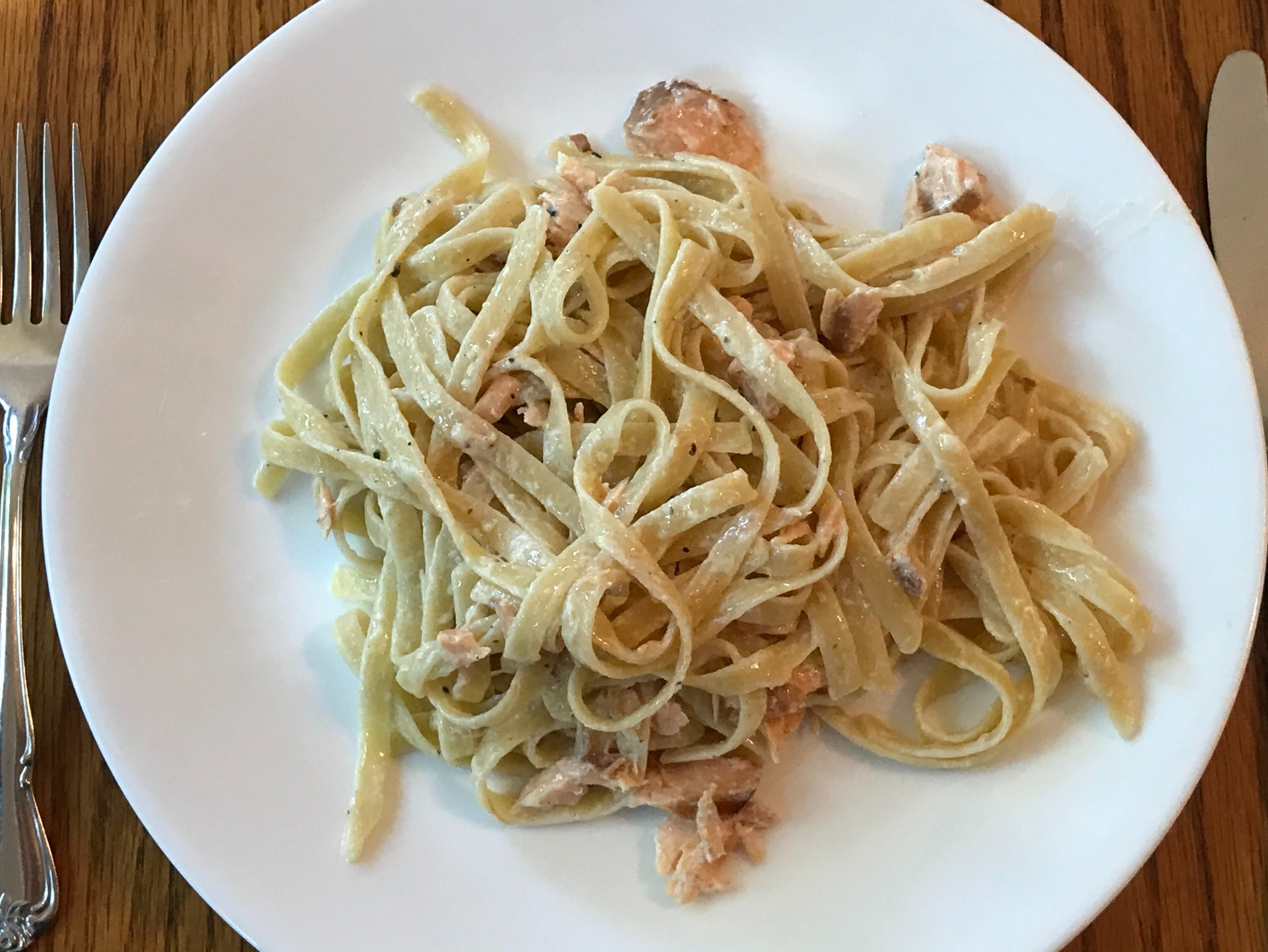
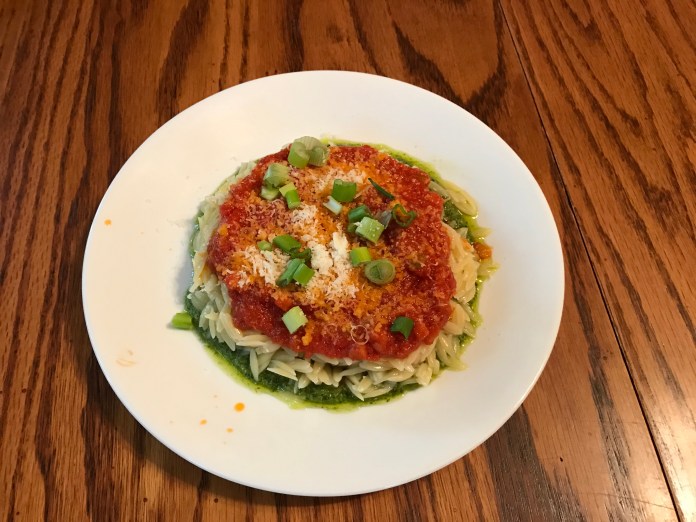
This menu demonstrates the some of the highlights of Ligurian cuisine: pesto, fresh vegetables, olives, seafood, and lots of olive oil. Unlike the Umbrian pesto in a previous post, this pesto has parmesan and pecorino Romano cheese along with the basil, garlic, pine nuts, and olive oil, making it slightly richer. It comes together quickly in a food processor. Once the spaghetti is cooked, it is added to the prepared pesto and served immediately. Unsurprisingly, it was excellent. Really, it’s hard to go wrong with pasta and pesto, especially when the basil comes from your own plants. The sauce left a fair amount of oil on the plates, but if some bread is added alongside it can be a nice dipping oil.

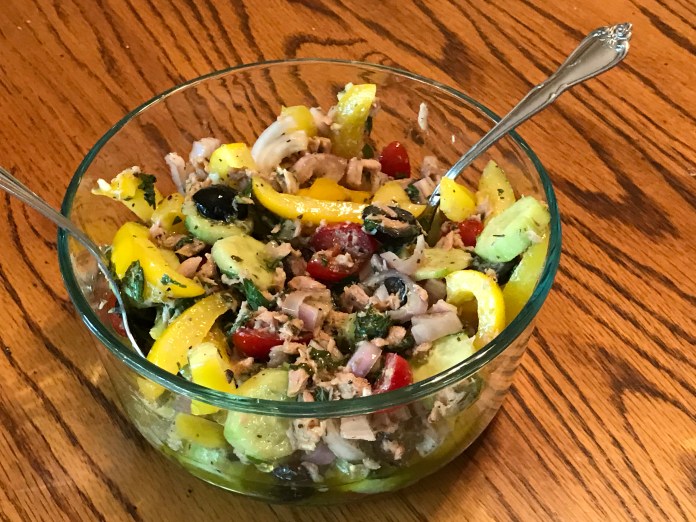
The salad was an interesting mix of cucumbers, peppers, olives, tomatoes, hard-boiled eggs (that I omitted), and tuna in olive oil. It is dressed with olive oil but no vinegar, flavored with basil and a bit of anchovy. It was good, but I liked most of the other salads better. I liked the dressing on the peppers and cucumbers, but since I’m not a big fan of olives or tomatoes on their own I found the rest of the salad was not really to my taste. Plus, a lot of oil in the pesto, followed by a lot of oil in the salad seemed a bit much, especially without an acidic contrast from vinegar or lemon juice. Still, a smaller amount of dressing on some peppers and cucumbers would be worth trying.
Dessert was an interesting surprise. The recipe calls for pouring sambuca over vanilla ice cream and sprinkling it with instant coffee granules. Since I didn’t want to buy an entire bottle of sambuca, especially when I didn’t think I cared for the anise flavor, I improvised by mixing a bit of anise extract into some half-and-half to pour over the ice cream. To my surprise, I really liked the flavor. The bit of anise blends with the coffee and vanilla to create an excellent palate cleanser. As discussed in the text, it is a super-simple but elegant dessert. Now that I have the anise extract, I would definitely make this again.











 Feasting Through Time