still life fruit cheese peonies
food history, italian cuisine

Cook’s Tour of Italy Menu 58 (pgs. 183 – 189): Umbrian Orgy in Perugia

still life fruit cheese peonies

Region: Umbria/Marches

Menu: Bread Toasts with Truffles, Marinated Salmon with Rhubarb Sauce, Penne Pasta with Brandy Tomato Cream Sauce, Umbrian-Style “Suckling Pig,” Vegetable Rainbow with Asparagus, Carrots, and Zucchini, Italian Cheese Tray with Mostarda

Recommended Wine: Lungarotti White and Red (Chardonnay di Miralduolo, Cabernet Sauvignon di Miralduolo)

            I’m not sure how one chooses the menu for an orgy, but there’s a tongue-in-cheek (I hope) suggestion in A Cook’s Tour of Italy, to be held in Perugia. Situated in the hills above the Tiber River upstream from Rome, the city has a prime location. An important city even before the Roman Empire, Perugia reached the peak of its influence in the Middle Ages. Several popes were elected there, and it was a regular refuge at times of civil unrest in Rome.

            As in Tuscany, Emilia-Romagna, Lombardy, and other parts of northern and central Italy, the weakening Holy Roman Empire created a power vacuum in Umbria during the High Middle Ages. It was filled by constantly-squabbling city states like Perugia, Assisi, and Spoleto. In one conflict in 1202, 20-year-old Francis of Assisi was captured and held in Perugia for a year. During this time, he began his spiritual journey, eventually leading to sainthood.

            The landscape of Umbria greatly resembles that of neighboring Tuscany, with hilltop towns, vineyards, olive groves, cypress trees, and groves of forest full of wild boars. Just think about a postcard or Renaissance landscape, and you’ll get a pretty good idea. The region is famous for pork, wild game, bread, oil, wine, truffles, and, more recently, chocolate.
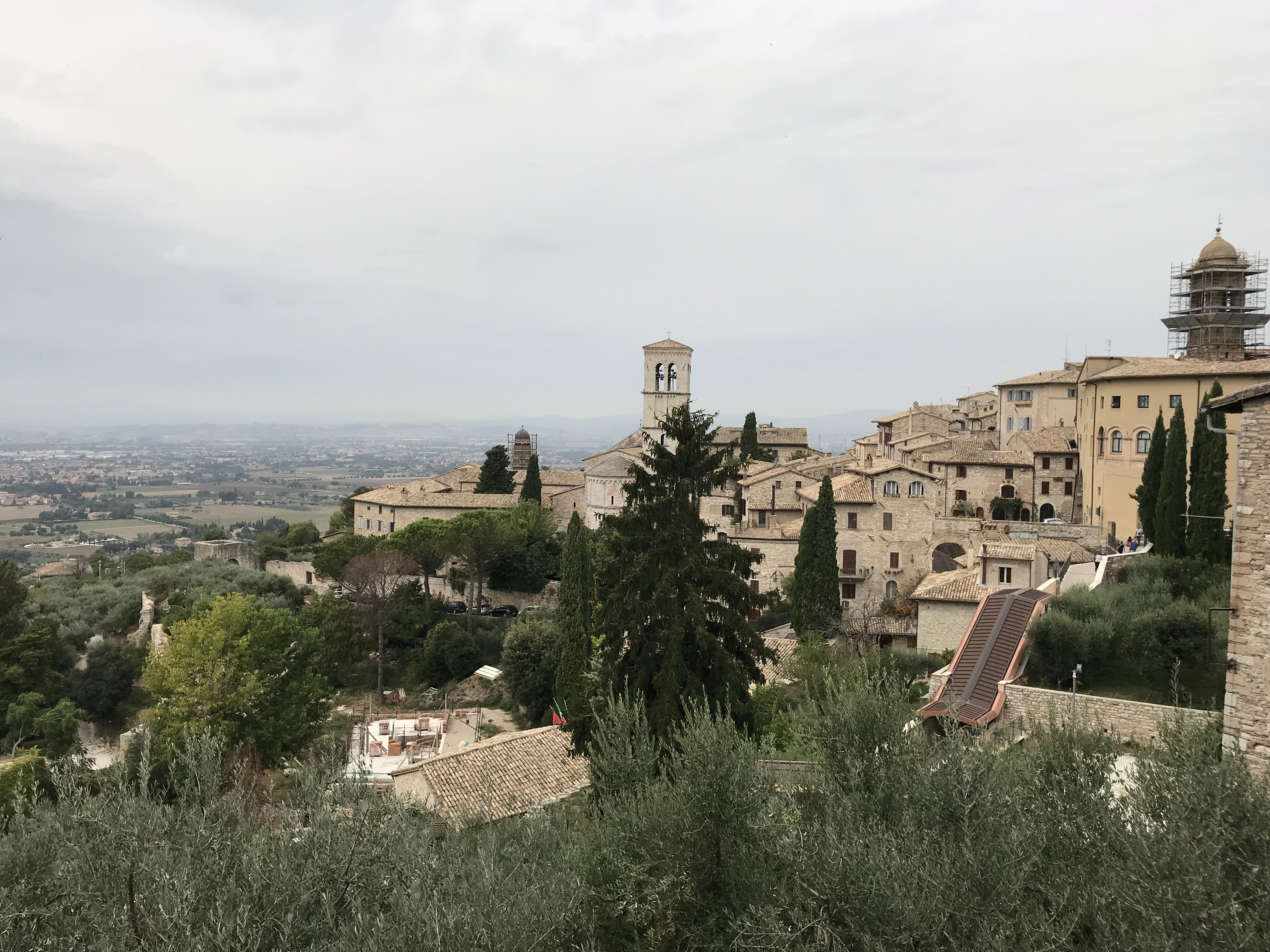
Assisi
View of Assisi

            We start off with a bit of grated truffle, mixed with garlic, oil, and lemon juice for a sort of pate, on toast. Unlike the white truffles of the Piedmont region, which are supposedly ruined by cooking and should only be grated over a finished dish, the less expensive black truffles found in Umbria can stand up to light cooking. Here, they’re briefly sauteed in the oil with garlic. Even though I didn’t use top-quality black truffles (instead using a roughly $12 jar I found at World Market), they had a pleasant and interesting flavor. I’m not sure if I’d bother again, but it was nice to try.
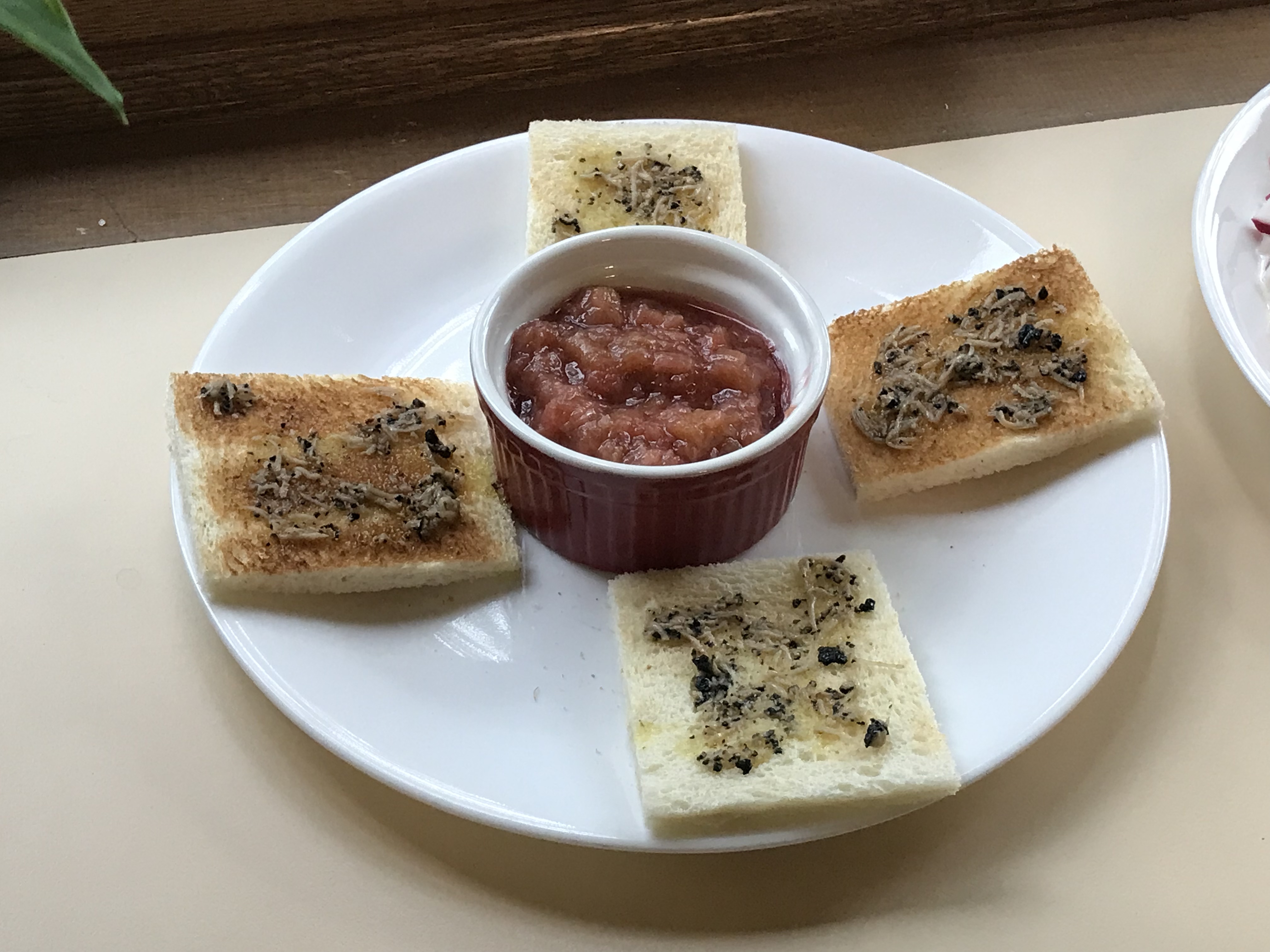
truffle toast rhubarb sauce
Truffle toasts, plus rhubarb sauce

            The ancient Romans loved mushrooms and frequently ate them as appetizers. According to some sources, Emperor Claudius was poisoned by them. A variety called death caps has been implicated in countless accidental and deliberate mushroom poisonings over the centuries, and are still responsible for over half of fatal cases, so they seem like the prime suspect. Perhaps fear of a repeat made edible fungi go out of fashion during the Middle Ages, and maybe that’s why medieval people considered them to be dangerously cold and wet. It wasn’t until the Renaissance that the wealthy even considered them again. Presumably that’s when Umbrians discovered (or rediscovered) their truffles.
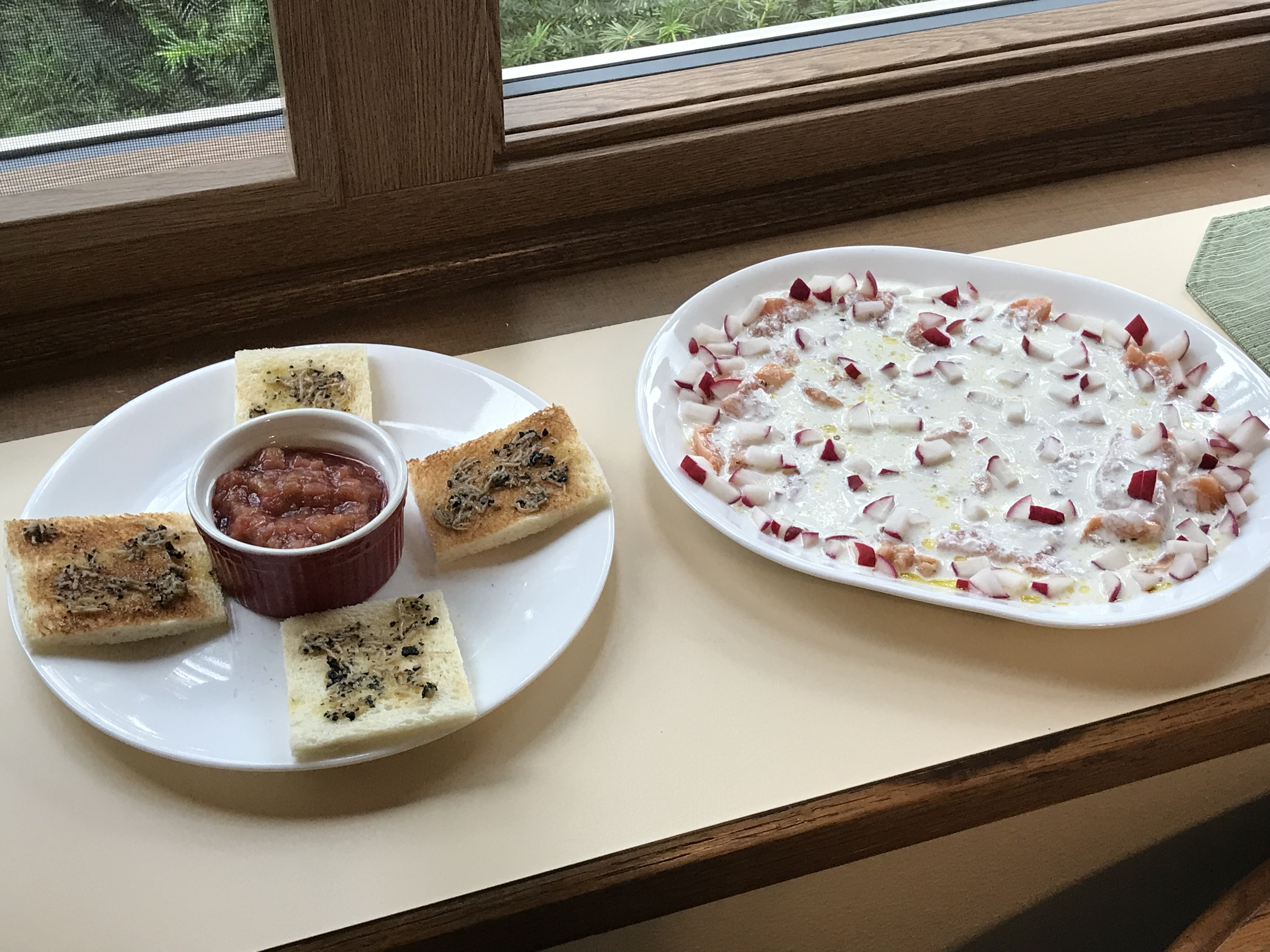
truffle toast, salmon carpaccio, rhubarb sauce
The first two courses

            The next dish is an interesting one. Landlocked Umbria is known for its freshwater fish, but salmon is not native. Mr. Famularo based this dish on one he had at a posh little hotel in the area. The salmon is raw, only “cooked” by an acidic marinade, served in a cream sauce, with a sweet-and-sour rhubarb sauce alongside. Since I was serving two people and not twelve, I only made a fraction of the amount of fish, to ensure it all got eaten. Leftovers probably would have not improved in the fridge.
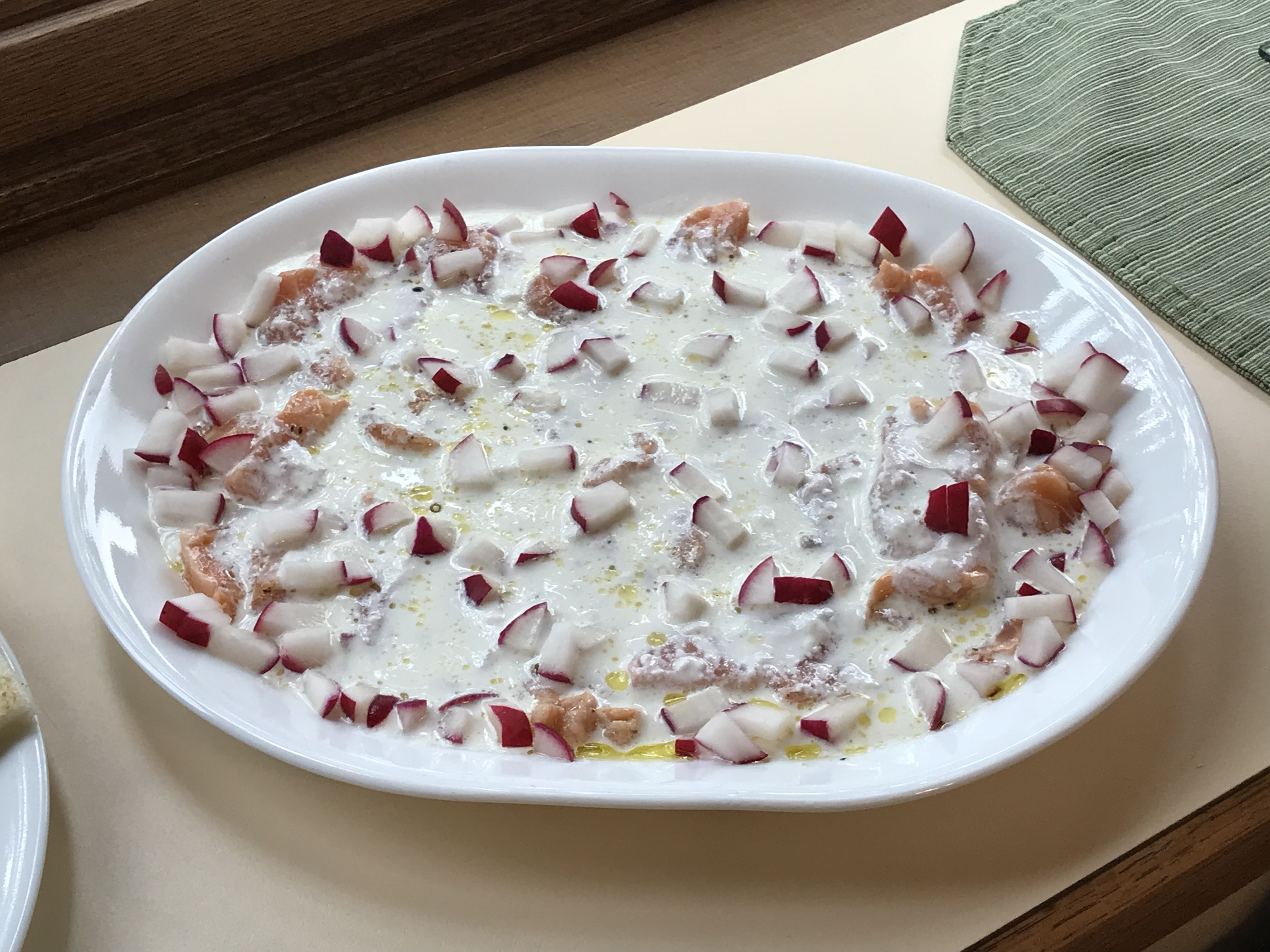
salmon carpaccio
Salmon to serve with rhubarb sauce

            The rhubarb sauce was another story. To make things a little easier, I served the toasts and fish on one day, and everything else on another. The texture of the fish took a little getting used to, but the cream and especially rhubarb sauce really made the dish. A little bit of lemon peel added extra flavor. For a full party of twelve, I probably would have needed to double the recipe to have enough. Leftovers are a great topping for ice cream, pancakes, and waffles. Rhubarb sundaes, with either vanilla or strawberry ice cream, could be the next big thing.
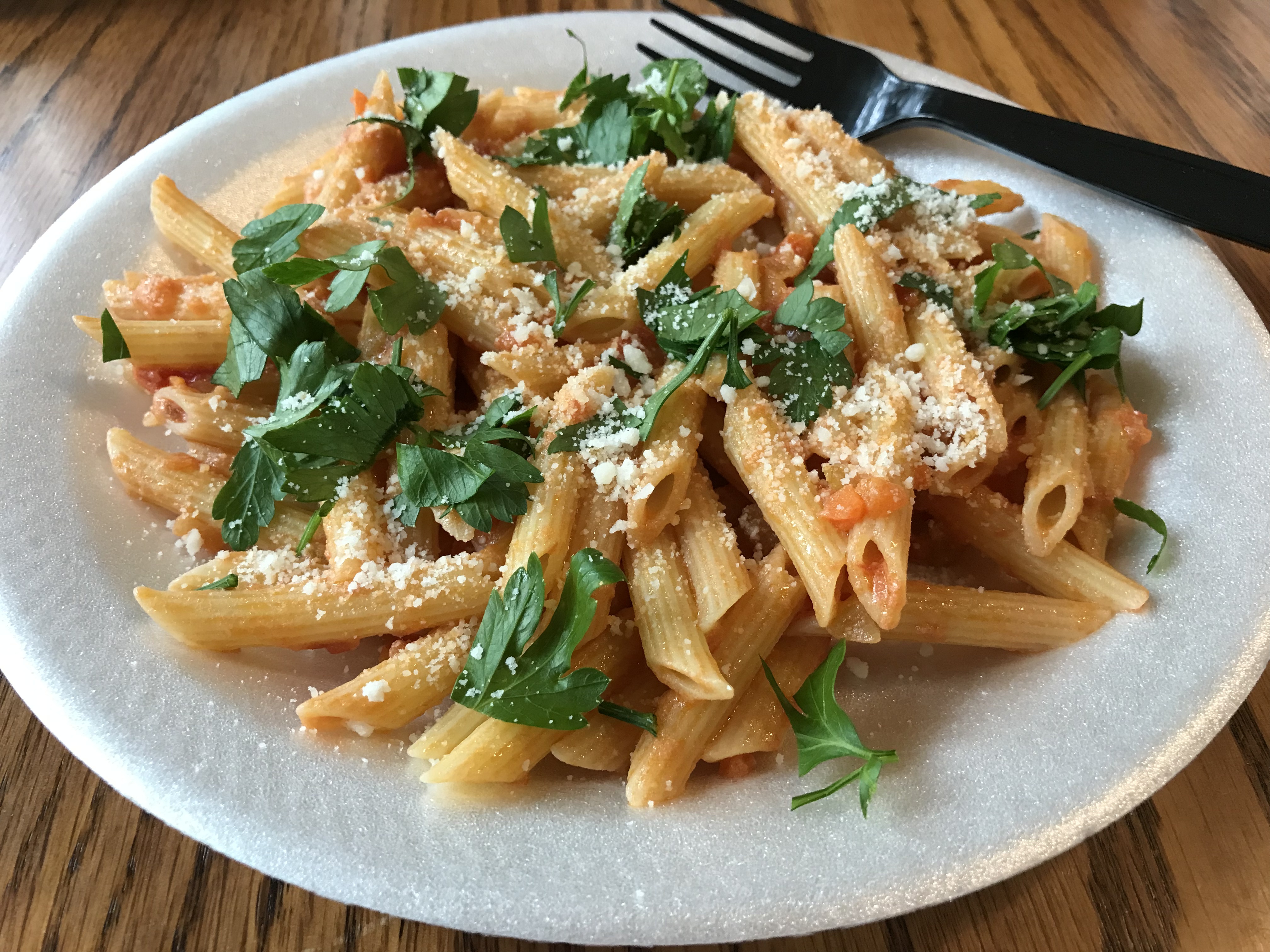
penne with tomato cream sauce

            If you’re wondering why the pasta is on Styrofoam plates, it’s because the water softener was out of commission, waiting for repair. To avoid unpleasant powdery mineral buildup on the regular plates, we used foam and paper ones for several days. Pasta with a homemade tomato-cream sauce tastes just as good that way. I couldn’t taste the bit of “cognac” in it, so using a basic domestic brandy worked just fine.
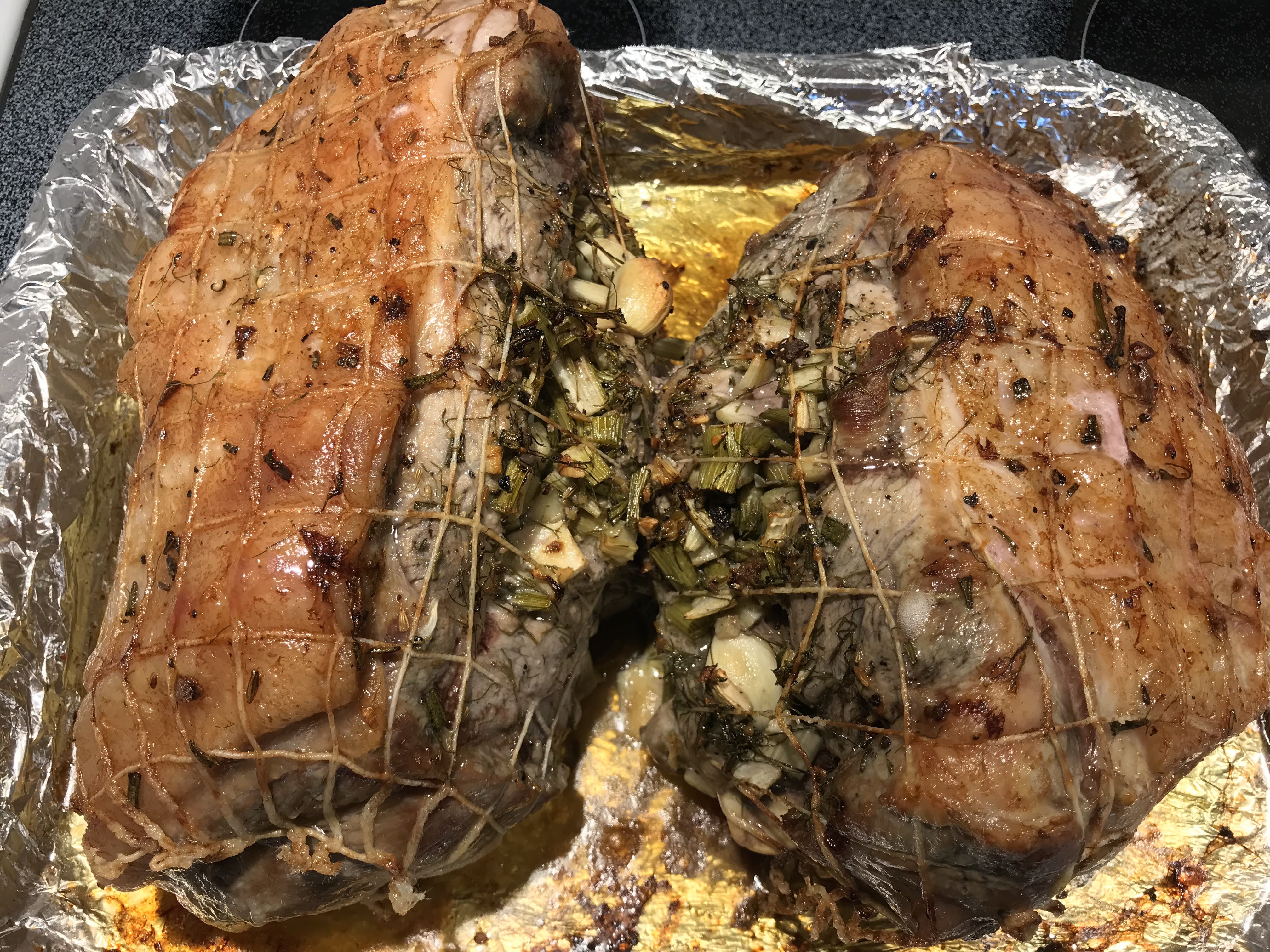
porchetta
Sort-of porchetta

            As a substitute for suckling pig, I used two chunks of pork butt, which are large and fatty enough to stand up to the long cooking time without drying out. The cooking time didn’t need to be reduced as much as I expected, so the pork became a bedtime snack a few hours after dinner. And porchetta sandwiches for a week of lunches. Luckily – but not surprisingly – it tasted delicious. Pork and herbs are a classic combination for a reason.
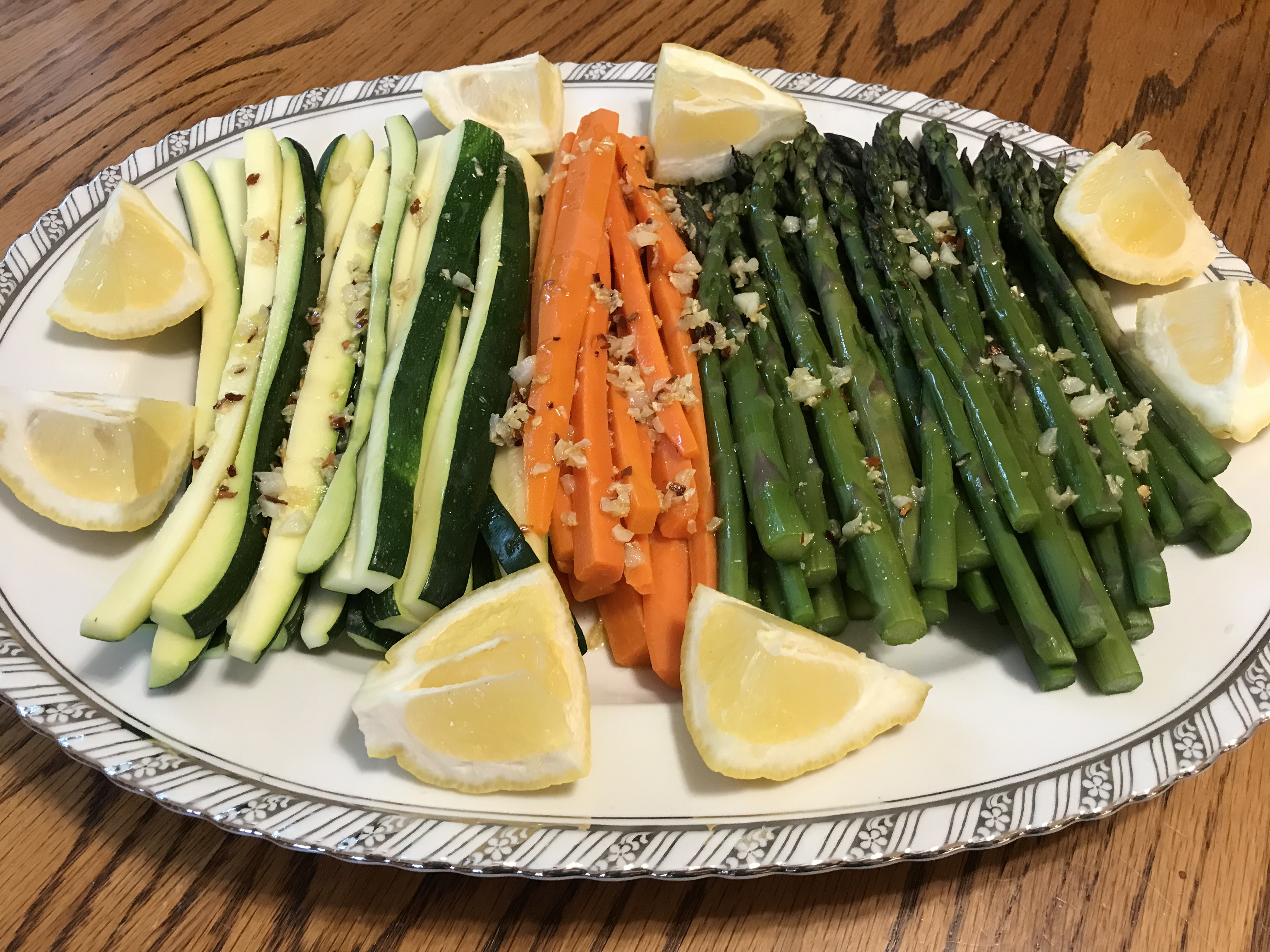
vegetables with garlic and lemon
Upgraded veggie tray

            The vegetables are simply steamed, arranged on a platter, drizzled with olive oil with sauteed bits of garlic, and served with lemon wedges. The combination would probably work with any sort of steamed or grilled vegetables. Lemon, oil, and garlic are a great combination.
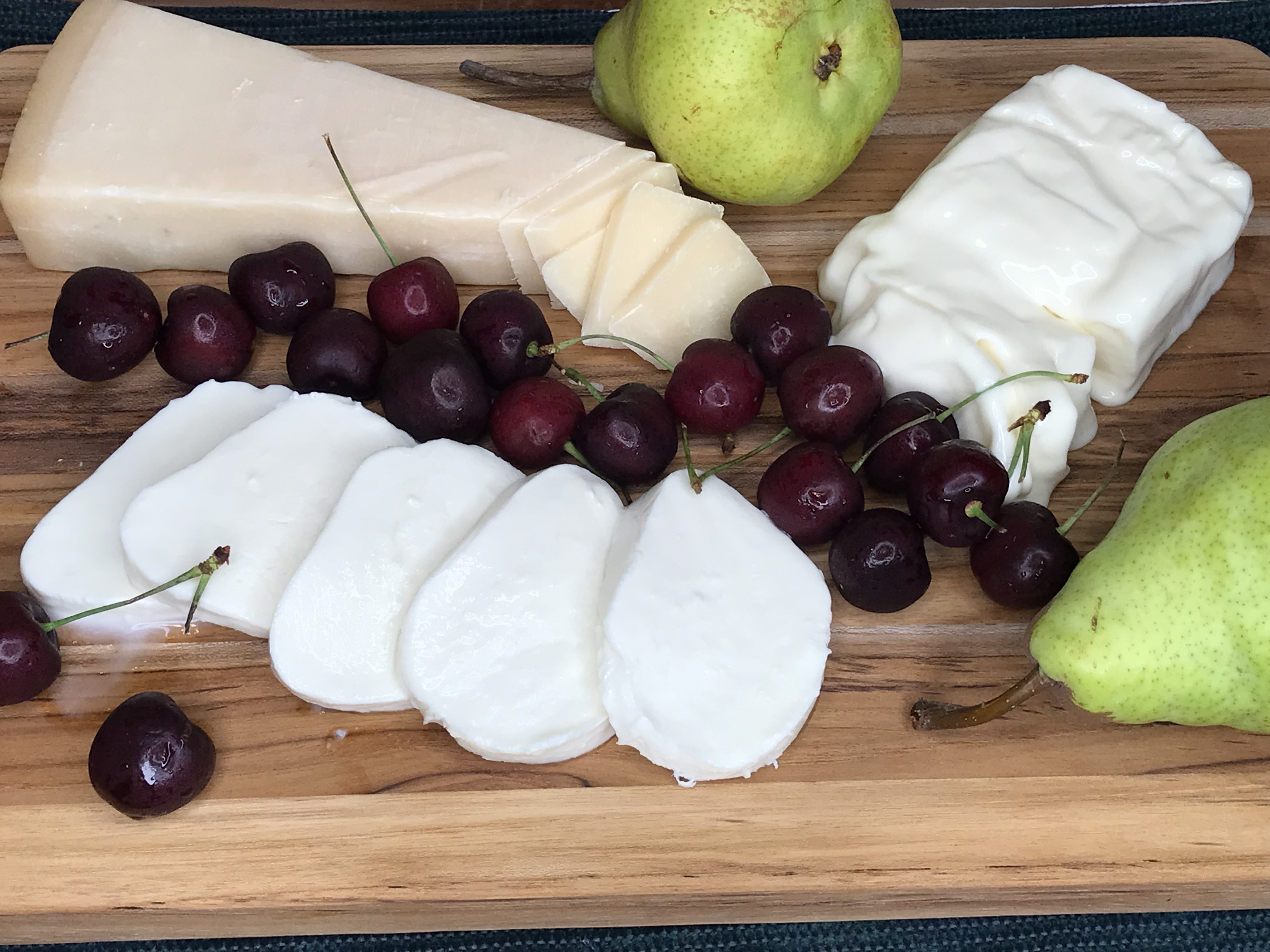
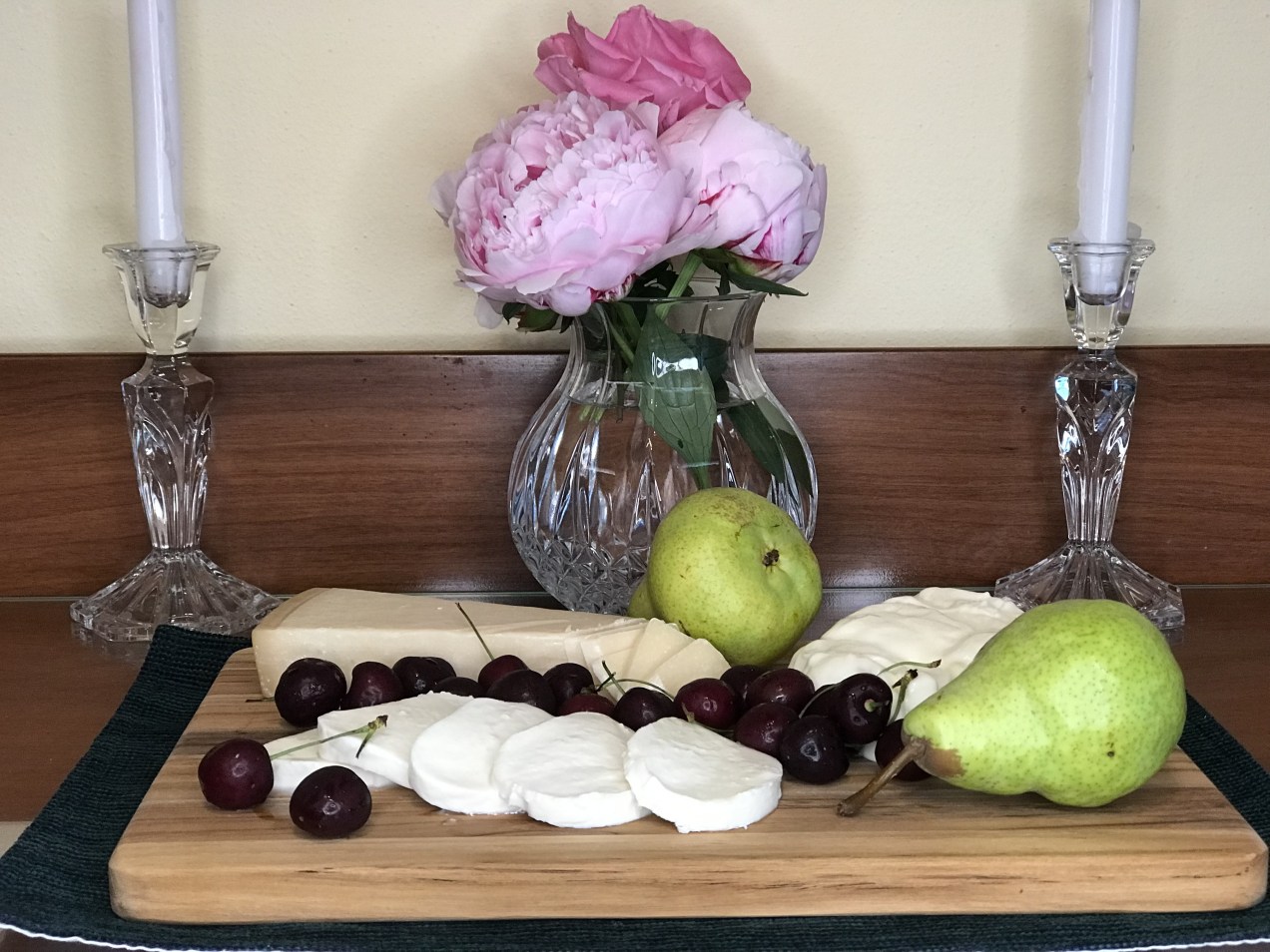
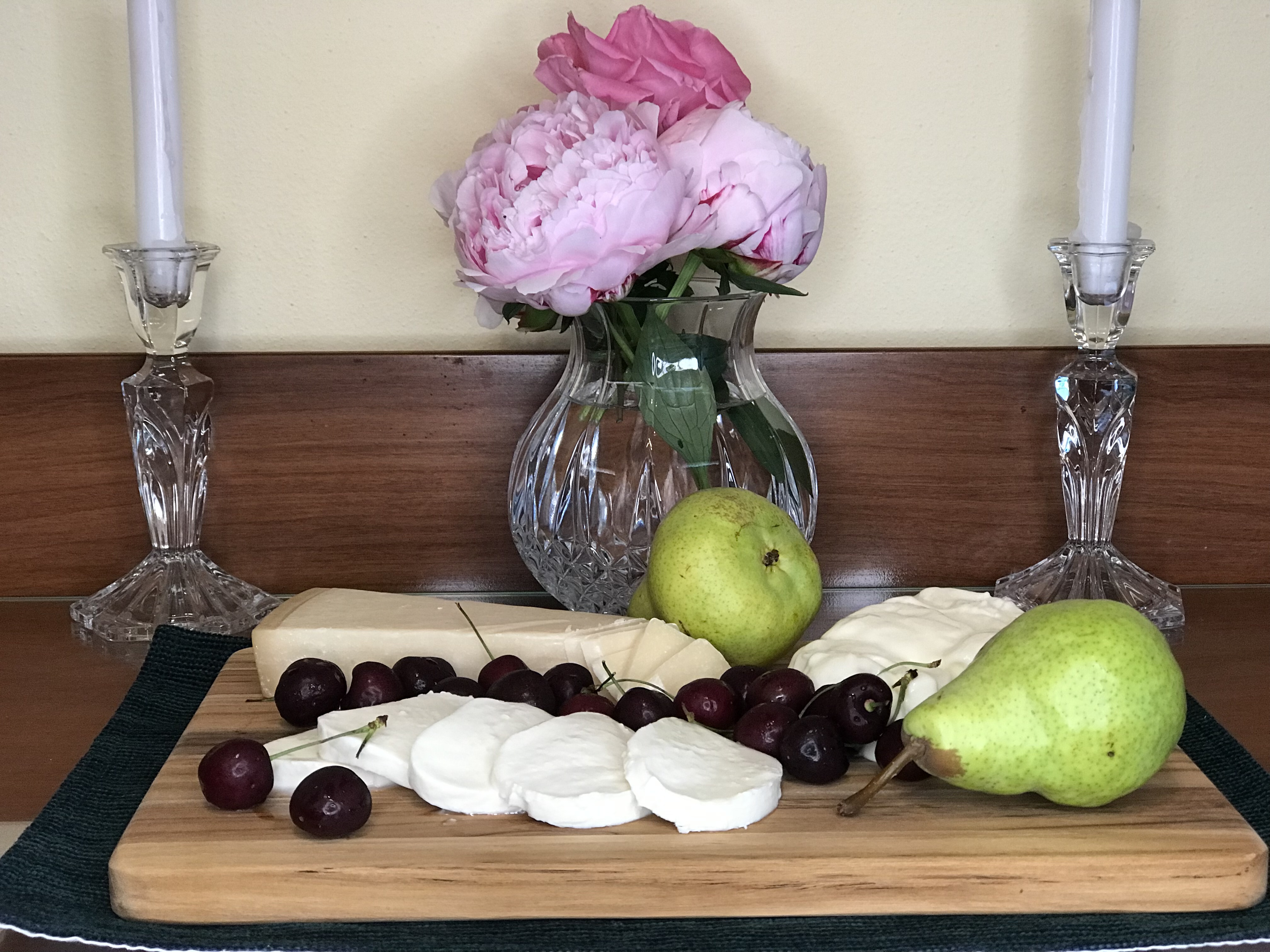
fruit and cheese still-life
Still-life of fruit and cheese

            I didn’t have mostarda di frutta, a mix of fruits preserved in a mustard-flavored syrup, to go with the cheeses for dessert, so I improvised with a still-life – fruit, cheeses, and flowers. In this case, I used fresh mozzarella in place of smoked, which might overpower the fresh pears and cherries, true Italian Parmigiano-Reggiano, and a soft rindless cheese called stracchino. The last was sort of like brie without the rind, was just firm enough to slice, and just runny enough to very slowly spread out and make the slices run back together. To make eating it easier, I got out some matzo from the cabinet, which worked perfectly.

Advertisements

            Parmigiano-Reggiano is sometimes called the “King of Cheeses.” Imitations abound, but to get the coveted name, the cheese has to be made of cows’ milk, according to a specific process, in a limited part of Emilia-Romagna near Parma, hence the name. Normally for pasta, soup, etc., a decent domestic parmesan is perfectly acceptable. It still has that characteristic slightly sweet, nutty flavor, even if the texture is less granular. Mimi Sheraton also praised its virtues on pages 216 – 217 of 1000 Foods to Eat Before You Die. But even the domestic stuff is delicious. At least if it’s made in Wisconsin.

Standard
Uncategorized

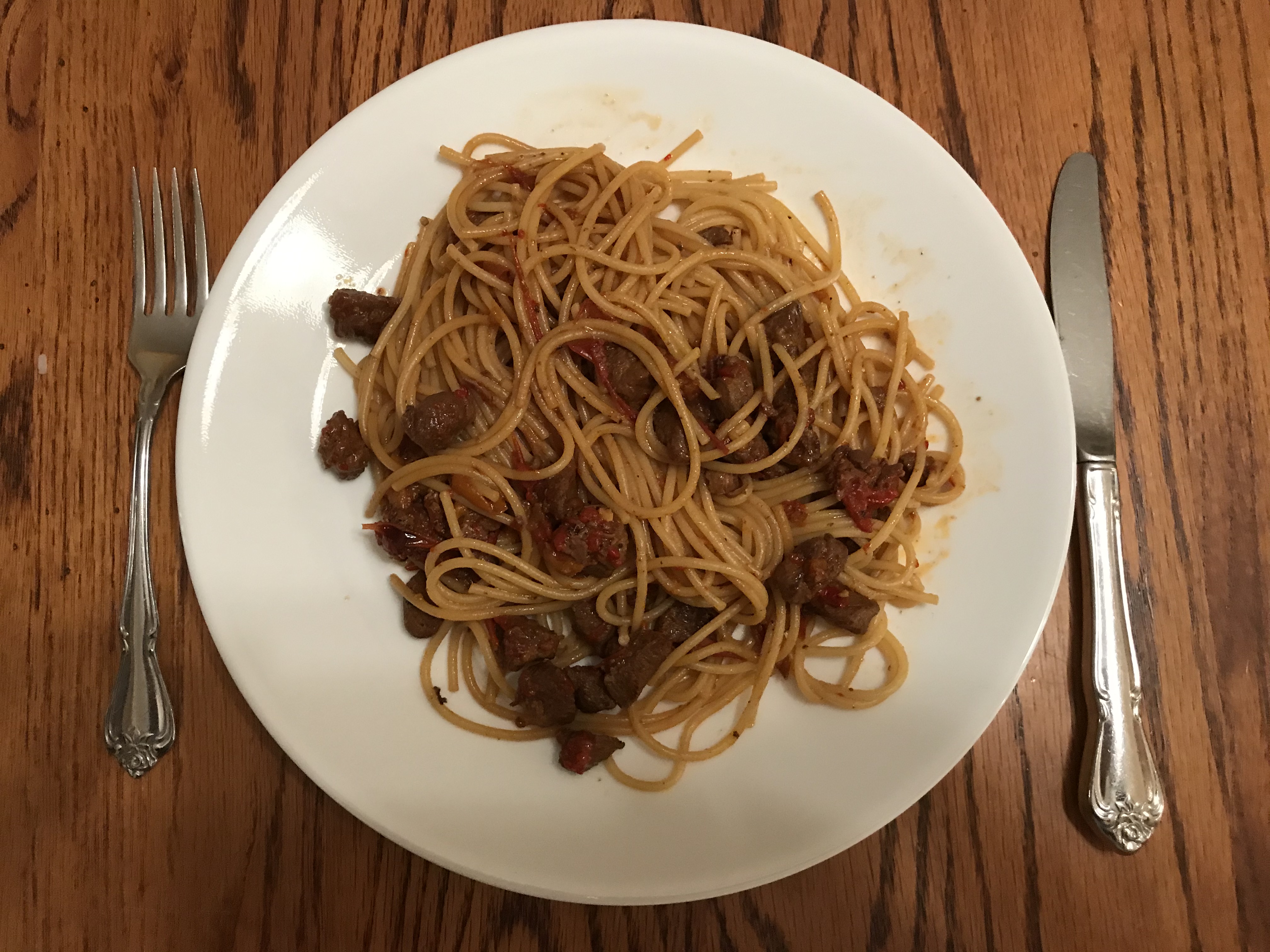
Cook’s Tour of Italy Menu 62 (Pgs. 194 – 195): Lamb, Pepper, and Pasta Casserole (Umbria)

            As in Lazio, lamb is popular in neighboring Umbria and its own eastern neighbor, Abruzzo. The rugged landscape has provided pasture for sheep for millennia, which in turn provided the residents with a variety of cheeses as well as meat. In this interesting regional specialty, lamb is used instead of beef or pork in a sauce that is then tossed with pasta. This is not the only dish of its kind. As discussed on page 174, lamb is often added to the tomato sauce in the pasta dish with two sauces during the winter months.

            This was fairly straightforward to put together. Sauté the minced lamb with garlic, add some wine or water and let that cook for a few minutes, then add tomatoes and bell peppers and cover the skillet to simmer for two hours. Occasionally check the pan to see if some broth or water may be needed. When that’s finished, cook the pasta, add it to the skillet, toss, and serve.

            I had a slight glitch in the preparation. Knowing extra liquid would probably be needed, I added the cup of water at the start of the simmering time, then went outside to work in the yard for a bit. Thinking my task would take about an hour, I planned to check the sauce after I finished. It turned out to be a bigger task than I anticipated. Almost two hours later, I was finishing up when I was alerted that I should probably check the pan, since it smelled like it was starting to scorch. As there was no smoke and the scorching seemed pretty mild, I immediately added more water and stirred to remove the browned layer from the bottom of the pan. This seemed to resolve the issue. The sauce didn’t taste scorched at this point, just pleasantly caramelized, so I continued with the recipe.

            Altogether, this was quite good. The peppers and tomatoes break up in the sauce, adding depth and acidity to counter the lamb, which has a rich, distinct flavor of its own. I wouldn’t have thought of putting lamb in pasta sauce, but it really shines when combined with the tomato flavor.

Standard
Uncategorized

Cook’s Tour of Italy Menu 55 (Pgs. 173 – 177): Dinner in Spoleto (in Umbria)

Menu: Pasta Stars with Two Sauces, Salmon in Parchment with Spinach and Carrots, Chocolate Truffle Roll

Recommended Wine: Orvieto (Dry and Light), optional Spumante with dessert

We now journey to Spoleto, a town in Umbria with a well-preserved Medieval center, to imagine a meal Mr. Famularo enjoyed there. In his recreation, he invites us to imagine the restaurant, housed in a 12th Century former convent, and the Medieval architecture and frescoes along the main street. With physical travel more or less suspended for at least a year, the book’s descriptions provide the mind a bit of a journey without risk. While we can only imagine the setting, we can cook and enjoy the food while we do so.

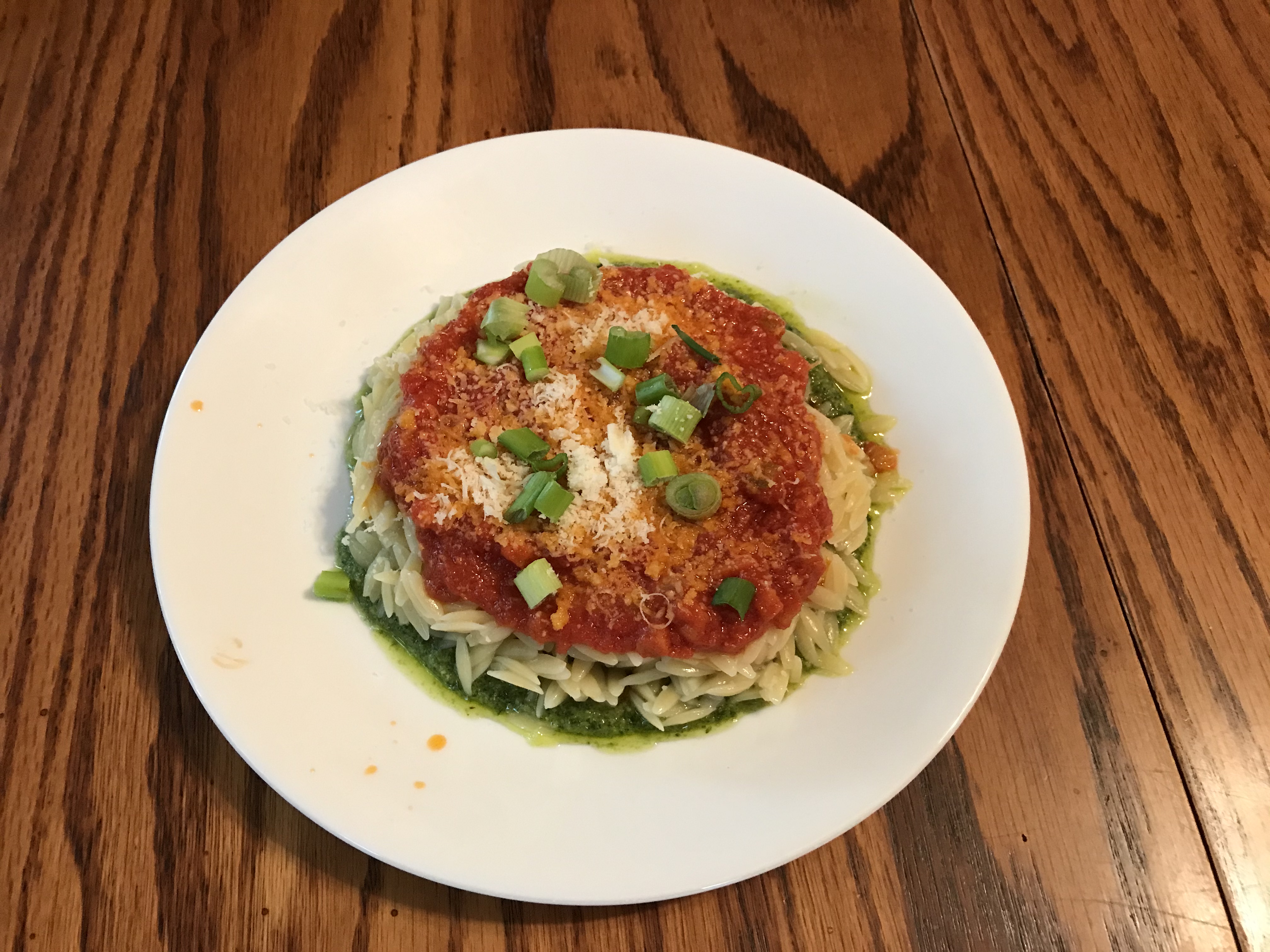
Dinner starts with pasta, served with both pesto and tomato sauce. The recipe calls for small pasta stars, but since I could not find these, I used orzo, since the restaurant in the description uses homemade pasta that is formed into rice-like shapes. Pesto has roots that stretch back to antiquity, made with a variety of herbs, spices, and other ingredients, though basil was not one of them until the Middle Ages. The most common variety today is made of basil, pine nuts, olive oil, garlic, and salt. Whether or not cheese is included depends on the region, in Liguria it is, is Umbria it is not. First, a bit of pesto is put onto the plate. This is followed by the pasta, which is then topped with tomato sauce. Finally, a sprinkle of parmesan cheese and scallions finishes the dish.

IMG_2704

The second dish was an interesting experiment. After precooking the carrots, spinach is placed in the center of one side of a parchment paper heart. This is topped with a piece of salmon, surrounded with carrots, and finished with butter, salt, pepper, fennel seeds, and a bit of white wine (I used pinot grigio from a mini-bottle, those both save money and reduce waste if you only need a little bit). This is then sealed and baked in a hot (475F in fact) oven for 15 minutes, then served from the parchment paper with a mixture of sour cream, lemon juice, and a bit of horseradish on the side.

IMG_2703

Dessert varied slightly from the book, where it is a chocolate roll with zabaglione sauce. I tried making the sauce as an experiment a few days beforehand and didn’t care for it, so I just served the roll plain. To describe its nature best, I am calling it a chocolate truffle roll, since the mix of bittersweet chocolate, butter, and a few egg yolks ends up having that consistency. Mixed into this are toasted almond slivers and vanilla wafer crumbs. The whole mix is then formed into a salami-like shape and allowed to chill and firm up. When ready to serve, it is rolled in more of the almonds and crumbs.

IMG_2706

Looks like a fine dining portion, but is very rich so you don’t need much.

This menu was another of my favorites. I wouldn’t have thought of putting two sauces on the same pasta dish, but the herbaceous, slightly rich pesto and the sweet, acidic tomato sauce complemented each other perfectly. The salmon was another remarkable dish. I didn’t think fish was supposed to be cooked at such high temperatures, but sealed in the parchment paper, it stayed buttery tender while being fully cooked and soaking up lots of flavor. The dessert was also fabulous. The soft, slightly bitter chocolate mix contrasted with the crunch and sweetness of the almonds and cookies. I might replace some of the bittersweet chocolate with semisweet next time, but the extra vanilla cookies on the outside definitely helped cut the bitterness. While very tasty regardless, it is best if taken out of the refrigerator half an hour or so before serving. This helps it soften up and have that truffle-like texture.


Standard
Uncategorized

Cook’s Tour of Italy Menu 61 (Pgs. 193 – 194): Frittata with Pancetta, Pasta, and Peas (Umbria/Marches)

Menu: Frittata with Pancetta, Pasta and Peas

IMG_2675

Probably the two most famous places in Umbria are Assisi and Lake Trasimene. Besides being the home of St. Francis and St. Clare, both noteworthy recommendations in themselves, Assisi features some of the finest examples of Medieval Italian art and architecture. Unlike Rome, Florence, and Venice, whose Medieval constructions were in many cases renovated or rebuilt during the Renaissance and Early Modern eras, the Medieval city center of Assisi is more or less intact. The difference between the Renaissance/Baroque basilicas St. John Lateran and St. Peter’s in Rome and the Basilica of St. Francis in Assisi is night and day, though all are magnificent. While many Italian architects never fully embraced the Gothic style, elements of it are clear in the Basilica of St. Francis, with its colorful frescoes, ceiling painted in bright colors, and rose window. After devoting appropriate time to this Basilica, which is really a must-see, several of the smaller churches are interesting as well. On our trip two years ago, my friend and I discovered a mini museum in the underground vaults of one of them, full of medieval painted panels, frescoes, and metalwork, along with ancient Roman and even pre-Roman artifacts. For an extra 5 to 8 euros (there was no price of admission to the church itself), it was a great way to spend a few hours of the free time we had to explore.

Also in Umbria is Lake Trasimene, which the tour guides pointed out to us as the bus passed right by the shore. It is most famous for what happened there in June 217 BC. After his famous crossing of the Alps seven months earlier, the Carthaginian general Hannibal had already defeated the Romans twice, once in a fairly minor skirmish at the river Ticinus, and once at the larger battle at the Trebia in late December 218 BC. Shocked that he 1) attempted the crossing of the Alps, 2) succeeded at it, and 3) did something that aggressive (according to Professor Shutt again, the Carthaginians had been nowhere near as aggressive in the First Punic War, so the Romans expected another conflict more or less at “arms’ length”), the Romans assembled a massive army to deal with the threat in their backyard. Meanwhile, Hannibal moved south from his winter camp in the Po Valley area towards Rome. As the Roman forces raced to meet him, Hannibal drew them into a trap.

Not only was he a brilliant tactician, but Hannibal was really good at getting the enemy to fight where he wanted them to fight. In this case, it was luring them into an ambush. Creating fake signal fires to trick the Romans into thinking his troops were elsewhere, he hid their true location in the fog rising off the lake. As the legions marched along the side of the lake, Hannibal boxed them in. Only a handful were able to fight their way out. The rest were either killed or captured then and there, tried to escape into the lake and drowned, or went in up to their necks in an attempt to wait out the enemy and were picked off by Carthaginian archers at their leisure. Despite the massive bloodshed, Hannibal was just getting started. It would take another 15 years and massive bloodshed on both sides before the Romans finally emerged victorious.

Turning from history to food, here we have another egg-based dish, this time a frittata. Varieties of frittatas are found all over Italy, including the central region of Umbria and the neighboring Marche region, on the Adriatic coast. In many ways, Umbria resembles Tuscany, with hills covered in vineyards, olive trees, and cypresses. Like Medieval Tuscany, Medieval Umbria was home to a number of feuding city-states, centered on fortified hill towns, including Perugia, Spoleto, and Assisi. There are similarities in the cuisine as well, with a focus on straightforward, distinct flavors, a variety of cured pork products, and good bread and olive oil. In addition, Umbrian cuisine features a variety of freshwater fish from the lakes and rivers, high-quality lentils, black truffles, and famous Perugia chocolates.

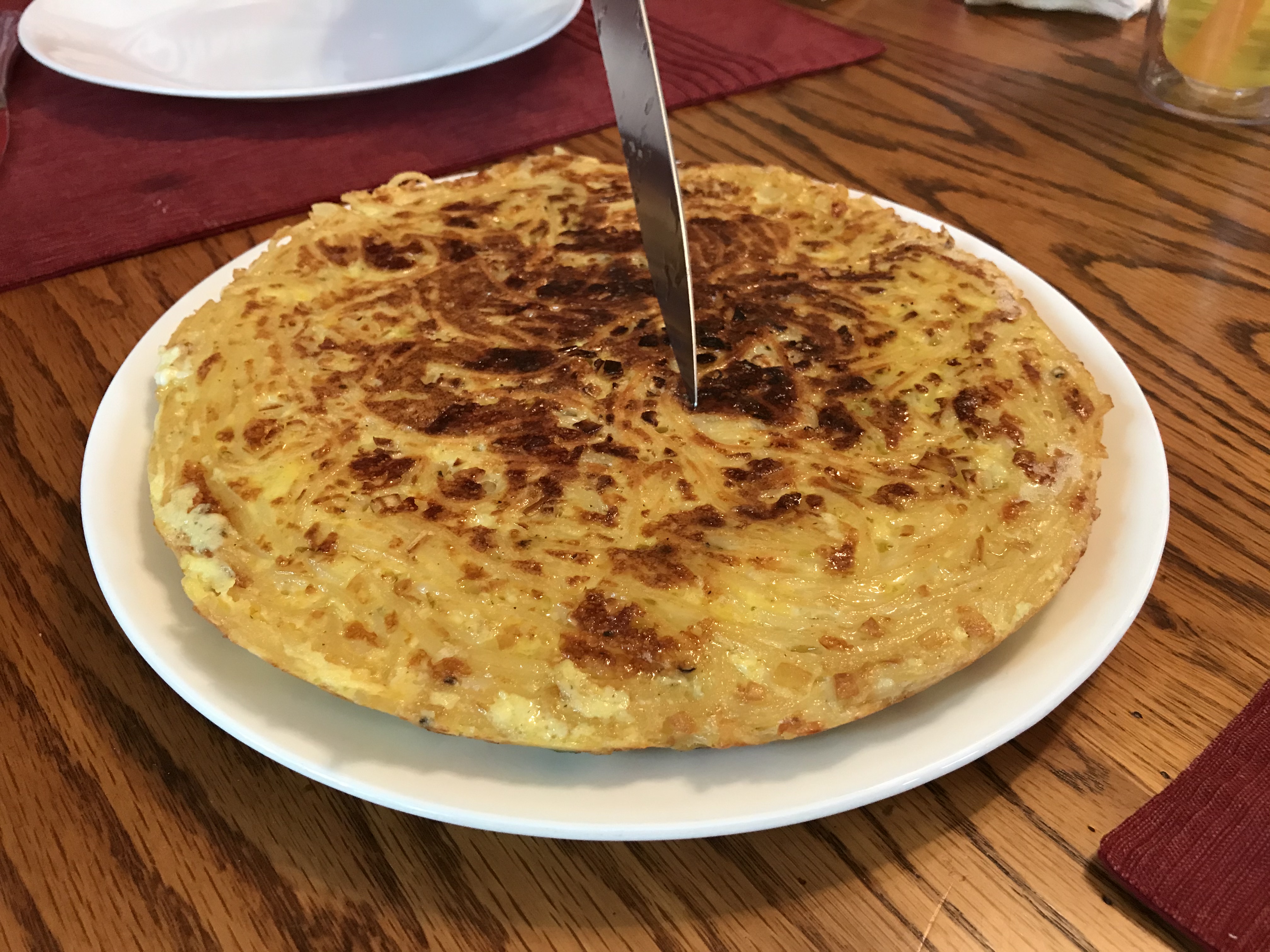
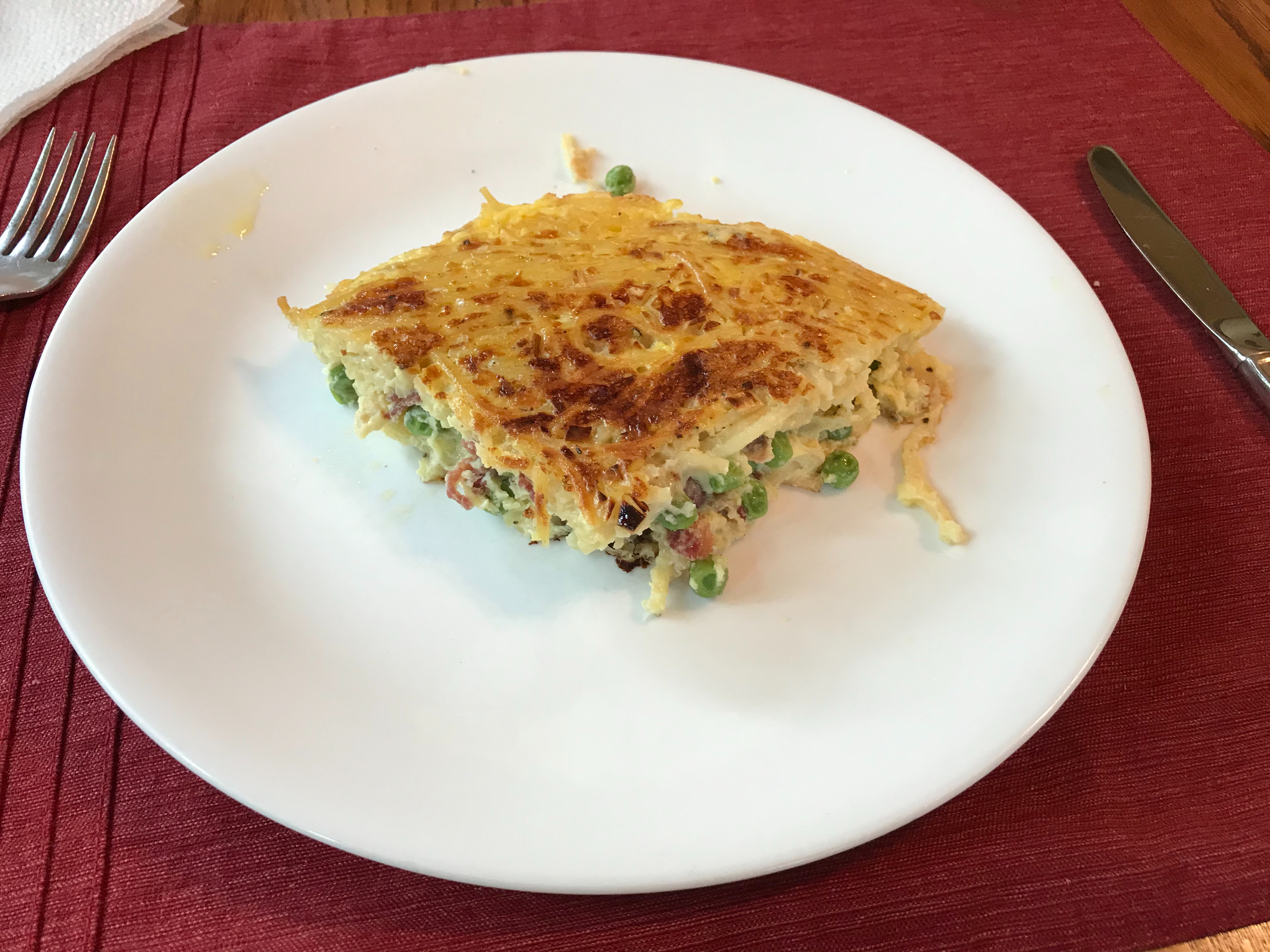
Though no truffle is used in this recipe, it is apparently a fairly common addition to omelets in Umbria. What is included is cooked spaghetti and mozzarella cheese mixed with the eggs, and a filling of lightly cooked peas, pancetta bits, and parmesan cheese. A little garlic is sautéed in oil, half of the egg/mozzarella/spaghetti mixture is put into the pan, the mix of peas, parmesan, and pancetta (or, in a pinch, bacon) is added, then topped with the rest of the egg mixture. After the first side is cooked through, the frittata is slid onto a plate, flipped, and returned to the pan to cook on the second side.

IMG_2676

Peas and spaghetti in an egg dish might sound a bit odd, but this was fantastic. The spaghetti and mozzarella in the egg mixture help form a crispy, flavorful crust on the outside, while the peas add a bit of lightness and sweet contrast to the otherwise rich dish. Best of all, it is surprisingly easy, the only slightly technical part is flipping it over. Just be careful not to scorch the garlic and wear an apron to protect your clothing from oil splatters during the frying/flipping. I would definitely make this again.


Standard