
Menu: Pasta Stars with Two Sauces, Salmon in Parchment with Spinach and Carrots, Chocolate Truffle Roll
Recommended Wine: Orvieto (Dry and Light), optional Spumante with dessert


We now journey to Spoleto, a town in Umbria with a well-preserved Medieval center, to imagine a meal Mr. Famularo enjoyed there. In his recreation, he invites us to imagine the restaurant, housed in a 12th Century former convent, and the Medieval architecture and frescoes along the main street. With physical travel more or less suspended for at least a year, the book’s descriptions provide the mind a bit of a journey without risk. While we can only imagine the setting, we can cook and enjoy the food while we do so.
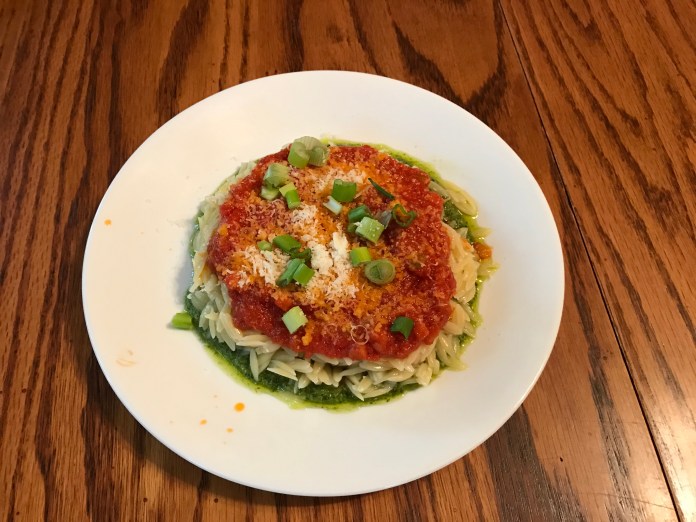
Dinner starts with pasta, served with both pesto and tomato sauce. The recipe calls for small pasta stars, but since I could not find these, I used orzo, since the restaurant in the description uses homemade pasta that is formed into rice-like shapes. Pesto has roots that stretch back to antiquity, made with a variety of herbs, spices, and other ingredients, though basil was not one of them until the Middle Ages. The most common variety today is made of basil, pine nuts, olive oil, garlic, and salt. Whether or not cheese is included depends on the region, in Liguria it is, is Umbria it is not. First, a bit of pesto is put onto the plate. This is followed by the pasta, which is then topped with tomato sauce. Finally, a sprinkle of parmesan cheese and scallions finishes the dish.
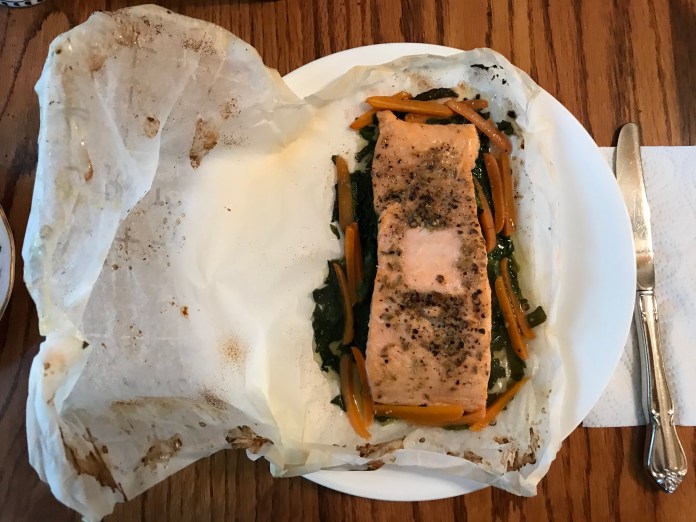
The second dish was an interesting experiment. After precooking the carrots, spinach is placed in the center of one side of a parchment paper heart. This is topped with a piece of salmon, surrounded with carrots, and finished with butter, salt, pepper, fennel seeds, and a bit of white wine (I used pinot grigio from a mini-bottle, those both save money and reduce waste if you only need a little bit). This is then sealed and baked in a hot (475F in fact) oven for 15 minutes, then served from the parchment paper with a mixture of sour cream, lemon juice, and a bit of horseradish on the side.
Dessert varied slightly from the book, where it is a chocolate roll with zabaglione sauce. I tried making the sauce as an experiment a few days beforehand and didn’t care for it, so I just served the roll plain. To describe its nature best, I am calling it a chocolate truffle roll, since the mix of bittersweet chocolate, butter, and a few egg yolks ends up having that consistency. Mixed into this are toasted almond slivers and vanilla wafer crumbs. The whole mix is then formed into a salami-like shape and allowed to chill and firm up. When ready to serve, it is rolled in more of the almonds and crumbs.
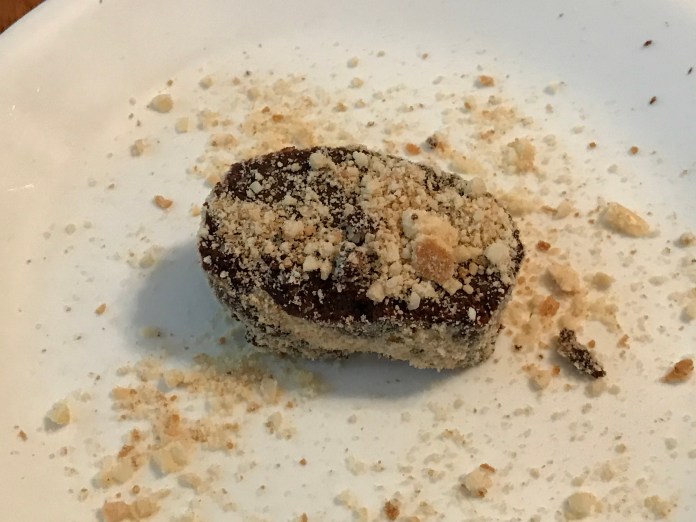
Looks like a fine dining portion, but is very rich so you don’t need much.
This menu was another of my favorites. I wouldn’t have thought of putting two sauces on the same pasta dish, but the herbaceous, slightly rich pesto and the sweet, acidic tomato sauce complemented each other perfectly. The salmon was another remarkable dish. I didn’t think fish was supposed to be cooked at such high temperatures, but sealed in the parchment paper, it stayed buttery tender while being fully cooked and soaking up lots of flavor. The dessert was also fabulous. The soft, slightly bitter chocolate mix contrasted with the crunch and sweetness of the almonds and cookies. I might replace some of the bittersweet chocolate with semisweet next time, but the extra vanilla cookies on the outside definitely helped cut the bitterness. While very tasty regardless, it is best if taken out of the refrigerator half an hour or so before serving. This helps it soften up and have that truffle-like texture.
 Feasting Through Time