Uncategorized

Cook’s Tour of Italy Menu 41 (Pgs. 132 – 135): Trattoria Menu, Near Vicenza (Veneto)

Menu: Fresh Asparagus Soup, Ricotta Gnocchi with a Light Picante Tomato Shrimp Sauce, Cubes of Butternut Squash with Cinnamon, Stewed Figs with Ice Cream

Recommended Wine: Muller-Thurgau from Trento, a Yellowish Fruity White

            We now return to the mainland of the Veneto region, famous for a variety of fruits and vegetables (text, page 132). Fitting with that theme, this menu features asparagus, butternut squash, and figs, prepared in interesting ways. Asparagus soup is thickened with semolina flour, and steamed squash is served with butter and cinnamon. In the original recipe, fresh figs are drizzled in kirsch, but since I could not find either of those items, I adapted by stewing dried figs in cherry juice and serving them over ice cream. While not like the original, this adaptation retained the flavors of figs and cherries.

            The soup is composed of just five ingredients: chicken and beef broth, semolina flour, thinly sliced asparagus, and grated parmesan cheese. Just bring the broth to boiling, add the semolina and let it cook, stirring occasionally. Once that’s thickened, add the sliced asparagus stems, and after a few more minutes, add the tips. Serve with a sprinkle of parmesan cheese and the recommended piece of garlic-rubbed toast. The squash is even simpler: just cube, steam, drizzle with melted butter, and sprinkle with cinnamon.
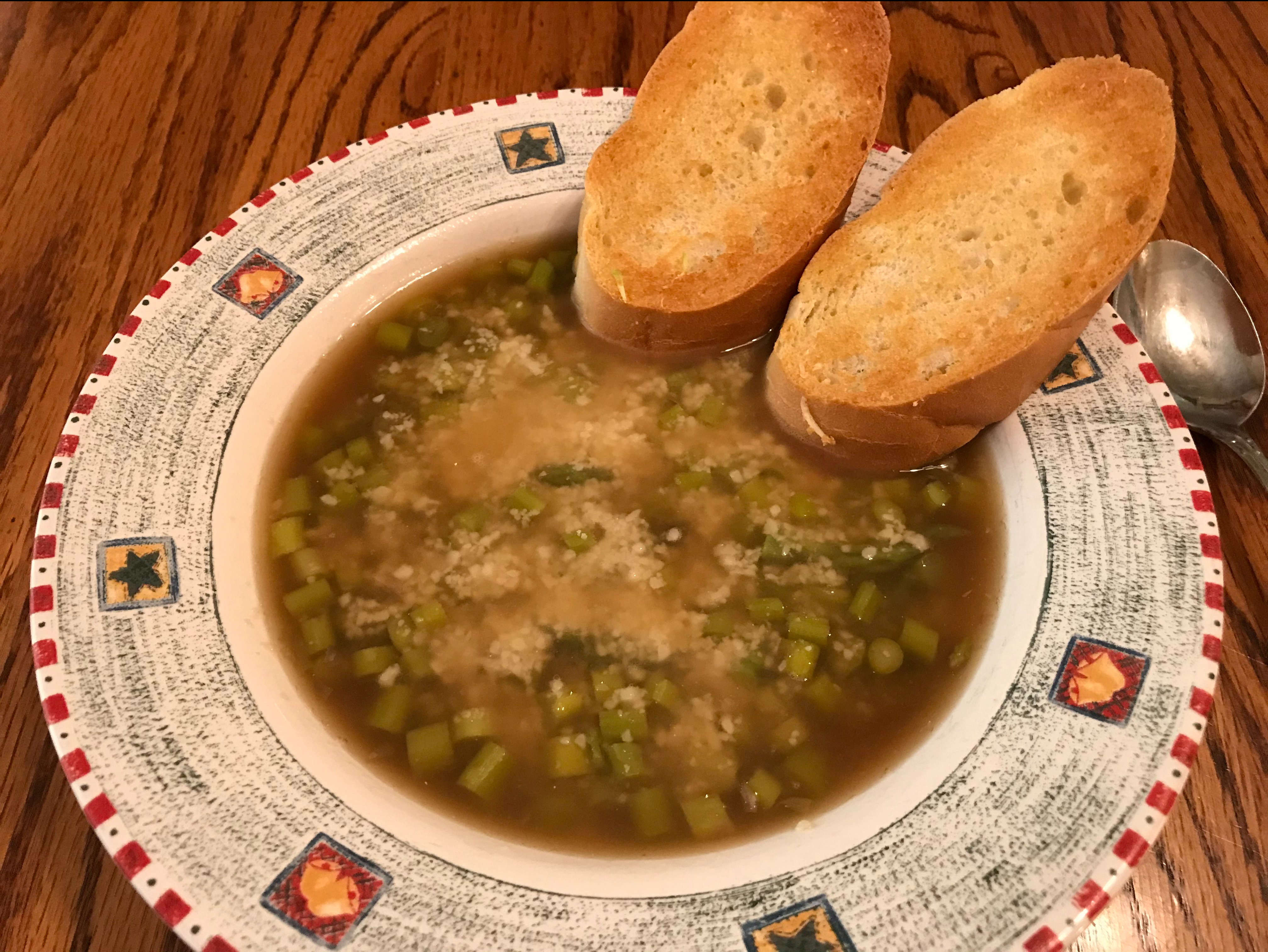
Asparagus soup

            The gnocchi were a bit more complicated to make, but not overly so. It’s possible to mix up the dough ahead of time, then just roll it out and cut it just before cooking. Contrary to its name, the sauce is not very spicy. A creamy base is flavored with a bit of onion, garlic, and red pepper, with a bit of tomato paste providing a lovely color. In an attempt to appeal to pickier diners, I did modify the recipe somewhat. The actual recipe calls for adding some fish broth and bouillon to the cream sauce, along with chopped cooked shrimp. For convenience and broader appeal, I used chicken broth and leftover rotisserie chicken. The pickier diner still didn’t care for it, but it was worth a try.
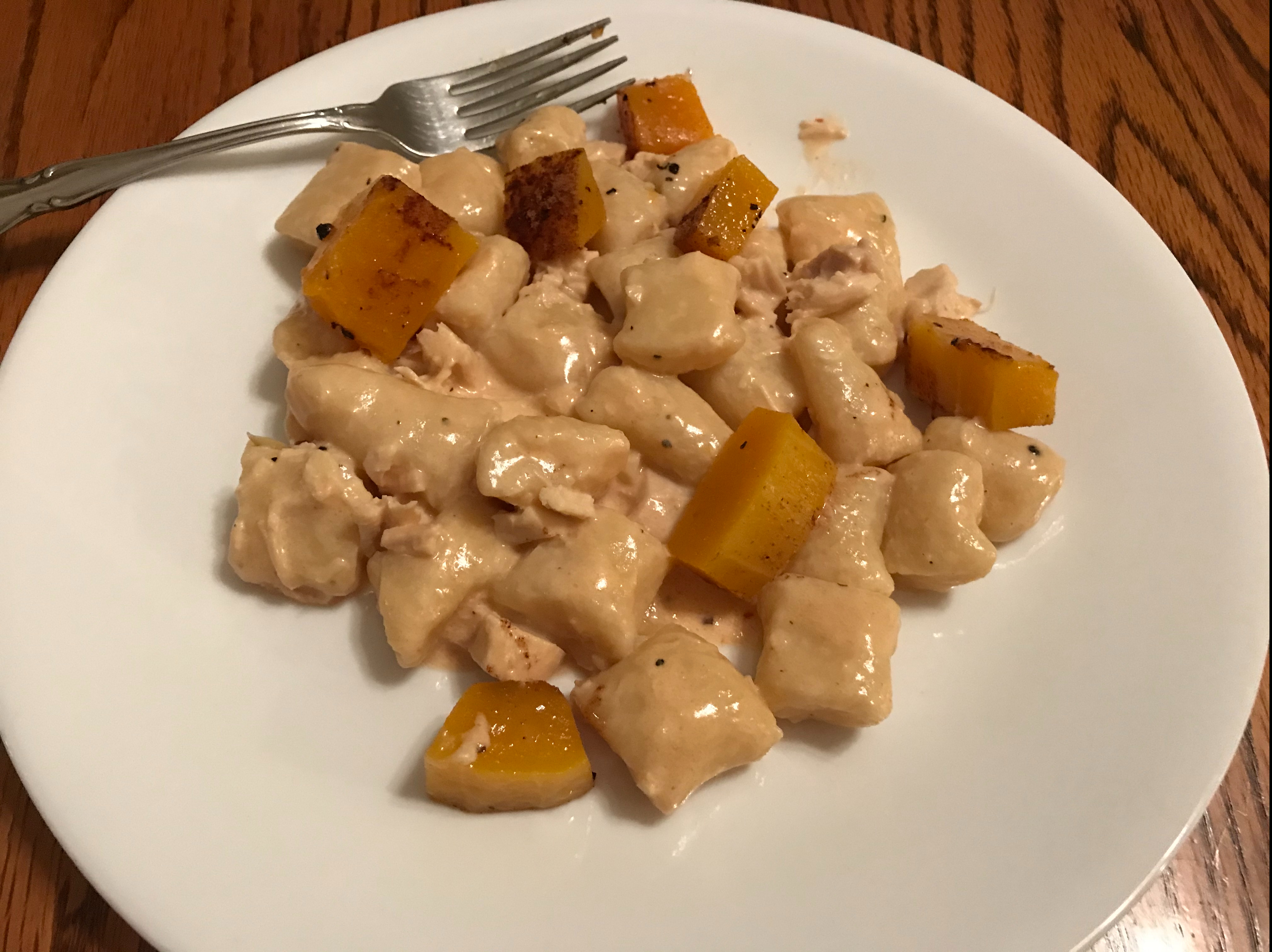
Squash and gnocchi

            None of this was difficult to make, and with the exception of gnocchi, it was not particularly time-consuming either. While the soup simmered and squash steamed, there was plenty of time to cook the gnocchi and make the sauce. Even better, this time I managed to time things right and we could enjoy the food in the order it’s supposed to be eaten in.

Stewed figs and ice cream

            I’ve never seen a soup thickened with semolina before, but it worked really well to add a bit of extra body without diluting the asparagus flavor. The gnocchi tasted kind of like homemade mac and cheese in little dumplings, with a creamy, chickeny sauce. These were especially good alongside the sweet, buttery squash. The figs were a nice closing to the dinner. The tartness from the cherry juice acted as a bit of a palate cleanser, while the sweetness from the figs and ice cream kept it from being overwhelming. This was yet another excellent dinner.
Standard
Uncategorized

Cook’s Tour of Italy Menu 62 (Pgs. 194 – 195): Lamb, Pepper, and Pasta Casserole (Umbria)

            As in Lazio, lamb is popular in neighboring Umbria and its own eastern neighbor, Abruzzo. The rugged landscape has provided pasture for sheep for millennia, which in turn provided the residents with a variety of cheeses as well as meat. In this interesting regional specialty, lamb is used instead of beef or pork in a sauce that is then tossed with pasta. This is not the only dish of its kind. As discussed on page 174, lamb is often added to the tomato sauce in the pasta dish with two sauces during the winter months.

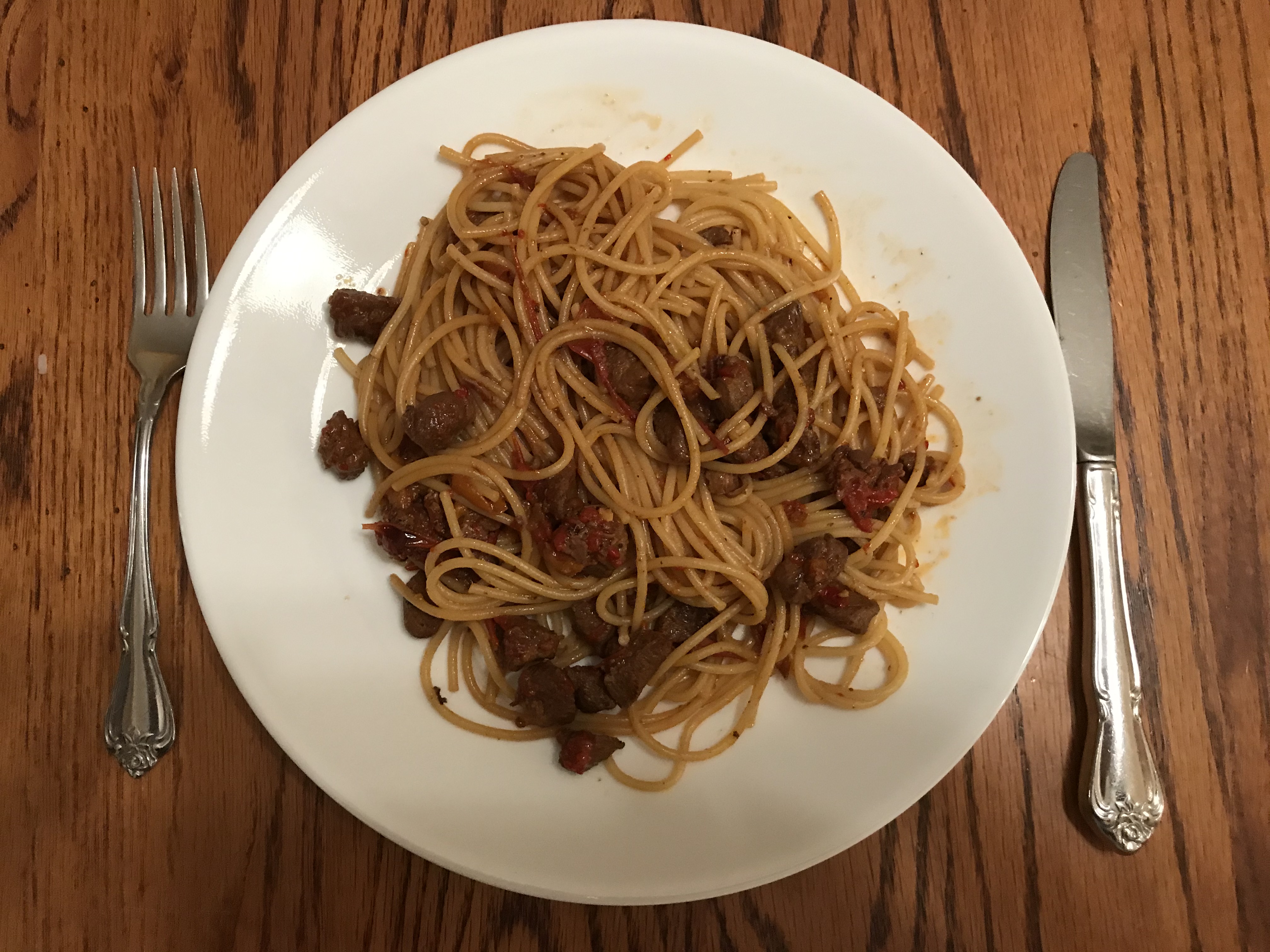
            This was fairly straightforward to put together. Sauté the minced lamb with garlic, add some wine or water and let that cook for a few minutes, then add tomatoes and bell peppers and cover the skillet to simmer for two hours. Occasionally check the pan to see if some broth or water may be needed. When that’s finished, cook the pasta, add it to the skillet, toss, and serve.

            I had a slight glitch in the preparation. Knowing extra liquid would probably be needed, I added the cup of water at the start of the simmering time, then went outside to work in the yard for a bit. Thinking my task would take about an hour, I planned to check the sauce after I finished. It turned out to be a bigger task than I anticipated. Almost two hours later, I was finishing up when I was alerted that I should probably check the pan, since it smelled like it was starting to scorch. As there was no smoke and the scorching seemed pretty mild, I immediately added more water and stirred to remove the browned layer from the bottom of the pan. This seemed to resolve the issue. The sauce didn’t taste scorched at this point, just pleasantly caramelized, so I continued with the recipe.

            Altogether, this was quite good. The peppers and tomatoes break up in the sauce, adding depth and acidity to counter the lamb, which has a rich, distinct flavor of its own. I wouldn’t have thought of putting lamb in pasta sauce, but it really shines when combined with the tomato flavor.

Standard
Uncategorized

Cook’s Tour of Italy Menu 28 (Pg. 92): Pasta with Cabbage, Cheese, and Potatoes

            This pasta dish is a somewhat unusual one from Northern Italy. The original version is made with buckwheat pasta, but the recipe here uses fresh fettuccine. Diced potatoes and Savoy cabbage are first boiled, then, when they are cooked through, the pasta is added. Once the pasta is cooked, all is drained and tossed with pecorino cheese. Melted butter, browned with sage and garlic while the pasta cooks, is poured over the pasta, which is then topped with more cheese.

            Cabbage may seem like a strange thing to find in an Italian dish, but it has a long history. In ancient times it was eaten by all levels of society, as evidenced by its inclusion in the works of Apicius. In the early 4th Century AD, the Emperor Diocletian kept himself occupied in retirement by growing cabbages. It remains popular today, especially in the cooler north. The favorite variety is the stronger-flavored, crinkled Savoy cabbage. Note that this is not the same thing as Napa cabbage. Both have crinkled leaves, but Napa cabbage heads are elongated while Savoy cabbage heads are round. I was unable to find the Savoy variety, and since Napa cabbage is not always that fresh (blame lower rate of turnover) I substituted regular green cabbage, which is always cheap, fresh, and available.

            Not only is this easy to cook, it turned out to be another favorite. The boiled potatoes partially break down as the pasta is tossed, mixing with the butter and thickening the sauce, acquiring a taste sort of like an alfredo sauce. The sage leaves crisp up in the skillet and make a delicious garnish. Exactly why pecorino cheese is used instead of parmesan is unclear since this is a northern Italian dish, but it worked really well. I’m sure grated parmesan would be good if pecorino is unavailable, and when I made the recipe for a second time with dried fettuccine, that worked too. Just make sure to adjust the cooking time for the pasta accordingly.

Standard