
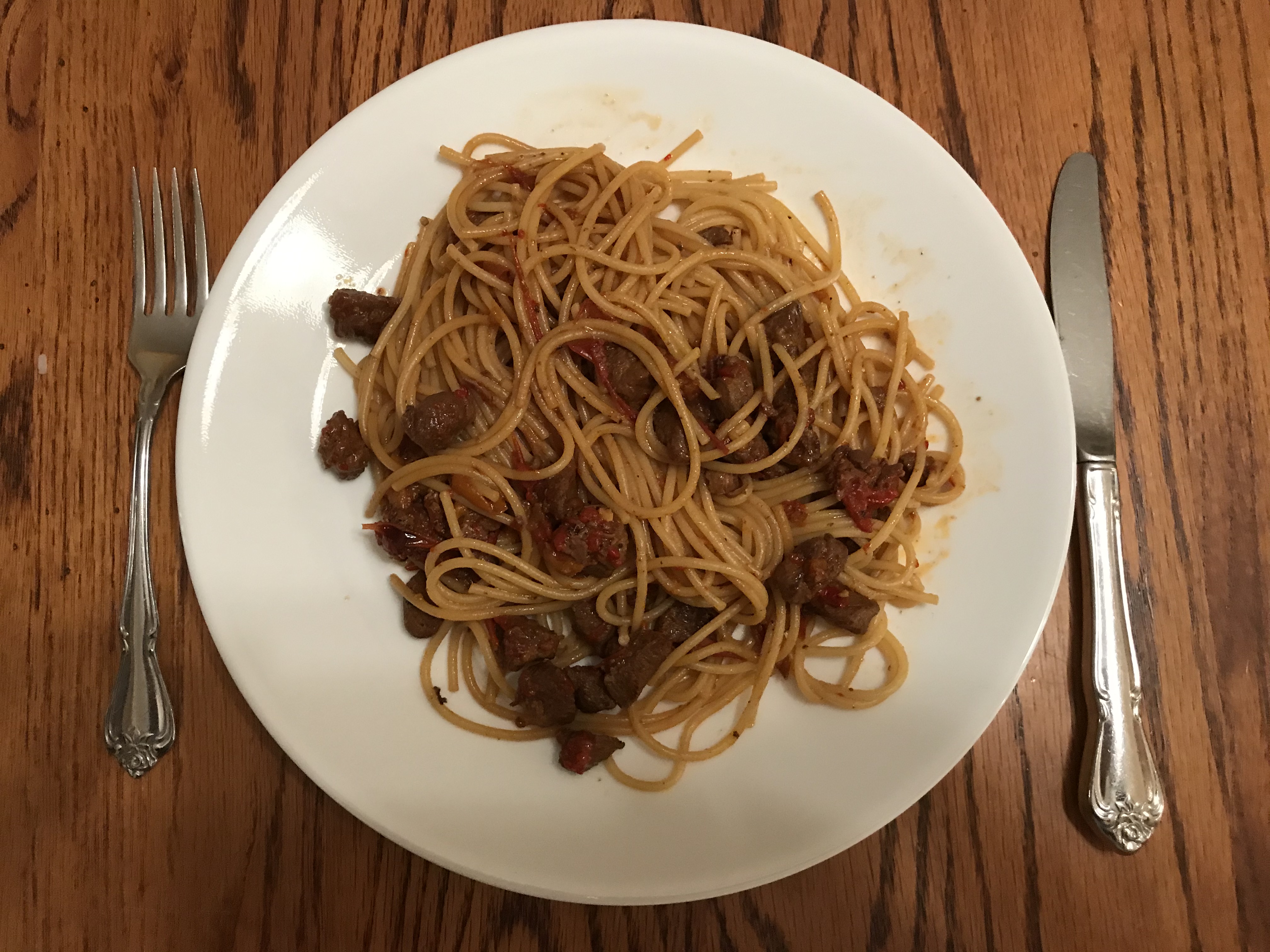
As in Lazio, lamb is popular in neighboring Umbria and its own eastern neighbor, Abruzzo. The rugged landscape has provided pasture for sheep for millennia, which in turn provided the residents with a variety of cheeses as well as meat. In this interesting regional specialty, lamb is used instead of beef or pork in a sauce that is then tossed with pasta. This is not the only dish of its kind. As discussed on page 174, lamb is often added to the tomato sauce in the pasta dish with two sauces during the winter months.
This was fairly straightforward to put together. Sauté the minced lamb with garlic, add some wine or water and let that cook for a few minutes, then add tomatoes and bell peppers and cover the skillet to simmer for two hours. Occasionally check the pan to see if some broth or water may be needed. When that’s finished, cook the pasta, add it to the skillet, toss, and serve.
I had a slight glitch in the preparation. Knowing extra liquid would probably be needed, I added the cup of water at the start of the simmering time, then went outside to work in the yard for a bit. Thinking my task would take about an hour, I planned to check the sauce after I finished. It turned out to be a bigger task than I anticipated. Almost two hours later, I was finishing up when I was alerted that I should probably check the pan, since it smelled like it was starting to scorch. As there was no smoke and the scorching seemed pretty mild, I immediately added more water and stirred to remove the browned layer from the bottom of the pan. This seemed to resolve the issue. The sauce didn’t taste scorched at this point, just pleasantly caramelized, so I continued with the recipe.
Altogether, this was quite good. The peppers and tomatoes break up in the sauce, adding depth and acidity to counter the lamb, which has a rich, distinct flavor of its own. I wouldn’t have thought of putting lamb in pasta sauce, but it really shines when combined with the tomato flavor.
 Feasting Through Time