
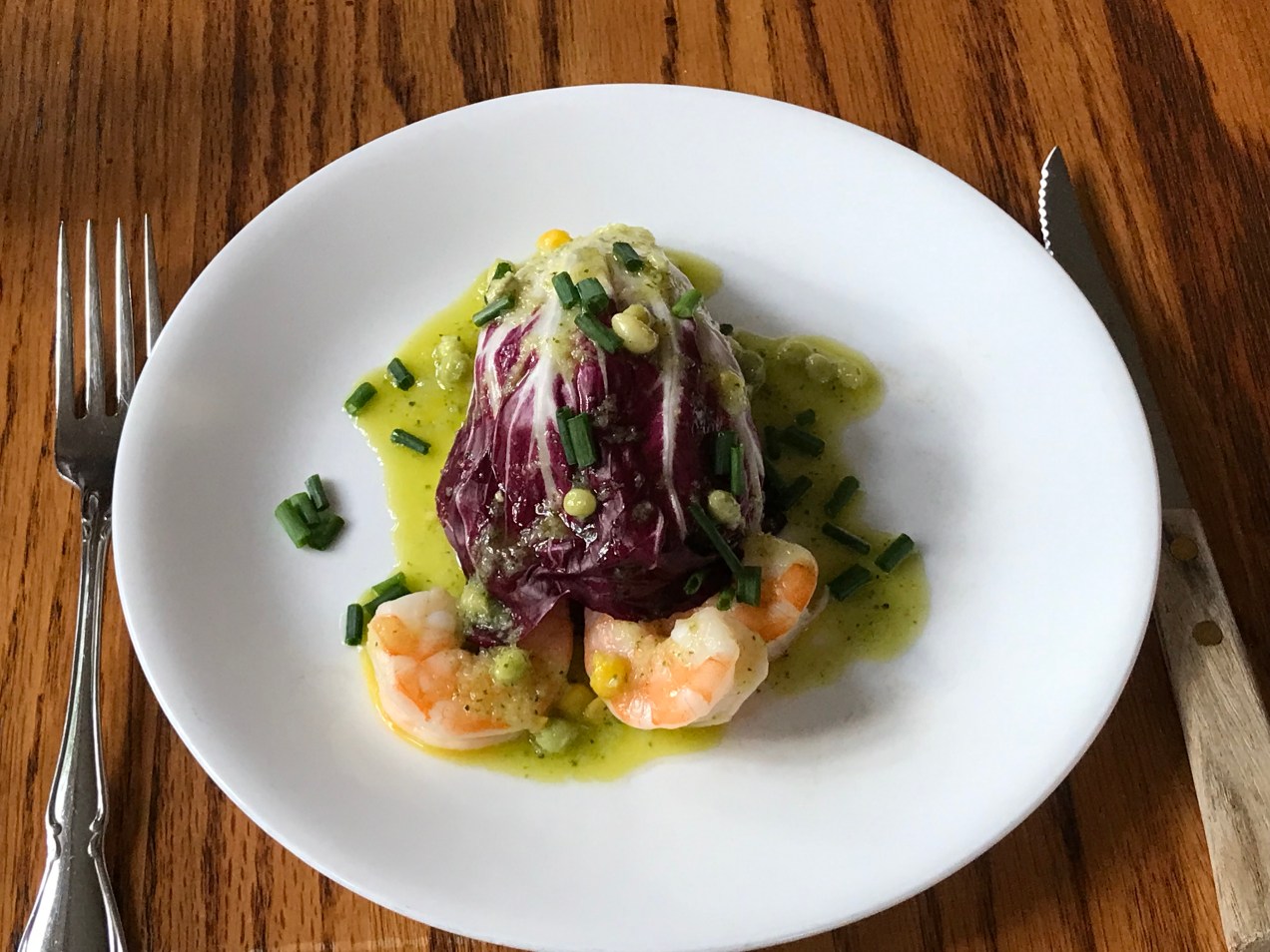
Menu 40 (Pgs. 128 – 132): Bachelor Party with Romeo, Verona
Region: Veneto
Menu: Shrimp and Radicchio with a Sweet and Sour Sauce, Fried “Soft-Shell Crabs,” Asparagus with Oil, Vinegar, and Fried Eggs on Radicchio, Sweet Semolina Cookies with Grana and Honey
Recommended Wine: Frontego (Soave, bright yellow with citrus aroma)
If you’ve ever read Romeo and Juliet, you’ll know that the title characters’ secret wedding did not allow for a bachelor party, but here we can imagine one. Pizza, hot wings, and lots of beer seem more likely fare for such a party, but maybe Romeo preferred the specialties of the Veneto region. These include fish, shellfish, and cephalopods of all sorts, including soft-shell crabs and cuttlefish, a variety of sweet and sour sauces, and radicchio. While this menu does not match up to the story’s Medieval origins very well, it was tasty and interesting.
Note that I did make a few substitutions for economy, convenience, and personal preference. The recipe called for using smoked salmon to form a “cornucopia” for the shrimp and vegetable pieces, but with all the other flavors in the mix it would be hard for the fish to shine. While the smoky flavor probably would have been a nice contrast with the sweet corn, peas, and sauce, the benefit didn’t justify the added cost. The contrast was provided by radicchio instead. Its bitter flavor worked well with the other ingredients, and it looked pretty on the plate. Even though I care more about how food tastes, having it look good is a nice bonus.
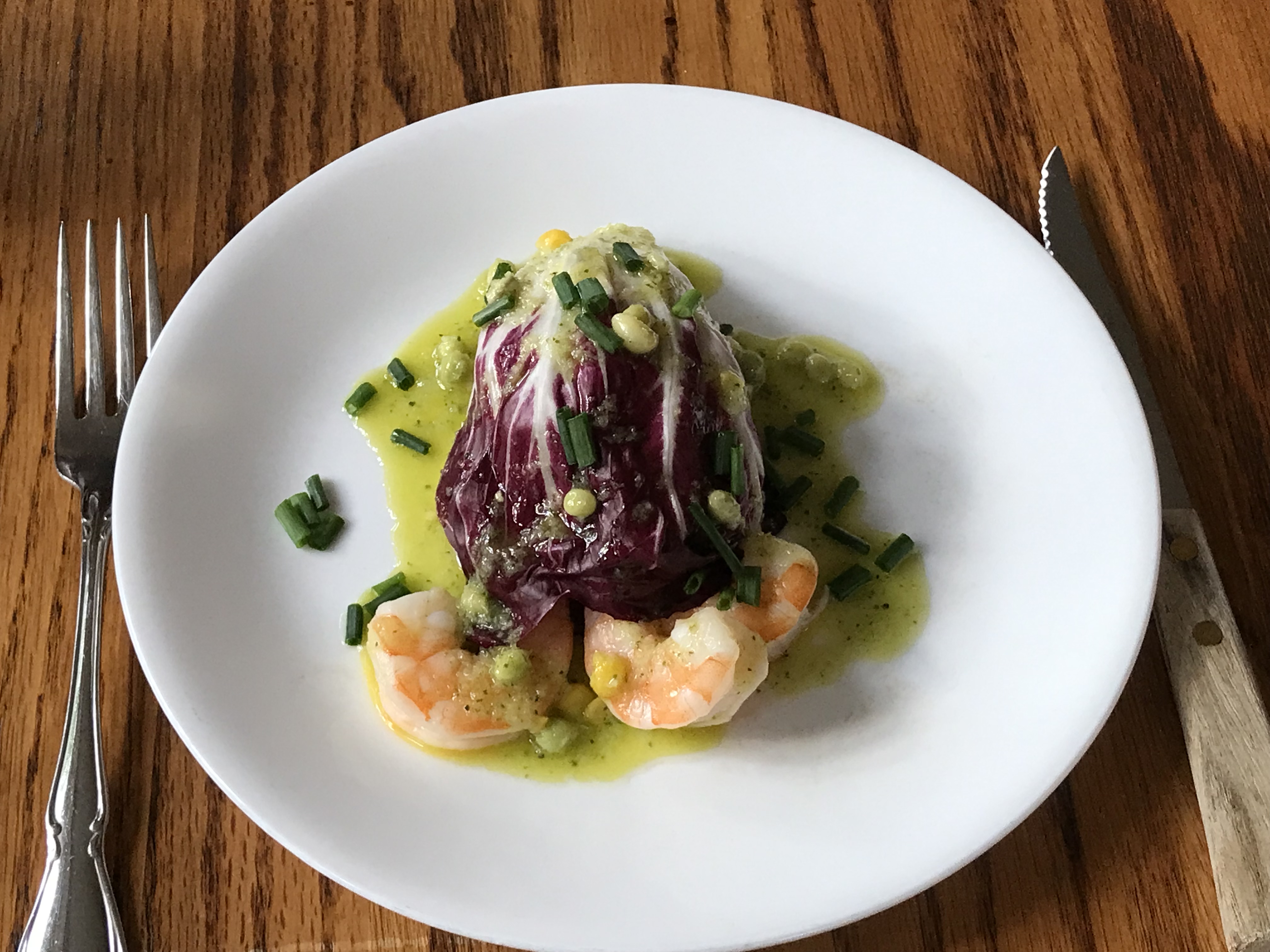
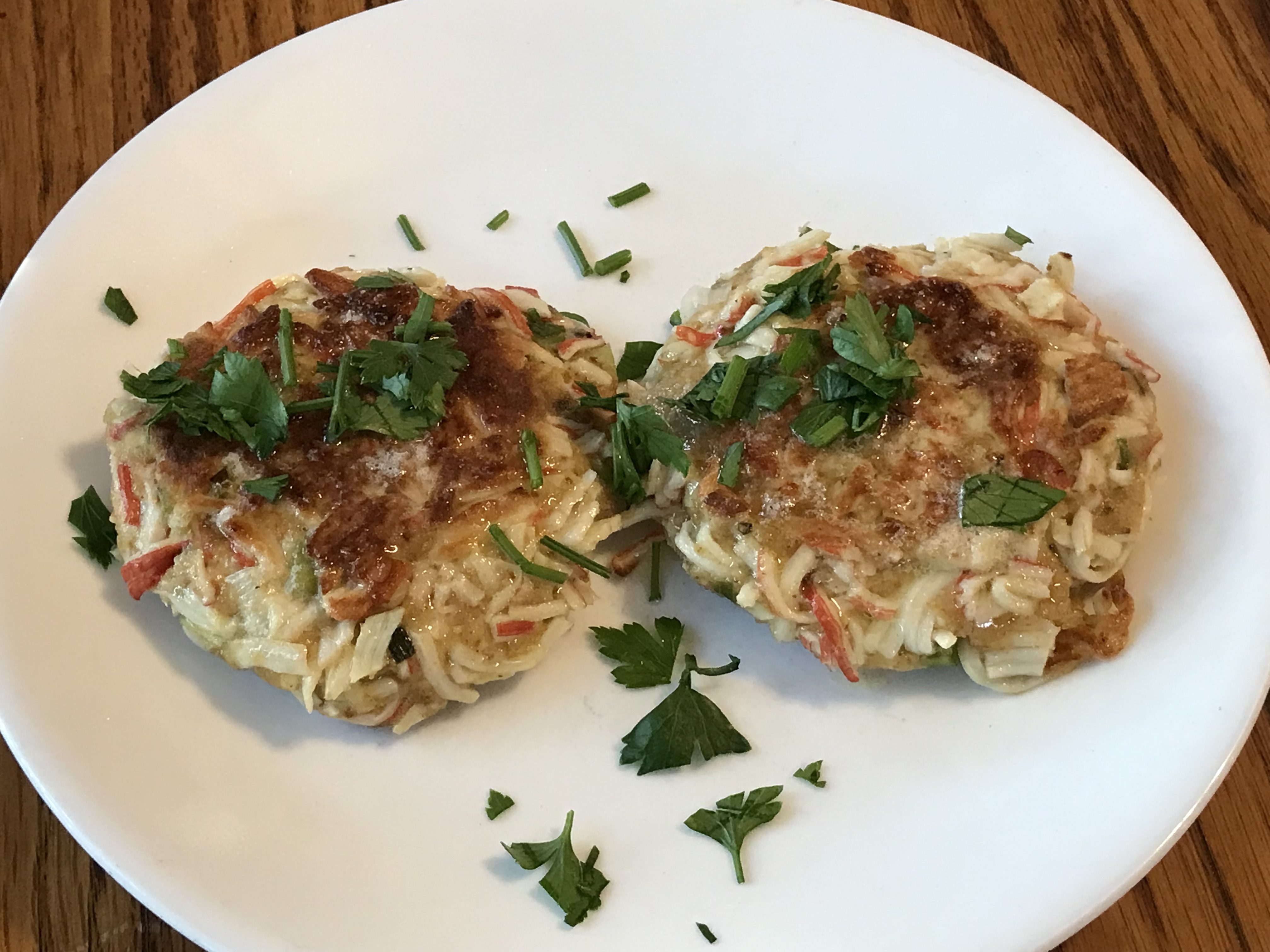
Soft-shell crabs are hard to come by when you live several states away from the nearest ocean. The two options are 1) have them delivered (which is impractical unless buying a large quantity of items) or 2) drive three hours to one of the fish markets in Chicago (possibly at night to accommodate their early hours). As neither option was feasible, I decided to make crab cakes instead. Specifically, imitation crab cakes, because frozen crab was too expensive and I didn’t trust the canned variety. So I combined chopped imitation crab, bread crumbs, and eggs, shaped them into cakes about the width of a palm (roughly the size of actual soft-shell crabs), and made those the main course. They were delicious.
The asparagus was closer to the recipe in the book. I cooked and marinated it as directed and plated it on radicchio. The difference was in the topping. The recipe calls for working chopped hard-boiled egg into the sauce. Since I don’t like hard-boiled eggs, I used another common method mentioned in the recipe: topping the asparagus with butter, fried eggs, and parmesan cheese. This all worked very well together and isn’t as weird for a bachelor party as it might seem.
Asparagus has been viewed as an aphrodisiac since the days of Ancient Rome. After falling out of favor for several centuries, it became popular again in the Renaissance. There was even a way to tell if someone was eating it in secret: by the distinctive odor it left in their chamber pot. People have noticed for centuries that asparagus made their urine smell funny. Both Benjamin Franklin and Marcel Proust mention it at least once in their writings, and one 18th Century club insisted that gentlemen not urinate in the coat rack during asparagus season. Why that was too much to ask for during the rest of the year is unclear, but it was a different time.


Moving on from aphrodisiacs and asparagus pee, we have dessert. These cookies are made crunchy and slightly gritty with semolina flour, flavored with rum and raisins, and served with parmesan-like grana cheese and honey. I’m not usually a raisin fan, but they were a good match with the light sweetness of the cookie and texture from the semolina. There is actually a Medieval connection here. At the end of a feast, it was common to serve wafers and cookie-like sweets, along with aged cheese, dried fruit, and spiced wine sweetened with honey. While the idea that this helped close the stomach and aid digestion was incorrect, the cookies, cheese, and honey worked surprisingly well together for a treat that stands the test of time.
 Feasting Through Time
Great post! Interesting substitutions in the recipes.