

Sources: 1000 Foods (pgs. 138 – 139), tartetatin.org
Cider isn’t the only use for apples. Aside from eating them fresh, people have been baking them into pies and tarts for centuries. Early examples used an inedible crust to cook and preserve the filling, which often only had a little sugar. Over time, edible “short crust” pastry, made with butter and/or lard, became common, the amount of sugar increased, and a huge number of varieties were developed. Some omit the top crust for an open tart, or contain a sugary crumble topping. One particular French variant, Tarte Tatin, is baked upside down to keep the crust from getting soggy.
The origin story goes something like this. In the 19th Century, the two Tatin sisters ran an inn. During one busy hunting season, an apple tart got dropped and landed upside-down. Rather than discard it, the cook served it upside-down and called it a new house specialty. No matter what the truth is, the French take Tarte Tatin seriously. There is even a website dedicated to it. According to the website, the tarte should be served by itself, without whipped cream or ice cream. What I found more interesting is that in the website’s recipe, there is no spice. While it is listed as an optional addition, my understanding is that the earliest recipes just included apples, crust, and the caramel formed in the pan.
The first step is to make the pastry. If you’re going to be making bread or pastry with any regularity, you will want a stand mixer. While I’m not usually in the business of advertising products, my KitchenAid mixer has been so helpful I wanted to mention it. They’re a bit of an investment, but their quality and durability make them worth it. The pastry is surprisingly easy to make. Cold butter is combined with the flour until the mixture is crumbly, then just enough ice water is mixed in for the dough to stick together. The dough is then kneaded a few times before being allowed to rest. One thing to be careful about, especially if you’re using a stand mixer, is not to overmix, which can make the pastry tough.
A caramel is produced by layering sugar and apples in a buttered oven-safe skillet, ideally cast iron. What’s great about this particular recipe is that you don’t have to peel the apples. Not only does this save time, but the pectin in the skin improves the texture of the caramel. The only issue was that the cast iron skillet I used is wider than the burner, resulting in the caramel forming and browning faster in the middle than around the edges. Lightly shaking the pan a few times helped, but the outside edge was not quite as caramelized as I would have liked. Since the apples seemed to be mostly cooked and I didn’t want to risk burning the middle by keeping it on the stove, I added the crust and put the skillet in the oven.
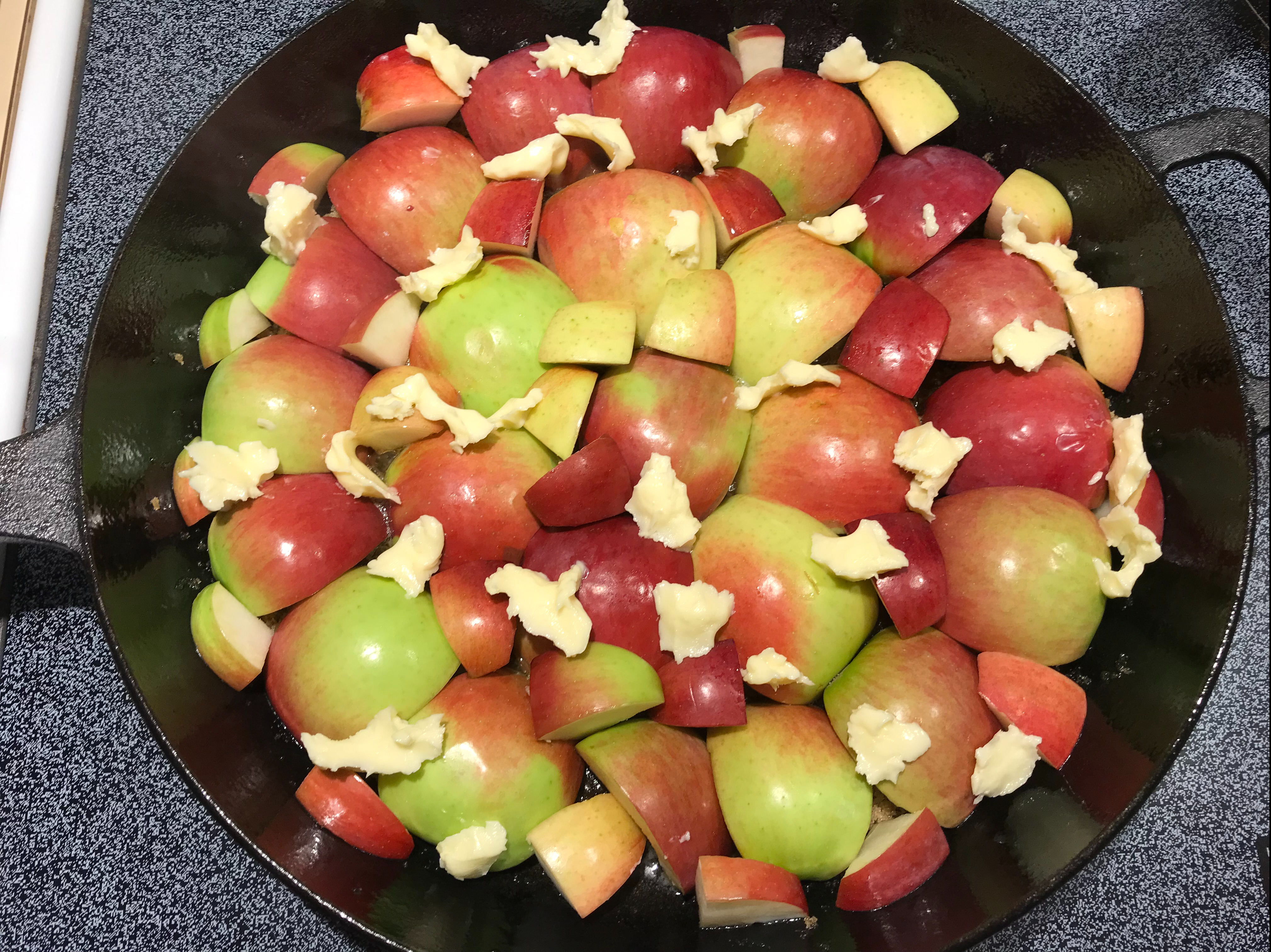
The reason for cooking the apples first is to release some of their moisture, which could make the crust soggy and inhibit browning. As for the type of apples, the website suggests either some particular varieties most common in France or golden delicious. Ms. Sheraton has two suggestions. For the prettiest appearance, golden delicious are still the best choice. For extra flavor, Cortlands are one of the best varieties. Since I care more about flavor, I used Cortlands. They’re easy to find in the fall, both sweet and tart, juicy but firm enough to hold up in the oven without disintegrating, and all around an excellent baking apple.
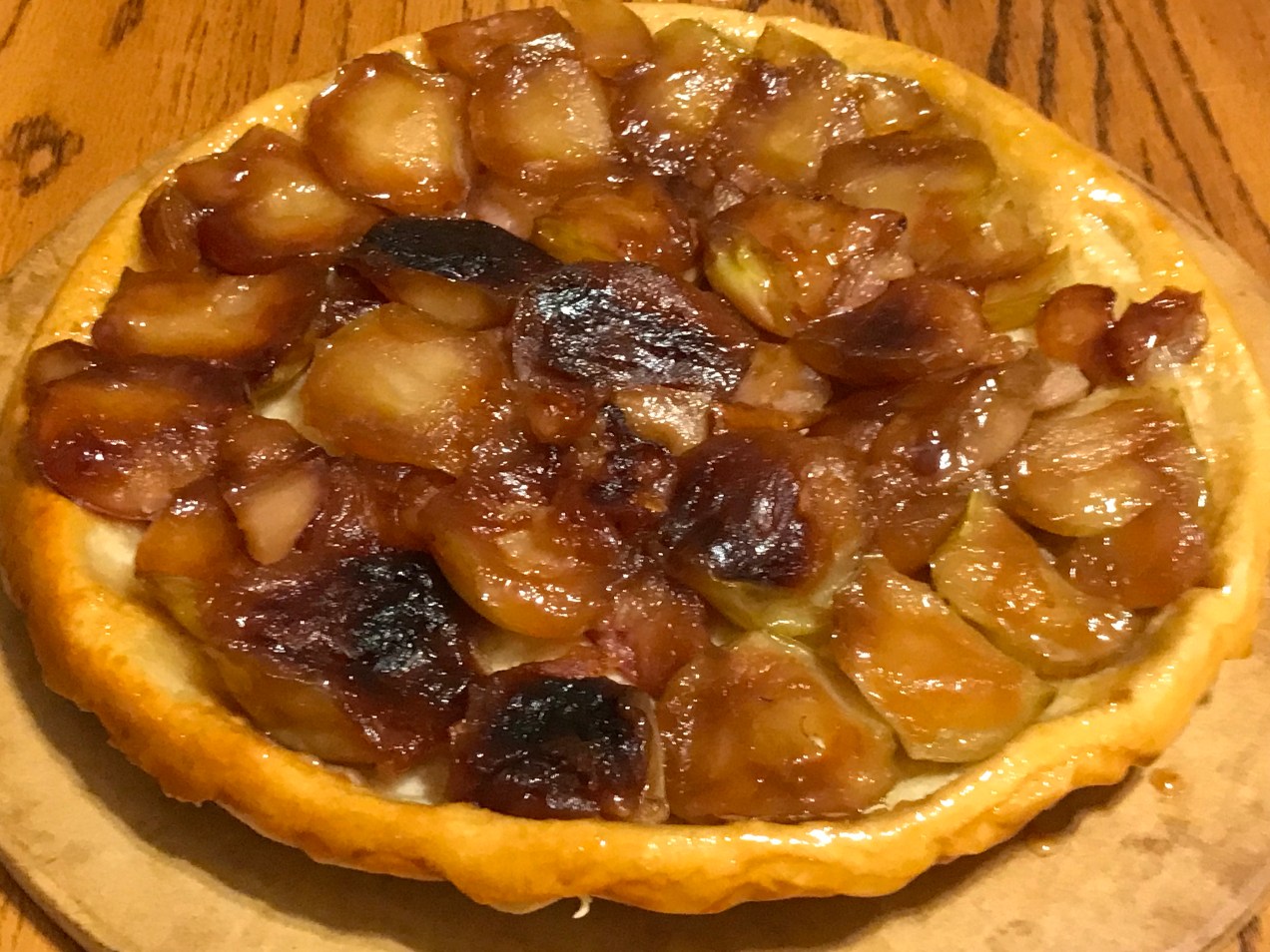
If you decide to make Tarte Tatin, be very careful taking the skillet out of the oven, and make sure your oven mitts or pot holders are dry and hole-free. Wet cloth conducts heat a lot better than dry cloth, which is what you’re trying to avoid. And as it turned out, one of my pot holders had a hole. It was hard to see without looking for it, but the intense pain made me aware of it within a split second. Fortunately, the natural human reflex is to let go before the brain can even make a conscious decision. The pain eventually went away after running my hand under cold water, and I only ended up with a small blister. Inverting the skillet onto a pizza stone did not result in any further burns.
The Tarte Tatin was delicious. With a thicker pastry and higher crust to apple ratio than most pies have, it was definitely different, but the caramel really made it. A bit of cinnamon might have enhanced the tarte, but the flavor was surprisingly complete without it. Apples, caramel, and buttery pastry worked together to make a dessert worthy of its status as a classic. And it was actually easier to make than a typical apple pie. By the time it comes out of the oven, the peels have broken down enough to be barely noticeable, saving a step. And baking with the crust on top avoids, in the words of the Great British Baking Show, a soggy bottom.
 Feasting Through Time
My kind of recipe — easy and delicious!
I appreciate the tips and information about your cookery. The dessert looks yummy for sure!