

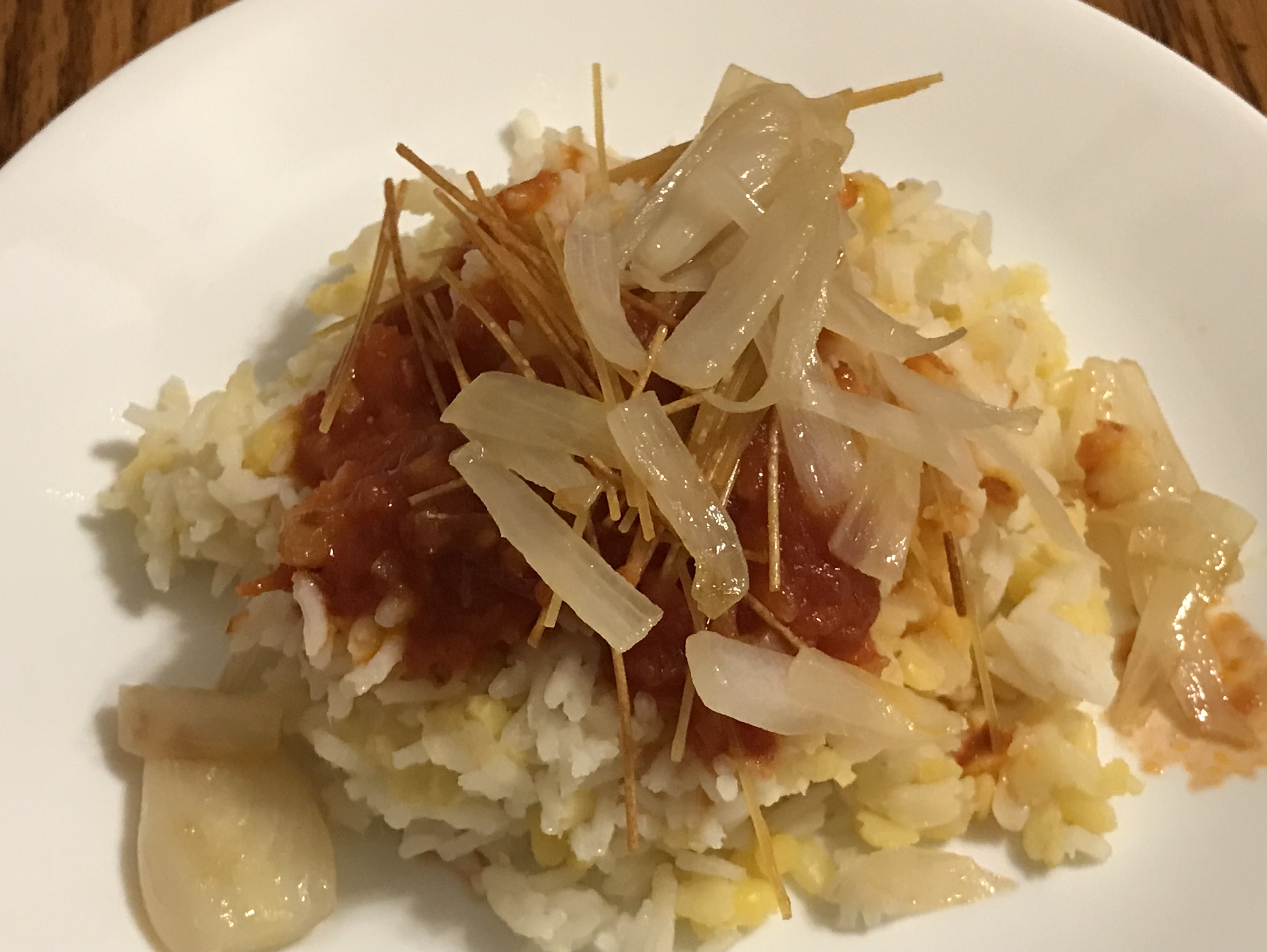
1000 Foods (pg. 711) for information, recipe is my own creation
Kosheri or Kushari has nothing to do with kosher rules, but the Israelites may well have eaten an early variant in Egypt. Their Egyptian neighbors may have been eating it over a thousand years earlier, in the 3rd Millennium BC. Records indicate that wheat, barley, lentils, garlic, and onions were cooked together in clay pots for a combination of starch and protein. Ancient Egyptians may have added flavorings like butter, fat, or vinegar to make things more interesting, depending on what they could afford. At a time and place when most people ate little meat, the lentils were an essential source of protein.
Even today, the starch/lentil combination is common in Egypt, particularly among those with less disposable income. Kosheri is a popular street food, often eaten for lunch. Rice, introduced at some point in the early centuries AD, is now the grain, pasta is added, sometimes browned in butter, and spicy tomato sauce is an essential flavoring. Interestingly, even though hot peppers didn’t really catch on in most of Europe when they were introduced from the Americas, Africans and Asians adopted them quickly and in much greater quantities. And presumably, early modern Egyptians found that tomatoes thrived in the sun and rich soil by the Nile.
To make kosheri, there are four elements needed: the rice/lentil mixture, tomato sauce flavored with garlic, vinegar, and hot pepper, onions browned in butter, and broken vermicelli (angel hair pasta), also browned in butter. Mimi Sheraton suggested that mastic was an essential flavoring so I tried it, but personally I think the kosheri is better without. It’s a balanced and flavorful vegetarian dish, and if the butter is replaced with oil, could even be made vegan.
Here’s the recipe I developed. You need:
- 2 cups long-grain rice
- 1 cup lentils (I used the yellow variety, but other kinds would work)
- Pinch mastic (optional, has a bit of a piney flavor)
- Pinch salt
- 1 tablespoon canola or vegetable oil
- 6 cloves garlic, crushed and minced
- ¼ cup vinegar (any kind but balsamic, which is too sweet)
- 1 can crushed tomatoes, about 16 ounces
- 1 yellow onion, peeled and thinly sliced
- 4 tablespoons butter
- 4 ounces vermicelli, broken into roughly 1-inch pieces
To make it:
- For the sauce, heat the oil in a saucepan. When hot, add the garlic and cook until it starts to brown. Then add the vinegar and scrape the bottom of the pan.
- Stir in the crushed tomatoes, and leave sauce to simmer, stirring occasionally, while you prepare the rest of the ingredients.
- If using the mastic, grind it with a pinch of salt to reduce sticking.
- Bring 4 cups water to a boil, then add the lentils, salt, and optional mastic, partially cover the pot, and cook for 15 minutes.
- Add the rice and another cup of water, fully cover the pot, and cook another 15 minutes.
- Melt 2 tablespoons of the butter in a skillet over medium heat. Add the vermicelli and cook, stirring frequently, until the pasta browns. Empty the pasta onto a plate, but don’t wipe out the pan.
- Add the rest of the butter. When it’s melted, add the onions and cook, stirring frequently, until browned and reduced in volume.
- To serve the kosheri, add a portion of the rice/lentil mixture to each plate. Top with tomato sauce, sauteed onions, and browned vermicelli to taste.
For more recipes, be sure to subscribe. It’s free, and you’ll get a notification whenever there’s a new post.
 Feasting Through Time
Loved this post – –
Stay Blessed – Mel
Keto Recipes – https://ketodietrecipes.co.uk/
Great Read Can i leave my thoughts ?! –
Looking To Tone Up? Lose Extra lb’s Just By Changing What You Eat?
Download Over 50 Keto Recipes , Unleash The Flavours – http://ketodietrecipes.co.uk/
Free Ketodietrecipes & Guides: what are your thoughts?