
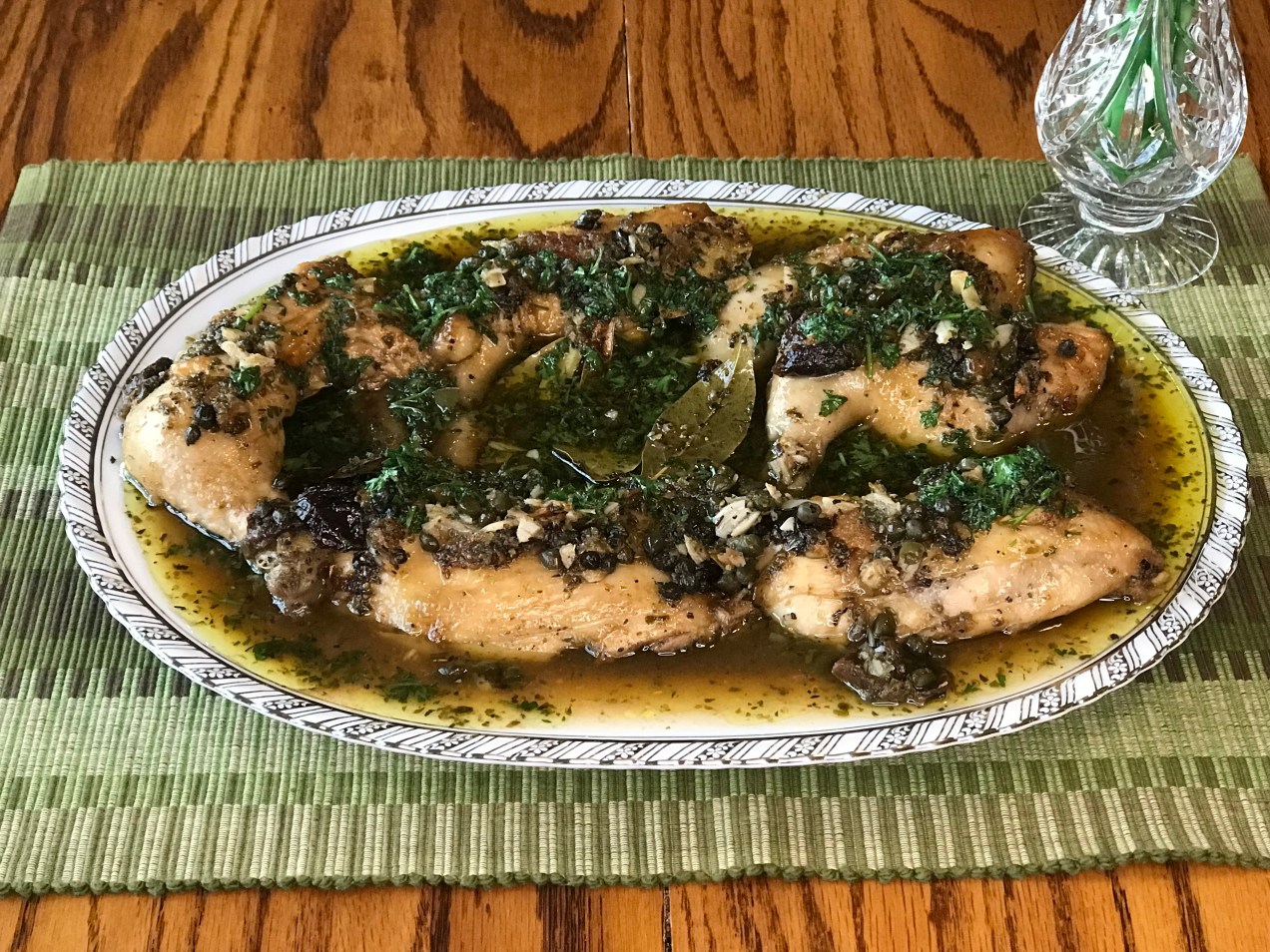
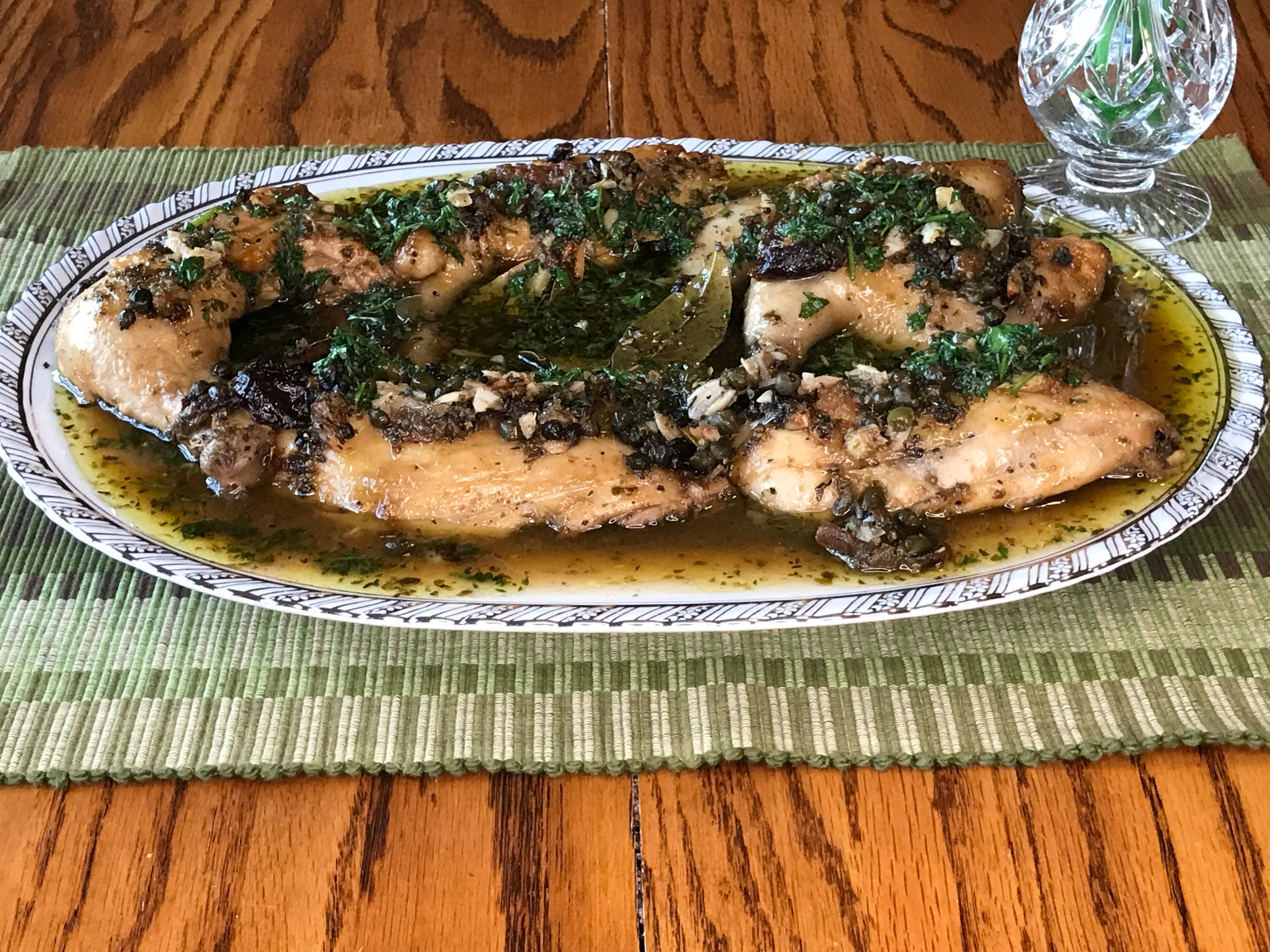
I’ll admit, I was a little skeptical when I first read about chicken Marbella. Prunes, olives, capers, vinegar, and brown sugar seemed like an odd combination with chicken. The dish was originally developed by the Silver Palette catering company in New York in the late 1970s/early 1980s. It’s very much in the 80s style, vaguely Italian or Mediterranean, and sophisticated for the time. Since the ingredients are fairly inexpensive, I decided to give it a try. Omit the olives (which aren’t generally my favorite) and it’s essentially sweet-and-sour chicken.
There’s actually a long history of serving meat with sweet, sour, and fruity sauces, that goes beyond turkey with cranberry sauce or duck with orange sauce. Ancient Romans loved complex sauces with any combination of honey, vinegar, wine, fruit, herbs, spices, and the fermented fish sauce garum. Medieval cooks ditched the garum but added sugar, verjuice (pressed from unripe grapes), and citrus juices. If their sauces contained broth or meat juices, they would be combined with these other, strongly-flavored ingredients. Add a few spices and possibly some breadcrumbs to thicken, and the sauce for chicken Marbella sounds positively medieval. And it bears more than a passing resemblance to the agrodolce sauce still popular in Sicily today.
The recipe on pages 542 – 543 of 1000 Foods to Eat Before You Die by Mimi Sheraton, originally from the Silver Palette Cookbook, was delicious and smelled amazing. The only changes I made were to skip the olives and use chicken leg quarters instead of quartered whole chickens, but I would tweak it a little further. Between the amount of marinade and the amount of liquid released by the chicken while cooking, the serving platter was swimming in sauce. The flavor was great, and the sugar gave the chicken a nice crunchy “crust,” but the mix was extremely sweet. That was despite the dramatic reduction in the quantity of prunes, for the simple reason that the bag, which I had bought for and used in another recipe, wasn’t as full as I thought.
For a second attempt, I made a few changes. Because I only used about half the amount of chicken, I cut the other quantities in half, producing a pool of sauce instead of a lake. Reducing the amount of sugar from one half to one third cup created a better balance with the vinegar, capers, garlic, and oregano. And pretty much any dried fruit will work. I used a mix of dried apricots, golden raisins, and Zante currants (because that was what I had on hand), to successful results. Turns out the 80s culinary experimenters had some good ideas. I still don’t understand the pasta salads with bottled dressing, though. Or nouvelle cuisine.

