
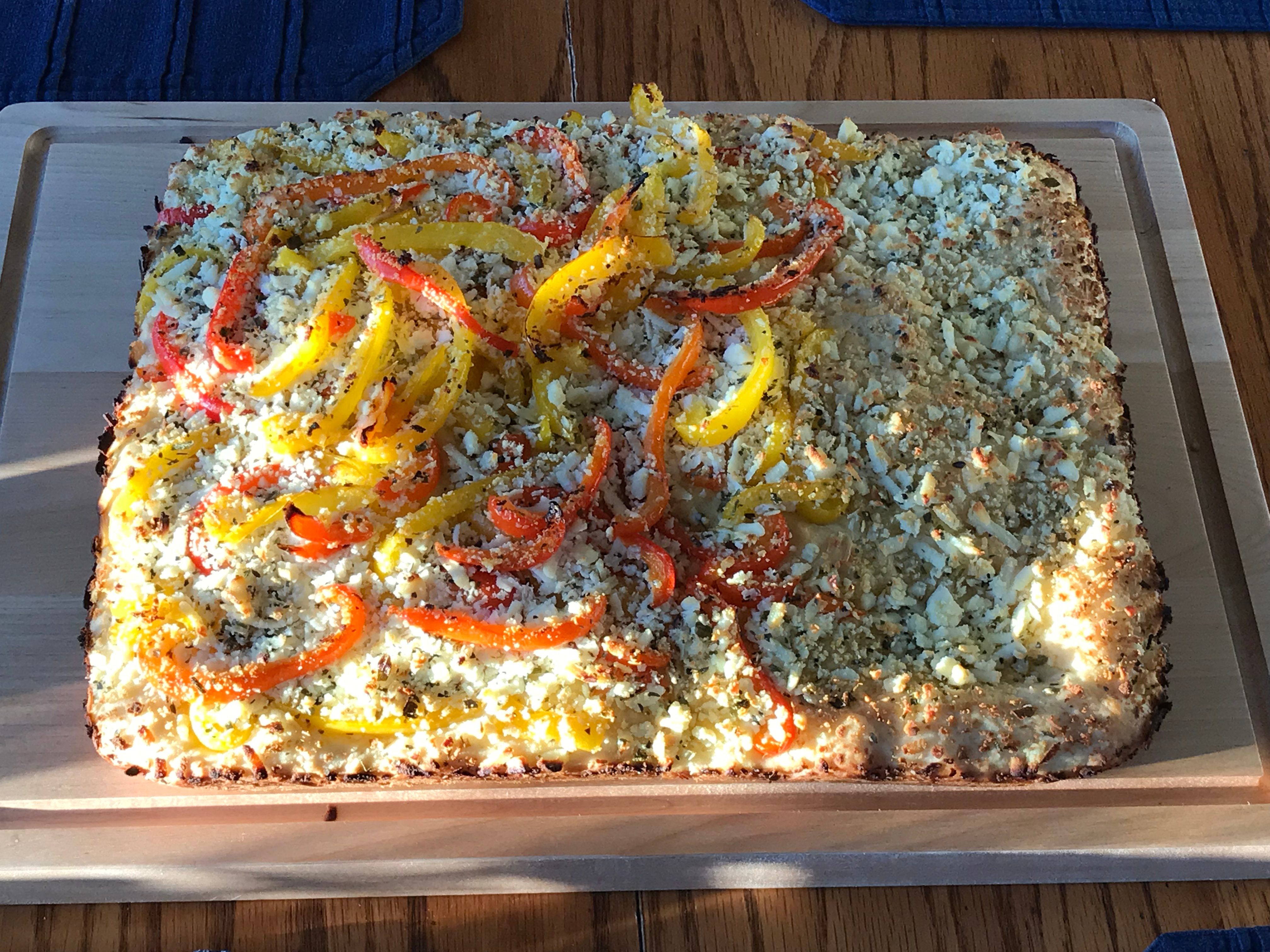
A few months ago, I came across some ricotta salata while browsing at Woodman’s. Remembering that lack of it led me to improvise on sweet pepper pizza a few years ago, I decided to remake the recipe and give it a try. Plus, I had some unbleached flour and quick-rising yeast I wanted to use up before they went bad. At the time, I’d been trying to clear out the pantry, find a use for the ingredients pushed to the back, and therefore avoid food waste.
Recently I started watching Hoarders, which is enough to make anyone want to clean, even if they don’t have a problem. Many of the jam-packed kitchens came about because their owners liked to stock up when preferred items went on sale. There’s nothing wrong with that, as long as you don’t buy more than you can use before it goes bad. Having some extra cereal, pasta, crackers, and canned goods in the basement is handy. Just don’t overdo it.
Some items, like the cornmeal that I bought at the start of Covid, expired two or three years ago and weren’t salvageable. The yeast and unbleached flour were still good, but expiring soon, so it was as good a time as any to make pizza. I made the garlic oil that all the recipes use, stuck it in a jar in the fridge, and decided to start with a white pizza using the leftover provolone and some of the pecorino from the eggplant timbale (and leftover parmesan from some gnocchi, and some mozzarella already in the fridge).
When I went to put the dough in the intended pan, a large round sheet pan with a short “lip,” it wasn’t there. Turns out, it had started flaking and reached the end of its natural life. Looking at my other options, I settled on a roasting pan with slightly higher sides. If I spread the dough all the way to the edge, the surface area would be similar, just in rectangular form. Nothing wrong with that.
This turned out to be the best culinary misadventure in a while. Because this dough recipe produces a thick crust, I had never spread it to the edge of the pan before, in case the garlic oil in the topping dripped off onto the bottom of the oven. Being able to do so made a huge difference. The crust rose evenly instead of bulging in the middle, and the edges got extra golden and crispy. Everything was delicious, but the edges were phenomenal. And the pizza fit perfectly on the new, giant wooden cutting board.
After this success, I decided to make any future pizzas in this pan. The sweet pepper and ricotta salata pizza was up next, for the simple reason that peppers were on sale at the store. This was good, but a little dry, even with the garlic oil. For pizza, meltier cheeses with a bit more fat seem to be the way to go.
 Feasting Through Time