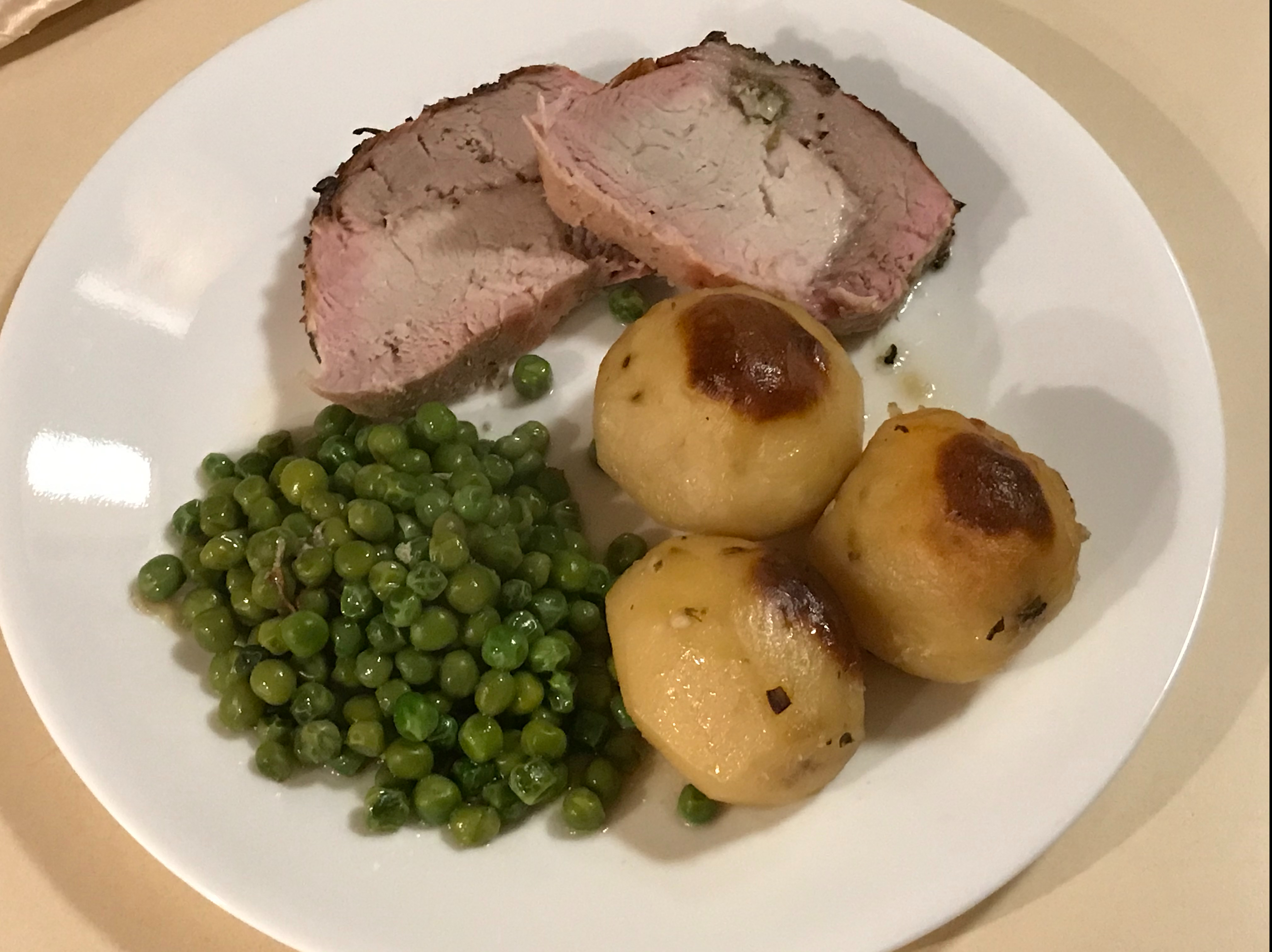
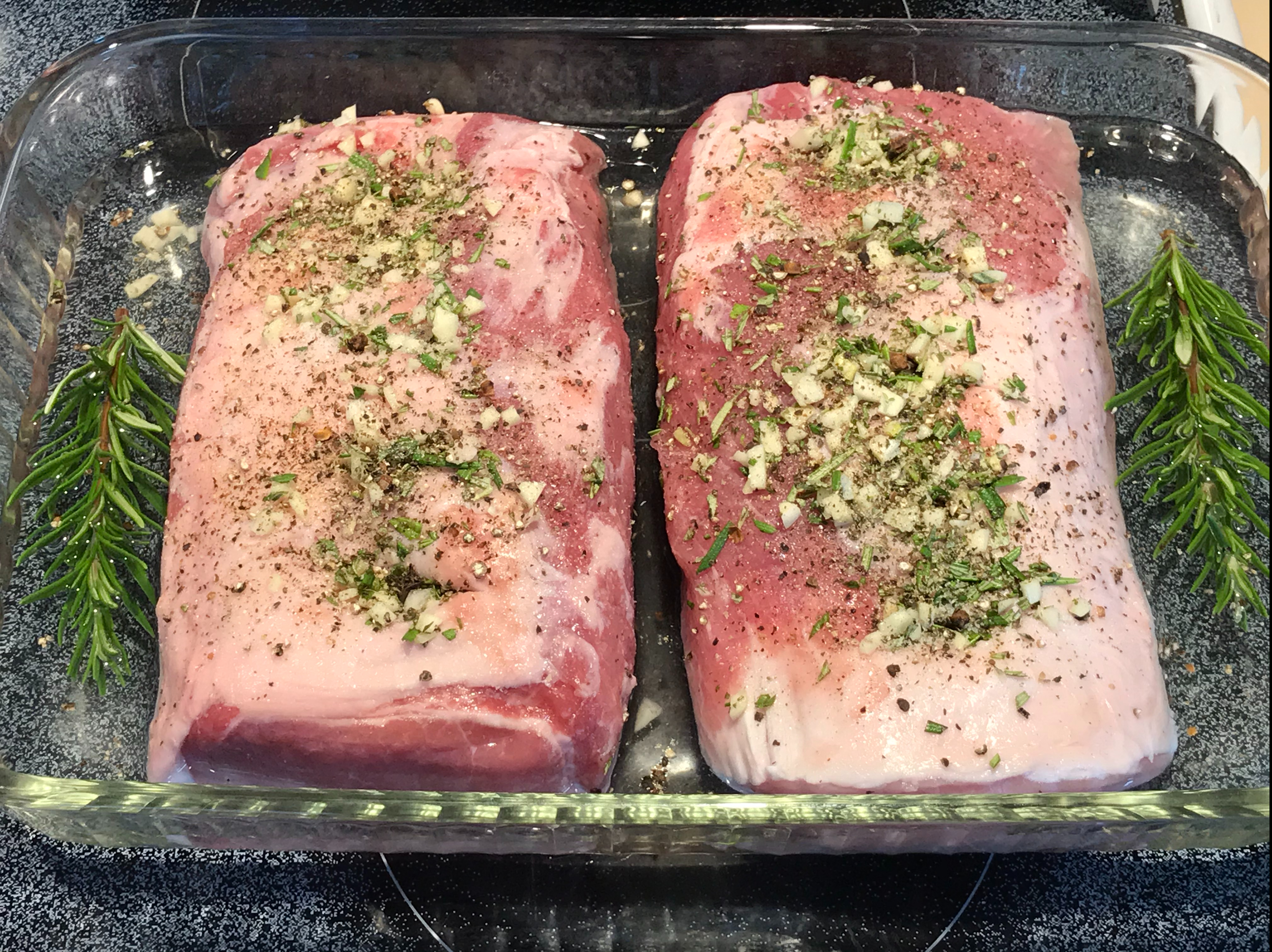
Here is a Tuscan recipe that highlights the diversity of Italian cuisine. Featuring pork, potatoes, and peas, roasted and basted in a water bath, it wouldn’t look out of place at a US Midwestern supper club. Cuts are made in the pork, which are then stuffed with a mix of chopped garlic and herbs and stuck with cloves. Water is added to the pan, not enough to cover, but enough to keep the meat from drying out during a long cooking in a hot oven. Since the water will never get hotter than 212 degrees Fahrenheit and absorbs a lot of heat, the pork cooks slowly and stays wonderfully tender while the exposed top exterior crisps up. Just make sure to put whatever side of the meat has more fat on top. Not only will the melting fat keep the meat from drying out, it forms a delightfully crispy, crackly layer.
Beautiful before and after cooking
Gradually the water absorbs juices from the meat, the melting fat, and the flavors of garlic, rosemary, and cloves, becoming more concentrated and flavorful as evaporation continues. Peeled new potatoes are added to soak up all the flavors, eventually followed by peas. Normally I do not bother peeling new or red potatoes, but it does help them absorb the flavor of the broth. When everything was finished the potatoes had a browned, crispy layer like the meat and the aroma saturated the kitchen. Unsurprisingly, it was a perfect cold-weather dinner.
Menu: Fontina Fondue with Steamed Vegetables, Beef Braised with Red Wine and Spices, Cabbage with Lemon, Chestnut Puree with Whipped Cream and Candied Orange Strips
Recommended Wine: Barolo or other bold Piedmontese red
Here is another pasta-free Northern menu. Home to the Kingdom of Savoy, which united Italy for the first time in over a millennium, the Piedmont region boasts a sophisticated cuisine. Perhaps its most famous product is the white truffle, among the most prized and expensive in the world. Or the red wines of the Nebbiolo grape, held by connoisseurs to be among the finest in Italy. There are hazelnut confections, candied chestnuts known as marrons glaces, cow’s milk cheeses, beef, veal, polenta, potatoes, mushrooms, and cabbage. Panna cotta originated here, where dairy is plentiful. All of the dishes in this menu contain Piedmontese specialties; fontina, beef braised in red wine, savoy cabbage, and chestnuts.
Among the cow’s milk cheeses is fontina. Semi-soft and creamy, it melts easily, lending itself to a variety of dishes. One of these is fondue, enriched with egg yolks and seasoned with white pepper and nutmeg. The reason for using white pepper is to avoid the dark flecks black pepper would cause, as well as its slightly different flavor. It can be a bit difficult to find except in its pre-ground form, but it’s worth seeking out or ordering whole white peppercorns. Pepper seems to lose its flavor faster than most other ground spices. Since you can’t be sure how long that container of pepper has been sitting on the shelf, it is always better to buy whole peppercorns and grind them as you need them. Pepper grinders are easy to find and inexpensive, but if you only use white pepper occasionally it might be better to use a mortar and pestle or spice grinder and save your pepper grinder for black pepper. If you can’t find whole white peppercorns, I would use freshly ground black pepper instead of pre-ground white pepper. The flavor difference between the two types of peppercorns is slight and whole black peppercorns are available in most spice aisles.
The beef dish, braised with wine and sweet spices along with the vegetables, has a somewhat Medieval character. Once the meat is cooked, it is removed while the other ingredients are pureed. If you have an immersion blender, this is the perfect time to use it. The pureed vegetables thicken the sauce, which is then served with the sliced beef. I had a slight incident with this dish, but the issue was human error, not the recipe. While we were eating the fondue, I left the meat in the pot to stay warm but turned off the burner. Upon starting the cabbage, I took the meat out, put it on a cutting board, and turned the burner back on to make sure the sauce was nice and hot. Unfortunately, I turned on the wrong burner. Instead of the one under the sauce, I turned on the one under the cutting board. As I was busy with the cabbage, I didn’t notice the mistake until the plastic cutting board started to warp and melt. Thankfully the melting was only on the bottom and the meat was unharmed, but I was pretty shaken up by the incident. Needless to say, the cutting board was thrown out.
Cabbage and chestnuts are favorites in Piedmontese cuisine. The cabbage is served with a straightforward lemon butter sauce. Dessert, however, is quite unusual. Cooked chestnuts are warmed in a mix of milk, sugar, and cocoa, then mashed and put through a food mill onto the plates. I don’t happen to have a food mill, so I used a small ice cream scoop to put scoops of puree on the plates. These could then be topped with whipped cream and candied orange peel as directed.
Chestnuts have an interesting history in the hilly and mountainous areas of Northern and Central Italy, as well as in neighboring Southeastern France and Corsica. In many of these regions, wheat did not grow especially well but chestnut trees did, making the abundant nuts the “bread” of the poor. Despite being viewed as an inferior substitute, they were a reasonably nutritious staple. Plus, as they were less valuable commercially than grain, chestnuts were less likely to be taxed in kind by the landowners. That’s not to say the rich had no interest in them, but they consumed them in a different manner. Candied marrons glaces became a popular confection in the Early Modern Era. As sugar prices continued to drop, a variety of cakes and tortes appeared. Over time, increased general wealth has made these things affordable to the larger population.
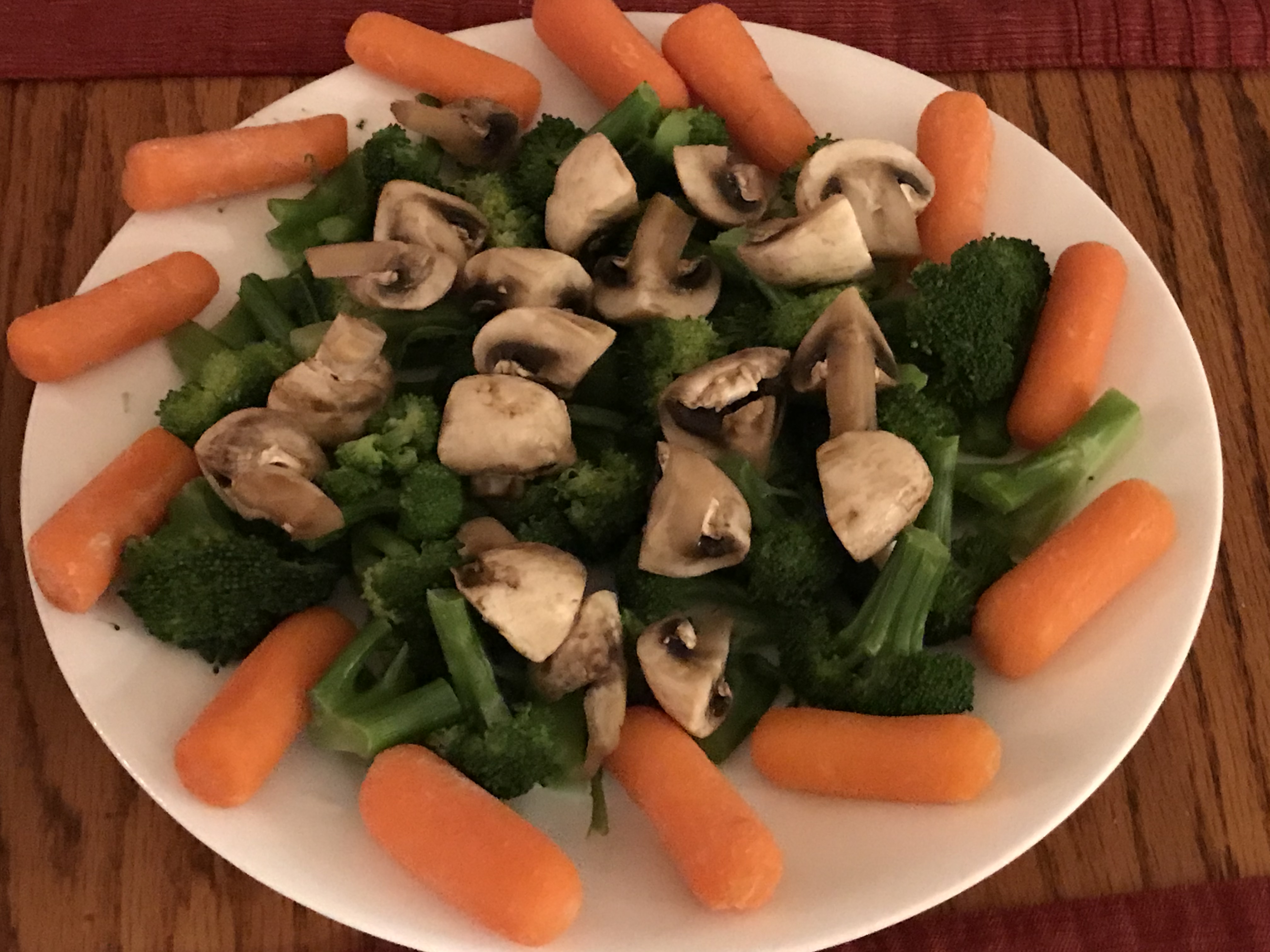
The fondue was the best part of the menu. I was a little worried about adding the beaten egg yolks directly into the cheese mixture, but due to the double boiler it was not quite hot enough to curdle them. For dipping were steamed carrots, broccoli, and mushrooms, along with my own addition of pieces of toasted Italian bread. There was supposed to be cauliflower as well, but I realized as I was getting everything together that I had forgotten to buy it. I’m sure it would have been excellent with the fondue, but so were the other vegetables and toast. The fondue was creamy, slightly salty, a little gritty from the pepper and nutmeg, and generally fabulous. While it is most commonly used as a baking spice, nutmeg adds a nice bit of extra flavor to cream and cheese sauces. The leftovers were especially good on toast, placed under the broiler to brown.
Fondue and vegetables
After the cutting board mishap, the beef was also delicious. The low, slow cooking had made it extremely tender, and there was enough leftover sauce to use with a pork tenderloin a few days later, once all the beef had been eaten. The cabbage, I must admit, was not my favorite. It was sauced with a mix of butter, fresh lemon juice, salt, pepper, and nutmeg, but the proportions were not to my taste. Though freshly squeezed lemon juice has many good uses (like lemonade, salad dressing, on seafood, etc.), it needs to be tempered with something to shine. Here there was not enough butter to do so. But again, that is a matter of personal taste.
Beef, cabbage, and dessert
I felt similarly about the dessert. It was good, but I’m not sure I’d make it again. The texture was nice, but between the heavily sweetened chestnut puree, sweet whipped cream, and candied orange peel, the sweetness was a bit overwhelming. Maybe some unsweetened whipped cream would balance it out, but with all the other excellent desserts in the book (ex. cherry jam tart, panna cotta, praline mousse cake, biscotti, almond cookies, chocolate roll, apple charlotte, baked stuffed peaches, etc.) I’m not sure I’d bother. The star here was the fondue.
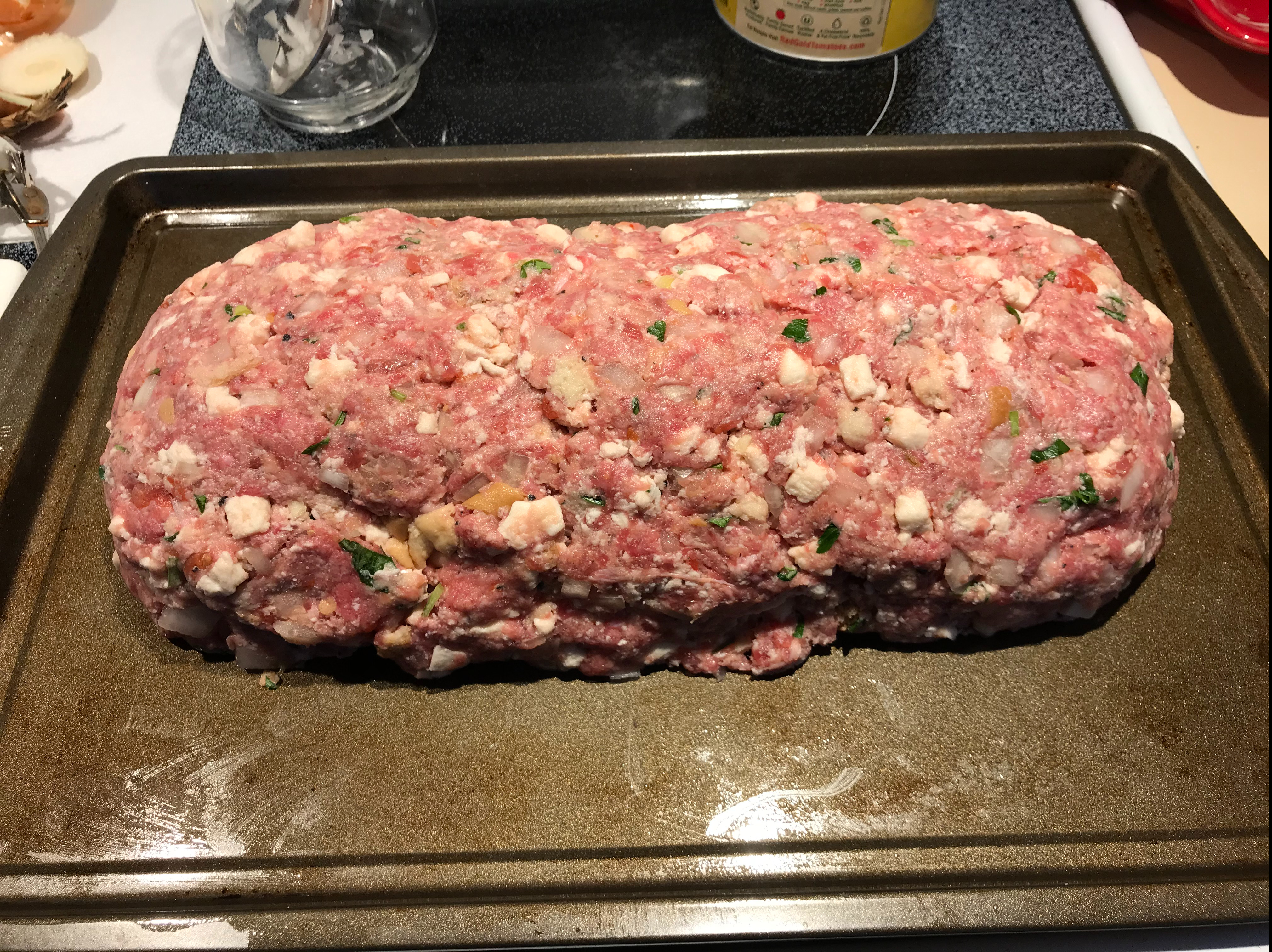
Returning again to the South, we have what is essentially a giant, elongated meatball. The name, polpettone, is even similar to the word for meatballs, polpette. A mix of ground beef, Italian sausage, bread, parsley, eggs, fresh mozzarella, and grated Romano cheese is formed into a loaf shape and baked. The result can apparently be served warm or cold, on a sandwich if desired, with an optional tomato sauce. Since it was a weekend afternoon and I wasn’t exactly busy, I opted to make the tomato sauce on page 175 to go with it. Any left over could be used for pasta.
Ready to bake
This was fantastic. I never considered the choice of warm or cold, since it was the middle of winter and the idea of cold meatloaf is odd to me. After pulling it out of the oven, I let it rest for a few minutes while the intoxicating aroma saturated the kitchen, then sliced and dished it up, still piping hot. It did fall apart a little bit (it’s usually easier and neater to slice cooled food), but the taste was the important part. The flavors melded together beautifully, fat in the sausage and moisture in the mozzarella kept it from drying out, and the sweet, acidic tomato sauce was the perfect contrast to the rich meatloaf. Ultimately there was just enough sauce for the leftovers the next day. I used up the leftover ground beef and sausage to make another a few days later and we devoured it that one too. This recipe is just that good.
Menu: Arugula Salad with Bacon and Hazelnuts, Roman-Style Gnocchi, Fig, Walnut, and Almond Tart
Recommended Wine: Montepulciano d’Abruzzo, Purplish-Ruby with Berry and Spice Aromas
We are now invited to imagine dinner with a friend of Mr. Famularo’s at her home in Rome’s Trastevere district, across the Tiber from the historical city center. Though space is limited inside her apartment, it has a balcony overlooking a courtyard garden. For most of the year, it is warm enough to eat and socialize there, where the air is perfumed with roses and jasmine. (Text, page 22) Imagine that the pandemic is finally over and you can socialize without worry.
The original menu is one of indulgence for a small group, featuring foie gras, a favorite since ancient times. There are two options for how to serve this, both on an arugula salad garnished with toasted hazelnuts. The recipe has the foie gras sauteed in butter, then served on top the salad. Another option in the recipe header, for those who aren’t able to obtain or don’t want to work with pieces of foie gras, is to use slices of foie gras terrine. I found the statement that the slices of terrine “of course are not to be sauteed” somewhat amusing. This would not have been obvious to me, though I’m not an award-winning cookbook author whose taken multiple trips abroad with a career spanning decades. Or maybe I’m just an unsophisticated barbarian. Supposedly, the pieces of foie gras are frequently sold in convenient 2-ounce serving size containers and the terrine is available in most supermarket delis.
Maybe that’s true in New York City, but I have never seen either of those things at any supermarket or deli. Granted, I have never actually looked for them, but before the pandemic I browsed a number of grocery stores and meat markets to see what sort of interesting things they had. I’ve seen beef liver, chicken livers, beef tongue, whole Christmas geese, and even pigs’ feet, but no foie gras anything. At any rate, with the price and method of production, I wouldn’t buy it anyway. Thus, I needed to find a substitute ingredient.
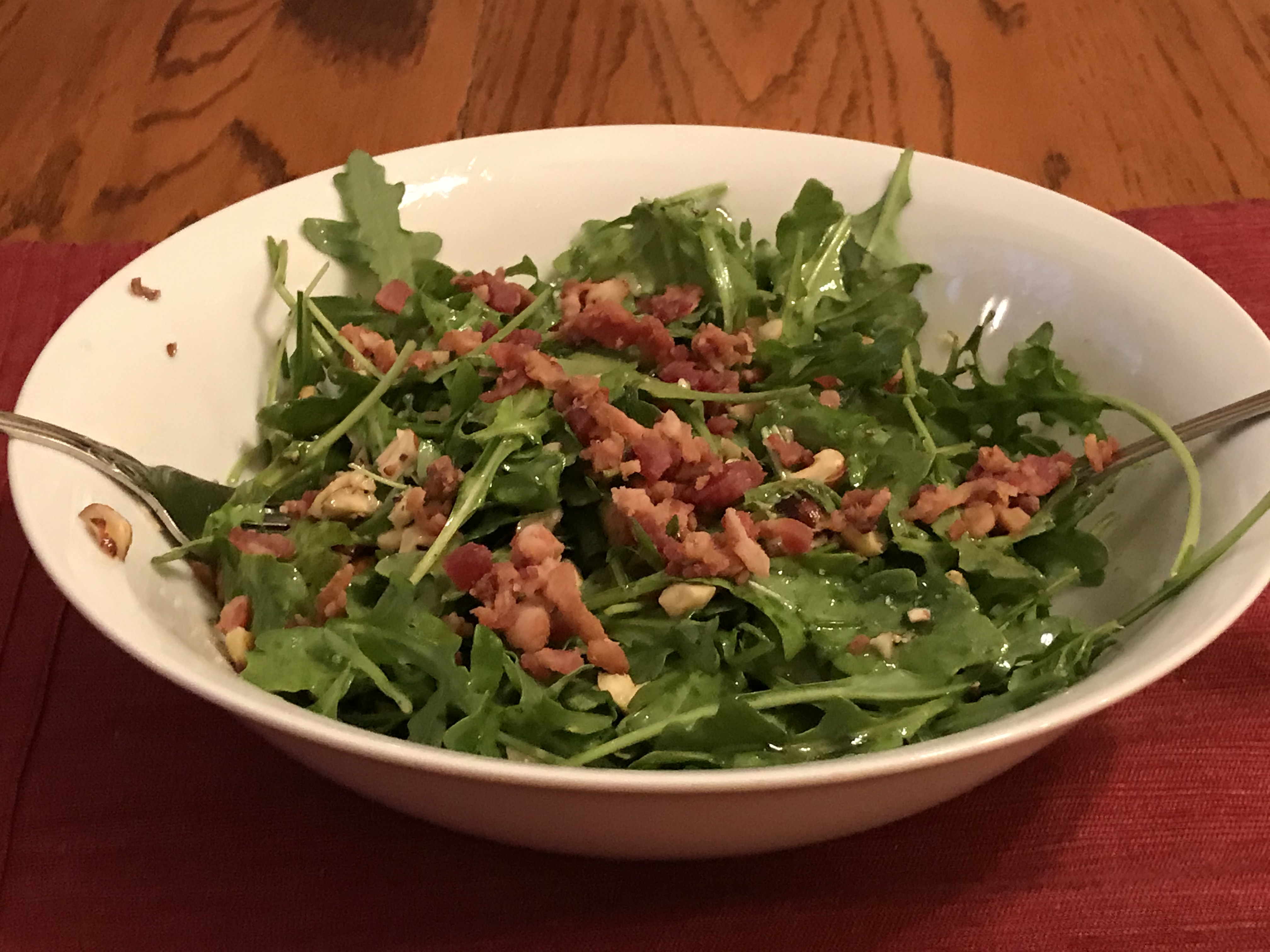
My first thought was to use chicken livers. Many large supermarkets have them, they aren’t expensive, and while not the same as fat-engorged duck or goose liver, they are still livers and still from poultry. If I could get over my squeamishness about eating liver, I could sauté them with extra butter to bring the fat level closer to that of actual foie gras. As it turns out, I’m not quite ready to go that far. As detailed in the previous post, I’ve eaten oxtail and loved it. I don’t think beef tongue would be an issue (it’s just another muscle). I’d even be willing to try pigs’ feet if they were cooked in a way to get the skin nice and crispy. Liver is still another story, though, especially knowing what the liver does. Besides, chicken livers look really unappetizing. In the end, I settled on bacon pieces. While not remotely the same thing as foie gras, it’s a good choice on almost any salad. All of the other salad ingredients were unchanged. Unsurprisingly, the blend of peppery arugula, salty bacon, and crunchy, toasty hazelnuts, accented with a vinaigrette, was delicious.
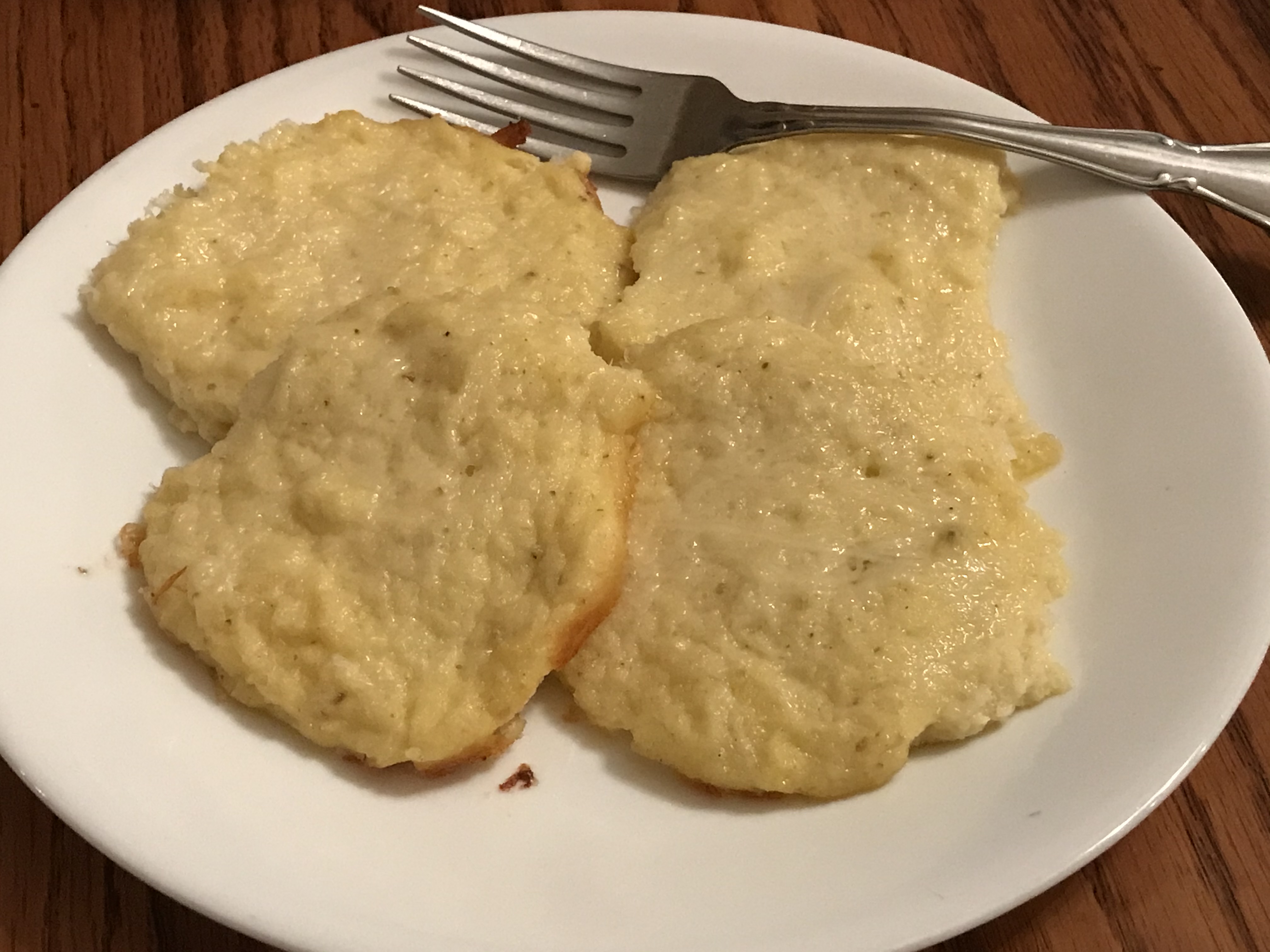
The next course was Roman-style gnocchi. Gnocchi are Italy’s version of the dumpling, the starchy filler to soak up the flavor of whatever it’s cooked with, found in various forms around the world. In most parts of Italy they are potato-based. What makes the Roman kind special is that they are made with semolina flour cooked in milk with nutmeg. Parmesan cheese and eggs are added to bind the mixture before it is cooled and cut into rounds. These are then topped with butter and more parmesan cheese and baked. I had some difficulty with these. The mixture didn’t firm up as much as I expected during cooling, which made cutting the circles out (with a glass) difficult. I ultimately resorted to forming them manually and layering them on the baking pan. My hands were a mess after this, but it worked pretty well. The end result was slightly crispy on the outside, soft and almost custardy on the inside, and delightfully rich.
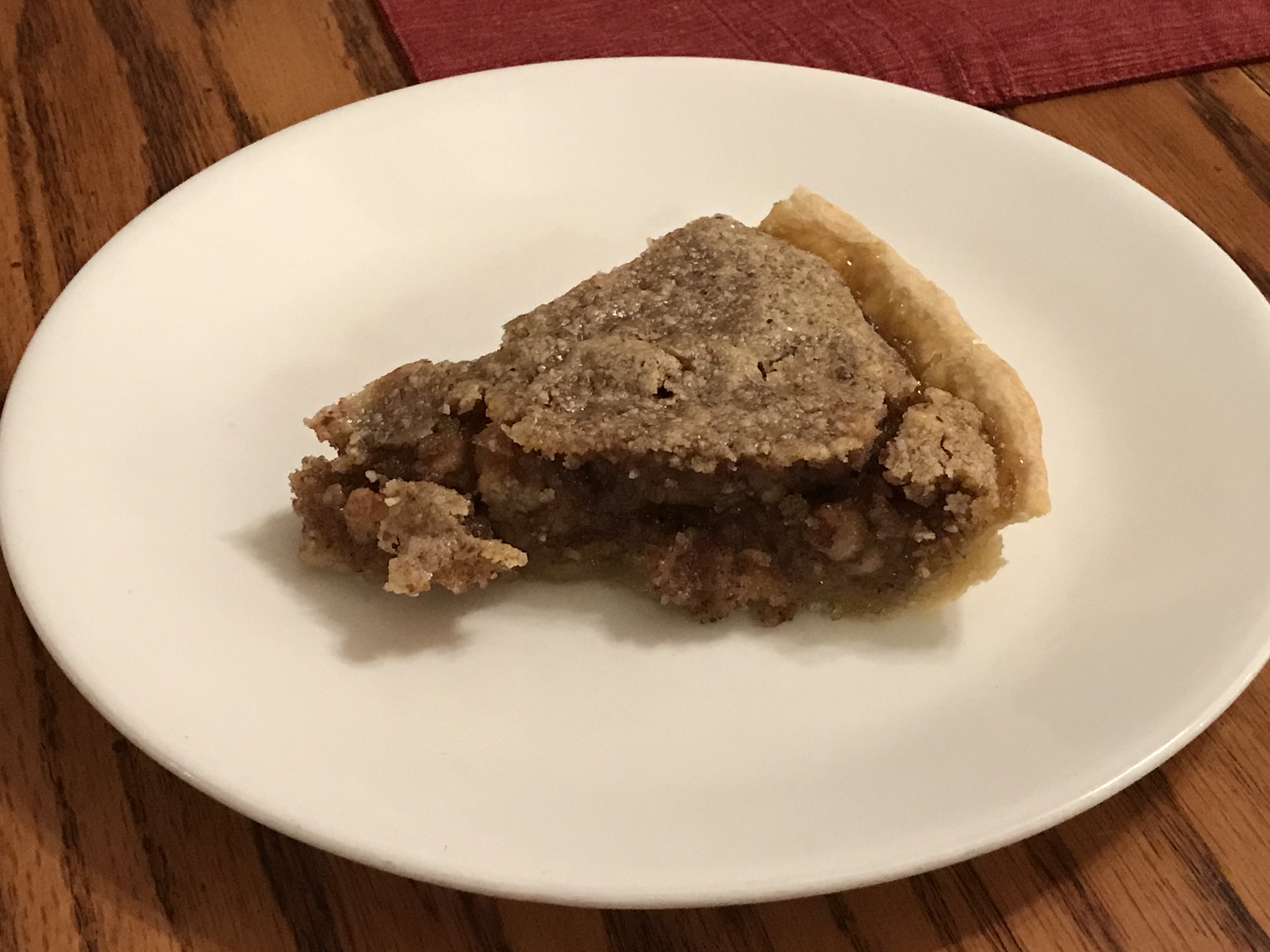
Dessert was a pastry tart, this time with a layer of fig jam and another of ground almonds and walnuts, held together with eggs and sweetened. If you own the book, you might notice that the recipe calls for pine nuts, not walnuts. The thing is, pine nuts are really expensive. The recipe calls for over a cup, the little packets and bottles of them only contain around a third of that, and they each cost around four dollars. This would add up to at least twelve dollars just for pine nuts, and walnuts are a fraction of the cost. Plus, I’ve come to realize that most pine nuts, even from Italian brands, come from China. With recent aggression in the South China Sea, the broken treaty with Hong Kong, and the worst genocide since the Holocaust being conducted against Turkic-speaking Muslims in the western Xinjiang province, I would prefer to avoid buying Chinese goods whenever possible. It can’t be avoided entirely, but the more people forego Chinese goods in favor of alternatives, the more economic pressure will be put on the government. If enough people are committed, maybe they will be forced to reconsider their policies. Now, I wouldn’t normally get into politics on a food blog. However, this is more than politics. It is an issue of basic decency and treating other people like human beings. While no one can solve the issue on their own, everyone can do something. One easy way to start is to use American-grown California walnuts. Their flavor and texture makes for excellent pesto, and according to several episodes of The Great British Baking Show, figs and walnuts are a winning combination.
And they are. The fig jam and almond mixture are both pretty sweet, with the former being even sweeter than most other jams. Unlike almonds and pecans, walnuts don’t have much of a sweet flavor, making them an excellent choice to provide contrast. The tart was still a bit sweeter than I would have preferred, but the optional unsweetened whipped cream helped with this. Overall, it was really good. I opted to make the pastry rather than use a prepared pie shell. Called pasta frolla, it baked up nice and crispy. The crunch from the pastry and walnuts contrasted with the soft jam and almond mixture, and everything worked well together. I might reduce the sugar slightly if I were to make this again, but that’s just a matter of personal preference. A cup of coffee or tea adds further contrast.
So-called “variety meats” are often disregarded today, but in the past, when animal protein was more expensive relative to income, they were widely consumed. Some parts, like tripe, were poverty food even then, while others, like sweetbreads, were considered delicacies. Yet others, like liver, seem to have been viewed in a similar way to tougher, more inexpensive cuts of meat: not fine banquet fare, but perfectly good for informal and everyday meals.
This appears to have been the case with oxtail. It turns up again and again in old recipes, almost always in soups and stews, which makes perfect sense. It contains a lot of collagen, so it is not very tender initially. As it cooks, the collagen breaks down, imparting an incredible body to the broth. Plus, soup and stew are excellent ways to stretch a small or modest amount of meat to feed more people. Oxtail was made for economical ingenuity.
Versions of oxtail stew are found across the globe, but the Roman variation features wine, tomatoes, and celery. If you don’t have or don’t want to use wine, a viable replacement is grape juice with a tablespoon of vinegar per cup. It’s still a little sweeter than it would be if dry wine were used, but I used this substitution and it worked well.
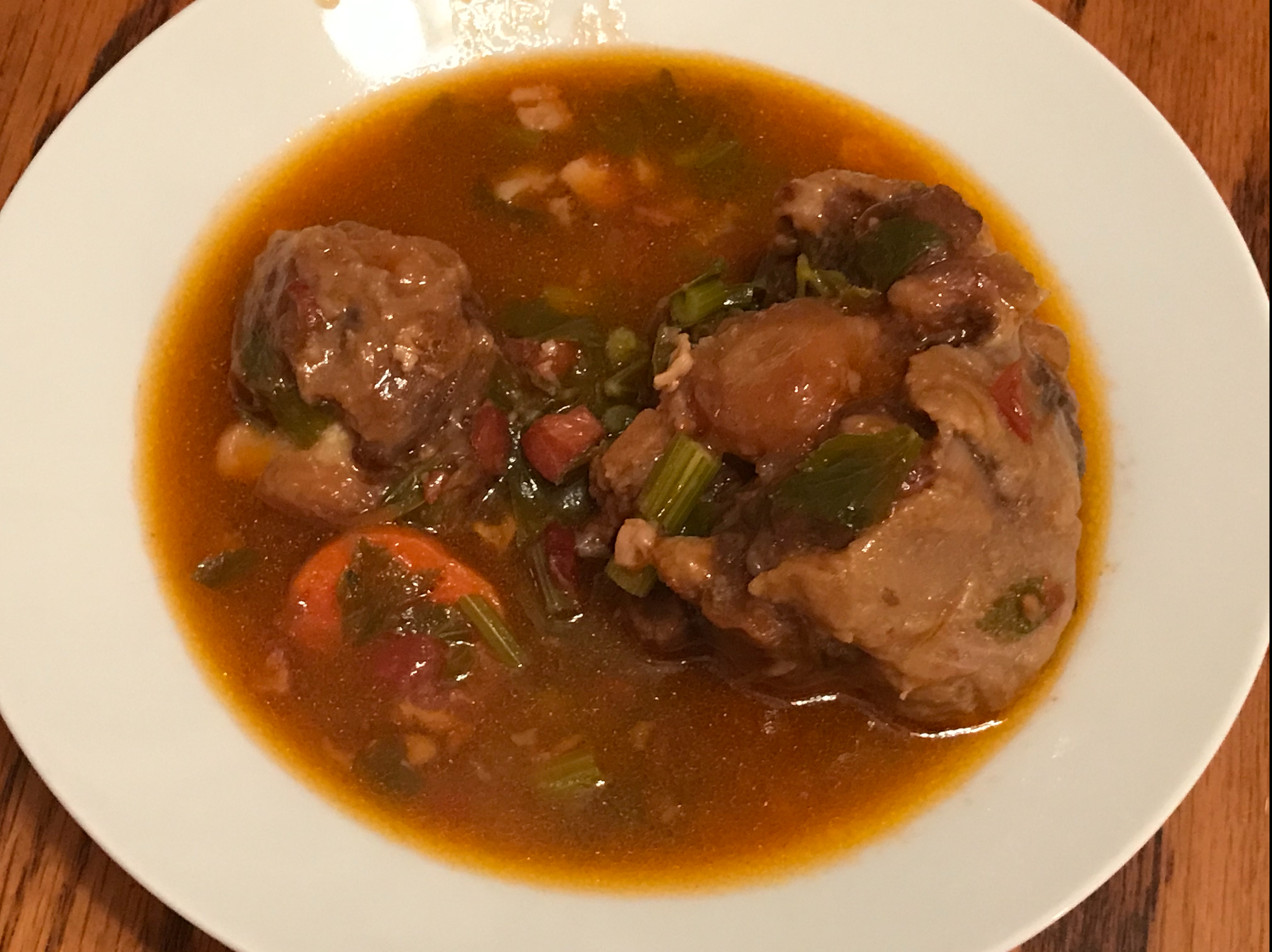
The dish started with the common flavor base of vegetables and pancetta/bacon. A bit of celery was added now, most was set aside to be separately cooked and added later. After browning, the oxtails are added to the pot, along with the tomatoes and wine. This all simmers for a few hours, with some of the broth being added periodically. Near the end of the cooking time, the rest of the celery is added. I’m not sure why the celery needs to be cooked separately rather than added directly to the pot, but I followed the recipe as closely as possible.
The taste and texture of this stew were both remarkable. The combination of broth, grape juice, tomatoes, and aromatics lent a pleasant, slightly sweet-tart flavor, while the collagen from the oxtail created a rich, almost sticky body. It was definitely messy to eat, though, since the meat stuck to the bones despite its tenderness and could not easily be removed with a fork and knife. Fingers and a lot of patience were required. That’s not to say I wouldn’t make it again. Add some bread and maybe a salad, and it’s clear why this dish remains so popular. Just make sure you have plenty of napkins.
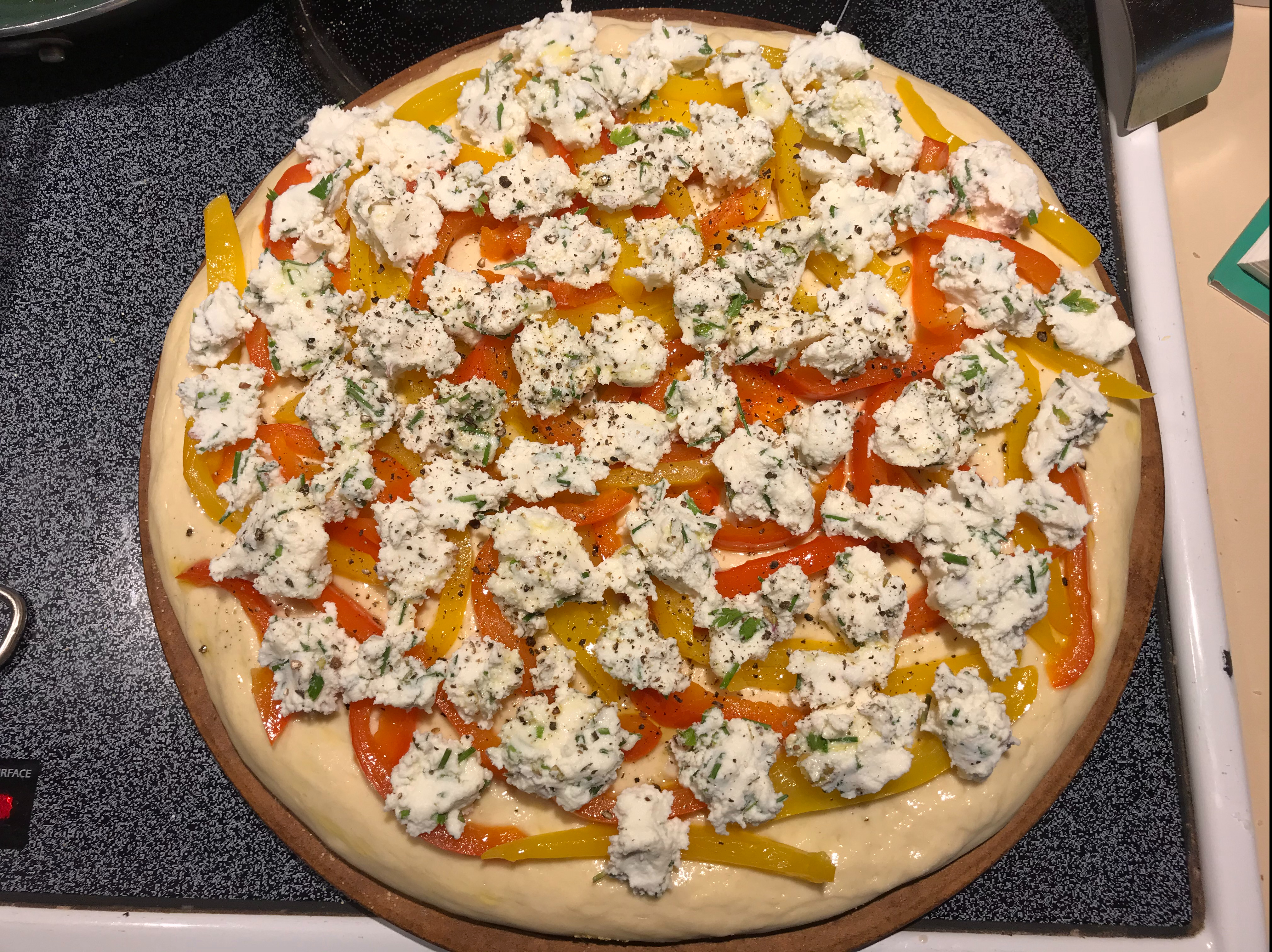
Finally, we have one of the most iconic Italian dishes: a pizza. Three pizza recipes are featured in the text, but none of them are the stereotypical takeout or delivery staple. None of these recipes have tomato sauce, pepperoni, or sausage, and only one of them has mozzarella cheese. Not that there is anything wrong with the American staple, far from it, but it is nice to have a change of pace from time to time. In this case we have pizza dough topped with garlic-infused oil, sauteed bell peppers, and ricotta salata mixed with herbs.
Pizza is an interesting dish with an unclear history. As discussed in the text on page 224, it does not have any special meaning and was originally commoners’ food. Bread dough with a few toppings to make it more interesting seems to have been around for hundreds of years if not longer, but perhaps because it was the food of peasants and poor urban dwellers, it was not written down. The earliest mention of it that I have found is an aristocratic recipe for a sweet dough with marzipan and crushed cookies from the 16th Century. Perhaps in the past the definition of pizza was broader than it is today. At any rate, the story goes that pizza became “respectable” in the 19th Century when a chef created the original “Pizza Margherita” for the queen at the time, Margherita of Savoy. From there, it’s popularity only grew.
While not quite as fast as takeout or delivery, this recipe is not particularly difficult. Most of the time required is in kneading the dough and letting it rise. A stand mixer with a dough hook saves a lot of time and mess for the first part. While it’s rising, there’s plenty of time to assemble/prepare the other ingredients and make the garlic oil, if there isn’t some already made from a previous pizza (the recipe makes enough for several). There are only two real tricks here. First, make sure the water is not too hot when adding it to the yeast. If it is, it will kill the yeast and the dough won’t rise properly. Second, infuse the garlic in the oil over very low heat to prevent the garlic from scorching and imparting that flavor to the finished product.
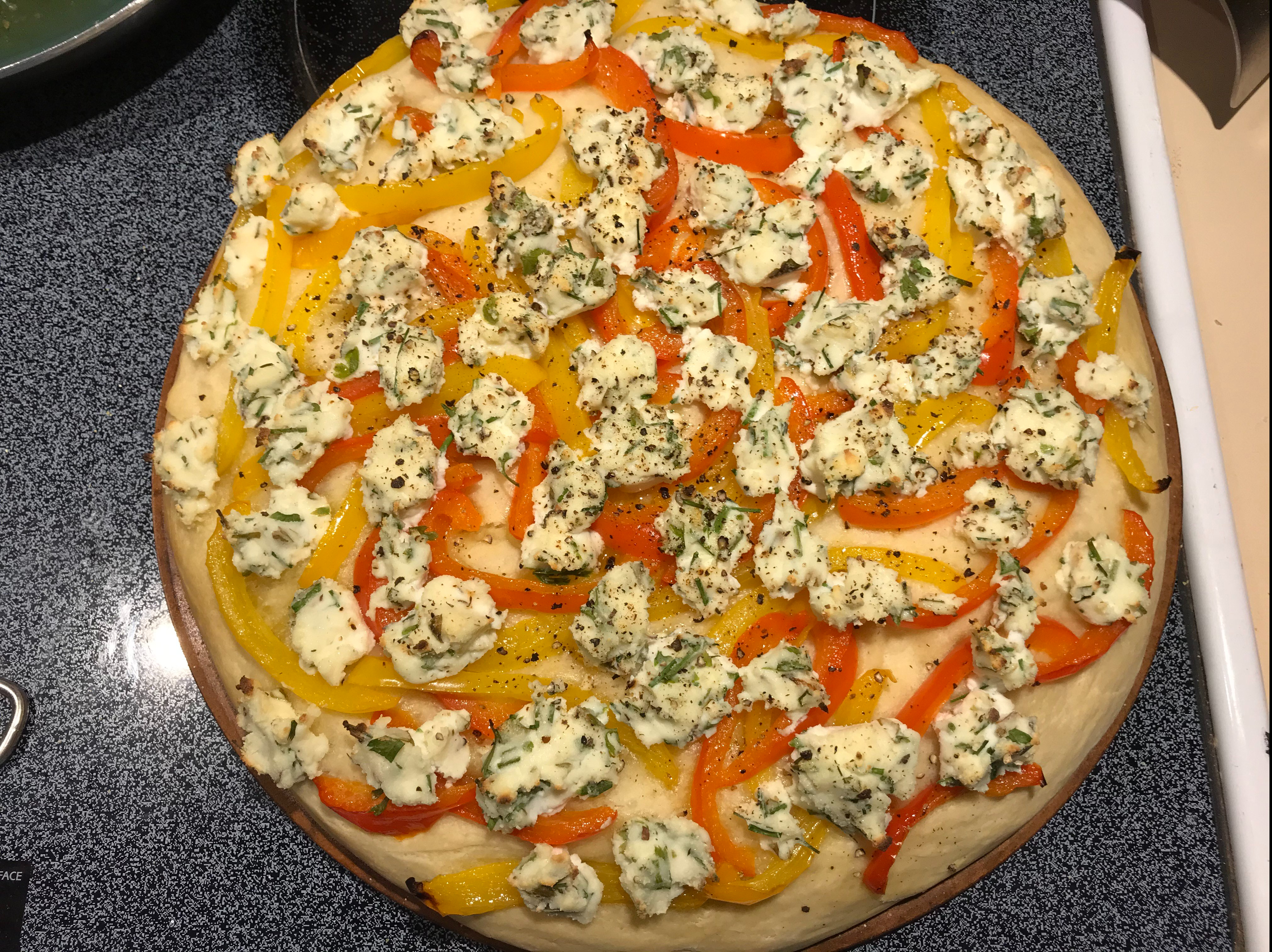
Since I could not find ricotta salata anywhere near me, I tried to make my own by mixing ricotta cheese with some extra salt, wrapping it in cheesecloth, and pressing it between two plates for a few days. The idea was to squeeze out some of the excess moisture, ideally enough to make the cheese firm and able to be grated. That didn’t quite work out as planned. Some moisture was soaked up by the cheesecloth, but the texture didn’t change significantly. I went ahead with the recipe anyway. Rather than mixing the herbs with the grated cheese, I just stirred them into the soft cheese and called it good. As there was no sprinkling this over the top of the pizza, I spaced globs of it on there as evenly as I could and hoped for the best.
The finished product
The cheese didn’t spread out over the surface as I thought it might, but the pizza was still delicious. The crust crisped up well on the pizza stone, the garlic flavor was clearly there but not overpowering, and the outside parts of the cheese globs browned a bit for added flavor. At some point it would be nice to try this with actual ricotta salata, but in the meantime, the modified version is more than worth making again.
Menu: Fresh Asparagus Soup, Ricotta Gnocchi with a Light Picante Tomato Shrimp Sauce, Cubes of Butternut Squash with Cinnamon, Stewed Figs with Ice Cream
Recommended Wine: Muller-Thurgau from Trento, a Yellowish Fruity White
We now return to the mainland of the Veneto region, famous for a variety of fruits and vegetables (text, page 132). Fitting with that theme, this menu features asparagus, butternut squash, and figs, prepared in interesting ways. Asparagus soup is thickened with semolina flour, and steamed squash is served with butter and cinnamon. In the original recipe, fresh figs are drizzled in kirsch, but since I could not find either of those items, I adapted by stewing dried figs in cherry juice and serving them over ice cream. While not like the original, this adaptation retained the flavors of figs and cherries.
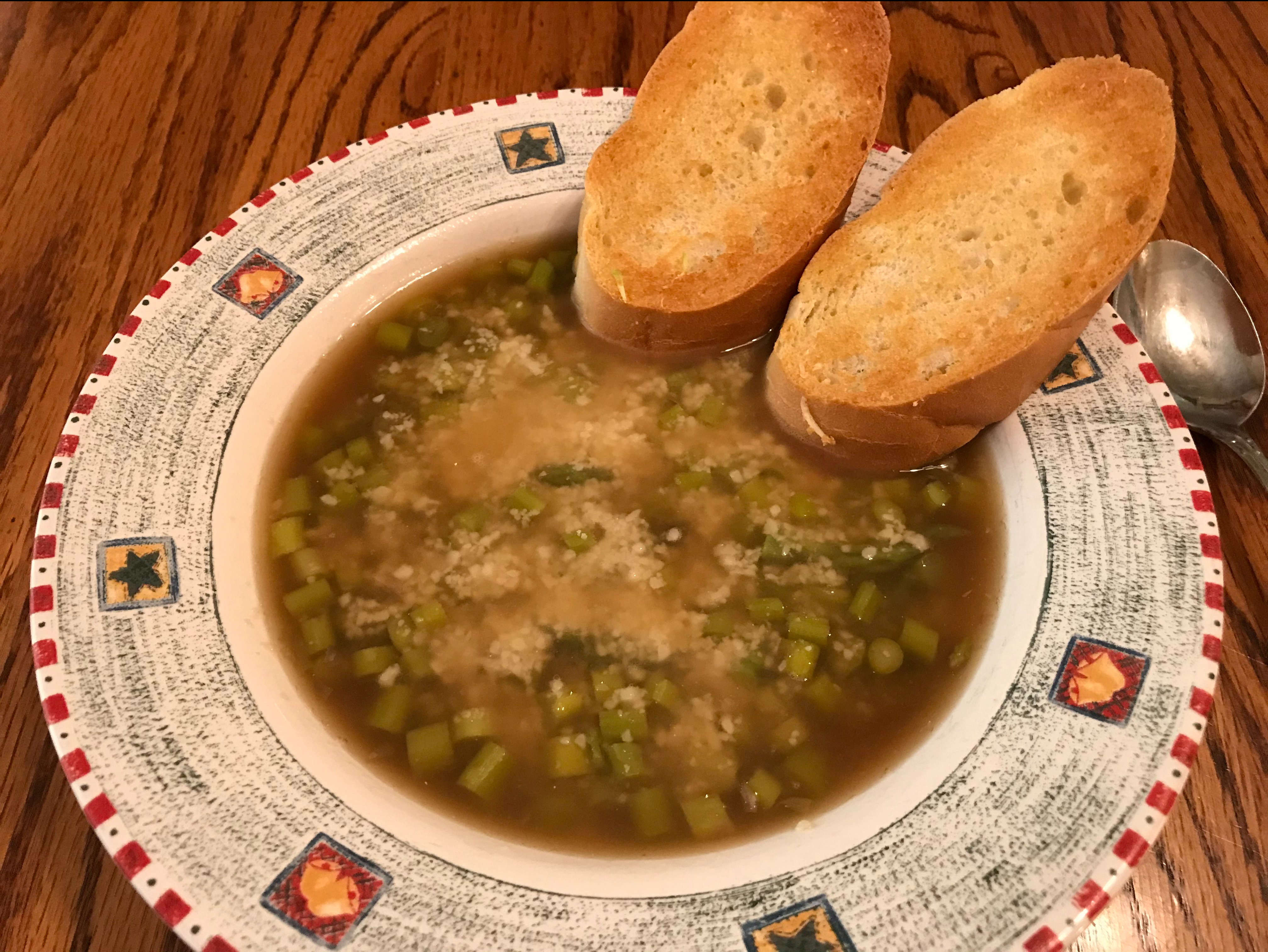
The soup is composed of just five ingredients: chicken and beef broth, semolina flour, thinly sliced asparagus, and grated parmesan cheese. Just bring the broth to boiling, add the semolina and let it cook, stirring occasionally. Once that’s thickened, add the sliced asparagus stems, and after a few more minutes, add the tips. Serve with a sprinkle of parmesan cheese and the recommended piece of garlic-rubbed toast. The squash is even simpler: just cube, steam, drizzle with melted butter, and sprinkle with cinnamon.
Asparagus soup
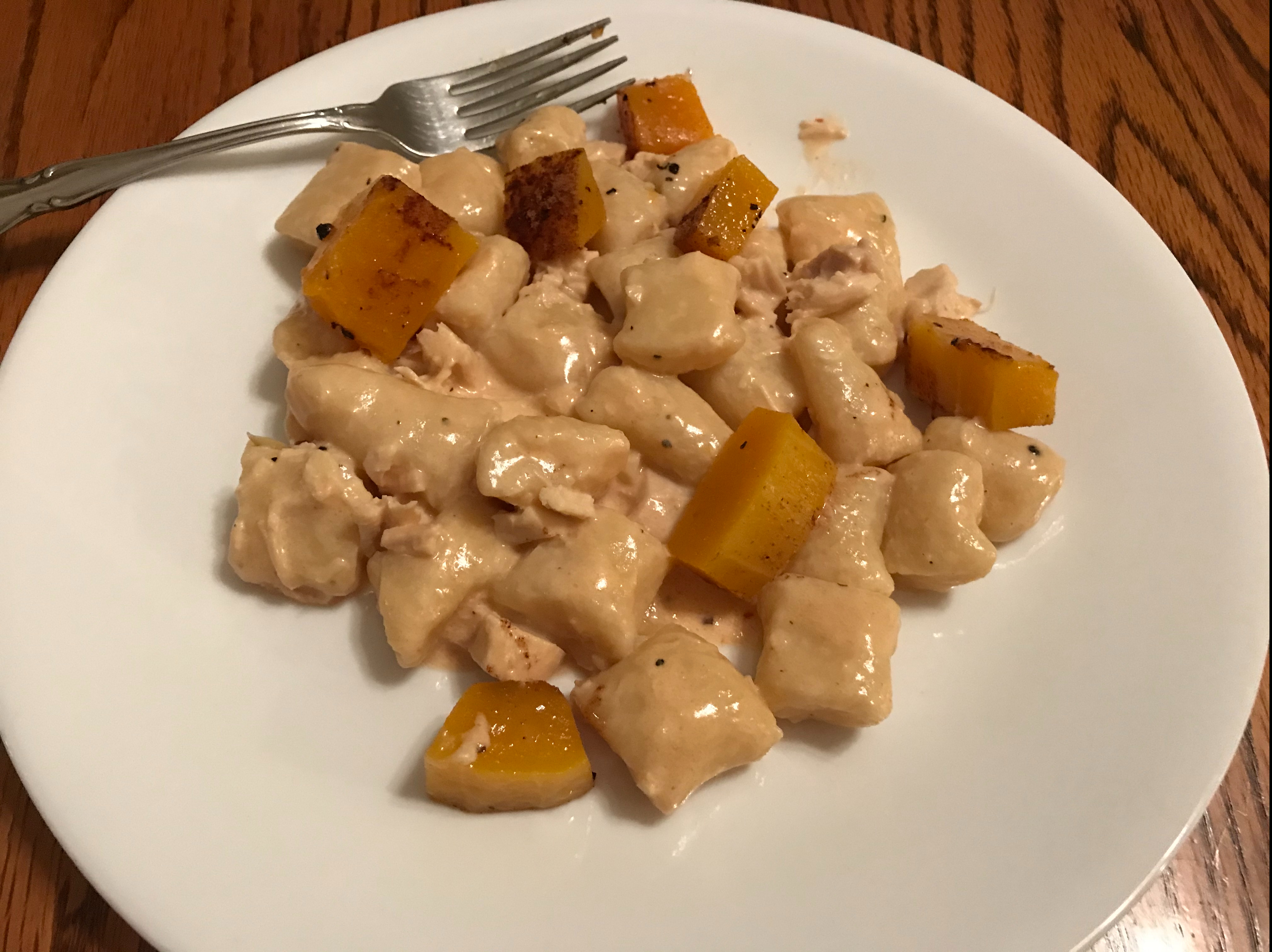
The gnocchi were a bit more complicated to make, but not overly so. It’s possible to mix up the dough ahead of time, then just roll it out and cut it just before cooking. Contrary to its name, the sauce is not very spicy. A creamy base is flavored with a bit of onion, garlic, and red pepper, with a bit of tomato paste providing a lovely color. In an attempt to appeal to pickier diners, I did modify the recipe somewhat. The actual recipe calls for adding some fish broth and bouillon to the cream sauce, along with chopped cooked shrimp. For convenience and broader appeal, I used chicken broth and leftover rotisserie chicken. The pickier diner still didn’t care for it, but it was worth a try.
Squash and gnocchi
None of this was difficult to make, and with the exception of gnocchi, it was not particularly time-consuming either. While the soup simmered and squash steamed, there was plenty of time to cook the gnocchi and make the sauce. Even better, this time I managed to time things right and we could enjoy the food in the order it’s supposed to be eaten in.
Stewed figs and ice cream
I’ve never seen a soup thickened with semolina before, but it worked really well to add a bit of extra body without diluting the asparagus flavor. The gnocchi tasted kind of like homemade mac and cheese in little dumplings, with a creamy, chickeny sauce. These were especially good alongside the sweet, buttery squash. The figs were a nice closing to the dinner. The tartness from the cherry juice acted as a bit of a palate cleanser, while the sweetness from the figs and ice cream kept it from being overwhelming. This was yet another excellent dinner.
As in Lazio, lamb is popular in neighboring Umbria and its own eastern neighbor, Abruzzo. The rugged landscape has provided pasture for sheep for millennia, which in turn provided the residents with a variety of cheeses as well as meat. In this interesting regional specialty, lamb is used instead of beef or pork in a sauce that is then tossed with pasta. This is not the only dish of its kind. As discussed on page 174, lamb is often added to the tomato sauce in the pasta dish with two sauces during the winter months.
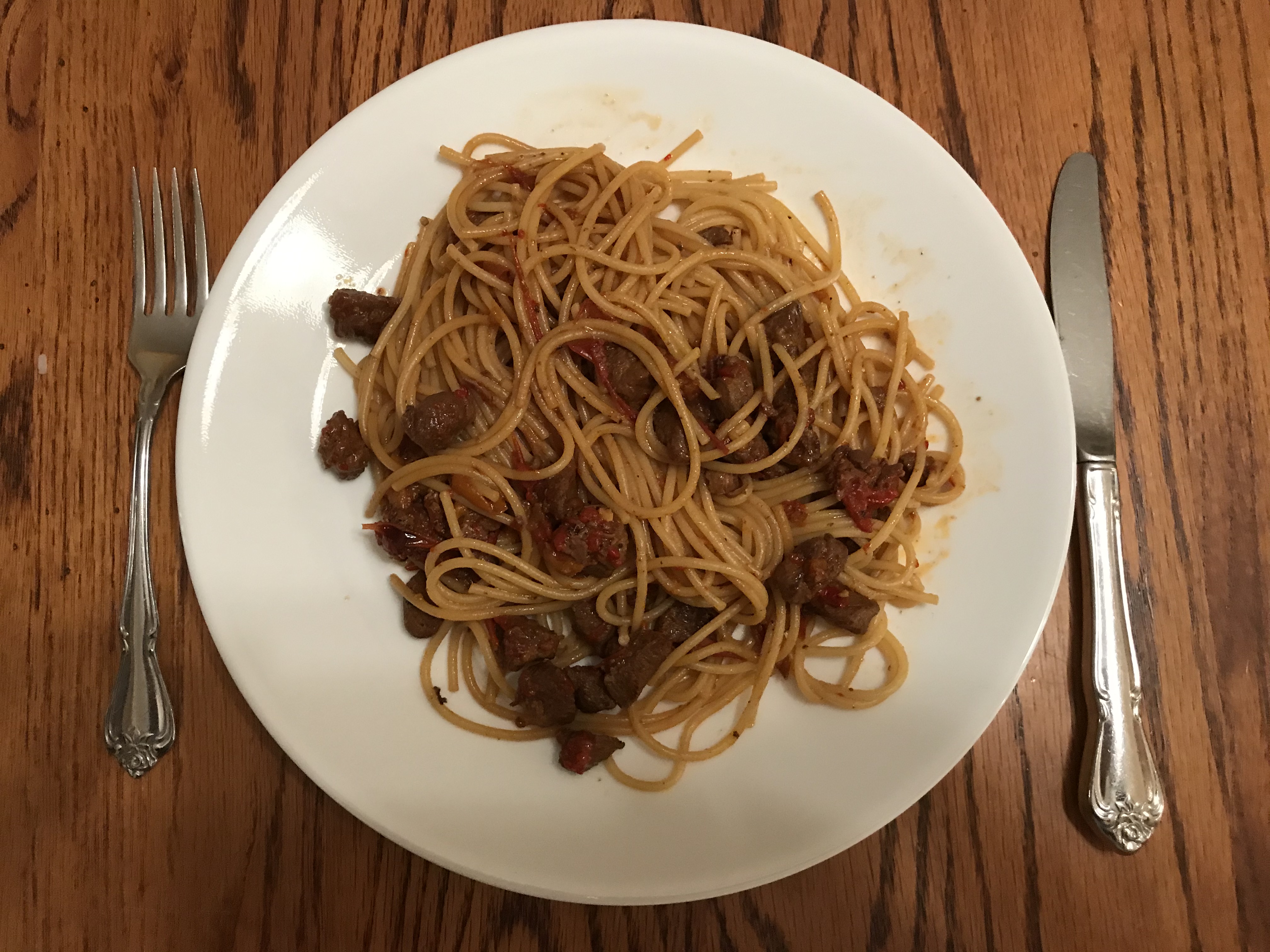
This was fairly straightforward to put together. Sauté the minced lamb with garlic, add some wine or water and let that cook for a few minutes, then add tomatoes and bell peppers and cover the skillet to simmer for two hours. Occasionally check the pan to see if some broth or water may be needed. When that’s finished, cook the pasta, add it to the skillet, toss, and serve.
I had a slight glitch in the preparation. Knowing extra liquid would probably be needed, I added the cup of water at the start of the simmering time, then went outside to work in the yard for a bit. Thinking my task would take about an hour, I planned to check the sauce after I finished. It turned out to be a bigger task than I anticipated. Almost two hours later, I was finishing up when I was alerted that I should probably check the pan, since it smelled like it was starting to scorch. As there was no smoke and the scorching seemed pretty mild, I immediately added more water and stirred to remove the browned layer from the bottom of the pan. This seemed to resolve the issue. The sauce didn’t taste scorched at this point, just pleasantly caramelized, so I continued with the recipe.
Altogether, this was quite good. The peppers and tomatoes break up in the sauce, adding depth and acidity to counter the lamb, which has a rich, distinct flavor of its own. I wouldn’t have thought of putting lamb in pasta sauce, but it really shines when combined with the tomato flavor.
This pasta dish is a somewhat unusual one from Northern Italy. The original version is made with buckwheat pasta, but the recipe here uses fresh fettuccine. Diced potatoes and Savoy cabbage are first boiled, then, when they are cooked through, the pasta is added. Once the pasta is cooked, all is drained and tossed with pecorino cheese. Melted butter, browned with sage and garlic while the pasta cooks, is poured over the pasta, which is then topped with more cheese.
Cabbage may seem like a strange thing to find in an Italian dish, but it has a long history. In ancient times it was eaten by all levels of society, as evidenced by its inclusion in the works of Apicius. In the early 4th Century AD, the Emperor Diocletian kept himself occupied in retirement by growing cabbages. It remains popular today, especially in the cooler north. The favorite variety is the stronger-flavored, crinkled Savoy cabbage. Note that this is not the same thing as Napa cabbage. Both have crinkled leaves, but Napa cabbage heads are elongated while Savoy cabbage heads are round. I was unable to find the Savoy variety, and since Napa cabbage is not always that fresh (blame lower rate of turnover) I substituted regular green cabbage, which is always cheap, fresh, and available.
Not only is this easy to cook, it turned out to be another favorite. The boiled potatoes partially break down as the pasta is tossed, mixing with the butter and thickening the sauce, acquiring a taste sort of like an alfredo sauce. The sage leaves crisp up in the skillet and make a delicious garnish. Exactly why pecorino cheese is used instead of parmesan is unclear since this is a northern Italian dish, but it worked really well. I’m sure grated parmesan would be good if pecorino is unavailable, and when I made the recipe for a second time with dried fettuccine, that worked too. Just make sure to adjust the cooking time for the pasta accordingly.
Menu: Marinated Cannellini Beans with Oregano and Crisp Salami, “Grilled Eel” with Thyme, Zucchini Pudding, Assorted Melon with “Caprini” Cheese
Recommended Wine: Fiano de Avellino or Taurasi (White Wines), or Greco di Tufo
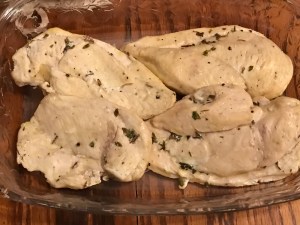
Returning to the southern Adriatic coast, near Bari, we have another seafood menu. Since I have no idea where to find eel, I used the seasoning in the recipe on chicken, and since it was raining, I used a grill pan and cooked it in the oven. Apparently, conger eel is relatively available in American fish markets (pg. 216), but I suspect that is probably only true on the coasts and in the big cities. I doubt that I could find it any closer than Chicago, which is three hours away from where I live. With the worst pandemic in a century still raging, the journey is simply not going to happen. Maybe at some point I’ll try it with eel, a favorite of both the Greeks and Romans, but for now, adapting is necessary.
The beans, marinated with vinegar, oil, and oregano and served with pieces of crisped salami are pretty good, but it was the zucchini dish that really stood out. Shredded zucchini is salted and squeezed out to remove the excess moisture (which could split the custard) before being mixed with eggs, half-and-half, basil, and diced red peppers. The end result is a cross between a quiche and a custard, with a creamy texture and mild vegetable flavors. Ultimately, it was one of my favorite recipes from the book.
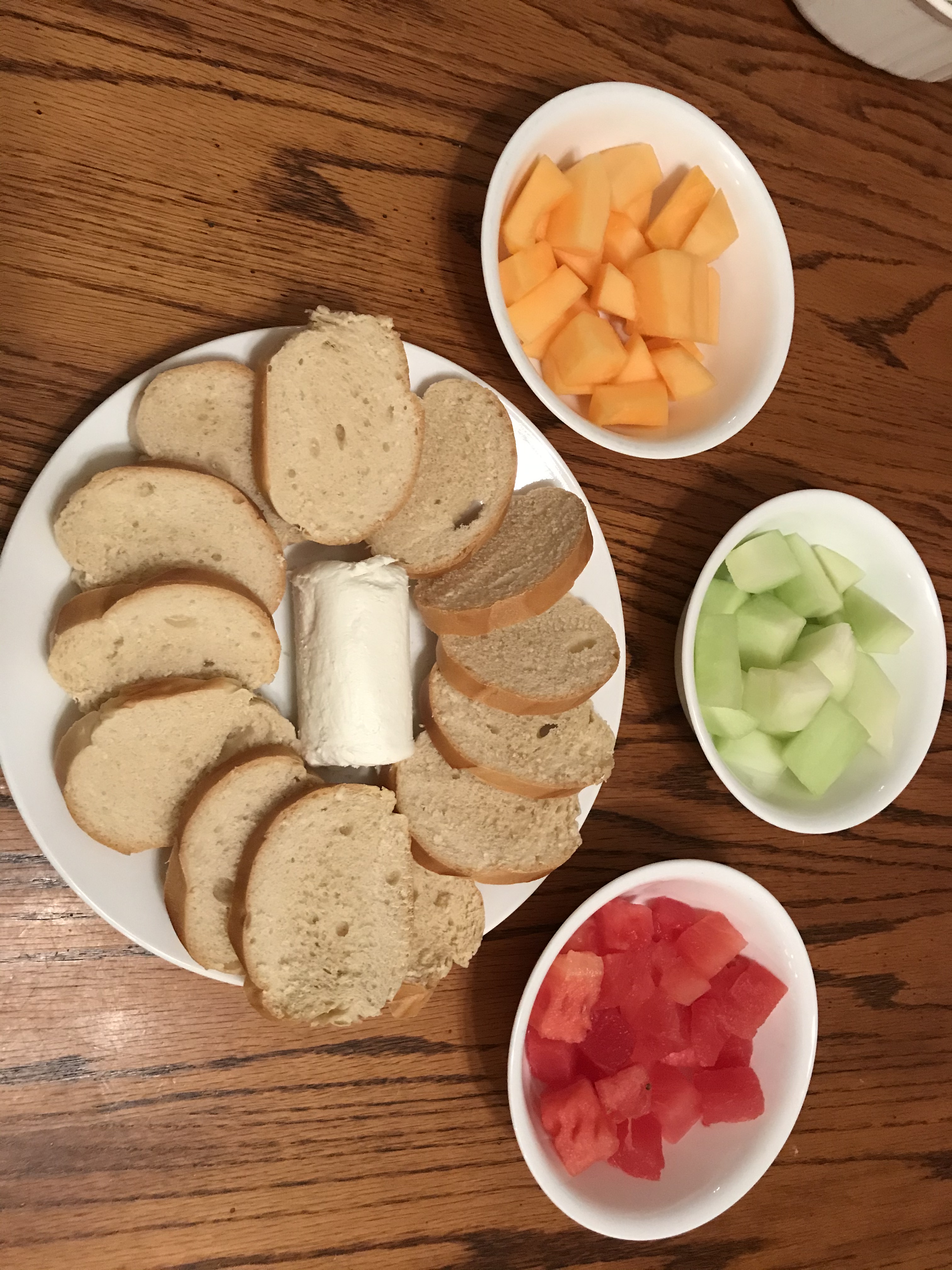
For dessert, we have an authentically Italian fruit and cheese combination. Watermelon, cantaloupe, and honeydew are served alongside toasted bread and caprini cheese, which, as you might infer from its name, is a goat cheese. As caprini is hard to find in the US, I replaced it with a regular goat cheese, with good results. The cheese makes for a more substantial dessert than fruit alone, while the fruit provides sweetness without a bunch of sugar. If you want a sweet but semi-substantial dessert while watching how much sugar you’re eating, this combination checks all the boxes.