schmaltz and matzo
appetizers, food history, jewish cuisine, snacks

Schmaltz: Better If You Grew Up On It

schmaltz and matzo
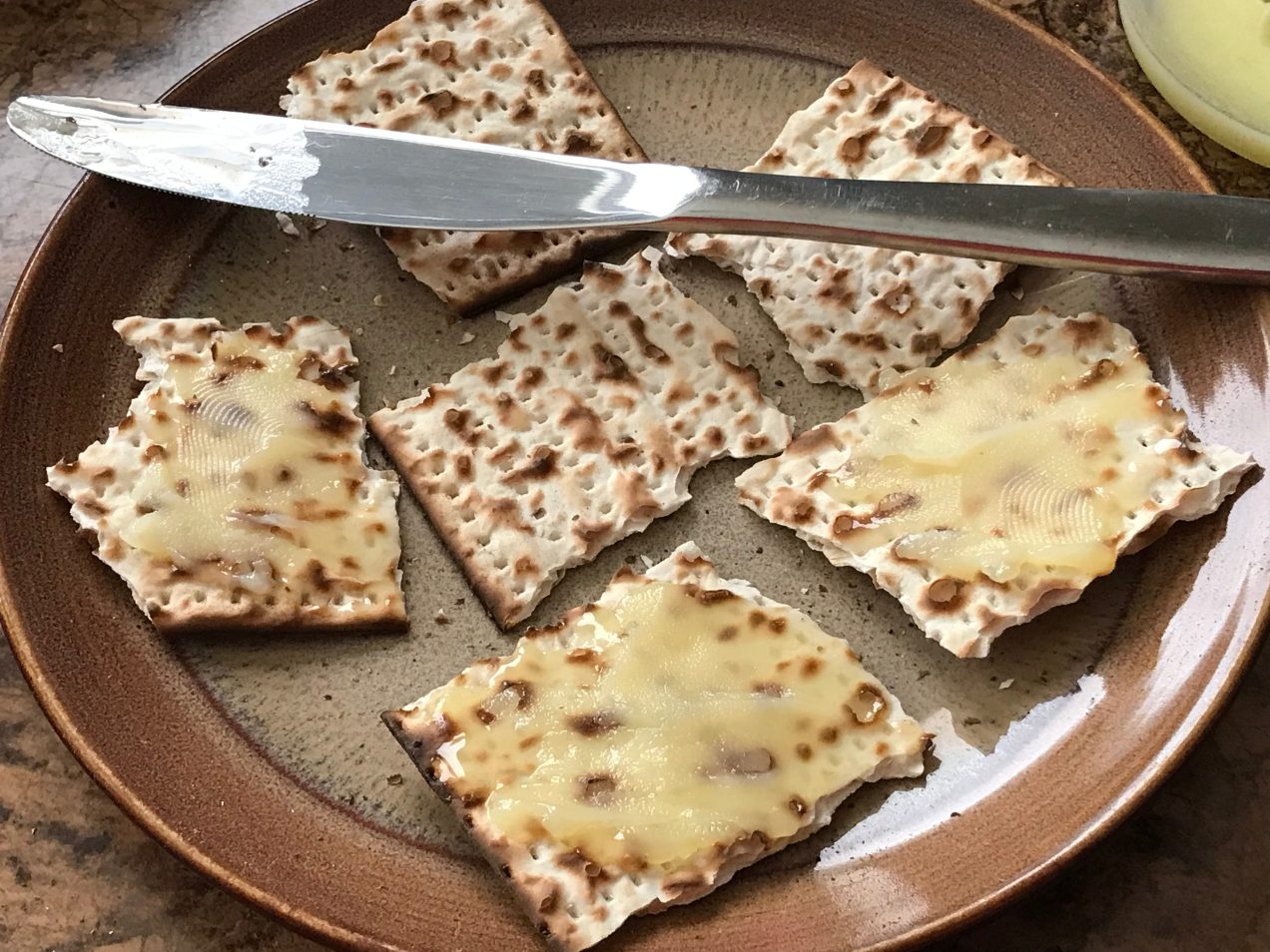
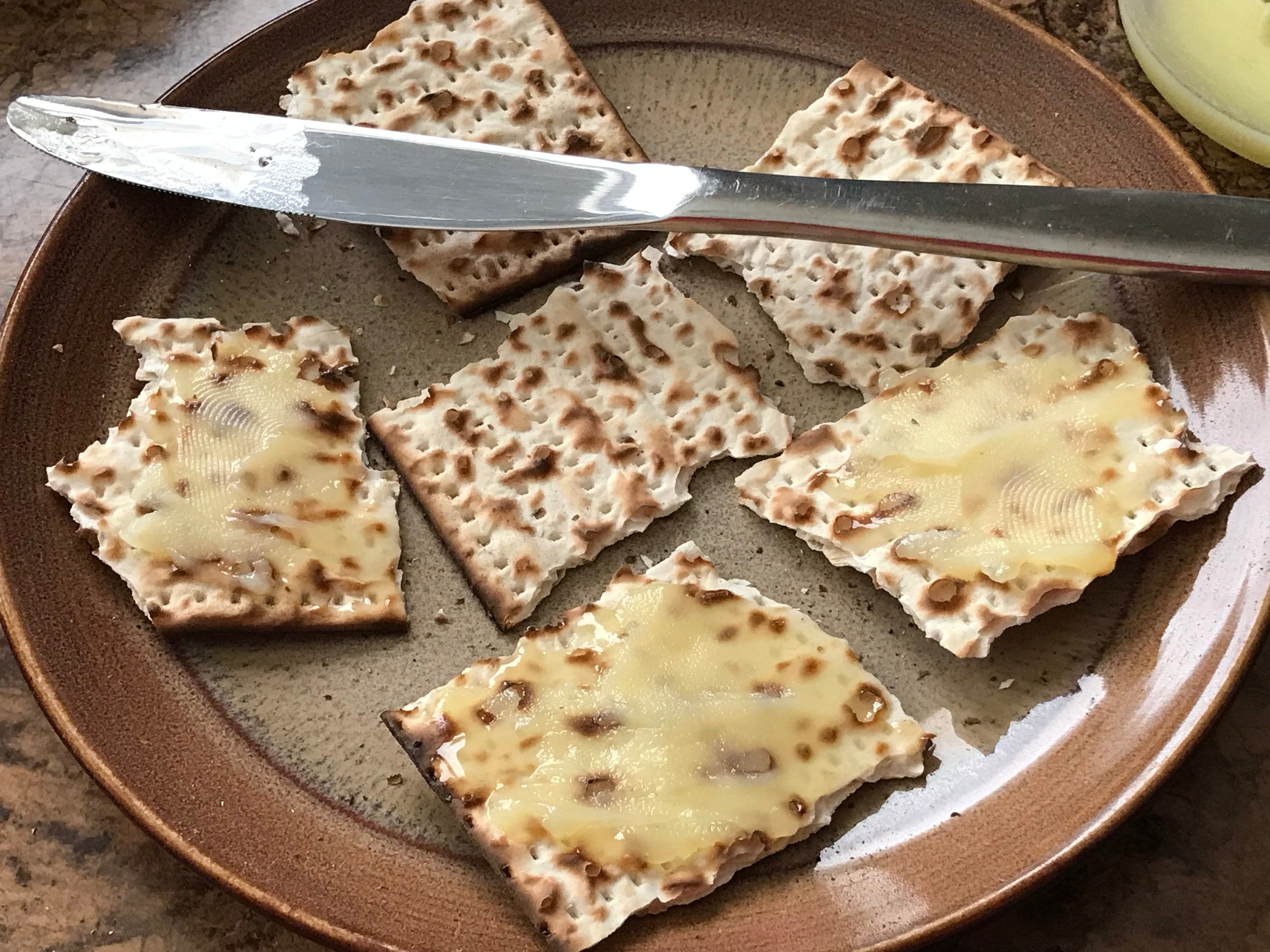
Matzo with schmaltz (a.k.a. pure chicken fat)

            Perhaps more than any other cooking fat, rendered chicken or other poultry fat is associated with a specific cuisine: Ashkenazi Jewish. It was a historical necessity. Butter couldn’t be used in a meat meal, due to the prohibition against combining meat and dairy. Certain types of beef fat aren’t kosher, which makes tallow a tricky proposition. As a pork product, lard was definitely out. Since olive trees can’t grow in Central and Eastern Europe, poultry fat was the only option before seed oils like canola and sunflower. Few other societies faced the same religious restrictions in the same kind of environment, so use of rendered poultry fat, or schmaltz, became stereotypically Ashkenazi. Jewish immigration brought it to America, especially New York.

            For generations, New Yorkers have used schmaltz in frying, knishes, and even as a spread on matzo crackers. Since the recipe on pages 464 – 465 of 1000 Foods to Eat Before You Die doesn’t make a huge quantity and I only had enough chicken skin for half, I decided to follow Mimi Sheraton’s suggestion to try it on piece of matzo with just a little salt. It wasn’t bad, tasting sort of like fried chicken cooked in slightly overused oil, and was even tasty after getting used to the flavor coming from a soft spread. The little chicken cracklings, called gribenes, were even better, tasting like pieces of fried chicken skin, which they what they are.

Advertisements

            That said, schmaltz is a lot of work for a small reward. Not to mention, half of the cracklings stuck to the bottom of my pan, requiring multiple soakings and scrapings to remove. With the widespread availability of vegetable oils, shortening, and margarine, rendered chicken or other poultry fat is no longer necessary for kosher frying. And for anyone craving the fatty chicken flavor, many grocery stores sell ready-made fried chicken.

            Schmaltz certainly has historical interest, and is currently enjoying a culinary revival, but I struggle to see the appeal. Having grown up eating non-kosher casseroles with ham and cheddar cheese, cheeseburgers, and pulled pork, the traditional “New York deli” specialties don’t have any nostalgia value. Would I scrape the solidified fat from a chilled pot of chicken or turkey soup to make gravy? Certainly – it would give the poultry flavor a nice boost. But I’m unlikely to make my own schmaltz again. It was worth trying once. In this case, once was enough.

Standard
appetizers, fall, recipes, salad

Guess the Color: Pumpkin Seed Oil (dressing recipe for potato or kale salad)

pumpkin seed kurbiskernol vinaigrette
Looks more appetizing on the kale

            Over the course of my culinary exploration, I’ve been amazed by just how many different types of oil there are. Some are pretty standard and widespread. Canola and vegetable (often soybean) oils are neutrally flavored, easy-to-find, affordable, and widely used in baking and frying. Some cooks prefer corn or peanut oil for deep frying. For sautéing and salad dressings, olive oil is a favorite. In a well-stocked grocery store, you often find sunflower, sesame, flaxseed, grapeseed, avocado, and coconut oils.

            Certain oils are largely restricted to particular cuisines or uses. Sunflower is popular in Eastern Europe due to Orthodox fasting rules and the inability to grow olives. Toasted sesame oil is common in East Asia, especially China, while Middle Easterners prefer untoasted. Nut oils like almond or walnut are sometimes used in European salad dressings. And bright reddish-orange palm oil gives many West African dishes their distinctive flavor.

Advertisements

            In Austria, a local specialty is pumpkin seed oil, called kurbiskernol, made from the appropriately-named oilseed pumpkin. It’s typically used in salad dressings and as a dip for bread. Due to its low smoke point, it’s not suitable for cooking, which damages its distinctive flavor. But here’s a question for you. If the stereotypical pumpkin is orange and inner seed kernels (pepitas) are green, what color is pumpkin seed oil?

            Answer: It’s a lovely deep purple, with yellow-green undertones.

            In 1000 Foods to Eat Before You Die (pgs. 323 – 324), Mimi Sheraton describes pumpkin seed oil as resembling liquid amethysts. If it had been available during the Middle Ages, sophisticated diners would have been all over it. They loved bright, even tacky colors, and very few foods are naturally that shade of purple. For people who created elaborate gilded dishes with egg yolks and saffron, liquid jewels sound right up their alley.

            Pumpkins arrived in Europe after Columbus. Exactly when Europeans began eating them or pressing their seeds is unclear, but the oil makes a great vinaigrette base. To boost its color, I added red wine vinegar, minced shallots, a little salt, and a dash of mustard and honey to keep the dressing from separating. If you find the flavor of the pumpkin seed oil a little strong, try replacing about half of it with sunflower oil, which is typically pale, for a lighter shade of amethyst. Yellow or greenish olive oil will make it look muddy.

            Thinner layers of the oil can look muddy anyway, but the taste, clearly that of roasted pumpkin seeds, is worth it. It’s a fantastic complement to potatoes, and makes salads much more satisfying. Kale is especially good, because its strong flavor is less likely to be overwhelmed. It also holds up in the fridge for a few days, even with dressing.

Advertisements

            To dress about six medium potatoes or one bunch of kale, just combine 6 tablespoons of pumpkin seed oil, 2 tablespoons red wine vinegar, a minced shallot, and a little salt. Mix in a teaspoon each of Dijon mustard and honey and whisk until combined. Toss with cubes of hot cooked potatoes (waxy varieties like reds or Yukon golds are best, peeled or not is up to you) or chopped kale and let rest for an hour at room temperature. Store leftovers in refrigerator, bringing potato salad back to room temperature before serving. If desired, rewarm for about 30 seconds in the microwave. The kale salad is ready right out of the fridge.

            Vinaigrette-based vegetable salads are perfect year-round. They stay crisp (if applicable) better than lettuce, are more interesting than a veggie tray, and provide a pleasantly light counterpoint to grilled or roasted meats, heavy sides, and desserts. With no egg or dairy, they’re safer on hot days than those with mayonnaise. And during the winter, sturdy vegetables like potatoes and kale (or even frozen vegetables like green beans) are more consistent than fresh sweet corn, tomatoes, or lettuce.

            And with how popular pumpkin spice is, pumpkin seed dressing would be perfect on a fall or Halloween theme menu. Perhaps a kale or other cabbage salad with pumpkin seed vinaigrette and toasted pumpkin seeds to start, followed by pumpkin or squash ravioli with butter and sage, and concluding with a pumpkin or apple dessert. With plain coffee or tea, though. Pumpkin spice belongs in desserts, not beverages.

One-Time
Monthly
Yearly

Make a one-time donation

Make a monthly donation

Make a yearly donation

Choose an amount

$5.00
$15.00
$100.00
$5.00
$15.00
$100.00
$5.00
$15.00
$100.00

Or enter a custom amount

$

Your contribution is appreciated.

Your contribution is appreciated.

Your contribution is appreciated.

DonateDonate monthlyDonate yearly
Standard
Aubergine en caton
appetizers, french cuisine, recipes, summer, vegetarian

French Baba Ghanoush: Aubergine en Caton

Aubergine en caton

            By European standards, France is a large country. As with any nation with varied terrain and climate, it has a number of regional specialties. There are the dairy-heavy cuisines of Normandy and Brittany, Germanic-inspired dishes of Alsace in the northeast, and wine-based sauces and stews from the wine-growing regions of Burgundy and Bordeaux. And in the south, along the Mediterranean, is Provence, where many dishes resemble those from neighboring Liguria in Italy.

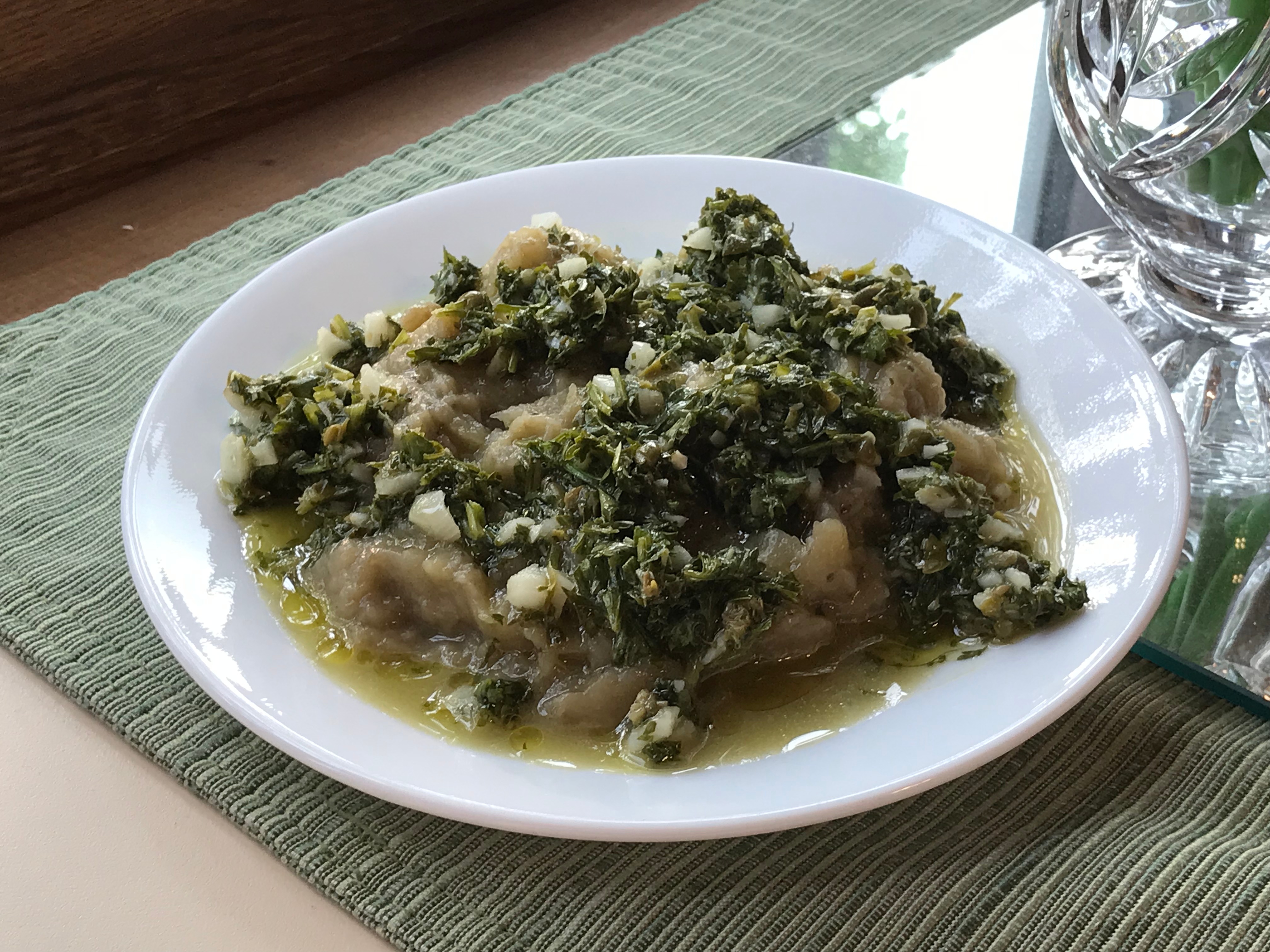
            Provence is one of the few French regions where olive trees can produce fruit. The oil is ubiquitous, including in a sauce for roasted eggplant. Other Mediterranean flavors come from lemon juice, capers, and a bit of anchovy. Before you get grossed out, it’s just a small amount of paste used as a flavor booster, not enough to make it taste “fishy.” All these other flavors, which are rather strong on their own, plus garlic and plenty of fresh parsley, balance it out.

            Aubergine is the French word for eggplant. Here it is cooked and pureed just like in baba ghanoush, except in the oven instead of over a wood fire, producing a lighter color and mild, slightly sweet flavor. Rather than mixed into the puree, the sauce is served over the top, for a greater contrast.

            As Mimi Sheraton suggested in 1000 Foods to Eat Before You Die on page 54, a simple description is sufficient to compose a recipe, at least for the sauce. It was the eggplant itself that gave me trouble. When cooking whole, which is necessary to keep the pulp a greenish color instead of browning, it takes a surprisingly long time to soften. At 400 degrees Fahrenheit (or just under 205 degrees Celsius), it took nearly an hour. Since it was a cool day that was fine, but on a hot summer day that would never be an option. Plus, using the oven for that long for one fairly small item doesn’t seem energy efficient.

            I considered ways to “pre-cook” the eggplant before finishing it off in the oven. After poking holes all over (to release steam and avoid an explosion), boiling or steaming would probably introduce too much water. But what about the microwave? They work by making water molecules move faster, creating friction and raising the temperature. And since the rays pass through the food, the center warms up much faster than with other cooking methods.

            For a vegetable like eggplant, which has a high water content, this worked like a charm. To avoid an explosion and mess, I poked the holes all the way through with the pointy end of a meat thermometer, giving plenty of openings for steam to escape. Just heat on a microwave safe plate, turn every two minutes, and be careful when handling. The eggplant steams inside the skin, creating the perfect silky texture with just the right amount of moisture.

            As it turned out, the oven wasn’t even required, making this interesting dish perfect for a hot day. When the eggplant is cool enough to handle, just cut in half, scoop out the pulp, puree it, and serve warm or at room temperature with the sauce. Accompany with bread, crackers, or crunchy vegetables.

            The sauce recipe is easy to double and can be kept in the refrigerator for several days. Don’t worry if the oil solidifies; it will turn liquid again as it warms up. This is common for vinaigrette-type dressings and sauces. Just get them out of the fridge half an hour to an hour or so before using, and they’ll be fine.

Ingredients:

  • 1 large eggplant, about 2 pounds
  • 3 tablespoons olive oil
  • Juice from ½ lemon
  • 1 clove garlic, minced
  • 2 tablespoons capers, minced
  • ¼ teaspoon anchovy paste
  • ½ bunch parsley, minced
  • Salt to taste

Directions:

  1. Combine all ingredients except eggplant, parsley, and salt in a bowl and whisk to dissolve anchovy paste and combine.
  2. Whisk in the parsley and taste for salt. The anchovy paste and capers are both salty, so you might not need it.
  3. Set sauce aside at room temperature, or refrigerate overnight. Bring to room temperature before serving.
  4. Poke holes all over the eggplant, all the way through. Place on a microwave-safe plate and cover with a paper towel. Microwave on high for 8 to 10 minutes, turning every 2 minutes, until a skewer slides easily into the flesh. Let rest until cool enough to handle.
  5. Cut eggplant in half and scoop flesh into bowl of a food processor. Process until smooth.
  6. Scoop eggplant puree onto a plate, spoon sauce over, and serve with bread, raw vegetables, and/or crackers.

            For more recipes and food history, sent right to your inbox, please like, subscribe, and/or share.

One-Time
Monthly
Yearly

Make a one-time donation

Make a monthly donation

Make a yearly donation

Choose an amount

$5.00
$15.00
$100.00
$5.00
$15.00
$100.00
$5.00
$15.00
$100.00

Or enter a custom amount

$

Your contribution is appreciated.

Your contribution is appreciated.

Your contribution is appreciated.

DonateDonate monthlyDonate yearly
Standard