Perhaps more than any other cooking fat, rendered chicken or other poultry fat is associated with a specific cuisine: Ashkenazi Jewish. It was a historical necessity. Butter couldn’t be used in a meat meal, due to the prohibition against combining meat and dairy. Certain types of beef fat aren’t kosher, which makes tallow a tricky proposition. As a pork product, lard was definitely out. Since olive trees can’t grow in Central and Eastern Europe, poultry fat was the only option before seed oils like canola and sunflower. Few other societies faced the same religious restrictions in the same kind of environment, so use of rendered poultry fat, or schmaltz, became stereotypically Ashkenazi. Jewish immigration brought it to America, especially New York.
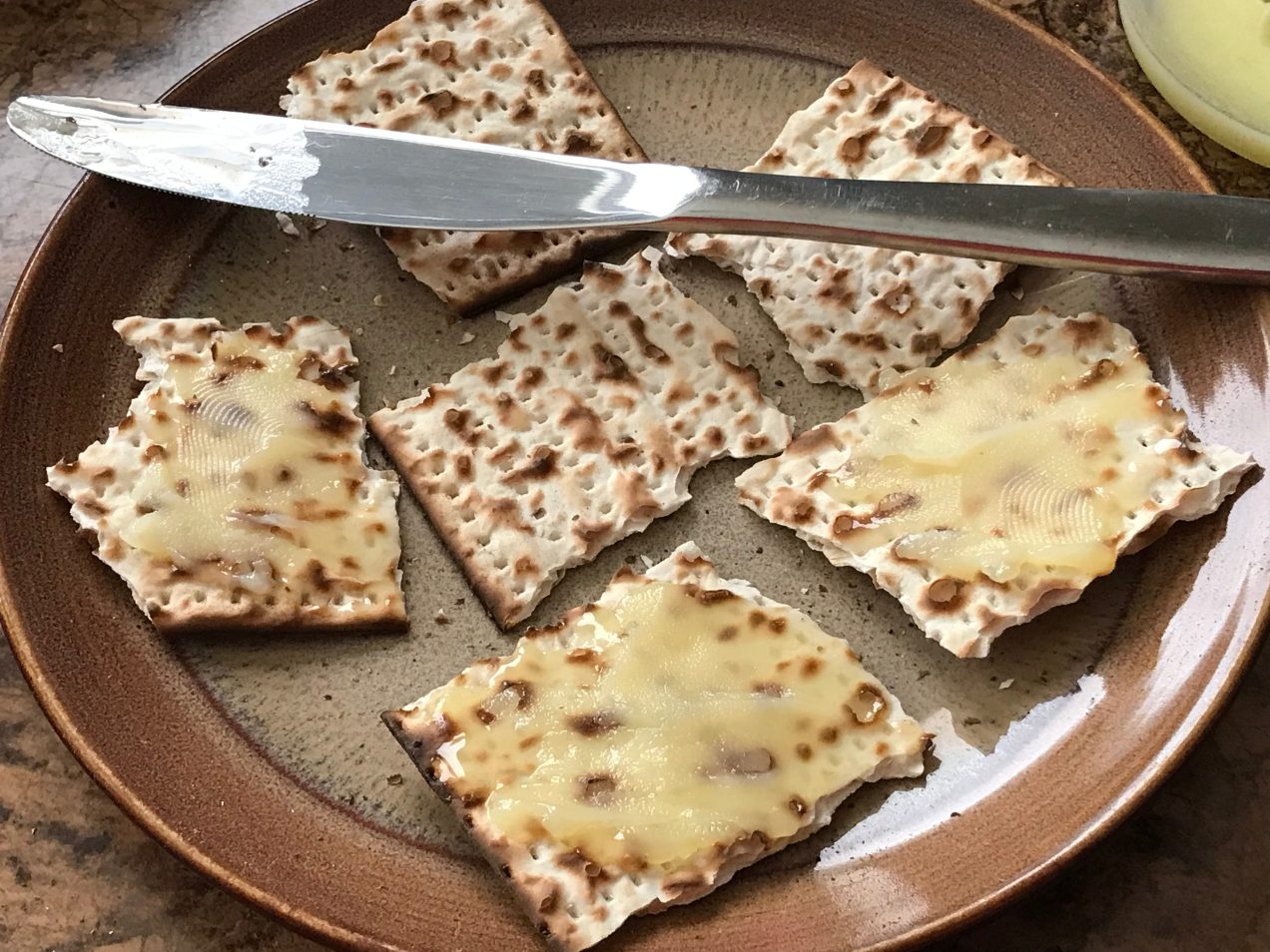
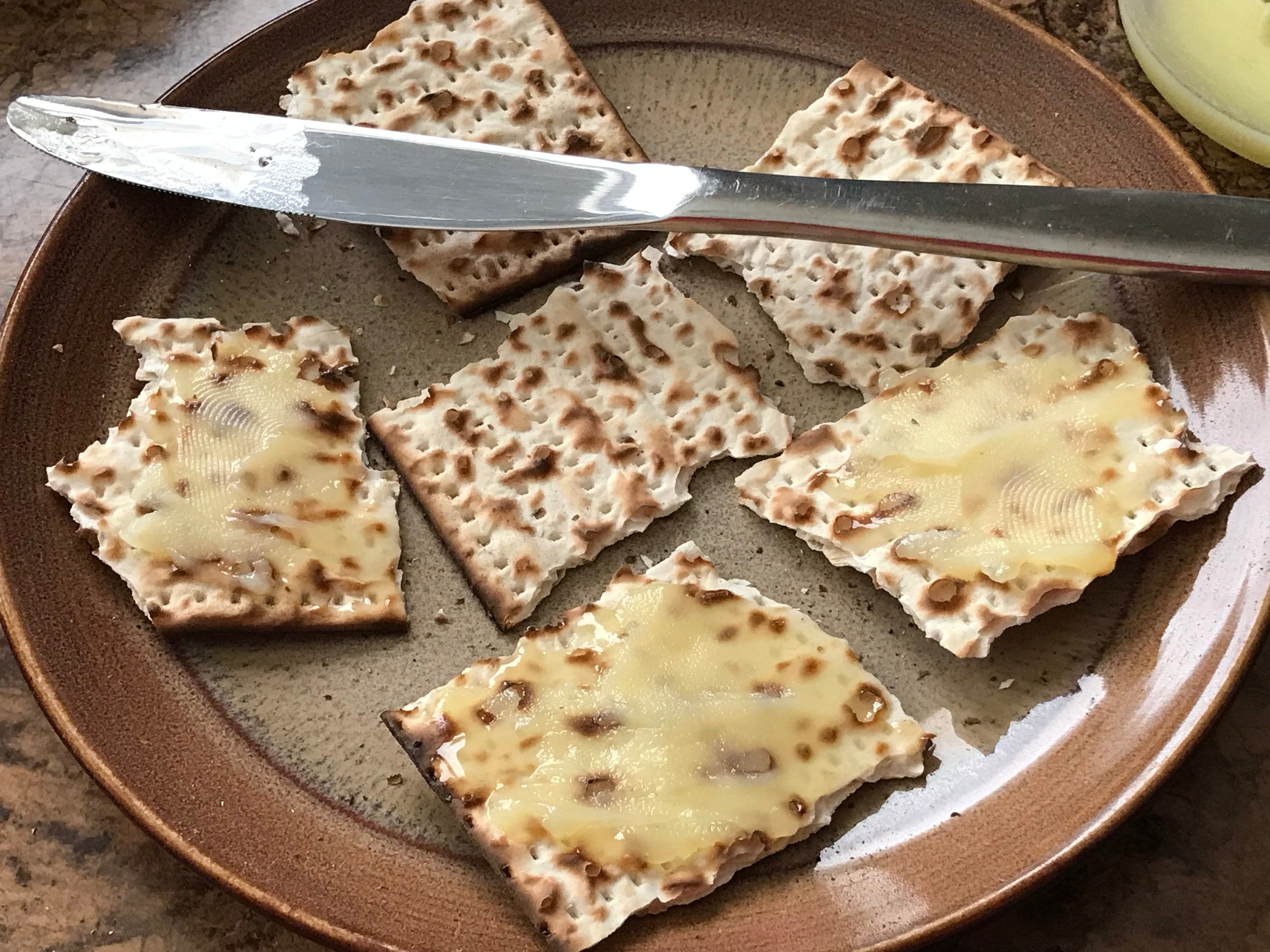
For generations, New Yorkers have used schmaltz in frying, knishes, and even as a spread on matzo crackers. Since the recipe on pages 464 – 465 of 1000 Foods to Eat Before You Die doesn’t make a huge quantity and I only had enough chicken skin for half, I decided to follow Mimi Sheraton’s suggestion to try it on piece of matzo with just a little salt. It wasn’t bad, tasting sort of like fried chicken cooked in slightly overused oil, and was even tasty after getting used to the flavor coming from a soft spread. The little chicken cracklings, called gribenes, were even better, tasting like pieces of fried chicken skin, which they what they are.
Advertisements
That said, schmaltz is a lot of work for a small reward. Not to mention, half of the cracklings stuck to the bottom of my pan, requiring multiple soakings and scrapings to remove. With the widespread availability of vegetable oils, shortening, and margarine, rendered chicken or other poultry fat is no longer necessary for kosher frying. And for anyone craving the fatty chicken flavor, many grocery stores sell ready-made fried chicken.
Schmaltz certainly has historical interest, and is currently enjoying a culinary revival, but I struggle to see the appeal. Having grown up eating non-kosher casseroles with ham and cheddar cheese, cheeseburgers, and pulled pork, the traditional “New York deli” specialties don’t have any nostalgia value. Would I scrape the solidified fat from a chilled pot of chicken or turkey soup to make gravy? Certainly – it would give the poultry flavor a nice boost. But I’m unlikely to make my own schmaltz again. It was worth trying once. In this case, once was enough.
By European standards, France is a large country. As with any nation with varied terrain and climate, it has a number of regional specialties. There are the dairy-heavy cuisines of Normandy and Brittany, Germanic-inspired dishes of Alsace in the northeast, and wine-based sauces and stews from the wine-growing regions of Burgundy and Bordeaux. And in the south, along the Mediterranean, is Provence, where many dishes resemble those from neighboring Liguria in Italy.
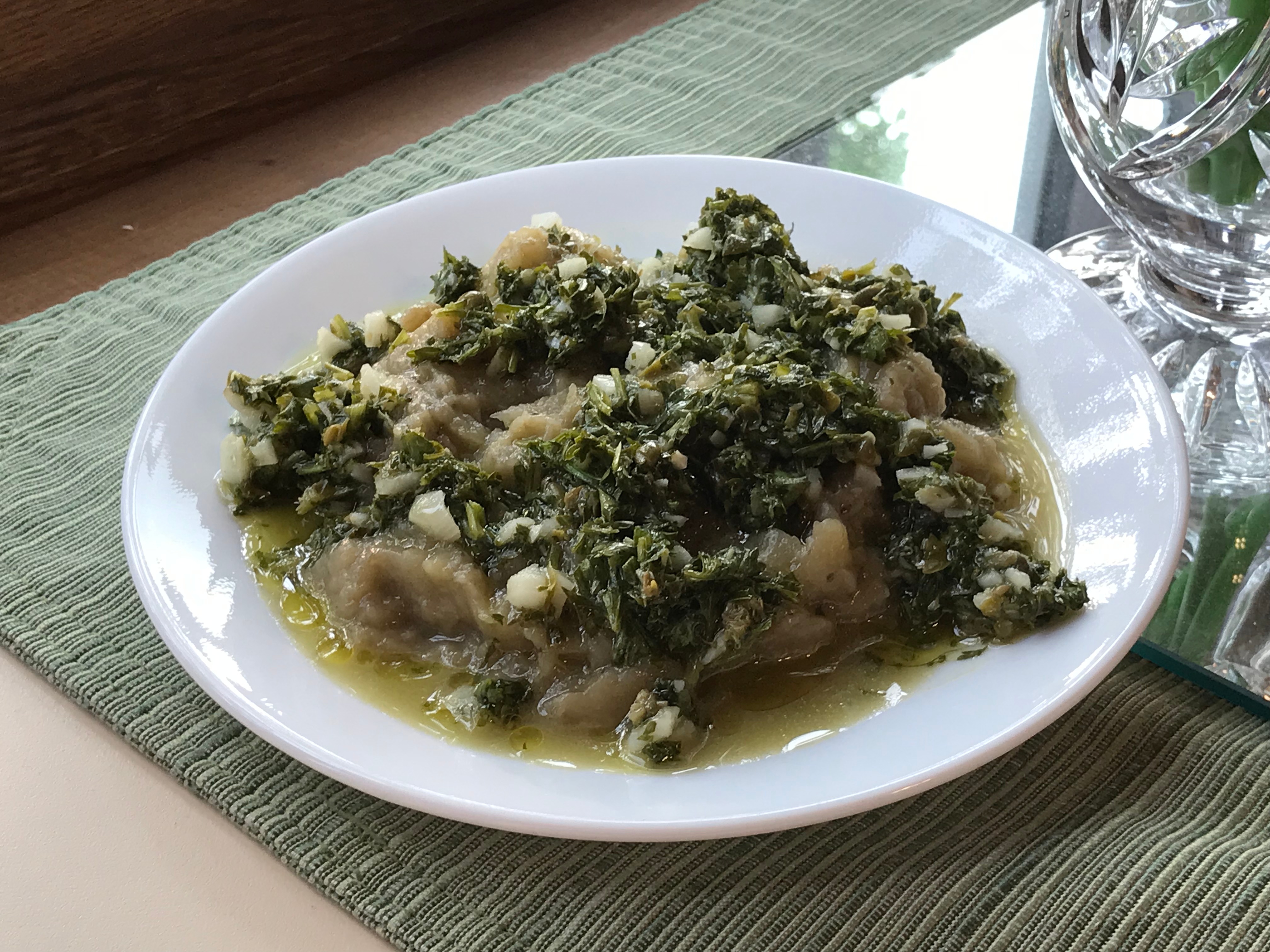
Provence is one of the few French regions where olive trees can produce fruit. The oil is ubiquitous, including in a sauce for roasted eggplant. Other Mediterranean flavors come from lemon juice, capers, and a bit of anchovy. Before you get grossed out, it’s just a small amount of paste used as a flavor booster, not enough to make it taste “fishy.” All these other flavors, which are rather strong on their own, plus garlic and plenty of fresh parsley, balance it out.
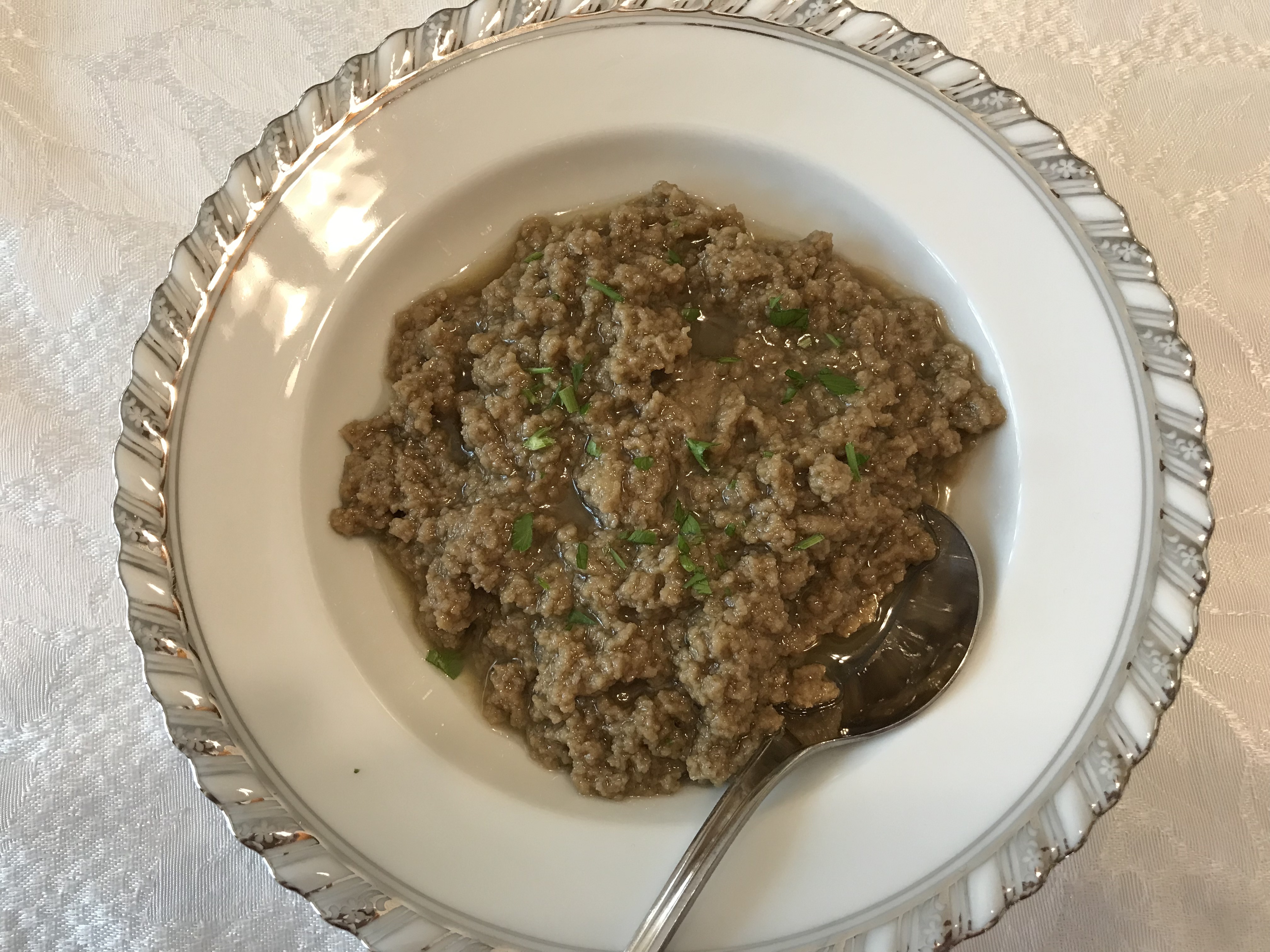
Aubergine is the French word for eggplant. Here it is cooked and pureed just like in baba ghanoush, except in the oven instead of over a wood fire, producing a lighter color and mild, slightly sweet flavor. Rather than mixed into the puree, the sauce is served over the top, for a greater contrast.
As Mimi Sheraton suggested in 1000 Foods to Eat Before You Die on page 54, a simple description is sufficient to compose a recipe, at least for the sauce. It was the eggplant itself that gave me trouble. When cooking whole, which is necessary to keep the pulp a greenish color instead of browning, it takes a surprisingly long time to soften. At 400 degrees Fahrenheit (or just under 205 degrees Celsius), it took nearly an hour. Since it was a cool day that was fine, but on a hot summer day that would never be an option. Plus, using the oven for that long for one fairly small item doesn’t seem energy efficient.
I considered ways to “pre-cook” the eggplant before finishing it off in the oven. After poking holes all over (to release steam and avoid an explosion), boiling or steaming would probably introduce too much water. But what about the microwave? They work by making water molecules move faster, creating friction and raising the temperature. And since the rays pass through the food, the center warms up much faster than with other cooking methods.
For a vegetable like eggplant, which has a high water content, this worked like a charm. To avoid an explosion and mess, I poked the holes all the way through with the pointy end of a meat thermometer, giving plenty of openings for steam to escape. Just heat on a microwave safe plate, turn every two minutes, and be careful when handling. The eggplant steams inside the skin, creating the perfect silky texture with just the right amount of moisture.
As it turned out, the oven wasn’t even required, making this interesting dish perfect for a hot day. When the eggplant is cool enough to handle, just cut in half, scoop out the pulp, puree it, and serve warm or at room temperature with the sauce. Accompany with bread, crackers, or crunchy vegetables.
The sauce recipe is easy to double and can be kept in the refrigerator for several days. Don’t worry if the oil solidifies; it will turn liquid again as it warms up. This is common for vinaigrette-type dressings and sauces. Just get them out of the fridge half an hour to an hour or so before using, and they’ll be fine.
Ingredients:
1 large eggplant, about 2 pounds
3 tablespoons olive oil
Juice from ½ lemon
1 clove garlic, minced
2 tablespoons capers, minced
¼ teaspoon anchovy paste
½ bunch parsley, minced
Salt to taste
Directions:
Combine all ingredients except eggplant, parsley, and salt in a bowl and whisk to dissolve anchovy paste and combine.
Whisk in the parsley and taste for salt. The anchovy paste and capers are both salty, so you might not need it.
Set sauce aside at room temperature, or refrigerate overnight. Bring to room temperature before serving.
Poke holes all over the eggplant, all the way through. Place on a microwave-safe plate and cover with a paper towel. Microwave on high for 8 to 10 minutes, turning every 2 minutes, until a skewer slides easily into the flesh. Let rest until cool enough to handle.
Cut eggplant in half and scoop flesh into bowl of a food processor. Process until smooth.
Scoop eggplant puree onto a plate, spoon sauce over, and serve with bread, raw vegetables, and/or crackers.
For more recipes and food history, sent right to your inbox, please like, subscribe, and/or share.
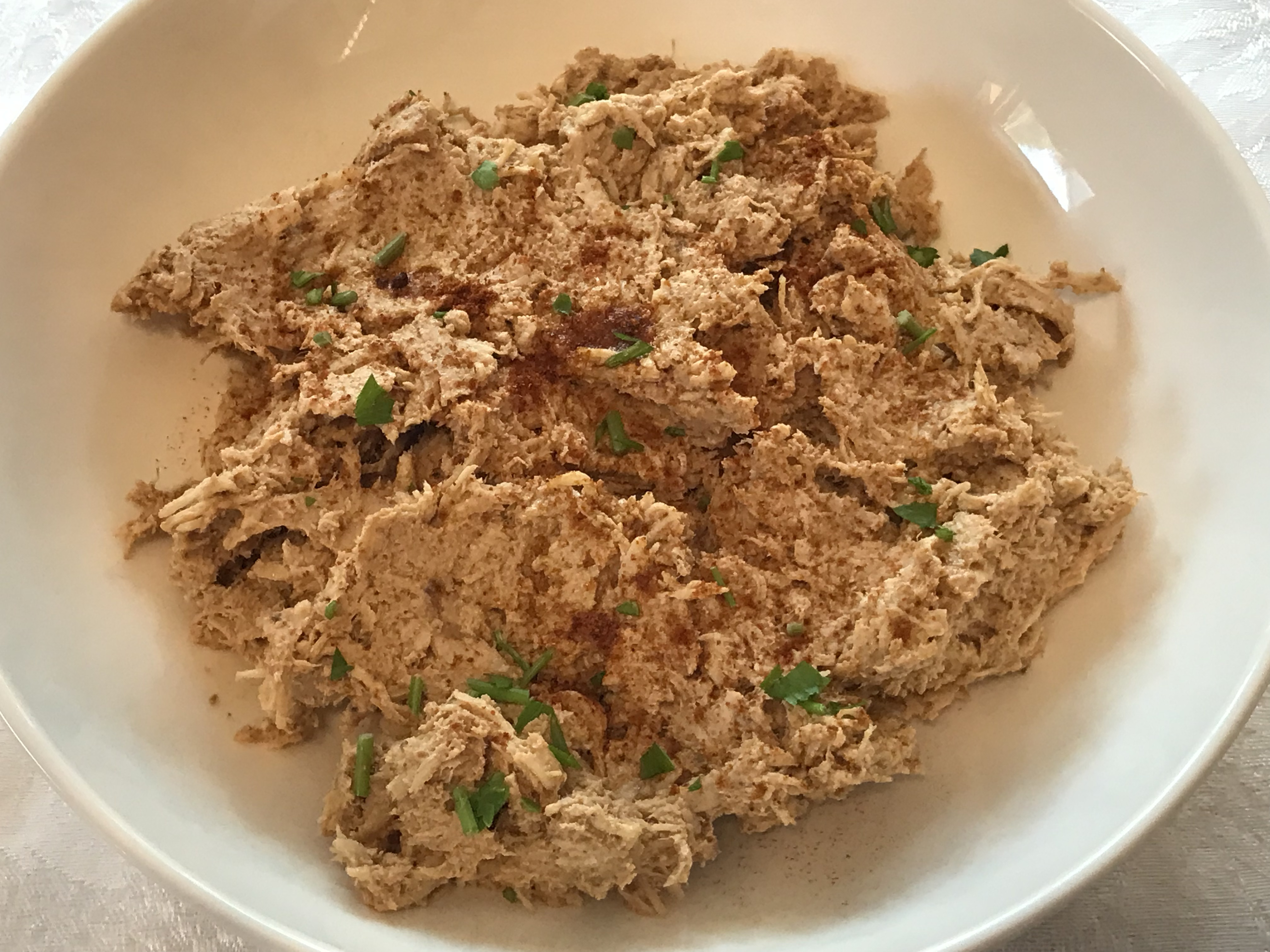
This dish’s name, Cerkez tavugu, literally translates to “Circassian chicken.” Supposedly, the combination of shredded chicken in a creamy walnut sauce originated in Circassia, a region east of the Black Sea and just north of the Caucasus Mountains. Now part of Russia, Circassia was controlled by the Ottoman Empire for much of the Early Modern Era. During those centuries, the recipe was carried around the empire, hence the Turkish name and similarities to Greek skordalia and Balkan scordolea.
The primary difference between the sauce for Circassian chicken and walnut scordolea is in the flavoring. Both use garlic, but the Turkish version replaces some of it with onion and seasons the dish with paprika. Traditionally, hot paprika is used, but I use sweet paprika and cayenne pepper to better control the heat. That ensures plenty of paprika flavor, with exactly as much bite as desired.
Paprika, a blend of dried ground peppers, may have reached Turkey in two ways. From 1519 to 1556, Spain, much of the Low Countries, Naples, Sicily, part of Germany, Austria, Bohemia, and Hungary were all part of the empire of Charles V. Sweet and hot peppers might have been brought to Europe by the Spanish, who spread them across the Habsburg Empire. On their eastern frontier, Charles V, his brother Ferdinand I, and their descendants fought the Ottomans off and on for centuries. As the frontier shifted back and forth, peppers and paprika may have entered the Ottoman Empire via Hungary.
Another possibility is that the Portuguese acquired peppers on their own voyages of exploration or from the Spanish. From there, peppers could be introduced across their vast trade network around the coasts of Africa, India, and into Indonesia and Malaysia. Unlike Europeans, who looked at hot peppers and mostly shrugged, Africans and Asians went crazy for them. Once chili peppers were introduced to Africa, they could have reached the Ottoman Empire through their holdings in Egypt and the North African coast.
Regardless of how it got to Turkey, paprika and cayenne pepper make for an amazing sauce with an evolving flavor. When you first take a bite, it tastes slightly sweet. Then it’s sour and creamy, followed by a spicy finish.
Ingredients:
2 chicken breasts, ideally bone-in skin-on
A few pieces onion, carrot, and celery
1 cup walnuts
2 slices good-quality bakery white bread, crusts removed
¼ cup milk
1 garlic clove, peeled, crushed with the side of a knife, and coarsely chopped
¼ cup chopped onion
Juice of ½ lemon
¼ cup olive oil
1 tbsp sweet paprika (make sure it’s fresh), plus extra to garnish
½ to 1 tsp cayenne pepper
Chopped parsley, for garnish
Directions:
Slow cook the chicken with the onion, carrot, celery, a pinch of salt, and just enough water to cover. In a slow cooker, it typically takes about 4 hours on high or 6 on low.
Remove the skin and bones from cooked chicken and shred the meat, either with two forks or clean hands. Cool completely.
Place bread in a bowl, drizzle with milk, and let rest while you toast the walnuts.
Heat the walnuts over medium heat in a skillet, shaking pan occasionally, until they smell toasty. Watch carefully, this only takes a few minutes.
Place the toasted nuts into a food processor and pulse a few times. Add the bread and any extra milk, the garlic, onion, and a little salt. Process until smooth and blended.
Add the lemon juice, paprika, and ½ teaspoon cayenne pepper and process again. Taste for salt and cayenne, adding more if desired. This usually has a kick but is not overly spicy.
With the motor running, slowly add the oil through the processor’s feed tube.
Slowly add ½ cup water, mixing until incorporated. The sauce should have a thick, creamy texture.
Transfer the sauce to a bowl, add the shredded chicken, and toss to combine. Garnish with additional paprika and chopped parsley.
Soon it will be time for apple and pumpkin dishes! For free recipes and posts sent straight to your inbox, make sure to subscribe.
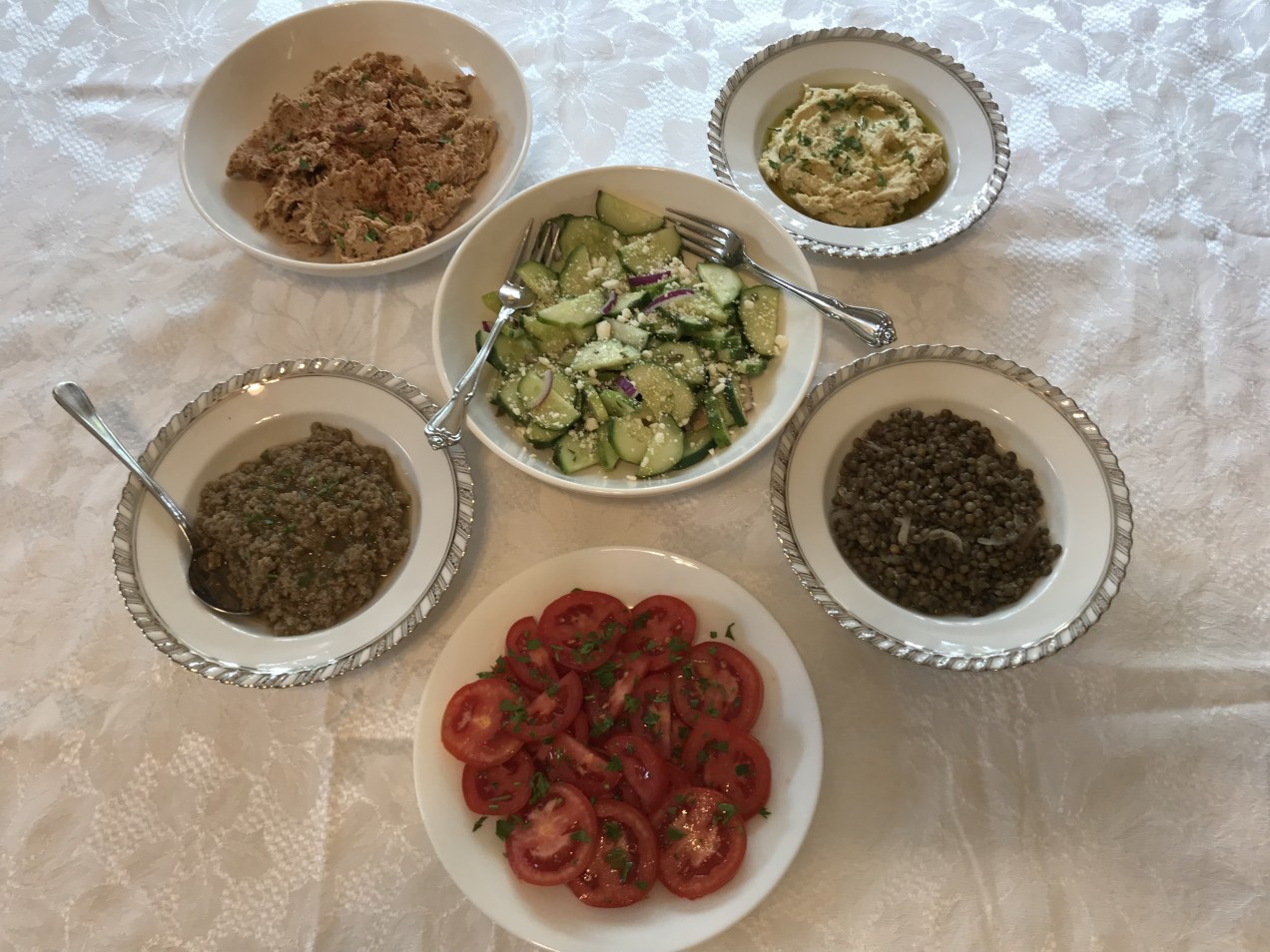
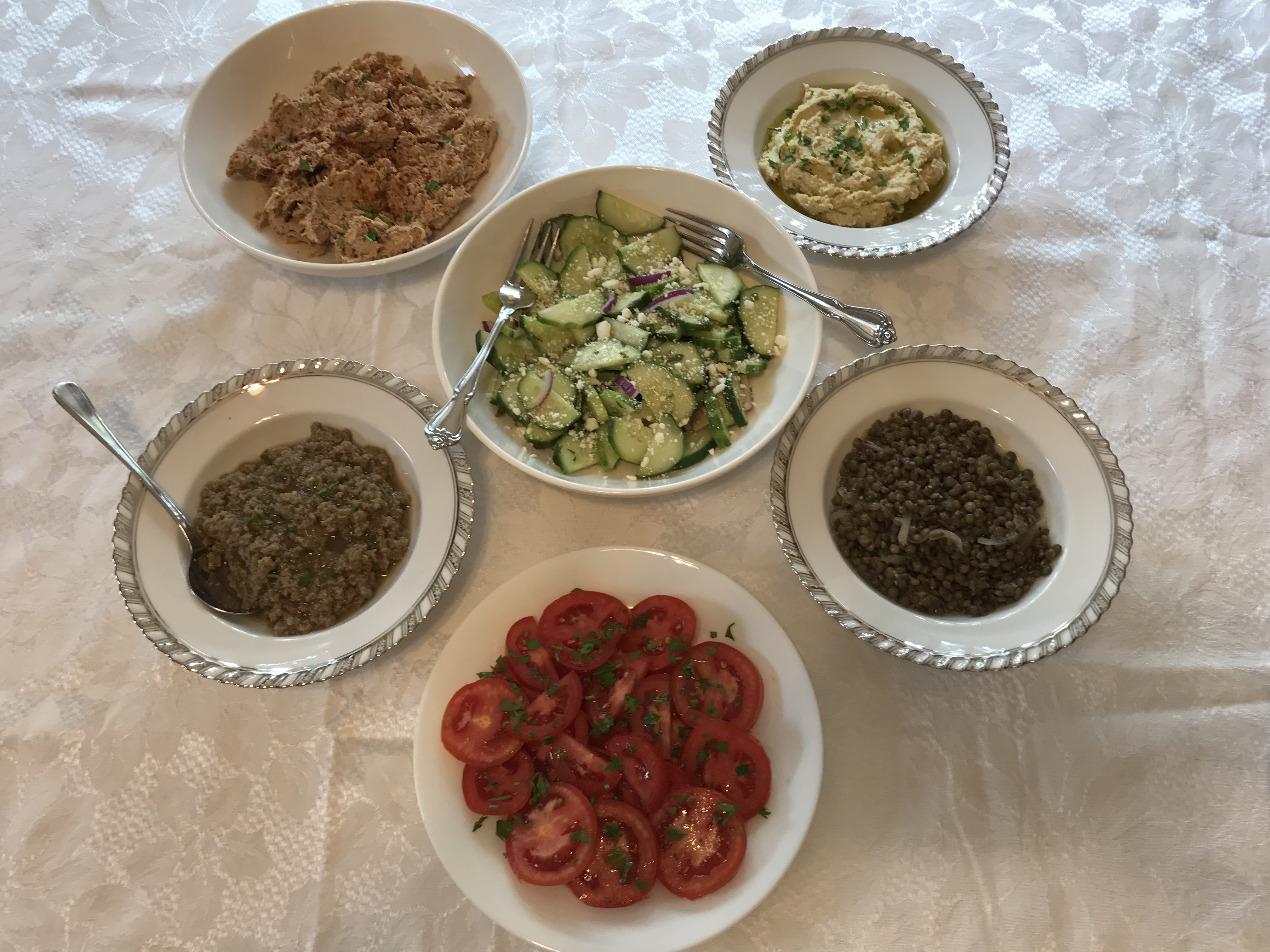
Menu: Hummus, Tahini Dip, Tomato Salad, Cucumber Salad, French-Style Lentil Salad, Turkish-Style Chicken with Walnut Sauce (last two recipes in subsequent posts)
Just as Spain has tapas and Italy has antipasti, Greece and the Middle East have meze. Reading through Mimi Sheraton’s description of the different varieties in 1000 Foods to Eat Before You Die (on pages 498 – 500), it became abundantly clear they would be perfect for entertaining a crowd, particularly during the summer. Most of the common varieties are served cold or at room temperature, and so could be made ahead. Only a few need last minute cooking, and many require no cooking at all. For a barbecue, meze would be ideal to either nibble before the other food comes off the grill or to serve alongside the main dishes.
Because meze are traditional over such a large area, with diverse landscapes, climates, and traditions, the variety is endless. Common options include olives, vegetable and legume salads, sausages, various dips like hummus or baba ghanoush, fish, stuffed grape leaves, fried items, tabbouleh, and phyllo pastry turnovers, alongside more local specialties. A large proportion of meze are flavored with lemon, garlic, olive oil, or fresh herbs.
Meze usually serve as a leisurely meal on their own, so having a variety with some substantial dishes is important. So is plenty of pita bread. For a representative summer/early fall selection, I chose hummus (a classic and always a favorite), tahini dip (interesting on its own), tomato, cucumber, and lentil salads, and Cerkez tavugu (Turkish chicken with walnut sauce). As long as you have a food processor, this entire menu is easy to put together. It’s a good idea to make the hummus, tahini dip, lentil salad, and chicken dish a day ahead to allow time for flavors to meld.
To make hummus:
Across the Middle East, hummus is frequently eaten as a main dish with pita bread. The idea makes perfect sense. Historically, people got much more protein from legumes like chickpeas than from meat. Comparatively speaking, the chickpeas and flavorings were relatively affordable staples. True connoisseurs say that the best hummus is made with a mortar and pestle, with dried chickpeas, but to save time, canned chickpeas and a food processor make a delicious, protein and vitamin-packed snack or meal.
Ingredients:
1 can chickpeas/garbanzo beans (about 15.5 ounces), drained
4 cloves garlic (peeled, crushed with the side of a knife, and roughly chopped
½ cup tahini (sesame seed paste)
Juice of ½ to 1 lemon
¼ cup olive oil, plus more to drizzle if desired
Chopped parsley to garnish, if desired
Pita bread and/or vegetables, for serving
Directions:
Combine the chickpeas, garlic, tahini, and juice of ½ lemon in the bowl of a food processor with a pinch of salt. Process to make a thick, slightly gritty paste, scraping bowl as necessary.
With the motor running, slowly add the olive oil through the feed tube. Once the oil is incorporated, taste for salt and lemon, adding more if necessary.
Add water to thin hummus to the desired consistency. ¼ cup produces a thick paste, for a thinner paste, use ½ cup.
Spoon hummus into a bowl. If desired, drizzle with olive oil and garnish with parsley, olives, roasted peppers, etc. (In the Middle East, pomegranate seeds are a popular garnish).
Serve with pita bread and/or vegetables for dipping.
To make tahini dip:
Tahini actually makes a fascinating, although distinctly bitter, dip on its own. Personally I prefer it sweetened for halva or used for hummus, but the bittersweet flavor is beloved across the Middle East. Here its flavor is further enhanced with garlic, salt, and lemon juice. All you have to do is crush 1 garlic clove with ¼ teaspoon salt in a mortar and pestle until it becomes a sticky paste. Stir the garlic paste into ½ cup of tahini, and mix in 2 teaspoons lemon juice and 2 tablespoons water. The paste will appear to “seize,” just keep stirring to smooth it out. Don’t add more water, which will make the oil separate out. Place in a bowl and serve with pita bread and/or vegetables (during the late summer and early fall, fresh carrots are particularly tasty).
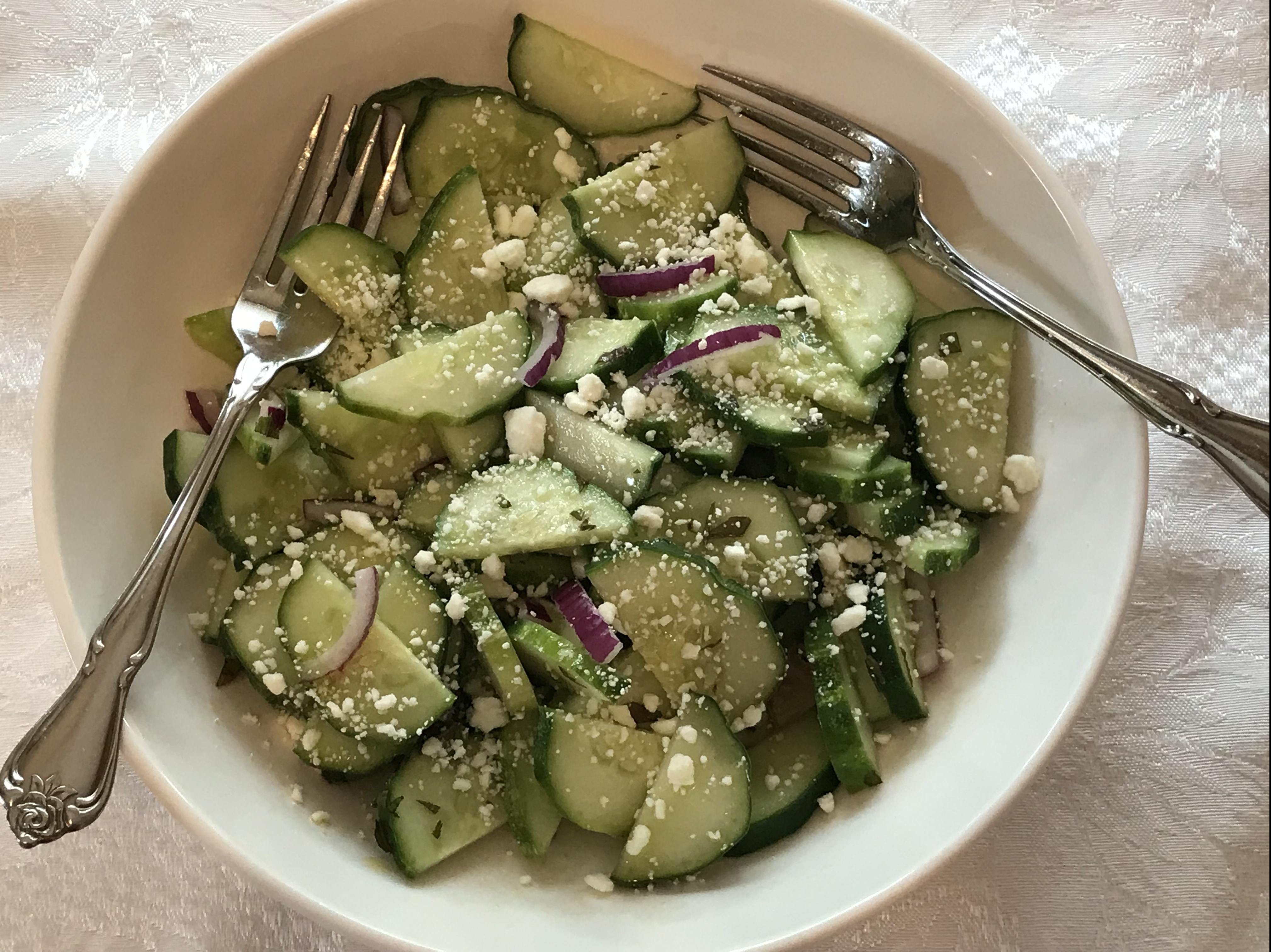
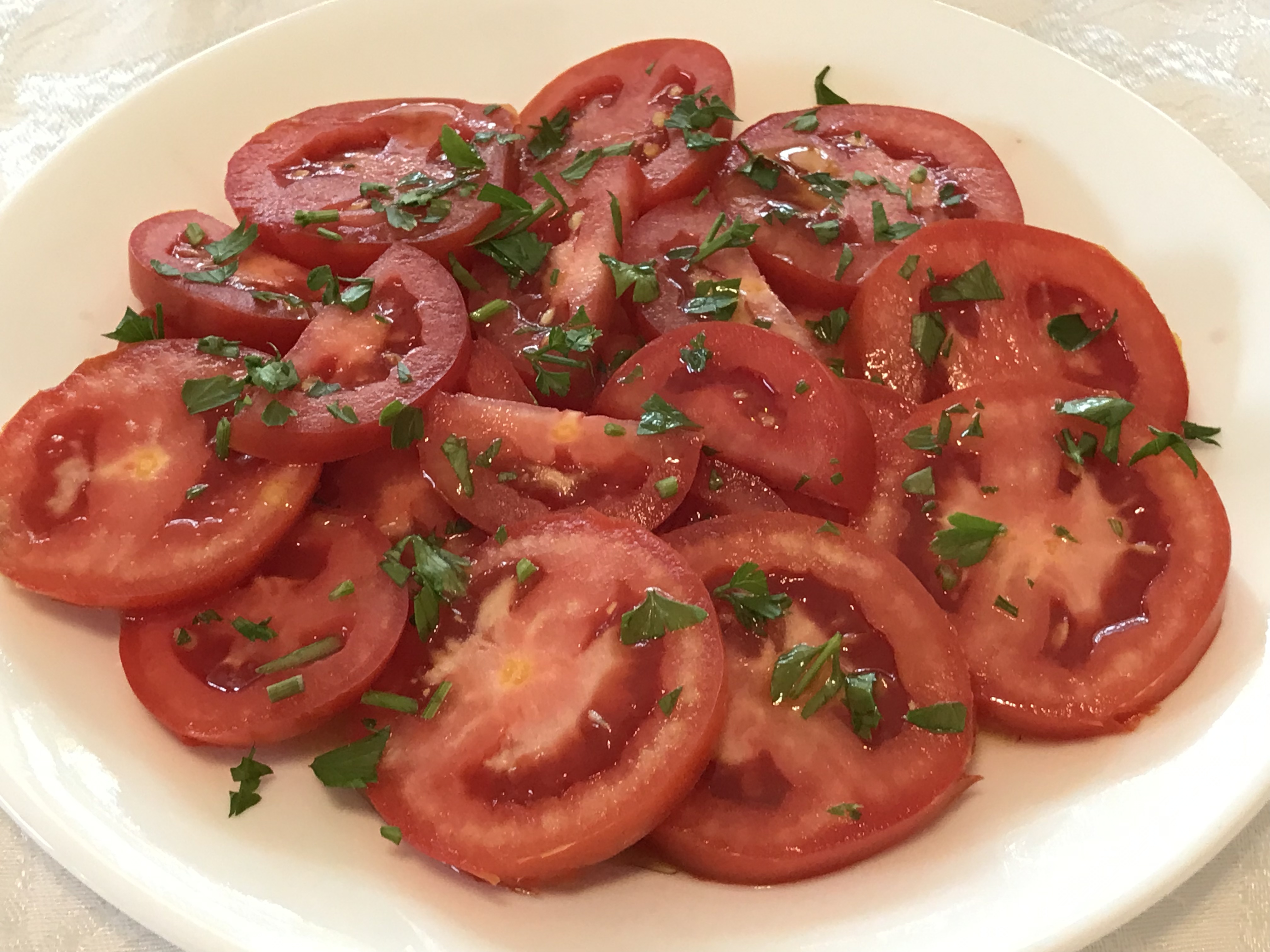
Cucumber salad: refreshing and prettyTomatoes and parsley came from my own plants
To make tomato salad:
First, make sure you have fresh seasonal tomatoes. If so, cut them into chunks or thin slices, place on a plate, drizzle with olive oil, salt and pepper to taste, and garnish with chopped parsley for a beautiful red and green effect. (If tomatoes aren’t in season, choose a different meze dish for the best flavor.)
To make cucumber salad:
Cucumbers, with their mild flavor and high water content, are quite refreshing, which reminds me of a story I heard recently. During the early centuries AD, Christian ascetics competed with each other, seeing who could eat the least food, go the longest without sleep, and so on. This was particularly common in the deserts of Egypt and Syria. In one instance, an ascetic tested his resolve by sitting in the hot sun with a cucumber and seeing how long he could go without eating it. He lasted for several days (presumably he had some water), at which point I shudder to think of the condition of the cucumber.
For a better-tasting salad, use 2 large or 4 small cucumbers. Peel them if desired, and slice thinly. Toss with ¼ red onion, also thinly sliced, 2 tbsp olive oil, 1 tbsp red or white wine vinegar, and a few finely chopped mint leaves. If desired, add a few crumbles of feta cheese.
Another common way to prepare cucumbers for meze is to combine with yogurt. Next time, I’ll have a recipe for green lentil salad, so be sure to subscribe.
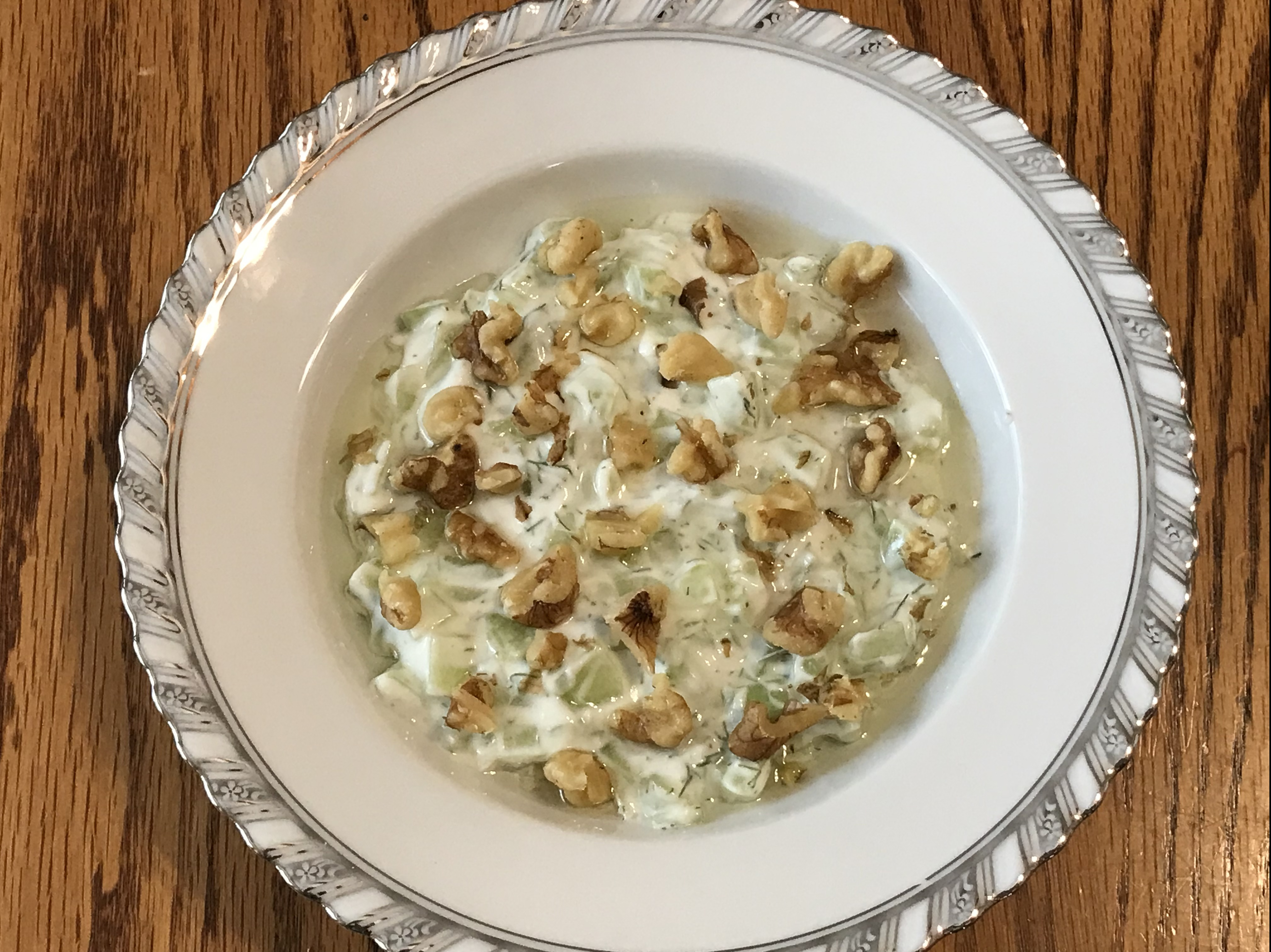
Tarator, a cucumber-walnut “soup” from the Balkans
The Balkans, or the southeastern corner of Europe south of the Danube and west of the Black Sea, has a fascinating and often tumultuous history. Fertile valleys and plains, broken up by various hills and mountains, were home to numerous ancient civilizations – Greeks, Illyrians, Dacians, Scythians, and Sarmatians. The Persian Achaemenids tried to expand their empire here just before and after 500 BC. During the 3rd Century BC, there was even a brief Celtic incursion.
The Romans were the first outside power to conquer and hold the Balkans. From the 2nd Century BC to the 5th Century AD, they both absorbed and influenced local cultures. Wealthy Romans were fascinated by Greek civilization, and many of the non-Greeks began to speak Latin. Anyone who spoke Latin or Greek and adopted Greco-Roman customs (which fused together somewhat during this time) could become a citizen, and many of the local people did. During the later Roman Empire, two of the most influential emperors, Diocletian and Constantine the Great, came from the Balkans, probably around modern-day Serbia.
From the 3rd Century AD onward, new waves of invaders entered the Balkans. The first were the Germanic Goths, who were eventually pushed back, but not before killing Emperor Decius in battle in 251 (Decius was also from the region, by the way). After abandoning the province of Dacia in modern-day Romania, the Romans secured the Danube frontier for another century, when various Germanic confederations pushed into the Balkans again, fleeing from the Huns. The Goths were back, accompanied by the Vandals and others.
What happened next was complicated, but basically went as follows. The leader of the Goths, named Fritigern, asked the Romans if his people could settle in the Empire in exchange for military service. The Romans, facing manpower shortages, agreed, but then broke their word and mistreated the Goths, which led them to revolt. After they killed another emperor, named Valens, in battle in 378, the Romans eventually honored their agreement. Over the next decades, Germanic troops made up more and more of the army.
After the Empire was divided for good in 395 AD, most of the Balkans became part of the Eastern Roman Empire. Through a combination of better leadership, greater wealth, and a shorter frontier, the Eastern Empire was able to force/bribe the Germanic groups to leave. These Goths, Vandals, etc. then headed west and dismantled the Western Roman Empire. After the Eastern Empire teamed up with the Western Empire and the Goths against the Huns in the 450s, the last “barbarian” group in the Balkans was the Ostrogoths, or Eastern Goths. The emperors sponsored sending them to Italy in the 490s to drive out the Visigoths, or Western Goths, and no Germanic confederations tried to invade the Balkans again. But that did not mean the region was safe, as I will explain in the next post.
With so many diverse cultures coming and going, along with a favorable climate with plenty of sunshine and rain, the food in the Balkans became just as diverse. Records indicate that the Dacians grew wine grapes. The Romans, who valued fresh produce, either introduced or improved a variety of fruits and vegetables. They were known to enjoy cucumbers, which make up the base of tarator.
In 1,000 Foods to Eat Before You Die on page 381, Mimi Sheraton suggests 3 ways to prepare walnuts, which have grown in the Balkans for millennia. One of those methods is an egg salad called aselila. Even with a walnut-based dressing replacing mayonnaise, the hard-boiled eggs are a non-starter for me. The walnut and cucumber mix sounds a little like tzatziki sauce, with cucumbers, yogurt, garlic, and dill. It is finished with a bit of sunflower oil and chopped walnuts. The whole idea seems a bit odd as a soup, but pretty good as a dip, so I made my recipe thicker.
Preparation is simple. There are two tricks to get the best results. First, toss the diced or grated cucumbers with salt and let drain for an hour to remove excess moisture that might otherwise make the dip watery. Second, the garlic needs to be crushed with salt, but there is not enough of it to do so in a food processor. A mortar and pestle work best. Once this is done, combine with the yogurt and dill and let sit until the cucumbers are finished draining, so the flavors can infuse.
Ingredients:
2 large or 4 small cucumbers, peeled, seeded, and diced or grated (I like diced for more texture)
1 ¼ teaspoons coarse salt
2 garlic cloves, peeled, crushed with the side of a knife, and coarsely chopped
1 cup whole milk plain yogurt (doesn’t have to be Greek yogurt, just make sure not to use low-fat or fat-free)
A few sprigs dill, minced after removing any tough stems, or ½ teaspoon dried
Sunflower oil, to drizzle
Coarsely chopped walnuts, to garnish
Directions:
Toss the cucumbers with one teaspoon of the salt and place in a colander to drain for an hour.
Place the garlic and remaining salt in the bowl of a mortar. Work with the pestle until a sticky, mostly smooth paste forms. A few lumps of garlic are fine.
Combine the yogurt, garlic paste, and dill in a bowl and allow to sit until the cucumbers are finished draining. Add the cucumbers to the yogurt mixture and discard the liquid.
Place the cucumber-yogurt mixture in a serving bowl. Drizzle with the sunflower oil and sprinkle liberally with the chopped walnuts.
Serve the dip with pitas, other bread, or crackers.
Tarator seems odd as a soup, but as a dip, it’s fantastic. It sort of tastes like non-sour dill pickles, but creamy. Considering that tarator uses the same flavorings of salt, garlic, and dill, it makes perfect sense. The yogurt, sunflower oil, and chopped walnuts make it more substantial, so it could almost be a hot-weather meal on its own with pitas.




 Feasting Through Time