Ashkenazi charoset
dessert, fall, jewish cuisine, recipes, spring

Healthy Spring (or fall) Dessert: Ashkenazic Charoset

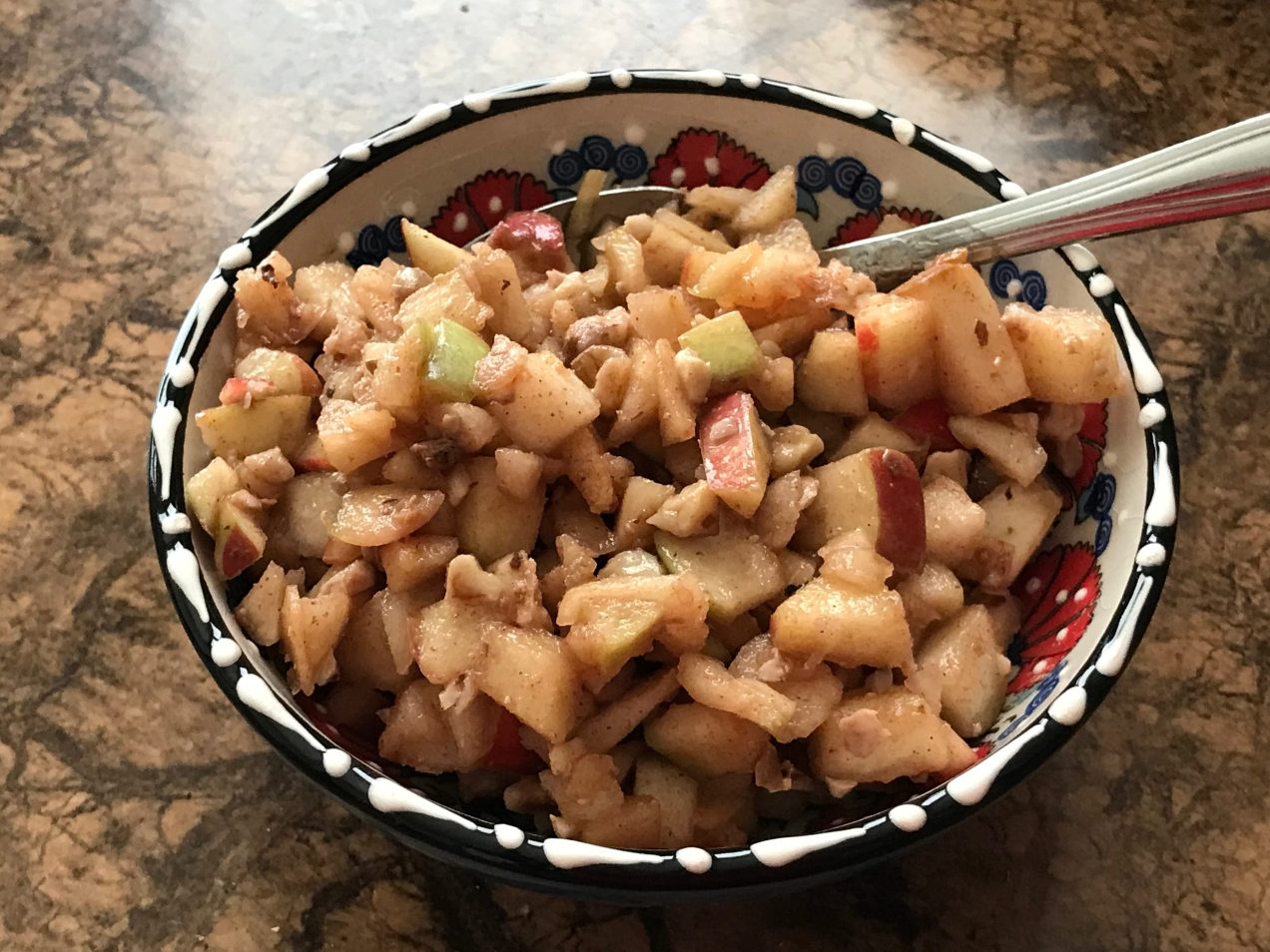
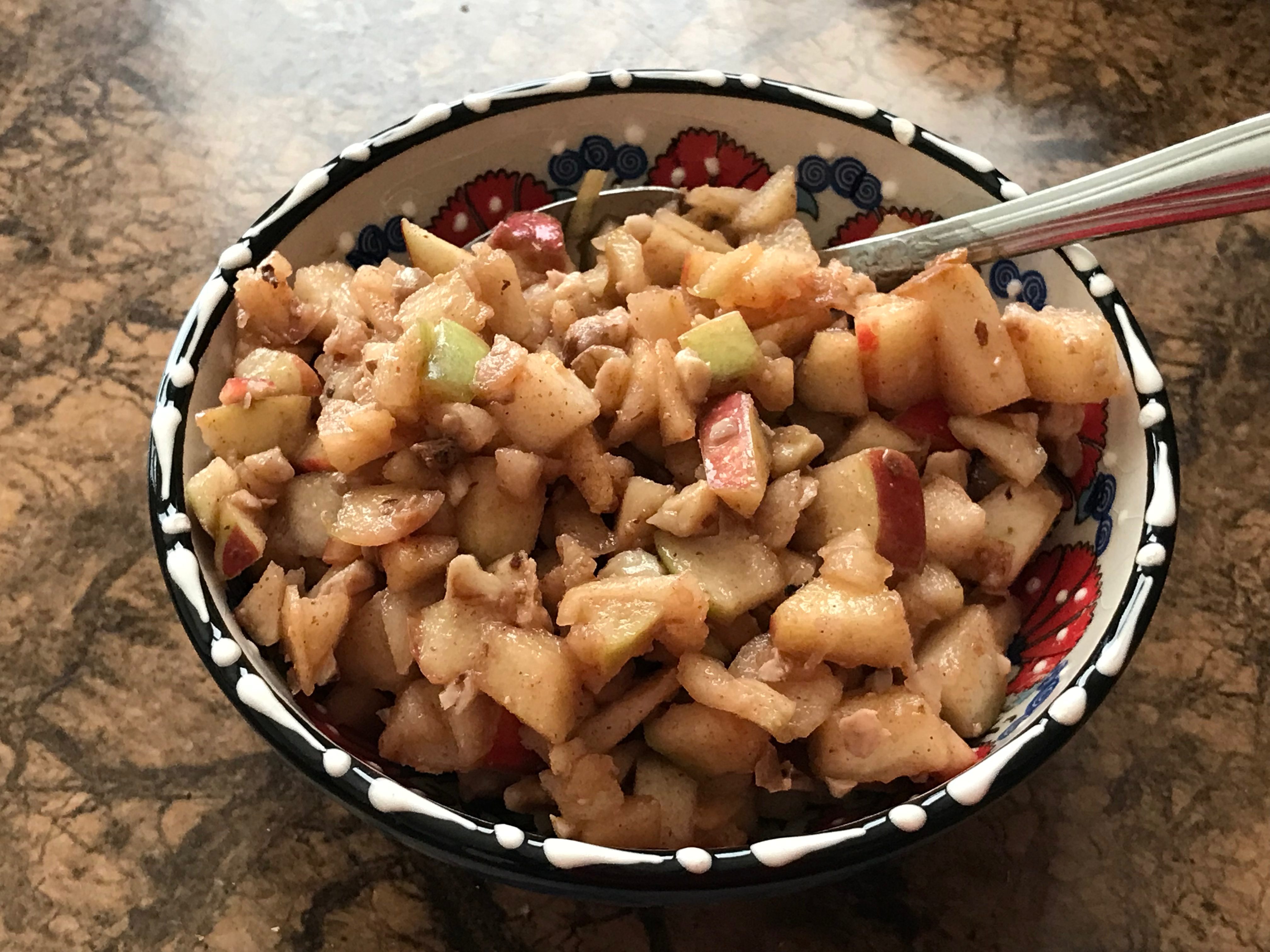
Ashkenazi charoset

            At first, it might seem strange to have apples in a dish for a spring holiday. Passover, the most important holiday on the Hebrew calendar, celebrates the Israelites’ Exodus from Egypt. It always occurs in the spring (in the Northern Hemisphere), while apples are a symbol of fall. On further reflection, the use of apples actually does make sense.

            Charoset is a blend of chopped fruit and nuts, representing the mortar enslaved Israelites used in Egypt, and is an essential element on the Passover Seder plate. Historically, most Ashkenazi Jews lived in Central and especially Eastern Europe. Not many fruits are in season there in March or April, but apples could be stored in a cold cellar over the winter. The only other option might be rhubarb, at least when there is plenty of sugar to counter the acid. Holiday food traditions seem to change more slowly than what people eat every day, so even with modern shipping and preservation, apples remain the base fruit.

            There are many recipes out there, typically including walnuts, sugar, spices, and an acidic liquid to keep the apples from oxidizing and turning brown. Most common is sweet, kosher red wine. Not all kosher wines are sweet, but Manischewitz, the most common brand (for all sorts of kosher products, in fact), is. With at least 51% concord grapes and a bit of extra sweetener, it tastes exactly like the classic non-fermented grape juice, with the alcohol flavor only coming in at the end. Naturally, grape juice would be the perfect non-alcoholic substitute.

Advertisements

            If you’re wondering why wine isn’t all kosher (as I was), it’s because ancient pagan people often used it in their rituals. To ensure their wine hadn’t previously been used in these rituals, the production from picking to transportation to serving had to be done by kosher-observant Jews. Unless, if I understand things correctly, it gets heated, which renders it unsuitable for pagan rituals. Once that’s done, anyone can handle it.

            Ashkenazi charoset is delicious, regardless of faith or season. It’s sweet, tart, two different kinds of crunchy, juicy, and especially tasty during the fall, when apples are freshest. Walnuts make the mix more substantial, and spices like cinnamon and ginger make it taste like crustless apple pie.

Ingredients:

  • 4 medium sweet-tart apples (I used 2 cortlands and 2 zestars)
  • ½ cup walnut pieces
  • A few drops of lemon juice, if desired
  • ½ teaspoon ground cinnamon
  • ¼ teaspoon ground ginger
  • ¼ cup (4 tablespoons) sweet kosher red wine or red concord grape juice
  • Sugar to taste

Directions:

  1. Core the apples, slice, and mince as finely as you can with a knife. (One of those devices that cores an apple and cuts it into 8 or 10 slices works perfectly for the first part, and I don’t bother peeling. If using a food processor for the second part, be careful not to overprocess.) Place in a large bowl. Toss with a few drops of lemon juice if desired.
  2. Mince the walnuts and stir in, distributing evenly. Add the spices and wine and stir again.
  3. Taste for sweetness. Depending on the apples, you may or may not need sugar. If the mix needs it, add sugar a tablespoon at a time, tasting as you go.
  4. Let rest in the refrigerator for 24 hours for the best flavor.

            If you enjoyed this, please like, share, and/or subscribe.

One-Time
Monthly
Yearly

Make a one-time donation

Make a monthly donation

Make a yearly donation

Choose an amount

$5.00
$15.00
$100.00
$5.00
$15.00
$100.00
$5.00
$15.00
$100.00

Or enter a custom amount

$

Your contribution is appreciated.

Your contribution is appreciated.

Your contribution is appreciated.

DonateDonate monthlyDonate yearly
Standard
Uncategorized

Reanimating Tough Beef: Mushroom Barley Soup

1000 Foods (pgs. 450 – 451)

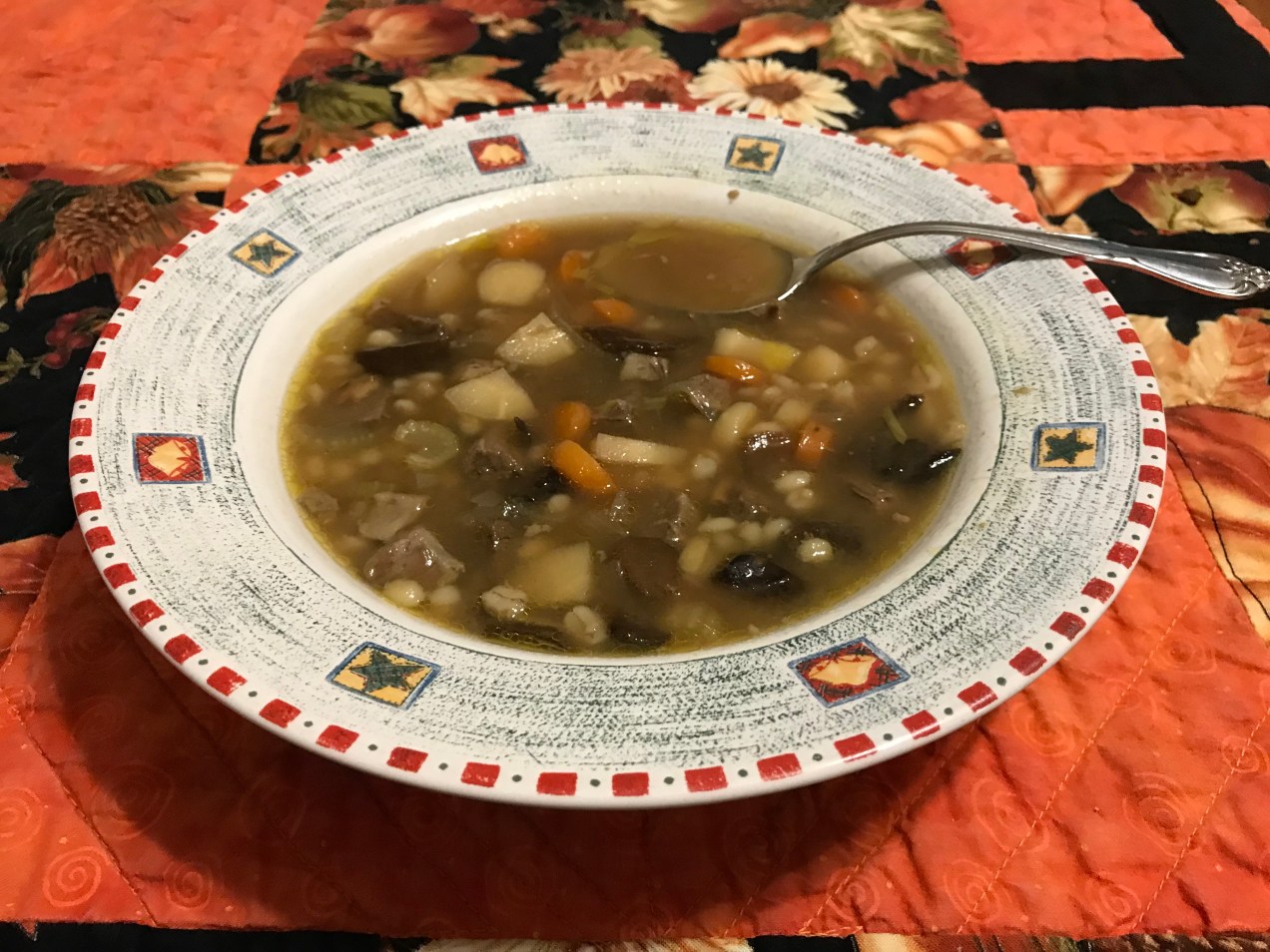
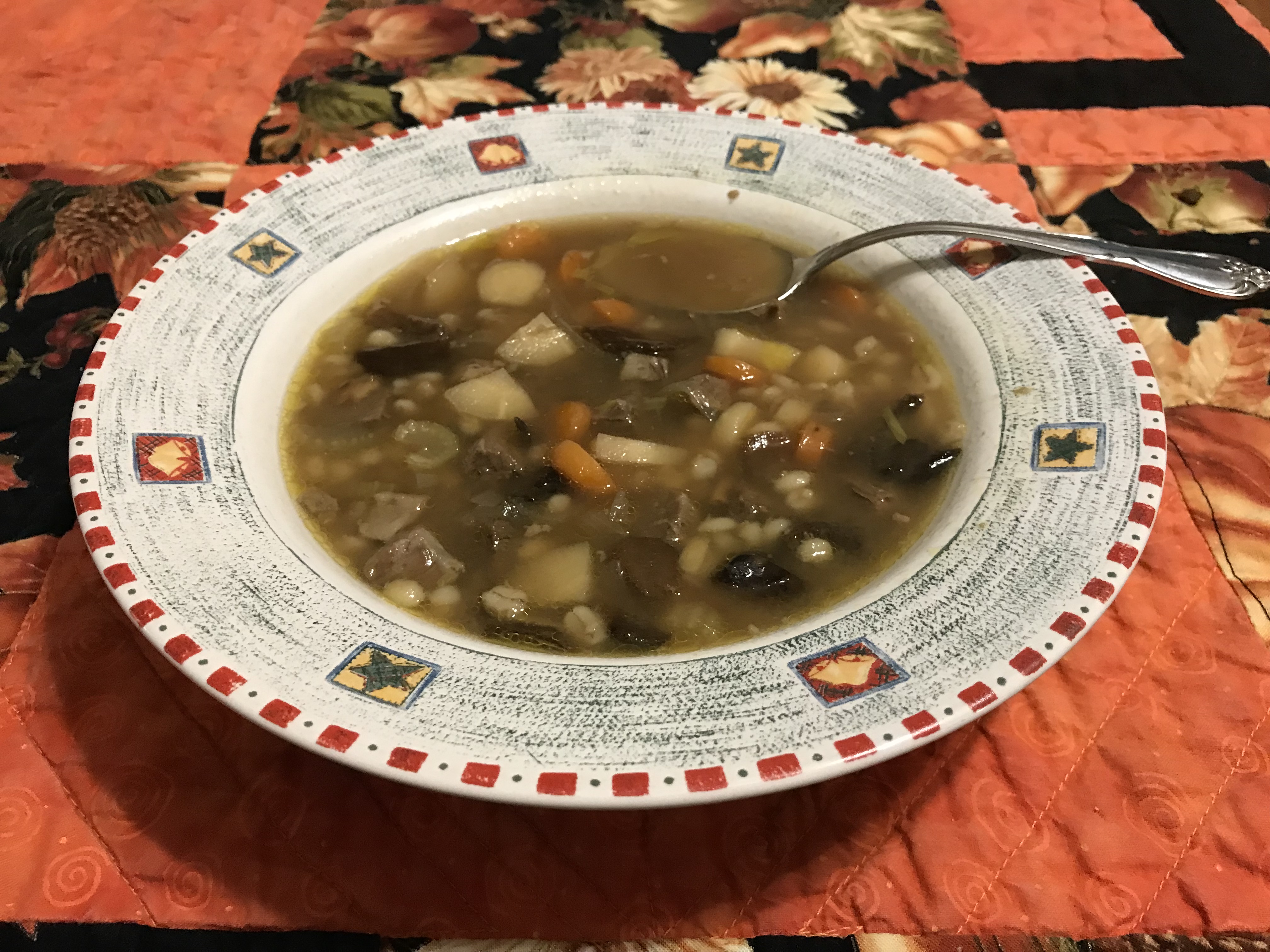
            After failing to soften the leftover tafelspitz beef by re-simmering, using the leftovers in salads, as suggested in the book, was definitely out. Fortunately, I’d been planning on using them in mushroom barley soup, since it uses many of the same vegetables (which I had extra of) needed to flavor the tafelspitz. With the failure of the emperor’s favorite lunch, I just had more beef and broth to work with. The idea was that chopping up the beef would increase its surface area, meaning more edges in contact with the broth as it re-cooked. New root vegetables plus dried mushrooms would add more flavor, while barley added substance. This time, everything went according to plan.

            Barley is one of the oldest crops cultivated by humans, deliberately planted no later than 8,000 BC, and possibly as early as 10,000 BC. A specific date is hard to come by, since the switch from gathering the wild plants, to deliberately spreading the seed, to building villages by designated fields was a gradual one. In some cases, the archaeology suggests that villages preceded agriculture, at least where there was a lot of wild grain to harvest. But whenever the process happened, barley was domesticated around the same time as wheat. The Sumerians, in modern Iraq, used barley as a form of money. Almost 3000 years before coinage, it was the perfect currency. A goat herder in need of a clay pot might not be able to find a potter in need of a goat, but everyone accepted payment in barley. The seller could eat the barley themselves, or trade it for something else they needed. Money didn’t grow on trees, but it did grow in fields.

            For almost as long as they have been growing grain, people have been turning it into alcohol. Our friends the Sumerians brewed lots of beer and even worshipped a beer goddess. From Egypt to Northern Europe, people fermented their grain. Often, they would drink their barley and eat their wheat. The reason for this is simple: wheat has more gluten than any other grain, which means it makes better bread. Most cultures seem to have preferred bread over other ways of preparing grain, creating a preference for wheat. Since wheat was usually more expensive, it made little sense to use it for beer, where its gluten would be of no use. Barley became the primary grain for brewing, and was used in soup, porridge, and cheaper bread.

            Barley is particularly good in soup. As it cooks, it swells up, taking on the flavor of the broth and creating substantial morsels. There’s a reason beef barley soup is a cold-weather classic. Mushroom barley (with beef) is another variation. I’m not sure why it’s in the Jewish food chapter, but the essential dried mushrooms provide a clue. Dried mushrooms are popular across Eastern Europe, and many of the Ashkenazi Jews who immigrated to the US in the early 20th Century came from this region. I’ll admit that I’m not very familiar with the kosher specialties associated with New York City, but the origin theory makes sense.

            Dried mushrooms have two major benefits: a long shelf life and concentrated flavor. To make the most of this flavor, don’t discard the soaking liquid. After letting the grit settle out (or straining through a coffee filter), it can be added to the dish. Mushrooms in the boletus family are particularly favored, but most varieties will work. I used some from a medley I found at Woodman’s, and they were great. All the other ingredients are available at any supermarket, making this a perfect home-cooked delight. You could order it at a restaurant, but it’s so easy to make at home, and the leftovers are as good if not better upon reheating. Over the course of a few days, they all got eaten. The tafelspitz redeemed itself.

Standard