Uncategorized

Cook’s Tour of Italy Menu 14 (Pgs.57 – 62): Tuscan Picnic in Pienza

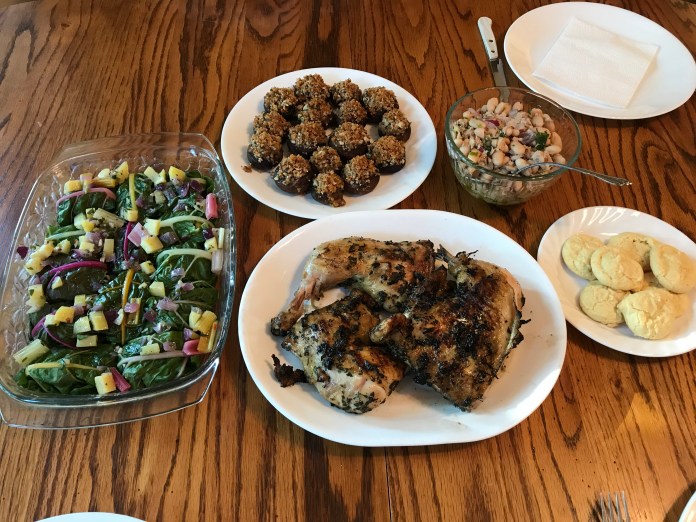
Menu: Bacon Frittata with Parsley, Fresh Beans with Tuna, Herbed Chicken on the Grill, Baked Mushrooms with Hazelnuts, Marinated Swiss Chard Stalks Wrapped in the Leaves, Sienese Ricciarelli Cookies

Recommended Wines: Terre di Tufi (straw-yellow, fruity white), Chianti Classico (red)
IMG_2719

Now imagine a Tuscan picnic, in the shade of a chestnut tree, near a Renaissance Papal residence. (Text, pg. 58) That is what we are to think of when enjoying this spread, which can be made entirely ahead of time. This would be quite a bit to make on one day, so spreading it out and bringing everything to room temperature before serving makes sense. I made the cookies and the biscotti for the next menu a few days beforehand, both at the same time to avoid wasting egg whites or yolks. The day before I put the chicken in to marinate, mixed together the beans and tuna, and made the swiss chard wraps. That just left the frittata and stuffed mushrooms to make the day of, plus grilling the chicken.

There were a few bumps in the road with this. I was under the impression that the herb/oil marinade would be more paste-like, rather than with visible pieces in the oil, but since the herbs were supposed to be minced, not put in the food processor, I stuck with it. The recipe also called for weighting the chicken down with a foil-wrapped brick or similar, which I did not have, so it went onto the grill without. This may have been a good thing, since that could have potentially forced out more of the oil, worsening the mini flare-ups that kept occurring. Due to this, I didn’t drizzle on a mix of olive oil and lemon juice periodically while cooking, just added a few splashes of lemon juice. While the chicken didn’t develop the herb “crust” it was supposed to, it was still tender and had a good flavor.

The marinated beans and tuna was an interesting and surprisingly good combination. In the past, the image of canned tuna I had in my mind was of a cat food-like homogeneous mass, but in reality it was flakes and bits of fish in a little bit of olive oil. I haven’t fully overcome the old mental image, but having it in dishes like this helps. The beans, tuna, vinegar, oil, onion, and herbs combine and balance each other out quite well.

IMG_2712

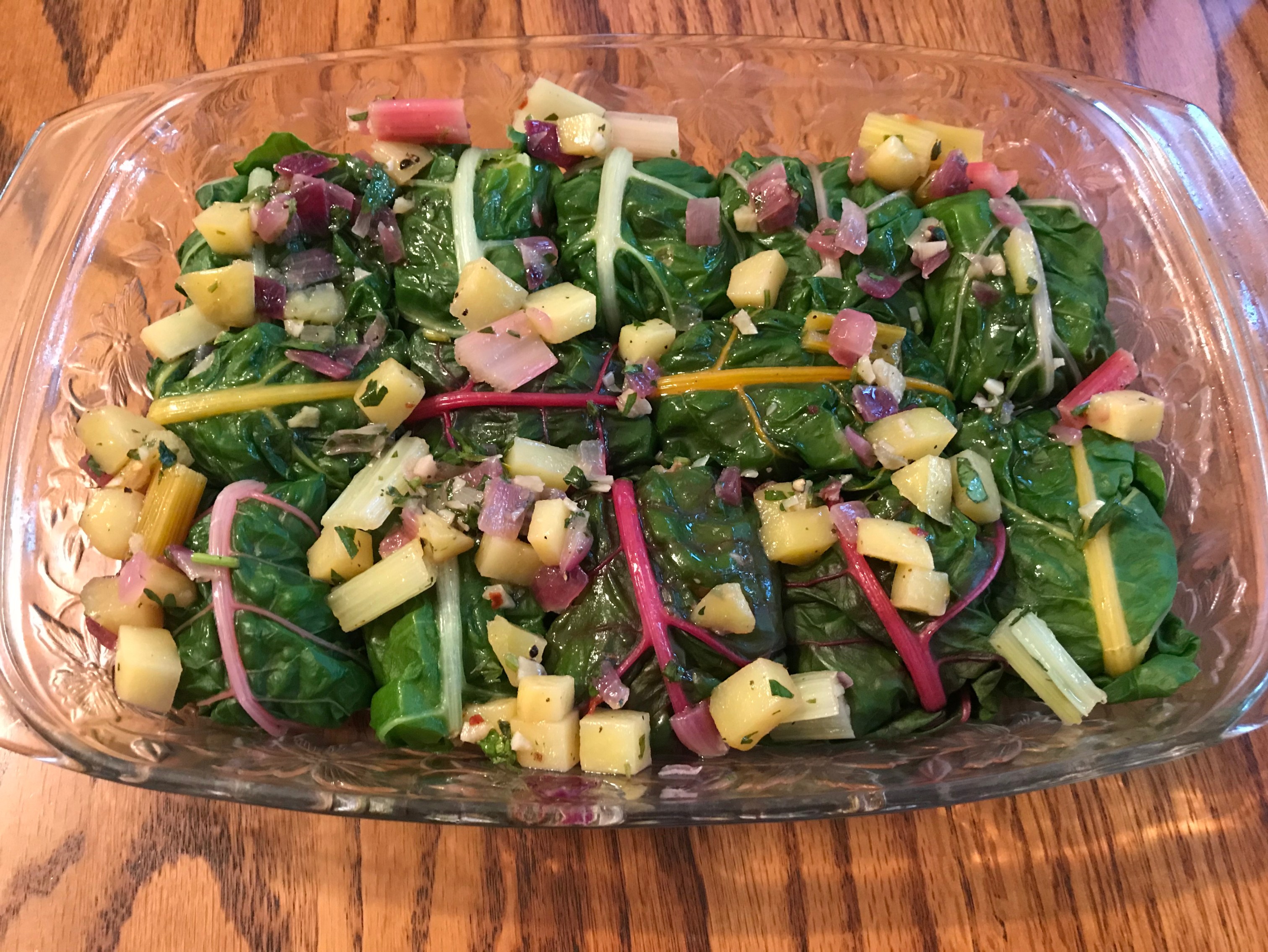
Perhaps the most interesting dish was the Swiss chard wraps, with a mix of lightly cooked stems, sautéed potatoes and onions, and a vinaigrette dressing wrapped in blanched Swiss chard leaves. The combination of potatoes, onions, and lightly sweetened dressing tasted a bit like German potato salad without the bacon. Wrapped in chard leaves with different colored veins, it was so pretty. I liked them best the first evening when still slightly warm, but they were still good when brought back to room temperature from the refrigerator the second day.
IMG_2709

I think my favorite of the dishes was the baked mushrooms with hazelnuts. They’re basically mushroom caps sprinkled with lemon juice, salt, and pepper, filled with finely chopped hazelnuts sautéed in butter, topped with breadcrumbs, and baked. Since I had extra mushrooms and had made a big batch of breadcrumbs, I doubled the recipe. On tasting them, I was really glad I did. They take a little bit of time to assemble, but the taste is nothing short of incredible. With the meaty-tasting mushrooms and rich hazelnuts, they might even make a good vegetarian entrée.

IMG_2713

The menu notes suggest making the frittata the morning of the picnic and keeping it at room temperature until ready to eat. While frittatas are frequently eaten at room temperature or cold, particularly for picnics, the idea of something like a cold omelet does not sound particularly appealing. To save time in the afternoon/evening I did make it in the late morning, but served it for lunch, since there would be plenty of food at dinner time. Like the other dishes, it was very tasty. Bacon and eggs always go well together, and the parsley and parmesan cheese mixed in added even more flavor. I did accidentally over-salt the eggs given the amount of salt in the pancetta cubes and parmesan, but it was still good. I would definitely make it again, just being careful with the salt.

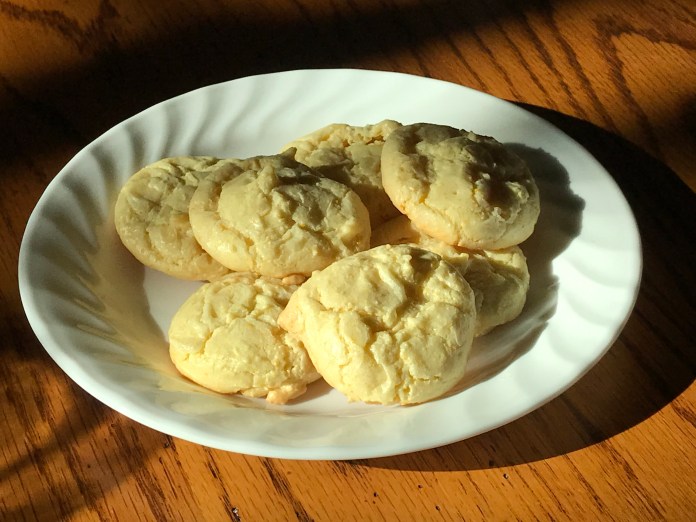
The cookies, called ricciarelli in Siena, were quite a hit. The recipe makes 20 of them, but you may notice that there are a lot fewer on the plate in the image. That’s what tends to happen when you make baked goods ahead of time. Based on almond paste and flavored with a bit of orange zest, they are given a meringue-like quality from powdered sugar and egg whites. Best of all, they are not difficult to make and hold up well in an airtight container for a few days.
IMG_2715

An overall review is as follows. The frittata would be good at a picnic, but also makes an excellent lunch for two or three people. Beans and tuna work surprisingly well together. The chicken has a great flavor and would suit most people’s tastes, even picky eaters. Hazelnuts and mushrooms seem like an odd combination, but the soft mushrooms and crunchy hazelnuts are an incredible match. The Swiss chard wraps are beautiful and tasty. For a finale, the cookies are one of the best recipes in a while.


Standard
Uncategorized

Cook’s Tour of Italy Menu 55 (Pgs. 173 – 177): Dinner in Spoleto (in Umbria)

Menu: Pasta Stars with Two Sauces, Salmon in Parchment with Spinach and Carrots, Chocolate Truffle Roll

Recommended Wine: Orvieto (Dry and Light), optional Spumante with dessert

We now journey to Spoleto, a town in Umbria with a well-preserved Medieval center, to imagine a meal Mr. Famularo enjoyed there. In his recreation, he invites us to imagine the restaurant, housed in a 12th Century former convent, and the Medieval architecture and frescoes along the main street. With physical travel more or less suspended for at least a year, the book’s descriptions provide the mind a bit of a journey without risk. While we can only imagine the setting, we can cook and enjoy the food while we do so.

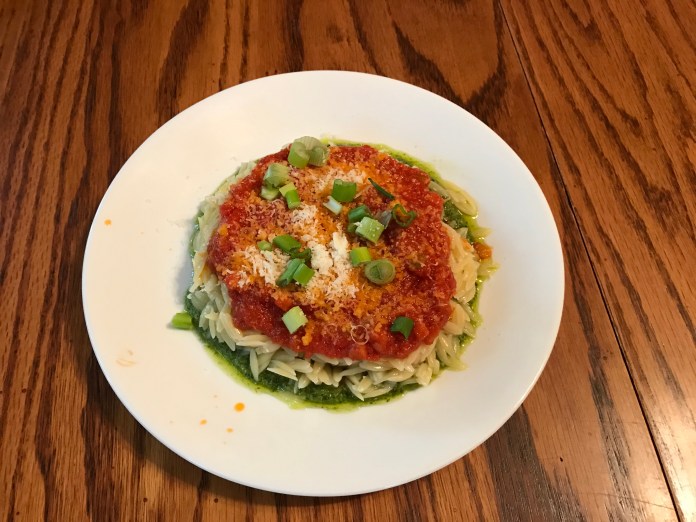
Dinner starts with pasta, served with both pesto and tomato sauce. The recipe calls for small pasta stars, but since I could not find these, I used orzo, since the restaurant in the description uses homemade pasta that is formed into rice-like shapes. Pesto has roots that stretch back to antiquity, made with a variety of herbs, spices, and other ingredients, though basil was not one of them until the Middle Ages. The most common variety today is made of basil, pine nuts, olive oil, garlic, and salt. Whether or not cheese is included depends on the region, in Liguria it is, is Umbria it is not. First, a bit of pesto is put onto the plate. This is followed by the pasta, which is then topped with tomato sauce. Finally, a sprinkle of parmesan cheese and scallions finishes the dish.

IMG_2704

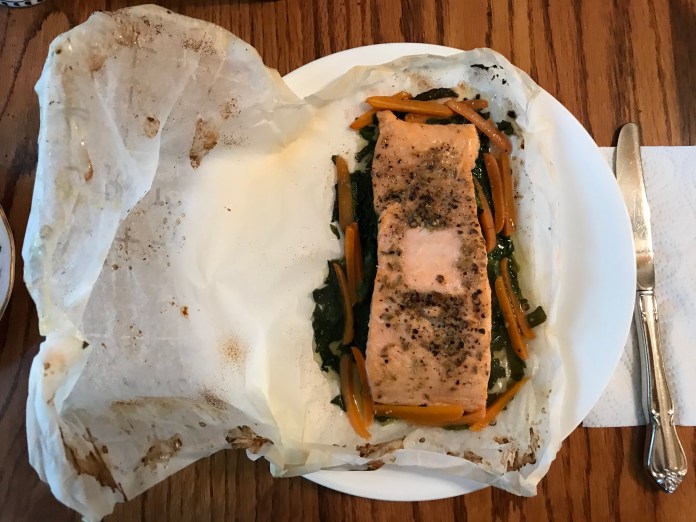
The second dish was an interesting experiment. After precooking the carrots, spinach is placed in the center of one side of a parchment paper heart. This is topped with a piece of salmon, surrounded with carrots, and finished with butter, salt, pepper, fennel seeds, and a bit of white wine (I used pinot grigio from a mini-bottle, those both save money and reduce waste if you only need a little bit). This is then sealed and baked in a hot (475F in fact) oven for 15 minutes, then served from the parchment paper with a mixture of sour cream, lemon juice, and a bit of horseradish on the side.

IMG_2703

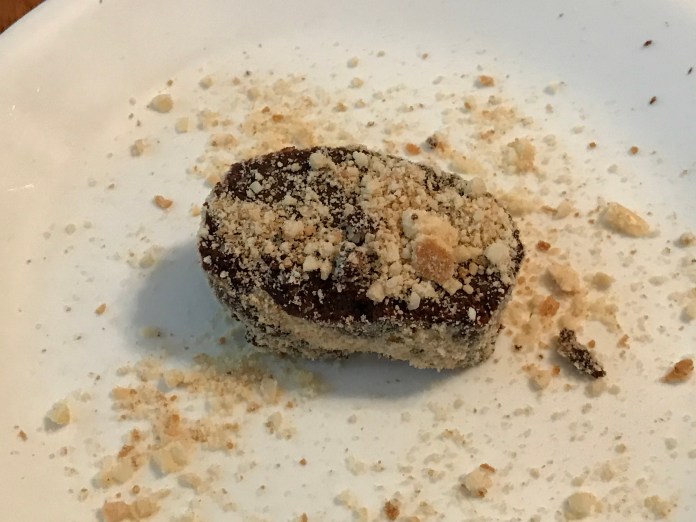
Dessert varied slightly from the book, where it is a chocolate roll with zabaglione sauce. I tried making the sauce as an experiment a few days beforehand and didn’t care for it, so I just served the roll plain. To describe its nature best, I am calling it a chocolate truffle roll, since the mix of bittersweet chocolate, butter, and a few egg yolks ends up having that consistency. Mixed into this are toasted almond slivers and vanilla wafer crumbs. The whole mix is then formed into a salami-like shape and allowed to chill and firm up. When ready to serve, it is rolled in more of the almonds and crumbs.

IMG_2706

Looks like a fine dining portion, but is very rich so you don’t need much.

This menu was another of my favorites. I wouldn’t have thought of putting two sauces on the same pasta dish, but the herbaceous, slightly rich pesto and the sweet, acidic tomato sauce complemented each other perfectly. The salmon was another remarkable dish. I didn’t think fish was supposed to be cooked at such high temperatures, but sealed in the parchment paper, it stayed buttery tender while being fully cooked and soaking up lots of flavor. The dessert was also fabulous. The soft, slightly bitter chocolate mix contrasted with the crunch and sweetness of the almonds and cookies. I might replace some of the bittersweet chocolate with semisweet next time, but the extra vanilla cookies on the outside definitely helped cut the bitterness. While very tasty regardless, it is best if taken out of the refrigerator half an hour or so before serving. This helps it soften up and have that truffle-like texture.


Standard
Uncategorized

Cook’s Tour of Italy Menu 49 (Pgs. 159 – 162): Light Lunch on the Via Emilia (Emilia-Romagna)

Menu: Grilled Asparagus and Parma Ham Salad, Fresh Berries with Almond Cream, Cappuccino, Fruit Vinegars

Recommended Wine: Verdicchio (Yellow-Green Color, Higher Alcohol)

IMG_2681

In Emilia-Romagna again, we have one of the most seasonal menus in the book, featuring fresh asparagus and berries. While they are generally available year-round, their quality is highest and prices lowest when they are in season. In the introduction to this menu, Mr. Famularo describes a light lunch during a trip in early summer, featuring a variety of seasonal produce and regional specialties. Also described is a balsamic vinegar factory with a peacock on the roof and learning how to make fruit-infused red and white wine vinegars, in this case peach, raspberry, and orange. I gave this method a try last year with some extra peaches and strawberries at risk of going bad if not used, and the results were remarkable, especially the strawberry vinegar. Though not used in the menu, these fruit vinegars are a tasty and interesting change of pace on salads, and the strawberry is fantastic on slices of cucumber. I imagine the peach would be as well.

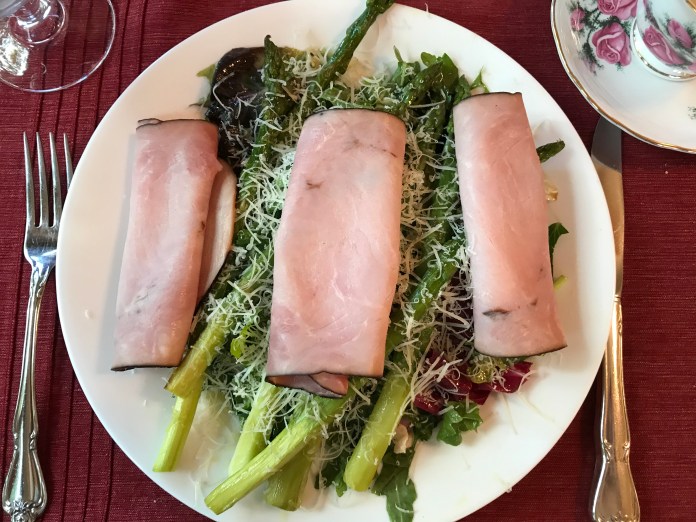
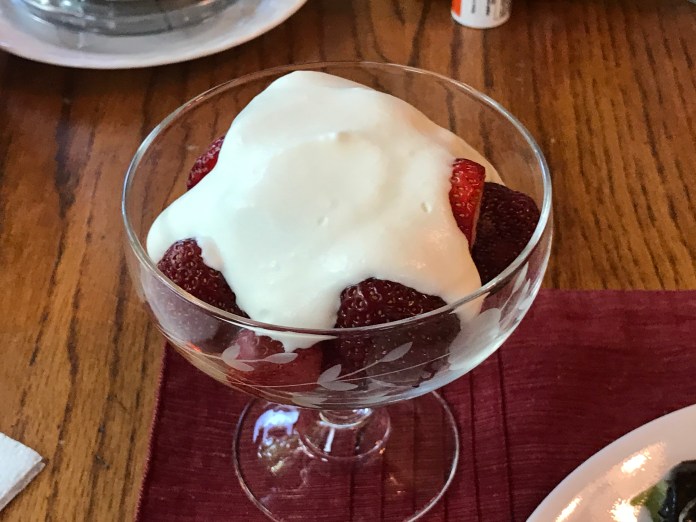
Returning to the menu, we have a salad of baby greens tossed with a mustard vinaigrette, topped with grilled (or broiled) asparagus, a bit of grated parmesan cheese, and Parma Ham (or, if that is unavailable, as it was in this case, Black Forest Ham), fresh strawberries and blueberries topped with almond-scented whipped cream for dessert, and homemade cappuccino to drink. Walnut liqueur is also included on the list of dishes but not mentioned again, so I’m not sure what that means. Is it supposed to go in the cappuccino, or is it a mistake by the publisher from the revision process? Either way, with no clear answer on that and not wanting to buy an entire bottle, I skipped that part.

IMG_2682

There is some interesting food history here that goes back all the way to the Ancient Romans. Salads were common appetizers, even then served with a vinegar and oil dressing, often flavored with mustard. The Romans loved asparagus, often cooking it with eggs in omelet-like patinas. They also enjoyed strawberries, especially those from around Lake Nemi, though they were not cultivated until the Middle Ages so were only available wild. Almonds, like other nuts, were popular desserts, though the flavorful but toxic if improperly prepared bitter almonds, used to make the extract, did not seem to come into use until later. Whipped cream and coffee also arrived later, during the Early Modern Era.

IMG_2683

Just as described, this was a taste of early summer. The contrast of the warm asparagus on the cool greens, the meaty ham and cheese against the tangy dressing, were exceptional. Wild strawberries are recommended for the dessert if they can be found, indeed the Italian recipe name fragole di bosco translates roughly as “forest strawberries,” but surely fresh local berries in season are just as good. Due to having several quarts of these, super sweet and with an intoxicating aroma, I skipped the blueberries and put extra strawberries in the dessert glasses. The whipped cream, scented with almond extract, was the perfect accompaniment. I would have preferred it with a small amount of sugar (in many cases in the book whipped cream is unsweetened), but it was a fantastic dessert overall, perfect during those few weeks when strawberries are in season.

IMG_2684

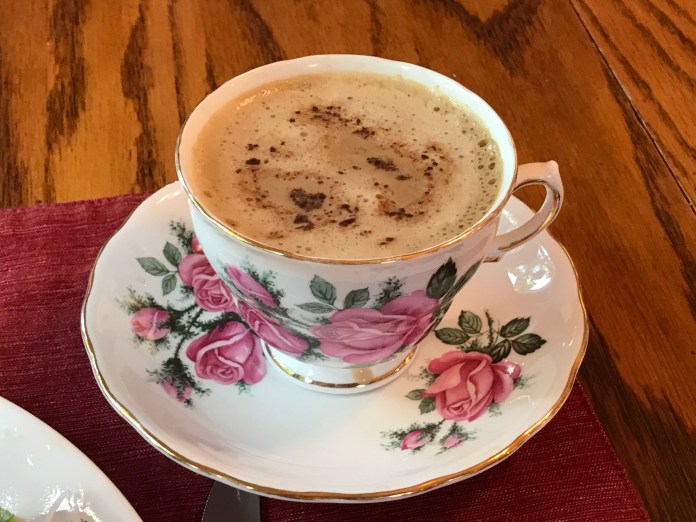
I even enjoyed the homemade cappuccino, though I don’t normally like the taste of coffee (its aroma is another matter entirely). It was surprisingly easy to make, just make some espresso (I used the granules I had on hand from some other recipes), heat some milk until it steams, whisking to make it foamy, and top the cups with a sprinkle of cocoa powder. Again, I would have preferred a little sugar in the coffee, but that’s a matter of personal preference. Overall, this was a delicious way to celebrate the start of summer’s bounty.


Standard
Uncategorized

Cook’s Tour of Italy Menu 61 (Pgs. 193 – 194): Frittata with Pancetta, Pasta, and Peas (Umbria/Marches)

Menu: Frittata with Pancetta, Pasta and Peas

IMG_2675

Probably the two most famous places in Umbria are Assisi and Lake Trasimene. Besides being the home of St. Francis and St. Clare, both noteworthy recommendations in themselves, Assisi features some of the finest examples of Medieval Italian art and architecture. Unlike Rome, Florence, and Venice, whose Medieval constructions were in many cases renovated or rebuilt during the Renaissance and Early Modern eras, the Medieval city center of Assisi is more or less intact. The difference between the Renaissance/Baroque basilicas St. John Lateran and St. Peter’s in Rome and the Basilica of St. Francis in Assisi is night and day, though all are magnificent. While many Italian architects never fully embraced the Gothic style, elements of it are clear in the Basilica of St. Francis, with its colorful frescoes, ceiling painted in bright colors, and rose window. After devoting appropriate time to this Basilica, which is really a must-see, several of the smaller churches are interesting as well. On our trip two years ago, my friend and I discovered a mini museum in the underground vaults of one of them, full of medieval painted panels, frescoes, and metalwork, along with ancient Roman and even pre-Roman artifacts. For an extra 5 to 8 euros (there was no price of admission to the church itself), it was a great way to spend a few hours of the free time we had to explore.

Also in Umbria is Lake Trasimene, which the tour guides pointed out to us as the bus passed right by the shore. It is most famous for what happened there in June 217 BC. After his famous crossing of the Alps seven months earlier, the Carthaginian general Hannibal had already defeated the Romans twice, once in a fairly minor skirmish at the river Ticinus, and once at the larger battle at the Trebia in late December 218 BC. Shocked that he 1) attempted the crossing of the Alps, 2) succeeded at it, and 3) did something that aggressive (according to Professor Shutt again, the Carthaginians had been nowhere near as aggressive in the First Punic War, so the Romans expected another conflict more or less at “arms’ length”), the Romans assembled a massive army to deal with the threat in their backyard. Meanwhile, Hannibal moved south from his winter camp in the Po Valley area towards Rome. As the Roman forces raced to meet him, Hannibal drew them into a trap.

Not only was he a brilliant tactician, but Hannibal was really good at getting the enemy to fight where he wanted them to fight. In this case, it was luring them into an ambush. Creating fake signal fires to trick the Romans into thinking his troops were elsewhere, he hid their true location in the fog rising off the lake. As the legions marched along the side of the lake, Hannibal boxed them in. Only a handful were able to fight their way out. The rest were either killed or captured then and there, tried to escape into the lake and drowned, or went in up to their necks in an attempt to wait out the enemy and were picked off by Carthaginian archers at their leisure. Despite the massive bloodshed, Hannibal was just getting started. It would take another 15 years and massive bloodshed on both sides before the Romans finally emerged victorious.

Turning from history to food, here we have another egg-based dish, this time a frittata. Varieties of frittatas are found all over Italy, including the central region of Umbria and the neighboring Marche region, on the Adriatic coast. In many ways, Umbria resembles Tuscany, with hills covered in vineyards, olive trees, and cypresses. Like Medieval Tuscany, Medieval Umbria was home to a number of feuding city-states, centered on fortified hill towns, including Perugia, Spoleto, and Assisi. There are similarities in the cuisine as well, with a focus on straightforward, distinct flavors, a variety of cured pork products, and good bread and olive oil. In addition, Umbrian cuisine features a variety of freshwater fish from the lakes and rivers, high-quality lentils, black truffles, and famous Perugia chocolates.

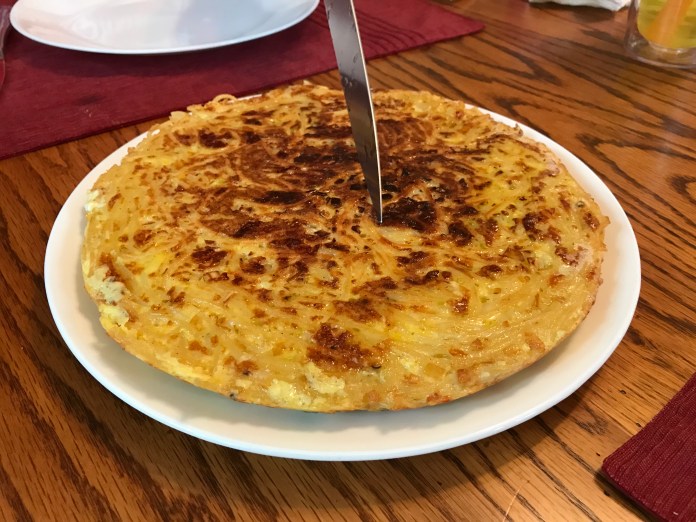
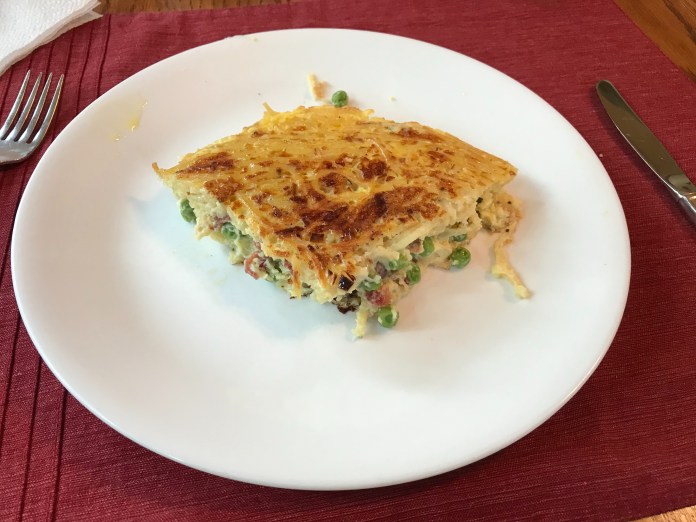
Though no truffle is used in this recipe, it is apparently a fairly common addition to omelets in Umbria. What is included is cooked spaghetti and mozzarella cheese mixed with the eggs, and a filling of lightly cooked peas, pancetta bits, and parmesan cheese. A little garlic is sautéed in oil, half of the egg/mozzarella/spaghetti mixture is put into the pan, the mix of peas, parmesan, and pancetta (or, in a pinch, bacon) is added, then topped with the rest of the egg mixture. After the first side is cooked through, the frittata is slid onto a plate, flipped, and returned to the pan to cook on the second side.

IMG_2676

Peas and spaghetti in an egg dish might sound a bit odd, but this was fantastic. The spaghetti and mozzarella in the egg mixture help form a crispy, flavorful crust on the outside, while the peas add a bit of lightness and sweet contrast to the otherwise rich dish. Best of all, it is surprisingly easy, the only slightly technical part is flipping it over. Just be careful not to scorch the garlic and wear an apron to protect your clothing from oil splatters during the frying/flipping. I would definitely make this again.


Standard
Uncategorized

Cook’s Tour of Italy Menu 73 (Pg. 228): Fresh Angel Hair in Custard Mold (Naples/Adriatic South)

Menu: Fresh Angel Hair in Custard Mold with Herbs

IMG_2671

Now, for the first time in this project, we travel south of Rome. The chapter covers a large swath of Southern Italy, from Naples on the peninsula’s west coast to the region around Bari, Brindisi, and Taranto in the Southeast. Despite regional variations, common themes throughout this region include dried pasta, lots of vegetables, olive oil, citrus fruit, seafood in many parts, and lower levels of meat consumption. Tomatoes are more ubiquitous here, and the sauces tend to “not have the restraint of those in the north for we are now in the land of the Greeks, the Byzantines, the exuberant, the colorful.” (Text, pg. 204)

Time for another history lesson. In the 8th and 7th Centuries BC, large numbers of Greek colonists, driven by population pressure and civil unrest, arrived in Southern Italy. They founded or came to dominate many settlements along the coast, including Naples, Bari, Brindisi, Taranto, and Syracuse, just to name a few. The mainland colonies came to be known collectively as Magna Graecia, though they were never a unified entity. Rather, as in Greece itself, they feuded constantly and alternated between trading and fighting with the Italic peoples that remained dominant further inland. The situation was even more complicated in Sicily, where they competed with Phoenicia and later Carthage for trade and colonies, and Sardinia, where Etruscans were added to the mix.

Despite the constantly shifting alliances between the various Greek, Phoenician, and Etruscan powers, Magna Graecia prospered from the 7th to the 4th Centuries BC. In fact, as discussed by Professor Timothy B. Shutt in his audiobook lecture series “Wars That Made the Western World,” Sicily in the 5th Century BC is believed to have had a Greek population as large as in Greece itself, and Syracuse was an economic and naval power on par with Athens. Even as the Romans conquered Naples at the end of the 4th Century BC and Magna Graecia and Sicily in the 3rd, the Greek influence lingered.

IMG_2672

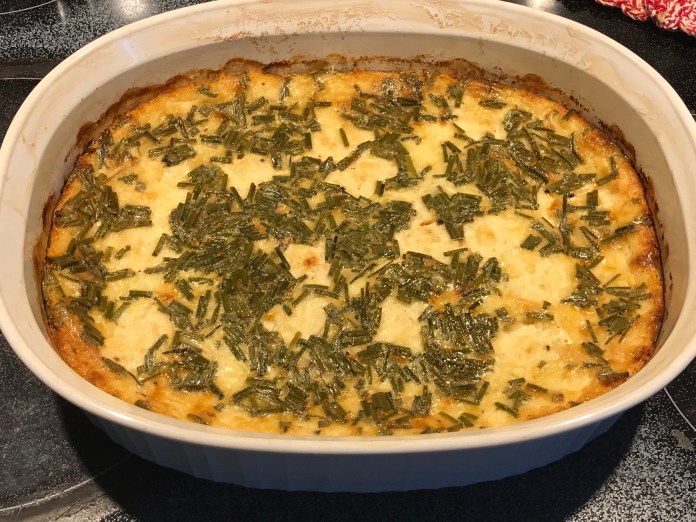
Unusually for this region, this dish contains fresh pasta, in this case fresh angel hair. After being cooked through, the pasta is mixed with a “custard” of eggs, milk, and fresh ricotta, flavored with rosemary and chives. The whole is then baked in a casserole dish, and each serving is sprinkled with more chives. For some reason the fresh angel hair was a bit gummy and clumped together, but the texture was improved upon being combined with the egg mixture. Overall, this was a pleasant dish with a mild flavor.

Standard
Uncategorized

Cook’s Tour of Italy Menu 39 (Pgs. 125 – 128): Lunch with Juliet, Verona (Veneto)

Menu: Roasted Pepper and Eggplant Puree Appetizer, Pasta Bows with Fresh Spinach, Mushrooms, and Cream, Fruit Compote with Citrus Sauce

Recommended Wine: Chardonnay from Ronc di Juri in Friuli

IMG_2664

The Veneto region is not just Venice. Perhaps the most well-known of the region’s mainland cities is Verona, famous as the setting of Shakespeare’s Romeo and Juliet. While it is unclear exactly when the story was supposed to take place and Shakespeare probably never visited Italy, the feuding families really did exist and their mansions, now tourist attractions, still stand in the city today. It seems the story evolved over a few centuries, so perhaps the precise date is not important. For Shakespeare, the focus was always on the characters.

Variants of the tale of star-crossed lovers have existed for centuries if not millennia and the names Romeo and Giulietta/Juliet are used from around 1300 all the way to Shakespeare’s time in the late 16th/early 17th centuries (he probably wrote his version in the 1590s). If you want a semi-specific timeframe, I would place the story between 1349 and 1405, and here’s why. The mansions that supposedly belonged to the two families are late medieval, built in the 13th and 14th centuries (Text, pgs. 126 and 128). In addition, “Prince Escalus” is typically assumed to be a member of the Della Scala family, who ruled the city until 1405, when it was conquered by Venice. As the text implies him to be a ruler of an independent city-state with feuding aristocratic factions, it could therefore not be set later than 1405.

Due to mention of the plague, which first struck Verona in 1348 and is described in a familiar way, I would place the story in 1349 at the absolute earliest. This is further supported by the statement that Juliet is an only surviving child out of what is implied to have been several. While this would have been a tragically common occurrence at any point before the medical advances of the 19th and 20th centuries, the chance would have been even higher in the immediate aftermath of the plague, which recurred several times in the 14thcentury after the first outbreak. Thus, we have a timeframe of 1349 to 1405.

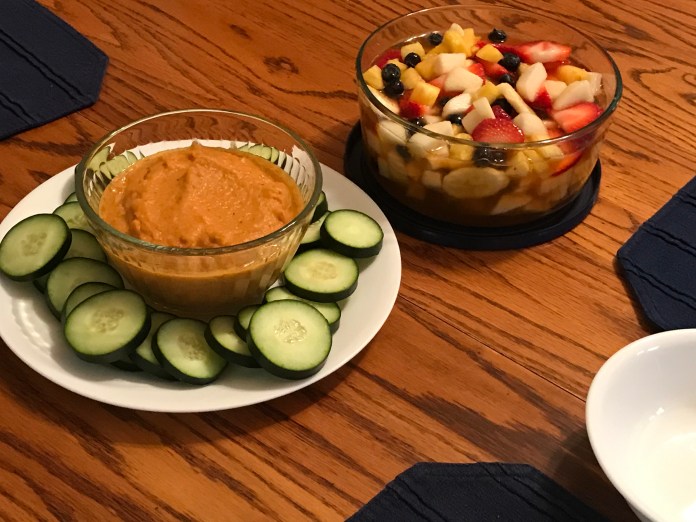
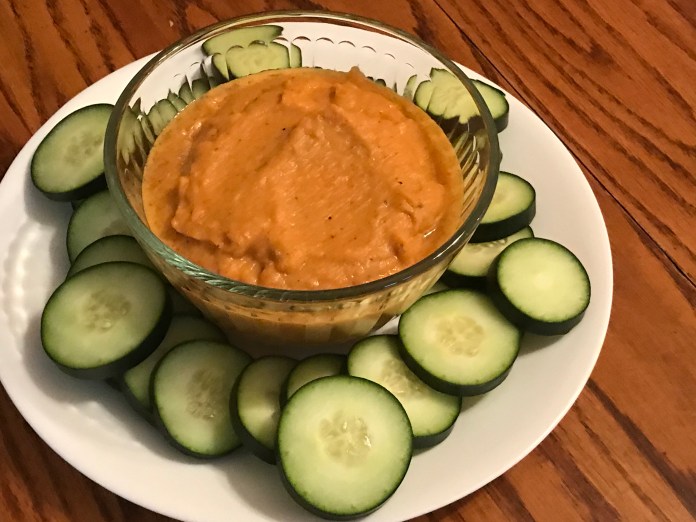
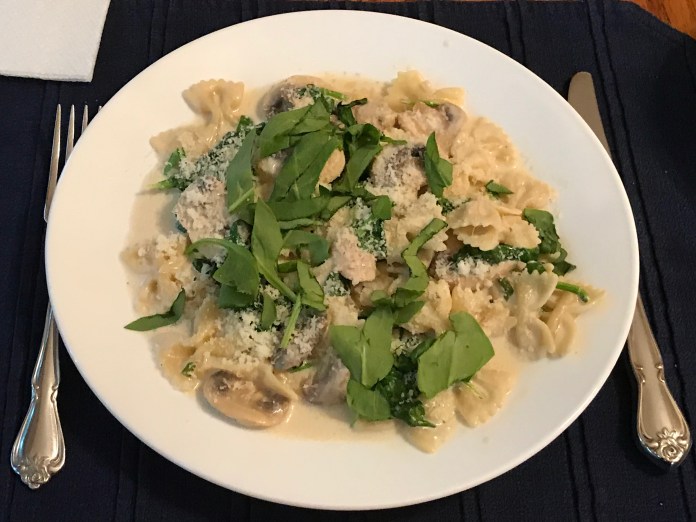
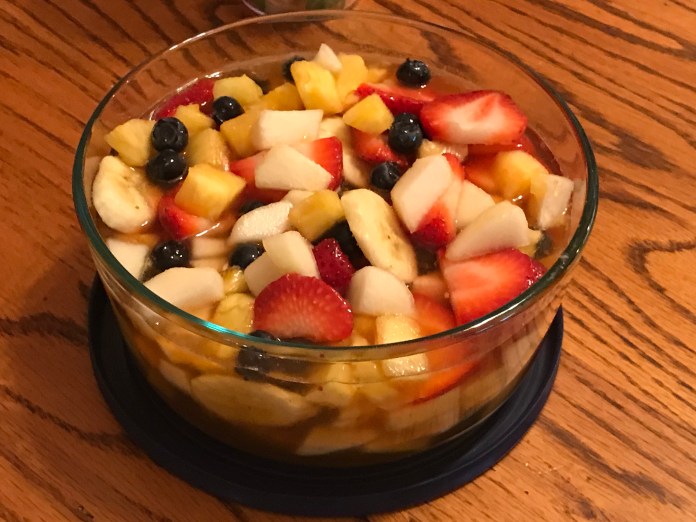
The history lesson aside, let’s turn to the menu. There’s a pureed mix of eggplant, roasted red peppers, garlic, and lemon that’s sort of like a red pepper baba ghanoush, served on slices of cucumber to start, followed by pasta bows and spinach with a mushroom cream sauce. Dessert is a mix of sliced strawberries and bananas, chopped pears and pineapple, and blueberries, dressed in a syrup of sugar, lemon, and orange juice.

Returning to history, most of this would not have been possible during the most likely historical timeframe or likely to be served even during Shakespeare’s time. The red peppers and pineapple were imports from the New World. Like tomatoes, peppers took a while to catch on in Europe (though hot peppers quickly became popular in Africa and Asia), and pineapples were still centerpieces at royal banquets in the late 17thCentury. Likewise, cream sauces were uncommon until the later part of the 17th Century and mushrooms were viewed with suspicion. It is unclear when eggplants and bananas reached Northern Italy, though the former had been introduced to Sicily centuries before by the Arabs and a few 17th and 18th Century still life banquet scenes depict bananas.

What would match with either the 14th or 16th Century, however, are the citrus juices and sugar. Sugar was a status symbol, beloved by all who could afford it, whose number gradually increased over the centuries. During the Middle Ages it was so expensive it was used like a spice. Even as supply expanded from the 15thCentury onward, it remained a luxury for a few more centuries. As mentioned in a previous post, sugar and citrus fruit fit right in with the Medieval taste for sweet and sour, inherited from the Ancient Romans. The popularity of lemons and oranges also increased over time, especially near the Mediterranean, where shorter shipping times and fewer stops meant lower prices. All of the dishes in this menu contain lemon juice, and the sauce for the fruit is fragrant with both lemon and orange juice.

Regardless of historical accuracy, this was all very enjoyable. I managed to roast the peppers without setting off the smoke alarm this time, and after briefly struggling to stuff two halved garlic cloves into cuts made in the eggplant, the baking, combining, and pureeing went without difficulty. The mix was good on the cucumbers, but I think I liked the leftovers even better on crackers the next day.

IMG_2665

Once the prep work was done, the pasta was super simple: just make the sauce, cook the pasta to al dente, toss the cooked pasta with the spinach to wilt it slightly, add the sauce, and toss to coat. The sauce started with a base of garlic and mushrooms sautéed in butter, to which a bit of marsala and lemon juice were added and allowed to cook for ten minutes to evaporate the alcohol. Cream was then added and allowed to heat through before combining with the pasta. All was then topped with a sprinkle of parmesan cheese. The pasta was excellent, though the sour taste from the lemon juice was maybe a little on the strong side. A slight reduction in lemon might benefit the sauce, but that would be a matter of personal taste. Mr. Famularo says on page 127 that he thinks Juliet would prefer this dish to potato gnocchi, and I am inclined to agree.

IMG_2669

The dessert was another treat. Though the mix here was strawberries, blueberries, pears, pineapple, and banana, anything in season would probably work. The lemon juice in the syrup prevents or slows browning, the sugar smooths out the taste of any especially tart fruit, and the juices combined add just a little more flavor. The recipe makes more syrup than is needed for the quantity of fruit, so any leftovers can be saved and used as needed. Just make sure not to add it too early, as sitting in the syrup too long can make the fruit turn soggy.

IMG_2666

Overall, this was a great menu to appreciate the summer produce coming into the stores. Even if not necessarily historical to Shakespeare’s time, that doesn’t really matter here. If given access to the foods mentioned here, there is every reason to believe Juliet would have enjoyed them.

Standard
Uncategorized

Cook’s Tour of Italy Menu 53 (Pg. 170): Pasta with Mascarpone, Sage, and Toasted Breadcrumbs (Emilia-Romagna)

Menu: Spaghetti with Mascarpone, Parmesan, and Sage-Flavored Breadcrumbs

IMG_2661

Heading back to Emilia-Romagna, we now focus on one of the things the region is most famous for: its pasta. Historically more prosperous than in some other regions, the populace was able to afford a richer diet. Along with prosciutto di Parma, mortadella (an ancestor of the American baloney, named after its supposed origin in the city of Bologna), Parmigiano-Reggiano, and true balsamic vinegar, fresh egg pasta was and still is a favorite. Eggs used to be more expensive relative to income than they are now, hence the luxury of the fresh pasta.

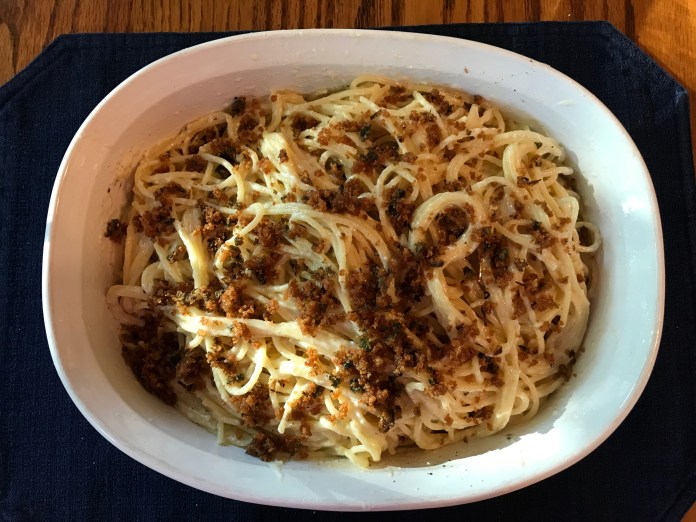
While this recipe uses dried spaghetti, the main component of the sauce is mascarpone cheese, a creamy cow’s milk cheese common in Northern Italy. Mixed with the mascarpone is grated Parmesan cheese, and the whole dish is topped with buttery, sage-scented breadcrumbs. With the rich, creamy, cheesy pasta, the contrasting crunch of the breadcrumbs really makes the dish. Another welcome contrast is to include a salad on the side, as the book recommends. In the text, Mr. Famularo says this is one of his favorite ways to make spaghetti. With how easy and tasty it is, I can see why.

IMG_2663


Standard
Uncategorized

Cook’s Tour of Italy Menu 42 (Pgs. 136 – 137): Layered, Baked Polenta, Venetian Style (Venice)

Menu: Polenta Layered with Vegetables, Salt Pork, and Parmesan

IMG_2648

Remaining in Venice, we now focus on another Venetian staple, polenta. As mentioned in the last post, polenta is at least as popular as pasta in various parts of Northern Italy. While evidence suggests that a form of polenta existed since at least Roman times, likely made of barley, millet or spelt, corn became the grain of choice after it was introduced in the 16th Century. Exactly why corn caught on in the North while pasta caught on sooner and more thoroughly in the South is unclear, but regardless, polenta is a Northern staple.

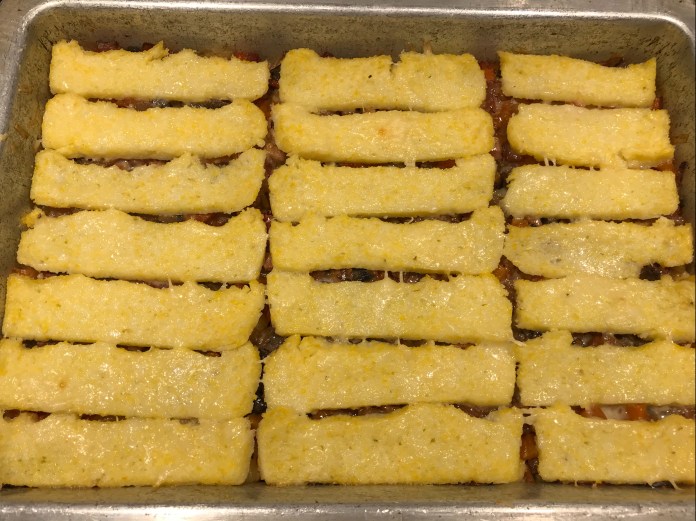
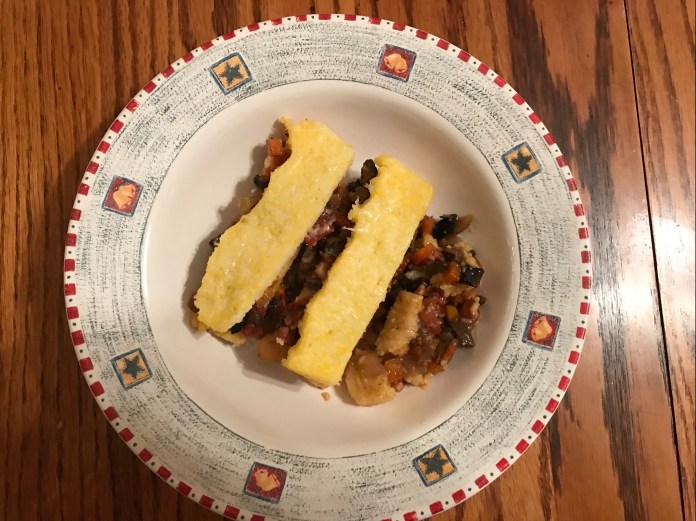
Though often a side dish, frequently served alongside meat, here it is a main course. After the corn mixture is cooked, it is poured into loaf pans to chill and firm up before being sliced. The slices are layered in a pan with a sauce made of salt pork (which looks and tastes a lot like unsmoked bacon), carrot, onion, celery, and rehydrated dried mushrooms with their soaking liquid. The three layers of polenta and two layers of sauce are topped with a layer of grated parmesan cheese.

IMG_2649

This wasn’t particularly difficult to make, but was a bit time-consuming and fiddly. It is necessary to stir really well as you are adding the polenta to the boiling water or it will get lumpy, and sometimes it still does. Meanwhile, you need to watch out for steam as the bubbles rise to the surface and pop. Finally, you need to slice the polenta really thin to get three layers in the pan. The sauce, which has a texture kind of like chunky salsa, came together without difficulty. Overall, it was pretty good; balanced and flavorful. I didn’t like it as much as some of the other recipes, but most of the other recipes set a pretty high bar.

Standard
Uncategorized

Cook’s Tour of Italy Menu 44 (Pgs. 138 – 139): Chicken Risotto with Vegetables, Venetian Style (Venice)

Menu: Risotto with Chicken and Vegetables

IMG_2647

Heading northeast, we cross Emilia-Romagna to the Veneto region, most well-known for Venice, but also home to Verona, Vicenza, Trieste, and other notable cities. Unlike Rome, Florence, Milan, Naples, or their historical rival Genoa, Venice was not an established city in the Roman era. Exact dates of foundation vary, but the most common story seems to be that the city was established in the 5th Century AD by those fleeing barbarian raids on the mainland. After a century and a half or so of Byzantine rule in the 6th and 7th Centuries, the first Doge was elected either at the end of the 7th or start of the 8th Century (the jury is still out on whether the first Doge was real or legendary) and the republic began its rise.

From its earliest days, Venice relied on trade, and in his work The Venetians, author Paul Strathearn explains why. Essentially, it boiled down to the fact that space was limited on the islands in the lagoon, limiting how much food could be grown and, to a lesser degree, how many goods could be produced. Trade both provided the necessary food and made the republic wealthy. For centuries, Venice was the main point of import for “exotic” goods from Asia, including spices, sugar, incense, and silk.

Another luxury import during the Middle Ages was rice, which gradually began to be cultivated in Italy as its popularity grew. The wealthy loved it, particularly cooked in almond milk. As supply expanded, the price dropped, making rice widely available to all classes. Today, in many parts of Northern Italy, risotto and polenta are more popular than pasta, and this includes Venice. Rice, polenta, vegetables, and seafood in various combinations are staples in Venetian cookery, which is very different from what is typically thought of as “Italian.”

The best way to think of this dish is probably “Venetian chicken and rice.” With a flavoring base of carrot, onion, and celery, which occurs in many recipes in the book, the risotto includes chicken, chicken broth, tomato puree, butter, and parmesan cheese. The end result is creamy but not too rich, and flavorful without being overpowering. The tomato flavor is present but not dominant, melding into all the other flavors. Additional virtues for this recipe are that it is not very difficult to make and uses easy to find, affordable ingredients. I would definitely make this again.

Standard
Uncategorized

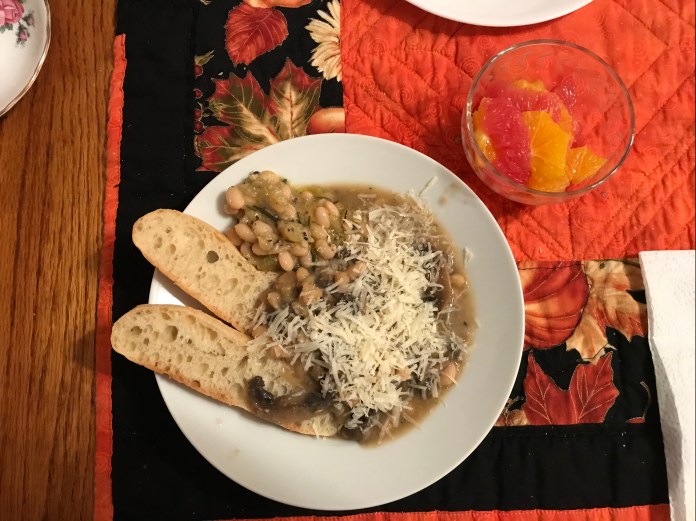
Cook’s Tour of Italy Menu 19 (Pgs. 69 – 70): White Beans and Mushrooms (Tuscany)

Menu: White Beans and Mushrooms, Orange and Grapefruit Salad

IMG_2641

Remaining in Tuscany, we have another bean-based stew, served with bruschetta and parmesan cheese. Like elsewhere in Italy, the pre-modern population of Tuscany ate little meat, getting much of their protein from legumes. Even now, when meat is more widely consumed, beans remain a central part of the diet. Prior to Columbus, this would have been mainly peas, lentils, and fava beans, with white navy and cannellini beans becoming favored after their introduction from the New World. They are part of antipasti, side dishes, and most of all, soups and stews with a variety of ingredients. Here, they are included in a vegetarian stew with fresh and dried mushrooms.

This has to be one of the most satisfying meatless entrées I’ve ever tried. After the beans are cooked with celery, onions, garlic, and vegetable broth, some are removed and marinated with vinegar, olive oil, and rosemary. The rest are mashed or partially pureed in the pot before adding sautéed mushrooms. Each dish of beans and mushrooms is served with a spoonful of the marinated beans, a couple pieces of garlic-rubbed toast, and a sprinkle of parmesan cheese.

All of the flavors were balanced, with a nice contrast between the somewhat rich “stew” and acidic and herbal qualities of the marinated beans. The mix of protein from the beans, carbohydrates from the bread, and fat from the olive oil made the dish filling and satisfying, with the toasted bread adding a crunchy contrast to the otherwise soft dish. Really, I can’t praise this dish highly enough. It’s great as is, but the optional orange and grapefruit salad is a good accompaniment.

Standard